Sound 3.5 - 37mins - Tracks 12
Boot featuring the full gigs of all 3 bands.
Good quality. Old tapes are of much inferior quality and to be avoided.
How Can I Understand the Flies
Midnight Special - Screen on the Green 2CD
This is a recent bootleg 2CD released in early 2001 on the Punk Vault label. It features all three bands in full from the famous Screen on the Green gig in 1976. First up are the Buzzcocks and this has a average sound. The Clash's set is a bit better recording, quite enjoyable with a lot of clarity and width with just some slight over modulation and age, dampening a good sound. The Pistols is slightly better again.
The boot CD is a big improvement in sound over the previously circulating tape/cdr which was very poor. Grossly distorted, at best 2/5
Bootlegs
Bootleg details can be found here
Visit these websites for a comprehensive catalogue of unofficially released CD's and Vinyl (forever changing) or If Music Could Talk for all audio recordings
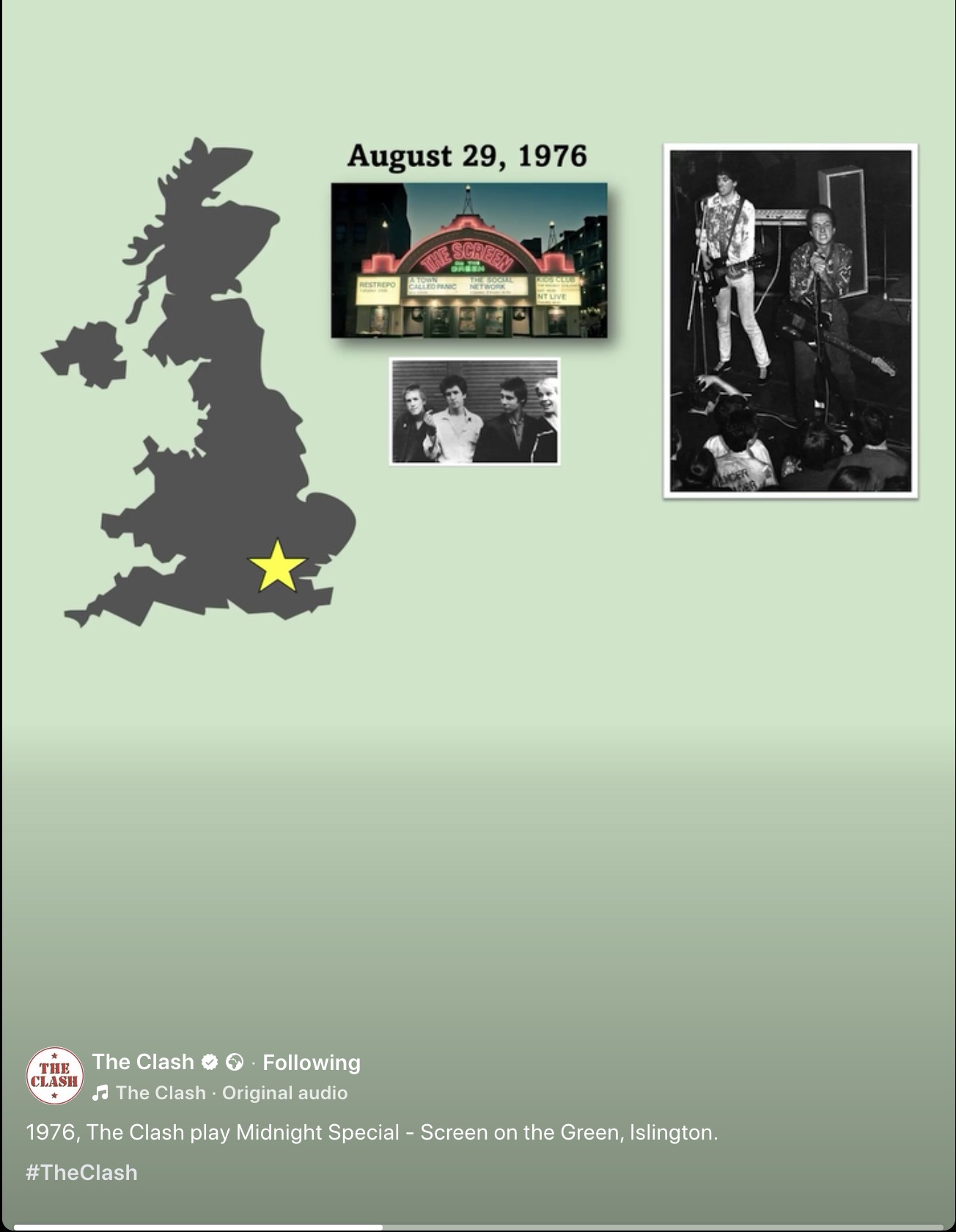
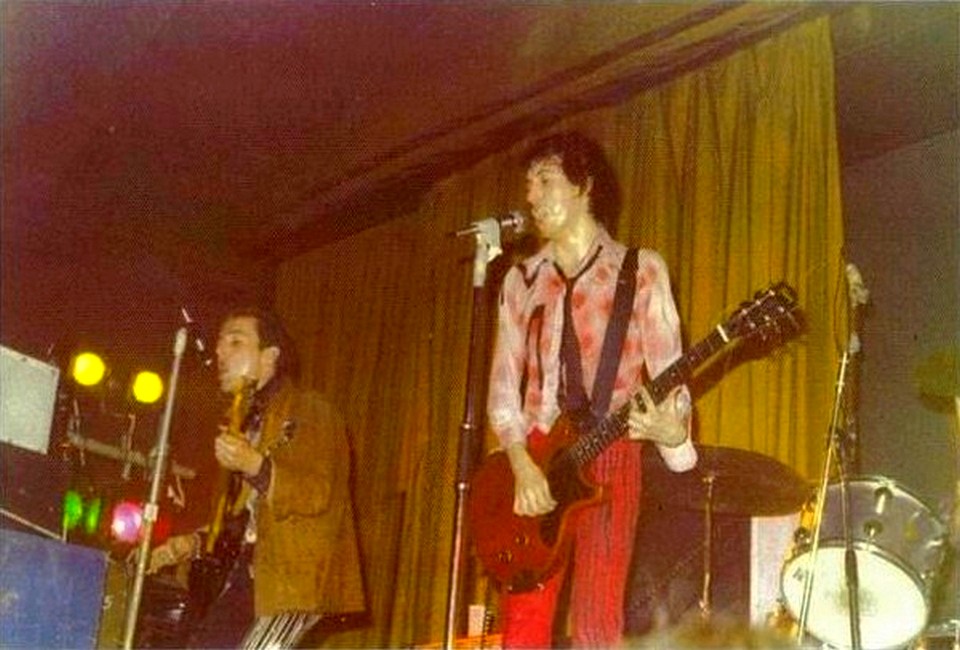
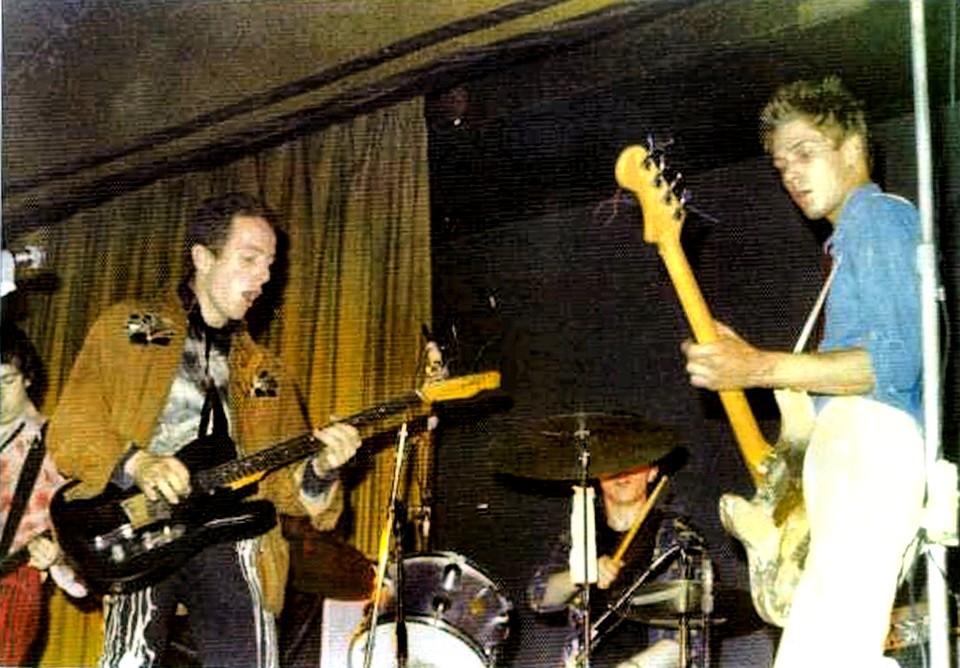
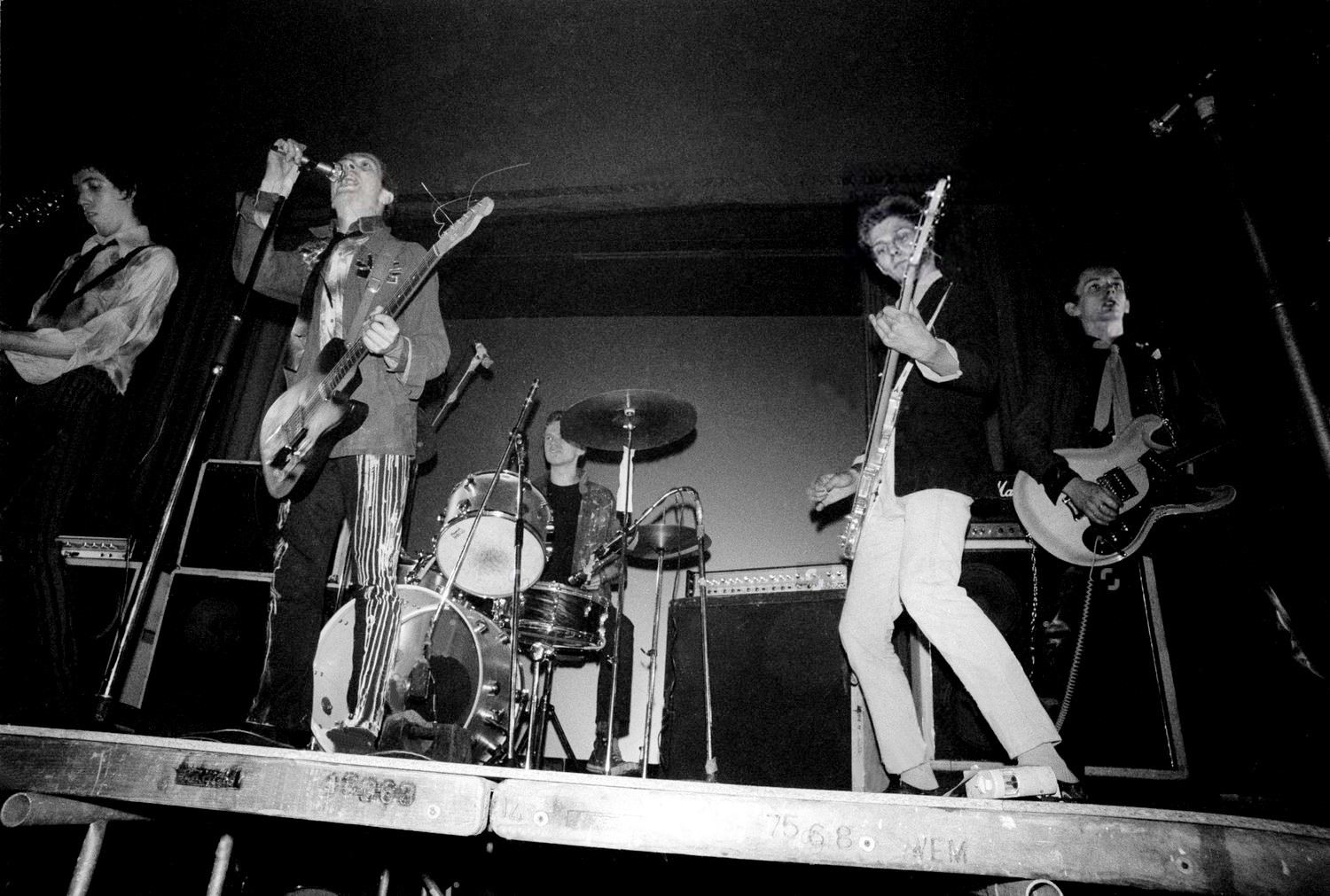
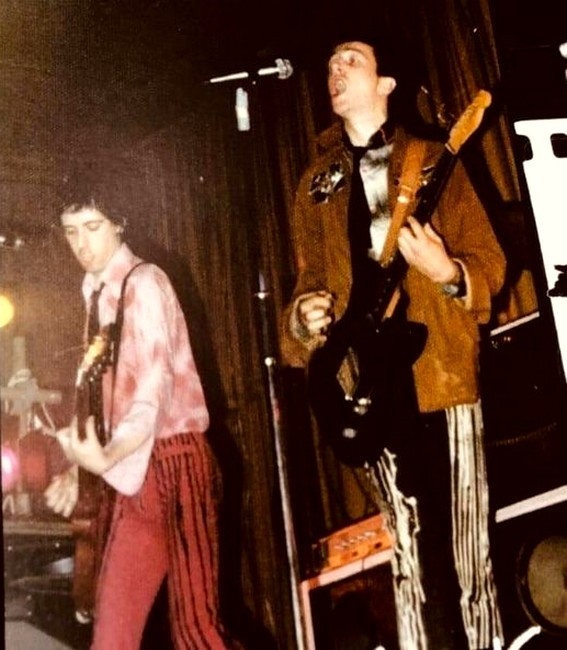
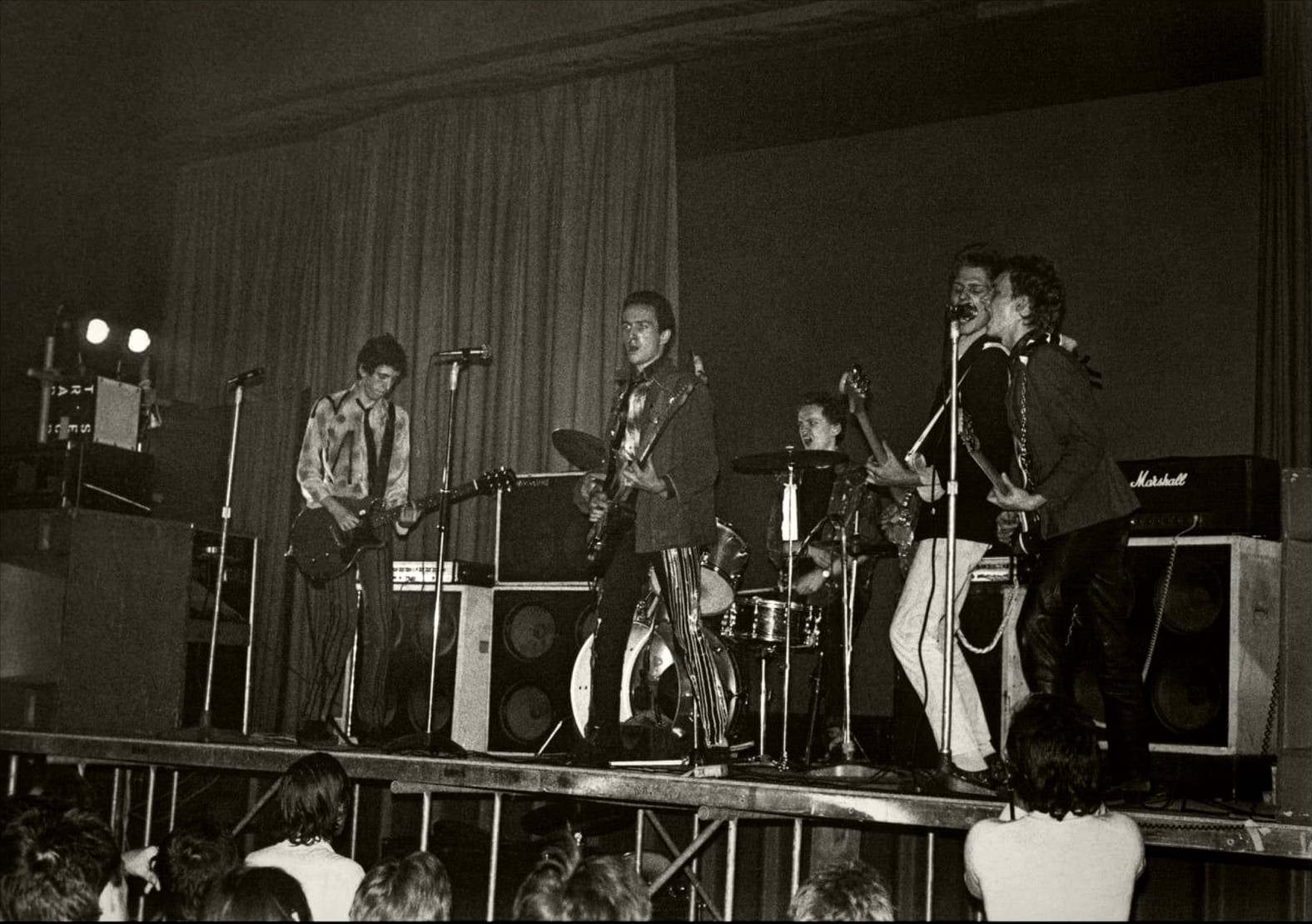
This is a historic night, for it marks the third ever gig by The Clash and the first known recorded performance. It is also the earliest surviving recording of both The Clash and a rare live capture of the Sex Pistols featuring Glen Matlock.
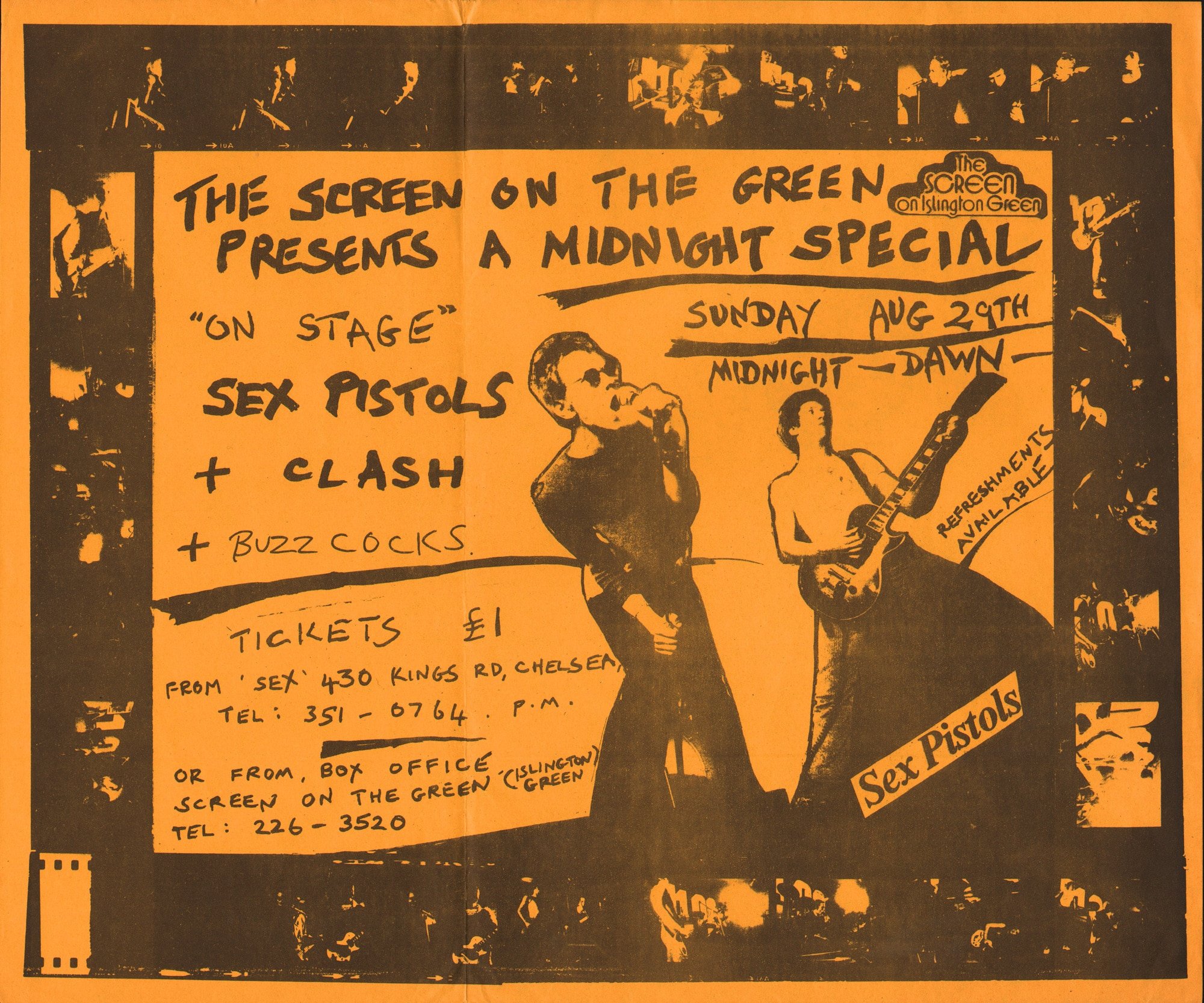
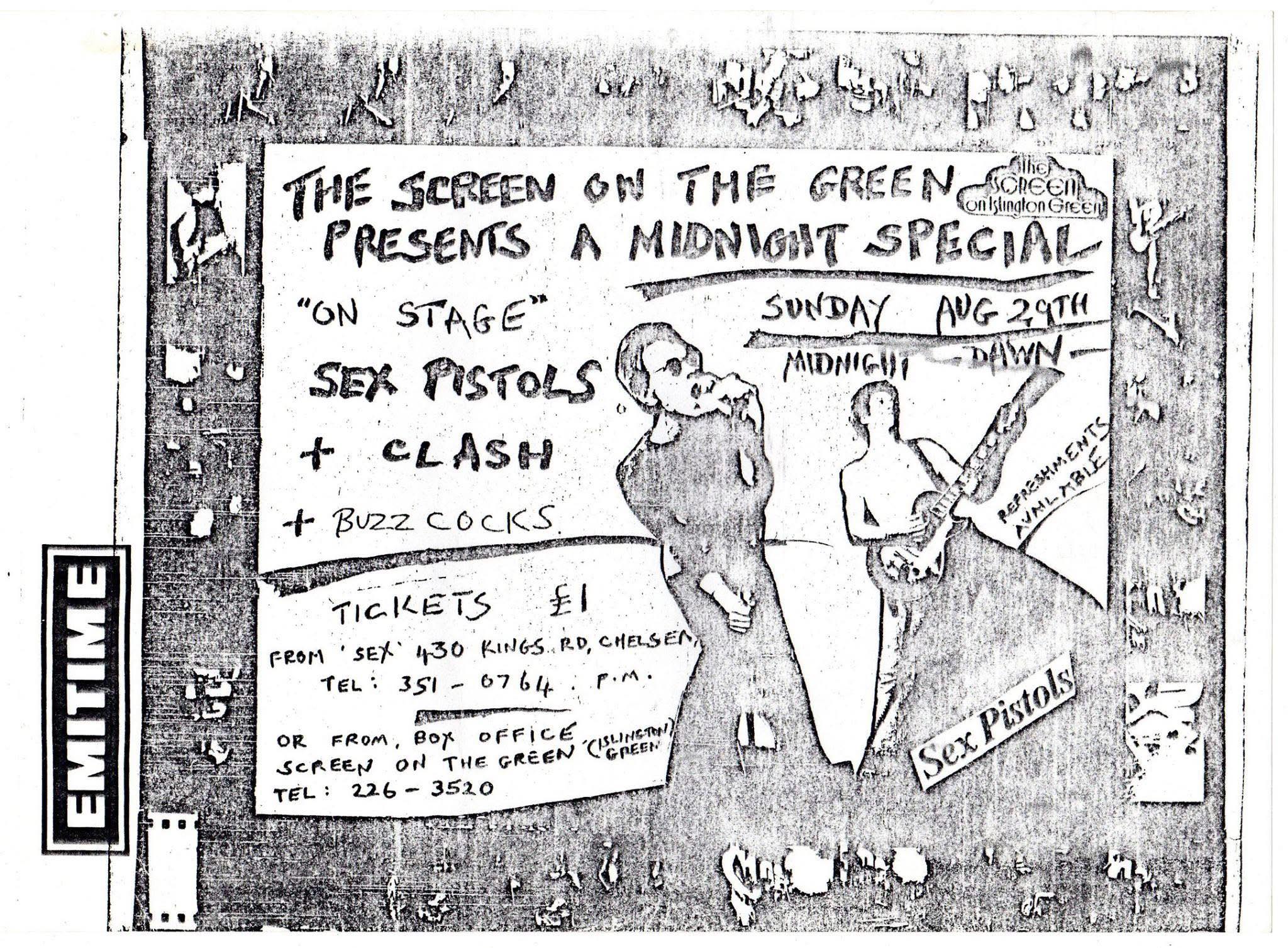
This event was Malcolm McLaren's showcase for his band, alongside other emerging acts from the burgeoning punk movement. Named The Midnight Special, the bands were scheduled to play after the evening's films at the famous Screen on the Green, London's renowned arthouse cinema. For further insight, see Marcus Gray's Last Gang in Town and Jon Savage's England's Dreaming.
Part of McLaren's deal was that The Clash had to build the stage themselves. Joe Strummer is quoted in England's Dreaming: "We weren't very good that night because we'd been up early unloading the scaffolding and building the stage." The band were also nervous—there's no stage talk from Joe (who swung to the opposite extreme just two gigs later at the Roundhouse).
It's suggested that both the Buzzcocks and The Clash suffered from appalling sound problems, which miraculously improved when the Pistols took the stage. While this isn't entirely evident on this recording, Glen Matlock and others have since confirmed that tampering may have taken place.
Press reviews
The press reviews at the time were, to put it mildly, unforgiving. Giovanni Dadomo blamed the equipment for doing the band "a grave disservice tonight, losing Joe Strummer's hard-to-mix vocals until they became an unintelligible mumble, and generally poleaxing the band's nuclear potential."
Charles Shaar Murray of the NME delivered his infamous verdict: "They are the kind of garage band who should be speedily returned to the garage, preferably with the motor running, which would undoubtedly be more of a loss to their friends and families than to either rock or roll."
In later interviews, Joe Strummer appeared to take Murray's comments personally—incensed by the critique. This spat became legendary and directly inspired The Clash track Garageland.
Ironically, just two years later, Charles Shaar Murray was hailing The Clash as "the greatest rock band in the world"—in the very same paper.
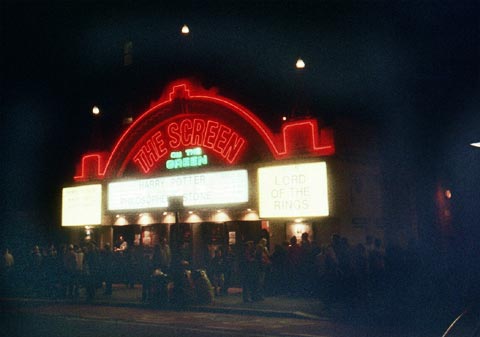
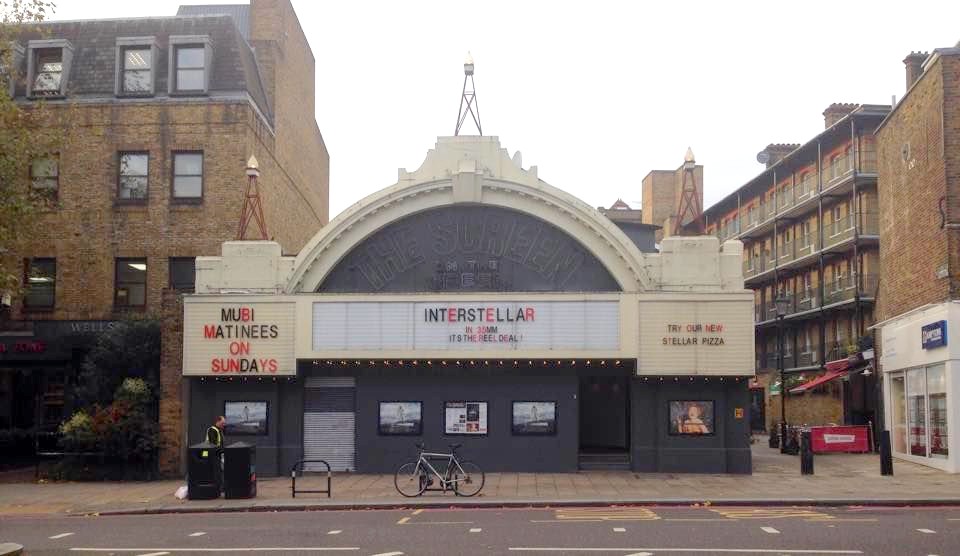
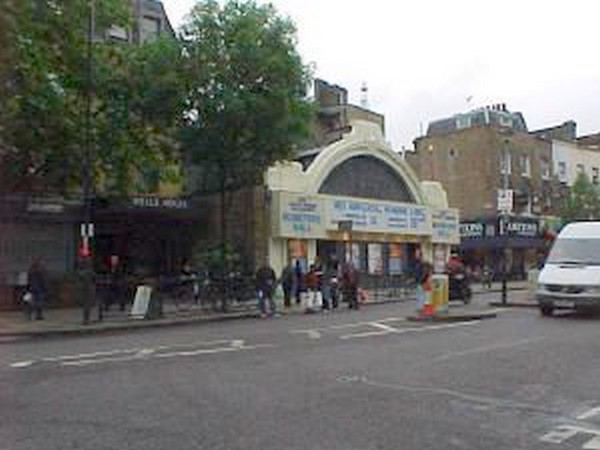
The Screen on the Green is a single screen cinema facing Islington Green in the London Borough of Islington, London.
The current building was opened in 1913 and it is one of the oldest continuously running cinemas in the UK. It is an example of the many purpose-built cinemas that followed the regulations set by the Cinematograph Act 1909. It is distinctive in the local area due to its façade outlined in red neon, along with a large canopy used for advertising current and upcoming films and events.
Since 2008, the cinema has been operated by Everyman Cinemas Group,[1] who have expanded their interests into a unique premium cinemas across London (including the original Everyman Cinema in Hampstead), Surrey and Hampshire.
Now retitled as 'Everyman Screen on the Green', the cinema offers a variety of films and special events, including the National Theatre Live, live Q, film festivals and seasons. The venue is equipped with Sony Digital 4K projectors and Dolby Digital surround sound.
All of The Clash's set is present here, although the packaging misnames several tracks, and two of the newer songs are buried within another pair, showing a total of only twelve. There are no edits, and it’s a very good audience recording—likely close to the master tape.
Of course, we can't be certain whether the sound's limitations stem from the recording itself or from the notoriously poor PA system that night. The drums are clear, the bass is present but lacks focus, and while the guitars come through well, they remain somewhat distant. The main shortcoming lies in the vocals, which are recessed—particularly Joe Strummer's—rendering, as Giovanni Dadomo observed, his vocals largely unintelligible.
This is a shame because this bootleg, together with 5 Go Mad In The Roundhouse (which offers better sound but suffers from edits and dropouts), represents the only circulating recordings of the six early unrecorded songs. The 100 Club performance on 21/9/76 survives in poorer quality—though slight upgrades have surfaced. These recordings are also the only existing documents of the five-piece Clash lineup: Keith Levene on lead guitar, Mick Jones on rhythm, Terry Chimes on drums, and Joe Strummer solely on vocals.
This recording reveals that The Clash of 1976 were already a thrilling live band. The signature punk snarl had yet to fully develop, and the songs destined for studio recording lacked their later subtleties—but the band was already playing tight and fast. The influence of The Ramones is unmistakable, from the 1-2-3-4 count-ins to the drum and bass patterns owing much to the brudders from New York.
The set closes with warm applause and calls for more—a testament to the raw energy The Clash were already delivering in these formative days.
Setlist
1. Deny Same lyrics as recorded but going not to the 100 Club yet but the 69 club.
2. I Know What to Think About You Good song with the slow Who, Can't Explain riff, lyrics "standing in the hospital room dead or alive", r'n'b type number with Gloria type middle section building back up to the chorus.
3. I Never Did It? "I could have been as rich as you " fast and furious a Terry Chimes drum solo segues into
4. How Can I Understand the Flies? "How can I go to sleep for the flies" Ramones like simply structured song.
5. Janie Jones Some lyric changes but already sounds great. Mick sings the chorus (Joe later at the Roundhouse and there after). Mick sings I'm in love with Janie Jones etc not the later He. The tempo is so much slower at this point.
6. Protex Blue Spirited Mick vocal .Same lyrics as later. A nice punchy mature version
7. Mark Me Absent Song about schooldays written by Mick. R&B feel not to far akin to what Joe was doing with the 101ers prior to the Clash.
8. Deadly Serious (Dig a Hole) Short fast song with a fast Can't Explain riff. Used later as basis for Clash City Rockers though the resemblance is not noticeable.
"Deadly Serious" is in fact called "Dig A Hole". Paul Simonon: "We even wrote a song about [reggae mimickry]," he says, "called Dig a Hole: 'Dig a hole, bury your guitars, dig some reggae but don't play any.'" (Interview The Guardian, 3.11.2006)
9. What's My Name A real highlight, lyric changes. Again like Janie Jones a much slower version than it would become in 1977.
10. Sitting at my Party Fast, furious but slight song. One of Micks old songs from the London SS days with Paul.
11. 48 Hours Same lyrics and structure as later recorded version.
12. I'm So Bored With You No punk snarl yet but sounds mature. A song about a girlfriend still and not the USA. Mainly different lyrics but indecipherable.
13. London's Burning Another highlight, verses order changed and many lyric changes but nearly the fully formed classic.
14. 1977 Sounds great, another highlight, mainly same lyrics , structure but no 1977 - 1984 coda yet, instead Joe repeats the year 1977 (being in 1976 then) an Mick shouts out in between.
A firsthand account of a chaotic yet groundbreaking night at The Screen where the Sex Pistols proved themselves as a "damned fine rock 'n' roll band", while The Clash showed raw potential despite technical setbacks.
Giovanni Dadomo, Sounds, 11 September 1976
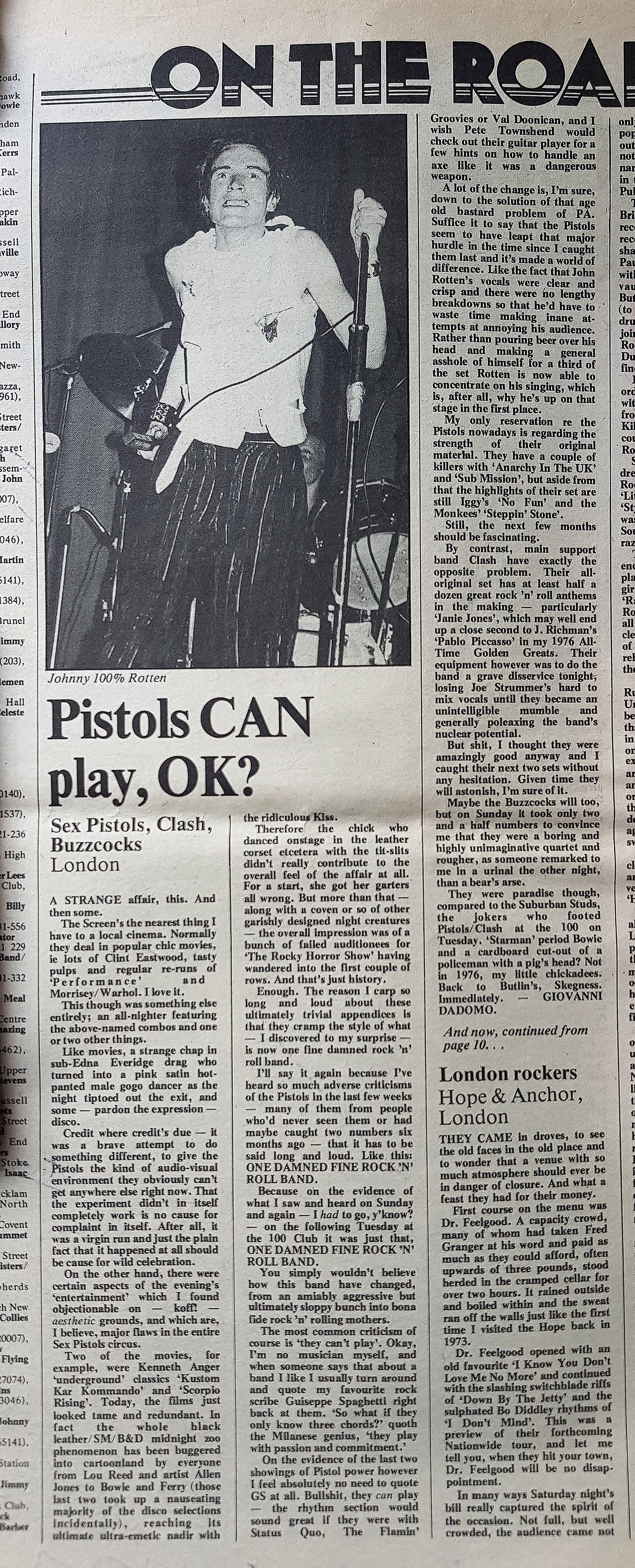
Pistols CAN Play, OK?
London – Buzzcocks, Sex Pistols, Clash
A strange affair, this. And then some.
The Screen is the nearest thing I have to a local cinema. Normally, they deal in popular chic movies — lots of Clint Eastwood, tasty pulps, and regular re-runs of Performance and Warhol/Morrissey flicks. I love it.
This though was something else entirely — an all-nighter featuring the above-named combos and one or two other things. Like movies, a strange chap in sub-Edna Everage drag who turned into a pink satin hot-panted male go-go dancer as the night tiptoed out the exit, and some — pardon the expression — disco.
Credit where credit's due — it was a brave attempt to do something different, to give the Sex Pistols the kind of audio-visual environment they obviously can't get anywhere else right now. That the experiment didn’t completely work is no cause for complaint. After all, it was a virgin run, and just the plain fact that it happened at all should be cause for wild celebration.
On the other hand, there were certain aspects of the evening’s entertainment which I found objectionable — on aesthetic grounds — and which are, I believe, major flaws in the entire Sex Pistols circus.
Two of the movies, for example, were Kenneth Anger’s underground classics Kustom Kar Kommandos and Scorpio Rising. Today, these films just looked tame and redundant. The whole black leather/SM/B&D midnight zoo phenomenon has been buggered into cartoonland by everyone from Lou Reed and artist Allen Jones to Bowie and Ferry — those last two dominated the disco selections, incidentally — reaching its ultimate, ultra-emetic nadir with the ridiculous Kiss.
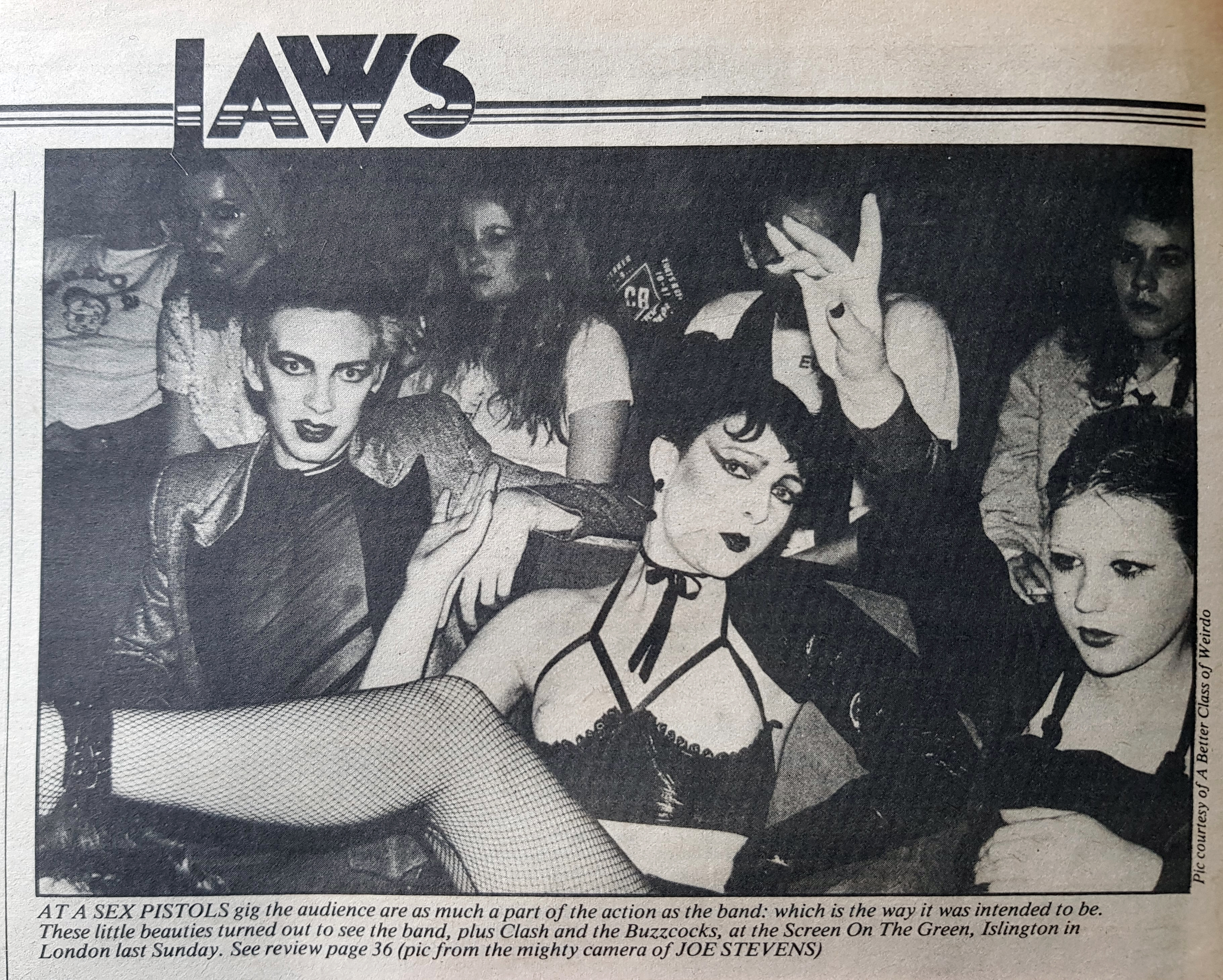
Therefore, the chick who danced onstage in the leather corset with the tit-slits didn’t really contribute much to the overall feel. Along with a coven of other garishly designed night creatures, the impression was of a bunch of failed auditionees for The Rocky Horror Show having wandered into the front rows. And that’s just history.
Enough. The reason I carp so long about these trivial appendices is that they cramp the style of what — I discovered to my surprise — is now one fine damned rock 'n' roll band.
I’ll say it again because I’ve heard so much adverse criticism of the Pistols lately, often from people who’ve never seen them or maybe caught two numbers six months ago. So here it is: ONE DAMNED FINE ROCK 'N' ROLL BAND.
On Sunday — and again on Tuesday at the 100 Club — they proved it. You simply wouldn’t believe how this band has changed: from an amiably aggressive but sloppy bunch into bona fide rock 'n' rollers.
The most common criticism? "They can't play."
Okay, I’m no musician, but when someone says that, I usually quote my favourite rock scribe Guiseppe Spaghetti: "So what if they only know three chords? They play with passion and commitment."
But after these last two shows, I don’t even need to quote GS. It’s clear — they can play. The rhythm section would sound great backing Status Quo, The Flamin' Groovies, or even Val Doonican. And I wish Pete Townshend would check out their guitarist for hints on how to wield an axe like a dangerous weapon.
A lot of this improvement is down to solving the age-old bastard problem of PA. John Rotten’s vocals were clear and crisp, no breakdowns forcing him to waste time annoying the audience. Instead of pouring beer over his head, he now focuses on his singing — which is why he’s on stage in the first place.
My only reservation is the strength of their original material. They have killers like Anarchy In The UK and Sub Mission, but beyond that, the highlights are still Iggy’s No Fun and The Monkees’ Steppin' Stone. Still, the next few months should be fascinating.
By contrast, main support band The Clash have the opposite problem. Their all-original set has at least half a dozen future rock 'n' roll anthems — particularly Janie Jones, which could rival Jonathan Richman’s Pablo Picasso in my 1976 All-Time Golden Greats.
Their equipment, however, did them a grave disservice tonight, losing Joe Strummer's hard-to-mix vocals until they became an unintelligible mumble and generally poleaxing the band’s nuclear potential. But, shit, I thought they were amazingly good anyway — I caught their next two sets without hesitation. Given time, they will astonish. I’m sure of it.
Maybe the Buzzcocks will too, but on Sunday it took only two and a half numbers to convince me they were a boring, unimaginative quartet — rougher, as someone remarked in a urinal, than a bear’s arse.
They were paradise, though, compared to the Suburban Studs — the jokers who footed Pistols/Clash at the 100 Club on Tuesday. ‘Starman’-period Bowie and a cardboard cut-out of a policeman with a pig’s head? Not in 1976, my little chickadees. Back to Butlin’s, Skegness. Immediately.
Charles Shaar Murray, NME, 11 September 1976. Reprinted in, NME: The History of Rock 1976.
NME: The Sex Pistols / The Clash / The Buzzcocks: Screen On The Green, Islington, London
Charles Shaar Murray reviews the chaotic Screen on the Green gig, hailing the Sex Pistols as a raw, powerful force in rock, while dismissing The Clash as under-rehearsed garage hopefuls lost in the rising punk wave.
If you'd like, I can now clean this up, stylize it with formatting (bold names, italics for quotes), or prepare it as a styled document. Would you like me to proceed with that?
"[The Clash] They are the kind of garage band who should be speedily returned to their garage, prefereably with the motor running, which would undoubtledy be more of a loss to their friends and familes than to either rock or roll."
Original article: Charles Shaar Murray, NME, 11 September 1976
Rebel Fun Page
"Someone's got to come along and say to all of us, 'All your ideas about rock and roll, all your ideas about sound, all your ideas about guitars, all your ideas about this and that are a load of wank. This is where it is!' Someone's got to come along and say, 'Fuck you'."
— Alex Harvey, November 1973
——
Sex Pistols SCREEN ON THE GREEN
It's almost funny. Not quite worth an uproarious explosion of uncontrollable hilarity, but definitely good for a wry chuckle or two when it happens to someone else. Trouble is, no-one's laughing because all the professional chucklers just found out that the joke's on them.
Any halfway competent rock and roll pulse-fingerer knows that this is The Year Of The Punk. You got Patti Smith doing Rimbaud's in the basement mixing up the medicine, you got Bruce Springsteen with his down these mean streets a man must go stereologues, you got The Ramones as updated Hanna-Barbera Dead End Kids, you got Ian Hunter doing I used to be a punk until I got old and made all this money, you got everybody and his kid brother (or sister) crawling out of the woodwork in leather jackets trying to look like they were hell on wheels in a street fight and shouting Put The Balls Back Into The Music.
Ultimately, if the whole concept of Punk means anything, it means Nasty Kids, and if Punk Rock means anything, it means music of, by and for Nasty Kids. So when a group of real live Nasty Kids come along playing Nasty Kids music and actually behaving like Nasty Kids, it is no bleeding good at all for those who have been loudly thirsting for someone to come along and blow all them old farts away — to throw up their hands in prissy-ass horror and exclaim in duchessy fluster that oh no, this wasn't what they meant at all and won't it please go away.
In words of one (or, at the most, two) syllables: you wantedSex Pistolsand now you've got 'em. Trouble is, they look like they aren't going to go away, so what are you going to do with them? Alternatively — ha ha — what are they going to do with you?
In a way, it's a classic horror-movie situation. Dr Frankenstein's monster didn't turn out according to plan but he was stuck with it anyway. Professor Bozo opens up a pyramid, summons a demon, or goes up to the Old Dark Mansion despite the warnings of the villagers and gets into a whole mess of trouble. Don't rub the lamp unless you can handle the genie.
The current vogue for Punkophilia and Aggro Chic has created the atmosphere in which a group like the Sex Pistols could get started and find an audience — and dig it — it is entirely too late to start complaining because they behave like real Nasty Kids and not the stylised abstraction of Nasty Kiddery which we've been demanding and applauding from sensitive, well-educated, late 20s pop superstars.
Anyway, time's a-wastin'. Their gig at The Screen On The Green (a fine independent cinema in Islington, plug!) has already started; in fact, we've already missed the first band, a Manchester group called Buzzcocks. All kinds of folks in Bizarre Costumes — the kind of clothes you used to find at Bowie gigs before 'e went all funny-like — are milling around the foyer playing the wild mutation. The occasional celeb — Chris Spedding, who has eyes to produce the Pistols, and Sadistic Mika — is mingling.
Up on the stage, it's Party Piece time. A bunch of people, including a chick in S&M drag with her tits out (photographer from one of the nationals working overtime, presumably with the intention of selling a nice big fat look-at-all-this-disgusting-decadence-and-degradation centrespread) and a lumpy guy in rompers are dancing around to a barrage of Ferry and Bowie records. Every time the lumpy go-go boy does a particularly ambitious move, the record jumps. He makes elaborate not-my-fault gestures and keeps dancing. The record keeps jumping. This goes on for quite a while.
Movies are projected on the screen and someone gets creative with the lights. The area near me 'n' the missis reeks of amyl nitrate.
There is nothing more tedious and embarrassing than inept recreations of that which was considered avant-garde ten years ago. Someone has obviously read too many articles about the Andy Warhol–Velvet Underground Exploding Plastic Inevitable Show. Andy, Lou, and Cale would laugh their butts off. This ain't rock and roll — this is interestocide.
Sooner or later — later, actually — a group called Clash take the stage. They are the kind of garage band who should be speedily returned to their garage, preferably with the motor running, which would undoubtedly be more of a loss to their friends and families than to either rock or roll.
Their extreme-left guitarist, allegedly known as Joe Strummer, has good moves, but he and the band are a little shaky on ground that involves starting, stopping and changing chord at approximately the same time.
In between times, they show Kenneth Anger'sScorpio Rising. The Pistols' gear is assembled in a commendably short time with an equally commendable absence of fuss, pissing about and Roadies' Playtime. Then the Pistols slope onstage and Johnny Rotten lays some ritual abuse on the audience — and then they start to play.
Any reports that I had heard — and that you may have heard — about the Pistols being lame and sloppy are completely and utterly full of shit. They play loud, clean and tight and they don't mess around. They're well into the two-minute-thirty-second powerdrive, though they're a different cup of manic monomania than The Ramones. They have the same air of seething just-about-repressed violence that the Feelgoods have, and watching them gives that same clenched-gut feeling that you get walking through Shepherd's Bush just after the pubs shut and you see The Lads hanging out on the corner looking for some action — and you wonder whether the action might be you.
The Pistols are all those short-haired kids in the big boots and rolled-up baggies and sleeveless T-shirts. Their music is coming from the straight-out-of-school-and-onto-the-dole deathtrap which we seem to have engineered for Our Young: the '76 British terminal stasis, the modern urban blind alley.'
The first thirty seconds of their set blew out all the boring, amateurish artsy-fartsy mock-decadence that preceded it purely by virtue of its tautness, directness and utter realism. They did songs with titles like "I'm A Lazy Sod" and "I'm Pretty Vacant", they did blasts from the past like "I'm Not Your Steppin' Stone" (ten points for doing it, ten more for doing it well) and "Substitute" (a Shepherd's Bush special, that) — and they kept on rockin'.
"Should I say all the trendy fings like 'peace and love, maaaaaaan'?" asked Johnny Rotten, leaning out off the stage manically jerking off his retractable mic-stand. "Are you all having a good time, maaaaaaan?" Believe it: this ain't the summer of love.
They ain't quite the full-tilt crazies they'd like to be, though: Johnny Rotten knocked his false tooth out on the mic and had the front rows down on their knees amidst the garbage looking for it. He kept bitching about it all the way through the gig: Iggy wouldn't even have noticed.
Still, they've got more energy and more real than any new British act to emerge this year — and even if they get big and famous and rich, I really can't imagine Johnny Rotten showing up at parties with Rod 'n' Britt or Mick 'n' Bianca or buying the next-door villa to Keef 'n' Anita in the South of France.
And if Elton ever sees them, I swear he'll never be able to sing "Saturday Night's Alright (For Fighting)" again without choking on his Dr Pepper.
Murray, Charles Shaar. “Aggro chic.” New Musical Express, 11 Sept. 1976, 2 pages. Reprint – History of Rock 1976, p. 94.
NME: Aggro chic
— Charles Shaar Murray in New Musical Express, reports on the rise of punk and the notorious Screen On The Green concert in Islington, featuring Buzzcocks, The Clash, and the Sex Pistols (Aug. 29, 1976).
— CSM captures the raw impact of the Sex Pistols at a chaotic London cinema gig, contrasting their taut, violent energy with the amateur theatrics of the night’s other acts. The Clash are infamously dismissed as 'garageland' punks, while the Buzzcocks are noted as openers. The authentic music of “nasty kids,” unvarnished and inescapable.
— Johnny Rotten dominates with snarling abuse and fractured teeth, backed by ferocious renditions of “I’m Pretty Vacant”, “I’m A Lazy Sod”, “Substitute” and “I’m Not Your Steppin’ Stone.”
— Kris Needs delivers a landmark profile of The Clash.
— Declares The Clash the most exciting group of the new wave, more important than Eddie & The Hot Rods or The Damned.
— First gig recalled: Tiddenfoot Leisure Centre, Leighton Buzzard, with an explosive White Riot.
— Profiles members Joe Strummer, Mick Jones, Paul Simonon, and drummer Terry Chimes; notes rehearsal base in Camden Town under manager Bernard Rhodes.
— Song inspirations: Notting Hill Riots (White Riot), vice queen Janie Jones (Janie Jones), London’s Burning on the Westway, dystopian 1977.
— History covered from London S.S. through The Heartdrops, to Joe quitting the 101ers.
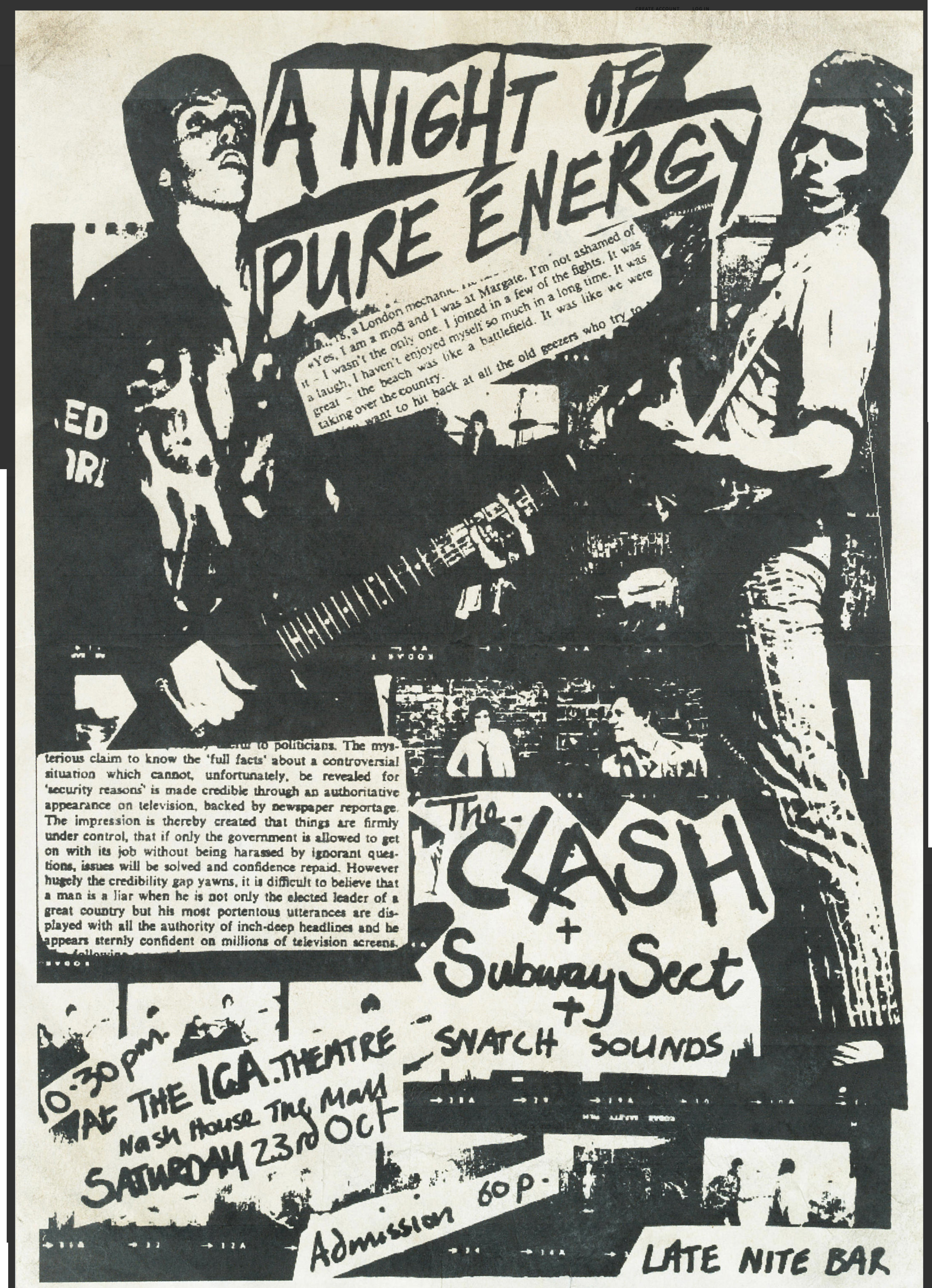
— Tiddenfoot Leisure Centre (first out-of-London gig 9 October 1976); 100 Club Punk Festival (20 Sept 1976); Screen on the Green (29 Aug 1976); ICA gigs (2nd and 23rd Oct 1976); RCA (5 Nov 1976); Roxy (1 Jan 1977); Anarchy Tour with Sex Pistols, Damned, Heartbreakers (Dec 1976); Harlesden Colosseum (11 Mar 1977).
— On the “Anarchy” tour: cancelled dates after the Sex Pistols–Bill Grundy scandal, leaving the band frustrated but politically hardened.
— Focus on the Harlesden Colosseum gig (March 1977): The Slits debut, Subway Sect revival, new-look Buzzcocks, capped by a ferocious Clash set.
— Recording insights: sessions with Guy Stevens, later replaced by Micky Foote. Songs include White Riot, 1977, Garage Land, and radical reggae cover Police & Thieves. — Notes the CBS contract, six-figure deal, and accusations of “selling out,” countered by insistence on artistic control. — Concludes that the debut LP will be “the most exciting album in years” and an all-time classic.
Covers the first few months of The Clash from London SS to 101'ers to the first few gigs of the Clash and includes references to the gig at the Black Swan.
During this June 1976 rehearsal period, the as-yet unnamed outfit’s initial drummer was Paul Buck (later in 999 as Pablo Labritaine), who had been at school with Strummer. He left after two or three practices and Terry Chimes was once-again tapped. The line-up settled on Chimes, Levene, Jones, Simonon and Strummer. Finding a name was difficult – amongst those in the running were The Psychotic Negatives and The Heartdrops or Weak Heartdrops (from a Big Youth record). Simonon came up with The Clash.
A debut show was booked for 4 July, supporting Sex Pistols sat Sheffield’s Black Swan – on the same day The Ramones debuted in the UK at The Roundhouse. The Sheffield billing was “ex 101’ers.” It was deliberate that, Pistols aside, London’s punk élite would not have a chance to pronounce on the worthiness of the band.
Despite there being no sonic evidence for the Sheffield debut, a little is known about what was played. The band opened with an instrumental titled “Listen” and, according to Pat Gilbert's 2005 book Passion is a Fashion, also played “Protex Blue” and Mick Jones’ Sixties-style beatster “1-2 Crush on You.” The set additionally included 101’ers staples “Keys to Your Heart,” “Junco Partner” and “Too Much Monkey Business” along with a Who cover and The Troggs' “I Can’t Control Myself” (also covered by the early Buzzcocks). A 101’ers hangover clouded proceedings.
Music Reissues Weekly:
Keith Levene and The Clash Honouring the pivotal UK punk band’s short-stay early guitarist
by Kieron Tyler
Sunday, 27 August 2023
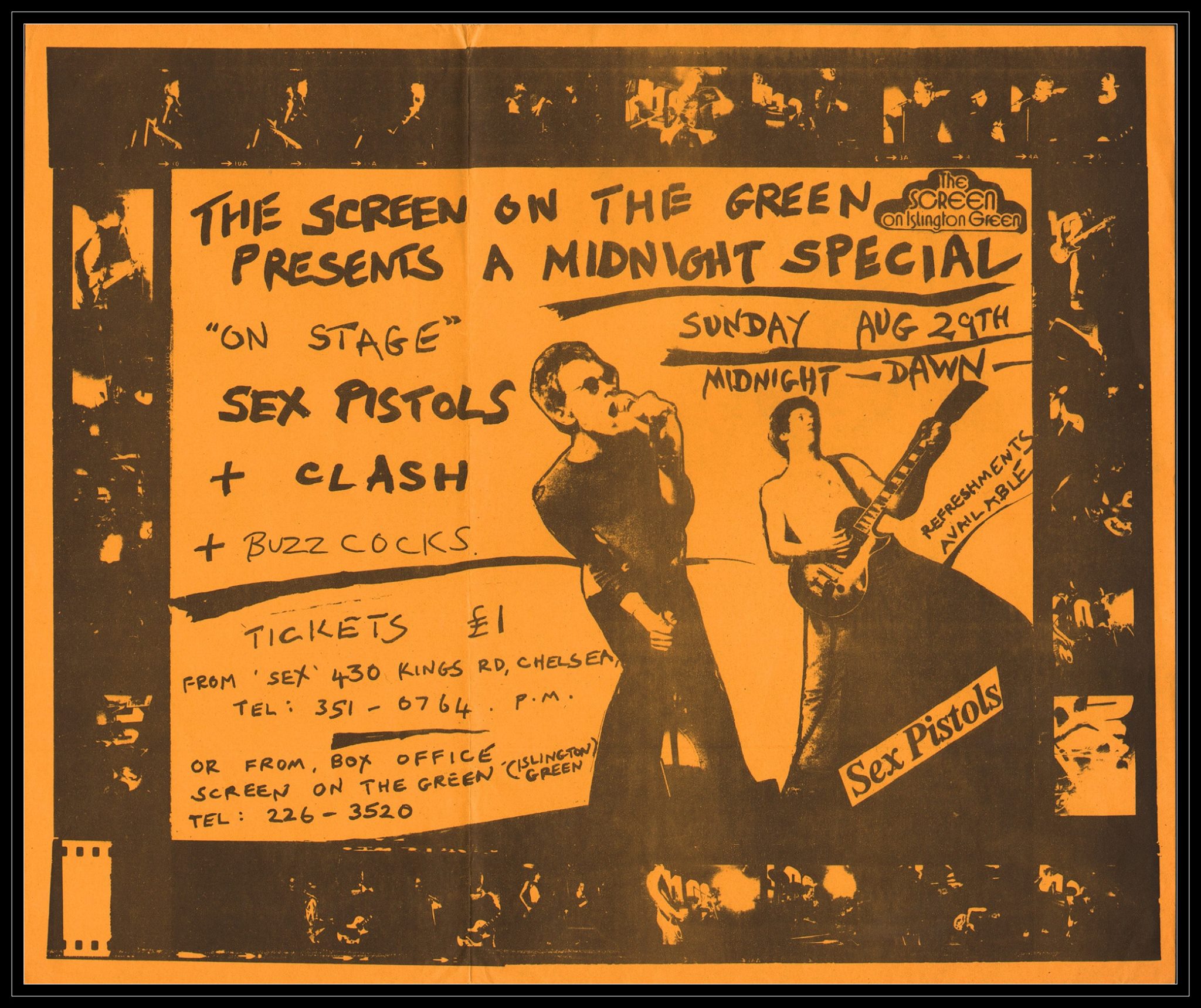
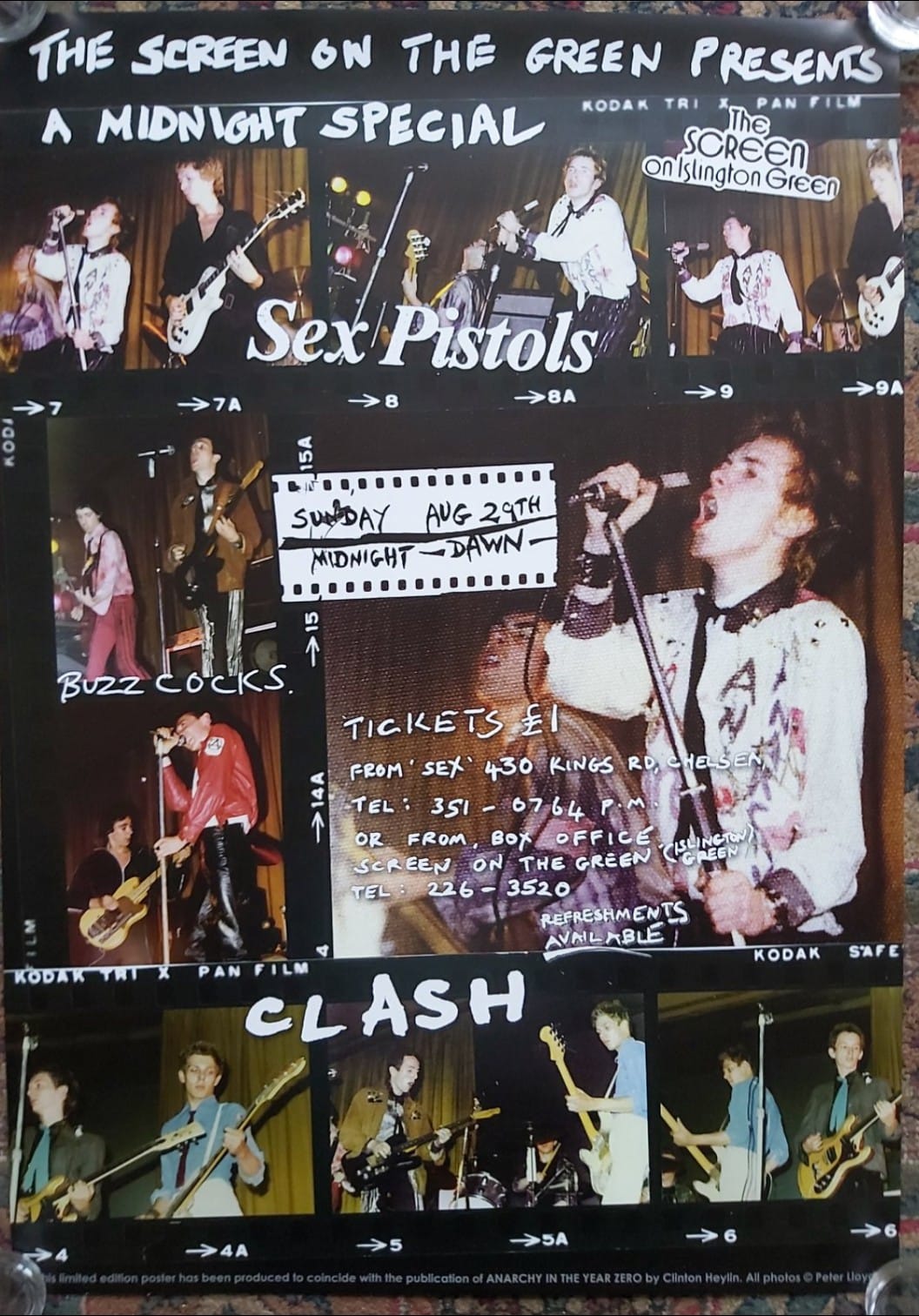
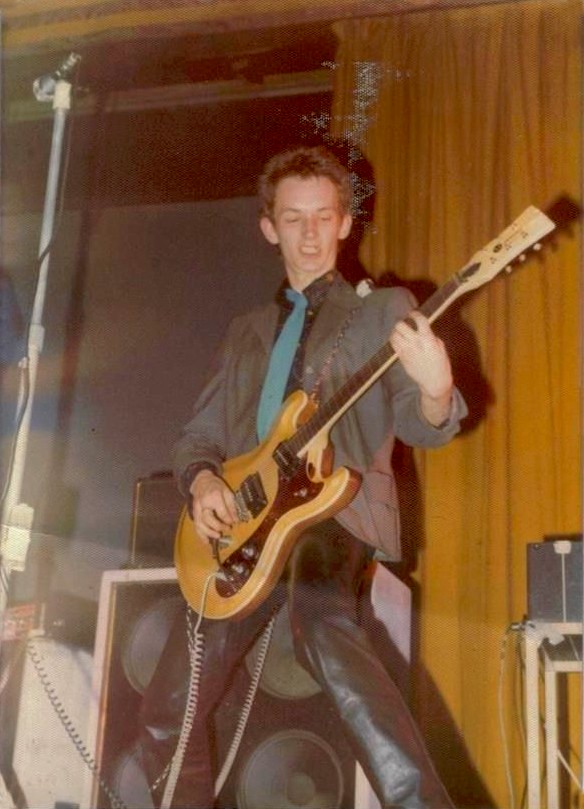
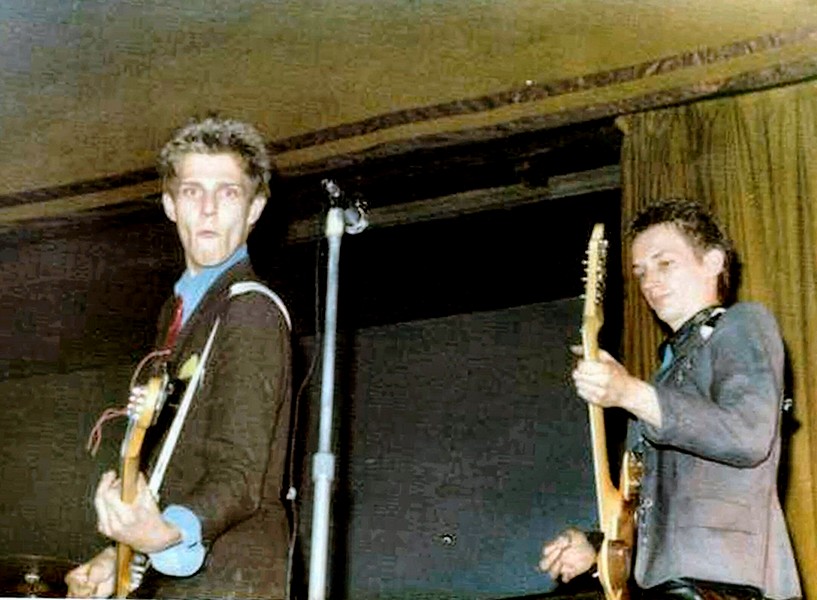
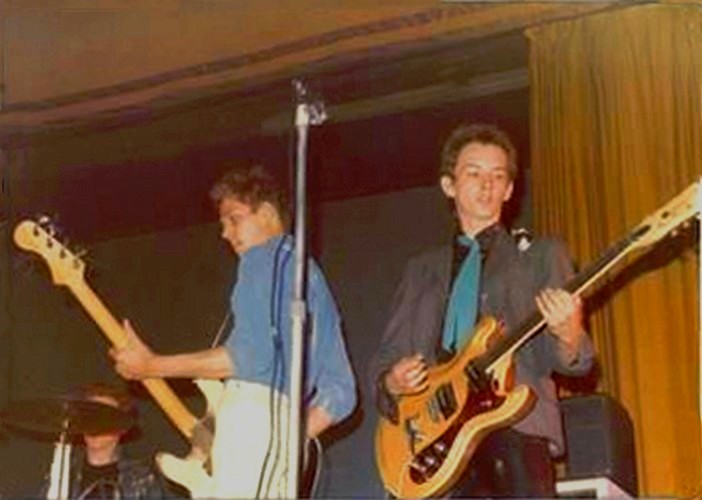
The latter-day Keith Levene, with The Clash a long way back in the rear-view mirror Forty-seven years ago this week, a new band called The Clash were seen by a paying audience in London for the first time. On Sunday 29 August 1976 they played Islington’s Screen on the Green cinema, billed between Manchester’s Buzzcocks – their earliest London show – and rising luminaries Sex Pistols. Doors opened at midnight. The anniversary needs marking.
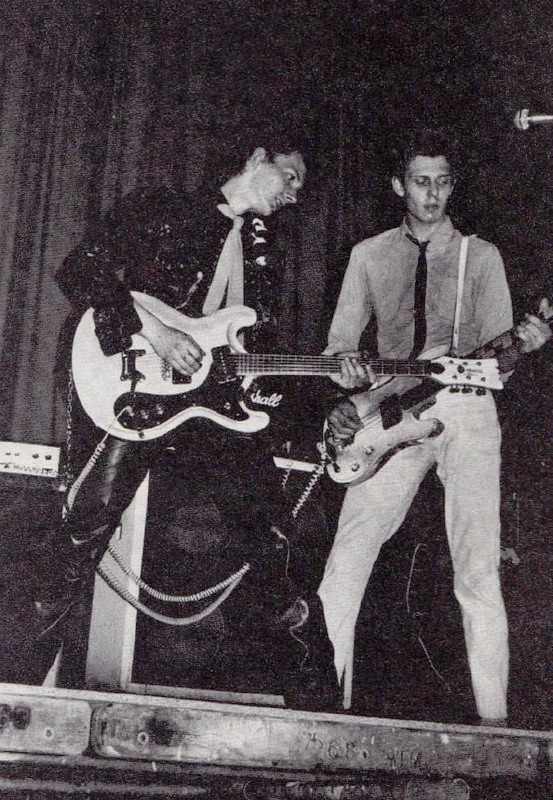
At this point, The Clash had three guitarists. They were a five-piece band rather than the four-piece which became familiar. The guitarist who left a few weeks after the Screen on the Green outing was Keith Levene. Along with fellow guitarist Mick Jones and bassist Paul Simonon, he was a co-founder. Former 101’ers frontman and rhythm guitarist Joe Strummer was next on board, assuming the same role in the new band. The drummer they settled on by the Screen on the Green booking was Terry Chimes.
Sex Pistols Screen on the Green
When The Clash played the 100 Club a month later on 20 September – at what became known as the “Punk Festival” – Levene was out and they were the band which – despite some drummer wobbles – signed to CBS on 26 January 1977. What came next for The Clash is well known. Easily lost though is the story of what came first.
Remarkably, and despite his short stay in the band, there is an aural evidence of the formative, Levene-era Clash. The band played in front of audiences five times with him in the line-up – the last three appearances were recorded. The surviving audio from before and after Levene’s departure makes it possible to dig into his importance to the band and impact on their sound – and how The Clash changed after the departure of one of their co-creators.
Keith Levene, who died on 11 November 2022 at age 65, was a significant figure in British punk and what came in its wake. An accomplished, self-taught guitarist his pre-punk adventures included working as roadie for Yes in 1972 and 1973. After leaving The Clash, he spent some of late 1976 in a band named Flowers of Romance with, amongst other in-crowd punks, Sid Vicious and a pre-Slits Viv Albertine. They never played live. In late 1977, he was in a short-lived band named Drunk & Disorderly with Rat Scabies, who had just left The Damned – they played live twice supporting The Clash at London’s Rainbow. Then, from May 1978, Levene became integral to John Lydon’s post-Pistols band Public Image Ltd, who he left in 1983. Following this, his path was erratic. He was the only person to play with members of all three of The Clash, The Damned and Sex Pistols. Becoming a member of The Clash was the opening shot.
An examination of the set lists from Levene’s stay in The Clash makes it obvious this was different to what CBS signed in early 1977. Songs were played live which were never recorded: “Deadly Serious” (also known as “Going to the Disco”), “How Can I Understand the Flies?” “I Know What to Think About you,” “I Never Did it,” “Mark Me Absent” and “Sitting at My Party.” These sat alongside others which were released: “1977,” “48 Hours,” “Deny,” “I'm So Bored With you” (later reconfigured as “I'm So Bored With the USA”), “Janie Jones,” “London's Burning,” “Protex Blue” and “What's My Name.” Of those lacking later studio versions, “Deadly Serious,” “How Can I Understand the Flies,” “I Know What to Think About you” and “Mark Me Absent” remained in the live set after Levene had gone. His departure did not markedly affect the material played on stage.
Scrolling back, as recounted in Marcus Gray’s 1995 book Last Gang in Town, Levene first met Mick Jones through a mutual friend named Alan Drake, the potential singer for a new band Jones wanted to form in Spring 1976 after his spell in the rehearsal-only London SS. Levene came on board, probably as result of encouragement by Malcolm McLaren associate Bernard Rhodes, who had managed The London SS. McLaren had Sex Pistols on his books so Rhodes wanted a competitor band. Also around was another London SS alumnus, neophyte bassist Paul Simonon.
Pictured left, The Clash rehearsing in June 1976 with Paul Buck on drums. Keith Levene, right
In April or May 1976. Mick Jones, Keith Levene and Paul Simonon had the skeleton of a new band. Drake dropped out and a few rehearsals were held with a singer named Billy Watts. Drummer Terry Chimes – another fleeting London SS member – arrived after he was phoned by Rhodes. Watts and Chimes were gone by the time Levene and Rhodes approached the recently Sex Pistols-smitten 101’ers frontman Joe Strummer at a 25 May Pistols gig at the 100 Club to see if he’d join the band they were touting. Despite the imminent release of his band’s debut single “Keys to Your Heart” and the following he had fronting a band familiar on the college and pub circuit, Strummer pitched in with the unknowns and began rehearsing with the new band in the first or second week of June 1976. The final 101’ers show was on 5 June.
During this June 1976 rehearsal period, the as-yet unnamed outfit’s initial drummer was Paul Buck (later in 999 as Pablo Labritaine), who had been at school with Strummer. He left after two or three practices and Terry Chimes was once-again tapped. The line-up settled on Chimes, Levene, Jones, Simonon and Strummer. Finding a name was difficult – amongst those in the running were The Psychotic Negatives and The Heartdrops or Weak Heartdrops (from a Big Youth record). Simonon came up with The Clash. A debut show was booked for 4 July, supporting Sex Pistols sat Sheffield’s Black Swan – on the same day The Ramones debuted in the UK at The Roundhouse. The Sheffield billing was “ex 101’ers.” It was deliberate that, Pistols aside, London’s punk élite would not have a chance to pronounce on the worthiness of the band.
Despite there being no sonic evidence for the Sheffield debut, a little is known about what was played. The band opened with an instrumental titled “Listen” and, according to Pat Gilbert's 2005 book Passion is a Fashion, also played “Protex Blue” and Mick Jones’ Sixties-style beatster “1-2 Crush on You.” The set additionally included 101’ers staples “Keys to Your Heart,” “Junco Partner” and “Too Much Monkey Business” along with a Who cover and The Troggs' “I Can’t Control Myself” (also covered by the early Buzzcocks). A 101’ers hangover clouded proceedings. A retreat to rehearsing followed.
(Pictured right, The Clash rehearsing in late June or July 1976 with Terry Chimes on drums. Keith Levene, second right)
Next up, over a month on, was a showcase at their Camden rehearsal room on 13 August 1976 – an invitation-only event for booking agents, music journalists and record label people. This time, the band had to be sure it had the goods. Despite this being written about by Sounds’ Giovanni Dadomo and the presence of writers Caroline Coon and John Ingham, there is no record of what was performed. However if, as at Sheffield, R&B and 101’ers numbers were played, it would have been noted. Dadomo was thrilled by what he saw, writing “I think they're the first band to come along who'll really frighten the Sex Pistols shitless. Exciting isn't the word for it.”
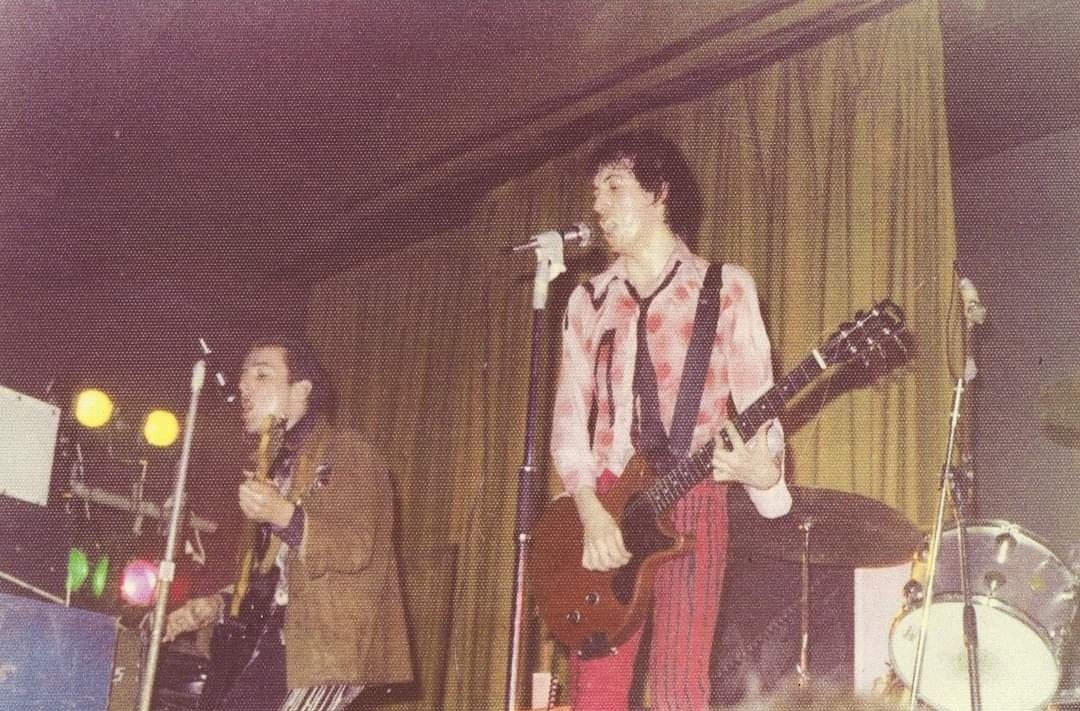
In the early rehearsals Levene, like Strummer, played a Fender Telecaster. For the showcase and later, he had the more unusual, un-rock Mosrite guitar – perhaps influenced by The Ramones, whose guitarist Johnny also played a Mosrite: Levene had seen them at Dingwalls, near The Clash’s rehearsal studio, on 5 July 1976. The showcase ushered in a new-style Clash.
Focus arrives with the next three shows, the remaining trio Levene played with the band: The Screen on the Green (29 August); The 100 Club (31 August, supporting Sex Pistols for a third time); The Roundhouse (5 September, supporting Strummer’s former pub-rock peers The Kursaal Flyers). All were recorded.
In parallel, there is a written record from the time. The nascent Clash was an object of fascination.
Pictured left, The Clash rehearsing in late June or July 1976 with Terry Chimes on drums. Keith Levene, third right at microphone
On seeing them at The Screen on the Green, NME’s Charles Shaar Murray wrote “a group called Clash take the stage. They are the kind of garage band who should be speedily returned to their garage, preferably with the motor running, which would undoubtedly be more of a loss to their friends and families than to either rock or roll. Their extreme-left guitarist, allegedly known as Joe Strummer, has good moves, but he and the band are a little shaky on ground that involves starting, stopping and changing chord at approximately the same time.” While it’s odd the R&B-favouring Shaar Murray wasn’t aware of Strummer from The 101’ers, this review inspired the future Clash song “Garageland.”
The already converted Giovanni Dadomo was there too. In Sounds he wrote, The Clash “were amazingly good” despite “their equipment [doing] the band a grave disservice tonight, losing Joe Strummer's hard to mix vocals until they became an unintelligible mumble and generally poleaxing the band's nuclear potential.”
Also for Sounds, Chas de Whalley saw them at The Roundhouse and said “At least you can guarantee that any band formed by the 101’ers guitarist Joe Strummer will bristle with fire and energy. Unfortunately at the Roundhouse The Clash had little more on offer.”
Mixed views then. The audio of the Screen on the Green, 100 Club and Roundhouse shows brings a different perspective, especially on how Levene plugged into this new band.
At The Screen on the Green on 29 August The Clash take the stage and spend the first minute tuning up in front of a silent audience. Hardly nuclear. After the fiddling, the set opener is “Deny.” People in the audience start whooping. The live sound is fine. Jones has the rhythm guitar over which Levene superimposes jagged, spidery arpeggios. Next up is the Kinks/Who-style garage rocker “I Know What to Think About you.” Again, Levene is about irregular aural colour. His contributions render the songs off balance despite their relentless forward motion. When the well-known “Janie Jones” arrives, the difference between pre- and post-Levene band is set in stone: not as fast as later, with a metallic ring to the whole sound – not as in heavy metal, but a sharpness. It’s the same with the chugging “What’s My Name.”
Pictured right, The Clash during the 13 August 1976 showcase at their rehearsal room. Keith Levene, right
Two days later, supporting Sex Pistols at the 100 Club, there's the same restraint with the pacing and an equivalent textured approach to the overall delivery. No matter how crude the songs, Levene’s guitar brings a prickliness. “1-2 Crush on You” is more mod-flash Nuggets-style garage rocker than punk in the 1976 or 1977 sense. “What’s my Name” is most interesting as it has a clanging quality which was later lost.
On 5 September, at The Roundhouse, the measured tempo is still a defining feature. As is Strummer’s verbal baiting of the crowd, which doesn’t work: there are catcalls for The 101’ers. In terms of Levene’s presence, his soloing as part of the overall onward thrust brings a spikiness which was lost in the barrage which was later perfected. By accommodating Levene’s guitar, this version of The Clash was a more measured unit than what was on the horizon.
Sex-Pistols-100-Club-Punk-Festival
Regular shows and press coverage meant the band was progressing but after late August’s Notting Hill Carnival, which Strummer and Simonon attended, the former turned up at a rehearsal with a new song titled “White Riot.” Levene’s refusal to play a song with so provocative title is one reason he gave for leaving the band there and then. He also said he was increasingly sick of manager Bernard Rhodes’ constant programming-style verbiage and Strummer haranguing him about the band’s mission. He was also tiring of, as he saw it, rock ’n’ roll. Any or all of these resulted in him walking out, leaving his guitar feeding back while leaning on an amplifier.
Within a week or so, on 20 September, The Clash played at 100 Club punk fest without Levene and as a four-piece for the first time – on before Sex Pistols again. “White Riot” debuted as the set opener. The show was recorded and finds the band faster than earlier and more emblematically punch-it-out punk than before. The Sixties garage-rock edge and chiming textures Levene gave the band have already gone. Shows from Birmingham, Fulham Town Hall and The Royal College of Art in October and November 1976 are the same – the band has become The Clash: The Clash which would be caught on their debut album is within reach.
According to The Clash, Levene’s sole legacy was a co-writing credit the first album’s “What’s my Name.” But, as the recorded evidence from live dates shows, when he was on stage with the band in August and September 1976, his effect was to temper the coarseness while bringing an unpredictable edge. It is this sound, his sound, which left an imprint by resonating through the early Subway Sect as heard on their first single “Nobody’s Scared.” A slightly different, more abstract, legacy.
As to what the Keith Levene Clash would have sounded like had they signed to a label and recorded? Nothing they were doing then would have attracted a mainstream imprint. Levene's Clash would have had little chance in finding a wide audience. Nevertheless, Joe Strummer joined as he knew where music was going; after ditching The 101’ers, The Clash was his lunge for the brass ring. And manager Bernard Rhodes was only interested in a major label for his charges. Such a scenario meant there was no place for an individualistic guitarist. If Levene had stayed, he would have become collateral damage. There was no chance of an alternative history for UK punk.
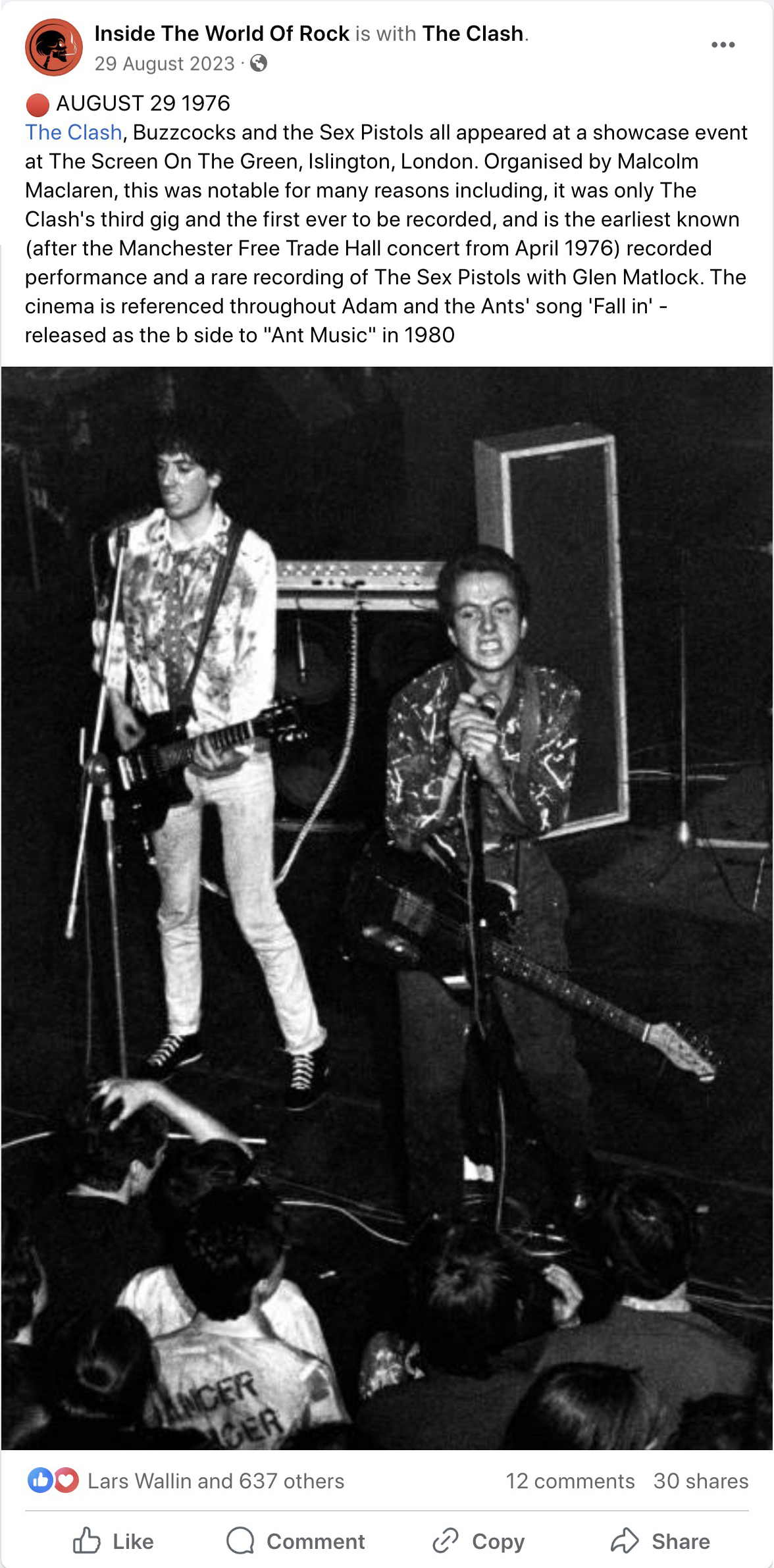
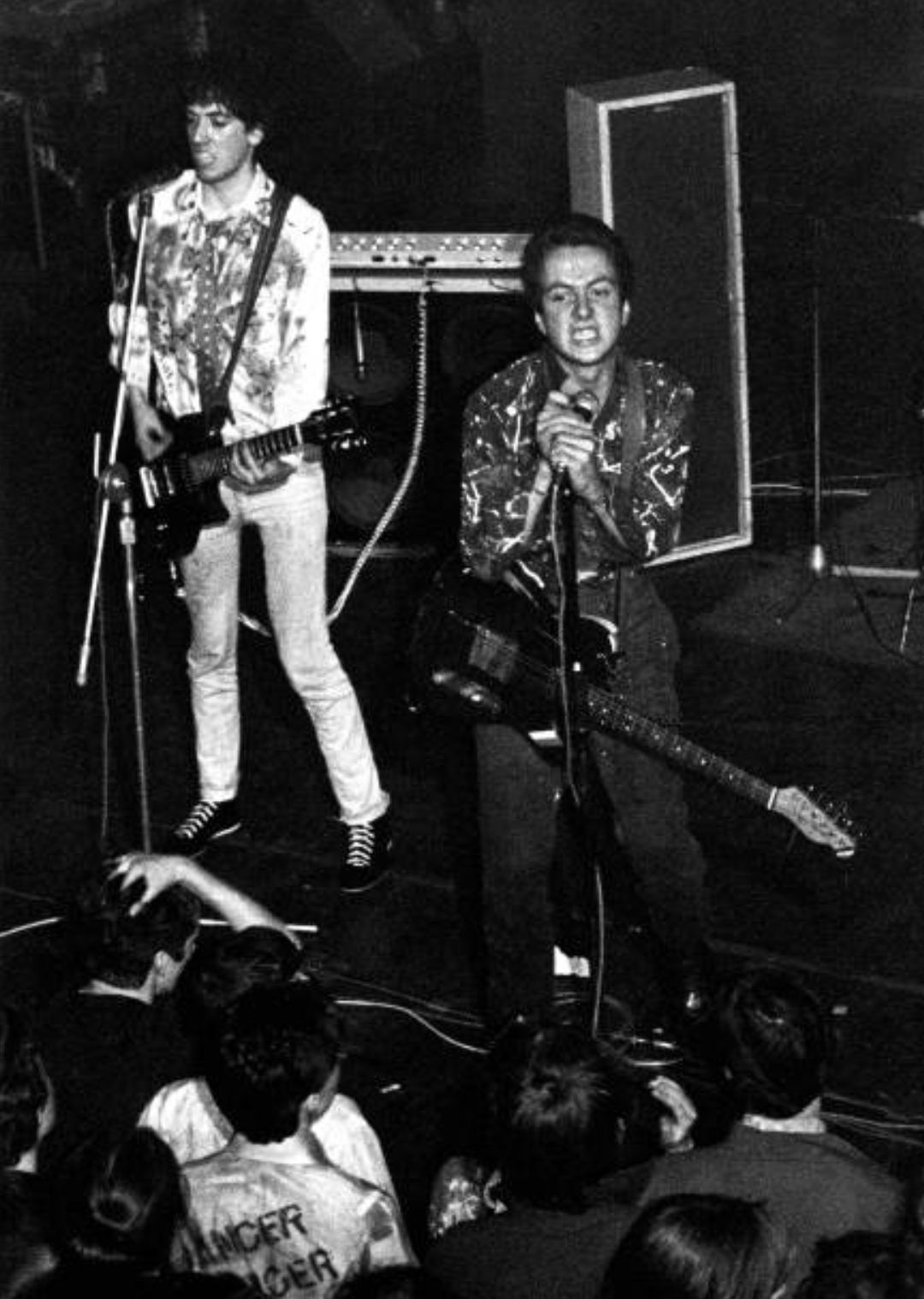
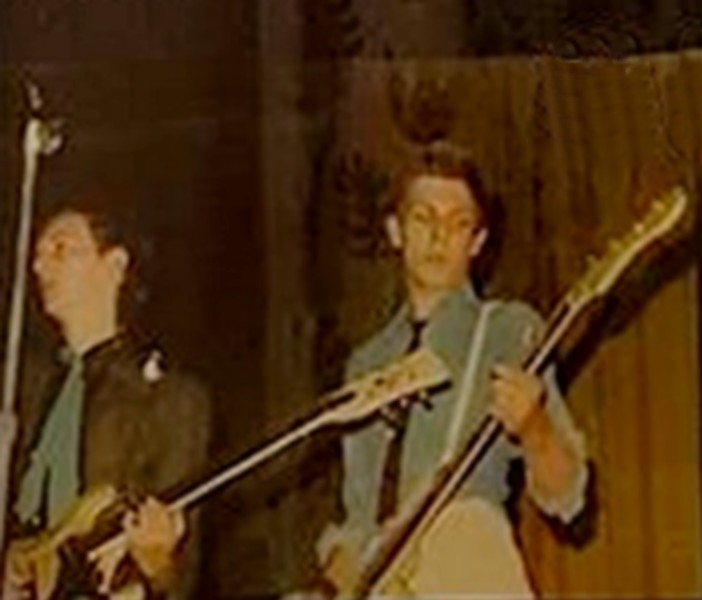
AUGUST 29 1976 The Clash, Buzzcocks and the Sex Pistols all appeared at a showcase event at The Screen On The Green, Islington, London. Organised by Malcolm Maclaren, this was notable for many reasons including, it was only The Clash's third gig and the first ever to be recorded, and is the earliest known (after the Manchester Free Trade Hall concert from April 1976) recorded performance and a rare recording of The Sex Pistols with Glen Matlock. The cinema is referenced throughout Adam and the Ants' song 'Fall in' - released as the b side to "Ant Music" in 1980
The Clash, Buzzcocks and the Sex Pistols all appeared at a showcase event at The Screen On The Green, Islington, London. Organised by Malcolm Maclaren, this was notable for many reasons including, it was only The Clash's third gig and the first ever to be recorded, and is the earliest known (after the Manchester Free Trade Hall concert from April 1976) recorded performance and a rare recording of The Sex Pistols with Glen Matlock. The cinema is referenced throughout Adam and the Ants' song 'Fall in' - released as the b side to "Ant Music" in 1980
Deny
I Know what to think of you
I Never Did It
How Can I Understand the Flies
Janie Jones
Protex Blue
Mark Me Absent
Deadly Serious (Dig a Hole)
What's My Name
Sitting At My Party
48 Hours
I'm So Bored With You
London's Buring
1977
EARLY GIGS '76,
LOTs of ARTICLES, POSTERS, CLIPPINGS ...
A collection of • Tour previews
• Tour posters
• Interviews
• Features
• Articles
• Tour information
Ignore Alien Orders: On Parole With The Clash Tony Beesley & Anthony Davie
Extensive eyewitness coverage of the early years from the Black Swan pub onwards
All the Young Punks
The People's history of The Clash
All The Young Punks is a people’s history of The Clash, told through the memories of over 300 fans across nearly 150 gigs. From their punk beginnings in 1976 to global fame, the book captures the raw energy, political fire, and unforgettable stage presence of Joe Strummer, Mick Jones, Paul Simonon, and Topper Headon. Featuring a foreword by Billy Bragg, it’s a vivid tribute to the only band that mattered.
Return of the Last Gang in Town,
Marcus Gray
Black Swan pg142 ... Rehearsal Rehearsals pg ...
Screen on the Green pg151, 164 ...
The 100 Club (Aug) pg160
Roundhouse pg160 ...
100 Club Festival pg164 ...
Tiddenfoot pg177 ...
Guildford pg178 ...
Aklan Hall pg178 ...
Uni of London pg178 ...
ICA (23 Oct) pg 176,180, 183 ...
Birmingham pg180 ...
RCA pg182 ...
Fulham pg182 ...
Ilford Lady Lacy pg185 ... Birmingham (27th) pg ...
Wycombe pg187 ... Lanchester Poly pg ...
Polydor demos pg188 ... Janet Street Porter LWT pg ...
Passion is a Fashion,
Pat Gilbert
Black Swan pg95, 96 ... Rehearsal Rehearsals pg ... Screen on the Green pg ...
The 100 Club (Aug) pg ... Roundhouse pg ...
100 Club Festival pg ... Tiddenfoot pg114 ...
Guildford pg114 ...
Uni of London pg114 ...
ICA (23 Oct) pg114 ...
Birmingham pg114 ...
RCA pg116 ...
Fulham pg116 ...
Ilford pg114,127 ... Birmingham pg ...
Polydor demos pg117 ... Janet Street Porter LWT pg 177 ...
Redemption Song,
Chris Salewicz
Black Swan pg ... Rehearsal Rehearsals pg ...
Screen on the Green pg ...
The 100 Club (Aug) pg ...
Roundhouse pg ...
100 Club Festival pg ...
Tiddenfoot pg165 ...
ICA (23 Oct) pg ...
RCA pg168 ...
Fulham pg166 ...
Ilford pg170 ...
Wycombe pg170 ... Lanchester Poly pg 173 ...
Polydor demos pg170 ...
Joe Strummer and the legend of The Clash
Kris Needs
Black Swan pg42 ...
Rehearsal Rehearsal pg43 ...
Screen on the Green pg44 ... 100 Club Festival pg ... Tiddenfoot pg49 ...
ICA (23 Oct) pg54, 56 ...
Birmingham pg56 ...
RCA pg56 ...
Ilford pg64 (photo) ... Birmingham pg ... Fulham pg56 ... Wycombe pg58 ...
Janet Street Porter LWT pg60 ...
Lanchester Poly (Rob Harper) pg61 ...
Polydor demos pg59 ...
The Clash (official)
by The Clash (Author), Mal Peachey
Black Swan pg ... Rehearsal Rehearsal pg ... Screen on the Green pg ... The 100 Club (Aug) pg ... Roundhouse pg ...
100 Club Festival pg ... ICA (23 Oct) pg ...
Uni of London pg82, 87 ... RCA pg83 ...
Janet Street Porter LWT pg60
Brixton Academy 8 March 1984
ST. PAUL, MN - MAY 15
Other 1984 photos
Sacramento Oct 22 1982
Oct 13 1982 Shea
Oct 12 1982 Shea
San Francisco, Jun 22 1982
Hamburg, Germany May 12 1981
San Francisco, Mar 02 1980
Los Angeles, April 27 1980
Notre Dame Hall Jul 06 1979
New York Sep 20 1979
Southall Jul 14 1979
San Francisco, Feb 09 1979
San FranciscoFeb 08 1979
Berkeley, Feb 02 1979
Toronto, Feb 20 1979
RAR Apr 30 1978
Roxy Oct 25 1978
Rainbow May 9 1977
Us May 28 1983
Sep 11, 2013: THE CLASH (REUNION) - Paris France 2 IMAGES
Mar 16, 1984: THE CLASH - Out of Control UK Tour - Academy Brixton London 19 IMAGES
Jul 10, 1982: THE CLASH - Casbah Club UK Tour - Brixton Fair Deal London 16 IMAGES
1982: THE CLASH - Photosession in San Francisco CA USA 2 IMAGES
Jul 25, 1981: JOE STRUMMER - At an event at the Wimpy Bar Piccadilly Circus London 33 IMAGES
Jun 16, 1980: THE CLASH - Hammersmith Palais London 13 IMAGES
Feb 17, 1980: THE CLASH - Lyceum Ballroom London 8 IMAGES
Jul 06, 1979: THE CLASH - Notre Dame Hall London 54 IMAGES
Jan 03, 1979: THE CLASH - Lyceum Ballroom London 19 IMAGES
Dec 1978: THE CLASH - Lyceum Ballroom London 34 IMAGES
Jul 24, 1978: THE CLASH - Music Machine London 48 IMAGES Aug 05, 1977: THE CLASH - Mont-de-Marsan Punk Rock Festival France 33 IMAGES
1977: THE CLASH - London 18 IMAGES
Joe Strummer And there are two Joe Strummer sites, official and unnoffical here
Clash City Collectors - excellent
Facebook Page - for Clash Collectors to share unusual & interesting items like..Vinyl. Badges, Posters, etc anything by the Clash. Search Clash City Collectors & enter search in search box. Place, venue, etc
Clash on Parole- excellent Facebook page - The only page that matters Search Clash on Parole & enter search in the search box. Place, venue, etc
Clash City Snappers Anything to do with The Clash. Photos inspired by lyrics, song titles, music, artwork, members, attitude, rhetoric,haunts,locations etc, of the greatest and coolest rock 'n' roll band ever.Tributes to Joe especially wanted. Pictures of graffitti, murals, music collections, memorabilia all welcome. No limit to postings. Don't wait to be invited, just join and upload. Search Flickr / Clash City Snappers Search Flickr / 'The Clash'
Search Flickr / 'The Clash' ticket
I saw The Clash at Bonds - excellent Facebook page - The Clash played a series of 17 concerts at Bond's Casino in New York City in May and June of 1981 in support of their album Sandinista!. Due to their wide publicity, the concerts became an important moment in the history of the Clash. Search I Saw The Clash at Bonds & enter search in red box. Place, venue, etc
Loving the Clash Facebook page - The only Clash page that is totally dedicated to the last gang in town. Search Loving The Clash & enter search in the search box. Place, venue, etc
Blackmarketclash.co.uk Facebook page - Our very own Facebook page. Search Blackmarketclash.co.uk & enter search in red box. Place, venue, etc
Search all of Twitter Search Enter as below - Twitter All of these words eg Bonds and in this exact phrase, enter 'The Clash'
 Midnight Special 2CD




.jpg)


.jpg)





%20Aggro%20chic/Aggro%20chic.html/Aggro%20chic_files%20copy/1_500h.jpg)
%20Aggro%20chic/Aggro%20chic.html/Aggro%20chic_files%20copy/2_500h.jpg)
%20Best/ZIG-ZAG%201977%2004.html/ZIG-ZAG%201977%2004_files%20copy/0_500h.jpg)
%20Best/ZIG-ZAG%201977%2004.html/ZIG-ZAG%201977%2004_files%20copy/1_500h.jpg)
%20Best/ZIG-ZAG%201977%2004.html/ZIG-ZAG%201977%2004_files%20copy/2_500h.jpg)
%20Best/ZIG-ZAG%201977%2004.html/ZIG-ZAG%201977%2004_files%20copy/3_500h.jpg)




/assets/adverts%20flyers%20posters/1976%2009%2020%20100%20Club%20poster%20big.jpg)




.gif)












 The Official Clash
  Clash City Snappers