The philosophy of aesthetics is very peculiar. peculiar. It holds on to this notion that art reflects and reflects on the times. But like Janus it really seems more simultaneous looking forward and back, at least in "popular" art, and only in retrospect does its relation to the present appear. Its externals reflect rarely on the world around it; art becomes popular as a debased, nostalgic reflection of the past or a truncated, amorphous pro- jection of the future-e.g. those cur- rent abominations, 1941 and Star Trek-The Motion Picture. This is not to say that there is no value in looking behind or ahead of ourselves, or that artistic presentations shouldn't be fun. But in the most visible, most widely shared art in our culture there is a tense search for what came before (we think) or what is to come (we hope)- and always a flight from our own reality.
This is especially true in popular music. There is little in the common ground between the primal rock'n'roll beat and the synthetic bop of the future. The few bands that cross c that ground and thus reflect the present as it is are often dismissed as trite or artificial. And there are, to be sure, the imposters, the ones who add past and future together and get no more than an uneasy mix-and-match
The present is dangerous, all the newsheadlines tell us, but it's even more dangerous to consider it un- fettered, on our own. We are recep- tive, both by habit and determined training, to accept the artificial present we're given it may be that the Futura Is Now NowNow, but it's amaz- ing how little of what's lasts very long and how it all falls very neatly into convenient annual balance-sheet cycles. Meanwhile our minds are out to lunch with the Animal House/Happy Days/ Barry Manilow syndrome. Anything to keep our minds off of what is really going on. ally going on.
New wave has been highly concerned with the present, and thus its definition. as an attitude rather than a distinct musical style. Most successful new wave artists have been interested, usually overtly, in mediating a view of actual, everyday life. Thus the Talking Heads, Ramones, Pere Ubu, Sex Pis- tols, Television, Elvis Costello, Urban Verbs, Patti Smith, Graham Parker. And thus the pretenders: DEVO, Cheap Trick, The Cars, post-Pistols Lydon and nearly all of power pop. One thing that has emerged with the punk and new wave vectors is this funny idea that people don't only want to be sedated by music. Three bands that subscribe to this dictum have released recent albums.
THE CLASH HAVE A heartening new double album Epic (36328), London Calling. I heard rumors in London last summer that the band had hit a stylistic impasse and faced bank- ruptcy. This new recording shows that, in effect, the band's course has been like that of a river: from steep, narrow and noisy origins, through rocky eddies. at the falls, and finally a broad and powerful waterway coursing to its destiny.
There have been insistent attempts to make El Clash combo to be some- thing like new Rolling Stones, but for my money they're really closer to The Who (aside from the guitar-smashing on the cover)... idiosyncratic, uneven, full of fire and ire.. ire. The parallels are striking: lower middle class origins, quasi-spiritual leaders for many of their peers, a highly respectful attitude toward the audience, a complementary nose-thumbing at the music machine. Like father, like son. Pete Townshend scoffed like a disenchanted father at The Clash's viability in December's Unicorn. In turn, the band replies, like disrespectful sons: "Every gimmick hungry yob digging gold from rock'n' roll/Grabs the mike to tell us she'll die before he's sold."
THE CLASH LOOK SHARP
And the Police are Arresting
who claim no allegiance to either the left or the right, did not blindly dismiss that criticism but instead observed the so-called 'ride' itself more carefully than ever they could not help but notice that despite the short-lived Tory tax cuts (specifically designed to help the already rich-not the poor) The Bee Gees did not return to these shores.
The Clash, in contrast, depict them- selves in "The Four Horsemen" as resisting the not-so-subtle enticements of the fame machine. War, Pestilence, Famine and Death have precious little exposure in popmuzik (save for David "Life in Wartime" Byrne), and while the band does not always address such questions, their overtly populist approach has sparked some backbiting. In their self-written press packet, for example, Mick Jones recalls how they "recorded an extended-play record entitled "The Cost of Living' ep which was released on election day. We all know what happened on that day [Thatcher and the Conservatives came to power] and it was no surprise when one critic exclaimed that the record sounded like left-wing paranoia and that 'The Clash should relax and enjoy the ride like the rest of us. The Clash,
LONDON CALLING bristles with meaty commentary on many aspects of the current "ride," some of it equally applicable to the US (for which English bands seem to gain an immediate sensibility once they've toured here- the band now appears in England in cowboy-derived duds). For example, in the sly "Koka Kola," they interpolate they interpolate the melody of the Coke jingle: "Koke adds life where there isn't any," and juxtapose the "Pause that refreshes in the corridors of power/When top men need a top up long before the happy hour" with the only perceived escape from the executive suite-jumping out the window. High analytical, these Clashboyos, not yer ordinry rudies
The concentrated anger that sur- faced in their early work-"White Riot" and "What's My Name" and "I'm So Bored With the U.S.A. has meta- morphosed on this record. It can be simplistic the macho Maoist RCP claptrap of "Guns of Brixton, or their favorable comment on the connection between the Spanish Civil War and recent Basque summer terrorism on Spain's leisure coast. But in "Clamp- down" we are beginning to see the development of greater insight:
You grow up and you calm down
You're working for the clampdown
You start wearing the blue and brown
You're working for the clampdown
So you got someone to boss around
It makes you feel big now
You drift until you brutalize
You made your first kill now
Perhaps The Clash are hopeless power-from-a-gun romantics some of the lyrics here and elsewhere would point that way. But we must temporize that they are always careful to set such thoughts in the context of self- defense, be it of body or psyche. At least they understand the outcome of violence begetting itself:
London calling, see we ain't got no swing 'Cept for the ring of that truncheon thing The ice age is coming, the sun is zooming in Engines stop running and the wheat is growing thin A nuclear error-but I have no fear London is drowning and I live by the river.
IT MUST BE NOTED that not all the songs here are political. There is a comment on sexual politics, if you will, in "Lovers Rock" that is not one of the better moments on the four sides. But the little present on side four, unmentioned anywhere on jacket, sleeve or label, is a fifth song called "Stand By Me (Or Not At All)"-shock horror a love song with harmonies'n'
PAGE 44
It is hard to get away from the lyrics in London Calling. They are agile, expressive, and surprisingly well- pronounced by Joe Strummer. He's pro not totally there yet, but now that The Clash realize they have a huge audi- ence I think Strummer decided to leave his mouthful of marbles on the beach. and go talk to the crowd. Not only that, but the liner has the actual printed words (most of them, anyway). The Clash have certainly found their voice, and they exercise it fully maybe even falling into a few Dylanisms (def: n. a verse containing a good thought and surrounded by cliche filler). But how could it work without the magnificent music?
In addition to Micky Gallagher on organ (he of lan Dury's Blocks), we have the Irish Horns and all sorts of fancy garage production to go along with the garbage pail of Clashy influ- ences: from rockabilly revel (Vince Taylor's "Brand New Cadillac) to reggae romp ("Rudie Can't Fail"). The best traditional sound is "The Card Cheat, outSpectoring the master himself since his best early Sixties days, including the mandatory percus- sion and thin horns.
BUT AT THEIR real best, they are only The Clash themselves-Mick Jones' squawling, piercing, haunting guitar; the charging, inventive bass of Paul Simonon; the precise and power- ful Topper Headon on drums. The sound is almost indescribably delicious harging,
-a swirling, raspy, bristling, magnificent mess. It shows best on "The Right Profile" (an odd reminiscence of Monty Clift) and "London Calling."
This is an aggravating, enlightening, joyous double album. It compresses as much of our hectic, cross-purposed, fulfilling, perilous world as I've heard in any record for half a decade. It may be too early to assess The Clash. It certainly is a fool's diversion to com pare them to The Who or the Rolling Stones or The Beatles.
"I can positively say we are not living for the future," says Mick Jones in closing the bio, "we're living day to day. No, in the present-we shall have to see what happens. All they ask is recognition for who they are. In a day of dominant Doobies doo-doo, that's a lot to ask. Is it too much to hope they'll get it?
THERE HAS BEEN a lot of specula- tion about The Police. Are thev simply a projection of Miles Copeland's mad scientist ego? Copeland is a most pleasant and engaging person, but he is a go-getter with a nasty reputation (being editor of the London weekly
Time Out, writer, promoter of concerts, founder of the alert indie/A&M affil- inte IRS: and and as well being manager of The Police, whose drummer is his brother Stewart). The Police have the flash and the class to remain at the top of the charts for as long as they care- as they have done for some time now in Blighty with "Message In a Bottle" and "Walking on the Moon" from their newest lp, Reggatta de Blanc (A&M, SP-4792). But the credit is mostly the band's, for they really can play.
The band mines two parallel lodes- root beer reggae and straight three- chord rock. The The reggae on the whole is the more successful blend-a concise, minimalist distillation of an already stripped-down form. On "The Bed's Too Big Without You, the standout, Sting starts out with simple bass phrase supported by Copeland's B-B beats. Andy Summers steps in with tattered threads of swirling guitar as Sting takes up with an echoey vocal, twisting a little from the usual boy- loses-girl motif. It's sprightly, reflec- tive, and the warmest song in a rather frosty album (mirrored stunningly, by the way, in the silvertone cover art)
On the rock side, a particular favor- ite is "On Any Other Day, a self- mocking first-person narrative of middle class anomie ("My wife has burned the scrambled eggs/The dog just bit my leg, etc.). The Police don't measure up to The Clash for reveling in the grandiose present, but they have certain newavey sensibility that informs their efforts. They are, ar in effect, downright depressing. On the whole, then, Reggatta is not a bad album at all, though not really endear ing either. But it's a damn dan sight better than the mush that passes for power pop. To put it simply, The Police have defined a new role for the power trio.
JOE JACKSON IS EVEN MORE straightforward. His first album spawned a no-see-um hit, it, "Is She Really Going Out With Him, that kinda burrowed into the charts and wouldn't go away. It swelled into an itch on the placid radio skin and soon produced a highly praised tour. More of the same can be heard on I'm the
Man (A&M, SP-4794), which boasts surely the ugliest cover (front and back) since the invention. invention of the lp. Joe him- self designed it. He should stick to music. You should stick to music, too.
So throw away the cover and keep the vinyl. Joe and the band have put together a serviceable collection of comments-witty ones at that-on his current world view. The title cut shows Joe in the pose of the pose the spiv, Gregory Peccary himself. You remember Gregory the little pig with the white collar from Zappa's Studio Tan, who worked for Swifty Trendmongers. "Kung Fu, that was one of my good ones," he says. "Well what's a few broken bones/When know it's all good clean fun."
In "The Band Wore Blue Shirts," Jackson recounts his days playing the "dreaded lounge circuit that's always written up in his interviews. "Friday" views the working week and the goal of it all for most of us: "Friday rules OK/Out to the local mecca "It's Different For Girls" is an elegant reversal of the usual four-F male atti- tude towards women.
Jackson isn't slick because he doesn't have to be. Production is one Fro the-er-raw side with a heavy dosage of Graham Maby's bass throughout, constrasting so well with The Police's light touch. Jackson himself adds a unique touch with his melodica ("the instrument of the Eighties," he calls it in jest), particularly on "Geraldine and John, a Costello-ish tale of a love affair between between two married people (who are not wed to each other, of course). And on the Graham Parker- ish "Kinda Kute," he supplies some interesting piano licks.
I'm the Man is not a record to over- whelm-it simply consolidates the ground staked out on the first album in a straightforward way and progresses from there. It's a highly personal approach, and Jackson is able to make his observations acute without being cute or acerbic.
I ONLY GOT ONE QUESTION. If all this wonderful music is coming from England, why-outside of the Talking Heads-is it being shut out in our own American mainstream?
A little over a year ago, the Clash made their first scratch on the charts when Give 'Em Enough Rope entered at #89. Two weeks later they were obscure again, at least to the monied listeners of America.
The Clash seemed at a familiar crossroads: the corner of vanguard and enigma. The people laughed but the press went mad. The fans were insecure, waiting for a communique. Hereit is.
My copy of London's Calling came Januar пагувбурін ary61 6by plane from England (just to demonstrate my own anticipation). I put on side two "Spanish Bombs," and prepared for therecord snowfall to hit the streets outside.
What I heard I wasn't prepared for. London's Calling is a rich two-disk undertaking, almost academic in its dedication and research. Producer Guy Stevens provides a clean semblance of continuity while the "four horsemen" go side for side over the entire quarter-century of rock'n roll history.
THE AMAZING EMERGENCE
of this studied rock experience is the third large step for Clashkind. The first record was screaming over the punk masses. Enough Rope made obsolete anything passing for "clean, hard rock," and was so digestible I was afraid it would pass away too quickly. It did, as far as chart-ranking goes.
I wouldn't have been surprised 'hat after all this "decade" hoopla, he Clash had timed themselves right off the charts with this effort.
Surprisingly, new radio formats and plenty of good press s have placed London's Calling at #42. And it is an even more vitriolic capsule of sound, harder to swallow than their first two records. That's good for the band, who desperately want to break out of the clite critic'sghetto.
London's Calling is a lot of record to chew on. Even the band itself can't get away from comparisons to Dylan's Blonde on Blonde, the Beatles' White Album, and the Stone's Exile on Main Street. On the picture-sleeve single of "London's Calling" the ruling teenaged listener sits, flanked by the early album covers of Elvis, the Beatles, Stones, Dylan and the Sex Pistols. It seems the Clash have really upped the ante, but still maintain their stance in the
title tune: London calling, now don't look to
45
All that phony Beatlemania has bit- ten the dust
The four horsemen scatter on London's Calling, but promise to meet up again before they ride into town. Everything from the roots of Stagger Lee, throught reggae, to the outrage of Three-Mile Island is expressed.
THE LATEST, FRESHEST feeling is pounded out indelicately in "Working for the Clampdown" and "Guns of Brixton." The message is clear:
The men at the factory are old and cunning.
You don't owe nothing so boy get running. It's the best years of your life they want to steal. You grow up and you calm down You're working for the clampdown.
If "Clampdown" concerns the ultimate rock 'n' roll decision between freedom and unknown consequences, then "Guns of Brixton" deals with those consequences in no uncertain terms:
When they kick in your front door How you gonna come? With your hands on your head Or on the trigger of your gun.
LONDON'S CALLING canbe compared to a spaghetti western in its rage, spoof and heroes dying at the end of a gun. Even low budgets and high expectations fit in
But it's gutsy as hell just watching these English wimps riding hard on what passes for popular music in these United States. Like a good settler I'll wait, but not too long, before I take up arms with the Clash. Meanwhile, I'll furnish aid and comfort. Besides, it's one of the cheapest records in the store.
During the late spring and summer of 1979, when there was ample evidence of impending apocalypse—racial tension, rising unemployment, rampant drug addiction—Strummer’s catalog of disasters in the title track of London Calling captured the era’s urgency.
But defiant energy was also present. The Clash covered songs with vision, such as "Brand New Cadillac" by British rockabilly legend Vince Taylor, and "Wrong ‘Em Boyo," a "Stagger Lee" takeoff by Jamaican ska group The Rulers.
The Clash found the perfect producer in Guy Stevens—a kindred spirit with notable credentials (he ran the UK branch of Sue Records in the sixties) and an intuitive, if erratic, genius for capturing rock & roll’s essence. Stevens had worked with bands like Free and Mott the Hoople and had produced The Clash’s first demos in 1976. Though he’d fallen from grace in the industry, the band felt he was just the madman for the job. "We sensed it was a good way to keep it on the beam, keep our feet on the ground," Strummer says. "I think something dies in the music when everything is too structured."
There was nothing restrained about Stevens’ methods. He poured beer into a piano when the band wanted to use it over his objections and hurled chairs around if he thought a track needed more energy. According to Strummer, Stevens nearly set himself on fire during one take. Guitarist Mick Jones says Stevens, who has since died, was outrageous but motivating: "He encouraged us to make it raw, increase the intensity. Stevens had good musical instincts, too."
THE TOP 100
LONDON CALLING – The Clash (Epic)
This album could not have come at a better time. Released in the U.S. in January 1980, as the decade began, London Calling broadcast rock’s last angry stand, warning that Armageddon was near. Western society’s anxieties were reflected at its core, and rock & roll desperately needed a jolt. Skidding between rockabilly, third-world music, and full-tilt punk, The Clash stormed the gates of rock convention and single-handedly set the agenda—musically, politically, and emotionally—for the decade ahead.
Having already challenged the establishment with The Clash (1977) and Give ‘Em Enough Rope (1978), the band—Strummer, Jones, bassist Paul Simonon, and drummer Nicky "Topper" Headon—broadened their worldview. The album’s London-centric sound triggered a resurgence of pop’s social consciousness in the eighties.
Rehearsing and recording most of the LP in London, the band had recently split with manager Bernie Rhodes, was heavily in debt, and declared open warfare on complacency. "We felt like we were struggling, about to slide down a slope, grasping with our fingernails. There was nobody to help us," Strummer recalled.
Themes of isolation and desperation run through London Calling. The ballad-like glow of "The Card Cheat" contrasts its lyrical pathos, while "Hateful" explores addiction. Jones remembers writing many songs at his grandmother’s flat before moving out: "I couldn’t get settled. I was supposed to be this rock star, living large, but there I was with my nan."
The album’s fighting spirit emerges in tracks like "Clampdown" and "The Guns of Brixton," the latter written and sung by Simonon. "Spanish Bombs," initially inspired by a news report on a terrorist bombing, evokes the rebellious spirit of the Spanish Civil War.
London Calling became a double album simply because Strummer and Jones were writing at a frantic pace. They spent nearly three months arranging and demoing material at their rehearsal space—a grimy garage in London’s Pimlico district—before entering the studio. They added a few choice covers, reflecting their expanding musical tastes.
The recording sessions were unpredictable. "Brand New Cadillac" was intended as a warm-up, but Headon insisted they keep it despite its accelerating tempo. "He said, ‘All rock & roll speeds up,’" Jones recalls.
The band fully embraced the chaotic process. "Train in Vain," the album’s surprise hit, was recorded so late that it wasn’t listed on the album cover. "It had this train-like rhythm and captured that feeling of being let down," Jones said.
Reflecting on those times, Strummer remembers the Pimlico space: "One light bulb, filthy carpets on the walls for soundproofing—it wasn’t glamorous. Recording there, being broke, that was the furthest thing from rock-star fantasy."
Missing the next page - wanted ****
Rolling Stone magazine - 3 April 1980
A Last Stand and a New Beginning
A review appeared in the 3 April 1980 (below) by Tom Carson issue followed by an article by Robert Henke in the 17th April issue (wanted ****)
BY NOW, OUR expectations of the Clash might seem to have become inflated beyond any possibility of fulfillment. It's not simply that they're the greatest rock & roll band in the world — indeed, after years of watching too many superstars compromise, blow chances and sell out, being the greatest is just about synonymous with being the music's last hope. While the group itself resists such labels, they do tell you exactly how high the stakes are, and how urgent the need. The Clash got their start on the crest of what looked like a revolution, only to see the punk movement either smash up on its own violent momentum or be absorbed into the same corporate-rock machinery it had meant to destroy. Now, almost against their will, they're the only ones left.
A Last Stand and a New Beginning
Give ‘Em Enough Rope, the band's last recording, railed against the notion that being rock & roll heroes meant martyrdom. Yet the album also presented itself so flamboyantly as a last stand that it created a near-insoluble problem: after you've already brought the apocalypse crashing down on your head, how can you possibly go on? On London Calling, there's a composition called "Death or Glory" that seems to disavow the struggle completely. Over a harsh and stormy guitar riff, lead singer Joe Strummer offers a grim litany of failure. Then his cohort, Mick Jones, steps forward to drive what appears to be the final nail into the coffin. "Death or glory," he bitterly announces, "become just another story."
But "Death or Glory" — in many ways, the pivotal song on London Calling — reverses itself midway. After Jones' last, anguished cry drops off into silence, the music seems to scatter from the echo of his words. Strummer reenters, quiet and undramatic, talking almost to himself at first and not much caring if anyone else is listening: "We're gonna march a long way," he whispers. "Gonna fight — a long time."
The guitars, distant as bugles on some faraway plain, begin to rally. The drums collect into a beat, and Strummer slowly picks up strength and authority as he sings:
We've gotta travel — over mountains
We've gotta travel — over seas
We're gonna fight — you, brother
We're gonna fight — till you lose
We're gonna raise — TROUBLE!
The band races back to the firing line, and when the singers go surging into the final chorus of "Death or Glory…just another story," you know what they're really saying: like hell it is!
A Celebration of Rock & Roll Rebellion
Merry and tough, passionate and large-spirited, London Calling celebrates the romance of rock & roll rebellion in grand, epic terms. It doesn't merely reaffirm the Clash's own commitment to rock-as-revolution. Instead, the record ranges across the whole of rock & roll's past for its sound and digs deeply into rock legend, history, politics, and myth for its images and themes. Everything has been brought together into a single, vast, stirring story — one that, as the Clash tell it, seems not only theirs but ours. For all its first-take scrappiness and guerrilla production, this two-LP set — which, at the group's insistence, sells for not much more than the price of one — is music that means to endure. It's so rich and far-reaching that it leaves you not just exhilarated but exalted and triumphantly alive.
From the start, however, you know how tough a fight it's going to be. "London Calling" opens the album on an ominous note. When Strummer comes in on the downbeat, he sounds weary, used up, desperate: "The Ice Age is coming / The sun is zooming in / Meltdown expected / The wheat is growing thin."
The rest of the record never turns its back on that vision of dread. Rather, it pulls you through the horror and out the other side. The Clash's brand of heroism may be supremely romantic, even naive, but their utter refusal to sentimentalize their own myth — and their determination to live up to an actual code of honor in the real world — makes such romanticism seem not only brave but absolutely necessary. London Calling sounds like a series of insistent messages sent to the scattered armies of the night, proffering warnings, comfort, good cheer, and exhortations to keep moving.
If we begin amid the desolation of "London Calling," we end, four sides later, with Mick Jones spitting out heroic defiance in "I'm Not Down" and finding a majestic metaphor at the pit of his depression that lifts him — and us — right off the ground: "Like skyscrapers rising up," Jones screams. "Floor by floor — I'm not giving up."
Then Joe Strummer invites the audience, with a wink and a grin, to "smash up your seats and rock to this brand new beat" in the merry-go-round invocation of "Revolution Rock."
A Rich Tapestry of Stories and Styles
Against all the brutality, injustice, and betrayals delineated in song after song here — the assembly-line Fascists in "Clampdown," the advertising executives of "Koka Kola," the drug dealer who turns out to be the singer's one friend in the jittery "Hateful" — the Clash offer their sense of historic purpose and the faith, innocence, humor, and camaraderie embodied in the band itself.
This shines through everywhere, balancing out the terrors that the LP faces repeatedly. It’s as simple as letting Paul Simonon sing his own "The Guns of Brixton," or as subtle as Strummer supporting Jones' fragile lead vocal on "Lost in the Supermarket." There are moments of intimacy and humor, like Strummer deflating the sexual-equality polemics of "Lover's Rock" with a squawk: "I'm so nervous!"
The martial pride becomes exultant in "Four Horsemen," with thundering guitars and drums galloping into the cry: "Four horsemen … and it's gonna be us!"
Stylistic expansions abound — brass, organ, occasional piano, blues grind, pop airiness, and the reggae-dub influence permeate nearly every number. The riotous rockabilly of "Brand New Cadillac" barrels into the strung-out shuffle of "Jimmy Jazz," creating a seamless narrative. The celebratory "Rudie Can't Fail" contrasts with the somber orchestral sweep of "The Card Cheat," whose final panoramic lyric turns personal tragedy into something universal.
Other tracks tackle history head-on. "Wrong ‘Em Boyo" updates the Stagger Lee tale with reggae flair, while "The Right Profile" turns Montgomery Clift's downfall into grotesque comedy that surprisingly ends on a note of empathy.
The album’s pinnacle, "Spanish Bombs," blends flamenco guitars, fragments of Spanish, and evocative lyrics referencing the Spanish Civil War: "With trenches full of poets, the ragged army, fixin' bayonets to fight the other line."
Here, the Clash stress that history’s lessons must be earned to be applied.
London Calling concludes with "Revolution Rock," a carnival of defiance and joy. Strummer calls back, "This must be the way out," laughing in disbelief at his own good fortune. Then, without fanfare, comes the hidden "Train in Vain," Mick Jones' wistful ballad of loss and perseverance. Ending the album on this tender note reminds us that love and revolution — personal or political — are all part of the same long, bloody march.
Sun Mar 2 1980 --- North East Bay Independent and Gazette
If the Clash was just another punk band, it might be possible to review "London Calling" with some measure of objectivity. As it stands, rhetoric has escalated the discussion beyond all reason the claim this record, from its album graphics to the "hidden song" on Side Four, makes for itself is that the Clash is the latest pantheon rock band, that it's fully earned its place in the rock tradition alongside Elvis, the Beatles, the Stones, Dylan and the Who. The critical corollary is supposed to be that the Clash is the "world's greatest rock band."
Not yet. The Clash simply hasn't developed a musical persona which is the equal of its supposed competition the guitars clang with the proper force, but the rhythm playing has grown progressive- ly less forceful with each successive LP (this is their third) and vocalist Joe Strummer's affectless yowl is merely unconvincing only when it isn't positively alienating. At its best, the Clash might very well be the smartest rock band in the world (particularly in a political sense), and such songs as "London Calling," "Spanish Bombs," "Lost in the Supermarket," "Wrong 'Em Boyo" and "Koka Kola" could sub- stantiate that claim. But the expansionist production of Guy Stevens works only up to a point - a point that's reached, for me, with the group's horrid wall- of-sound botch, "The Card Cheat." A good band, absolutely; a great one, maybe; the best - no way.
Trouser Press: TP 47, February 1980
RECORDS: Clash Calling
THE CLASH - London Calling
Epic E2-36328
By Ira Robbins
In the annals of rock recording, there have been only a few double LPs of real merit: Tommy and Quadrophenia, the White Album, Blonde on Blonde, Exile on Main Street, Something/Anything, Goodbye Yellow Brick Road. In general, the format has been plagued by barbarously awful live expeditions and other contract-breakers. That a new wave band should attempt—and succeed with—a project of this magnitude only reaffirms the Clash’s credibility as a top-flight rock organization. London Calling has the variety, strength, and depth to stand among the aforementioned library of four-sided albums.
The Clash has chosen the least likely path at each and every turn in their chaotic career. Constantly wary of becoming predictable, they’ve shifted musical direction drastically on several occasions, experimenting with styles tha ...... an even broader view, the Clash offer Dylanesque folk-rock, commercial rock ’n’ roll, and semi-melodic pop.
Contentions of hypocrisy and all preconceptions fostered by Cost of Living, The Clash LP, and Give ’Em Enough Rope must be discarded simultaneously en masse and urgently. London Calling is an ambitious, articulate attack, seething with production and life in its densely long songs. London Calling is a title song only; the Clash chant and evenly beat, but it doesn’t stop them from being loose and sloppy when they care to be. For their part, the group plays their asses off, not hiding behind studio touch-up work. The album was recorded quickly and lacks the fussy precision of Give ’Em Enough Rope, but has a spontaneity and natural feel missing from that LP.
The Clash has grown and diversified—both musically and lyrically—way beyond the narrow confines of their urban guerilla days. Without losing their initial veneer of political ethics and commitment, they’ve learned not to take themselves totally seriously. Most of London Calling deals with serious social concern—nuclear holocaust, the dangers of cocaine, police persecutions—but there are lighter moments: a cover of Vince Taylor’s Brand New Cadillac, homage to Montgomery Clift (Right Profile), a Monty Python dance cut not listed on the sleeve and a few good-time numbers that are hard to figure.
One of the LP’s funniest and most pleasant surprises was an unidentified guest pianist on Julie’s in the Drug Squad. This album is musically and lyrically diverse, containing strong numbers and compositions of occasional variety. Mick Jones sings several tunes; Paul Simonon sings one where (Guns of Brixton) he proves himself adequate. Strummer (with Jones) delivers I Know What I Want (which suggests something about knowing when to make decisions). The record succeeds quite a bit—the Clash project their best qualities and maintain their integrity.
There are traces of prior disasters among these 19 tracks, but not enough to fear extravagance. London Calling is the best mix of political awareness and musicality yet. The closing Spanish Bombs is an overt political appraisal of Spain’s civil history and terrorism, Right Profile ambles gaily through Clift’s movie titles and a description of his scarring car crash.
Lost in the Supermarket, the companion piece to Rope’s Safe European Home, is couched in another chapter in Mick Jones’s autobiography—this one a soul-searching search for self.
John Lennon’s Mother, with its lush background and sparse arrangement, can be compared with some of the Who’s later work in projecting regret. To place the Clash with the Who’s circle is not for exaggeration and energy but rather sincere and focused anger and personal anguish.
This band just keeps getting better and better. The rest of the side consists of a hot number called Clampdown and the already legendary Guns of Brixton. The latter ranks among the group’s best songs, and the LP closes with a few happy throwaways and one, Train in Vain, that works on a definite winner level.
Koka Kola and Lover’s Rock offer contrasting vocals, highly effective hooks, and a fun rock sway, and Train in Vain, with its catchy lilting jingle, is both effective and straightforward. Card Cheat and Death or Glory maintain the necessary Clash sense of urgency and angst as the best pure rockers.
The album is pure energy and commitment—nothing else. London Calling may be the best double album of its type. It’s a big, ambitious, and joyous record that gives you more than you bargained for—but they’ve given nothing up to take a step forward. Clash time is now!
L*T*R*CY
How come you c***s can't do a reasonable article on the Jam? I don't count the f*ckin' useless re-view of "When You're Young" (TP f*ckin' 44). Instead of writing about the Jam, Clash and Under-tones, you f*ck ups write on sh*t like Magazine. F*ck off!
P.S. To hell with Roy Loney; who the f*ck is he?
Angery [sic] LTA, USA
CREEM MAGAZINE -- April 1980
Records, Is there life after wartime?
CREEM MAGAZINE REVIEW
Records, Is their life after wartime?
As much as I like and admire The Clash, London Calling leaves me caught in a dilemma that I'm not at all pleased to be in. The problems that I have with the two-record set actually lie somewhat outside of the LPs themselves and, because of that, it's probably better to first discuss the work itself and then get on to what seem to be the more important questions raised by it in regard to The Clash's self-pledged role in the world.
THE MUSIC AND PRODUCTION
If it seemed to some that all the musical growth so evident in those absolutely amazing singles which followed The Clash's debut album (in particular, the Clash City Rockers and Hammersmith Palais singles, and both sides of each as well) was stunted by the somewhat overbearing metalloid tendencies of producer Sandy Pearlman on Give 'Em Enough Rope, then London Calling is a fine re-affirmation of the unbridled adventurousness and progress that The Clash are capable of.
The band, with the considerable aid of long-lost Mott the Hoople producer Guy Stevens, touch the kind of bases that one used to expect but now hardly ever sees from one, let alone two albums (if Tusk is F. Mac's White album, I'm J. Lennon's monkey's uncle). The approaches here range from all-out sonic attacks (London Calling, which I'll have more to say about later, is so powerful that one is utterly drained physically by the end as the Morse Code S.O.S. fades with Joe Strummer's wails) to souped-up rockabilly (Brand New Cadillac) to free-wheelin' R&B (Lover's Rock, Wrong 'Em Boyo, the latter featuring some swift "Stagger Lee" into "Sea Cruise" horn swings) to suds 'n' sods pub croons (Jimmy Jazz) to Spectorial/Springsteen melodrama (The Card Cheat).
In short, everything that is around now musically meanders in for the ride somewhere along the line, and just about all of it does sound of a piece. Stevens has deftly brought out the best of this band, in particular the unfailing intimacy of Joe Strummer's vocals and the constant supportive interplay between Strummer's voice and Mick Jones' chip-ins—both in his own singing and more importantly, in his gut-wrenching guitar playing. The sheer strength of The Clash's energy is used deftly here, bursting forth at times and riding under the current at others. Stevens has managed to give The Clash the same kind of wonderful edge that he gave Ian Hunter and Mott, and it sure makes sense when you hear the almost Dylanesque way Strummer shouts "You can go it alone" on London Calling and "That's just Montgomery Clift, honey!" on The Right Profile, a song that could very well have been found somewhere on the Basement Tapes. In these days of Chapman explicitness, it's a treat to hear such un-overly-conscious production values.
LYRICS AND THEMATIC WEIGHT
But like I said, I don't find London Calling an easy album to handle, and when I stated previously that my problems lay somewhat outside the work itself, you'll notice that I haven't mentioned many of the lyrics. That's because the unavoidable fact of London Calling is that that very first track almost makes the rest of the two records immaterial. So explosive is it in its depiction of apocalypse now, so strong is its message, so challenging is its putting forth of all the questions and abhorrences that are flying through all of our lives at the present time, that the rest of the album's lyrics just seem to be a weak addendum to a case already stated as well as it can be.
Which is something that I can't help thinking about. For, having been attacked rather idiotically for the one instance so far where they've managed to forget about the world's troubles and their fist-in-the-air righteousness—namely the light and buoyant 1-2 Crush on You—they seem almost too self-consciously on the offensive here. And with this much room to spread out, I was praying that there'd be a little more light shed on what, if anything, The Clash can see on the other side. And if that light just isn't there for them, then it is indeed some kind of vast wasteland they find themselves in.
FINAL THOUGHTS
I guess perhaps that's why those startling singles throughout '78 meant so much—they just seemed to spring up and grab you, shake you, and hold you for three minutes, then release you to mull it over. Here, though, the absence of relief is wearisome. Since there is no turf here that hasn't been mentioned in some shape or form beforehand on earlier Clash efforts (war, oppression, racism, sexism), I'm just kind of ambivalently perplexed. Because by now, we all should be hopefully well aware of all the dangers that the various political and social systems that be are placing us in and under. But it's hard for me to believe that's all that runs through Jones' and Strummer's heads, hearts, and veins 24 hours a day.
Which is not to say that all I want is a world full of numbed Mr. Joyboys. But that rough mix between politics and music—one which heretofore The Clash had managed to incorporate into everything they did better than anyone else has ever done—because they are such a phenomenal group—is getting a little messy. Even the MC5, at their most blatant, still tossed in Looking at You on Back in the U.S.A. without it interfering with the overall message. The four sides of London Calling have me feeling like I've been leveled by the weight of the world. Which very well may be The Clash's intent. But I'm not sure if that sticker that's mentioned elsewhere in this section is really what I want as a sum total of my feeling about The Clash.
The Lexington Herald - Sun 6 April 1980 - Lisa Robinson
The Clash Still Drawing Big U.S. Audiences
Lisa Robinson
The Clash Still Drawing Big U.S. Audiences
It's been four years since the Clash formed in England. During the infamous "Anarchy in the U.K." tour with the Sex Pistols, reports quickly reached the U.S. that this was a band worth noticing. Fast forward to the present, and the Clash's popularity in America is undeniable. Their recent shows sold out within hours, and their double LP London Calling is both a commercial success and a significant musical achievement. Yet, despite this rise, the band insists that fame hasn't changed them.
"I don't feel any different," guitarist Mick Jones said after the band's remarkable performance in New York. "We're not stars." His modesty seemed genuine, even with fans crowding the stage door for a glimpse. In contrast to the aloofness often seen with successful bands, the Clash invited their fans into the Green Room for photos, autographs, and conversation—a refreshing departure from the typical backstage exclusivity.
When asked whether the Clash still considers itself a punk band, Jones responded thoughtfully: "Yes and no. It depends on how I feel," he chuckled. "We've grown and changed—it was inevitable. We've gained a broader appreciation for things, learned to be more subtle instead of just shouting, and we've written better songs. We've discovered different ways to express ourselves. But," he emphasized, "it's all been a natural process. We've followed our instincts."
On their recent U.S. tour, the band made conscious efforts to connect with audiences. They sought out venues with removable seating to encourage dancing, kept ticket prices affordable, and chose opening acts like Lee Dorsey to highlight the musical roots that influenced them. "We try to play fair," Jones said. "We do feel responsible."
Reflecting on the overwhelming praise for London Calling, Jones expressed gratitude: "I'm pleased people like it. Of course, there are some who think it's dreadful," he laughed. Upon hearing that their music has been played at venues like Studio 54—where the band recently watched James Brown perform—Jones grinned. "Really? That's pretty strange," he remarked.
Strange or not, the Clash has undeniably arrived in America, achieving both critical acclaim and popular success. And, as many would agree, it's well-deserved.
Page 6 --- Messenger-Press Thursday, April 17, 1980
Messenger, In The Groove
By Steve Wosahla
1980'S ROCK
"1980's Rock" became a catchy new phrase more than a year before the decade began. It became a problem in that what was late Seventies music could have easily been an unpleasant Eighties hangover—just like heavy metal and the Woodstock generation were to the Seventies.
The most anticipated year in some time got off to a slow start, but by its fourth month, there's enough new and exciting music to make a mid-year look seem too far off. One could say that the seven records I'm going to talk about can truly be called "Eighties Rock" in the sense that they're new, fresh, and exciting.
They say the best album of the year is also the most innovative. That album is a two-record set by the Clash called London Calling. On their first two albums, The Clash and Give 'Em Enough Rope, the Clash, with sheer volume and rock'n'roll power, established themselves as the best band of both the punk-rock and post-punk eras. Those LPs bristled with energy, and the Clash were so good you could call them punks without applying a clichéd bandwagon label. What's more, the Clash were proud of their punk heritage because, after all, the best rock'n'roll is punk-rock.
The Rolling Stones are the first to attest to that statement.
But those records had their limits. The Clash was the last word in rock mania, and Give 'Em Enough Rope, with better songs, echoed the excitement of its predecessor. London Calling, even with its excesses (it could have been a single record), is almost a perfect album in that the Clash are really moving ahead—much further than anyone could have expected. The record is full of horns and different textures. It's not overkill—there are far too many subtleties for you to get tired of it.
Yet, as they move ahead (or return to their soul and reggae roots), they fall back on their rock'n'punk heritage with songs like London Calling and Brand New Cadillac, some of the hardest rocking they've ever done. London Calling embodies everything that's great about rock'n'roll—and surprisingly enough, Guy Stevens produced it. Stevens, as you may remember, was Mott the Hoople's guiding light when all they could make was noise, but the Clash are far beyond that. The horn arrangements on Wrong 'Em Boyo are absolutely brilliant. In fact, London Calling is by far the most important record of the decade.
You can't accuse the Clash of selling out because they are progressing forward. If anyone faults them, it's their fans who want them to remain what they were in 1977.
The same applies to the Ramones, who date back even further as the first American punks. On their new album End of the Century, produced by legend Phil Spector, the Ramones move closer to rock classicism—a shift that began two years ago with their remake of the Searchers' Needles and Pins on Road to Ruin. That move sometimes means strings (as on Baby I Love You and Danny Says) to soften the quieter moments beneath their three-chord wall of sound.
Can traditional Ramones fans accept that? Well, either they move ahead with the Ramones, or the Ramones don't move at all. After the failure of Rock'n'Roll High School on the screen, the band needs some commercial success soon, and End of the Century is a trial of sorts. Still, the Ramones have never been more devastating than on I'm Affected, and The Return of Jackie and Judy proves their eternal humor remains intact.
On the same Sire label as the Ramones, the Pretenders are probably this year's best new band. They've already had plenty of singles successes in England, and The Pretenders is a compilation of those hits: Kid, Brass in Pocket, and a remake of the Kinks' Stop Your Sobbing. The quartet—seemingly faceless were it not for lead singer, songwriter, and guitarist Chrissie Hynde—fuses everything from reggae (Private Life) to pure pop (Stop Your Sobbing). Hynde, an American turned Londoner, brings style and girlish punk attitude, sometimes more convincingly than Blondie's best work.
Other promising newcomers include Arista's Willie Nile, who just released his self-titled debut, and D.L. Byron with his first album, This Day and Age. Nile, resembling a cross between a modern-day Bruce Springsteen and the Bob Dylan of the Blonde on Blonde era, blends countryish blues and folk into uncompromising rock'n'roll with songs like Dear Lord and Sing Me a Song.
Byron, less flexible in vocal range and style, is equally thunderous, though sometimes predictably so. His overt power pop mash is shaped by influences like Elvis Costello and Bruce Springsteen. Onstage, Byron can get carried away with Springsteen-like grunts at every beat, but his band, the Protector 4, is tight, and his songs can be positively uplifting. His best tracks are Loryanne, Love in Motion, and Big Boys Don't Cry. Byron brings a rare, thoughtful mind to rock music.
If the Clash are the best band in England, the Boomtown Rats run a close second. On tour for their second visit to America, the Rats gave this year's best concert at the Palladium a few weeks ago. Bob Geldof, at times eerily similar to Mick Jagger, is a clever pop stylist with true stage presence and charisma.
I Don't Like Mondays, written after Geldof heard of the girl who opened fire on a San Diego schoolyard claiming she didn't like Mondays, is a masterpiece—more classical than rock. Radio has a second chance to make it a hit with a live version on the B-side of the new single Someone's Looking at You from their second American LP, The Fine Art of Surfacing. Though released in late '79, it's so "nnnnnn-nineteen eighties"—just as Geldof would proudly say.
London Calling is the best record of the year, but my second-best pick for 1980 makes me almost as enthusiastic: Dream Babies Go Hollywood, John Stewart's follow-up to last year's successful comeback Bombs Away Dream Babies. Even without his protégé/mentor Lindsey Buckingham, Stewart's new album is probably the best American rock'n'roll record since Fleetwood Mac's Rumours. It's as much a testament to Stewart's revitalization as it is to Buckingham's highly influential (though underrated) production. The album is so good it deserves a full column of its own.
The Pretenders headline the Palladium in Manhattan on May 8. Willie Nile plays the Bottom Line in New York on April 25 and 26. Both are highly recommended.
PLATTSBURGH – "Drive!" Two-beat guitar slam. "Drive!" Two-beat guitar slam.
"My baby drove up in a brand-new Cadillac..." Joe Strummer starts yelling, while Mick Jones rips the old rockabilly song right and left with his angry guitar. The Clash, a band with an onomatopoetic name if there ever was one, begins charging through Brand New Cadillac, probably the fiercest rocker committed to vinyl in months.
Brand New Cadillac is only one of a number of remarkable songs to be found on London Calling, the latest album from the Clash, which contains some of the finest rock music recorded in the last few years. Sharing the spotlight would easily be earlier efforts by the Clash, including The Clash and Give 'Em Enough Rope.
The Clash is a powerful band with a sense of anger, humor, and politics that comes together into rock that is surprisingly alive and real. With the Clash, you don't have to say, as with so many other groups, "Remember five (or 10) (or 15) years ago, when they were really good?!" The Clash, subtitled "The Only Band That Matters," is happening right now, and anyone who's missing out on them is missing out on one of the best rock bands in the world.
London Calling isn't "abunchanoise," the characterization that has been placed—sometimes deservedly so—upon New Wave and punk bands. Rather, the album brims with melodic hooks and optimistic energy, not to mention musical styles ranging from reggae to pumped-up, horn-filled rock and Mick Jones's guitar attack, sharp and economical like that of John Fogerty.
The Clash's songs also tend to be a lot of fun, even when discussing jolly topics like police brutality, cocaine abuse, depression, and systematic oppression. No one could confuse these men with dead wires. The bounce of Jimmy Jazz, the locomotive guitars of Death or Glory, the gleeful chaos of The Right Profile, and the lively Bo Diddley beat of Rudie Can't Fail are just a few of the gems on this double-record set, which sells close to the price of a single album.
Even on songs where the band's hard edge is a little too rough, like the title track or The Guns of Brixton, born of England's violent street politics, the Clash's sincerity is not to be doubted. That in itself counts for a lot.
The band's reach also is surprising. Lost in the Supermarket features open-tuned guitars, a wistful melody, and a sad lyric. Spanish Bombs reaches back to the Spanish Civil War and up to today's street fighters, and The Right Profile hones in on the sad life of movie star Montgomery Clift.
In the end, this is a brave, "up" record, going for broke on songs like I'm Not Down and the fragment at the end of Revolution Rock, making a stand where most others wouldn't. The Clash is a great band and this is a great album.
Prophets Of Rage guitarist Tom Morello says he put his metal records to one side after hearing London Calling
How The Clash changed my life, by Tom Morello
The Clash frontman Joe Strummer
Joe Strummer (Image credit: Lex van Rossen\/MAI\/Redferns)
The Clash are my favourite rock'n'roll band of all time. London Calling was the launching point for my love of the band. Until I discovered punk, I was a heavy metal fan and it was the cover of that album that first piqued my interest and made me think: ‘Who is this great new heavy metal band?'
I devoured that record. I could not believe how great it was; it made much of my heavy metal collection seem very silly. It was music I could relate to lyrically much more than the dungeons-and-dragons-type lyrics of my metal forbears. The conviction with which the band played and with which Joe Strummer sang were indescribable. It was at a time that I was becoming politically aware, and here was a band who made me feel that I wasn't alone; it was a band that told the truth - unlike my president, unlike the people on the national news, unlike my teacher - and I thought: ‘I'm in'.
I wrote my first political song immediately in the aftermath of listening to London Calling. It was called Salvador Death Squad Blues. The possibility of combining kick-ass music and lyrical content that mattered became real.
Tom Morello
Tom Morello (Image credit: Neil Lupin/Redferns) At the time, it was said of The Clash that they were the only band that mattered, and it really felt that way. The Clash were more than a punk band, they were much more musically adventurous, and London Calling was really the record where they incorporated music from around the world and every song sounded like The Clash.
The album was a revelation; it really made anything seem possible, like you could play a reggae song, or a hard rock song. London Calling made me realised that there were bands out there who were willing to tell the truth and in an unflinching, uncompromising way where every note of music and every lyric mattered. That was brand new to me. And they had outfits that looked cool.
I've played the song London Calling in countless cover bands throughout the years. I wasn't exactly sure what Joe Strummer was going on about but it felt apocalyptic and I knew he was right. The subtlety and the humour in his lyrics is sometimes overlooked. That guy did great lyrics. There's so much going on; Joe Strummer was a deep cat.
It was also the first album I ever saw that had a parental advisory sticker, and that too added to its allure and danger.
I couldn't believe that there was a band for me. Up until that point, I was settling. When I discovered The Clash I didn't have to settle anymore.
## **BEST OF 1980**
### *Year of the Lollapalooza*
### **The Year of the Lollapalooza**
#### *The Seventh or Eighth Annual Pazz and Jop Critics Poll*
By Robert Christgau
As we know, many voters found 1980 a confusing year. When Pazz & Jop gossip began a few months ago, various critics complained that after three or four inescapable lollapaloozas, they were left with 20 or 30 possibilities for their top 10s. Although different critics naturally heard different lollapaloozas, the poll ended with three clear leaders—each more than 100 points ahead of the next closest competitor (274 points in one case):
1. **The Clash – *London Calling*** *(Epic)* – Easily the biggest winner in Pazz & Jop history
After these top three came a cluster of four, then two more—albums that likely would have ranked higher if not for racial bias against the artists—and then the rest: a varied mix of excellence and niche appeal.
My personal confusion stems from spending the first nine months of 1980 working on a book-length *Consumer Guide* to the previous decade. Consequently, I was only vaguely aware of new releases. After *London Calling* and *Crawfish Fiesta* in early January, nothing truly resonated until October, though Public Image Ltd., The Brains, Gang of Four, The Pretenders, and Hassell & Eno made impressions. I spent the last three or four months of the year force-feeding myself music—not ideal, since popular music is meant to be lived with.
This binge-listening may have skewed my choices. The top 10 I submitted two weeks before the poll deadline already feels outdated; I’d drop The Jacksons down a few spots and shift some of The Clash’s points to Talking Heads and Prince. Still, I had my lollapaloozas—two from the collective top three and one from the next six. The more I listened, the more I appreciated even the also-rans, ultimately finding over 40 A-quality records. My conclusion: for quality, 1980 was a strong year, comparable to 1978 and 1979.
---
### **Poll Expansion & Results**
For the first time, eligibility broadened beyond strictly U.S.-released albums. Imports and late-breaking 1979 LPs qualified, following the successful inclusion of singles in last year’s poll. As a result:
- Michael Jackson’s *Off the Wall* reappeared in the top 40 for the second time.
- Pink Floyd’s *The Wall* charted for the first time.
- Imports like Joy Division’s *Closer* and Young Marble Giants’ *Colossal Youth* entered the list.
- *Wait Till Last Year:* XTC (*Drums and Wires*), The Brides of Funkenstein (*Never Buy Texas from a Cowboy*), Smokey Robinson (*Where There’s Smoke...*)
- *Alternative Disciplines:* Arthur Blythe (*Illusions*), Steve Reich, Dollar Brand (*African Marketplace*), Big Youth (*Progress*), Henry Cow, Michael Mantler
- *Judgment Reserved:* Joy Division, Al Green, Bunny Wailer, Pylon, The Clash (*Sandinista!*)
---
### **Christgau’s Reflections**
My picks are eccentric—four of my top 10 finished near the bottom of the Pazz & Jop top 100, and 13 of my top 40 didn’t chart at all. Hermit-like listening habits and limited club time may explain that; my singles list is even stranger. Commercial radio, in my opinion, has regressed. (I'm hanging a red ribbon until WPIX returns.)
I've always believed singles transcend consensus—there are so many that the ones you love aren’t just "good," they become part of your life. Here are ten that shaped mine:
---
This cleaned version improves grammar, punctuation, and formatting, ensuring readability while preserving the article’s tone and historical context. Let me know if you need further edits!
Critics, not fans, carry on love affair with Clash
Rock Beat
Critics, not fans, carry on love affair with Clash
By Anastasia Pantsios
Last week's release of *London Calling* by the Clash raises again the question of why this band has earned so much praise. It's not as important as the question of why Styx is popular, because Styx appeals to real people.
But the Clash is a critics' band. I read three different year-end wrap-ups in which the writers proclaimed the Clash to be the world's best rock 'n' roll band or the most exciting live act.
Now, the Clash was here in February, and it was OK. The band wasn't even deadpan and humorously awful like the Ramones. It was better than the average British punk-type band—moderately enthusiastic and competent, producing a drone sound that became low-energy in its lack of dynamics.
The band's recorded work—the new double set is its third U.S. release—showed glimpses of promise and occasionally even the ability to vary the straight-ahead punk/rock wall of drone. Critics most frequently praise the band for its lyrics, which, they say, express rage and anger about the condition of modern society, a stance common to British punk acts.
But "rage" and "anger" seem too strong for the Clash's petulant whining and fuzzy thinking. Tunes like *Gates of the West* are a morass of half-conceived ideas out of which you'd have to draw your own conclusions. Lyrics are their weakest point.
But the Clash, on *London Calling,* has pulled a small surprise. Its admirers praised the band for its shallow politicizing, but the band is now stretching beyond that, reaching out for other musical influences and drawing in a more original and less petulant outlook.
The Clash has always been marginally influenced by other music such as reggae, although it kept returning to the jackhammer sound and naive concepts. *London Calling* is actually two records. The band realized it would look silly if it didn't broaden its approach.
There are a few real winners. *Lost in the Supermarket,* for instance, returns to the old idea of society oppressing the individual but treats it in a buoyant manner alien to punk and is totally infectious. Reaching out musically, it draws in jazz, reggae, R&B, and pop. When it comes back to the hard-edged, monochrome punk sound, it gains energy through contrast.
Half-thought-out lyrics and extraneous verbiage still plague the band, but the music is sharper and brighter, which helps to overlook that.
What's curious is the people promoting these naive statements as important observations on modern life. If it were teenage rock fans, you'd think they'd just discovered life was sometimes unfair and that the Clash spoke for them until they were able to use this rage as a springboard to more far-reaching conclusions.
It is, rather, rock critics and new wave fans, many of whom are past 30 and few of whom are teenagers. Why are *they* saying this griping is insight? Don't *they* remember Jefferson Airplane doing this in 1969? Haven't *they* heard Steve Stills whining about the establishment before retreating to his lime?
I have a theory about the ardent espousal of punk "teenage" music like the Ramones by rock critics. I think the average rock writer is a 30-year-old middle-class white male who studied too much in high school in order to get into a "good" college. When he got out of Columbia with his B.A. in literature, he felt gypped because he never necked in the back seat with a cheerleader at a drive-in. He began to adore music that celebrated that. He calls it "teenager" music, while today's teenagers, grown past that, buy mounds of Styx albums.
Apparently, he missed the late '60s police raids and protests because he was studying or abroad. My sister, for instance, skipped the sit-ins at Columbia because our parents were sending her to Europe that summer and she didn't want to blow it by being in jail.
Over the band's political and social stance, it would have been so easy for the Clash to stand still. To its credit, it doesn't. Could the Clash be smarter than its promoters?
FROM THE STARK, homemade look of their predominantly black-and-white packaging to their gritty, straightforward, to-hell-with-the-state-of-the-art sound, The Clash's London Calling and Bruce Springsteen's The River are passionately political albums. Both records reflect a deep, often desperate concern with how working-class men and women endure challenging times. Springsteen and The Clash are morally and historically committed to the directness and honesty of rock & roll—music that resonates with those whose hearts burn with anger or shame.
The Clash, with an Apocalypse Now urgency, confront issues head-on. Yet, they are not without moments of wistful reflection, dreaming of “Spanish songs in Andalucia / The shooting sites in the days of '39” or indulging in the rollicking Brand New Cadillac. Compared to Springsteen, however, The Clash sometimes appear naïve. They hold onto the belief in total victory—a belief Springsteen's characters have long abandoned. His protagonists, veterans of their own personal wars, may yearn for triumph but understand that even the smallest successes are fragile and fleeting.
Lines like:
Once I spent my time playing tough guy scenes But I was living in a world of childish dreams Someday these childish dreams must end To become a man and grow up to dream again Now I believe in the end
ring true. Yet, they are often wrapped in an ominous sense of dread, making them sound like distant reveries or wishful thinking rather than hopeful declarations. There is nothing apocalyptic or innocent about The River. Listen to it after Born to Run and the evolution is stark—gone is the wide-eyed romanticism, replaced by hard-earned realism.
Though The River stands as a milestone in rock & roll, one can’t help but sense it’s also Springsteen’s own Independence Day—a reflective farewell to youthful dreams and a recognition of life's sobering complexities.
London Calling—recently crowned the greatest album of the 1980s by Rolling Stone—captured The Clash’s raw working-class anger during Britain’s racial and economic upheaval at the turn of the decade. Yet last night at Glenside’s Keswick Theatre, a more refined Joe Strummer, co-founder of The Clash, delivered a set that blended grit with maturity.
While the audience swayed along to the richly textured rhythms of Strummer and his band—guitarist Zander Schloss, bassist Lonnie Marshall, and drummer Jack Irons—the mood leaned more toward enjoyment than rebellion. Strummer himself has evolved. During a performance of the new track "Gangsterville," he abruptly stopped mid-song to prevent security from ejecting a fan who had stage-dived in classic punk fashion. Yet when the same fan repeated the act, Strummer had him escorted off and jokingly warned he’d “bonk” him if it happened again.
The distance between performer and audience had its benefits. Though the crowd reacted most enthusiastically to reggae-tinged Clash favorites like “Police and Thieves” and the inevitable encore of “I Fought the Law,” Strummer used the generally mellow atmosphere to highlight material from his solo album Earthquake Weather. "Gangsterville" stood out with its unique blend of abrasiveness and fluidity—Strummer’s gritty vocals and Schloss’s abstract guitar layered over Marshall’s elastic, pulsating bass. “Passport to Detroit” showcased rapid-fire instrumentation that, despite its complexity, never descended into chaos.
Strummer also surprised with tender vocals on a lullaby-like piece from his Walker soundtrack and delivered a stirring rendition of “Love Kills,” the theme from Sid and Nancy. While his days as a musical firebrand may be fading, Strummer’s artistry remains vibrant and evolving.
FROM THE MORASS of Punkdom there has emerged at least one truly great rock band: The Clash. Formed in 1976, The Clash remains one of the very few surviving early Punk bands. Unlike many of its colleagues, it has neither sold out nor "packed it in." Survival, then, is the secret to its success. And isn't this the basis of the Punk philosophy—making the best of a bad situation?
The Clash has the ability to lead the way yet it adapts to changing situations. The fact that it can do these two things simultaneously is only one example of how it holds itself together by the ingenious use of paradox. This utilization of opposite poles has never been more apparent than on its new Epic album, London Calling. It begins with the music itself. The first Clash album (The Clash) was all brash energy, while the second (Give 'Em Enough Rope) was production-oriented.
Producer Guy Stevens seems to capture the best of both worlds on London Calling. He gives The Clash enough rope to generate its distinctive brand of the loose, the sloppy, and the caustic, yet he saves the group from hanging itself.
This theme of paradox goes beyond the music itself. The Clash even handles the inevitable rock star ego trip with typical schizophrenia. A sticker on the cover frankly states that the album contains "18 new songs from the only band that matters." In contrast, the title tune discourages the fanatic approach to loyalty: "Now don't look to us. All that phoney Beatlemania has bitten the dust."
Paradox even reaches the day-to-day events of the band. Clash members have often referred to the power rock of the '60s, which spawned its own sound, with a certain disdain. They have coined terms like "Old Pop" and leave the impression that they can be used synonymously with words like "dinosaur." On the other hand, they recently invited The Who's Pete Townshend on stage to help them close a show.
Not even politics escapes this phenomenon. The Clash would have us believe that it is associated with neither the left nor the right. A cursory listen might leave one with an uncomfortable feeling that Clash is purveying a dangerous blend of fascism and anarchy. There seems to be a lot of call to action for the sake of action.
Closer listening will reveal Clash to be rather consistently on the side of the little guy—not in the pseudo bleeding-heart liberal tradition to which we are accustomed but in what I'd call the "we-are-the-products-of-what-you-discuss-in-your-living-room" tradition.
Out of these apparent contradictions there arises a surprisingly ethical sort of consistency. Don’t be mistaken: these guys do all the things expected from prototype punks. In fact, they can play only in seatless auditoriums as their fans have a tendency to tear things apart. On the other hand, their music is honest if caustic; their themes reflect a grassroots sort of social conscience.
London Calling contains 18 chunks of first-rate rock. Theirs is the sparse, thumping variety—lots of punky reggae (The Clash was the first to successfully blend the two)—and a few more complicated tracks (Phil Spector doing punk sometimes comes to mind). The Clash helped invent punk rock; it has the good sense to not be restricted by it.
The Albuquerque Tribune, Wednesday, March 26, 1980 --- B-3
'London Calling' best new rock album
The Albuquerque Tribune, Wednesday, March 26, 1980 --- B-3
'London Calling' Best New Rock Album
By JOHN ROCKWELL (c) NY Times News Service
NEW YORK — Although it's only been available domestically for a couple of weeks, The Clash's London Calling still counts symbolically as the first important rock album of the 1980s.
This is a two-disk set that justifies its length, and the first Clash album that fully explains the acclaim that the band's admirers have been heaping upon it all along.
THAT PRAISE has indeed been extreme; for many serious rock critics, The Clash is the best rock band in the world.
To this listener, The Clash's first album (its second album released in this country, oddly enough) was muddily produced but full of fine, fervent songs. But the band's live performances seemed more hectically energetic than emptily raucous.
The second album (the first released here) was slicker in production but less interesting as music. And so it stood, until London Calling.
Here are the themes that normally make for success in the United States — sex and love. But the music is so superior, capturing all the diversity of present-day London underclass life.
The songs are full of ingenious touches, as are the arrangements with their pervasive brass parts. Yet the directness and passion of the band are never subverted.
As with all of The Clash's music, the themes are political, either directly or indirectly. They're direct in songs that call the audience specifically to battle; more often, they're more implicit, as with descriptions of London life that make one realize all that's gone wrong with the English ideals of fairness and opportunity.
WHAT ONE doesn't have with The Clash is material like this to perform. The band can be such a passionately convincing performing group that it will be very surprising if Epic Records can't sell them to a mass American audience.
London Calling may just be that increasingly rare phenomenon, an album prized for its seriousness even as it reaches out to the millions.
THIS IS an album that captures all of The Clash's primal energy, combines it with a brilliant production job by Guy Stevens, and reveals depths of invention and creativity barely suggested by the band's previous work.
Clash album looks back to rock rebels while preaching revolution
B-6 Saturday, March 22, 1980 / THE COURIER-NEWS
Clash Album Looks Back to Rock Roots While Preaching Revolution
THE CLASH"London Calling" (Epic)
The cover of The Clash's new album owes much to Elvis Presley’s first album. The pink and green lettering, the shape of the lettering, and the arrangement of the title over a black-and-white photo is identical to the cover of Presley’s first album for RCA released in 1956, almost as if The Clash hopes this album will be as important to rock as that one.
It is one of many bows this English rock band makes to the past here. (The cover photo also pays homage to Pete Townshend of The Who, by presenting a scene of impending guitar destruction.)
The sounds recall nearly all of rock’s greats—from The Rolling Stones to The Beatles, from Buddy Holly to Chuck Berry. The Clash also incorporates that other political music, reggae, into the act with good results.
The two-record set is ambitious, alternately flawed and successful. The big surprise is the amount of polish these musicians have developed since their last record.
The melodies, merely intimated on the last album, are now full-blown, with powerful arrangements that, while smooth, never undercut the band’s raw power.
Unlike their spiritual progenitors, The MC5, who first blended a distinctly revolutionary stance with rock music in the late ’60s, The Clash avoid experimental music, preferring simple high-energy arrangements in traditional rock styles.
There are dangers for a group that claims to reflect the disenfranchised. One is that as a group becomes a star band, it loses touch with the realities that engender its original commitment. This is true even when you consider rock ’n’ roll as teenage rebellion.
Most groups lost that rebelliousness as their pocketbooks grew fatter.
The big question is, "Can The Clash keep from being corrupted?"
If The Clash truly seeks an overturn of the system that oppresses, it may be undoing its own cause by offering a vicarious substitute for action in the cathartic strains of its music.
The problem is that music is not a good medium for delivering literal information; it is the feeling that counts. And the feeling, sad to say, is usually gone a short while after the show.
Despite this, the title cut, "London Calling," is a great tune. The lyrics are vague but rousing:
"London calling to the faraway towns / Now that war is declared—and battle come down."
Maybe it’s a reaction to the growing fascist movement in Britain as a result of that country’s economic decline, or just one of rock’s many doomsday scenarios.
It details the decline of humankind—or at least the perception of its decline in a time characterized by scarcity:
"The Ice Age is coming. The sun is zooming in. / Engines stop running and the wheat is growing thin."
The song is chilling in much the same way that Dylan’s "Desolation Row" is. Neither song makes literal sense, but both express a sense of doom and acceptance of it. The Clash’s song is much more didactic, much more humdrum in its lyricism, devoid of a real joy in language, because the beat is all-important.
The best of the 19 songs is "Lost in the Supermarket." A strong melody is accompanied by lyrics that must speak for themselves:
"I am lost in the supermarket / I can no longer shop happily,
I came in here for that special offer / Guaranteed Personality."
The song goes on to paint a picture of a lost soul, dehumanized by a crazy urban environment and a total product of the consumer society:
"I’m all tuned in, I see all the programmes / I save coupons from packets of tea,
I’ve got my giant hit discotheque album."
"Spanish Bombs" seems to make a parallel between the Spanish Civil War and modern revolutionary movements. "Working for the Clampdown" is an indictment of Nazism. "Koka Kola" makes points against advertising.
There seems to be a strong anti-drug stance throughout, as if to say that drugs are a tool of government to keep the lower classes low. Take these lyrics from "Four Horsemen":
"They gave us everything for bending the mind."
Also noteworthy is the group’s "Train in Vain," the last song on the record. It’s a tough non-political rocker with a strong touch of rhythm & blues. (For some reason, the tune is not named either on the record label or jacket, but it’s there on the vinyl—and that’s what counts.)
There are times when the lyrics fail, particularly on the reggae tune "Revolution Rock," and the vocalizing is very raw throughout.
But on the whole, this is a dedicated, tough record with good (if not great) songs in profusion. Even without its politics, it is an important rock record (or maybe, more precisely, despite its politics).
By DAVE MARSH The Clash – London Calling (Epic) ★★★★☆
If The Clash were just another punk band, it might be possible to review London Calling with some measure of objectivity. But the surrounding rhetoric has escalated beyond reason. The album itself—from its cover art to the "hidden song" on Side Four—boldly claims that The Clash belongs in rock’s pantheon, alongside Elvis Presley, The Beatles, The Rolling Stones, Bob Dylan, and The Who. The critical corollary? The Clash as "the world’s greatest rock band."
Not yet.
While The Clash is undoubtedly a good band—perhaps even great—they haven’t fully developed a musical persona equal to their legendary comparisons. The guitars clang with the necessary force, but the rhythm playing has weakened with each successive LP (this is their third). Joe Strummer’s vocals range from an affectless yowl to something downright alienating.
At its best, The Clash might be the smartest rock band in the world—particularly on the political front. Tracks like "London Calling," "Spanish Bombs," "Lost in the Supermarket," "Wrong 'Em Boyo," and "Koka Kola" lend weight to that claim. However, producer Guy Stevens’ expansive approach only works up to a point. For me, that point is reached with the group’s overblown misfire, "The Card Cheat"—a wall-of-sound mess that falls flat.
The Clash is a good band—no doubt about it. A great one? Maybe. The best? No way.
Other ReviewsThe Undertones – The Undertones (Sire) ★★★★☆
Feargal Sharkey, lead vocalist of The Undertones, embodies what Joe Strummer lacks—conviction and innocence. Sharkey rants with equal vigor, but the Irish band’s concerns, while possibly tangential to American listeners, resonate universally through raw expressions of frustrated youth. Tracks like "Teenage Kicks," "Male Model," and "Girls Don’t Like It" speak the universal language of rock and roll angst. For those who connect with it, this album is a winner.
Penetration – Coming Up for Air (Virgin International) ★★★☆☆
Thunderous punk delivered with energy but less distinction than the aforementioned bands. Still, there’s a standout track in "Shout Above the Noise," an anthem rivaling anything this side of Tom Petty’s "Refugee."
The Clash are calling out the music world. They are four musicians from London who have played a rebel hand in the game of pop music. They have vigorously resisted acclaim despite London Calling climbing the charts, because they still consider themselves outlaws in the corporate world of rock music. An early song in their career has characterized their social status. It's called "I Fought the Law".
But there is a substance to their music that goes beyond mouthing juvenile anthems. They are punk without pretension. There is energy without hype. They are direct without being simple. They are trying to get a message across—sometimes sounding as bracing as a slap in the face. They want to wake us up to the rhythms of the age.
"A lot of people think we're either too aggressive or too despairing, but we're saying there's really not too much we can do about the world, so we try to inject a punchy feeling into our music," says Mick Jones, the lead guitarist and founder of The Clash. "The aim of our music is to make people feel good and then make them think."
Urge to dance
Most people want to dance when they hear a Clash tune such as "London Calling." Yet its tone is hostile, its lyrics about coming of age and the errors of society. "It's angry, sure, but we're singing about the reactionaries," says Jones, whose slicked-back black hair reveals a hardened baby face. "We'd like our fans to get involved, participate in the music, because then we all get a sense of shared feelings. We're not too keen on playing to an audience that wants to be entertained from afar. We don't want to be enjoyed from a distance."
The Clash are anything but a group of cheerleaders on stage. They are overwhelming in their intensity despite exhibiting a natural spontaneity as performers. At last week's concert at the Palladium, they had wanted to play in a dance hall or use "festival seating" to allow their fans the freedom of dancing and mingling. The Garden's Felt Forum turned down The Clash's request for festival seating.
"The tragedy in Cincinnati with The Who was the factor why they ruled against it," said Jones. "We like the atmosphere festival seating creates. A lot more bands today are playing at dance halls where everyone can participate. I think it's a lot healthier because it's a more real environment. We always want to play in that type of situation."
The show at the Palladium didn't show any adverse effects from formal seating. Most everyone in the orchestra got up and danced as the evening progressed. But it did point to a problem success poses for The Clash—they have become too big to play in small clubs anymore. They attract too much attention. They are the recognized leaders of punk music today, playing a tough brand of chord-based rock that plunges forward with striking rhythm.
"We call it punk because that's what we consider ourselves," says Jones. "We’re not leaders of a movement or being involved in new wave. Punk has gone through a bit of sorting out. The initial flash was around 1976. I guess we were fed up like everyone else with the mindlessness of disco, although I did like some of its performers. But punk is not new—it has just come of age."
The Clash is unique because it can combine different rhythms and styles while staying true to its musical direction. It is a derivative band that has synthesized past musical formats into a new approach. At the Palladium concert, they added Micky Gallagher, a member of Ian Dury's band, on the keyboards, and the sound took on a riveting quality.
"We like hard rock but veer away from soaring solos. There's a discipline to our music that makes it powerful. I'd like to do more reggae," says Jones. "It has a certain strength to it that makes it attractive, and it's flexible. I'd like to see more of it around."
The Clash performed several reggae-like numbers at the Palladium and finished the second encore with Billy Williams. Their third LP, London Calling, was the source of most of their concert set and provided the most recognizable songs to the audience. However, The Clash also played a repertoire of songs from their three-year career.
"I think we were all a little surprised how well-received London Calling was because although we thought it was a really good album, we expected our fans to react the other way," says Jones. "We were very pleased with the reaction we've received so far throughout our East Coast tour, but I think it's safe to say we're still far from being complacent."
Daily Record, Northwest N.J.,
Friday, March 14, 1980 – 3W
The Clash, by JIM BOHEN
Clash City Rockers:
A musician friend tells me he can't understand the premise behind the new wave.
"They seem to be reversing the theory that says the more you practice, the better you get," he says. "They're saying, 'We're going to put our message across even though we don't even know how to play our instruments.'”
Until recently, that summed up how I felt about The Clash. Their first two albums sounded like the work of fervent amateurs, whose passion didn’t quite make up for their lack of polish. But with London Calling—the band's new double album—my opinion shifted. For the first time, their music felt structured, bringing the passions and politics that fueled their earlier work into sharper focus.
Then I saw them live at the Capitol Theater in Passaic last weekend—and I’m nearly reconsidering again.
Live, Loud, and Rough:
In concert, The Clash are so loud that the volume alone turns their performance into more pain than pleasure. Their lyrics—arguably their greatest strength—were lost in the noise. The music, dependent on tight rhythmic stops and starts, suffered when played sloppily. Joe Strummer mangled "I Fought the Law" by spending key moments too far from the microphone to be heard.
Surprisingly, drummer Topper Headon—who hardly draws attention on stage—held the band together. His steady drumming was the only thing preventing total chaos. Meanwhile, the borrowed keyboardist (from Ian Dury’s band) was inaudible, and the guitarists... well, Strummer didn’t earn his name for finger dexterity.
Only a few songs survived the rough treatment: "London Calling" (increasingly one of the most powerful rock tracks around), "Julie’s in the Drug Squad," and perhaps "Clampdown." The rest—even fan-favorites like the reggae-infused "Police and Thieves" and "White Man in Hammersmith Palais"—fell flat. Ironically, despite being early champions of reggae in rock, The Clash can’t seem to nail the reggae beat live.
What remained was The Clash’s undeniable stage presence. Their entrance alone got the sold-out crowd on its feet, where it stayed for the whole show. Still, the audience’s enthusiasm felt oddly forced—almost self-deceptive. I left before the encore.
Days later, standing in a record store, I heard "Train in Vain"—the rising hit from London Calling—on the radio. It had everything the concert lacked: an insistent rhythm, catchy hooks, and sharp lyrics. It sounded like a natural, unstoppable hit. That track embodies what I like about The Clash—but, unfortunately, their live show didn’t come close.
Take a Sad Song and Make It Better:
Capitol Records is set to release a new Beatles album, The Beatles Rarities, on March 24. This compilation features 15 tracks—songs never before included on U.S. Beatles albums, along with alternate versions of familiar titles.
Initially, Capitol planned to release the British Rarities album stateside but found that many "rare" tracks in the UK were common in the U.S. Hence, this specially curated American version offers true rarities.
Notable Tracks:
"The Inner Light" – B-side of "Lady Madonna."
"You Know My Name (Look Up the Number)" – B-side of "Let It Be."
"Across the Universe" – Not the Let It Be version, but from a British charity album.
"Misery" and "There’s a Place" – Previously released by Vee Jay Records but never on Capitol.
"Sie Liebt Dich" – German version of "She Loves You," originally a German single.
"Help" – The mono UK single, featuring a different lead vocal.
"And I Love Her" – From a German LP, with the ending guitar line repeated six times instead of four.
"I’m Only Sleeping" – UK Revolver version with a different mix, sequence, and extra guitar riffs.
Mono mixes of "Helter Skelter" and "Don’t Pass Me By."
"Penny Lane" – Includes an extra trumpet flourish at the end, found only on DJ singles.
"I Am the Walrus" – Features extra beats in the intro and between "I'm crying" and "Yellow matter custard."
"Sgt. Pepper Inner Groove" – A few seconds of nonsensical speech that appeared on most international versions of Sgt. Pepper, but not in the U.S.
The gatefold includes the full-frame "butcher cover" photo from the infamous Yesterday... and Today album—uncropped from the original.
Bits and Pieces:
Judy Collins performs at the County College of Morris in Randolph – April 13.
Smokey Robinson plays the Capitol Theater in Passaic – March 27.
Warren Zevon appears at the Capitol – April 18.
Orleans' new album, out next month, includes guest guitar work from former member John Hall.
Little River Band drops Backstage Pass (live album) – March 24 via Capitol.
Four ex-Lynyrd Skynyrd members (Gary Rossington, Allen Collins, Billy Powell, Leon Wilkeson) form the Rossington-Collins Band, debuting at the New Orleans Superdome with new members Dale Krantz (vocals), Barry Harwood (guitar), and Derek Hess (drums).
American honky-tonk artist Joe Ely recorded a live album in the UK during his tour with The Clash. MCA may release it stateside if demand arises.
Daryl Hall finally releases Sacred Songs, his solo album produced by Robert Fripp, after two years of legal delays.
Sonny Curtis (longtime leader of The Crickets) releases "The Real Buddy Holly Story" on Elektra—correcting myths from the 1978 biopic. Notably, Curtis also penned "I Fought the Law."
The Windsor Star -- Wednesday, March 12, 1980 - entertainment
JOHN LAYCOCK ON POP
"Eighteen new songs from the only band that matters," brays the sticker on the new Clash album, London Calling (on Epic), showing that the only thing these raucous-'n'-rollers underestimate is the number of tracks on their double album—it actually contains 19 songs.
They certainly don't devalue their own worth. The Clash are confident, all right—supremely, superbly arrogant, a fierce and self-righteously pushy pack of zealots.
And more and more people agree with them.
Critics, of course, lap up new thrills. "The first important rock album of the 1980s" – New York Times.
Yet other listeners, the ones who pay attention because they care, are also praising the Clash. I keep hearing comparisons to the Rolling Stones' seminal Exile on Main Street (and from people who had to pay for their copy, too).
Something's shakin' here. Or, at the Motor City roller rink on Detroit's northeast side on Monday, was thundering.
The hardwood floor was clogged with excited fans standing cheek-to-cheek in front of the low stage. The place was steaming, the sound brazen and muddy—just like a decade ago when the blessed Grande Ballroom was hearing new ideas.
The Clash played long and loud, pompadour haircuts bobbing like the knights of 1950s rock and roll, sons of Gene Vincent and Eddie Cochran, snarling and pounding their urgent songs.
The Clash are raucous, brazen, and important.
Standing behind 1,500 enthusiasts, I couldn't see if spit was flying, and the lyrics needed subtitles. Yet even with smudged words, everyone could share the energy in the songs' sheer musical sinew.
An irony in that, since the lyrics are as deadly as the ferocious barrage of sound. The new album, with a rounder sound, demands that kind of attention.
The title track London Calling foresees London in a post-nuclear ice age; Hateful is a drug addict's slipping grasp of life; Spanish Bombs listens to echoes of that civil war in the tourists' disco. These guys are angry!
It helps that their rawness is a calculated shock tactic. They really can play. And it helps even more that the songs are worth playing, for their melodies as much as their messages.
The Clash's music taps a bloodline straight from the young heart of rock. Wrong 'Em Boyo recalls Lloyd Price and then takes the old folk hero Stagger Lee into a reggae context.
The Card Cheat, with tambourines and hollow horns, builds with the same materials as Phil Spector's early-'60s wall-of-sound. Rudie Can't Fail, again flavored by Jamaica, recalls their old friend Bo Diddley. Monday's show was a benefit for Motown's cruelly stricken Jackie Wilson.
The Clash are going to matter like their forefathers. Just how much, though, will depend on whether they can come to terms with playing to big audiences. Right now, at home in a roller rink, their influence and energy will be passed on by other more accessible musicians.
The secret song on the album, completely without note or credit, is the only one that approaches the conventional silly-little-love-song. It's catchy and basic, something about standing by your man, and it could be a hit. Which would be another kind of rock and roll irony.
London Calling is the first two-record set produced from the new wave/punk movement. It is also a jump beyond much of what passes for new wave these days, be that light-weight '60s pop or musical brute force.
Yeah, but is it the Clash? That question nags me, even as I acknowledge London Calling will probably turn out to be North America's most important album this year (released in England in late '79).
Up to the release of London Calling, The Clash meant savage music from a band that pioneered the anger of punk rock. The first Clash album, The Clash, released in 1977 and re-released last year, is the definitive record of its period, standing ahead of even the Sex Pistols' one and only LP. On record and in concert, The Clash has easily lived up to its reputation as "the last gang in town."
Now, with its third album, The Clash enters the rock mainstream. Sellout? No. London Calling has many promising signs of growth that a collection of rock artists develop and flourish—not the least of which is seeing a band corporately mature.
This album had to happen. Punk rock, as defined by The Clash and the Sex Pistols in 1976-77, was fiercely limited. The Sex Pistols couldn't survive it. The Clash—guitarist Mick Jones, vocalist Joe Strummer, bassist Paul Simonon, and drummer Topper Headon—did it by refining the stage act, bringing in influences of reggae, rhythm and blues, and by searching for lyrical meaning beyond "tear down the walls." Another step was to go beyond the uncontrolled energy of the early albums and singles.
The second album, Give 'Em Enough Rope, signalled the band's struggle to become more complicated. It was uneven, but it showed the founding energy mixed with a variety of sounds.
London Calling is the real breakthrough. Having earlier stripped away the pretensions and trappings of mainstream rock, the four members of The Clash are now engaged in a process of building a more sophisticated style.
Four Horsemen has the guitar-driven energy of a Who song. The Card Cheat thrives on the horns and keyboards of weighty '70s pop. The Right Profile delivers a twisted version of the story of actor Montgomery Clift.
Revolution Rock, which closes the album, is a mix of classic Clash rock and reggae, with a double-headed message about the "second coming" in rock. Wrong 'Em Boyo is a reggae-style retake of the Stagger Lee rhythm and blues yarn with a British working-class flavor. On The Guns of Brixton, bassist Paul Simonon makes a surprisingly strong venture into reggae and revolution.
The music on Lost in the Supermarket, a track getting airplay on CFUN locally, is easily mistaken for any one of a dozen British pop bands. There’s no mistaking the lyrics:
"I came here for that special offer, guaranteed personality.
I wasn’t born so much as I fell out, nobody seemed to notice."
Spanish Bombs and Koka Kola repeat the same approach, concealing Clash-style invective in the fist of pop. Other songs, like Death or Glory, London Calling, and Clampdown, deal with love, war, and working-class struggles.
This scattershot survey of the album might make it seem like the songs don’t hang together. They do. There’s no mistaking Strummer’s persistently raspy lead vocals, nor the fundamental energy and commitment that lies at the bottom of each Clash song.
In all, London Calling has 18 songs, each deserving a spot on an album—a rarity for double discs—at a price of less than $10.
The sticker on this brand-new double album hypes the Clash as the only rock band that really matters.
Like any good hype, it's an obvious exaggeration based on a sufficiently large grain of truth to be oddly fitting.
The Clash is about the only genuine punk band left, and though London Calling may be their most accessible, easiest-to-listen-to release yet, the punk connotation remains important—especially while other survivors have hidden behind less intimidating labels like new wave.
A lot of new wave and power pop bands are using early '60s British-invasion rock and roll as their base, especially the spirit if not always the exact sound. But the Clash says, "phoney Beatlemania has bitten the dust," and gets away with it because the Clash remains one of the few, if not the only, bands to strike out boldly in genuinely new directions.
And the Clash don't merely charge ahead where few bands dare to go—they do it with great power, presence, and persuasion.
They continue to evolve and improve while the Sex Pistols, in one of the most fitting gestures of our time, simply self-destructed—because of the Clash's delightful determination to have its music and play it too.
Less rough and raucous than its predecessors, London Calling is a great rock and roll album, an instant classic.
The Clash is calling, and if you want to be where the real musical action is, you'd be well advised to listen up.
The Clash. After being dismissed as just another frenzied punk group, thi soutfit has matured ...
Fort Lauderdale News, Friday, March 7, 1980 -- RR 218 2
The Clash
After being dismissed as just another frenzied punk group, this outfit has matured and diversified and could become one of the most exciting bands of the '80s
By Lynn Van Matre
Chicago Tribune
With the demise of the Sex Pistols, the overpublicized punk rock band whose short-lived career ended with a whimper in early 1978, the odds-on favorite in the British punk rock scene's sturm und drang sweepstakes was clearly a quartet called the Clash.
Like the Pistols, the Clash relied on primitive, pounding frenzy rather than any sort of musical finesse to put its performances across. Like the Pistols, its songs ignored the usual pop topics (principally love and/or something like it), concentrating instead on life gone sour in Britain and other strident political and social complaints. "I'm so bored with the U.S.A.," ran the opening line of a song by that title the band performed as part of its first American tour.
The feeling, it turned out, was more or less mutual. By and large, the U.S.A. didn't find the Clash all that captivating either; despite extravagant attention from a few quarters of the pop press and some overblown assertions by more hysterical critics about the band being the "best in the world," the band fulfilled relatively few expectations. As with too many punk and new wave acts, theirs was basically a one-note performance—whether on record or live onstage—in which the musical passion was undeniable but simply not enough to make up for the dreary narrowness of approach. Neither of the Clash's two muddily produced albums, released both in the U.S. and Britain, were the successes at the cash register that the attention accorded the band might have suggested.
Confusingly enough, the band's initial release in Britain, The Clash, was released as its second album here, while Give 'Em Enough Rope, its U.S. "debut" album, was the follow-up to The Clash in Britain. At any rate, ...Rope wound up selling around 80,000 copies, according to Clash-connected sources; The Clash did little better, in the low 90,000s.
Obviously, the Clash had not connected on any mass level nor, on the basis of their performance up to that point, did they really deserve to. Like a lot of other people, I danced to the Clash's music, but once the relentlessly raucous rhythms stopped, the temptation was to write them off as just another rock band in a snit—not to mention a rut. Entertaining enough, even exhilarating in limited doses, but nowhere near diversified enough musically to qualify as real contenders over the long haul.
But London Calling (Epic), the Clash's recent double album, has made it plain that the three-year-old band is not only capable of more diverse creativity, but also has the potential for becoming one of the most exciting bands of the '80s. The raw excitement and passion that were the Clash's most compelling points remain strong, while the occasional wit and insight reflected in lead vocalist Joe Strummer and Mick Jones' lyrics have intensified. But the range of moods and music is wholly unexpected. Where there once was mostly anger and a driller-killer, chain-saw-massacre musical approach to everything, now there is a potpourri of reggae, ska, rock, blues, and soul—with the Clash's usual guitars and drums occasionally augmented by a brass section. One number, the reggae-rocker Wrong 'Em Boyo, even incorporates a bit of the American traditional "Stagger Lee."
Clearly, the Clash has matured both in terms of musical outlook and execution without sacrificing any of its intensity of feeling, and the results add up to an effort that no doubt will wind up on a lot of "10 best" album lists come year's end.
Reggae (along with its predecessors, such as ska), which has always met with far more success with British rock audiences than U.S. ones, plays a large part in the Clash repertoire—as it does in a number of other newer British bands. While a lot of the "purer" reggae—particularly the militant back-to-Africa music made by reggae singers who are members of the Jamaican Rastafarian movement—was understandably alien to most U.S. audiences in terms of its sentiments, the beat itself can be irresistible. Merged with rock and new wave in the hands of bands such as the Clash and the Specials—who are currently riding a wave of success in Britain with a sound heavily influenced by the reggae forerunner ska—the distinctive Jamaican rhythm has its best chance yet of reaching a wider audience.
But while the Clash incorporates the style marvelously, and Wrong 'Em Boyo ranks as one of the best songs on London Calling, the band's rock 'n' roll reaches out even more aggressively on a couple of levels. Those interested simply in rock's sound and fury can find plenty of it here—but should you want to get "literate," a glance at the lyrics printed on the record sleeves can prove both entertaining and thought-provoking. (The last song on the album, incidentally, is not printed on the sleeve or even listed on the record jacket; entitled Train in Vain, it was apparently an afterthought addition.)
Koka Kola, for example, a hard-rocking, impressionistic collection of images from and about the advertising world, speaks of:
"the pause that refreshes in the corridors of power,
When top men need a top up long before the happy hour,
Your snakeskin suit and your alligator boot,
Your snakeskin suit and your alligator boot,
You won't need a launderette you can send them to the vet!"
As is usually the case, the Clash—scheduled for another U.S. tour this spring—offers no real answers to the situations they decry. Their calls to action suggest few real solutions. But their passion is almost palpable, their energy is direct and devastating, and their London Calling ushers in the '80s with an adrenaline rush of raw excitement coupled with musical competence and diversity—the sort of sound a lot of people may just have been waiting for.
It all in the first place. Like The White Album, Exile on Main Street, or Live at Fillmore East, this bumper crop of new material finds songwriters Joe Strummer (lead singer) and Mick Jones (founder/composer/guitarist) experimenting with the band's style but, in the end, making it even more distinctive. The idea of rock and roll for fun has always been taken for granted by the Clash. They offer much more. Their songs educate. They burst with relevant insight. On London Calling, the lads grasp this concept even more seriously.
The Clash London Calling – The Clash (Epic)
It is clear in both the songs and the performance that the Clash have done exactly what the title implies—left London for so long they miss it. An extended jaunt through North America has left them taking an artistic giant step. The violent tone and reggae sensibilities of their first recording, The Clash, are coupled here with blatant and spontaneous bursts of country and western, Philly soul, rhythm and blues, and countless other instances of Americana that have fallen on their eyes and ears (consider the Elvis Presley clone record jacket). On that first album, they sang "I'm So Bored With The U.S.A.", a joyously naive song of rebellion against America. Now, after casing it out first-hand, they may be secretly scratching their heads—but they are definitely not bored. London Calling exhibits an even broader maturity for the band who seemed to know.
The Clash preach a strict gospel of self-reliance. They get right to the point—help yourself. In "Koka Kola" or "The Right Profile", they are quick to point up the deceptions of drugs. More powerful compositions such as "Clampdown" or "I'm Not Down" are wrenching, firsthand reports of abuse of power and money. These new songs support and clarify the principles set forth on their first record and perpetuated on their second release, 1978’s disappointing Give 'Em Enough Rope.
The most intelligent message that the Clash convey to the rock culture is just a few lines into the first song. They sing:
"London calling to the underworld /
Come out of the cupboard, (all) you boys and girls /
London calling, now don't look to us /
(All that) phony Beatlemania has bitten the dust."
Music can be progressive; hero worship can’t.
The 19 songs presented in this specially priced two-record set have a prolific comprehension of the culture shock these ruffians experienced while touring. "Jimmy Jazz" makes Bad, Bad Leroy Brown sound like the half-wit TV mentality that it is. Musically, "Brand New Cadillac" is the Peter Gunn of secret agent songs. Lyrically, it is the "Cheap Shot at the Blues Blues." It relates only this:
"Baby drove up in a brand new Cadillac /
She said, 'Come here Daddy, I ain't never coming back.'"
"Wrong 'Em Boyo" is preceded by a limp verse of Stagger Lee which sets the mood for a scathing retaliation to the cheating of an honest man.
The pensive "Lover's Rock" smartly avoids the soap opera sorrow of Top 40 love songs. The endearing "Lost in the Supermarket" presents a simple problem and deserves a simple answer, but the Clash use it as a metaphor for life's little absurdities and injustices. Being lost in the supermarket, singer Strummer cries:
"I can no longer shop happily /
I came in here for that special offer /
Guaranteed personality."
He knows there’s no justice—only the quest for it.
Since their beginnings, the Clash have easily contended with rock's heaviest superstars—their style has been instantly persuasive and challenging. It is sad that they probably will never get big recognition stateside. You can't understand the lyrics unless you're reading along (especially on that first LP), and secondly, this band is a bit too serious and surely too angry for American audiences.
Stickered on the cover of London Calling, the Clash is proclaimed as "the only band that matters." It's almost true. There is an honesty here that cuts right through the pretense with which many new bands formulate an image and sound. In all ways, the Clash supersede the bulk of the new wave.
AFTER 18 MONTHS of listening to their various recordings, and with three live performances in a six-month period ringing in my ears, I'm willing to say that if The Clash represents the direction in which popular rock 'n' roll music is heading, then all the better.
But I know, and Clash-hip rock freaks know, that the pop-music and recording industry establishment has no intention of allowing such an up-front, give-'em-hell band like The Clash to achieve the goal its fans anticipate of becoming the "world's greatest rock band."
The Clash performance at the Warfield Theater on Saturday night (and presumably much the same happened again last night) was a superb demonstration both on stage and in the audience of not just "new wave rock" but also of a new generation's own "new waves." Although a theater situation, the show instantly, upon The Clash's arrival on stage, became a rock 'n' roll experience for performers as well as audience.
No one in the orchestra section was seated; all stood throughout the long performance. Actually, "stood" is hardly the word—they were on their feet, true, but they were jumping, dancing, imploring unseen (but not unheard) gods of rock with their outstretched hands, leaping about, rolling in the aisles, and screaming from the balcony. Most of the audience was on its feet, too.
The up-and-down pogo-like movements in the crammed stage-front section, which was cleared of seats, were matched throughout the huge, sold-out theater. The Clash's lead guitarist, Mick Jones, and its astonishing leader (in song and style), Joe Strummer, by their bounding around, helped encourage the audience's gymnastics.
I have never seen a more intense, hard-driving, energy-packed rock personality than Strummer. That his tough lyrics and guttural inflection combine to produce unintelligible vocals is really of no concern. By his urgency, he makes his point, and I think virtually everyone in the 2,200-seat theater knew all the lyrics anyway. Selections like "Police and Thieves", "English Civil War", and the newer "London Calling" are the sorts of songs that stick in the brain to be easily recalled (and sung) when the band is howling from the stage.
The Clash is, simply, a very strong band in every essential aspect of rock band evaluation. Their instrumental sound is tight, loud, percussive, and overwhelming. Besides Strummer (who plays guitar as well as sings) and Jones, there are drummer Topper Headon, the remarkably '50s-style bassist Paul Simonon, and (on many tunes) electric keyboardist Micky Gallagher.
There isn't much melody from The Clash, but the lyric lines and spare vocal harmonies (plus short tunes and effective stop-time instrumental solo breaks) provide some variety. The piano-organ lines also help create a full musical sound.
The Clash continues to be raw, meaningful, and honest. If their current London Calling LP album represents an over-produced sellout, as some ultra-punk listeners have claimed, certainly their live show on Saturday contradicted that contention. Exhilarating—that's what it was.
A thoroughly noisy, spirited, wild (anarchistic?) and exhilarating experience. Carrying a political and humanitarian sense of purpose along on almost every number, The Clash seem to make sense out of the new-wave, punk rock sounds that otherwise, for the most part, just drift into oblivion in repetitious, meaningless renditions by their inferior colleagues in the field.
The Clash is noisy, aggressive, urgent, and compelling. Their tight, organized full instrumental and vocal sound belies their lyric advocacy of political anarchy.
PAGE SIXTEEN - The Magazine - SUNDAY, MARCH 2, 1980
WORDS words words WORDS words WORDS WORDS
LONDON CALLING. The Clash (Epic)
At a time when The Clash seem to have alienated all but the devout, along comes the group's most successful album commercially and artistically.
Certainly London Calling lacks the impact of the first Clash LP—the fact that it is a double album foretells a war to be waged on all fronts rather than staying with the concentrated blitzkrieg of earlier punk.
Success has become a priority, which was inevitable, since without it there is slim hope for survival, and The Clash make clear that they are determined to survive, even as its bravado is undermined by increasing paranoia. Guy Stevens (who produced Mott The Hoople, a major Clash influence) has created a lively and loose studio sound that represents The Clash today and yet is more accessible than any of their albums.
London Calling is also a roots album that re-states The Clash's punk ethos, its affinity for the rebel yell inherent to reggae, and offers a survey of early rock styles—from the raunch of Vince Taylor's "Brand New Cadillac" to the Phil Spector-like "The Card Cheat" and the '60s soul of "Stand by Me," which is not listed anywhere on the LP but closes it nonetheless.
The cover, which copies that of Elvis Presley's first album, attempts to corral these echoes of the past but, unfortunately, the parallel it establishes is pretentious.
Yet pretension is hardly new to The Clash. When you fancy yourself a rock and roll commando with teeth clenched and bayonet fixed, you run the risk of sounding like P.F. "Eve of Destruction" Sloan—as do Joe Strummer on "Spanish Bombs" and Mick Jones on "Four Horsemen."
London Calling addresses itself to the individual, the title cut containing the equivalent of Dylan's "don't-follow-leaders" statement of independence. "Jimmy Jazz,""Rudie Can't Fail," and "Wrong 'Em Boyo" identify The Clash with the rude boy who will not become "Lost In The Supermarket," who will not be reduced to "The Right Profile," and whose strength will not be sapped by the "Hateful" drug dealer.
In first-rate songs such as "Guns Of Brixton" and "Death or Glory,"The Clash advocates resistance. But finally, after the heroics, "Stand by Me" is a song in which the singer, needing more than comfort, seeks not only love but reassurance.
After 18 tracks planted randomly like a minefield of duds and blockbusters, on the 19th The Clash reveals its wounds and finishes stronger for it.
Rolling Stone Magazine, record reviews
The News and Observer, Raleigh, N.C.
Sunday, March 2, 1980 - 7-V - By DAVE MARSH
THE CLASH:"London Calling" (Epic).
If The Clash were just another punk band, it might be possible to review London Calling with some measure of objectivity.
As it stands, rhetoric has escalated the discussion beyond all reason. The claim this record, from its album graphics to the "hidden song" on Side Four, makes for itself is that The Clash is the latest pantheon rock band, that it's fully earned its place in the rock tradition alongside Elvis, the Beatles, the Stones, Dylan, and the Who.
The critical corollary is supposed to be that The Clash is the "world's greatest rock band." Not yet.
The Clash simply hasn't developed a musical persona which is the equal of its supposed competition. The guitars clang with the proper force, but the rhythm playing has grown progressively less forceful with each successive LP (this is their third) and vocalist Joe Strummer's affectless yowl is merely unconvincing—only when it isn't positively alienating.
At its best, The Clash might very well be the smartest rock band in the world (particularly in a political sense), and such songs as "London Calling,""Spanish Bombs,""Lost in the Supermarket,""Wrong 'Em Boyo," and "Koka Kola" could substantiate that claim.
But the expansionist production of Guy Stevens works only up to a point—a point that's reached, for me, with the group's horrid wall-of-sound botch, "The Card Cheat." A good band, absolutely; a great one, maybe; the best—no way.
The News and Observer - Sun Mar 2 1980 - Enlarge Image
The Clash rates four stars
A-44 -- Rolling Stone review
The Clash rates four stars
By DAVE MARSH Rolling Stone Reviewer
THE CLASH:"London Calling" (Epic) 4 Stars.
If the Clash was just another punk band, it might be possible to review "London Calling" with some measure of objectivity. As it stands, rhetoric has escalated the discussion beyond all reason—the claim this record, from its album graphics to the "hidden song" on Side Four, makes for itself is that the Clash is the latest pantheon rock band, that it's fully earned its place in the rock tradition alongside Elvis, the Beatles, the Stones, Dylan, and the Who. The critical corollary is supposed to be that the Clash is the "world's greatest rock band."
Not yet. The Clash simply hasn't developed a musical persona which is the equal of its supposed competition—the guitars clang with the proper force, but the rhythm playing has grown progressively less forceful with each successive LP (this is their third), and vocalist Joe Strummer's affectless yowl is merely unconvincing—only when it isn't positively alienating.
At its best, the Clash might very well be the smartest rock band in the world (particularly in a political sense), and such songs as "London Calling," "Spanish Bombs," "Lost in the Supermarket," "Wrong 'Em Boyo" and "Koka Kola" could substantiate that claim. But the expansionist production of Guy Stevens works only up to a point—a point that's reached, for me, with the group's horrid wall-of-sound botch, "The Card Cheat."
A good band, absolutely; a great one, maybe; the best—no way.
I've been surprised ever since the Sex Pistols' arrival three years ago at how slow American rock fans are in recognizing the link between punk and the Presley-to-Stones tradition. But it looks like the British, who first embraced rebellious punk, also need to brush up on their rock 'n' roll roots.
Reviewing the new Clash album, a Melody Maker critic described the LP cover design this way:
"(It) carries a monochrome picture of (Clash bassist Paul) Simonon on stage, framed by the album's title and backed by a nicely executed replica of a 1960s fanzine layout. Innocence regained."
How embarrassing. The cover of the new Clash album is a replica, but it has nothing to do with the 1960s. The design was patterned after Elvis Presley's debut LP in 1956.
The cover, however, isn't the Clash's only link with the past in "London Calling."
The two-record set is a glorious survey of rock's most affecting early strains, from Presley-era rockabilly to the New Orleans R&B that helped shape reggae.
But don't get the wrong idea. "London Calling" isn't just a look back. As current as its 1980 copyright, the LP is a triumphant step forward for a band that already has been hailed by some critics as rock's greatest.
Where the Clash's first two albums were stark, black-and-white exercises, this one—thanks in part to outstanding production work by Guy Stevens—is in color. Horns, humor, and melodic variation combine to give the Clash's music an accessibility and range that lift it out of the powerful but narrow punk genre.
That move won't be applauded by all Clash fans, but it was an essential one. The Clash was exhilarating but one-dimensional on stage when using its punk-only material. To fulfill its potential, it needed the variety of emotions provided by groups like the Beatles, Rolling Stones, and Who.
"London Calling" gives the Clash that variety.
Aggressive. And it's true: Joe Strummer's singing, even by liberal rock standards, is awfully ragged.
That doesn't mean it will be everyone's favorite. Given today's conservative bent, many rock fans will still reject the Clash as too—
If the Clash was just another punk band, it might be possible to review "London Calling" with some measure of objectivity.
As it stands, rhetoric has escalated the discussion beyond all reason—the claim this record, from its album graphics to the "hidden song" on Side Four, makes for itself is that the Clash is the latest pantheon rock band, that it's fully earned its place in the rock tradition alongside Elvis, the Beatles, the Stones, Dylan, and the Who.
The critical corollary is supposed to be that the Clash is the "world's greatest rock band."
Not yet. The Clash simply hasn't developed a musical persona that is the equal of its supposed competition—the guitars clang with the proper force, but the rhythm playing has grown progressively less forceful with each successive LP (this is their third), and vocalist Joe Strummer's affectless yowl is merely unconvincing—only when it isn't positively alienating.
At its best, the Clash might very well be the smartest rock band in the world (particularly in a political sense), and such songs as "London Calling," "Spanish Bombs," "Lost in the Supermarket," "Wrong 'Em Boyo" and "Koka Kola" could substantiate that claim.
A good band, absolutely; a great one, maybe; the best—no way.
Syndicated from Rolling Stone/Dave Marsh (see above)
Clash Aspires Beyond Punkdom
By DAVE MARSH From the Rolling Stone
THE CLASH:"London Calling" (Epic) 4 Stars.
If the Clash was just another punk band, it might be possible to review "London Calling" with some measure of objectivity.
As it stands, rhetoric has escalated the discussion beyond all reason—the claim this record, from its album graphics to the "hidden song" on Side Four, makes for itself is that the Clash is the latest pantheon rock band, that it's fully earned its place in the rock tradition alongside Elvis, the Beatles, the Stones, Dylan, and the Who.
The critical corollary is supposed to be that the Clash is the "world's greatest rock band."
Not yet. The Clash simply hasn't developed a musical persona which is the equal of its supposed competition—the guitars clang with the proper force, but the rhythm playing has grown progressively less forceful with each successive LP (this is their third), and vocalist Joe Strummer's affectless yowl is merely unconvincing—only when it isn't positively alienating.
At its best, the Clash might very well be the smartest rock band in the world (particularly in a political sense), and such songs as "London Calling," "Spanish Bombs," "Lost in the Supermarket," "Wrong 'Em Boyo" and "Koka Kola" could substantiate that claim. But the expansionist production of Guy Stevens works only up to a point—a point that's reached, for me, with the group's horrid wall-of-sound botch, "The Card Cheat."
A good band, absolutely; a great one, maybe; the best—no way.
THE SUNDAY SUN - BALTIMORE, MD. FEBRUARY 24, 1980 - SECTION N
ENTERTAINMENT - Pop beat - By ERIC SIEGEL
The Clash scores with varied approaches
During The Clash's first North American tour last winter, Joe Strummer, singer-guitarist-songwriter-spokesman for the angry young band from Britain, issued a few words of caution to those who would stereotype the group's sound.
“Punk is not a limitation,” Strummer said backstage after a show at Washington's Ontario Theatre. “It's merely a convenient word. When we go in the studio, anything goes, even if it comes from 30 trumpets.”
The Clash doesn't employ 30 trumpets on its new two-record album, "London Calling." But the group does employ a brass section, the Irish Horns, and keyboards to supplement its basic lineup of lead and rhythm guitars, bass, and drums.
The result is the best of the three American albums the group has released to date.
On the basis of its first two American LPs—"Give 'Em Enough Rope," released in the fall of 1978, and "The Clash," released here last year but actually recorded and released in England three years ago—The Clash was hailed by many critics as not only the best band in rock, but also the savior of the entire genre.
Symbols
Such accolades seemed to be inspired at least as much by what The Clash symbolized as what it sang. The Clash came across as the quintessential political rock group. The very titles of many of the songs—"White Riot," "Tommy Gun," "London's Burning"—were a reaffirmation of the notion of rock and roll as a call to arms, and that notion was reinforced by the clatter of guitars that punctuated nearly every song, like bursts of gunfire.
It was high-voltage material, so much so that it tended to overwhelm some of The Clash's subtler compositions, notably "Julie's in the Drug Squad," an uptempo cut about betrayal off the "Give 'Em Enough Rope" LP.
But the principal problem with the group's lyrical and musical bombast was that it was too often unintelligible. A listener knew something was happening but couldn't be sure just what it was. During last year's tour, mimeographed lyric sheets were handed out so the audience could follow the songs.
That fact—and not, as The Clash and many of its admirers implied, any intrinsic message in the group's music—was probably most responsible for the group's limited popular appeal in the United States.
But that problem has been done away with on "London Calling." From the opening title cut to "Train in Vain," a last-minute addition that closes the two-record set, the production is clean, crisp, and clear.
Class conscious
Even more important is the fact that The Clash manages to keep from being hemmed in by the bounds of its image. Instead of nothing but frontal assaults, the group tries—and succeeds—at a number of stylistic departures, without ever straying too far from the political and class consciousness that gives it a sense of purpose.
Take, for example, the title cut, which portends doomed civilization. Amid bleak images of a coming nuclear holocaust is a warning that there will be no easy out: "London calling, now don't look to us/All that phoney Beatlemania has bitten the dust."
The song is immediately followed by two that represent significant departures for the group: "Brand New Cadillac," a remake of a 1959 classic featuring a soaring, Ventures-style guitar opening, and "Jimmy Jazz," a jazz-style mock-up featuring the aforementioned horn section that evokes images of a sleazy, off-hours club.
As different as it is, The Clash's us-against-them mentality prevails on the latter number: "The police walked in for Jimmy Jazz/I said, He ain't here but he sure went past."
"Spanish Bombs," which opens the second side, is a highly lyrical song that recalls a bit of Dire Straits' best work. The song neatly cuts across a generation of revolution, beginning with the Spanish Civil War and moving to references to the IRA.
Something different
"Wrong 'Em Boyo," which opens side three of the two-record set, is as different from "Spanish Bombs" as it is from anything else The Clash has done. Set to a Fifties-style beat, punctuated by horns and highlighted with harmonies, the song reveals an innocence that borders on naivety, asking at one point: "Why do you try to cheat?/And trample people under your feet/Don't you know it is wrong?"
The Clash even manages to have some fun along the way, while still scoring points. Typical here is the mockingly derisive "Koka Kola," in which the group takes aim with a barb—not a bludgeon—at corporate America, declaring: "It's the pause that refreshes in the corridors of power/When top men need a top up long before the happy hour."
For all the diversity displayed throughout the album, elements of The Clash's raw style exist in abundance—but with a subtlety only suggested, but never completely fulfilled, on the group's previous albums.
"Clampdown," for example, lashes out at the drudgery of working-class life against the backdrop of a furious guitar-and-drum attack. "Hateful" is a bitter lament against a drug pusher, with the scorn most obvious in the couplet: "Oh, anything I want he gives it to me/But not for free."
Two levels
"The Guns of Brixton," a reggae number written by bassist Paul Simonon, is a song of life and terror in London's Jamaican community. But it works on a less obvious level as well: as a statement about the choice of standing up or giving up.
Similarly, "Death or Glory," another furious rocker, is about choices too—ones that are not so much overtly political as they are personal: "Every cheap hood strikes a/Bargain with the world/And ends up making payments on a/Sofa or girl."
The last song listed on the album jacket ("Train in Vain" was added too late to be listed) is entitled "Revolution Rock." The song opens with the lines: "Revolution Rock it's a brand new rock/A bad, bad rock this here revolution rock"
and continues: "Everybody smash up your seats and rock to this/Brand new beat/This here music mash up the nation/This here music cause a sensation."
The song works on many levels: ironic self-appraisal, commentary on the record industry's tendency to commercialize everything, and criticism of the knee-jerk visceral reaction of many fans.
In that sense, it is a fitting penultimate number—typical of the whole of "London Calling."
Soundscale / A weekly guide to contemporary music Fort Myers News-Press, Sunday, February 24, 1980 - 3E
Diverse songs show a 'Clash' of interests
By KEN PAULSON, News-Press Staff Writer
Best bet of the week London Calling – The Clash (Epic Records)
At one point, a double LP by The Clash would have been virtually unthinkable. The music on the band's first British album was brash and exciting but hardly the sort of thing you would want to hear spread over four sides.
But The Clash have demonstrated remarkable growth over the span of their three albums. Their latest, London Calling, is a powerful smorgasbord of pop and rock influences.
The material on the new LP is a little slower-paced than the first two albums as the band places greater emphasis upon melodies and harmonies. However, these niceties do little to blunt The Clash's frequently cynical and pessimistic assault.
The album kicks off with the title tune, a British hit single that proves The Clash don't pander to popular tastes. The song weds a riveting refrain to lyrics more likely to depress than exhilarate: "The ice age is coming, the sun is zooming in. Engines stop running, and the wheat is growing thin."
The political commentary is no lighter on "Clampdown," a high-velocity rocker that suggests young men lose the best years of their lives working assembly lines and waiting to acquire the power to dominate the next generation of factory workers.
"Koka Kola" is a stinging condemnation of high-pressure advertising tactics, while "Death or Glory" takes a shot at those who sell out their principles. It's heavy-metal Phil Ochs as The Clash observe: "Every gimmick-hungry yob digging gold from rock 'n' roll grabs the mike to tell us he'll die before he's sold."
Breaking up the album's rhetoric are a handful of cuts that approach mainstream pop. One of these is a tune left off the album credits. The mystery cut evokes the spirit of The Beatles as The Clash ramble through an arresting song about shattered romance.
"Wrong 'Em Boyo" is another surprising effort. The song begins with a bit of "Stagger Lee" and then explodes into an upbeat mix of rock and reggae. The Irish Horns give the cut an added boost with their powerhouse brass.
Those on a tight budget, take note: This double album is retailing for less than $10—quite a bargain as single discs hover near that figure.
'London Calling' provides a direct line to the '70s
H 18 - THE COURIER-JOURNAL, SUNDAY, FEBRUARY 17, 1980
MARC ZAKEM ON MUSIC
'London Calling' provides a direct line to the '70s
"London Calling," the Clash's new double album, documents the '70s more pragmatically than The Long Run and solidifies its 19 quasi-songs into work infinitely stronger than Tusk.
The album has also been a source of disappointment for many, and it isn't hard to understand why. The Clash has never been judged through comparison with others, but solely on its own terms.
As befits the best rock 'n' roll band in the world, its devotees have set their sights higher than is usually the case, especially at a time when most hard rock sounds like filler, with the substance never appearing.
We all know that raised expectations can be a dangerous thing. Still, when a band sets itself up to carry the revolutionary banner of the late '70s, how can it then renege by claiming that eventually newer heroes must be found, as the Clash does on "Death or Glory" ("If you've been trying for years, then we already know your song")?
The question, of course, is unfair, because the members of the Clash never set themselves up as anything. Rather, like other bands, they were simply playing what they felt.
The difference was that what they felt was more important than the concerns of most musicians, and the way in which they played was more aggressive and powerful than the music of practically any other band.
As a result, punks, New Wavers, English kids, leftists, rightists, critics, and listeners found new heroes.
The band occasionally played up to that sentiment, though it's uncertain whether the members' hearts were truly in it. The band's second album, "Give 'Em Enough Rope," is a statement by angry young men, but in retrospect, much of the music sounds forced, and by no standards does the album come close to the 1977 debut album. And when the band temporarily attempted to break out of its mold with a pure pop single, "One, Two Crush on You," the results were even more disheartening.
For the Clash, then, the change of direction on "London Calling" probably presents the only alternative for a band that would rather stay around for a long time than burn out the way many of punk's other standard bearers have. This is fine, because even though "London Calling" might well be a letdown from the Clash's other efforts, it hovers above the rest of current output, with practically no one coming very close.
Themes on "London Calling" are familiar to Clash listeners. The title cut is simultaneously a call to arms and a doomsday prediction, with its themes repeated in "The Guns of Brixton" and the anti-fascist "Working for the Clampdown." The rest of the album touches on themes such as wealth, alienation, race, hate, war, and love.
The big change here is in the music. The melody, always an important part of the Clash's work, is stronger, as is the music's backbeat. The band dabbles in forms such as ska, reggae, and even disco.
And even though rockers such as "Clampdown" snap the listener back like a rubber band with each line, most of the songs deliver less of a punch than earlier tunes.
Structure is much looser throughout the album, with most songs containing alternating verse and chorus (no breaks), some with only one repetitive line of melody, and at least one ("Rudie Can't Fail") exhibiting chorus and break, but no discernible verse.
Such composition would not be tolerable on a single album. But on the two-record set, it doesn't quite seem to matter that a lot of the songs have no real beginning or end. As with the Rolling Stones' Exile on Main Street, I couldn't give a list of all the songs on "London Calling," and as with Exile, it doesn't really matter.
Normally, two-record sets don't demand as much of a concerted listening effort as do single albums. For no reason other than time, you aren't expected to be able to listen to four sides in one sitting.
Because of that, "London Calling" is more of an environmental album. Unlike Tusk, though, the music here isn't ambient—you can't take it or leave it. As with Exile, you must "take" the Clash's music; played enough, it's bound to make an impression and a difference.
The music on the earlier albums begged for attention and analysis. People in a room would sit around and do nothing but talk about each song as it came through the speaker.
"London Calling" doesn't dominate in that way. Rather, by the sheer lack of structure of the album and songs, the music has a chance of complementing and even changing lifestyle patterns without becoming the center of attention. Which might actually be the way the Clash prefer things.
It might also be true, and likely is, that the Clash gave no thought to such matters. Instead, "London Calling" could just be the result of a logical evolution in the Clash's writing and playing abilities.
The first album and subsequent singles show a band that was just starting out and had lots of ideas for great songs. By the time for the second album, though, the Clash still had things to say but didn't have the music to say it. The result is "Give 'Em Enough Rope."
"London Calling" gives us a more confident group, and one that has found out how to write songs practically effortlessly. Most of the songs sound as if they were written quickly, some would say even lazily, as is evidenced by lack of structure. The point, though, is that "London Calling" proves that the band will be around for a long time, that writing skills are in no danger, and that the band has the chops to back up anything it writes.
Interestingly, "London Calling" was released in England in December and over here in January. As a result, the album is neither the last important album of the '70s nor the first important one of the '80s. Instead, it is a reminder that we can't artificially designate eras and that the '70s' assorted problems—musical or otherwise—aren't ready to disappear.
We're still living in the same time, which for many of its fans remains Clash-time. Whether "London Calling's" punk sentiments without the punk scream will be able to change the times, as well as how those times are labeled, remains to be seen.
"London Calling" could be the name of a BBC shortwave radio program, with news, talk, and music beamed at former colonies. In essence, that's what this newly released third album by The Clash is, aimed at lifting morale in all occupied rock and roll territories.
Looked at from another direction, "London Calling," an accomplished, passionate, and vital two-record set, could also be heard as a distress call. The Clash got together in 1976, a year which was to rock and roll in London what the upheavals of 1968 were to youth culture sensibilities in America and Paris. It was a time of defiance at the barricades, of taking a surging spirit to the streets in the hopes of overturning the established order. In America, that surge drove Lyndon Johnson from the presidency; in France, rebellious students came closer than anyone expected to toppling the government. In December 1976, The Clash was the opening act on the Sex Pistols' "Anarchy (in the U.K.)" tour. By the end of the next year, the Sex Pistols were in disarray, and The Clash had taken their position as leaders of the punk rock revolt.
The first two Clash albums, "The Clash" and "Give 'Em Enough Rope" (released in reverse order by a timid Epic Records in the U.S.), were indeed vitally, conscientiously political. Inspired by what they perceived as outbursts of repression and racism, coupled with the frustrations of undeniable inflation, The Clash were dealing with serious business. The titles themselves tell the story. From the first album: "Remote Control" and "Complete Control";"White Riot" and "(White Man) In Hammersmith Palais." For outside material, The Clash chose Texan Bobby Fuller's hit (composed by Sonny Curtis) "I Fought the Law" ("and the law won"), and Junior Murvin's frightening reggae song, "Police and Thieves," a song with violent imagery tempered by a nobody's-right-if-everybody's-wrong theme. From "Give 'Em Enough Rope": "Guns on the Roof" and "Tommy Gun"; "Drug Stabbing Time" and "Julie's Been Working for the Drug Squad"; "That's No Way to Spend Your Youth" and "English Civil War."
The albums made The Clash heroes in the United Kingdom, but the United States held back approval. Both albums were too raw and dense for American radio to program comfortably; disco and "adult-oriented rock" (AOR in the trades) ruled.
It is also probable that most American rock fans didn't know how to relate to The Clash. Unlike every other important and unimportant hard rock band, The Clash denounces decadence, is contemptuous of self-destructive behavior, and finds the cocky, sexist egotism that goes along with rock stardom to be pathetic.
The Clash: Distress call on 'London Calling.'
On the pointed and harrowing title track of the new album, The Clash makes its position on a few subjects clear. Drugs, The Clash understands, are more of an immediate threat to their young compatriots than the right-wing National Front, inflation, and the Russian army. "London Calling upon the zombies of death/quit holding out and take another breath."
This opening song also has The Clash disavowing both movement leadership and the rock business' star-making machinery. "London calling, now don't look to us/all that phoney Beatlemania has bitten the dust." While "London Calling" shows the integrity of The Clash to be intact, it is far more expansive than its predecessors. It is leavened with humor and features a variety of musical styles. The Clash—singer Joe Strummer, guitarist Mick Jones, bassist Paul Simonon, and drummer Topper Headon—has learned to play a bit more slowly, with considerably more color (saxophones and keyboards have been added for richness). At the same time, there's no loss in intensity. This should be the album that allows the ears of the world to catch up with the most uncompromising hard rock band since The Who.
The cover of "London Calling," designed clearly as a homage to Elvis Presley's debut album, virtually marks this as a new beginning for The Clash. But while Elvis, on that 1956 cover, is seen riffing on his guitar, Mick Jones is seen smashing his. It is a cover that says: this is what we are, sons of Elvis, nephews of Pete Townshend, brothers of Johnny Rotten.
Musically, while Strummer, Jones, Simonon, and Headon effortlessly are expanding their range, they are also reasserting the virtues of rock's formative era. There are three instructive cover versions. There is an obscure 1959 rockabilly tune called "Brand New Cadillac," with a lyric twist in which a woman is, figuratively, telling the man to stay off her blue suede shoes. There's also a little-known reggae song called "Revolution Rock," which might have meant something entirely different on other Clash albums. But The Clash has given up some of the puritanical edge it chafed against in making "politically correct" music. Instead of propaganda, "Revolution Rock" is a good-time throwaway that nevertheless explains the real subversive power of rock and roll. The message is: **"Everybody smash up your seats and rock to this brand new beat! This here music mash up the nation/This here music cause a ....
Saturday, February 9, 1980 - Tucson Citizen - Page 11
Sounds: The Clash - Album reviews
By Chuck Graham, Citizen entertainment writer
By Robert Hilburn, Los Angeles Times
HOLLYWOOD — I've been surprised ever since the Sex Pistols' arrival three years ago at how slow American rock fans are in recognizing the link between punk and the Presley-to-Stones tradition. But it looks like the British, who first embraced rebellious punk, also need to brush up on their rock 'n' roll roots.
Reviewing the new Clash album, a Melody Maker critic described the LP cover design this way: "(It) carries a monochrome picture of (Clash bassist Paul) Simonon on stage, framed by the album's title and backed by a nicely executed replica of a 1960s fanzine layout. Innocence regained."
How embarrassing.
The cover of the new Clash album is a replica, but it has nothing to do with the 1960s. The design was patterned after Elvis Presley's debut LP in 1956.
The cover, however, isn't the Clash's only link with the past in the new "London Calling."
The two-record set is a glorious survey of rock's most affecting early strains, from Presley-era rockabilly to the New Orleans R&B that helped shape reggae.
But don't get the wrong idea. "London Calling" isn't just a look back. As current as its 1980 copyright, the LP is a triumphant step forward for a band that already has been hailed by some critics as rock's greatest.
Where the Clash's first two albums were stark, black-and-white exercises, this one—thanks in part to outstanding production work by Guy Stevens—is in color. Horns, humor, and melodic variation combine to give the Clash's music an accessibility and range that lift it out of the powerful but narrow punk genre.
That move won't be applauded by all Clash fans, but it was an essential one. The Clash was exhilarating but one-dimensional on stage when using its punk-only material. To fulfill its potential, it needed the variety of emotions provided by groups like the Beatles, Rolling Stones, and The Who.
"London Calling" gives the Clash that variety. That doesn't mean it will be everyone's favorite. Given today's conservative bent, many rock fans will still reject the Clash as too aggressive. And it's true: Joe Strummer's singing, even by liberal rock standards, is awfully ragged. He sounds at times like a man who pries bottle caps loose with his teeth—and then swallows the caps.
But the Clash is a marvelous rock 'n' roll band. The group's first two albums suggested it. This one confirms it.
Inspired by the Sex Pistols, the Clash delighted U.S. critics when it rode the first British punk wave here. Through tunes like "London's Burning" and "I'm So Bored With the U.S.A.," the group lashed out at oppressive social and economic conditions in England. On stage, the group played with as much intensity as anyone ever in rock.
One disappointment in "London Calling" is that the Clash spends so much time demonstrating its versatility, especially melodically, that the band gives us frustratingly little of the full-speed abandon associated with its first two LPs.
A few songs, notably "Working for the Clampdown" and the title track, do, however, exhibit the aggression that made the Clash such an influential attraction on the punk-new wave circuit.
By opening the LP with the title tune, the band makes it clear it has not abandoned its own roots. The song is a siren-like look at the results of social apathy, set at a chaotic point in the future when "all that phony Beatlemania has bitten the dust."
The Clash then moves quickly into various American rock strains, from the sensual rockabilly tone of "Brand New Cadillac" to the lazy blues shuffle of "Jimmy Jazz" to the New Orleans R&B of "Wrong 'Em Boyo."
The band, however, doesn't ignore British influences. Echoes of both the Kinks and Mott the Hoople surface in such lilting, satiric pieces as "Lost in the Supermarket" and in such lush, sentimental glimpses as "The Right Profile."
"London Calling" is a hallmark album that invites adjectives like thoughtful and sophisticated that once seemed inconsistent with the emerging punk tradition. Without violating that movement's original intent, the Clash brings punk of age.
Syndicacted article to other publications. Here is the orginal Chicago Tribune/Lynn Van Matro
Sound - By Lynn Van Matre, Rock music critic
Clash makes impact on rock scene
WITH THE DEMISE of the Sex Pistols, the overpublicized punk rock band whose short-lived career ended with a whimper in early 1978, the odds-on favorite in the British punk rock scene's sturm und drang sweepstakes was clearly a quartet called the Clash.
Like the Pistols, the Clash relied on primitive, pounding frenzy rather than any sort of musical finesse to put its performances across. Like the Pistols, its songs ignored the usual pop topics (principally love and/or something like it), concentrating instead on life gone sour in
Page 2 Section 6
Britain and other strident political and social complaints.
"I'm So Bored With the U.S.A." ran the opening line of a song by that title the band performed in an appearance at the Aragon Ballroom last fall as part of its first American tour.
The feeling, it turned out, was more or less mutual. By and large, the U.S.A. didn't find the Clash all that captivating either; despite extravagant attention from a few quarters of the pop press and a few overblown assertions by some of the more hysterical critics about the band being the "best in the world," the band fulfilled relatively few expectations.
As with too many punk and new wave acts, theirs was basically a one-note performance, whether on record or live onstage, in which the musical passion was undeniable but simply not enough to make up for the dreary narrowness of approach. Neither of the Clash's two muddily produced albums, released both in the U.S. and Britain, were the successes at the cash register that the attention accorded the band might have suggested.
Confusingly enough, the band's initial release in Britain, "The Clash," was released as its second album here, while "Give 'Em Enough Rope," its U.S. "debut" album, was the follow-up to "The Clash" in Britain. At any rate, "Rope" wound up selling around 80,000 copies, according to Clash-connected sources; "The Clash" did little better, in the low 90,000s.
Obviously, the Clash had not connected on any mass level nor, on the basis of their performance up to that point, did they really deserve to. Like a lot of other people at the Aragon last September, I danced to the Clash's music, but once the relentlessly raucous rhythms stopped, the temptation was to write them off as just another rock band in a snit—not to mention a rut. Entertaining enough, even exhilarating in limited doses, but nowhere near diversified enough musically to qualify as real contenders over the long haul.
But "London Calling" (Epic), the Clash's recent double album, has made it plain that the three-year-old band is not only capable of more diverse creativity, they also have the potential for becoming one of the most exciting bands of the '80s. The raw excitement and passion that were the Clash's most compelling points remain strong, while the occasional wit and insight reflected in lead vocalist Joe Strummer and Mick Jones' lyrics have intensified. But the range of moods and music is wholly unexpected. Where there once was mostly anger and a driller-killer, chain-saw-massacre musical approach to everything, now there is a potpourri of reggae, ska, rock, blues, and soul, with the Clash's usual guitars and drums occasionally augmented by a brass section; one number, the reggae-rocker "Wrong 'Em Boyo," even incorporates a bit of the American traditional "Stagger Lee."
Clearly, the Clash has matured both in terms of musical outlook and execution without sacrificing any of its intensity of feeling, and the results add up to an effort that no doubt will wind up on a lot of "10 best" album lists come year's end.
Reggae (along with its predecessors, such as ska), which has always met with far more success with British rock audiences than U.S. ones, plays a large part in the Clash repertoire, as it does in a number of other newer British bands. While a lot of the "purer" reggae, particularly the militant back-to-Africa music made by reggae singers who are members of the Jamaican Rastafarian movement, was understandably alien to most U.S. audiences in terms of its sentiments, the beat itself can be irresistible. Merged with rock and new wave in the hands of such bands as the Clash and the Specials, who are currently riding a wave of success in Britain with a sound heavily influenced by the reggae forerunner ska, the distinction—
Clash LP has roots of punk deep in the heart of '50s rock
Going out - PAGE 10 MARQUEE. The Sun/The Daily Herald January 26, 1980
Clash LP has roots of punk deep in the heart of '50s rock
By ROBERT HILBURN, THE LOS ANGELES TIMES
HOLLYWOOD — I've been surprised ever since the Sex Pistols' arrival three years ago at how slow American rock fans are in recognizing the link between punk and the Presley-to-Stones tradition. But it looks like the British, who first embraced rebellious punk, also need to brush up on their rock 'n' roll roots.
Reviewing the new Clash album, a Melody Maker critic described the "LP cover design" this way: "(It) carries a monochrome picture of (Clash bassist Paul) Simonon on stage, framed by the album's title and backed by a nicely executed replica of a 1960s fanzine layout. Innocence regained."
How embarrassing.
The cover of the new Clash album is a replica, but it has nothing to do with the 1960s. The design was patterned after Elvis Presley's debut LP in 1956.
The cover, however, isn't the Clash's only link with the past in the new London Calling.
The two-record set is a glorious survey of rock's most affecting early strains, from Presley-era rockabilly to the New Orleans R&B that helped shape reggae.
But don't get the wrong idea. London Calling isn't just a look back. As current as its 1980 copyright, the LP is a triumphant step forward for a band that already has been hailed by some critics as rock's greatest.
Where the Clash's first two albums were stark, black-and-white exercises, this one—thanks in part to outstanding production work by Guy Stevens—is in color. Horns, humor, and melodic variation combine to give the Clash's music an accessibility and range that lift it out of the powerful but narrow punk genre.
That move won't be applauded by all Clash fans, but it was an essential one. The Clash was exhilarating but one-dimensional on stage when using its punk-only material. To fulfill its potential, it needed the variety of emotions provided by groups like The Beatles, Rolling Stones, and The Who.
London Calling gives the Clash that variety. That doesn't mean it will be everyone's favorite. Given today's conservative bent, many rock fans will still reject the Clash as too aggressive. And it's true: Joe Strummer's singing, even by liberal rock standards, is awfully ragged. He sounds at times like a man who pries bottle caps loose with his teeth—and then swallows the caps.
But the Clash is a marvelous rock 'n' roll band. The group's first two albums suggested it. This one confirms it.
London Calling is not the first evidence of the Clash's fondness for early rock. On its first U.S. tour last year, the band used '50s rocker Bo Diddley to open its show and exhibited '50s influences in its appearance.
Lead singer-rhythm guitarist Joe Strummer wore his shirt collar up just like the early Presley and greased his hair back in '50s ducktail fashion. Strummer, who is joined in the Clash by singer-guitarist Mick Jones, bassist Paul Simonon, and drummer Topper Headon, also mentioned that Presley's Sun Sessions is his all-time favorite album. At the time, he said, "Great production, nothing's ever beat it."
But this association with rock tradition was lost on the American rock audience. Confused by the safety-pin-through-the-cheek symbolism of punk and the aggressiveness of the music, most fans dismissed the Clash as alien. Radio programmers ignored the band's records. Neither of the Clash's first two LPs reached even the Top 100.
Still, the group attracted a following.
Inspired by the Sex Pistols, the Clash delighted U.S. critics when it rode the first British punk wave here. Through tunes like "London's Burning" and "I'm So Bored With the U.S.A.", the group lashed out at oppressive social and economic conditions in England. On stage, the group played with as much intensity as anyone ever in rock.
One disappointment in London Calling is that the Clash spends so much time demonstrating its versatility—especially melodically—that the band gives us frustratingly little of the full-speed abandon associated with its first two LPs.
A few songs, notably "Working for the Clampdown" and the title track, do, however, exhibit the aggression that made the Clash such an influential attraction on the punk-new wave circuit.
By opening the LP with the title tune, the band makes it clear it has not abandoned its own roots. The song is a siren-like look at the results of social apathy, set at a chaotic point in the future when "all that phony Beatlemania has bitten the dust."
The Clash then moves quickly into various American rock strains, from the sensual rockabilly tone of "Brand New Cadillac" to the lazy blues shuffle of "Jimmy Jazz" to the New Orleans R&B of "Wrong 'Em Boyo."
The band, however, doesn't ignore British influences. Echoes of both The Kinks and Mott the Hoople surface in such lilting, satiric pieces as "Lost in the Supermarket" and in such lush sentimental glimpses as "The Right Profile."
Throughout, the Clash maintains its provocative lyric slant, even slipping in subtle observations on rock stereotypes and lifestyle. Against the overt romanticism of "Lovers Rock," the band takes a wry jab at the macho inclinations of rock music.
London Calling is a hallmark album that invites adjectives like thoughtful and sophisticated—words that once seemed inconsistent with the emerging punk tradition. Without violating that movement's original intent, the Clash brings punk of age.
Since this English foursome first emerged in London in 1976, they have been at the very forefront of rock and roll. Their debut album, "The Clash" is considered by some to be one of the best rock and roll albums recorded in rock's relatively brief, 35-year existence.
In England, The Clash's musically raw, almost primitive early singles like "White Riot" and "Clash City Rockers" were critical and popular successes. In America, however, the group has a large cult following (4,000 people attended a fairly recent Bay Area appearance) but is basically an unknown quantity.
Its first album, "The Clash," was deemed too raw for American tastes and initially wasn’t released in the U.S. The group was saddled with American rock producer Sandy Pearlman, who was supposed to smooth out The Clash's sound and make it appealing to American tastes. Near-legendary battles took place on both sides of the ocean between Pearlman and The Clash. The result was the excellent "Give 'Em Enough Rope," which failed to please American record buyers.
Still, as the decade came to a close, rock critics were including The Clash on their lists of bands expected to make the significant rock and roll of the '80s.
With "London Calling," an album released in England at the end of December, which is being released in America in the next week or so, The Clash has created a classic rock album—an album which literally defines the state of rock and roll and against which the very best rock of this decade will have to be judged.
"London Calling" is a two-record set which, at the conclusion of its fourth side, leaves the listener hungering for another two sides.
When The Clash last toured America, they appeared on American stages with their hair greased back like '50s rockabilly singers. In fact, wearing tight-pegged pants and bright red and pink shirts with the collars up, they looked like a cross between Elvis Presley and James Dean. And, in a way, their outfits made a certain kind of sense. For it was as if this English rock band had come searching for an America that no longer existed.
As they crossed America, they sought out indigenous American music: zydeco, blues, rockabilly, country-western, and jazz. Sometimes they performed with American country-western musicians, rockers, and rockabilly revivalists. On several occasions, they jammed with country singer Joe Ely on a rockabilly song, "Fingernails."
Thus it's not totally unexpected to find The Clash exploring the terrain of American music in sections of "London Calling," even as they reshape it to fit their own purposes. "Brand New Cadillac" is an out-and-out rockabilly song that Carl Perkins himself would certainly appreciate. Vocalist/songwriter/rhythm guitarist Joe Strummer blusters the lyrics, his voice bathed in classic Sun Records-style echo: "My baby drove up in a brand new Cadillac," sings Strummer. "She said, 'Hey, come here daddy, I ain't never coming back.'"
"Jimmy Jazz" finds the group working in a near blues idiom. Sometimes it's the American Dream The Clash tamper with, as in "Lost in the Supermarket," when lead guitarist/vocalist/songwriter Mick Jones sings with forced innocence: "I'm all lost in the supermarket/I can no longer shop happily/I came in here for that special offer/Guaranteed personality."
Two other sides of The Clash are in evidence on this album. A number of tracks—"Revolution Rock" and "Wrong 'Em Boyo," for example—ride on Jamaican reggae rhythms. And on "Lost in the Supermarket" and "Lover's Rock,"The Clash reveals a fondness for the pop ballad. Somehow, the group makes all this diverse music fit together.
Lyrically, the group remains the outstanding political voice of rock and roll, tearing away at materialism, sexism, stardom, capitalism, nuclear power, and more, in the tradition of Bob Dylan, John Lennon, the MC5, and other one-time rock radicals.
If there is one song on the album that sums up The Clash, it is the title track, "London Calling." Set to a military beat, Joe Strummer sings of impending world crisis: "The ice age is coming/The sun is zooming in/Engines stop running and the wheat is growing thin/A nuclear error/But I have no fear/London is drowning/And I live by the river."
Guitars come crashing down with relentless fury. This is rock and roll to start a revolution—powerful stuff that exhales the intense fire that has been the mark of the classic rock and roll: songs like "My Generation" by The Who, "Money" by The Beatles, and "Gimme Shelter" by The Rolling Stones.
"London Calling" is, simply, a masterpiece—as ambitious in its own way as both The Rolling Stones' classic '70s album "Exile on Main Street" and "The Beatles" (the "White Album"). It's that good.
March 1980 --- International Musician And Recording World
Give 'em Enough Rope
LondCall review, interview.
By Steve Brennan, Photos by Penny Smith - 22
The Clash, Give 'Em Enough Rope
Turn off your mind, lie back on the couch and relax, We're going to have an association test. What do you think of when I say the Clash? Running battles with the grey forces of government? Three chord supercharged thrashes vilifying unemployment and public housing vegetation? Seething hordes of punks dancing themselves into a frenzy?
Wrong. Times have changed. Punk is now locked as firmly into the past as hippies were in the Sixties. Safety pins and bondage trousers are as passé as headbands and peace signs. The bands that characterized an era have disappeared. The Sex Pistols destroyed themselves which left the Clash
After an impressive first album and a fair second effort, their third double record recaptures the drive and energy of the first. The Clash have established themselves as the most talented band to emerge from the much vaunted new wave.
Their latest album, London Ca displays considerable evolution since days of the band The songs are reflective and melodic Songwriters Strummer and Mick Jones conti heavily but to a large extent the dex and adapatability of drummer Top Headon has enabled the Clash to de their musicality
Topper IS. perhaps. the accomplished musician of the four band. His early training with a varme different music forms, from tradit jazz to soul. has provided a foundation for Strummer and Jo Topper provides the matrix from w the rest of the band work
Topper believes the Clash survived because they have staying pa because they haven't been afraid changing and because they were hesitant to branch out when they g tured of playing frenetic chords
"We've remained true to what we ginally believed in," declares Topper.
"We still enjoy playing our own songs. We're not going through any set patterns. The basic idea has been to remain true to what we believe in and not allow ourselves to be dictated to by the industry and become CBS puppets."
They've done a deft job of staying ahead of the big business machine, "Who needs it? We wanted our double album to go out for $10 when everybody else's albums go out for a lot more. We had to fight battles to get a cheap record out. Obviously, that's not in the record company's interests. They told us it was impossible. Maybe that's why we've stayed together; we keep setting ourselves impossible tasks. It gives us drive.
Even on tour, the Clash are determined to keep prices down which certainly affects the band's take home pay. But money isn't what they want most.
"What we want is for the kids to be able to see us," Topper says.
23
Their attitude irrates businessmen. "If anybody does something like sneak a video of us on television, we'd split up. And CBS knows we mean business. We owe them so much money they can't afford for that to happen.
The Clash are a refreshing contrast to the kind of bands that do anything to get their name on the dotted line. From the beginning it's been complete a turnaround from the usual state of affairs that exist between band and record company. The companies have been chasing the Clash.
Topper joined the Clash between their first and second albums. Previously he was playing with a soul band that regularly toured Germany and British airforce bases. Regularly earning $100 a week, Headon took a cut in pay to work with The Clash. "I knew at once that it was the gig I'd been looking for. Everything came quite naturally
By the time Topper joined the band, he was beginning to think he'd never pass an audition. Not many bands were signed before the British punk explosion.
"They'd form a band for somebody from out-of-work-musicians who had been thrown out of other bands. They knew the ropes, so they wouldn't kick up a fuss because they knew they were dispensable. Everytime I went along for an audition, I was constantly beaten by drummers who had played for name bands and had 'experience.' It just went on and on like that."
Topper had been playing drums since he was 13. Drumming was a habit he picked up when he had a broken leg which halted a promising football career. His dad spotted a second-hand kit in the local paper and bought it. By 14 Headon was regularly playing with a traditional jazz band. "For some reason bands were always short of drummers.
"This jazz band," Topper recalls, "were all about 50 years old, and a couple of them were pretty good. It taught me a lot about time keeping, just keeping it moving and swinging. Just because I was straightforward no frills or anything - they thought I was great. Gradually, I began to get better and they liked me less and less because I started to get flash. The first lesson I learned was that other musicians appreciate a solid drummer, not a flash drummer.
As far as tutoring. Topper never got past the introduction in the books. Paradiddles and triple paradiddles were as far as he got. Eventually, Headon bought
Premier kit: "At that time it was the cheapest pro kit you could get. You could go into any music store and get one. Everyone stocked spares and fittings. That was one of the reasons I bought a Premier. I'm still sold on silver kits because they look great under the lights."
A few days before his first tour with the Clash he took possession of a silver Pearl kit, which he still uses. After a bit of chopping and changing of toms, he's wound up with a 24" x 17" bass drum, 14" x 10" top tom tom, 16" x 10" and 18" x 10" floor toms, and a Ludwig Black Beauty snare drum. All the cymbals are Zildjian two pairs of 15" Heavy Rock hi-hats, a 16" crash, an 18" crash, a 21" Rock ride, a 19" Rock crash and a 20" Rock crash, plus a little Zildjian splash cymbal attached to the top of the bass drum which he claims is driving the rest of the band mad. All the stands are Premier Lokfast Trilok stands.
"I go for a real solid kit," claims Topper, "that's why I chose Pearl and Premier. There're really solid and serviceable, no frills on them. You get a good feeling when you sit behind them because they're so workmanlike. You think, 'Great, I ain't gonna knock these over'. I use rubber mats to secure the kit on the riser.
"Although I have the kit basically the same most of the time, I do like to change it around occasionally. If I started to use wooden blocks on the riser then I'd be stuck with one position, and that can be limiting.
When it became evident that the Clash were here to stay, Topper got the chance of a new kit, which he tried but didn't rate as much. However, he did take Pearl up on the offer of a buckshee recover and recon. He expects to have his present kit for at least another five or six years, providing it doesn't get dropped or broken.
Another complaint from Topper is lack of service and spares outside London: "We've got a flight case which is like a miniature drum shop, it carries everything down to cymbal felts and spare lugs for the bass drum. We always take it with us on the road and keep it stocked.
"I begin a tour with everything I might conceivably need, and gradually I get rid of things I don't need, so the kit gets smaller as the tour goes on. Once the hi hat busted, the spring went right inside, and it was impossible to fix. It was a Saturday night when we discovered it, and The Clash
we had a show on Sunday. Luckily, we were able to borrow a hi-hat stand from the support band."
Topper is a man dedicated to acoustic drums. He regards synthesized drums as irrelevant: "They were alright for two weeks, then the novelty wore off. Personally, I'm exploring different areas, like percussion. I even use finger cymbals on one track of London Calling. But that's the way to go into acoustic percussion. There's so much scope there that I don't know why synthesized drums were invented in the first place."
Miking up for a gig is a lot similar to miking up for the studio. Topper uses two overhead cymbal mikes, and two mikes for the double hi-hat set up he uses. The toms are all miked from the top, and the snare drum is miked from beneath. He keeps both heads on and never has anything inside the shells. Topper uses very little damping live. What damping there is, is usually on the bass drum, and always external. All damping is with gaffer tape. Topper prefers AKG mikes, but on tour they vary depending on which PA hire company is being used.
"I can go into the studio and get a good drum sound in an hour," continues Topper. Listen to the latest LP London Calling and you'll hear what he means. "The first time I went into the studio I was pretty green but I learned from it. For London Calling I went straight in and knew exactly what to do. Everybody goes into the studio much more relaxed now. I use AKG mikes and everything is miked from the top except for the snare. Again I use double heads to get the boom sound, and I use room mikes to pick up the spillage, to make it sound more live without going over the top. The set up is exactly the same as I have live, really. except I don't use a bit of damping."
The biggest problem with putting T out the new album were recording costs. The Clash figure that the longer they spent in the studio, the more it would cost, the more money CBS would have to put up, and consequently they'd have a greater hold over the band. The Clash even put up some of the money themselves. Eventually, they had the tape and told CBS: "You can have it if you meet our conditions." Topper admits that there are some mistakes on the album, and more than a few drum errors. That's the price to pay for the energy captured on the vinyl.
London Calling was recorded in a month, with Guy Stevens producing. That's how it's going to be in the future, Topper maintains. The second album, Give 'Em Enough Rope, was not as successful as either the first or the third records, and Topper blames producer Sandy Pearlman for this.
"He made it quite dull," Topper says. "He was a dull person to work with. We wanted a producer, CBS gave us a list of producers and his name was on the top. We listened to stuff he'd done with heavy metal bands, and we thought it was rubbish, but it was the production we were interested in. We wanted to get a good sound, and one complaint against the first album was that it sounded too thin. So we wanted some production that would stand up to time. So we got Pearlman. But he took so long to do it, with his perfectionism, that the prevalent feeling in the studio by the time he'd finished was boredom. When I think about recording that album I cringe."
Problems don't end in the recording studio for the Clash. For a good few years now they've had constant trouble with local districts who insist on banning punk bands from "The Establishment" which began with the infamous Sex Pistols. The daily newspapers portrayed the Clash as wreckers of society.
"We're still getting that sort of prejudice," explains Topper. "We had 16 gigs booked at various places, and then about 12 pulled out. You have to completely re-route the tour."
One hall cancelled a concert because there were too many mirrors in the place to safely allow Clash fans in: "But our fans don't smash things anymore. They do if they're told what to do, like sit down in this seat and be a good boy. That's why out of all the gigs on our British tour only two have seats in them.
Harassment from local villages takes other forms. The obligatory visit from the fire inspector often results in strict demands being laid down: "He says take that backdrop down, so we take the backdrop down, and he says erect more crash barriers, so we put up more crash barriers, he says this stage has to be rebuilt
here, and you need more security. We just laugh at him and do anything he wants. Nothing can stop us playing. But they make life difficult."
As time progresses, however, the Clash are becoming more acceptable, though not more respectable, Topper hopes. He makes the point that the Clash have to pay for all the damage that's caused, so why should they promote vandalism?
Surprisingly, Topper found that the audiences in America weren't so much different to the British fans. The punk thing is realy only just beginning to happen across the pond: "They're still into safety pins," declares Topper. "It's the same as the White Riot tour here, when there were about 300 or 400 fans dancing down the front with the rest there out of curiosity. But we sold out 25 of our 28 gigs there, and that was in 3,000 and 4,000 seater auditoriums. The States is 50 big. LA was just a load of old hippies lazing around getting stoned in the sun. I liked Chicago best, with all the blues clubs. But we should do well over there because the USA has all the same problems as Britain except they're magnified. They have all the slums and the poverty, and more of a racial problem,
too. Highlighting social problems is one of the bands strong points. They should have plenty to write about in America. The Clash are political, and very definitely against racist groups.
Topper's favourite drummers come from America, such as Harvey Mason and Steve Gadd. His favorite British drummer is Terry Williams, who plays for Rockpile. Musically, his tastes are strictly black; James Brown, Otis Redding and lots of reggae, particularly The Mighty Diamonds.
America looks ripe for the Clash. They've toured there twice and soon they should start to take off now that punk has spread. The Americans have been fairly slow catching on to what the '76 British new wave was all about perhaps they've been too wealthy for too long. With a new recession biting home, The Clash will take on new relevance to downtrodden, unemployed kids in America.
Topper's favorite drummers come establishment of musicians in Britain that once would have been unthinkable. Two years ago The Clash were vilified as not being "real" musicians. Their drive. talent and staying power has proved the cynics wrong. In general, The Clash have proved themselves to be dedicated professionals with firm ideals at heart. In particular, Topper Headon spearheads the drumming new wave with a forceful and accomplished style that can't be dismissed.
The Clash London Calling (1979)
Expectations vs. Reality
Before I started listening to London Calling for this review, I already had an intro half written in my head. I was gonna talk about how it was the pivot point between The Clash proving themselves with the first two records, then using the mainstream mega success gained here to attempt something a little more ambitious with the triple album epic, Sandinista! Turns out I was wrong about all of it.
While London Calling is the iconic record and image of the band today, its predecessor was actually a bigger chart hit back in the day. And as far as ambitious, epic records go, I had no idea that London Calling was itself just that, with 19 tracks clocking in at well over an hour. I assumed this would be the most familiar Clash album in this career retrospective, but I was genuinely surprised by how blind I was going into this legendary and important piece of rock and roll history.
Opening with the titular track, it’s obvious why this might be the most famous and most played song by The Clash almost 40 years after its release. London Calling is a great example of a band becoming more polished with their songwriting and instrumental craft while losing none of the raw edge that made them so revolutionary in the first place.
Styles, Surprises, and Standouts
There’s a ’50s, greased-back, rockabilly sound to Brand New Cadillac that perfectly suits the song’s title. For a band that always bucked the slick, self-aggrandising cockiness of American rock, they certainly do a good job of appropriating it here. That makes it the perfect partner to the ’50s doo-wop rock and roll (complete with sax solo), given a lazy, stoner looseness on Jimmy Jazz.
With Rudie Can’t Fail, I realise something about The Clash: the more guitar effects or general trickiness there are, the more likely you’re listening to a Mick Jones-led song. Joe Strummer seemed to view music purely as a delivery system for his message, while Jones’s songs feel more organically connected between lyrics and melody.
There’s more Jones weirdness with Lost in the Supermarket, possibly the least Clash-like song by The Clash I’ve ever heard. It’s poppy, light, and unexpectedly pretty. With 19 songs and over an hour of music, surprises like this are welcome.
Diving into different genres, The Guns of Brixton slows down for a dub-heavy groove, written and sung by bassist Paul Simonon. Its lethargic energy contrasts the protest-driven lyrics, subtly drawing you in. Speeding up the reggae influence gives us the dancehall ska of Wrong ‘Em Boyo.
When comparing UK and US punk icons, the UK’s The Clash and the US’s The Ramones are always paired. I’d never understood the connection until Death or Glory—speed it up, simplify the melody, and it would fit on any Ramones album.
Towards the end, The Card Cheat introduces orchestral grandeur, sounding like the opening of a rock musical, before shifting to the disco bounce of Lover’s Rock. Closing with Train in Vain, my personal favourite, the album embraces pop sensibilities that hint at Jones’s later creative direction.
A Genre-Spanning Classic
While the first track hinted at refined songwriting, it’s the full scope of London Calling that amazed me. Across rockabilly, reggae, punk, and pop, the album’s variety never sacrifices its Clash identity. Success and acclaim may have found them, but the band’s passion and dissatisfaction remained untouched.
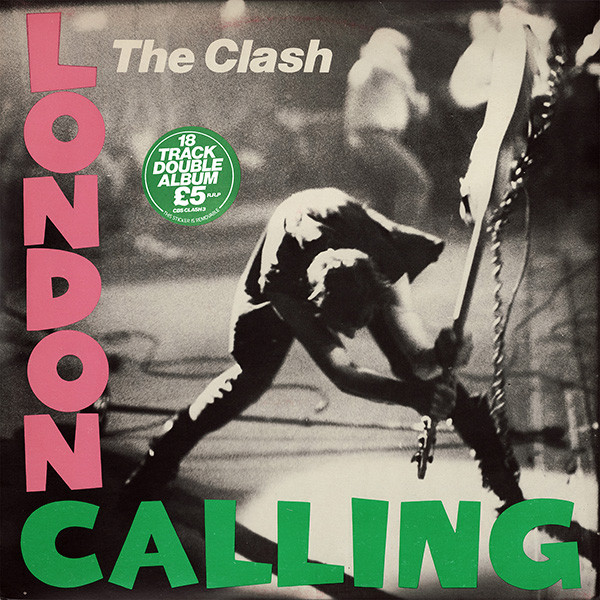



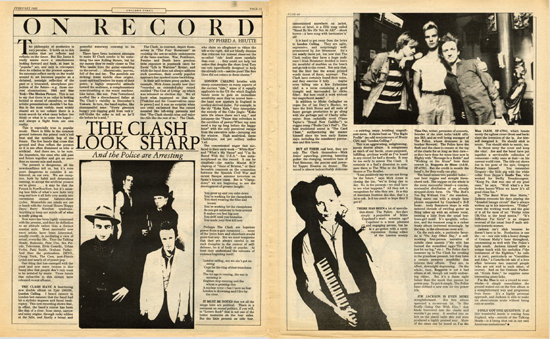

/80%2000%2000%20Rolling%20Stone%20LC%20review%20(1989)%20partial.jpg)

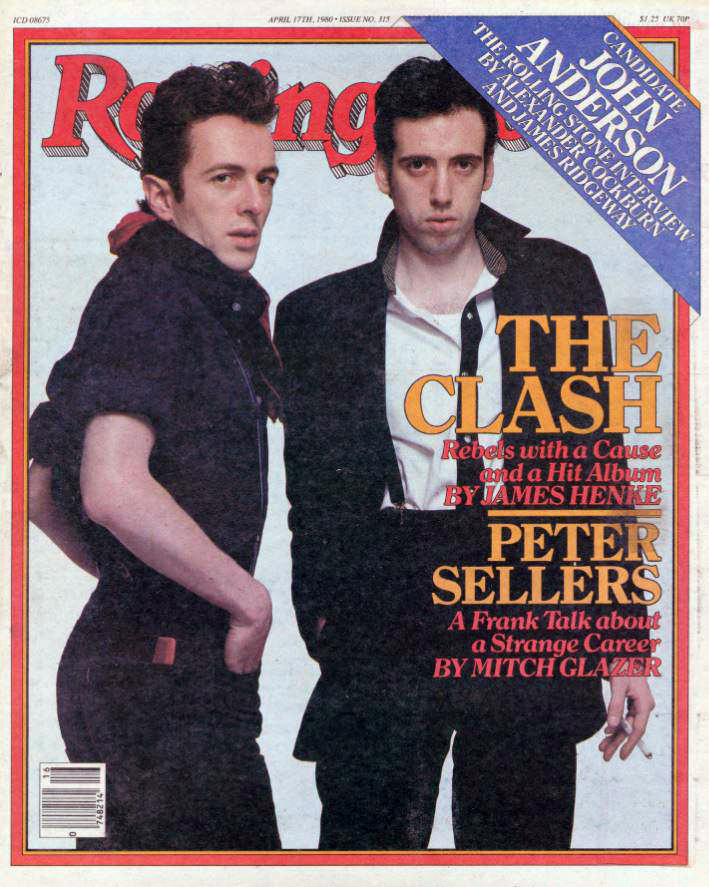
/North-East-Bay-Independent-and-Gazette-Sun-Mar-2-1980-WEB.jpg)


%20CREEM%20--%20Working%20Class%20Heroes/Thumbs/LC1.jpg)
%20CREEM%20--%20Working%20Class%20Heroes/Thumbs/LC2.jpg)
%20CREEM%20--%20Working%20Class%20Heroes/Thumbs/c.jpg)
/The%20Lexington%20Herald%20Sun%20Apr%206%201980%20WEB.jpg)
/Messenger-Press-Thu-Apr-17-1980-Web-550.jpg)

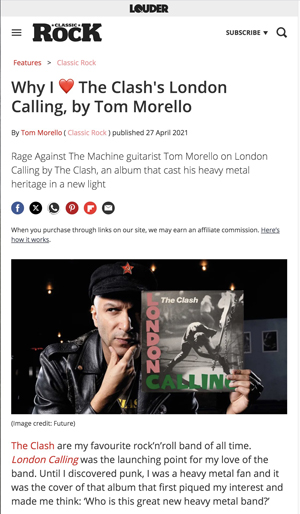


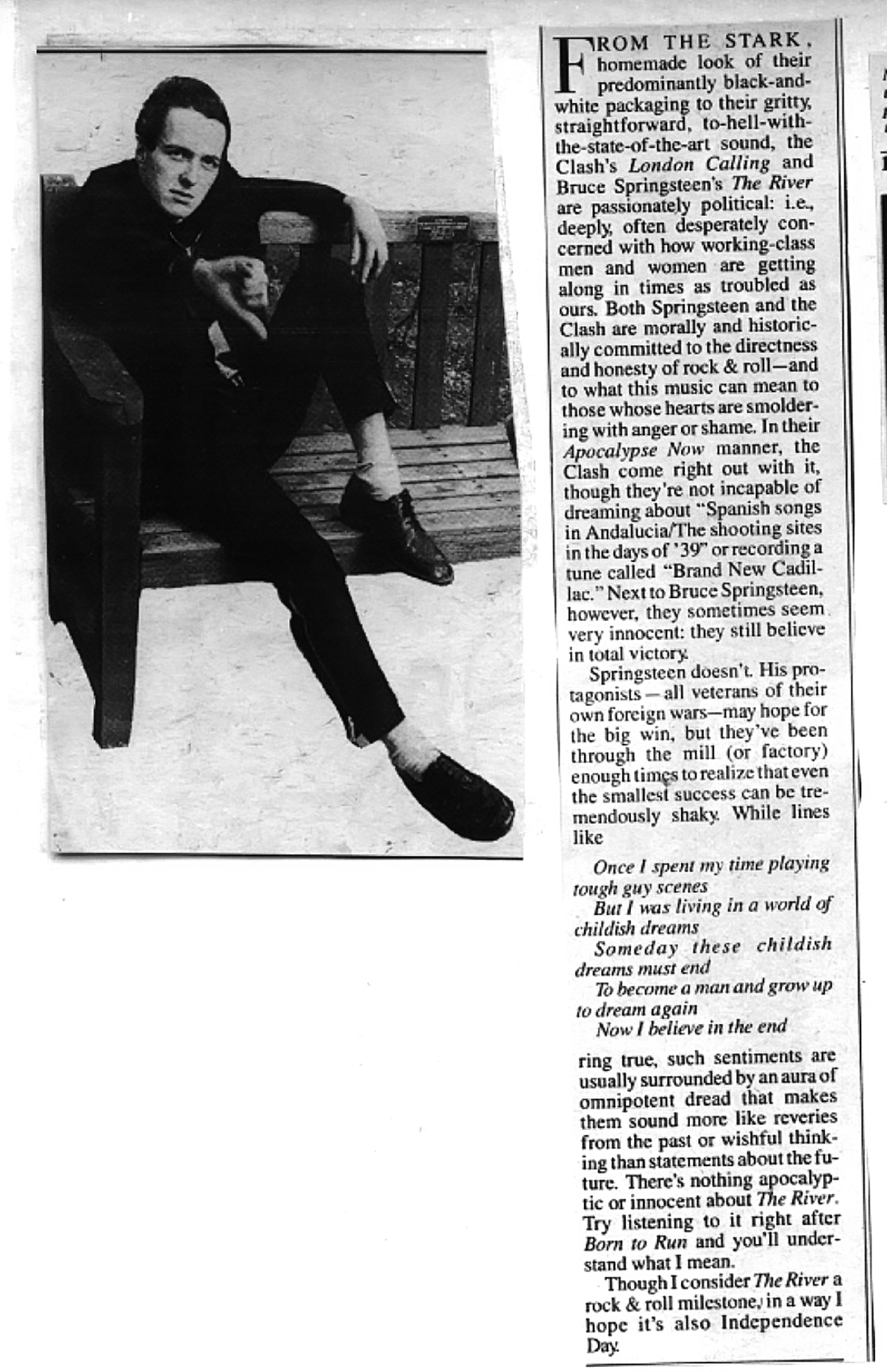

/The%20Whig%20Standard%20Sat%20Mar%2029%201980%20Web.jpg)
/The-Albuquerque-Tribune-Wed-Mar-26-1980-Web-550.jpg)
/The%20Courier%20News%20Sat%20Mar%2022%201980-WEB.jpg)
/Courier%20Post%20Thu%20Mar%2020%201980%20WEB.jpg)
/Daily-News-Sun-Mar-16-1980-550.jpg)
/Daily-Record-Fri-Mar-14-1980-550.jpg)
/The-Burlington-Free-Press-Sun-Mar-9-1980-WEB.jpg)
/The-Vancouver-Sun-Fri-Mar-7-1980-550.jpg)
/The-Ottawa-Citizen-Fri-Mar-7-1980-550.jpg)
/Fort-Lauderdale-News-Fri-Mar-7-1980-550.jpg)
/North-East-Bay-Independent-and-Gazette-Wed-Mar-5-1980-WEB.jpg)
/The-San-Francisco-Examiner-Mon-Mar-3-1980-WEB.jpg)
/The-Province-Sun-Mar-2-1980-550.jpg)
/The-News-and-Observer-Sun-Mar-2-1980-WEB.jpg)
/The-Sentinel-Sat-Mar-1-1980-550.jpg)
/Philadelphia%20Daily%20News%20Fri%20Feb%2029%201980-WEB.jpg)
/The-Daily-Item-Thu-Feb-28-1980-550.jpg)

/The-Charlotte-Observer-Thu-Feb-28-1980-WEB.jpg)

/The%20Wichita%20Beacon%20Wed%20Feb%2027%201980.jpg)
/The-Baltimore-Sun-Sun-Feb-24-1980-550.jpg)
/News-Press-Sun-Feb-24-1980-550.jpg)
/Asheville-Citizen-Times-Sun-Feb-24-1980-WEB.jpg)
/The-Courier-Journal-Sun-Feb-17-1980-WEB.jpg)
/Newsday-Nassau-Edition-Sun-Feb-17-1980-550.jpg)
/Tucson-Citizen-Sat-Feb-9-1980-550.jpg)
/Chicago-Tribune-Sun-Feb-3-1980-WEB-550.jpg)
/The%20Sun%20Sat%20Jan%2026%201980-300.jpg)
/The-San-Francisco-Examiner-Sun-Jan-13-1980-550.jpg)
%20(missing%20page)/Fort-Lauderdale-News-Fri-Feb-29-1980-WEB.jpg)


