1. Discovery of the Tapes
2. The Search for a Solution
3. The Discovery of Rare Footage
4. The Final Product
THE LAST TESTAMENT - THE MAKING OF LONDON CALLING
In early 2004, Paul Simonon received a package from Kosmo Vinyl, the group's former PR man, now living in New York. Among its contents were two video tapes.
Discovery of the Tapes
Kosmo had a vague idea they might contain some unseen film of The Clash recording London Calling with producer Guy Stevens. This rang a bell with Paul: he faintly remembered a hand-held video camera lying about at Wessex studios, which the band had shot some footage on. The trouble was, the two video tapes Kosmo had discovered were unplayable because they used an obsolete format.
The Search for a Solution
The group scouted around and found an old lady who ran a video-transfer company in West London. They heard nothing for several weeks. They feared the worst: either the tapes were too fragile to work with or they contained nothing of use. Then they received a phone call. 'I'm afraid I haven't been much help,' said the woman's voice at the other end of the line. 'All that was on the tape was a bunch of drugged-up, drunken, talentless louts messing around in a studio. I don't know where it was, but no self-respecting studio would allow them to behave as they did with that lovely Steinway piano - it's disgraceful. What use it is to anyone I do not know.'
The Discovery of Rare Footage
Tricia, The Clash's manager, excitedly phoned Paul and Mick. 'You'll never guess what we've found...'
The videos contained 84 minutes of black-and-white, hand-held film of the London Calling sessions. Though a lot of the material was unusable (either too dark or unwatchable zooming in and out), there was extraordinary footage of Guy and The Clash at work. Guy can be seen smashing chairs, climbing up ladders, jumping madly across the studio floor, winding up Joe for an impassioned vocal performance. It was an incredible find.
The Final Product
The footage was passed onto Don Letts, who has used the material together with rare live film of The Clash and interviews with the group, Kosmo Vinyl, engineer Bill Price and photographer Pennie Smith to create The Last Testament, the definitive account of the making of London Calling.
1. The Connection Between The Clash and Pink Floyd
2. The Clash’s London Calling
3. The Clash's Musical Evolution
4. Notable Tracks on London Calling
5. Anthony Moore’s Album
6. The Pretenders' Debut
7. The Pretenders’ Potential
8. The Sad Case of Sid Vicious
9. Robin Scott’s M
10. The No Nukes Compilation
11. The American Music Scene
12. Bruce Springsteen's Contribution
A flash in the Clash
ARTS GUARDIAN, ROCK RECORDS
WHAT PRICE a psychedelic revival for the Eighties? No, I’m not exactly predicting one, but I can’t help but note that the original hippy heroes Pink Floyd are at the top of both the album and the singles charts, with what must be the bleakest Christmas hit ever, while the best two albums released since The Wall both have hippy connections.
The Connection Between The Clash and Pink Floyd
This may come as something of a surprise to both The Clash and Anthony Moore, but both of them happen to be managed by Blackhill Enterprises. And Blackhill Enterprises once managed the Floyd, pioneered free concerts in the park, and look after Roy Harper. And Mr Harper’s next album threatens to be very psychedelic.
The Clash’s London Calling
The Clash’s London Calling (CBS CLASH 3) is a low-priced, uneven double album that contains some excellent songs, a lot of good-natured fun, and very few dull moments among its 18 tracks. It is a massive improvement on Give ’Em Enough Rope, which I hated for its pretension, and their stage shows of early last year, which I hated for their amateurism.
The Clash's Musical Evolution
The flashest punks going can now almost justify their claim to write “modern folk songs.” They have toned down the punk frenzy but kept the excitement, and added a new tunefulness and lightness of touch, as well as the ability to deal with R & B roots alongside their long-term fascination with reggae. And Joe Strummer can now actually sing, which once seemed about as likely as him voting Conservative.
Notable Tracks on London Calling
The songs are varied; the best are scattered across the four sides in no particular order. The most successful, at the start of side two, is “Spanish Bombs,” a stirring piece that deals with the recent history of Spain, the memories of Lorca and the ’39 war, seen from the apparently precarious perspective of flying in to the Costa Brava on a DC10. And if that sounds pretentious, I can only say it is a jumbled set of evocative images that really works well.
Elsewhere, there is “Lost in the Supermarket,” a mellow but bitter piece about alienation (“I came here for a special offer, guaranteed personality”); the chugging and fatalistic “Death or Glory”; a trendy piece of ska fun with “Rudie Can’t Fail”; and bursts of revivalism with “Brand New Cadillac” and “Wrong ’Em Boyo,” which drifts from “Staggerlee” into reggae.
The production by Guy Stevens is appropriately light but rough at the edges, and the introduction of Micky Gallagher’s keyboards brings out the melodies The Clash were always good at writing, but not so good at performing.
Anthony Moore’s Album
Anthony Moore (or A. More as he calls himself here) was once a member of Slapp Happy, and has now made a remarkable album by doing everything himself; not just writing, singing and playing all the instruments, but getting the record made and even delivering it to the shops.
Flying Doesn’t Help (Quango HMG98) is a strange mixture of catchy, varied melodies set against intriguing textures, electronics or tape-loops that sometimes merely back the song, sometimes dissect it. The results are in turn fascinating, disturbing and highly original. If Mr Moore has not visited your shop, you can get hold of it from Blackhills at 32 Alexander Street, London W2.
The Pretenders' Debut
Back with the British new wave, there is the first album from The Pretenders (Real RAL3, available at the end of the week). It includes their three singles among the 12 very long tracks, which give the impression of an excellent band slightly confused as to their musical identity. The first side has Chrissie Hynde speaking, declaiming or chanting over the energetic backing, so when it suddenly reaches Ray Davies’s “Stop Your Sobbing” it comes as a shock to find that the band can also play melodies and Chrissie can sing.
The Pretenders’ Potential
If you press on with the second side, you’ll find she can sing very well, and is actually a closet balladeer. Apart from the excellent hits “Kid” and “Brass in Pocket,” there is another strong ballad, “Lovers of Today,” and another slow piece with tough female lyrics, “Private Life.” Keep playing the second side, and The Pretenders are a great band.
The Sad Case of Sid Vicious
There is also, alas, the unacceptable face of the new wave, with the continued exploitation of the very dead, untalented Sid Vicious. Sid Sings (Virgin V2144) is a pathetic set that proves that he could not, except on a couple of tracks like “Something Else” and his funny version of “My Way,” that have been released before. The rest of this sounds as if it were recorded on a broken cassette player, which it probably was.
Robin Scott’s M
It is enough to make one turn to good clean pop music like the catchy songs Robin Scott writes for M. Their New York, London, Paris, Munich (MCA MCF3046) is fine, as long as you do not already own his delightful “Pop Muzik” and “Moonlight and Muzak.” The rest of it drifts towards disco mediocrity, crossed with a touch of Roxy Music.
The No Nukes Compilation
From America, there’s the three-album set No Nukes (Asylum ML801), recorded at the anti-nuclear power concerts at Madison Square Garden last September. The most powerful and impressive thing about it is the accompanying booklet on nuclear dangers and alternatives, and the list of artists who took part for a cause that (to Mrs Thatcher’s relief) simply has not caused that much concern here.
The American Music Scene
The music of America’s musical establishment is a little predictable these days (the Doobie Brothers and Crosby, Stills and Nash sound as if they should have retired), but there are some worthwhile moments. There is Ry Cooder’s slinky “Little Sister,” Bonnie Raitt singing “Runaway,” Jackson Browne with “Before the Deluge,” and joining Nash for Sydney Carter’s “Crow on the Cradle.”
Bruce Springsteen's Contribution
And then there is the Bruce Springsteen contribution. It is nearly two years since his last official recording, so it is encouraging to find he is still in powerful voice. He contributes two oldies — “Stay” (with Jackson Browne joining in) and a medley around “Devil with the Blue Dress.” It is the most powerful track on the set, and must have been tremendous to watch.
How The Clash shattered punk orthodoxy and created a masterpiece | The Independent
1. Martin Scorsese's Tribute to "Janie Jones" by The Clash
2. A Year of Change in Britain
3. Punk’s Promise in 1979
4. The Clash's Evolution and the American Rock Influence
5. Back to the Drawing Board
6. The Clash's Rebirth: London Calling
7. The Impact of London Calling
8. A Juxtaposition of Musical Styles
9. Don Letts’ Journey with The Clash
10. The Clash's Musical Freedom
11. Radical Music of 1979
12. Lightning in a Bottle: The Clash's Unique Sound
13. Guy Stevens’ Unconventional Production Style
14. The Clash: A Punk Band with a Grand Vision
15. The Clash: London Calling Exhibition
16. Punk and Strummer’s Legacy
17. The Influence of London Calling on Future Artists
Martin Scorsese once described “Janie Jones” by The Clash as the greatest British rock’n’roll song. One of the many wonderful things about that statement, not lost on Clash fans, is that however charged-up-and-ready-to-blow the opening track of the band’s eponymous 1977 debut album is, it’s not even the greatest Clash song; hell, it’s not even the greatest opening track on a Clash album. There’s serious competition for that accolade on each of their studio albums, but the title track of London Calling fights off all comers. Its ringing apocalyptic alarm announced the most extraordinary album of the late Seventies, which, almost unbelievably, was released 40 years ago next month on 14 December. It’s even being celebrated in its own exhibition at the Museum of London.
Political and Social Context
London Calling landed at the close of an extraordinary year in Britain. In 1979, Margaret Thatcher won her first Tory majority, ending the era of post-war consensus politics, and replacing it with a no-compromise, anti-protectionist, monetarist regime that would preside over denationalisation and the decimation of Britain’s traditional industries. The class warfare that had simmered below the surface of British society since 1945 would be openly waged by the Thatcher government, which would mobilise the state against its people and let free-market economics do what it would. The echo of its mantra – “a price to be paid” (three million unemployed) – can still be heard today in talk of “short-term pain” (watch this space). In 1977, The Clash had demanded “a riot of our own”; Thatcher was ready to respond with mounted police, truncheons, and the army if necessary. “Where there is discord, may we bring harmony” indeed.
The Clash's Struggles and Response
But all that was still to come (as was The Clash’s musical response to it): 1979 was aberrant in other ways. A sitting MP – Airey Neave – was blown up and killed by an Irish republican bomb as he drove out of the Houses of Parliament; another, the former leader of the Liberal Party, Jeremy Thorpe, was on trial for incitement to murder. The Yorkshire Ripper was at large. Sid Vicious, on bail awaiting trial for the murder of his girlfriend Nancy Spungen, died of a heroin overdose. Had punk’s promise come to this?
Musical Shifts and Rejection of Commercialism
The Clash, meanwhile, had lost their standing as the movement’s most resolutely anti-commercialistic band when they had Blue Öyster Cult producer Sandy Pearlman drape their second album Give ‘Em Enough Rope in the power-chord sheen of American rock. Whether or not it was an attempt to crack America, it was a long way from “we’re a garage band” and “I’m so bored with the USA”. The band felt “bruised by the experience” and by the criticism they had faced, says filmmaker Don Letts, who documented what happened next in his compelling The Last Testament – The Making of London Calling (2004). Singer Joe Strummer himself told NME: “We’ve had our fill of bullshit, and now we’re back to the drawing board. We’re really f***ed, but I don’t think we’re f***ed enough to quit. We’re way beyond that!”
Creation of London Calling
“Their backs were against the wall,” says Letts. There was a sense, he adds, that they needed to “hunker down” and redefine what The Clash should sound like.
The result – London Calling – would prove beyond doubt that trying to sound like a big US rock band was a waste of time, because, in 1979, the greatest rock’n’roll band in the world sounded like The Clash.
Critical Reception and Impact
“London Calling celebrates the romance of rock’n’roll rebellion in grand, epic terms…” wrote Rolling Stone, “…it digs deeply into rock legend, history, politics and myth for its images and themes. Everything has been brought together into a single, vast, stirring story.”
It was a double album: 19 tracks. Not all were classics (does anyone really love “Lover’s Rock” or “Wrong ’em Boyo”?), but almost all demanded to be included. And from track two, the deranged psychobilly cover of Fifties British rock’n’roller Vince Taylor’s “Brand New Cadillac”, it was clear that London Calling wasn’t going to be quite like anything else. By the time you reached the jazz guitar and whistling that leads into track three, “Jimmy Jazz”, all bets were off. That side one ended with the exuberant ska pop of “Rudie Can’t Fail” showed that this wasn’t an album that opened with its one great song; they were just going to keep on coming.
Side Two and Lyrical Shifts
Side two signalled a step change in Strummer’s lyrical concerns. “Spanish Bombs” introduced spotty teenagers across the world to the Spanish Civil War: “The freedom fighters died upon the hill/ They sang the red flag/ They wore the black one”. “Lost in the Supermarket”, sung by guitarist Mick Jones, showcased one of The Clash’s secret weapons, that high, girlish, heartfelt voice of Jones, which mixes ardour with the pang of something lost. It gave The Clash a soulful instrument other punk bands didn’t have. And, ironically, it helped The Clash break America, when it was put to use on “Train in Vain” – not listed on the album, except for where it was scratched on the run-off groove – which had a run at the US Billboard chart.
Musical Collaboration and Sound
For Letts, though, the album isn’t about the greatness of individual tracks, though he has a place in his heart for “London Calling” and bassist Paul Simonon’s “The Guns of Brixton”. It’s about the juxtaposition of musical styles from far and wide.
Legacy of London Calling
Letts had first come into contact with the band in west London in the mid Seventies, when he noticed two lone skinny white boys [Simonon and Strummer] in a basement reggae club. He recalls thinking it was pretty brave at the time. He recognised them later when they wandered into the clothes shop he ran on the King’s Road in Chelsea, Acme Attractions, but it was his then girlfriend Jeanette Lee – later to join PiL – who first took him to see them play at an out-of-the-way venue in northwest London. The energy of the band on stage was like nothing he had ever seen before.
The Clash’s Evolution and Influence
From then on, their careers would be intertwined. Letts was the DJ at the Roxy in Covent Garden, where The Clash played on New Year’s Day 1977, and was an early chronicler of the band on Super-8. He shot the videos for “White Riot”, “Tommy Gun” and, in 1979, the famous promo for the “London Calling” single (which went to No 11 in the UK).
Influence and Lasting Impact
London Calling shattered punk orthodoxy and inspired bands from U2 to Beastie Boys to Manic Street Preachers. Artists as diverse as Bruce Springsteen, Metallica and The Strokes have played songs from it on stage. Even the Pet Shop Boys’ Neil Tennant has professed his love of the band. Rolling Stone has London Calling rubbing shoulders with Dylan and The Beatles in its top 10 albums of all time. It’s now literally a museum piece, but its rebellious spirit lives on.
Exhibition and Final Reflection
The Clash: London Calling, Museum of London, 15 November – 19 April 2020, admission free. The London Calling Scrapbook, released to mark the 40th Anniversary of the album, is available now.
1. Political and Social Context
2. The Clash's Struggles and Response
3. Musical Shifts and Rejection of Commercialism
4. Creation of London Calling
5. Critical Reception and Impact
6. Side Two and Lyrical Shifts
7. Musical Collaboration and Sound
8. Legacy of London Calling
9. The Clash’s Evolution and Influence
10. Influence and Lasting Impact
11. Exhibition and Final Reflection
The Clash's album 'London Calling' reviewed by Garry Bushell. "Sure 'London Calling' will be their biggest hit to date" - 15 Dec 1979
1. IT'S FUNNY
2. Punk's Decline
3. SIDE ONE
4. SIDE TWO
5. Clash's Decline
6. Disappointment
7. A Clash Fan's Perspective
8. The End of the Clash
GIVE 'EM ENOUGH DOPE
…and watch 'em turn into the Rolling Stones
THE CLASH – "London Calling" (CBS CLASH 3) ★★★☆☆
"THE HELL with it! Let chaos reign, louder music, more wine, the hell with the standings, the top rungs are up for grabs. All the old traditions are exhausted, and no new one is yet established. All bets are off! The odds are cancelled! It’s anybody's ballgame! And out of such glorious chaos may come some nice new fat Star Streamer Rockets that will light up the sky."
Transplanted, Tom Wolfe captures the feel of '76 punk with an unnerving accuracy. The old ways were dying on their bland, boring bourgeois feet, and punk was gonna build a new EVERYTHING. "No Elvis, Beatles, or Rolling Stones in 1977," Strummer sneered in 1976, and we believed him.
We didn’t realise that by the winter of ‘78, Elvis would be advertising the third Clash album, its cover a Presley pastiche, its content a sad justification of escalating jibes about "The Rolling Clash" as Strolling Bones clones.
No, back then, it was possible to believe that punk was gonna change things and that the Clash gave the whole movement real meaning, tempering wasteful nihilism with revolutionary optimism and destructive fury with angry humanism.
The white riot was against apathy and for social justice, while the music was pure unadulterated rock ‘n’ roll energy. Blistering brain-bashing dance music free of cliché, and two and a half years old, still towers above everything else released this decade.
Yeah, but we played the hand wrong. You don’t change the world with music alone, and divorced from real political muscle, the radical assault of the best punk was diverted relatively easily by the system, while, with media assistance, the movement itself degenerated into safety-pin and bondage pants plastic posing and sickeningly stupid swastika/death-trip schtick. At its best, punk became just the most vigorous music on offer; at its worst, it wasn’t worth talking about.
IT'S FUNNY
how fan worship can blind you. One of my colleagues recently compared the blossoming Jam unfavourably with the Clash, claiming that Joe’s gang were driven by world-conquering no-compromise ambition (etc.).
The sad reality, however, has been that the Clash turned out to be the laziest bunch of mothers going. When we needed them most, after the Pistols had split and the disintegration really set in, THEY blew it. Not CBS or Bernie Rhodes, but the Clash, whose meagre output and coke-snorting indolence was made worse by the squandering of vital months in lavish Stateside recording studios.
But this time last year, they roared back fighting with "Give ‘Em Enough Rope," a magnificent, fiery rock album, brimming with metal attack and renewed purpose. Yeah, give ‘em another chance, they’d junked the charlie and were coming on as punk saviours and, and, and… punk was all Sid & stupid by then. The band failed to resurrect the movement, they lost their optimism and renounced their followers.
Punk's Decline
And while "headbands" sprang up in opposition to the UK Subs pogo genre and the unpretentious Mod/Ska "live fun" axis (shame about the revivalist/powerpop elements sic), the Clash devoted two tours to conquering the place they were so bored with, played a handful of disappointing London gigs, and recorded "London Calling."
On the face of it, the album's great value for money—19 tracks (one unlisted) for the price of one album, a double LP for just one crisp Lady Godiva. Ah, but here’s the rub, bub—it ain’t even worth plundering the piggy for.
SIDE ONE
is the best side on offer, opening with the single "London Calling", a fine, irrepressibly catchy melodic groover—the most impressive new number here. Next comes Vince Taylor's old R&B workout "Brand New Cadillac", followed by a sort of Fats Waller-esque jest called "Jimmy Jazz" that sounds like Louis Armstrong and Bing Crosby ought to be toasting over it; then a catchy Stones-do-Bo-Diddley number "Hateful", followed by "Rudie Can’t Fail", a cross between the Stones’ reading of Eric Donaldson's"Cherry Oh Baby" and "White Man in Hammersmith Palais."
SIDE TWO
follows suit with the lightweight pop of "Spanish Bombs"; hoary old hayrack on the Ian Hunter soundalike "The Right Profile"; the Al Stewart-type pop-rock of "Lost in the Supermarket" with Mick Jones trotting out his best Jagger take-off; the truly embarrassing bloodclaat "Guns of Brixton", Simonon's limp vocals gracing a feeble reggae setting for more of the Clash’s degenerating "guns and gangs" outlaw vision—a lumpen lyrical fantasy world populated by druggies, crooks, gambling dens, dingy basements, and gun-toting niggers.
Clash's Decline
A vision only interrupted once on this side with "Working For The Clampdown", Clash rock in the style of "Rope" with a necessary put-down of EVIL fascist cul-de-sacs, repeating the Clash’s always vague alternative—"Kick over the wall / Cause governments to fall."
Shame that one of the Clash’s biggest failings has been their inability to link their righteous sentiments with the power struggle in the real world. Like, shouting "Long live the revolution" don’t make it come, y’know.
The nine tracks that follow are even less interesting, more variations on standard Stones formulas, the best of which being the unannounced "Stand By Me" (?) which sounds like a Stones bash through an early sixties Tamla number (maybe a nod to producer Guy Stevens’ mod DJ past…).
Disappointment
Elsewhere, there’s the uninspired plod "I’m Not Down"; the confused pop of "Koka Kola"; a couple of covers—a pretty gutless reading of Jackie Edwards’ "Revolution Rock" (not in the "Armagideon Time"/"Police And Thieves" league) and a cover of a reggae version of "Stagger Lee" called "Wrong 'Em Boyo" which sounds like The Selecter avec "Sea Cruise"-type of sax. Leaving just the ropey "Rope" out-take sound of "Four Horsemen", which, you guessed it, sees the band as the four horsemen of the apocalypse.
A Clash Fan's Perspective
the impression I'm left with after two days of solid playing is overwhelming disappointment. There's no hunger here, no vision or coherence or charisma, no killer punches, no sense of fighting to be heard, nothing that makes you go "wow."
Ironically, they’re condemned by their own words on "Death Or Glory"—"I believe in this, and it's been tested by research / That he who f***s nuns will later join the church."
In the Clash’s case, the church is the good ol’ wanked-out rock tradition—the sicko corrupt mythology built up from fatboy Presley to the Stones, the antithesis of what they said they set out to be.
No, aside from sporadic spurts of brilliance (like one every six months), the Clash seriously dried up well early on, losing their perspective and momentum. Unable to go forward, they’ve clutched at straws, ending up regressing via Strummer’s R&B past and Jones’ Keith Richards fixation, to the outlaw imagery of the Stones and tired old rock clichés.
The End of the Clash
Sure, "London Calling" will be their biggest hit to date, and sure, this album’ll sell and sell, and I bet you play it to death till you’re convinced it’s great—though I wouldn’t play it in close succession to "The Clash" if I were you.
Hey, maybe if we’re lucky, they’ll still be playing "White Riot" as an encore in a few years' time.
After all’s said and done, it’s only rock ‘n’ roll… and now the Clash are only another rock ‘n’ roll band.
The Clash are firmly convinced that they are rock and roll’s future, and yet they’ve still to break into the big time in terms of record sales.
"London Calling" is a Strummer/Jones song delivered in true Clash style and with the right kind of push it could be the one they’ve been looking for to lead us into the Eighties.
SMASH HITS - Volume 27 - several pages
Feature article STRUMMERTIME BLUES
PLUS Clash dates
1. Strummertime blues
2. Joe Strummer collects his thoughts.
3. Joe Strummer wins you over.
4. The Clash survive.
5. Joe Strummer speaks about bandmates.
6. London Calling masterpiece.
7. Adding Motown to the mix.
8. Joe Strummer's quest for grandeur.
9. London Calling as best album.
10. Strummer and Mick Jones' tension.
11. Geldof and Sting criticised.
12. Joe Strummer's message of hope.
13. Clash tour dates
14. The Clash UK tour dates.
SMASH HITS Volume 27
STRUMMERTIME BLUES
THE CLASH'S JOE STRUMMER PUTS DOWN BOB GELDOF, THE POLICE AND THE CURRENT CROP OF NEW BANDS BUT SAYS THINGS WILL GET BETTER
By ADRIAN THRILLS | Camera Crew: PENNIE SMITH
Joe Strummer's Humble Setting
JOE STRUMMER sups his pint and collects his thoughts. The gruff, livewire Clash vocalist is sitting opposite me in a poky public bar no more than a stone's throw from the band's current rehearsal room. Shrouded in a battered Crombie overcoat and a jacket at least two sizes too small, he blends unnoticed with the early evening boozers.
The Clash's Commitment
Joe obviously enjoys the fame he has found via The Clash. But, paradoxically, he also revels in the anonymity he acquires in this dismal south London pub. As he readily points out, if Jimmy Pursey, Bob Geldof or any other new recruit to the Blankety-Blank Generation were sitting where he is, heads would turn.
Joe Strummer's Perspective
In shying away from the cheap publicity that has made the likes of Pursey, Geldof and even Lydon household names, Joe Strummer has retained not only his dignity but also his perspective. He still sees things from a streetwise, almost worm's-eye point of view.
The Clash's Survival
JOE STRUMMER is one of those rare types who can win you over by sheer force of character. In the space of a C60 Philips cassette, he shows glimpses of anger, passion, dismay and cruel wit. He also remains as fiercely committed to The Clash as when they played their first gig, supporting The Sex Pistols over three years ago at Islington's Screen On The Green cinema in London.
The Clash's New Sound
The fact that The Clash still survive where so many of their contemporaries have gone under or lost all sense of purpose, Joe attributes to the thrill of discovering new sounds. The Clash, despite continually looking to be on the verge of splitting up, are still very much alive.
Creative Tension in The Clash
"These guys are the only people I could ever play with now," Joe says over the pub din. "If we had a big bust up tomorrow, I don't see the point of finding anybody else to play with.
The Clash's Direction
"I don't see the point of being Steve Jones and Paul Cook and going around doing a bit of this and a bit of that. They come up with something strong as a group but, from there on, it's mediocrity all the way."
The Clash's Latest Album
But not for The Clash. Their latest masterpiece, London Calling, a double album that retails for the price of one — shows a distinct change of direction. As Joe puts it, they've gone Motown—but not in the crass and blatant manner of, say, Secret Affair.
Joe's Musical Philosophy
"We're still digging our reggae ditch but what we've added to that is Motown. It's that kind of thing, but as a simple four-piece group plus two tablespoons of organ and half a pint of horn. To me, it's a feeling that just comes out naturally, so you try to choke it off a bit and tense it up so it comes out sounding even harder.
Joe's Artistic Vision
"To me, music is a feeling, the best that there is. The reason I'm in it is 'cause I believe we can get the best feelings and I believe in the people I work with."
The Clash as a Quest
Not surprisingly, Joe still sees The Clash, perhaps childishly, as a great quest, something akin to Journey To The Centre Of The Earth in 3-D with a soundtrack by Chuck Berry.
The Clash's Approach to Creativity
"Yeah, yeah. I'm really into the whole grandeur thing. I don't like doing things by half. We really like to get going. It helps to build up morale and keep things exciting. Like, if someone comes up with a wild idea, it's immediately recognised for what it is and not disregarded. You have to crank yourself up like that."
LONDON CALLING's Impact
LONDON CALLING, according to Joe, is far and away the best Clash record ever. And he picks out a couple of rather strange reasons as to why.
The Clash's Tension During Recording
First, the tension between the four individual members of the band — Strummer and guitarist Mick Jones in particular — was at fever pitch when the songs were being written.
Creativity from Mediocrity
"That's had a really good effect on the music. When you're playing for your life, it makes for a good record."
The Impact of Mediocre British Radio
Secondly, Joe subscribes to the unusual theory that subjecting yourself to mediocrity sparks off the creative powers. The mediocrity in question is none other than the great blandness of British radio.
Joe's Views on Geldof and Sting
Sneers Joe: "I subject myself to the radio all the time. I must be a masochist or something, but I force myself to listen to it just for the annoyance, the irritation."
Joe's Criticism of Geldof and Sting
The two biggest offenders in Joe's books are Messrs Geldof and Sting.
"If there is anyone left in Britain who can stand that bloke's voice — PC Sting — they should get a medal or telegram from the Queen.
Joe Strummer's Message of Hope
"And the same goes for Bob Geldof. I just can't stand that smart-alec, gubbering, twittering—while-you're-desperately-hamming-it-up-with-the-old-cliches-against-a-Bruce-Springsteen-backdrop thing he does."
Joe finishes on a message of hope:
"If you stick at it long enough, you'll see your work pay off. Not to mention Bob Geldof or The Police."
CLASH TOUR DATES
The Clash have announced UK tour dates:
Jan 5: Aylesbury Friars
Jan 8–9: Brighton Top Rank
Jan 11: Bath Pavilion
Jan 20–21: Edinburgh Odeon
Jan 31: Bradford St George's Hall
Feb 3–4: Manchester Apollo
Feb 15–16: London Electric Ballroom ...and more!
Tickets: £3 (standing), £2–£3 (seated). Check local venues.
Message Received
THE CLASH: London Calling (CBS CLASH 3)
1. Influences and diversity
2. Growth and self-discovery
3. Optimism and musical experimentation
4. Guy Stevens' production vision
5. Spanish bombs and anthem-like rebellion
THE CLASH: "London Calling" (CBS CLASH 3).
The Clash in drag? Their militancy assimilated into style, their anger into care and caution, the Clash have sought redemption in diversification; "London Calling" flirts and skirts its way across the field with a dexterity and archly engineered innocence that borders on the camp.
Affectionate pastiches of early rock 'n' roll (rockabilly especially), reggae and punk reveal a wider, more receptive band and a more artful use of the past. The reason why it does come close to sounding camp - no criticism - is that it also signifies the Clash relaxing on record for the first time, again no bad thing.
Influences and diversity
Beneath its deceptive casualness lie a maturity and cohesion that appear to have been hard-won. Almost the first in, the Clash were the last to break out of punk's self-imposed limitations; cheapened by endless imitation and forced to make their mistakes in public, beneath an overbearing critical scrutiny, they had reason to find theirs a dubious victory.
Growth and self-discovery
The cracks in confidence were evident in last year's "Give 'Em Enough Rope", a morose, unsuccessful album that seemed more concerned with self-justification than saying anything new, or remotely interesting.
The secrecy in which this album was planned and recorded reinforces the impression that it was seen by all concerned as a means of survival rather than consolidation. That it's not as desperate or depressed as its predecessor is basically down to two things: the Clash have discovered America and, by the same process, themselves.
Optimism and musical experimentation
The effects of both are written large across this album. Like the Public Image confession box, "London Calling" looks to the future by sketching in the past. The Clash's tiresome habit of inflating their own petty grievances into public, supposedly political debate (viz. "Guns On The Roof") has been curbed, replaced by a more perceptive and often ironic self-assessment, less intent than Lydon's but more objective. Vulnerability suits them well.
Guy Stevens' production vision
Beneath it all runs a powerful undertone of optimism, emphasised by the song placing, which seems intent on deliberately breaking up and separating the different moods. No sooner has the album's title-track opened the first side than its apocalyptic pessimism is dispelled by a dash through Vince Taylor's rockabilly classic, "Brand New Cadillac".
"Jimmy Jazz", a stuttering acoustic blues carried by one of Joe Strummer's most contorted and expressive vocals, leads into "Hateful", a pill-popper's lament which, if autobiographical, steers clear of self-pity. In construction a fairly typical Clash song, all street-corner harmonies and snappy guitar breaks, it's underplayed as a light, infectiously rhythmic skiffle. Closing the first side, "Rudie Can't Fail" transposes "I Fought The Law" into a bustling, ska-based duet between overdubbed vocals.
Spanish bombs and anthem-like rebellion
If diversity is the clue, producer Guy Stevens holds the key. A veteran of mod (the original version), psychedelia, and Mott The Hoople, he gets it absolutely right. The width and depth of the sound is tailored to each individual song, with enough space left on the edges for an ever-present echo to curl round the vocals and guitars.
"Spanish Bombs", which opens side two, expands the dynamic to its fullest limits, producing a wall of sound propelled by a bubbling piano. Minor, almost mournful chords support rather incongruous parallels between the Spanish Civil War, the Irish problem and what appears to be a package holiday on the Costa Costa Brava. It's hardly Charlie Haden's Liberation Music Orchestra, but it retains the rousing, anthemic zeal of a rebel song.
'...the wit of the city's urchins is as sharp as the finest conversation of the rural lord; the vulgar speech of the street arabs is so full of metaphor and condensed reference that an ancient poet would have given his soul to possess the tongue of a London apprentice; yet it is a speech almost impossible to translate, more mysterious than Sanskrit, and its fashions change from day to day..."
Michael Moorcock's Reflection on Language
Michael Moorcock, Gloriana, Or The Unfulfill'd Queen
LONDON CALLING is the first of The Clash's albums that is truly equal in stature to their legend, yet for the most part it disposes of the more indigestible portions of that legend. Parts of it sound totally unlike anything they have ever recorded before, yet it is the most quintessentially Clashlike Clash record thus far. Much of the material on these four sides represents The Clash writing, singing and playing for their lives, yet simultaneously much of it shows them writing, singing and playing purely for fun.
Clashrock as of now (or as of London Calling) has a freshness, variety, vitality and range that they've never shown before (though aspects of it were signposted as long ago as 'Stay Free', 'White Man In Hammersmith Palais', 'Julie's Been Working For The Drugs Squad' and the Cost Of Living EP) while simultaneously drawing from musical roots scarcely apparent back in the days of White Riot.
London Calling is also – no small point, this – the first Clash record (with the possible exception of Cost Of Living) that actually sounds right. Guy Stevens has produced The Clash the way they should have been produced right from the start: the tinny Winfield-wall-of-sound of the first album now sounds quaint and one-dimensional by comparison, and the AOR (Adult Oriented Rock, that is easy-listening HM sound imposed on 'Give 'Em Enough Rope' by the appalling Sandy Pearlman) is now exposed as an even more gargantuan error of taste and judgement than it seemed at the time.
The Clash's Growth and Evolution
The business: London Calling is an 18-track (19 if you count the bonus track which appears at the end unmentioned on either sleeve or label) double album of new Clash music retailing for a fiver, and if you buy it sharpish at a Virgin shop you can take it home for three quid. It's good, it's cheap and there's a lot of it: I call that a bargain, one of the best I ever had. With London Calling, The Clash have matched everybody else's bets and chucked their cards on the table: in Springsteen's words, they've shown a hand even the police couldn't beat, and they deserve to clean up.
They've even been honest enough to expose their three greatest faults on three specific tracks: The excruciatingly condescending and self-conscious 'Lovers Rock' demonstrates that they're a hell of a lot better at discussing the relationship between man and society than they are at dealing with the relationship between woman and man. This is a chronic imbalance in the Clash worldview, and the day that they resolve this contradiction is the day that Strummer and Jones (my money's on the latter) will write one hell of a good song.
'Four Horsemen' is the kind of stylish-radical-boys-together self-mythologising which they decry on 'Death Or Glory' and which should have been dumped back in the days of 'Last Gang in Town' or left to Generation who, after all, have precious little else to sing about.
The Clash's Bold Musical Choices
The third and final bone of contention is 'Guns Of Brixton', Paul Simonon's debut as composer and vocalist. Musically impeccable, it's one of The Clash's most tense and stirring reggae pieces (The Clash have always picked up on the tautness and militancy of reggae, whereas The Police's reductions of reggae have always concentrated on its spaciness, which is – after all – far more saleable as it's less challenging), but we don't need another paean to martyrdom; we've already had enough martyrs.
Lyrically, those three tracks represent the worst of The Clash: male-bonding (with women either not mentioned or taken for granted), militarism along with the militancy and a martyrdom fixation. Everywhere else (now we've got those three out of the way), The Clash come up trumps.
* The album opens with the single: a straight line drawn between the apocalypse of Bowie's 'Diamond Dogs' and the testament to personal courage and integrity of Springsteen's 'Darkness At The Edge Of Town'. A call for solidarity and trust in the face of impending disaster, 'London Calling' is a tuning-fork that strikes the keynote for the album, a tone apparent even in the most light-hearted moments of what is to follow.
The Tracks and Their Impact
Even before Mick Jones' pickup-selector morse-code bleep has died away, The Clash drive straight into Vince Taylor's 'Brand New Cadillac'; rockabilly-tinged R&B of the hard kind that recalls The Yardbirds' epic 'Train Kept A-Rollin'' with even a tiny nod to Cream's 'Crossroad' at the beginning of the guitar solo. The Clash's sympathies are – for once – clearly with the departing girlfriend: check Strummer's scornful roar of "Balls to you, big daddy! She ain't NEVER coming back!"
Next up, The Clash take over Tom Waits' favourite bar for 'Jimmy Jazz', a lazy, alcoholic shuffle with dirty, goosegrease saxophone. There's brass aplenty on 'London Calling', attributed to "The Irish Horns"; if it ain't John Earle and the Rumour brass, I apologise. A slurring Strummer exclaims "What a relief!" over the sax solo and misdirects the police who come looking for Jimmy Jazz himself.
An Inter-City paced Bo Diddley beat leads into 'Hateful', a sharp look at drug consumption patterns with the smooth humming guitar sound Mick Jones featured most notably on 'I Fought The Law'. "Anything I want he gives it to me/ Anything I want he gives it but not for free," Joe points out while sardonically and ruefully chronicling his mental and spiritual decline.
The Political and Personal Themes
Mick Jones' 'Rudi Can't Fail', one of the highpoints of a fairly highpoint album, rounds off the first side. Rudi has clearly gotten his bottle back since Strummer first evoked him during the retreat-fade back to their 'Safe European Home' on the last album, and Strummer eggs Jones on to a marvel of rapid, even brilliant wordplay.
Side two begins with 'Spanish Bombs' that sounds like the Clash doing 'Bolero,' and Jones' music here sounds most inspired by the Velvet Underground in parts. The fascinating aesthetic influence of reggae has spread to embrace the work of the Velvets and the Stones. Following through after 'Rudi Can't Fail' is Strummer's 'Death Or Glory' with typical bile, venom, and ironic self-righteousness.
And don't forget the famous 'Tommy Gun,' that sees the boys trying to satirize a serious subject with plenty of energy.
The last few tracks showcase the band's musical abilities and satirical edge. 'Guns Of Brixton' for instance has an inspired bassline and lyrics brimming with tension and threat, perfect for the times they represent. Overall, a clever blend of youthful rage and musical experimentation.
Continuing with 'Lost In The Supermarket', a haunting exploration of alienation within modern consumer society. With its mix of melancholy and social commentary, the track becomes a poignant statement about the emptiness of materialism. Strummer speaks directly to the listener, encapsulating the frustration and disillusionment felt by a generation struggling with the overwhelming forces of capitalism.
Clampdown takes us back to the political sphere, with Strummer's biting critique of the system that breeds conformity and mediocrity. The song's intensity is matched by its urgency, a call to arms for those who refuse to conform, with its iconic refrain urging the listener to "stop it, stop it!" The track remains one of the band's most powerful anthems for rebellion.
Perhaps one of the most surprising aspects of London Calling is the eclectic range of influences that shine through on its tracks. From the reggae-inspired beats of 'Guns of Brixton' to the rockabilly energy of 'Brand New Cadillac', the album is a showcase of the band's willingness to experiment and cross musical boundaries. With the inclusion of jazz, blues, and even ska influences, The Clash demonstrate their versatility, while still remaining true to their punk roots.
But it's not just the music that makes London Calling so enduring – it’s the way it captures the mood of its time. Released in 1979, the album reflects the political climate of the late '70s, with its themes of social unrest, disillusionment, and rebellion. Songs like 'Spanish Bombs' and 'Death or Glory' serve as powerful critiques of war and the political establishment, while the apocalyptic imagery in the title track speaks to the anxiety of a world teetering on the brink of disaster.
In the end, London Calling stands as not only the greatest Clash album but also one of the defining albums of the punk era. It's a record that reflects both the anger and the hope of a generation, and its influence can still be felt today in the music of countless bands who followed in its wake. Whether it’s the political commentary, the musical experimentation, or the raw energy of the performances, London Calling remains a landmark in the history of rock music.
Ultimately, this is an album that has stood the test of time, continuing to resonate with listeners across the globe. It’s not just a collection of songs – it’s a statement, a manifesto, and a call to action. The Clash may have set out to make a punk album, but with London Calling, they created something far more lasting and profound: a timeless classic that will continue to inspire and provoke for generations to come.
London Calling is not just the work of a band at the top of their game, but also a reflection of a time and a place that was rapidly changing. With its fearless approach to genre-blending, social commentary, and political activism, it remains a testament to the power of music to change the world.
Whether you're a lifelong fan or a newcomer to their music, London Calling is an album that demands to be heard, appreciated, and celebrated. It is, without question, one of the most important albums in the history of rock music.
The Clash: damn right. Now everybody here from Birmingham England to Birmingham Alabama, call 'em back. This is the one.
THE MECHANICS of selling musical product has always been subject to many unwritten laws. One of the laws refers to longevity. Generally, a third album is a crossroads that leads either to success in either financial or aesthetic terms (or the desired combination of the two) or a limp slither over the precipice back to square one.
The Clash have the distinct disadvantage of not only spearheading a movement but also defining and articulating its major facet.
The now boring cliches of dole queue tower blocked boredom were angry, coherent innovations. Their passion and bitterness against the wastefulness of capitalism brought politics from out of the distant realms of Westminster and the media.
It opened and assimilated the ears to other musical expressions and provided the platform for others to build on.
Of course not everybody got the point.
ALBUMS
The call of the wild
Soon the countless zipped and bondaged imitators cursing and shouting in neanderthal cockney tones made a mockery of the original Intentions. The revolt had turned to style and was soon boring.
'London's Calling' is a 19 track double album retailing for the price of a single.
It's produced by Guy Stevens who was a key figure in the original mod era, the birth of island records and the growth of Mott The Hoople.
The album finds the Clash more at ease within the shadow of their astonishing debut album with all the attendant frustration, contradiction and compromise that was thrust upon them.
The direction that they have chosen to take is a harvest of traditional music sources. The music explores the past with a vigour and determination to enter the eighties on a surer footing.
It will obviously irritate those who want an action replay of 1977 styled 1-2-3-4-ramalama revolution. The Clash that enters the
THE CLASH: weakened resolve?
1980's attempts to be a more reflective unit but with a more comprehensive grasp on their passion.
The title track is a typical example as they manage to merge the swing and bouyancy of reggae with the understated stridency and menace of Bowie's visions and the political reality as shaped by the bulldozing Tory government.
Joe Strummer's voice is more relaxed and assured, lacking the frantic, clipped rush of yesteryear.
'Brand New Cadillac' is a forceful foray into traditional rock 'n' roll. Paul Simenon's thrusting bass conjures up the sleazy evil of 'Peter Gunn' while Joe Strummer crystallises the essence of Gene Vincent. However, the experimentation fails on the lazy excursion across the airy terrain of 12 bar Jazz on 'Jimmy Jazz'. It turns out as a messy hotchpotch of forties styled Jazz with a mid period Stones feel.
But when they hit the buttons they do it with a vengence. 'Hateful' explores the dependencies that build up with drug abuse without preachiness. It merges a glitterrock corruption of the infamous and much abused Bo Diddley riff with neo 'Suffragette City' backing vocals and a rousing terrace styled chorus. It showcases the Glash at their best integrating the elements of the past with a concern for the future.
They nearly repeat the success with a neat cross of Bo Diddlely and Prince Buster while still retaining the identity and individualism of the Clash.
But the experimentation tends to lead the Clash down a downhill path after the first side.
Despite its title 'Spanish Bombs' is a gentle but racy reflection on the Basque bombings of last summer featuring acoustic guitars and a catchy chorus. This coupled with Mick Jones' 'Lost In The Supermarket', which points out the gap between the processed image of happiness in advertising and its reality, show the Clash at their most self - conscious, particularly on the pitifully sickly 'Supermarket'.
However 'Working For The Clampdown' is a precision attack down old Clash territory of aggression against the various forms of facism of the personal, racial, class kinds.
Paul Simenon's debut as a singer songwriter is the repetitious but starkly intense 'Guns of Brixton' and features a bubbling bass riff that ripples over the steady drums and slivers of icy tremolo.
The second album is more confused and lacks the direction of the previous record. It kicks off well with a spirited version of 'Wrong Em Boyo', an extension of the Stagger Lee myth but soon questions arise with the Stonesish groove of 'Death Or Glory' which tells cynically of the inevitability of every gloryboy succumbing to the system sooner or later. Could this be an admission that the Clash's association with the CBS corporation has weakened their resolve?
The fourth side continues in the same monocrome way with only the defiant 'I'm Not Down', a personal statement of commitment to carry on despite the pressures of their position, and the extra track 'Train In Vain' showing any of the traditional Clash sparkle.
So here endeth the Clash's new testament and a brave venture it is. But keeping in mind that a double album will always need more than the few days given to assimilate its various twists and turns, this experiment is vital to the Clash.
Guy Stevens: There Are Only Two Phil Spectors In The World And I Am One Of Them?
Jack Kerouac, On The Road
"He's in love with rock and roll, WOOAAHHH! He's in love with getting stoned, WOOOAAAHHH!" The Clash, 'Janie Jones'
"With Guy Stevens it was very, very special, because if it hadn't been for him seeing that glimmer of whatever that I certainly wasn't aware of, I'd still be workin' in the factory right now."
Ian Hunter
"Guy Stevens Forget him. He's had it."
A Music Industry Figure
TAKE A DEEP breath and you could recount the Guy Stevens story in one sentence.
Kingpin mod deejay at the Scene Club in '64, Our Man In London for Sue Records, the legendary soul label, first house producer for Island Records where he signed and produced Free and Spooky Tooth as well as inventing Mott The Hoople, discoverer of The Clash after a long time in hibernation and now finally producer of their new album London Calling. The man who got Chuck Berry out of jail in 1964, the man who supplied The Who with the compilation tape that gave them most of their early pre-original material repertoire, the man who introduced Keith Reid to Procol Harum and generated 'Whiter Shade Of Pale' only to fail to get them signed up and then had to stand by and watch them sell 90,000,000 copies for someone else, the man who smashed up every piece of furniture in a recording studio to get the performance he wanted out of the group he was recording, the man who Mick Jones of The Clash still thinks is responsible for getting him fired from his first real band, the man who heard Phil Spector rant about how it was him, Phil Spector, who first discovered The Beatles, the man who...
Guy Stevens, with the rolling, popping, bulging eyes of a veteran form speedfreak, the boozer's lurch and slur, smashing through or falling over every obstacle between him and the perfect rock and roll record, the ultimate rock and roll record, the final rock and roll record, the next rock and roll record...be that obstacle, human or inanimate, himself or something else. Staggering, screaming, crying, flailing, laughing, Guy Stevens arouses pity, terror, admiration, revulsion, contempt.
In 1971 they wrote him off as a hopeless loser, a man too far gone into the depths of alcoholics' perdition to be of any use to himself or anyone else again.
And now, in the closing weeks of 1979, Guy Stevens is back in the charts. It is' as they say' a mighty long way down rock and roll. The inevitable corollary is that it's an even longer way back up again. Guy Stevens has been to hell and back.
"WHAT HAPPENED was I was living in a one-room no-water flat in Leicester Square and playing records for Ronan O'Rahilly' later of Radio Caroline' down at the Scene Club. I had an R&B night every Monday and a lot of people like the Stones and Animals used to come down..."
Guy Stevens is ensconced in a taxi heading for a friend's flat, where our interview is scheduled to take place. He had arrived at the NME offices half an hour late and roaring drunk, his hand lacerated and bleeding following some sort of incident with a glass door. Apparently, the prospect of being interviewed' at once exhilarating and terrifying' had sent him down to the pub as soon as it opened. He is 15 years away in time, back when Mod really was mod, back when Guy Stevens had a direct line to R&B central.
"I got all my records mail-order. You sent 'em the money and got the records back within seven days from Stan's Records Store in Shreveport, Louisiana, USA and it's right down deep in Tennessee..."
Wait a second, Guy. How can it be in Tennessee if it's in Lousiana "Well, it's somewhere around there. It all started for me when I was 11 years old and the first record I ever heard was 'Whole Lotta Shakin' Goin' On' by Jerry Lee Lewis and that was the end of my school career. What I did was to start this thing at school where every boy in the school had to pay me a shilling a week' that's 5p' to be a member of my rock and roll club, and I chose the records. We had 'Peggy Sue', 'That'll Be The Day', Larry Williams' 'Bony Maronie', all the hits of the time, Jerry Lee Lewis' 'Great Balls Of Fire'...and I got expelled for it eventually.
"So I was expelled at 14, and I went to work for Lloyds, the insurance brokers. They thought I was kinda funny. By '63 I had all these records that I'd imported from Stan's Record Store in Shreveport Louisiana, right...And Peter Meaden came round one night. He was the bloke who formed The Who, and he arranged to bring them round one day with their manager, Kit Lambert.
"And they were really weird. They just stood there. My wife, who I was then living with' we're separated now' made a cup of tea for each one of them and they still stood still. I played 'em 'Rumble' by Link Wray and put it on a tape for them' because by then I'd built up this enormous collection and Steve Marriott and everybody used to come round to get material.
"So The Who were there with Kit Lambert, and he offered me a fiver to make a two-and-a-half-hour tape for them, because Townshend hadn't started writing and they had no material to play on stage. So I played 'em all James Brown stuff, 'Pleeeeeeeeeease Pleeeaaase Pleeease'..." Hair flying, right there in the cab, Stevens becomes James Brown. "And I played 'em 'Rumble' by Link Wray, which was the classic Pete Townshend record, which he'd never heard before."
Stevens' mouth begins to emit gigantic, grinding guitar chords and odd flecks of spittle. Demonic possession by a guitar.
"So Townshend, Daltrey, Entwistle and Moon sat there for three hours drinking tea looking like little schoolboys and my poor wife was going, 'Would you like another cup of tea' and they're saying, 'Uh...well...um...ah...dunno,' and I'm playing the records going, 'Jesus Christ! WAKE UP" I was going through my cabinet where I had all my singles, I had every Motown single, every Stax...I went to Stax in Memphis in 1963 and they said, 'It's just a record shop'. I said no, no, you've got a studio and they say, 'We're just a record shop'. So I went behind the shop and there was the studio where Booker T made 'Green Onions'. The whole lot, Rufus Thomas...and it was the size of this taxi we're sitting in now."
One visualises a younger Stevens, mod suit, hair cropped short, ranting and screaming at the bemused counter assistant at Stax, or a young, shy Who clutching cooling teacups while this maniac jumps up and down, hitting them with soul music and screaming .
"And at Stax I said to them in 1963, 'Don't you understand the importance of what you're doing' I can't tell you enough...they were nuts! They thought the record shop was more important than the studio!"
The whole industry thinks shops are more important than studios, though.
"Well, if they think filing cabinets are gonna sell records, then they'd better start selling them now. Records sell because they are made by dedicated people who love to sing and love to play, and that's what it's about. The record companies are full of people who are either secretaries, hangers-on or people who don't know anything about music all thinking, 'Well, it's better than working in a bank'."
FROM DEEJAYING, scenemaking and propagandising blues, soul and rock and roll, Stevens moved to operating Sue Records as part of the then fledgling Island label. From living off what he made from selling Scene Club tickets at Piccadilly Circus tube station, he graduated to a £15 a week salary from Island. From label administration to production was only one band away.
"What happened was that these guys came down from Carlisle in a van in '65. They were called The V.I.P.'s, later to be known as Spooky Tooth, and they were all nutters, all complete maniacs, and they ambushed Island Records at the same time as I did. I was always at total war with Chris Blackwell (then' as now' Island's headman) and...I can't put him down in a nice way, really. He was always a millionaire dilettante: he had a million anyway so he didn't need to bother, bu
t I never knew this. I had just started the Sue label, and I got Charlie & Inez Foxx, I got James Brown, I got a hell of a lot. "Sue was formed by a guy called Juggy Murray in New York, and he started the label with Charlie & lnez Foxx's 'Mockingbird'; that was Sue 301. I went over to get a record called 'The Love Of My Man', which nobody has covered, and I hope Elkie Brooks isn't listening. 'The Love Of My Man' by Viola Kilgore. Unbelievable. Un-be-lievable. Blitzkrieg, out the window, number one, easy. He owned the copyright. Chris went over and offered him $500. Juggy wanted half a million. It got to three in the American charts; if you check back you'll find it. One of the greatest records I've ever heard in my life.
"I wanted it to be on Sue. The main thing was that I wanted everything good to be on Sue. I wanted Bob Dylan to be on Sue. That was why I started importing records for Island with David Betteridge (now a CBS high-up) and Chris. And it nearly bankrupted Island."
BY NOW we're established in a luxurious flat belonging to a friend of Guy's. We're drinking coffee and brandy, except that Kosmo Vinyl' acting as Guy's part-time minder on behalf of The Clash' is surreptitiously filching Guy's brandy glass every time it's refilled and drinking it himself. Guy doesn't appear to notice, since every so often he is allowed to take a sip.
We're in '67 now, discussing the first Traffic album Dear Mr Fantasy, the getting-it-together-in-a-cottage-in-the-country one with the ghost on the cover. "I did that cover! I went down to the cottage in Berkshire with them, I did the cover, I did everything! It sounds terrible to say all this...maybe I should say nothing. What do you want me to say"
"Tell 'im the facts, Guy," interjects Kosmo from across the room. "Steve Winwood asked me to come down, said 'I want you to produce Traffic and live with us'. So I went down there and it was a bit fairytale, a bit weird. There were some very weird things going on. They were smoking a hell of a lot, and each one would come out and say to me, 'Oh God, I can't go on with life' and all this. That was Jim Capaldi. Then Steve Winwood would come out with, 'I can't cope! It's all gone too far! It's all too much! We've had a hit single! Oh God!' And then Chris Wood started going, 'Oh God! I've had enough!'
"I said, 'Hang on, I've just heard this from three people! What is this Have you all learned it off parrot fashion or what' I was down there with all my belongings, all my records and everything thinking 'Jesus Christ, they're all going mad!' And what they were all going mad over was Steve's girlfriend, but th
at's definitely another story... "But the worst thing that happened between me and Blackwell was the 'Whiter Shade Of Pale' incident. He had it on his desk for a week! What happened was this boy I knew called Keith Reid came into the office with these words he'd written. He worked in a solicitors' office for £4.50 a week, and he brought in these words which were vaguely Dylanish, and I told him the words were great and suggested that he got himself to a good songwriter."
Reid ended up with Gary Brooker and Procol Harum. Chris Blackwell turned the result down, and when it was finally issued elsewhere, it made number one in two weeks flat, became one of the biggest records of '67 and still sells astronomical quantities whenever it's reissued. Guy Stevens had a nervous breakdown.
At the same time, Guy's massive record collection was stolen from his mother's house in 1967, and' to add insult to injury' the thief sold them all off for ninepence each (that's old money. In comtemporary currency that would be 3.75p each. Weep!).
"The guy didn't know what he was selling. I had every Miracles record. Every Muddy Waters record. I had every Chess record from 001. Listen! I was at a session with Phil Chess in 1964 with Chuck Berry when he was doing 'Promised Land' and 'Nadine'. I was at the session! I was taking photographs! I got Chuck Berry out of prison! I put tremendous pressure on Pye Records, who had Chess and Checker over here, and the head of the company at the time was Ian Ralfini.
"I put pressure on him to get 'Memphis Tennessee' released as a single. It was out as a B-side, with 'Let It Rock'. They taped all the Chuck Berry tracks off my records! Not from master tapes but from my records! I mean, I may have spat on them or something. You never know what happens, do you Now you'll know that if your old Chuck Berry records jump or something, it's probably me spitting on them.
"The first thing I actually produced was with Spooky Tooth. It was called 'In A Dream' and it built up. All my records build up. Have you noticed that Now, what I've done with the new Clash album is I've made 'em actually play a bit. I hope that's no offence to anyone...they haven't turned into Andy Williams or anything. Actually, I could do a really good Andy Williams. You wanna hear an Andy Williams impression"
Guy lurches to his feet, something like a slow-motion film of somebody falling over projected in reverse. He approaches the white piano in the corner of the room, punches out a horribly discordant introduction to 'Moon River', saunters to the centre of the room and collapses into a paroxysm of mock sobbing. He chokes out an anguished monologue about Claudine Longet and the death of the ski instructor and then returns cautiously to the sofa.
"That's it. Ask me another question. Now the thing is that these blokes' Spooky Tooth' came down from Carlisle in a van, and they were incredibly heavy, both physically and because they were all taking about 500 blues a week. I loved them. I thought they were incredible and I took Blackwell along to see them. Spooky Two was the album. The mixing on that was incredible: that was my engineer Andy Johns. I don't know what happened to him. He's still alive, but he's in America.
"Andy' if you're listening' please come home." Stevens lurches closer to the cassette microphone and raises his voice. "You can work with anyone here at anytime, but"' confidentially now' "don't get messed up like you did before."
AND THEN came Mott The Hoople, and that story starts "in Wormwood Scrubs. I was doing eight months for possession of drugs and I read this book called Mott The Hoople by Willard Manus. I wrote to my wife and said, 'Keep the title secret'. She was my ex-wife, or separated wife, I don't know what they call them, and she wrote back, 'Are you joking Mott The Hoople That's ridiculous!' Anyway, when I came out of prison Island re-employed me at £20 a week' I went up a fiver' and I've got to admit that Mr Betteridge came and picked me up from the gates of Wormwood Scrubs.
"And then I wanted to have a pee, and he said. 'Fuck that, have a pee if you want one, but I'll be two miles down the road'. I said, 'Wait a minute I just got out of prison! Show some sensitivity, for fuck's sake! I don't even know what roads look like anymore.' So I went for a pee and he drove off, and then finally he said, 'Oh, I didn't know you were following us'. I only found them because my wife was waving her arms out of the window and yelling..."
Memories cascade out of Stevens, virtually unchecked. He is obviously pissed and ranting, but there is something eerie about his conversation: he appears more medium than raconteur. His voice undergoes startling changes; one moment almost precise, the next moment so alien that it seems as if he is maintaining his grip on the art of speech only by a conscious effort. He recalls Janis Joplin telling him at the Albert Hall that she was going to overdose within a year. "She was the kind of girl who would walk into a bar and just take over the whole bar. She'd walk up and...'Awwwwwl raht. A-whoooooo's gonna bah me a drank A-whooooooo's gonna bah me 'nother drank Whooo's gonna bah me 'nother double drank'
"Janis Joplin I loved. I loved her music and since her death I've felt funny and tortured about it. If I'd tried... when I get really sad I cry at home and play that second track off I Got Dem Ol' Kozmic Blues Again Mama."
He also remembers a pre-Yardbirds Eric Clapton, dragged up to Guy's den and finding Freddie King albums blaring out at him while Guy banged a hammer on the floor and screamed "Play, Eric! Play" while the young fellow tried to hide in a corner.
He moves on to chaotic Mott The Hoople sessions where studios were reduced to rubble.
"I never hit a microphone. Everything else I destroyed. Why ANGER! I'm just a very angry person. When a group's been sitting there for two weeks without getting anything done, you've got to...lemme tell you about Hunter. The first time...I love the fact that he came from a wife and three kids in Archway' changing buses twice' to get to what he thought was some dodgy demo session. He didn't know what it was going to be. The guy at Regent Sound just told him that there was some bloke rambling on about Jerry Lee Lewis and Bob Dylan.
"Ian had a cold and a headache, but he came down and he played 'Like A Rolling Stone' and I stopped him and said, 'That's it. You're hired. Come by the office tomorrow and pick up your fifteen quid with the rest of the band'. He asked what the band was called and I told him Mott The Hoople. He went, 'Whaaaaat Mott The What'
"He came in the next morning and got his fifteen quid, and then he finally believed. I'd organised everything, set it all up. There was no embarrassment. The only thing I'd like to say on my behalf is that I think David Bowie scored most of the credit rather than me. I'd chosen the name, found the band' because they had to be right, I'd auditioned over 70 bands in a year.
"I knew they had to be right, have the right attitude. Then I saw these blokes lugging an organ up the stairs, and they were really lugging this fucking great organ up the stairs. It was enormous, a Hammond C3 the size of a piano, and I thought, 'I don't care what they sound like. They've done it. They got the organ up the stairs'.
"What happened was that I made five great albums for Island with Mott and luckily David Bowie picked up on them. That was great, I was really pleased. He saved their lives.
"The actual incident that happened...you know 'Ballad Of Mott The Hoople' Well, they disbanded in Zurich, they just said, 'Well, see ya when we get off the train'. Bowie had heard about this, and he'd based most of his rock thing on Mott, all his rock artistry and all his rock vision. I think if he'd been Ian Hunter, he'd have loved it.
"The real trouble with Ian, though, is that he takes himself so seriously. He takes himself much too seriously."
Today, Guy Stevens says, "I never really recovered from Mott The Hoople." Ask him about the period between Brain Capers (his last Mott album) and London Calling and his reply is simply, "You're asking about a very mixed-up period of my life."
He refocuses. "I never really got over working with Ian Hunter. You've got to realise that...I think Chrysalis Records are doing a great job, signing him up and...the trouble with Ian is really...
"
HE-E-ELLLLP!" A comic wail of distress masks the real one effectively enough for the conversation not to be derailed. "Listen, The Clash are really great to work with. I found 'em in '76. I produced demos of the first album, 'White Riot' an' all that. This character called Bernie Rhodes who owned a garage in Camden Town and happened to live opposite where they rehearsed...I was living near there at the time and I wandered in. They were doing 'White Riot'."
He launches into his own impromptu performance of the song, spittle flying, hair bouncing, eyes bulging. "'WHITE RIOT! I WANNA RIOT! WHITE RIOT! A RIOT OF MY OWWWWWWN' And I just thought 'Right! RIOT! RIGHT! RIOT! Let's goooooooh!'
"And then Bernard got very tricky."
The conversation then saunters into the minefield of The Clash's financial history, a topic over which a discreet veil should be drawn. Suffice it to say that anyone thinking that The Clash's popularity and influence has created a proportionate bulge in their bank accounts is suffering from severe delusions. If anyone's "turning rebellion into money", it certainly ain't The Clash.
WHICH IS WHY we find The Clash in a room in a West London office building winding down after a business meeting. The previous day the 'London Calling' video had been shot in the Battersea drizzle, and an evening's rehearsals have just had to be cancelled because their equipment is still waterlogged and as such unfit for immediate use.
Their single is out and warmly received. Everyone who's heard the album thus far thinks it's marvellous, so everyone's telling their Guy Stevens stories.
Joe Strummer looks like a Ted on his way from a building site to an oldies shop hot on the trail of Jerry Lee Lewis outtakes. Paul Simonon looks like The King Of All The Rudies. Topper Headon looks like a punk rockaaaahhh. Mick Jones looks like Al Pacino in The Godfather.
"I well remember searching through all the pubs in Oxford Street looking for him," Strummer recalls. "I found a row of blokes sitting slumped over the bar staring in their beer. I looked down this row and I spotted him because of his woolly hat. I went up to him and tapped him on the shoulder, he looked round and it was like son-finding-father in one of those corny films. He looked up at me and said, 'Have a drink'.
"He had a few rucks during the sessions," Mick Jones chips in. "He had one with Mister Oberstein (Maurice Oberstein, big boss man at CBS) where he lay in front of Mister Oberstein's Rolls Royce. He had fights with Bill (Price, engineer of That Ilk)...why'd he have a fight with you" he calls over to roadie Baker Glare.
"He threw something of mine across the room," elucidates Baker.
"We highly recommend him to anybody who wants to make a record," announces Strummer.
"There was this big pile of chairs," reminisces Jones, "all stacked up on top of each other like at school and he rushed out during a take and grabbed for the top chair and they all started to come over, so he pushed them back, then went for the top one, pulled it down and smaaaassssshh! Then he says, 'I'm Guy Stevens and this is what I do...especially when I'm thinking about my mother' and then he starts behaving...eccentrically."
During the sessions, Guy would periodically phone Ian Hunter in the States for pep talks. Guy was telling Hunter that he couldn't go on, and Hunter would tell him to stop pissing about and get on with it. He would hang off the hallway phone for hours while The Clash worked in the studio.
"We paid for the calls. We paid for his minicabs as well. He brought in about a year's worth of minicab slips' every minicab he'd taken since the '50s. We'd told him he could have minicabs in and out, so he brought all these other ones in. One day he hired a bodyguard..."
The bodyguard eventually turned out to be a cab driver who'd come in to get paid when Guy didn't have the cash. He ended up staying at the session for 18 hours.
The Clash received considerable opposition from CBS when they proposed to use Guy Stevens. "They hate his guts! They said they wouldn't use him again until he was bankable. We plan to use him again, and we're going to get all of CBS' acts to use him. We're gonna make him their house producer.
"It gives me heart when Guy tells us about his business history," continues Strummer. "At least there's someone around who's as bad as us if not worse. All the dreadful, life-wrecking things that've happened to him..."
Jones: "His presence in a studio definitely makes all the difference. It's like all the mess goes to him like Dorian Grey's portrait or whatever. All the messy sound goes and it becomes him, and what's left on the tape is...clarity."
Strummer: "People tend to be afraid of him because he's off the wall, to put it mildly. And they should be. There's a little bit of an act in there, but it's not entirely an act. It puts a lot of people off. They just think, 'Christ, get this man home'."
Jones: "But even when he's unconscious he can still recite his address."
Apart from applying time-honoured Guy Stevens production techniques such as the Mott furniture-smashing standby...
Strummer: "He invented some new ones for us. Like pouring beer into the piano to make it sound better..."
Jones: "Like blowing the desk up. Like hitting the guitarist with a ladder. All these I could take, but not pouring beer into the piano. I nearly killed him."
Strummer: "When he poured beer into the IV I nearly killed 'im an' all. Lucky there were no Space Invaders about or he'd'a done them and then Paul would've killed 'im."
Jones: "He's obsessed with Liam Brady and Arsenal. He always wears his scarf and on the way to every session he goes and stands in the middle of Arsenal football ground and pays the cab to wait for him. And nobody in the group supports Arsenal."
The Clash unhesitatingly recommend Guy Stevens. Strummer pronounces him "the ultimate cure for musical constipation". How would they react to the dictum' oft-voiced by such worthies as PiL and The Stranglers' to the effect that all record producers are parasites.
Strummer grins broadly. "They should try him. They've never met a parasite like this one before!"
And the room explodes into laughter.
IT HAS BEEN ten days since the first interview session with Guy Stevens. Then he had arrived at NME blind drunk and bleeding. Now, he turns up punctual and sober. The shilling-sized flakes of dandruff in his hair have been washed away. He is wearing new sneakers. Suddenly, he's a hero. Suddenly, everyone loves him. He is in ecstasy.
"I'm buying some new jeans as well! I was tremendously unpopular at CBS until this record went in the charts. Now it's 'Hel-lo, Guy!' They've all cooled out!
"It's been tremendously refreshing working with The Clash. They've changed a lot since I first knew them in '76. Joe is great, because he always puts you straight if you're out of order. The whole thing happened very naturally. It just worked."
Throughout his entire involvement with rock and roll, right from that first Jerry Lee Lewis flash more than 20 years ago, Guy Stevens has been lurching and screaming after one thing, one great blinding, deafening rock and roll epiphany.
"Well, the best way of explaining that would be...there's a quote from Jack Kerouac's On The Road, quite early on' about page seven or so' something like 'All my life I've been chasing after people who are mad, mad to talk, mad to play...' People who want to. And I suppose that applies to rock and roll. I was 11 when I heard 'Whole Lotta Shakin ? ? and I was never the same again. That intensity of feeling. I've seen performances by Jerry Lee Lewis that were just unbelievable. It was when he was at his most unpopular, 200 people in a 2,000-seater, and he played his heart out, and that's always stayed with me,
"That electricity, that manic intensity. It's a kind of madness, not a 'mad' madness...but like Dean Moriarty and Sal Paradise. Chasing, chasing. I've always felt that way about making records. Making a record is an event. Big letters: AN EVENT. It's not just 'another session': I hate people with that attitude. It's electricity. It's got to be.
"It may be hard for a company like CBS to accept a concept like this, but I could quite well die while making a record. It's that important. That's why' if it came to it' I could produce anybody."
Right now, Guy Stevens is out of the dumper with a vengeance. The plan now is to get rid of the booze problem and take advantage of his redeemed credibility to make a lot more records.
"I can't very well afford to take out a small ad in the classifieds, so...you couldn't print my phone number so that people can get hold of me, could you It's 699-4999.Ask for Guy.
BRITAIN'S last punk band discovers that being a little less angry and concentrating on playing in time and in tune produces a far more commercial and marketable sound.
The music is still rough and refreshingly irreverent but their former violence has given way to an exciting variety of influences
Rupert Holmes: Partners in Crime. (MCA)
THE MAN whose song has made pina colada the most fashionable drink today tries his hands at some other cock- tails with much less success.
SIMON KINNERSLEY
Deluxe Edition of London Calling.
Mojo: Capital Gains
WHAT GOES ON!
THE HOT NEWS AND BIZARRE STORIES FROM PLANET MOJO
Capital Gains
A DELUXE CD OF LONDON CALLING IS IMMINENT - WITH A DVD AND NEVER-BEFORE-HEARD SONGS. PAT GILBERT REVEALS ALL.
WENTY-FIVE years after Clash T roadie Johnny Green reportedly left them on the Tube, the 'lost' demo tapes for London Calling - known as The Vanilla Tapes; they were recorded at Vanilla studios - have been discovered by Mick Jones during a house move. "I recognised them instantly," he says. "Then I put them somewhere... and had to find them again! But I sensed where they were and that took me to the right box. They hadn't been heard since before the record was made. It's pretty amazing.
The recordings include undocumented Clash songs - sprightly rocker Heart And Mind, reggae-ish Where You Gonna Go (Soweto), blues instrumental Walking The Slidewalk and will appear on a bonus CD with the deluxe 25th anniversary of London Calling on September 20. If that's not enough to ruffle your bondage strides, a bonus DVD (yes, it's a triple) has unseen footage of manic-genius producer Guy Stevens and the band recording the LP proper at Wessex studios. The film was found in ex-Clash PR man Kosmo Vinyl's cupboard. Shot mostly by bassist Paul Simonon in black-and-white, it shows, among other things, Stevens trying to smash a chair and barking at Mick and Joe.
Behind the CAMERA
This previously unseen shot of The Clash (from left, Mick Jones, Paul Simonon, Topper Headon, Joe Strummer) was taken in March 1980 in Corby, Northants, by Pennie Smith. "I can't recall who it was for, but it was done on the hop," she says. "We would have looked d for what was around that made good graphic shapes, and if it worked with what they were wearing. What was Paul listening to? Probably reggae. This was before an American tour. We'd just stayed in a hotel that had an outbreak of Legionnaire's Disease and were getting phone calls asking if we felt OK. We couldn't tell Mick about it, he was a bit of a hypochondriac."
Punk's lost classic is found - 25 years after being left on a train
Tapes of the Clash recorded during the making of 'London Calling' were mislaid by the band's roadie when he fell asleep on the Tube
One of rock'n'roll's great lost albums, a set of recordings made by the Clash, has been rediscovered 25 years after the songs were thought to have disappeared for ever when they were left behind on a London Underground train.
The recordings, which have become known as "the Vanilla Tapes", had previously been heard only by the band and are being hailed as a hugely significant find. It was long believed the only copy had been mislaid by one of the band's roadies on a Tube train.
But master tapes have now been discovered in a cardboard box by the Clash's guitarist and singer Mick Jones as he prepared to move house.
The Clash inspired a generation of musicians from U2 to Billy Bragg. They managed to transcend the three-chord thrash of their early days to embrace jazz, blues, reggae and hip hop, and are credited with putting a political edge back into rock.
"The Vanilla Tapes" date back to 1979 as the band worked on songs which would eventually become their third album, London Calling, widely hailed as their masterpiece. Now 21 of the tracks from "The Vanilla Tapes" - including five songs that were previously unknown - are to be released for the first time as part of the Calling. The majority of the tracks are unpolished versions of the songs which the band put on the album.
Band biographer Pat Gilbert said: "There
is very little unreleased Clash stuff. The idea that a whole album's worth of material has come to light like this is absolutely incredible."
The existence of the recordings took on mythical status when roadie Johnny Green wrote in his memoirs about how he had lost them. He had been asked to deliver a tape of the band's new songs to prospective producer Guy Stevens, to see if he was interested in working on the material, but lost it en route. "I was told to deliver it to Guy but I went down the pub and had a few, well, quite a few," he said. "I fell asleep on the Tube and when I woke up I realised I was at Warren Street where I had to change, so I rushed off, but left it on the Tube. One of the band had marked the tape 'Val Doonican' so I have this vision of someone finding the tape player and being really excited, then finding the tape and thinking 'what's this?' and throwing it in the bin."
However, a master tape survived, long forgotten in Jones's private collection.
The songs were recorded at Vanilla Studios in Pimlico, central London, where the band wrote and prepared their next album - with only their two roadies, Green and Baker Glare, in attendance. Using primitive recording techniques they set the tapes rolling each day to capture the works in progress. At one stage the band's other front man Joe Strummer - who died in December 2002 - had been keen to use the basic set-up to record the band's next album, but the idea was ditched.
The Clash were in a golden period, expanding their boundaries. "There was a point where punk was getting narrower in terms of where it was going," said Jones. "We thought we could just do any type of music." They themselves were also getting on famously, bolstering their camaraderie with regular football matches - a marked contrast to the bitter infighting that would follow.
After weeks holed up at Vanilla they moved into Wessex Studios in Highbury, north London, where the colourful and unpredictable producer Stevens used a variety of unconventional methods to coax out great performances.
"He'd pick up a ladder and then swing it around and then he'd throw six or seven chairs against the back wall," recalled Jones. Footage of his antics are contained in a documentary made by Clash associate Don Letts, which is being released as part of the reissued album.
Jones said "the Vanilla Tapes" would give an insight into the band as they limbered up for their finest hour. "They were just sketches, really. But I'm glad I found them. They tell you quite a lot about what we were like at the time."
Pat Gilbert, whose book Passion Is a Fashion: The Real Story of the Clash is published in October, said: "In some ways the mystique is washed away by hearing the basic construction of these songs, but they still stand up musically."
Property developers move in on legendary recording studio
It was the location for some of the most famous recording sessions in the UK with Queen and the Sex Pistols, as well as the Clash, passing through.
But now Wessex Studios, at one time beaten only by Abbey Road for its facilities, is to become a range of apartments costing upwards of £300,000.
The building started life as a Victorian chapel but by the 1970s it was attracting an array of star names for a new life as a recording venue. Among the diverse visitors have been Barbara Dickson, the Jesus and Mary Chain, Ash and the Pretenders.
The Sex Pistols recorded their one and only album, Never Mind the Bollocks, at Wessex and singer Johnny Rotten is reputed to have thrown up into the piano.
Spillages in the piano seem to have been something of a theme at Wessex. Studio engineer Bill Price recalled Joe Strummer sitting at the keyboard one day trying to write a new riff with a bottle of red wine by his side. The album's producer Guy Stevens walked up and shouted "Jerry Lee Lewis" in his ear.
Price said: "Joe just completely ignored him and carried on playing the riff, so Guy picked up the bottle of red wine and poured it across the piano keyboard and across Joe's hands. Unfortunately this caused about £6,000 worth of damage to the Bosendorfer."
Not all musicians are shedding a tear at the studio's demise. It was the first professional session for Jah Wobble when he recorded Public Image Ltd's first single. "We got barred after about five days because there was a punch-up in the pub with people from the studio," he said. "It's just another studio as far as I'm concerned, and it was a rip-off."
The history of rock’n’roll is peppered with stories of mysterious ‘lost’ recordings and film footage. Their possible existence seems to nag at us like unsolved crimes. The Clash have been the subject of several such mysteries. One of the biggest was solved three years ago when Hell West 10, the black-and-white silent gangster movie made by Joe Strummer in 1983 and starring The Clash, turned up on a market stall in London. No copy of it was believed to have survived.
Its discovery promoted renewed optimism about the greatest Clash riddle of them all: whatever became of the ‘Vanilla Tapes’? This was an itch that had been bugging fans for over two decades. These were recordings the group had purportedly made in rehearsals during the early summer of 1979. They were cut just weeks before the sessions with Guy Stevens at Wessex for London Calling.
The first tantalizing clue that any such tapes existed appeared in an interview Joe gave to NME’s Charles Shaar Murray in June 1979. ‘Suppose a group came along and decided to make a 16-track LP on two Teacs,’ said Joe, ‘which dramatically diminishes the cost factor called "studio cost". Suppose you presented that tape to the record company and told ’em that it cost just a few quid to make... you can still get a fucking LP for two or three quid.’
The idea that The Clash had been experimenting with recording their own material, or even their own LP, was planted in the public mind. The possible existence of self-produced 1979 Clash recordings was forgotten about when London Calling appeared to a grand hurrah at the end of that year. But as the ’80s passed by, it seemed odd that no demos/rehearsal tapes for the album had surfaced on bootleg (bar a couple of studio warm-ups). People began to relish the prospect that arguably the most important group of their generation had joined The Beatles, The Beach Boys and The Stones as creators of a mythical lost session.
The group themselves half-remembered committing some material to tape in the rehearsal space they used in Pimlico, called Vanilla. But no one knew where the tapes were, or what was on them. They had other things to worry about, lives to get on with, and were happy to let the stories weave themselves into the myth.
In 1997, some clarity was brought to the legend by the group’s infamous roadie-savant, Johnny Green. That year, Johnny published his on-the-road memoir, A Riot of Our Own: Night and Day with The Clash. This included a detailed account of the months spent at Vanilla developing the songs that would later grace The Clash’s superlative double. He also related how the group taped the rehearsals on a Teac tape recorder and portastudio. So there it was: The Clash definitely had made some recordings.
He also, it appeared, revealed their ultimate destiny. Having been given a tape to deliver to Guy Stevens, then in the frame as producer, he lost them on the London Underground. The way Johnny tells it, the priceless rehearsal/demo recordings of ‘Clampdown’, ‘London Calling’, ‘Guns of Brixton’ and ‘Rudie Can’t Fail’ are still travelling up and down the Northern Line somewhere.
Then, in March 2004, something rather extraordinary happened. Mick Jones was preparing to move a few houses around the corner in Holland Park when he found an old cardboard box with some tapes in it. Mick had accumulated thousands of tapes down the years but these seemed extra special.
‘I recognised them instantly for what they were,’ he explains. ‘Then I put them somewhere ... and I had to find them again. But I sensed where they were and that took me to the right box. I opened it up and found them. They hadn’t been heard since before the record was made. It was pretty amazing.’
After 25 years, the ‘Vanilla Tapes’ had miraculously revealed themselves at last.
The story behind the recordings begins in February 1979. That month, The Clash returned from their first tour of America. At the end of ’78, the group had split from their manager, Bernie Rhodes. This meant they’d also lost their HQ, Rehearsal Rehearsals in Camden. Johnny Green and fellow roadie Baker Glare were dispatched to find them a new, permanent base.
Eventually, they chanced across Vanilla studios on Causton Street in Pimlico. The building - a former rubber factory - was used for car repairs. ‘It was like a drive-in garage-type place,’ recalls Paul Simonon. ‘There were mechanics and parked cars and fumes. It was great because it was in the middle of nowhere, we weren’t on the map. We could be left alone. You didn’t have other people wandering in and out. It was us, Johnny and Baker. That was the team.’
Mick: ‘Did it feel magical? No, not at all. We just used to walk in through the cars. It was like one of those factories where you go up the stairs and there’s a room where the foreman sits. That’s where we were. It was great because no one knew we were there. Unless they were invited.’
Throughout May and June the new material came together. Topper can vividly remember Mick excitedly turning up one afternoon with the distinctive, strident riff for ‘London Calling’. Some of the music came in ready-made - Rudie Can’t Fail, Lost In the Supermarket, Four Horsemen, I’m Not Down. Other songs grew organically. Mick and Joe were constantly to and fro-ing across the room, showing each other chord shapes on their guitars and guiding Paul and Topper. Sometimes Paul and Topper would be guiding Mick and Joe.
Mick: ‘When you do music, with me, the bit you’ve just done tells me where to go next. I can hear it already, so it’s already there for me. It was really feeling it out, and trusting in the way we work together, knowing it’ll be alright. Looking back, it was a really natural, organic process.’
Paul: ‘Mick would be an hour late or half-an-hour late, so we’d be playing something. I suppose it was the first time we played together in terms of creating the songs. There was
a lot of experimentation. I’d hear tunes on the radio or a record, I’d play it, then Topper would join in. Or Mick or Joe would arrive with something, and we would work on it. It was like doubles at ping-pong but with music as the ball.’
Towards the end of June, The Clash decided they wanted to record their new stuff. Joe talked animatedly about taping an album there and then in Vanilla. However, both Paul and Mick contend there was never any real plan to make London Calling at Number 36 Causton Street. ‘We were bluffing,’ says Mick. ‘We were winding up the record company. Our chant for that record was "two-for-one!". We were concerned about value for money.’
Earlier in the year, Johnny and Baker had struck up a friendship with The Who’s soundman Bob Pridden. They knew him from hiring gear from ML Executives, a hire company set up by The Who. Pridden suggested they use a Teac 4-track machine and link it to a portastudio. He helped them set it up, and Baker learned to work the equipment. In this way, The Clash taped several rehearsals. At the end of each session, they ran off cassette copies, which Mick in particular would take away to study. It was one of the final cassette copies that Johnny Green had left on the tube.
Today, Paul and Mick think it was, in fact, Bernie who suggested Guy Stevens as a possible producer the album. That was fine with The Clash. Joe went off in search of Stevens and found him propping up the bar in a pub off Oxford Street...
So what exactly is on the ‘Vanilla Tapes’? What have we been missing out on for the last 25 years? Well, you’re possibly listening to them right now, so you’ll already have a very good idea. Basically, they’re clean, bright recordings that reveal a group who are evidently enjoying creating something organic and musical. Paul’s bass walks, hops and lopes as he feels himself into jazz, funk and disco. Mick plays economically, expertly and fluidly – intelligent licks and chops. Joe’s rhythm guitar cuts through like a man who learned his craft from old Bo Diddley, Bukka White and Chuck Berry records. Topper is magnificent – light, precise and clever. It’s London Calling stripped bare for combo playing: no horns, Hammond, piano, whistling.
The tapes Mick discovered included 37 tracks in total. These have been pared down to the 21 best versions. Every song they recorded is represented here. There are some interesting snatches of studio chatter, but the most exciting revelation is the presence of five completely unknown Clash songs: ‘Heart And Mind’ (a rocker pitched somewhere between ‘The Prisoner’ and ‘Death Or Glory’), ‘Where You Gonna Go (Soweto),’ 'Lonesome Me' and a bluesy instrumental, 'Walking The Slidewalk.' There's also a cover of Matumbi’s version of Bob Dylan’s ‘The Man In Me’. The Clash’s takes on Vince Taylor’s ‘Brand New Cadillac’ and Danny Ray’s ‘Revolution Rock’ made the final album, of course.
‘Remote Control’ gets an airing and shows how different The Clash’s first-album material was sounding two years on. A remnant of the warm-up sessions at Vanilla, it’s a surprise to find it here: the song wasn’t played live after the White Riot tour in spring 1977. ‘We’re not supposed to like that, are we?’ laughs Mick of the song CBS famously released as a single in 1977 without the group’s permission. ‘I think Joe disliked it on a symbolic level, because of what happened with the release. But we always liked the tune.’
‘The Right Profile’ is still in its instrumental stage, and is called ‘Up-toon’ (a version called ‘Canalside Walk’ has been passed over in favour of this one). Paul’s ‘Guns of Brixton’ is still without lyrics and is slightly groovier and more conventionally reggae. You can hear he and Mick suggesting a drum intro to the track to Topper. On other songs, bridges and intros are missing, and lyrics differ. ‘Clampdown’ is in its early ‘Working And Waiting’ incarnation, while we’re treated to the version of ‘London Calling’ that Joe alludes to in The Clash On Broadway box set - here London calls to ‘the fools and the clowns’ and ‘the Mods on the run’ (the 1979 Mod revival resulted in seaside skirmishes that Easter).
Four songs from the finished " London Calling " album are absent: ‘Spanish Bombs’, ‘The Card Cheat’, ‘Wrong ’Em Boyo’ and ‘Train In Vain’. This confirms the received wisdom that (except ‘Wrong ’Em Boyo’), these we written when The Clash were in Wessex recording the album proper.
Even so, that means that the ‘Vanilla Tapes’ feature versions of 15 out of the 19 songs on the album. It’s a fascinating document.
‘We only played these demos a few times,’ says Mick. ‘We didn’t go into the studio and slavishly copy them. We knew the basics, some of the lyrics came later. They were sketches, really. But I’m glad I found them. They tell you quite a lot about what we were like at the time.’
Sadly, Number 36 Causton Street, the site of Vanilla, was redeveloped in the early 1990s. Today, a new building stands on the site, renumbered 1-16. It was in these premises that Joe first sung the immortal words ‘I believe in this and it’s been tested by research/He who fucks nuns will later join the church!’ on ‘Death Or Glory’. It was the ultimate insight into how youthful rebellion is eventually tempered by the responsibilities and realizations of adulthood.
I’m sure Joe would be laughing his socks off if he knew that Vanilla studio is now a church building called London Diocesan House.
www.openculture.com
Hear The Clash's Vanilla Tapes, Demos of Nearly Every Song From London Calling
Hear The Clash's Vanilla Tapes, Demos of Nearly Every Song From London Calling
Every creative work begins with a draft—or two, or three, or four. Great American novel, iconic painting, generation-defining poem, album of the decade… each represents a palimpsest of sketches, blind alleys, dead ends, demos, and outtakes. So it's no great surprise to learn that London Calling, the Clash's double-album masterpiece, exists as an earlier version, recorded by the band themselves on four-track tape machines at their rehearsal space in central London. What is maybe surprising is how good these early recordings are, and that they exist at all. Called The Vanilla Tapes, after the name of their studio, the tapes—though certainly rough—represent what The Guardian calls "a collection of demos and rehearsals that still manage to sound more focused, intelligent and relevant than most of today's young pretenders." No need to name names; it's not much of a stretch to say that no rock and roll band today sounds as interesting as the Clash did in their practices 35 years ago.
Recorded in 1979, then lost, it seemed, forever, the tapes lived only in rumors and sly hints dropped by Joe Strummer of a self-recorded LP. That is until March of 2004, when Mick Jones discovered them in a box and "recognized them instantly for what they were." The tapes, he said, "hadn't been heard since before the record was made. It was pretty amazing." These versions, writes Pat Gilbert at Mojo, are "clean, bright recordings that reveal a group who are evidently enjoying creating something organic and musical."
Paul's bass walks, hops and lopes as he feels himself into jazz, funk and disco. Mick plays economically, expertly and fluidly – intelligent licks and chops. Joe's rhythm guitar cuts through like a man who learned his craft from old Bo Diddley, Bukka White and Chuck Berry records. Topper is magnificent – light, precise and clever. It's London Calling stripped bare for combo playing: no horns, Hammond, piano, whistling.
At the top of the post, hear a rough take of "London Calling." Aside from some hesitancy in Strummer's delivery and a somewhat plodding opening, the recording captures—perhaps even more than the studio take—the apocalyptic dread of the song's lyrical imagery. Some of the lines are different—London calls to the "the fools and the clowns" and "the mods on the run." But this early version does have Strummer's werewolf howl and canny summation of the turn-of-the decade zeitgeist. Above, we have the Vanilla Tapes version of "Rudie Can't Fail" in all its funky ska immediacy. (Notice the descending melody in the chorus—which I almost like better than the album version's ascending chorus—and the toasting interjections.) Just below, hear "Heart and Mind," one of "five completely unknown Clash songs" that appears on the tapes, "a rocker," writes Gilbert, "pitched somewhere between 'The Prisoner' and 'Death or Glory.'"
Why this didn't make the album, we'll maybe never know, but the chorus is great—"You've got a heart / You've got a mind / But you can't / Keep them in time." The other four unearthed outtakes are "Where You Gonna Go (Soweto)," a rockabilly tune called "Lonesome Me," "bluesy instrumental "Walking the Sidewalk," and a reggae version of Bob Dylan's "The Man in Me." The tapes "included 37 tracks in total… pared down" for release "to the 21 best versions." Missing from The Vanilla Tapes are London Calling tracks "Spanish Bombs," "The Card Cheat," "Wrong 'Em Boyo," and "Train in Vain," confirming "the received wisdom that (except "Wrong 'Em Boyo"), these were written when The Clash were in Wessex recording the album proper."
"Muddy, raw, and insistently vague," writes Pitchfork, the tapes see the band "working hard, but also grasping for a muse." They found a guiding creative force in producer Guy Stevens, who crafted their demos into the more polished, but still rough enough for punk, studio versions we know well. But even without the benefit of comparison with the brilliant realizations on the record, these early versions stand up on their own as the sound of a band with more rangy creative energy than most groups can muster over their entire careers. The tapes were included in the 25th anniversary legacy edition of London Calling, but you can hear them all on Youtube (listen to "Lost in the Supermarket" above). Like some commenters, you might be surprised to find you like some of these raw demos even better than their celebrated studio versions.
Josh Jones is a writer and musician based in Durham, NC. Follow him at @jdmagness
ZIGZAG: No96 Xmas Issue
LONDON CALLING reviewed
The Clash - Amazin offer!
Double album - 18 tracks
London Calling
The new double-album for only a quid!
Subscribe to Zigzag and not only d'ya get 12 issues of the world's most alive rock read, but, for just another quid, the stunning new Clash LP, London Calling, is yours too (UK only). Limited edition offer – 1st come, 1st served!
Send to: 2162AG Subs, 118 Talbot Road, London W11 (price includes new postal rates)
The Playback
Two hours ago The Clash finished their new album.
There I was, trussed from head to foot in gaffa tape, sprawled on the pool table where I'd been dumped minutes before. A billiard ball was sellotaped in a very delicate place. Meanwhile, Mick Jones, Joe Strummer, and Paul Simonon were grinning and gloating. The word came that the tracks were sequenced and ready for their first continuous airing. It was five in the morning and we had all been there over 12 hours. All the loops had run out for 'Space Invader,' so food fights, water fights, toilet utensils in the tea, and much pool passed the time until this, the crowning boredom-beater.
Now we heard that the weeks of work were at that vinyl hour. So they carried me downstairs to Wessex Studio One, put a crash helmet on my head, and rolled the tapes. Know what? By the time Rudi Can't Fail powered out of its ska-faced shell one side later, I'd burst those bonds Hulk-style and the legs could pump free, free to join the other beat-soaked bodies smiling with pride.
Background
London Calling took half the time to make and twice the vinyl of Give 'Em Enough Rope. In the producer's chair (but more often the floor) was Guy Stevens, the man who brought Mott the Hoople into the world and produced the original Clash demos. He acted as a kind of manic catalyst to fire the latent new energy surging through The Clash last summer. The mood in the making was up from the outset. By the time they left for the Take the Fifth US tour, 20 tracks were down and almost ready for mixing. Back from the tour, into Wessex for a few days, and that's where we came in...
London Calling is the most danceable Clash album yet. It shows them branching into a wild variety of styles. If you hold them to their past, you're strapping on a straitjacket (but you probably will). This is a gamut of styles streamlined into a new Clash direction, which has been budding more and more since they exploded into the world: vital, exciting elements from what's great, clashified, and concentrated into an optimistic, positive record. More instruments: keyboards, sax, brass on many tracks. Greater reggae assimilation, more dynamics, and a severe injection of classic wild rock 'n' roll shivers—particularly on a great version of Vince Taylor's Brand New Cadillac.
The Tracks
London Calling – Like the 12" single (with Armagideon Time, a heavy reggae original by Willie Williams on Studio One – great electric sitar-guitar!) The LP opener is a dark warning from Joe of a nuclear nightmare, with shrill, menacing guitars, counter-vocals, and a stamping beat. Good start.
Brand New Cadillac – Stinging and soaked in sinister Gene Vincent intensity.
Jimmy Jazz – Police bust bar song with clinking glasses, lazy jazz beat, and scat singing from Joe. Real sort of Tom Waits job (see what I mean about different?).
Hateful – Back into top gear: drumming tight as a coiled spring, boisterous Mick chorus, and a killer live track. Typical of the honed-down but exploding sound.
Rudi Can't Fail – Neither would this as a single. As on many tracks, The Clash steam through changes with reckless abandon, sharp as a needle. This combines carnival vibes with a killer chorus and is pretty glorious. End of side one.
Spanish Bombs – Lighter feel with acoustic guitars but still fast and catchy.
The Right Profile – Came about when Guy was raving about Hollywood hell-raiser Montgomery Clift. He lent Joe a biography book, and Joe was bowled over. With beer-fried piano and whacking brass, it provides suitable tough-guy backing.
Lost in the Supermarket – Mick Jones song with a more low, restrained voice, bewailing the insanity of advertising and not living up to TV stereotyping.
Clampdown – Heaviest track in a literal sense with a metallic piledriver beat, emphasising the monotony of factory work. Ultra-brittle sheet metal guitars, another chorus classic, and a hilarious Move On Up quote at the end.
The Guns of Brixton – The singer-songwriting debut of Paul Simonon and totally creditable. Perched on black, watery guitars and a steady reggae beat, it builds in intensity on a scene of urban terror—police at the door, suspicion, and guns.
Side 3
Wrong 'Em Boyo – Kicks off with a few up-tempo bars of gambling classic Stagger Lee until Joe waves his arms—"No, no, start all over again"—and they bomb into a ska-Stax stomp with a toast-slanted Joe vocal and a steaming chorus.
Death or Glory – Strong, flag-waving Clash city rocker.
Koka Kola – Are You Being Served cash till intro and going up! A marketing-big biz inflation beat that ends with a raid.
The Card Cheat – Shocked and slayed me. The Clash meet Phil Spector! A miles-high wall of booming sound, pokey fanfare in the middle, and saxes like a liner in orgasm. Pumps big and ambitious. Nearly called King of Hell.
Side 4
Lover's Rock – Looks at the absurdity of the "reggae" moniker on a suitably light base, bossa nova style.
Four Horsemen – Gutter-in-the-face hard rocker with Joe's Jerry Lee-style piano and ouch hooks.
I'm Not Down – Without a pause, straight in. Previewed at the Notre Dame gigs, it's a statement of defiance: "You can show me up, you can blow me up, but I'm Not Down." Strident descending riff with many smooth changes.
Revolution Rock – A long, booting reggae number—dubonic and distended. Joe, the only white toaster, delivers funny, true-to-life lines.
The sleeve says it's the last track, but on the Saturday, Mick came in with a new song. They learnt it, laid it down, and by Monday night Train in Vain was finished. It's the last track, scratched in the run-out groove if you look. Glad they got it on 'cause it's great—irresistible, punchy groove with harmonica and heartfelt vocal from Mick. "Stand by me, or not at all, stand by me, no..."
That’s it then. London Calling should be in your shops December 14. What a way to glide into the '80s.
They'd made one of punk's seminal debuts but by their second LP. the ropes. So when they began to lay down
THE CLASH were on tracks for their third album in March 79, it was do-or-die time. On the 25th anniversary of the release of London Calling Mick Jones. Paul Simonon, Topper Headon and the other key players recall the manic drama and bloody battles behind the making of punk's late masterpiece ....
On February 7, Seattle’s non-profit broadcaster KEXP headed to London for their seventh annual International Clash Day. In celebration of The Clash’s London Calling turning 40 in December 2019, KEXP organized a 4-day live broadcast in Seattle and London, featuring performances from contemporary bands and covers of The Clash’s songs. Their intention was to highlight the “enduring influence” of The Clash’s music as well as their “human rights message.” Released in the UK in December 1979 and in the US in January 1980, London Calling is widely recognized as one of the most influential albums of the twentieth century. Rolling Stone listed it as the eighth best album of all time, Q Magazine listed it at number 20, and the NME placed it at number 39.
The Clash are tied to punk’s emergence in 1976. After the band made its live debut supporting the Sex Pistols in Sheffield in 1976, The Clash became one of the key players in London’s punk scene. By January the following year, The Clash had signed with CBS Records for £100,000 and in April they released their self-titled debut album. The record deal was considered an astronomical fee by the music press and fans alike. Mark Perry, founder of influential punk fanzine Sniffin’ Glue, claimed, “punk died the day The Clash signed to CBS.” Nonetheless, The Clash’s debut record was still recognizably a punk record. London Calling, however, reflected the band’s exploration into styles of music that transcended their punk origins, such as rock and roll, reggae, and ska. In spite of their substantial record deal, The Clash struggled financially. By 1979, The Clash was largely in debt and they were at war with their record company. They needed a commercial success and fast. London Calling delivered, selling around two million copies upon its release. In the UK, it was certified gold in December 1979 and in the US it peaked at number 27 on the Billboard Pop Albums chart.
Cover of the first edition of Sniffin’ Glue (via Wikipedia)
In addition to its diverse range of musical influences, London Calling’s success derived from its sociopolitical content. In the album’s title track, Joe Strummer declared, “we ain’t got no swing, ‘cept for the ring of that truncheon thing.” Strummer was referring to the collapse of what Time had labeled “Swinging” London in the 1960s, evoking police truncheons and riots in the city to elucidate a growing sense of turmoil in the 1970s. After the optimism of the 1960s, London seemed culturally and politically stagnant. But these changes were not just limited to the city of London. London Calling was released at a critical moment in Britain’s post-war history: unemployment was on the rise; there were frequent trade union strikes in 1973 and 1974; the British government sought a loan from the IMF in 1976; and ongoing disputes between James Callaghan’s Labour government and trade unions during the coldest winter for 16 years was dubbed the “Winter of Discontent” in 1978 and early 1979. Britain, once a manufacturing and imperial powerhouse on the global stage, was perceived to be in sociopolitical disarray. The overarching sense of doom and disorder was a large factor in Thatcher’s election in May 1979. Not only this, but the punk movement seemed to have lost its early momentum as an articulation of political and cultural discontent. “Phony Beatlemania” Strummer dubbed it, had “bitten the dust.”
Even though historians such as Jim Tomlinson and Andy Beckett have argued that the doom and gloom of the 1970s tends to be exaggerated, The Clash spoke to genuine political discontent and a seemingly desolate socioeconomic climate. Their earliest songs were particularly scathing about the state of the world. “White Riot” expressed exasperation at the lack of white working-class struggle, claiming “all the power’s in the hands, of people rich enough to buy it, while we walk the street, too chicken to even try it.” “London’s Burning” reflected on cultural stagnation and crippling boredom and “I’m so Bored with the U.S.A.” critiqued American imperialism: “Yankee dollar talk, to the dictators of the world, in fact it’s giving orders, and they can’t afford to miss a word.” The Clash was one of the more overtly political punk bands, using punk’s fast-paced, urgent, and aggressive style to critique 1970s society from the left.
London Calling continued in this vein, with most of its songs predictably centered on London. “Jimmy Jazz” and “Guns of Brixton” tell the stories of fictional characters in the city’s criminal underbelly. “Rudie Can’t Fail,” a heavily ska-influenced song, documents how young first-generation immigrant men, known as “rude boys,” were often subject to scorn from the British white middle class. The Clash also described how young people often neglect their idealism and political views once they get older and more comfortable in “Clampdown.” In “Spanish Bombs” the band drew comparisons between the Spanish Civil War in the 1930s and the rhetoric of Basque nationalists of the late 1970s. “Lost in the Supermarket,” offers a critique of consumerism as a key reason for political apathy and “Lovers Rock” endorses safe sex and family planning. Finally, the title track and album opener depicts a scene of rising unemployment, racial tensions, and drug use. London Calling is a scathing sociocultural commentary of the 1970s. This was reflected on International Clash Day when KEXP spotlighted various social justice organizations “because The Clash was anti-racist, anti-fear, pro-solidarity, pro-unity, pro-inclusion.”
But questions about whether The Clash had sold out never went away. To some, these doubts undermined the legacy of London Calling with regard to its political message. Others see a more complex history. American artist and activist, Mark Vallen, argued in 2002 that even though The Clash had sold out by allowing Jaguar to use “London Calling” to advertise cars, its original composition had been in keeping with the punk ethos. “When The Clash released London Calling,” he claimed, “the song was one of the band’s most chilling works. Ominous and dark, it foretold of the Western world collapsing in a spasm of war and out of control technologies, it addressed our fears of government repression.” Although some people in the punk movement believed The Clash had already sold out by this point, the initial excitement that London Calling generated was contingent on the authenticity of its political message.
London Calling’s continued popularity is largely down to a careful balancing act. The album could be called the greatest punk rock record of the era or it could be said that it is not a punk rock record at all. From a musical perspective, it is an amalgamation of various styles. Particularly, it pays homage to rock and roll. The album cover captures bassist Paul Simonon smashing his bass guitar on stage. This rock cliché is anchored by a logotype referencing Elvis Presley’s 1956 debut album. Musically, it was a nod to the past while incorporating an eclectic blend of contemporary styles. The three cover songs on the album emphasize this: “Wrong ‘em Boyo” and “Revolution Rock” were first recorded by reggae artists and the other was “Brand New Cadillac,” originally a rock and roll song from 1959. All three sound at home on the album next to the Clash’s original compositions.
London Calling undeniably helped bridge the divide between punk as music and punk as a historical moment. It normalized punk as a credible genre of music while articulating the sociopolitical grievances that British punks were reacting to: high unemployment, racial politics, and the sense that society around them was falling apart. The album has the feeling of a party during the apocalypse. From a historical perspective, even though The Clash had signed to a record label – a cardinal sin for a 70s punk rock band – their wide-ranging sociopolitical commentary encapsulated the cynical mood of the late 1970s. At the end of the title track there is a message in Morse code, created using Mick Jones’ guitar pickups, that spells out S-O-S. Amidst political crises in Westminster, London Calling’s apocalyptic tone is as relevant to Britain in 2019 as it was in the winter of 1979.
DON LETTS'S PERSONAL PERSPECTIVE ON 'LONDON CALLING
LONGTIME BAND ASSOCIATE, FORMER BIG AUDIO DYNAMITE MEMBER DON LETTS'S PERSONAL PERSPECTIVE ON 'LONDON CALLING.
"The record Rolling Stone magazine voted album of the decade for the 1980s, even though it was released in 1979!
"Now, I could have easily chosen The Clash's debut album, as it's hard to think of a better musical statement of intent. But I went for this album for a couple of reasons besides the fact I directed the video for the 'London Calling' single - as well as 'Clampdown' and 'Train In Vain'.
"I chose this record because not only was it a quantum leap from their debut release, it was also a quantum leap for punk itself, which by this time had painted itself into a corner - you can't do this, you can't do that. Punk was never about nihilism and negativity - it was about empowerment, individuality and freedom, personal and musical. 'London Calling' embraced these ideals like no other punk record from the period.
"A double album, sold for the price of one - The Clash took a cut in royalties to make this possible - 'London Calling' reflected the band's musical tastes as a group and individually. It's a culture clash of musical styles that include reggae, old-school R&B, jazz, rockabilly, ska, pop, soul and rock that signposted new possibilities for the punk movement.
"It was produced by the legendary Guy Stevens (RIP) who came with some serious credentials as he was the 'missing link' in the UK beat and blues scene of the 1960s, having produced the likes of Mott The Hoople - a big plus as far as Mick Jones was concerned.
Don Letts: "Punk was never about nihilism and negativity - it was about empowerment, individuality and freedom…"
"Guy had been involved with some of the band's early demos - which didn't go as planned. Nevertheless, The Clash got him to produce the album against the wishes of the record company. Truth be told, Guy was a wild card - yet he was key to the process, and not always by design. His production methods were kind of 'out there', to put it mildly, as he was more into vibe than technique. This would include antics like swinging ladders around the studio and pouring wine onto the Bösendorfer piano while Joe Strummer was playing, as he thought it made it sound better. Guy was all about creating a rock 'n' roll atmosphere.
"Recording wise, a lot of the songs went down in one or two takes during 18-hour days over a six-week period - the band was never work shy, and they were on it 24/7. In typical Clash style, many of the lyrics and topics were about issues that had direct impact including: unemployment, drugs, consumerism, racial problems, paranoia, adulthood and even love, as demonstrated in 'Train In Vain'.
"And then there was the album artwork - designed by Ray Lowry (RIP) as homage to Elvis Presley's debut album. It features Pennie Smith's incredible picture of Paul Simonon smashing his Fender Precision Bass on the stage of The Palladium in New York City - and if you wanted to sum up the spirit of rock 'n' roll in one picture, well, that would be it.
"From its release over 35 years ago to this very day, 'London Calling' is still acknowledged as one of the most critically acclaimed double albums ever, right up there with The Stones' 'Exile On Main Street'. In fact, Rolling Stone ranks it as number eight on its list of the 500 greatest records of all time - no shit, Sherlock."
Number 4 - June 1980 this is the cover and article.
"Disco Actualidad" signed "Diego A Manrique" in 1980, I don't know the number and I only have this image of it. (I think you can read better the picture Joe put up) Link
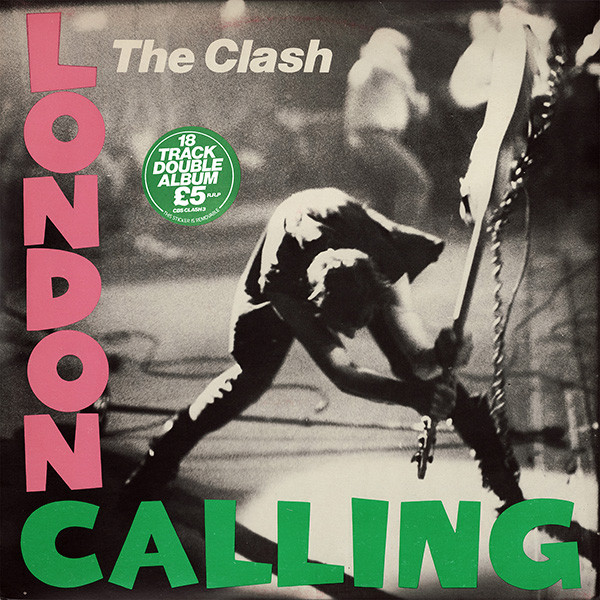





/80%2001%2009%20The%20Guardian,%20London,%20Greater%20London,%20England%20(LC%20Review).jpg)


/Liverpool-Echo---Friday-07-December-1979.jpg)
%20SMASH%20HITS%20feature%20article/1979%2012%2013%20SMASH%20HITS%20feature%20article%20550.JPG)


.jpg)
.jpg)


 Archive PDF


 80 01
80 01