Here is a list of known articles around the time of the tour. If you know of anything that is missing please do let us know.


Adverts

Dates

Fanzines

Posters

Snippets

UK Articles

US/ International Articles

Audio / Video

1977 Magazines

1977 General

Photos


Clash headline four-week tour

Date / source unknown - Link


Forced to cancel

Record Mirror from Oct 27 1977 - Link


Back on the road

Record Mirror from Oct 27 1977 - Link


Clash and Hell finalise dates

News of The Clash's UK Tour with Richard Hell And The Void-Oids in Sounds 1st, October 1977. Plus Tom Robinson Band's UK Tour. @TheClash -

Link 1 or Link 2


Advert: Richard Hell & The Voidoids + The Deadboys tour dates

Link


Steve Connelly's tour book

Clash roadie Steve Connelly's tour book which was auctioned in 2014 for $1,560. One page only! If you have the other pages, please could you send scans to us. - Link
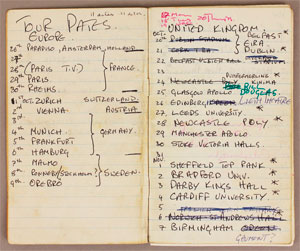
A Silvertone memo book containing nineteen pages of handwritten notes regarding The Clash's first European tour from their trusted roadie Steve "Roadent" Conolly. The notes include addresses (including one for John Lennon's Dakota New York address), phone numbers and guitar/amplifier/instrument lists, etc. Featured is an itinerary of European and UK tour dates for The Clash. These includes dates from September 26th through December 20th. Measures 4 x 6.25, some of the pages are detached from the binding. Comes with a Gotta Have Rock & Roll Certificate of Authenticity.


Information about the Lous, support band

An extensive Lou's biography at https://www.bacteria.nl/tag/the-lous/ including a link to live video of the Lou's playing at the 1977 Mont de Marsan punk festival.


Back to the top


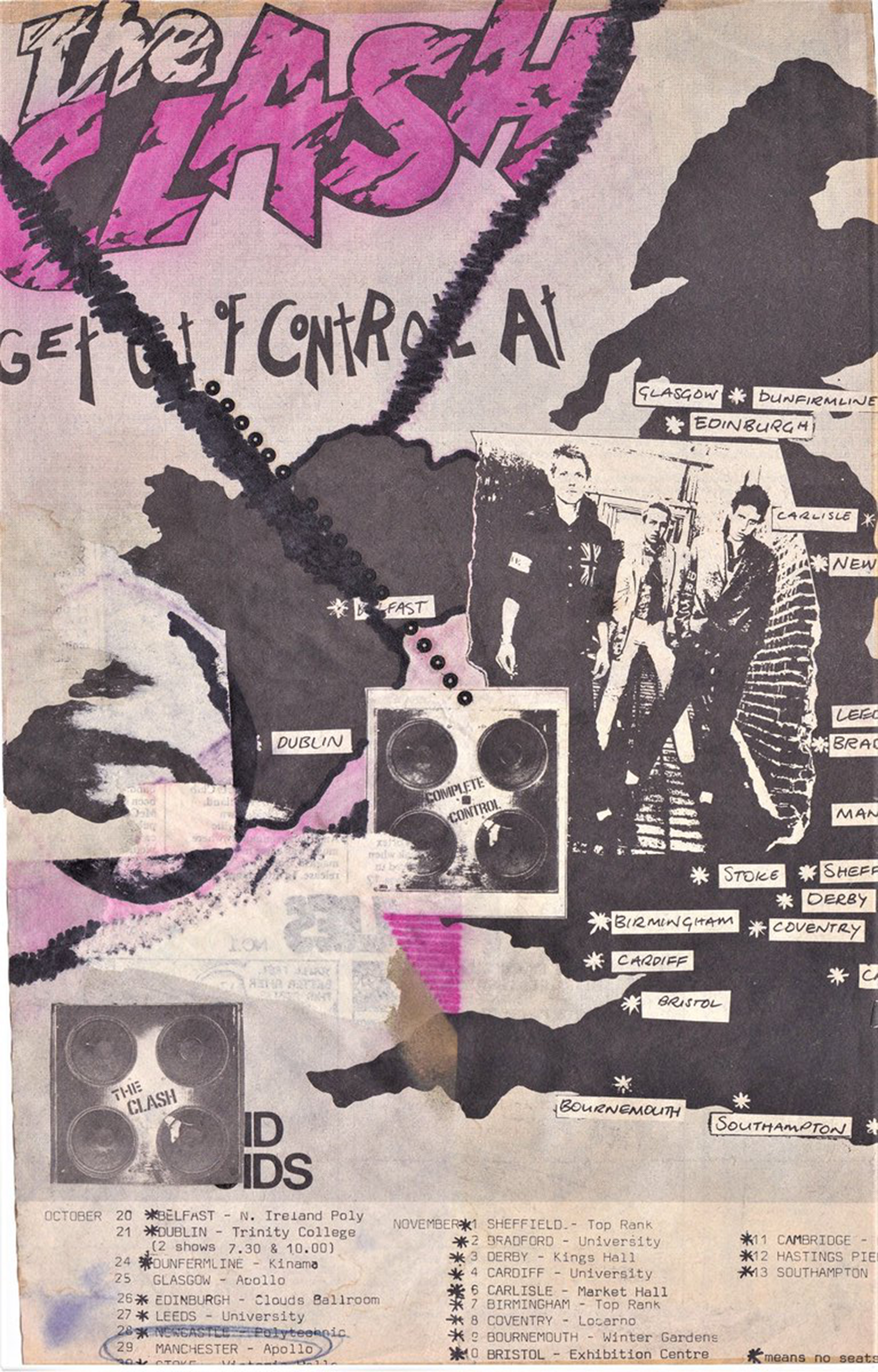
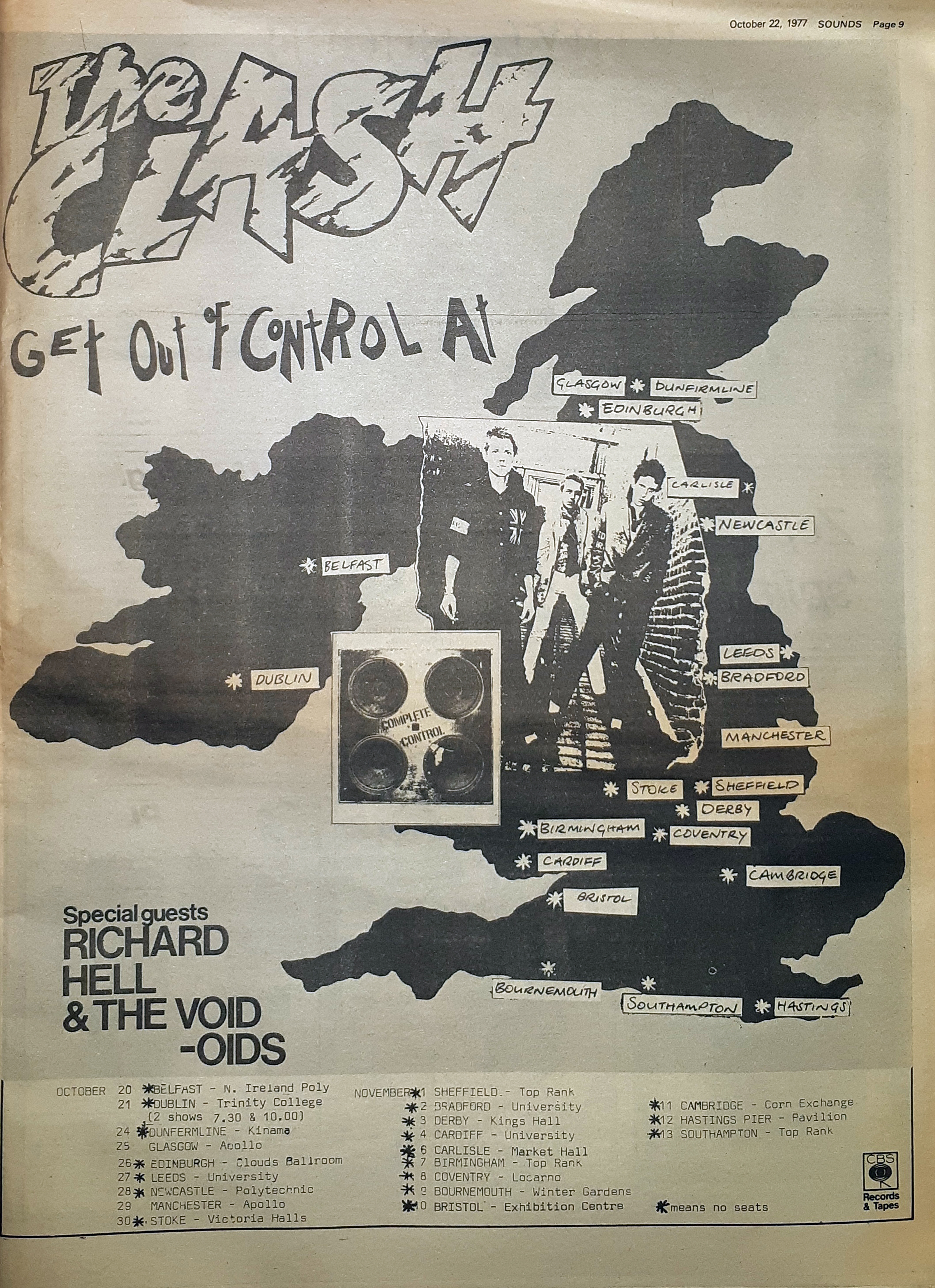
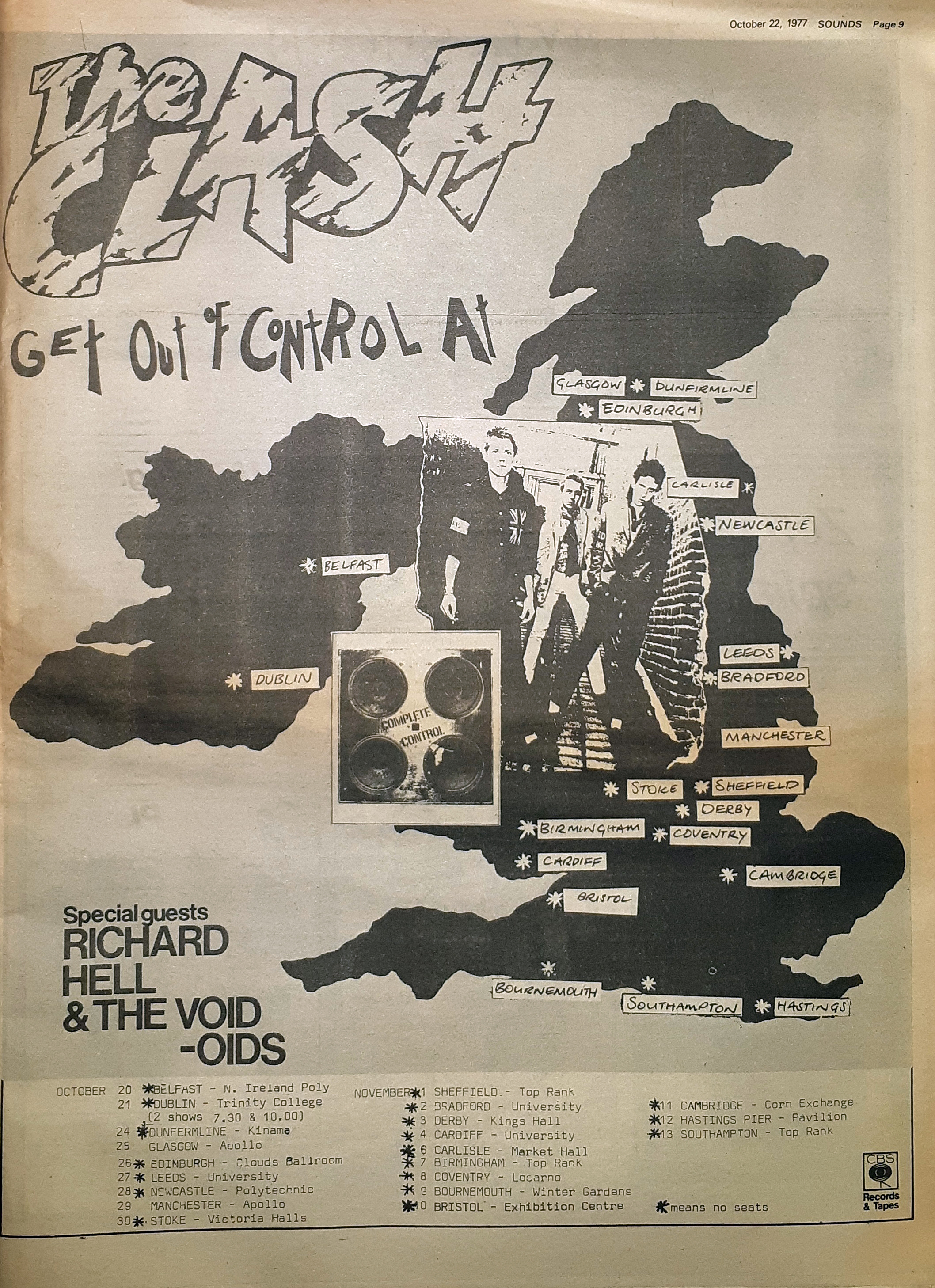
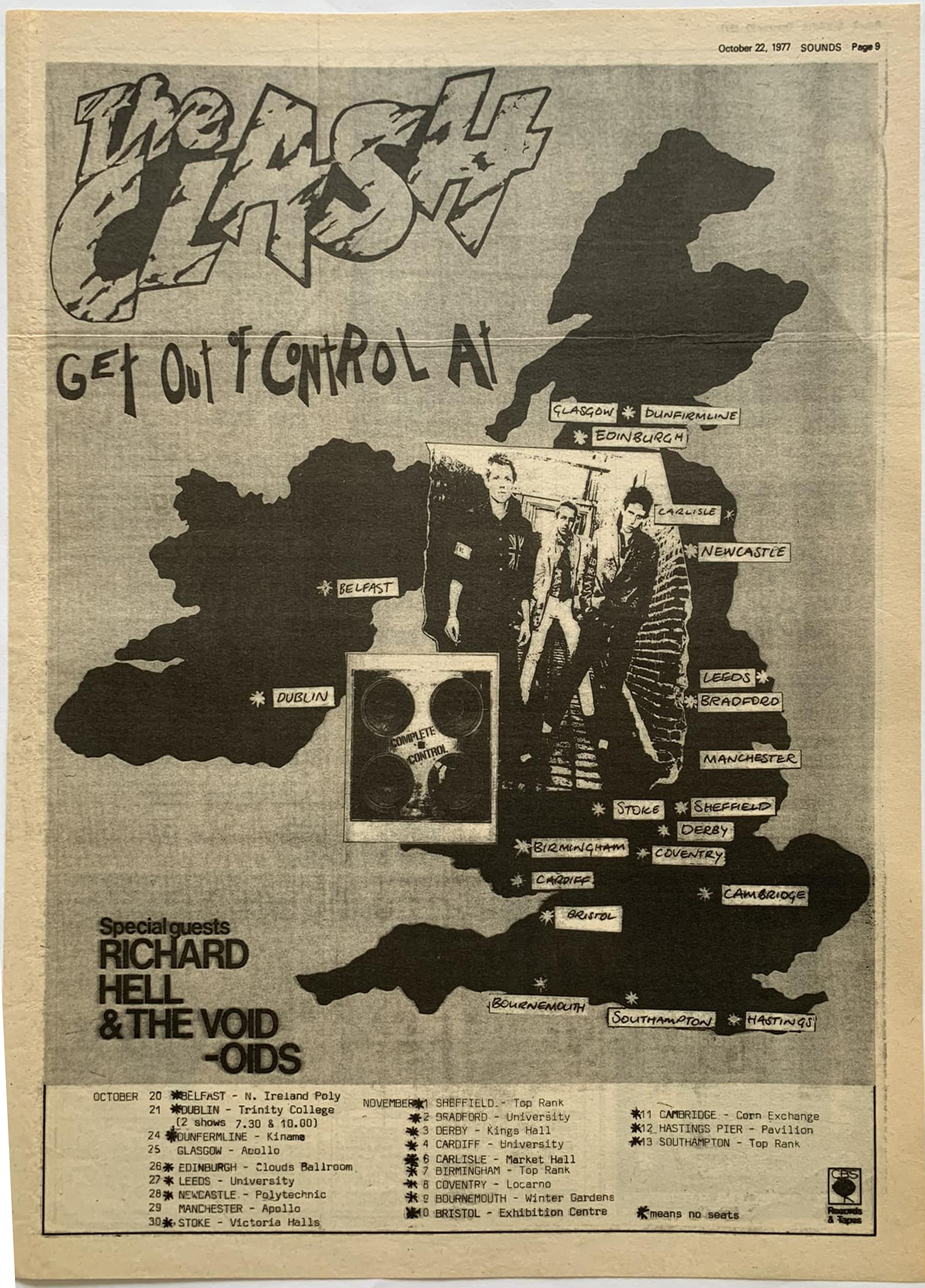
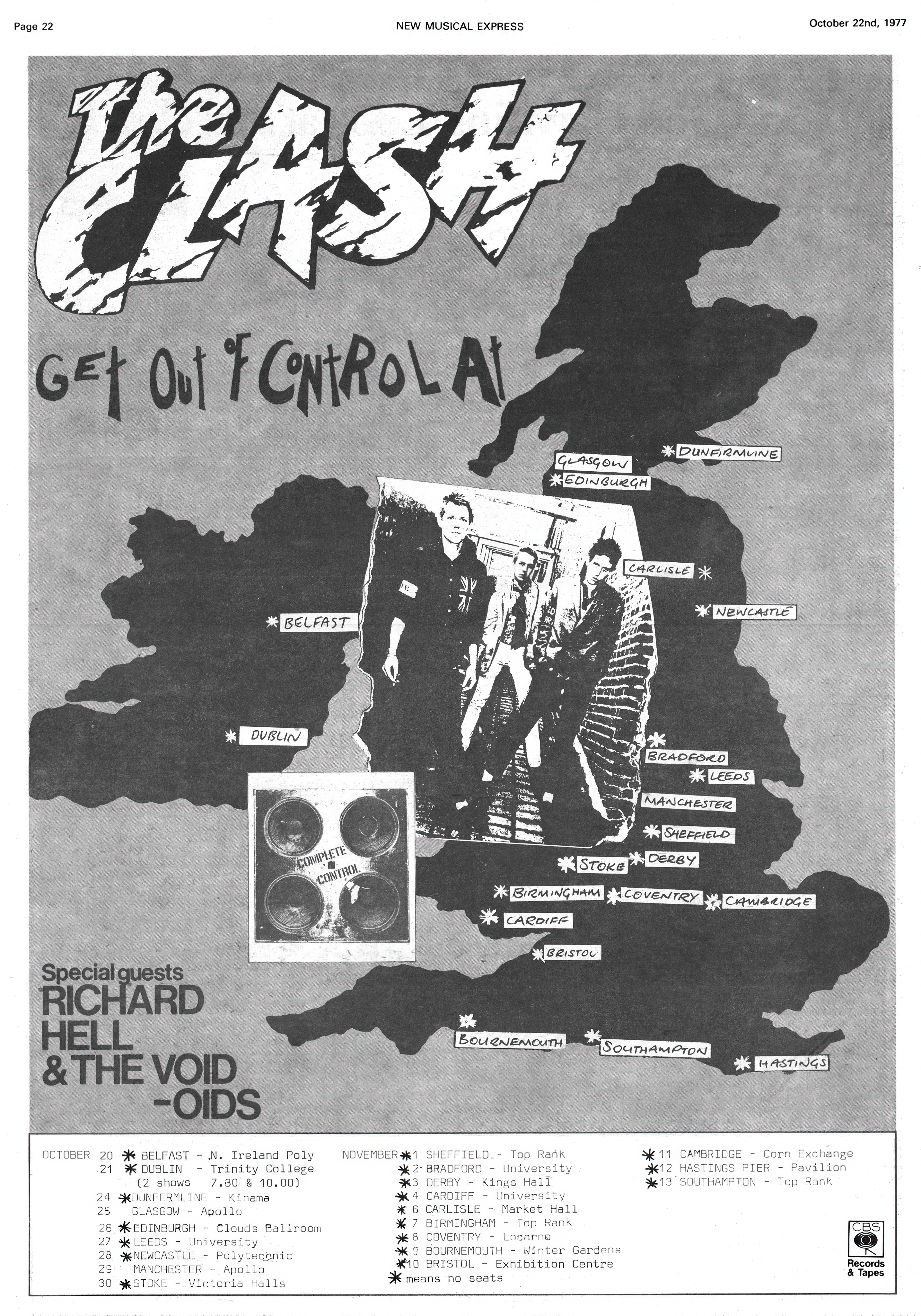
NME Tour advert with dates

large


Sounds & NME

Get out of Control adverts

Link


Sounds and Sounds


Sounds / NME: The Clash's UK Tour advert

22nd, October 1977 @TheClash - Sounds - NME


Back to the top


Record Mirror INTERVIEW David Essex

3 December 1977 - Link to full interview


Zig Zag End of Year Poll


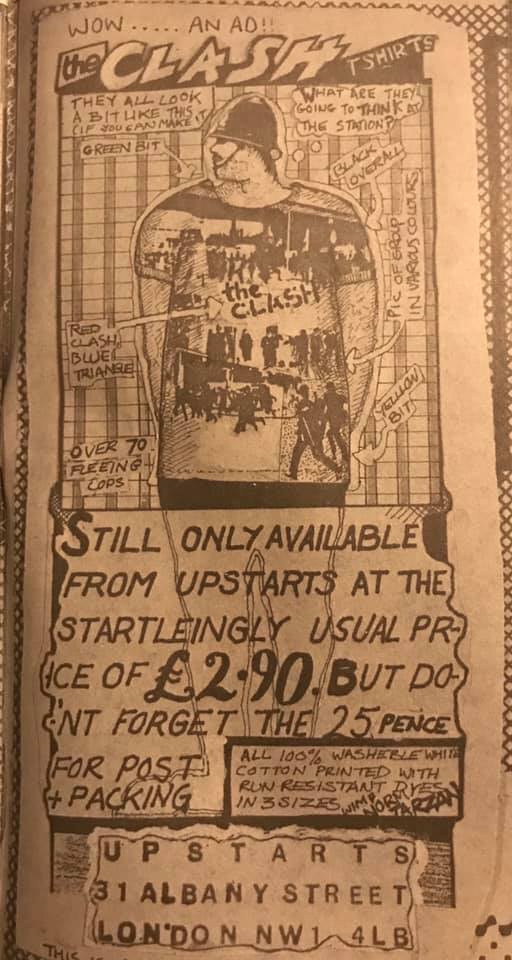
Clash t-shirts for sale

Link -

Link


Punk band seeks deal

Date / source unknown

Link


Clash London dates threatened by 'riot'

Date / source unknown

Link


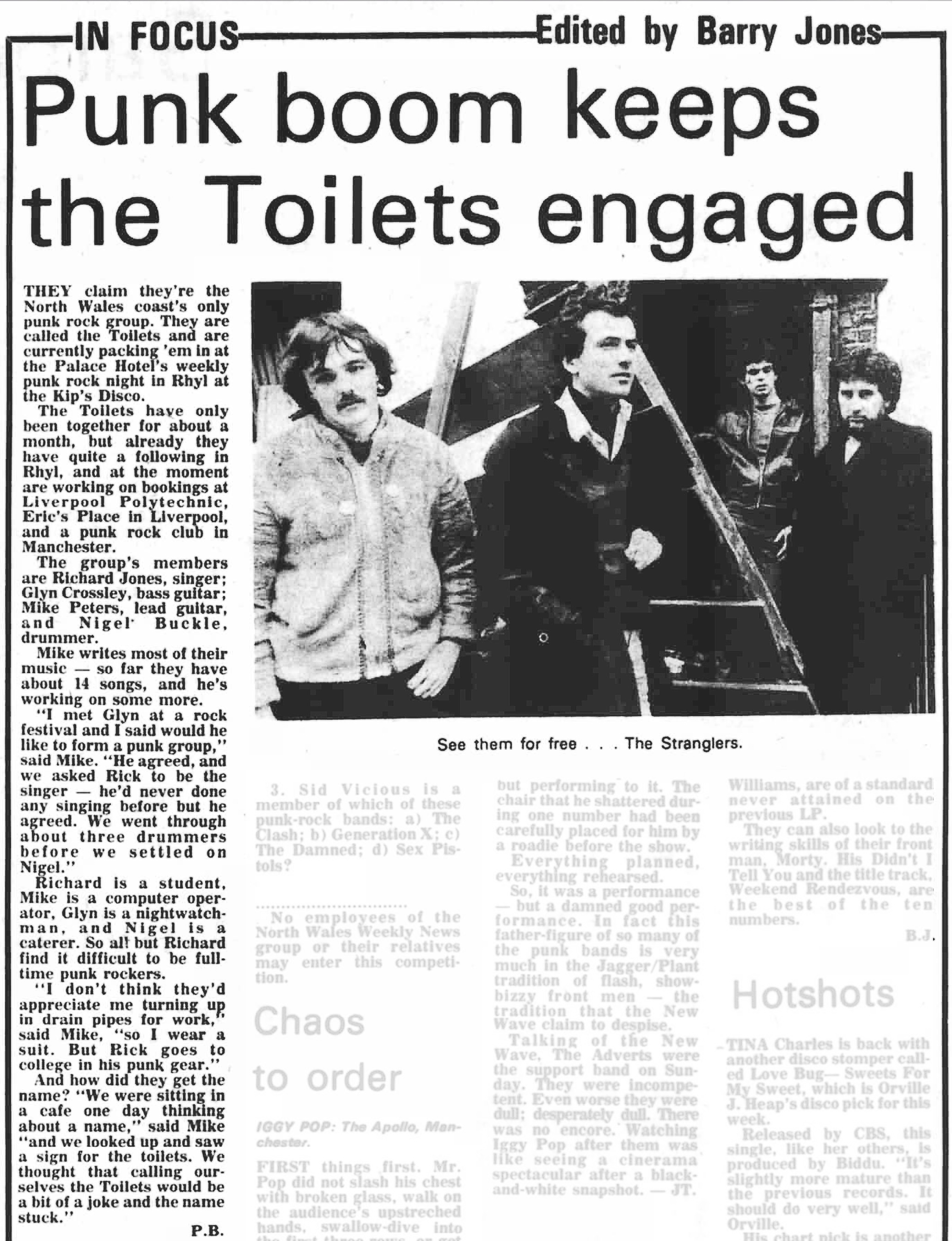
North Wales Weekly News - Punk boom keeps the Toilets engaged

Thursday 29 September 1977 - The Toilets supported the Clash

Enlarge image or full page PDF


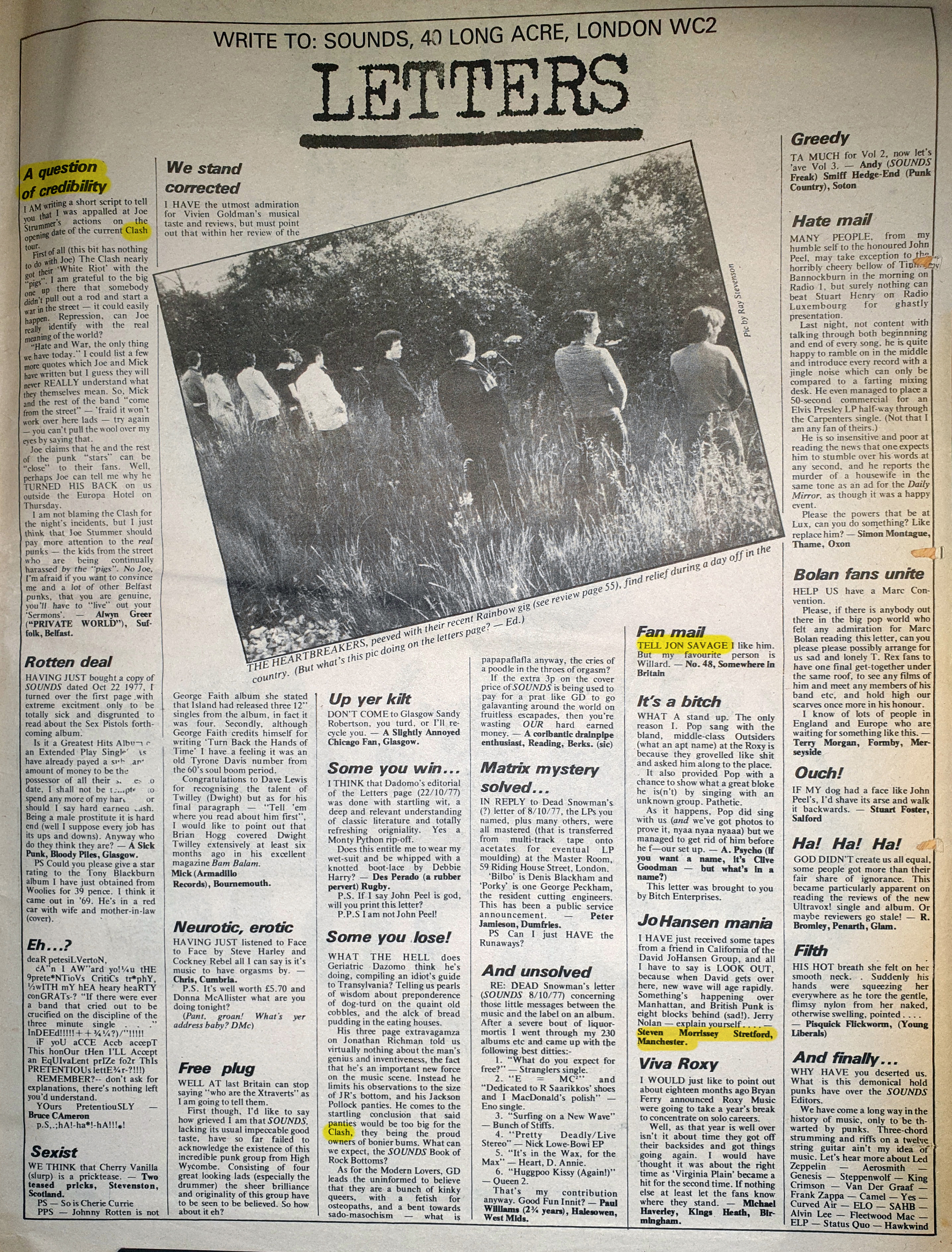
SOUNDS, The LETTERS page

Including The Clash and a letter form one, Steven Morrisey

Sounds; 5th, November 1977

Enlarge whole page - enlarge Clash letter only


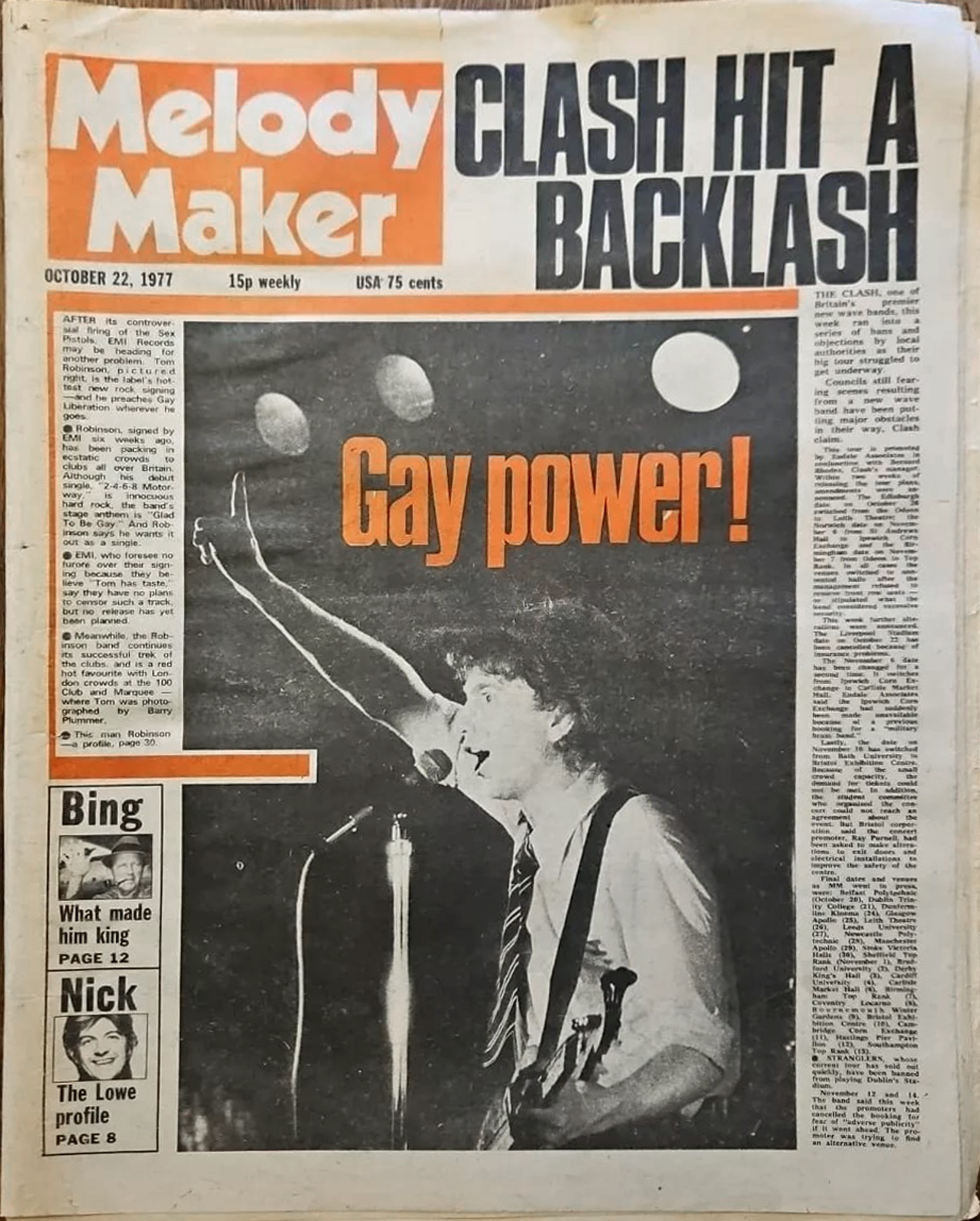
MELODY MAKER, Clash hit a backlash
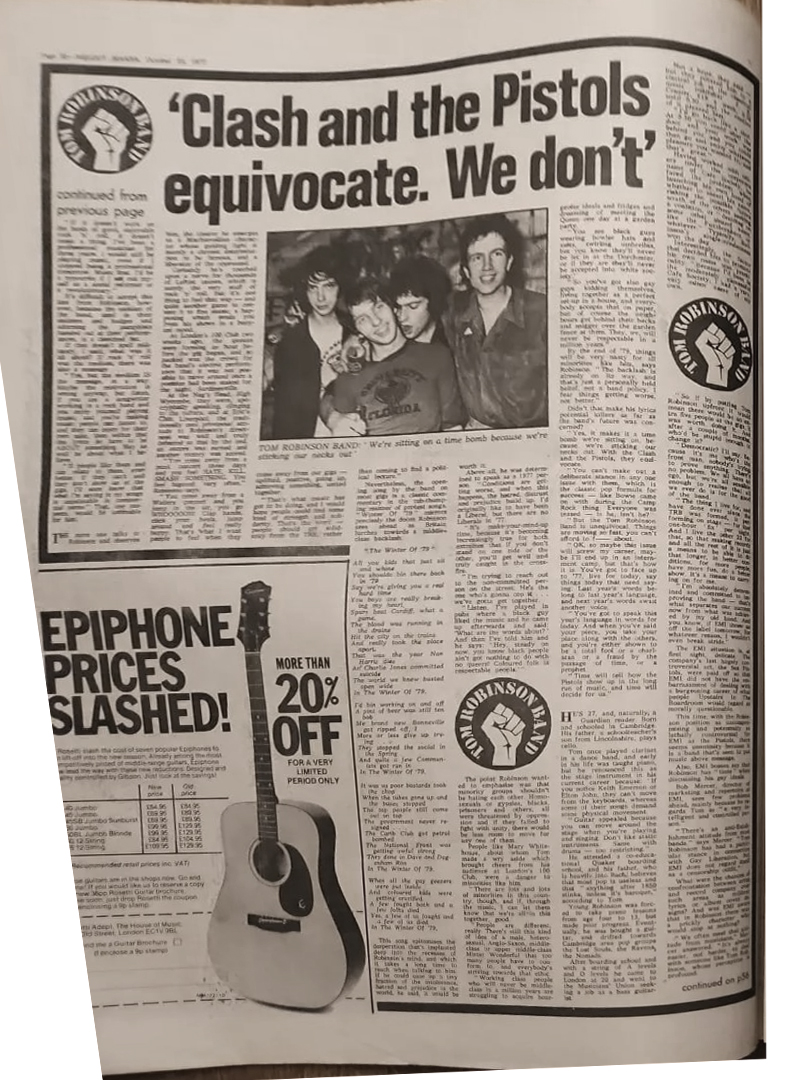
Tom Robinson 'Clash and the Pistols equivocate. We don't'

22 October 1977 - unreadable, too low quality

WANTED ****


Back to the top


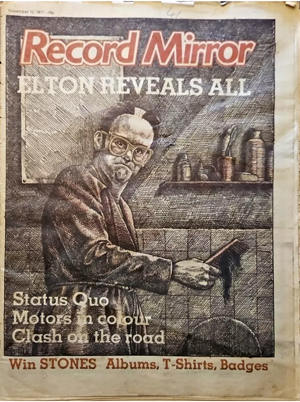
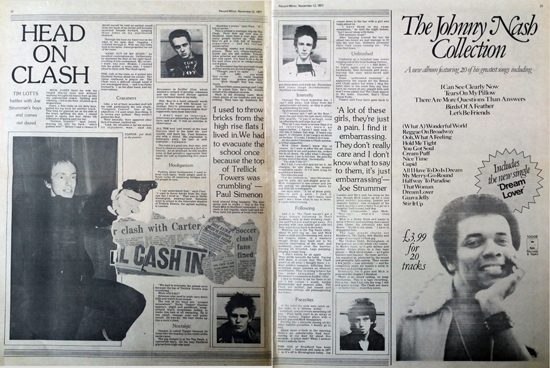
RECORD MIRROR WEEKLY, Head on Clash

11 November 1977 - Archive PDF


Kris Needs, "Stay Free: The Clash from 1976-1983" Vive Le Rock, #10, 2012, pp. 48-61.

Joe Strummer 21.8.1.1952 - 22.12.2002

Stay Free: The Clash from 1976-1983

— A first-hand account of life with The Clash from 1976-1983, from their earliest gigs to their eventual dissolution by journalist and friend Kris Needs.

— Detailed recollections of early gigs, including the violent 1978 Dunstable Civic Hall show and the legendary 1977 White Riot Tour.

— Chronicles the band's internal dynamics, creative evolution, and personal struggles, including Joe Strummer's transformation, Mick Jones's studio genius, and Topper Headon's addiction.

— The recording of classic albums like London Calling and Combat Rock, and the pivotal sacking of both Headon and Jones.

— Dunstable Civic Hall (1978), White Riot Tour (1977), Out Of Control Tour (1977), 16 Tons Tour (1979), Bond's Casino, NYC (1981).

— Also includes a feature on the history of British Reggae by Martin Langford (pp. 62-65).

Read the article ... 

PDF


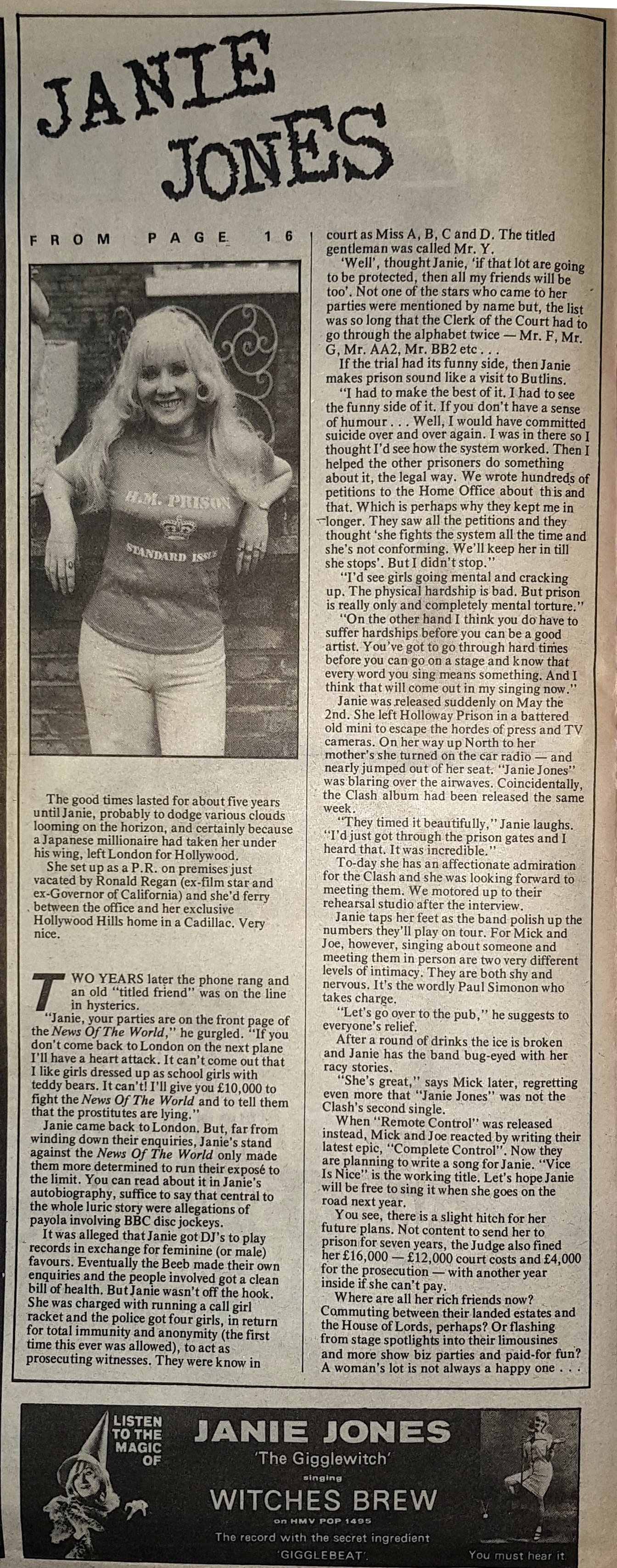
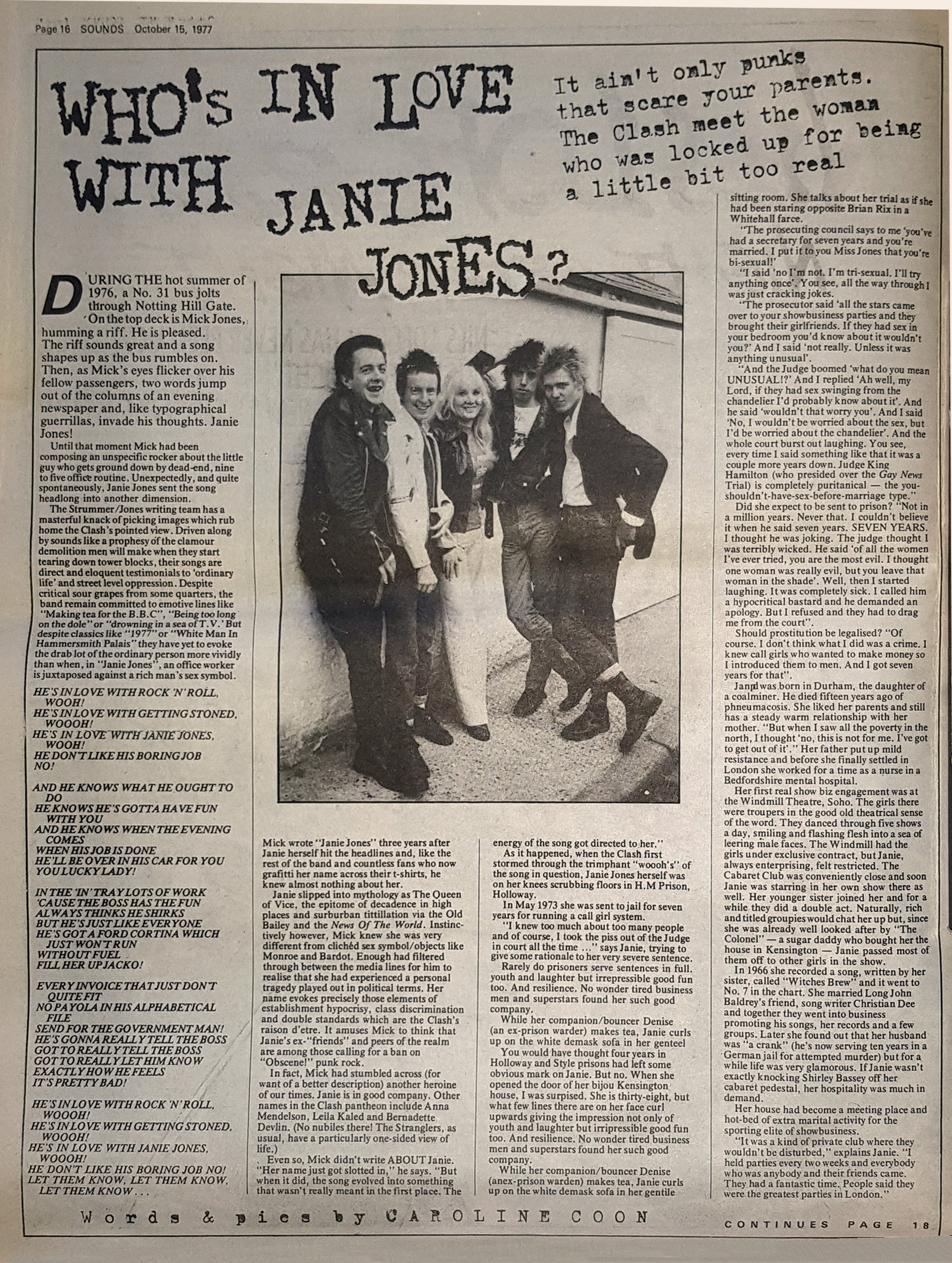
Sounds, Who's in Love with Janie Jones

Enlarge

Sounds, Janie Jones

plus advert (Witches Brew) Enlarge

15 October 15 1977 - 2 page


Sounds: Clash City Rockers
The Clash in the City of the Dead. No fun in Belfast or London

29 October 1977 - 4pages

Link 1 or Link 2 - PDF Link 1 or PDF Lnk 2


Rock-A-Bye Punk
An early death for Punk?

Link


Melody Maker: Heroes and Villains
Conflict and Clash control... Clash lose

Meoldy Maker 29 October 1977 - Report from Belfast

Link


Record Mirror THEY ARE HUMAN

22 October 1977
Drones do a skit Clash album, Clash turn up to laugh along.

Link


Record Mirror CLASH HEADLINE FOUR-WEEK TOUR

1 October 1977

Link


SOUNDS Who's in love with Janie Jones

15 October 1977

Link


IN LOVE WITH JANIE JONES: THE CLASH AND THE BAD GIRL WHO INSPIRED ONE OF THEIR GREATEST SONGS


See also Dangerous Minds

IN LOVE WITH JANIE JONES: THE CLASH AND THE BAD GIRL WHO INSPIRED ONE OF THEIR GREATEST SONGS

Link or archived PDF


Who's In Love With Janie Jones?

Interview by Caroline Coon - Sounds, October 1977

Text link

DURING THE hot summer of 1976, a No. 31 bus jolts through Notting Hill Gate. On the top deck is Mick Jones, humming a riff. He ...


Greatness from Garageland

Peter Silverton, Trouser Press, February 1978

UNANNOUNCED, TO SAY the least, a kid in boots, suspenders and short-cropped hair clambers through the photographers' pit and up onto the stage of London's Rainbow Theatre. Benignly ignored by band, stage crew and security alike... Read the full article


Clash Landing

Search and Destroy Fanzine

Clash Interviewed by Annette Weatherman and Vermilion Sands
A lengthy interview with Joe, Mick & Paul in 1977. It was published in Search & Destroy mag out of San Francisco. It was the first word of the Clash in print in the U.S. Birmingham Rag Marktt & Sweden gigs referenced.


Bangs, Lester. "Six days on the road with the foremost garage band in the land", New Musical Express, no. 10 Dec, 1977, pp. 31-34

Six days on the road with the foremost garage band in the land

Lester Bangs documents six days on tour with The Clash, capturing their explosive live shows and egalitarian ethos during UK dates in Derby, Cardiff, and Bristol

— Contrasts media hysteria about punk violence with the reality of "gentle" fans pogoing to White Riot and Police and Thieves, while criticizing gobbing as "nauseating"

— Praises Joe Strummer's righteous fury despite an abscessed tooth, Mick Jones' Keith Richards-esque charisma, and Paul Simonon's Muppet-like antics offstage

— Highlights the band's revolutionary fan interactions - letting supporters sleep on hotel floors, a stark contrast to rock star excess

— Analyzes The Clash's political authenticity versus Sex Pistols' nihilism, while debating punk's musical limitations at breakneck speeds

— Features Pennie Smith's iconic photos of the band's paramilitary aesthetic and Topper Headon's first NME portrait

— Includes backstage chaos: sandwich fights, hair set aflame by manager Bernie Rhodes, and debates over playing Booker T. funk covers

English.html  |   PDF1  |   PDF2


Hate 'n' War 'n'

General interview towards end of the 1977

Record Mirror?

Link


one page only - need full article


Clash City Rockers on Tour

ZigZag December 1977

... Strummer attacked at the Marquee

Derby & Cardiff reviews
Kris Needs, Tour review
Robin Banks

Link

Derby Kings Hall. The thickset geezer with the appearance of a frustrated rugby player - too short to make the scrum but just as tough if they'll only try me out - stands at the edge of the crush around the stage and looks at the bobbing, shoving throng in between wet stares at all gir] French group the Lou's, who ....


Mick back stage at the Nashville

Melody Maker

Never Mind the Bollocks was released on the 28th October 1977

thumbnails only, hi-res scans wanted


Punk will continue to rule - but what comes next?

The world of pop from the inside by Chris Salewicz, the man in the know

Liverpool Echo - Saturday 31 December 1977

Link


So whats new about punk?

Year end piece. Mentions Coventry Tiffany's.
Coventry Evening Telegraph - Saturday 31 December 1977
Year end piece. Mentions Coventry Tiffany's.

Link


The Punks Mr Fix It

Daily Mirror - Tuesday 20 December 1977 - pg10, 11

Link

[Punks pecking order] ... The Jam were seen riding round in a Rolls- Royce, so that disposed of them. After these more famous bands comes the Irish, Brixton axis, places where it is good to have come from. At least with Brixton or - Ireland as a background there is less chance of being considered a "poseur," or fake, the worst crime in the book.

IN the pecking order of punk there is a definite hierarchy. After the Pistols come The Clash and The Stranglers, two groups who have been variously banned or not allowed to play—part of a punk pedigree.

But The Clash seem to have neglected their humble origins lately and were rumoured to have cane lied gigs in Ireland to go away to Jamaica: very " non punk."


Insurance strangles two more punk dates

References the Clash cancelled concert two weeks prior

Belfast Telegraph - Tuesday 25 October 1977 - Link


Residents' punk rock fear / Plan for Elm Park concert attacked

Reading Evening Post - Thursday 27 October 1977 - Link


Punk Rules OK / The Song of th anti-hero / Baggy to the knees

Coventry Evening Telegraph - Tuesday 13 September 1977 - Link

- Lengthy piece about punk clothes, mentions Tuffany's ban, Rainbow riot and Lanchester non payment.


Adrian Boot The Clash Story and all the important the photosessions

Online or
archived PDF

The Clash Story contains 3 important photo sessions including The Clash in Belfast. The other two main sections were The Clash at the Camden Rehearsal Studios and The Clash under London's A40 Westway. Maybe it should have been called "UK Calling.

Links to photos

THE CLASH
The Clash Archive
The Clash - Belfast -1977
The Clash - Camden -1977
The Clash - Westway -1977
The Clash - Backstage 1976-79
The Clash - Live
Big Audio Dynamite
Straight to Hell
The Clash - Soho - 1976


NME Magazine - Clash Interview

20 October 1977

WANTED ****


Punk will continue to rule—but what comes next? 

Liverpool Echo - Saturday 31 December 1977

THE WORLD OF POP FROM THE INSIDE BY CHRIS SALEWICZ,
THE MAN IN THE KNOW

Enlarge image or Full Page PDF


Back to the top


In Conversation with Paul Simonon The Clash

1977 Punk Magazine No11 October 1977 - Archive PDF (readable)

Better copy WANTED ****


Back to the top


1977 Magazines

martin.james, CUEPOINT, MEDIUM, 5 May 2016, PDF1, PDF2

Weekend Punks: Tagging Along with The Clash

1977 was punk’s Year Zero, the year Joe Strummer and chums made their call to arms to the U.K. youth. Martin James heard the call, cheeked his mum and ‘ran away’ to join the ‘White Riot’ tour. 27 years on, he sat down with Messrs Jones and Simonon in a private bar in West London to reminisce....

Photo: Erica Echinberg / Getty

martin.james, CUEPOINT, MEDIUM, 5 May 2016

Weekend Punks: Tagging Along with The Clash

1977 was punk’s Year Zero, the year Joe Strummer and chums made their call to arms to the U.K. youth. Martin James heard the call, cheeked his mum and ‘ran away’ to join the ‘White Riot’ tour. 27 years on, he sat down with Messrs Jones and Simonon in a private bar in West London to reminisce.

It’s August 2004. I’m sitting in a private members bar on Portobello Road in west London with Paul Simonon and Mick Jones, both former members of The Clash. Mick is slumped in a voluminous sofa, his skeletal frame on the brink of being swallowed whole by the combination of an oversized pinstripe suit and generous soft furnishings. His receding hair is greased back and his sallow skin appears to shrink around his cheekbones and teeth. He reminds me of Dustin Hoffman’s Ratso character in Midnight Cowboy, but with added London cool.

Paul’s roguish good looks and sinewy frame have filled out with age. A hat hides his thinning hair and where once he came over as the band’s gun-wielding thug, he now has the air of amiable barrow boy-turned-art dealer. He continually leans forward, apparently reveling in the interview limelight. “People only ever wanted the singer or the guitarist in the old days,” he complains while tucking into a bowl of chips.

We’re here to discuss the reissue of the 1979 album London Calling, the record that saw The Clash flirting with rhythm and blues, reggae, ska and rock — in effect transcending their purist punk-rock origins. It’s a record that both men are fiercely proud of. Jones declares it to be “the sound of a real band really in tune with each other” while Simonon talks about “breaking free from what people expected of us.”

The story behind the album has been endlessly recounted in the years since it was first released. However, as the beers flow, talk comes round to the impact the band had on so many people. Jones’s conversation gradually descends into sniggers and quips while Simonon becomes ever more animated, talking with hazy-eyed nostalgia about the days when The Clash inspired kids to pack up their possessions and leave home in pursuit of the band.

“It’s true we connected with so many people in a very meaningful way,” says Paul. “What’s really nice is that I’ll meet people and they’ll chat to me like I’ve known them for ages — but they’ll be Clash fans. It’s like having this extended network of friends.”

Mick chips in: “Ultimately, though, we were just doing what we liked doing, playing the music that we liked — never thought about the effect we were having too much. We never had time to think about it.”

So what would you do if your kids ran away from home to follow a band? “I’d probably say ‘good for you — go for it,’” says Paul. “But only if it’s the Libertines,” adds Mick, who is their producer.

[photo: Janette Beckman]

I was 14 when I first left home to follow The Clash. It was early 1977 and the impact of punk rock was just beginning to be felt in the nation’s classrooms. Like so many kids of my generation the cocktail of punk’s apparent unbridled anger and my own hormones proved too potent to contain. In the course of what seemed like only a few weeks my voice broke, I gave my mum cheek, I cut my hair short, converted my flared jeans to drainpipes, acquired baseball boots and a ripped T-shirt, and got beaten up. This was for being a punk, setting a pattern that was to define the next few years of my life.

My first Clash gig was at the Harlesden Coliseum in 1977. I told my parents I was staying at a friend’s house. My friend did the same and we duly “left home.” For two kids from the middle-class town of Marlow-on-Thames it seemed like the punk rock thing to do.

Harlesden Coliseum was decrepit. The fake alabaster decor was in an advanced state of decomposition, the flecked wallpaper peeling off in strips to reveal disintegrating walls. The carpet was sticky underfoot, the air dense with the smell of damp, stale cigarettes and body odor. It constituted the perfect setting for my first encounter with the London punk scene. It also seemed the perfect venue for The Clash, who took the stage to taunts about their newly signed deal with Sony Records. The band’s reaction was to deliver a set of all-consuming ferocity.

The picture is still clear in my head: Joe Strummer screwing his face up to snarl at — rather than into — the microphone, his leg pumping uncontrollably like a piston; Mick Jones attacking his guitar and his amp as if he hated them (they kept packing up, as if they hated him); peroxide-blond bassist Paul Simonon swinging his instrument low like a weapon, a slow-burning cigarette hung constantly from his bottom lip in defiance of the laws of physics. It doesn’t go away, that kind of imagery, not when you encounter it for the first time.

‘London Calling’s’ iconic cover shot

After the gig I worked up the courage to approach Joe Strummer. He was holding court at a makeshift bar, enjoying a couple of beers and praise for the show. I waited until the crowd thinned, wandered over to him and said hello. He seemed to me to be the epitome of cool in his Clash uniform of heavily-stenciled combat gear. But it was his teeth that really compelled my attention. They appeared to be decaying in front of my eyes, ravaged, presumably, by a combination of negligence, bad dentistry and cheap speed. As he spoke a continuous stream of spittle flew from his mouth.

I attempted to make intelligent conversation. I asked him why he sang a song called “White Riot” while the DJ played reggae all night — did it, I wondered, annoy him at all? The spittle turned to froth. Did I not understand that “White Riot” was all about his respect for black people and their stand against oppression? Had I not listened to the lyrics, in which he sang that he wished white people would take the same positive position?

Well, no actually. First of all The Clash hadn’t actually released a record at this point so there was no way I could have analyzed his lyrics. Secondly, I hadn’t grown up in multi-racial Notting Hill Gate. And, despite going to gigs in the multi-racial town High Wycombe, I had never previously been forced to face up to my own inherent racism.

It was an attitude that had been borne from the simple fact that there were no black people in Marlow. I was ten when I met my first black kid. Some nice white middle-class family had adopted him. I can still remember being told in the playground that if the black kid touched me his color would rub off on me. As a 14-year-old, race riots — or indeed the very concept of “racism” — meant little to me.

So Strummer forced my eyes open. And to confirm my new-found awareness I started drinking Red Stripe in High Wycombe’s Rasta pub, The Red Cross Knight, and, when The Clash hit the road again in May 1977, skanked enthusiastically to the band’s version of Junior Murvin’s roots-rocking classic “Police and Thieves.” I became a vocal supporter of the Rock Against Racism movement. And when, in April 1978, The Clash played the RAR Carnival at Victoria Park in Hackney, there I was handing out badges, unquestioningly.

Paul Simonon plays the RAR Carnival at Victoria Park, London in 1978 [photo: Syd Shelton]

Back in Harlesden, however, the tongue-lashing Strummer meted out went on and on and left me reeling. This was not what one expected of narcissistic rock stars. But he did stop eventually, at which point he put his arm round my shoulders and told me to “piss off ‘ome.” I stumbled into the Harlesden streets feeling like I’d just been pulled up by a teacher. It was while I reflected somberly on this that I was knocked cold by another punk and robbed of the £1.20 I had to get home with. It wouldn’t have happened, of course, if my attacker had realized that I was now a close friend of Joe Strummer’s.

So how exactly did a middle-class kid from a middle-class town come to follow The Clash around? Well, as a young teenager it certainly wasn’t their political stance that excited me. At that time the dole meant nothing to me and, as I’ve already mentioned, I was completely ignorant of any concept of racism.

In retrospect I think I was drawn to the macho air that surrounded the band. It may not appeal much now, but as a teenage boy their tough-guy, outlaw image was something to aspire to. The Clash, far more than the Sex Pistols or the Damned, were a gang. And, more to the point, they made us — their hormonally challenged disciples — feel like we were also part of the same gang. They were, they argued, the same as us and everything about them portrayed an us-against-them attitude. It comes as no surprise to hear, more than 25 years later, Simonon still talking about his “network of friends.”

That gang vibe was a key component of the punk “stance.” Kids like me were never hard enough to be skinheads. In fact, like most punks, I was happier to write poetry than fight. But like it or not, aggro attended punk wherever it went. The media waged a daily war on us; complete strangers adopted the blood sport of “punk hunting.” We just took it on the chin, or wherever else the blows landed, because we had a cause. We were martyrs, the beatings a right of passage. We would show our wounds to younger, aspiring punks. The cuts and bruises were much, much more meaningful than button badges.

And we got great stories out of it: I remember bragging about being jumped on by a gang of Teds when in reality a single Elvis impersonator had punched me for spitting at him. We were only reducing ourselves to type. I was a punk: spitting is what we did. He was a Teddy Boy: hitting punks is what they did. He probably told his friends that he’d taken on a gang of us. The fact that we sat next to each other in double-English on a Tuesday afternoon would certainly have been left out of the narrative.

Punk offered the chance of reinvention. We were all keenly downwardly mobile, throwing away what we saw as the entrapments of middle-class life in favor of what we perceived to be working-class attributes. This meant swearing a lot, chewing imaginary gum and sneering at “the straights.”

The mad rush to punk self-reinvention was especially notable in the generation about to head off for university. Virtually every 18-year-old went off as a hippy, only to return at Christmas quoting the first Ramones album, hair shortened (side bits still over ears though), styled by Oxfam.

My own three-strong gang comprised Nutty (the son of a toilet-roll salesman), Gerrard (who later became briefly famous for finding an original painting by John Lennon in a skip) and myself. But by the summer of ’77 our number had swelled considerably. Among the future DJs, movers and shakers of the late 20th century, Roald Dahl’s grandson used to hang out with us. Can’t remember his name. He was at Eton at the time. And one of the girls started to bring along her boyfriend. His name was Steve Redgrave, a huge, quiet fellow. He wore a torn school shirt with the names of his favorite punk bands written in ballpoint all over it. But that was as far as he went. He had other interests. He amiably put up with us giving him stick for not being punk enough and puffing up and down the Thames in a rowing boat when he could be going to gigs and changing society.

At the time, the most uncool thing you could be was a “weekend punk.” It’s what the London cognoscenti called us Thames Valley youngsters, and that’s exactly what we were. Correspondingly, in time-honored anthropological fashion, we would sneer “weekend punk” at anyone who didn’t measure up to our exacting standards: wearing the right clothes, buying the right records or being seen at the right gigs. Steve Redgrave was a full day short of qualifying as a weekend punk.

In May 1977 I “left home” on a number of occasions to follow the Clash’s “White Riot” tour around the country. These adventures were funded by savings from odd jobs and, of course, Christmas, birthday and pocket money. I even started dealing in second-hand records at school and later, in a particularly enterprising move, selling such bootleg classics as the Sex Pistols’ Spunk.

We got to the gigs on a mix of naïvety and bravado. We often hitched and relied heavily on punks in other places for food. We sometimes even managed to grab a sandwich from the band and their entourage. Obviously, there was also a degree of subterfuge involved. In fact, you could say that The Clash taught me to lie convincingly to my parents and, on occasion, to my friends. My entire family were oblivious to what I was up to. Even today my parents refuse to accept that this episode in my life ever took place. At the launch for my most recent book my dad picked up a copy of my biographical blurb and, after reading about my Clash adventures, declared at the top of his voice that “this man is a liar!”

But I was never gone long enough for them to become suspicious. I was, however, now spending enough time in the band’s orbit to be on nodding terms with them. Joe I’d come to see less as a pedagogical figure and more as a cool older brother. Paul was always the one I most wanted to be like — he seemed street-tough but indefatigably concerned with the welfare of other people. Mick I was less sure of. His sneer was always unsettling. He had no inhibitions about showing his dislike for us juvenile weekend punks.

But I was having the time of my life. I’d been to Eric’s Club in Liverpool and the Electric Circus in Manchester. I’d joined in with my fellows and ripped up chairs at The Rainbow in London (an act that we repeated a year later for Siouxsie and the Banshees) and talked my way backstage on numerous occasions, to chat with Clash iconographer, film-maker and Roxy Club DJ Don Letts. I even blagged my way, blind drunk, into sleeping on the floor of one of the band’s hotel rooms in Leicester. To this day I’ve no idea whose.

The Clash performs during the On Parole Tour in 1978 [photo: Kevin Cummins / Getty]

Inthe year that followed I took in a few one-off dates around the country. Each time “leaving home” only to return early the next morning. It was in June, on the 1978 “Clash On Parole Tour” that I decided to bite the bullet and actually run away to follow the band on a permanent basis. The first date was at Aylesbury Friars. I was wearing white jeans, red military jacket (both embellished with home-sewn zips) and ripped Clash T-shirt.

After the gig one of the hangers-on (who I now realize was Ray Gange who starred in the Clash film Rude Boy — although I was studiously indifferent to the ever-present cameras at the time) handed me a button badge giving me backstage access. The dressing room was a whitewashed breezeblock box with mirrors on every wall. The floor was a rubble of beer cans, empty amphetamine wraps and comatose punks. I went straight up to Joe and told him I was coming on the road with the band. He told me to “piss off ‘ome” again. Undaunted, I turned up the following night at Queen’s Hall in Leeds. This time Joe told me I was an idiot. So I spent the night on the floor of Mick’s room, along with a horde of stranded fans eking out their own space among the cans, wraps and guitar cases.

I went straight up to Joe and told him I was coming on the road with the band. He told me to “piss off ‘ome” again. [photo: Erica Echinberg / Getty]

This wasn’t the greatest fun in the world and the following day I decided to go home. Paul rather sweetly did offer his floor on future dates if I decided to continue with the tour. However, by now I’d made the discovery that the romance was better than the reality. My bed at home in Marlow was preferable to Mick Jones’s hotel-room floor in Leicester and the illusion of being a part of The Clash’s extended family had somehow just dissolved. It had never figured in my fantasy that I’d actually have to share the experience with other fans.

In September 1999, at a party to celebrate the release of the posthumously released Clash live album From Here to Eternity, I reminded Joe about the time he stopped me from leaving home. He stared at me, obviously not believing his ears. I went on to explain how that experience had changed my life. His reply was typically direct: “Don’t blame me for your life — I don’t want that on my shoulders.”

“Like Joe said, we were just a band, we didn’t want the pressure of everyone else’s expectations on us,” says Paul Simonon, back again in the Portobello bar in 2004. But I have to leave, to catch the last train home. I make my excuses and a quick exit.

As I reach the door Paul comes running after me with his phone number. “If you’ve missed it, give me a call and you can kip at ours.” I feel like I’m 14 again — but I go home anyway.

Post script: A reflection It’s now 12 years since that meeting with Mick and Paul. Punk’s memory has been hijacked by the U.K.’s capital city through the Punk London celebrations of the so-called birth of punk in 1976. In retrospect the underlying theme of this story was the prominent part the suburbs played in the U.K. punk story and how history has become rewritten through the very un-punk canonization of bands like The Clash. In truth London was the focus, but the suburbs provided the engine. But that’s a story yet to be written…


Comments

Jay –– May 5, 2016 –– His reply was typically direct: “Don’t blame me for your life — I don’t want that on my shoulders.”

As a 15 year old I encountered the legendary Mr Strummer at Glastonbury. I told him what a fan I was and that he inspired me and he put his arm round my shoulders and whispered (as far as I can remember) “don’t copy me. Don’t idolise me. I don’t want people to think what I do is something to aspire to because… then they’re MY fault. Don’t be my fault” then he handed me a can of warm beer (red stripe, I think) and said “You’re a good kid, fuck off”

All Ears –– Jul 10, 2016 –– I’ll never forget the first time I saw “The Clash” album cover. Their bad ass stances, posing in the alley with armbands and flags, which showed they stood for something, short hair, opposite of the rockn’roll long hair, their attitude overflowing and the ripped up artwork that was so popular and modern at the time. Wow, I was totally smitten. I could not wait to buy the album. I just knew they had to be good and I was not disappointed. It wasn’t long until I got kicked out of the frat I was pledging to, once I cut my surfer hair and starting cranking “Career Opportunities” and “Garageland” in my room! The Clash saved me!

Donald Kelly –– May 7, 2016 –– Incredibly overrated group. The Clash were good for about 5 seconds and then they bought into the whole rock star thing and turned to complete shit and pumped out sell out after boring sell out top 40 crap music . Fuckin phonies and about as truly punk as The Bee Gees.


MOJO Magazine, August 1994 - Special Feature on The Clash's journey from Westway to Broadway. 20 pages

The Clash From Westway to Broadway

The Riot Act: John Ingham captures punk's chaotic rise in London, 1976.

– The Clash's mission to conquer America and redefine rock. Take the Fifth Tour 1979

– Ray Lowry’s sketches and memories from The Clash’s US tour.

The Clash on Broadway: Seventeen legendary nights at Bond's in New York, 1981.

Fifteen Years On, Joe Strummer reflects on The Clash’s American journey.


UNCUT 1977 *from the archives of NME, Melody Maker *Published 2015–2017.

The History of Rock 1977

— First offering for the Clash first album reviewed, page 68

— Letters Joe Strummer writes a letter to Melody Maker (23 April 1977) nixing
John Cale for bogus Roundhouse posters, page 91

— FEATURE: In Belfast, the Clash, "Desolation and chaos", October 1977, 6 pages, page 118

— FEATURE: NME April 2nd: "We ain't l ashamed to fight" The Clash, 6 pages, page 44

English.html  |  PDF


Reference: MOJO - Punk: The Whole Story (2006). For more, visit Archive.org

MOJO / Punk: the whole story

Contents (Clash only)

Eyewitness - The birth of punk at the 100 Club Festival, Sept 1976

Sniffin' Glue - How a fanzine became punk’s voice

The Clash Explode! - From squats to stardom: The rise of The Clash

Levene’s Departure - Internal conflicts reshape The Clash

What Happened Next - Post-punk journeys and transformations

Sandinista! — Genius or Folly? - The Clash’s ambitious triple album saga

Online viewer (very good)

Read the article


Retropective magazine features, audio, video

For a full catalogies of retropective articles in magazines, interviews and features on TV and radio go here.


Back to the top


Hanging Around fanzine, Issue #7

including Edinburgh review (1977) - Link


Still Unusual

Great site with lots of archived fanzines

List


Rockers on the Road Out of Control Tour

Oct 77 - Fanzine 2 pages

Link


Trash 77. “Issue Three.” Trash 77 (Glasgow fanzine), no. 3, 1977, pp. 3 pages.

Trash 77 – Nº3

— Third issue of Glasgow’s punk fanzine Trash 77: The Clash and emerging UK punk bands.

— Their breakthrough singles, live, debut LP and its political edge, the tension between punks and authorities, multi-cultural atmosphere around Rock Against Racism.

Rock Against Racism events; Edinburgh gig 7th May 1977, White Riot Tour

Read the fanzine  

PDF1  |  PDF2  |  PDF3  |  PDF4  |  PDF5  |  
Review of Trash77 #3


Oct 77 - Fanzine, 2 pages

Rockers on the Road Out of Control Tour

Rockers on the Road. THANKS TO ANNE FOR HER ….??…..

Punk tours are now almost legendary for only half happenings. The ‘Anarchy’ tour played only 3 or 4 dates out of 20 odd all due to massive punk paranoia while the ‘White Riot’ tour didn’t suffer quite as much, but hotels had got word that all punks were dirty.

The name Keith Moon evokes a hotel room. Everyone laughs and says “Ha ha, look at old Keith he’s a savage” but it’s a completely different thing if punks do the same. Hardly any wrecking of rooms took place on this tour. Nicky Headon did shoot an air gun in one room, but on the whole there was no more trouble than on a Gary Glitter tour.

The only people responsible for trouble were excitable hotel managers (and management men) who brought out special rules for punk bands. Richard Hell and his Voidoids were amazed by the stupidity of so-called English rules. Lucky enough the more rational people on the tour calmed things down.

The Clash themselves were so frustrated that anything less than 4 star was a hole. Just about everywhere where the...

For various stupid reasons The Voidoids didn’t suffer quite so much and as a result on most dates were in different hotels, which bugged both parties.

The tour itself was great, even better than the ‘White Riot’ one. When The Clash are on stage they are unstoppable; they leave any rival bands (including The Pistols) standing. When Joe Strummer asked me what I thought the difference between this tour and the last tour was, I had to say it was more professional, not the kind of professionalism that makes Yes or ELP a bore, but in a way that makes all those cynical arseholes who say “Oh punk is gone for the mind but they can’t play their instruments” eat their words.

Not only were they more professional in their music, but also in their handling of the audience and the continual spitting, a point which was very sore with Richard Hell. A simple statement from Joe Strummer: “I don’t want you tossing your gob at me, toss it on the ceiling or the bloke next to your best, not me.” That immediately commanded respect from the audience.

In Cambridge Mick Jones called the morons spitting at him “wankers” which upset them: “We only spit at you cos we like you.” Mick replied, “Anyone who spits at me is a wanker.”

The Lous, surprisingly enough, didn’t suffer as much spit as Richard Hell. Surprisingly because (a) they are French and (b) they are girls. CBS in Paris have just signed them up and put them on this tour to get them a proper taste of the English version. In France they hate us, but over here they went down just great. They have a very individual guitar sound and the tunes are the type of...

——

Nevertheless, naked truth itself can move these things, it can stir desire of the soul, yet it has no strike; it drives away sin, and that one drives away sensation. Always Epicurus holds this, in order to advance proof. For by nature expecting it in motion, it will draw small things to itself and remain steady.

Nevertheless, naked truth itself can move these things, it can stir desire of the soul, yet it has no strike; it drives away sin, and that one drives away sensation. Always Epicurus holds this, in order to advance proof. For by nature expecting it in motion, it will draw small things to itself and remain.

———

I never got fed up once, there’s no face to look at. Each time they hit the stage the crowd exploded and each time they hit the stage they blasted into “London’s Burning.” The new songs were even better than the old. “Clash City Rockers” will probably be the next single and will also become a stage fave.

“Clang, Clang Go The Jail Guitar Doors” has a very catchy chorus which is away from the football-terrace type chant associated with the band. “The Prisoner” is the band’s own dedication to the TV programme. It has a great guitar solo with the riff of the Prisoner theme.

But for me, the best number The Clash have ever written is the reggae-ish “White Man in Hammersmith Palais.”

Archive PDF


Back to the top


Richard Hell Tour poster

Link - Link


Back to the top


Manchester - Nov 15

Elizabethan Ballroom, Belle Vue

Often circulated as Elizabthan Suite, it is in fact a full gig which was filmed by and for Granada TV and included Souisie and the Banshees as support.

Snippets were screened twice on the So It Goes TV show (Dec 77 and Nov 78) (and repeated again in 1990) and circulate on video and audio.

Other than the So It Goes source, no other source exists.

It is thought Granada don't know where it is either and that the Dec 78 footage may have come from Tony Wilsons own collection?


So It Goes was a British TV music show presented by Tony Wilson on Granada Television between 1976 and 1977. It is most famous for showcasing the then burgeoning punk rock movement. The show's first series gave the Sex Pistols their first ever TV appearance performing Anarchy in the UK.


14 Seconds of The Clash in Belfast October 1977

For more information on The Clash in Belfast - visit Spit Records at https://www.spitrecords.co.uk


Jonathan Ross interview

BBCR2 with Strummer - July 2001 - 10:57mins

Aberdeen Parole
Suicide, Alan Vega
Richard Hell and spitting, hepititus, Shag Nasty
Roxy New Years Day 77
Suporting the Sex Pistols and moral crisis
Clash tribute bands, local bands, Alarm
Woody Guthire, folk music, Dylan
No Elvis...
Cut the Crap
Bournmouth Winter Gardens (6:15)
Rainbow (White Riot)
Electric Circus Manchester
Speech Impediment, drawl
US EPIC, The Only band that Matters or "mutters" graffiti
ageing
Johnny Cash
Strummers quiff and self titled 1st LP
"reunion when they are '77" and will play faster


Back to the top


Open photos in full in new window


THE CLASH - PRESS / PROMO PHOTO COLLECTION

28 original c 1970s/80s photographs depicting The Clash to including original CBS promo photo and many 8x10" press photographs. Many with press/photographer info to verso. Sold for £950 Hammer Price


THE CLASH - BLACK AND WHITE 8X10" PROMOTIONAL PHOTOS.

14 mostly c 8x10" black and white (mostly) promotional photographs depicting The Clash c late 1970s. Most stamped to verso with photographer info inc Alain De La Mata, Barry Plummer, Chester Simpson, Chris Walter. Several with Anabas stamps. One larger black and white contact sheet (12x9.5") with Adrian Boot stamps to verso. Sold for £200 Hammer Price


THE CLASH - STAMPED ORIGINAL PRESS PHOTOS INC ONE SIGNED BY PAUL SIMONON.

Six black and white press photographs depicting The Clash, all but one stamped with band and CBS logo to verso. One signed in blue ink by Paul Simonon. One with Caroline Coon sticker to verso. Sold for £150 Hammer Price

Botttom left with Bernard Rhodes is November 1976
Top centre and right (and possibly bottom centre) are Paris October 1977


Back to the top


Back to the top


www.blackmarketclash.co.uk

email blackmarketclash.co.uk@gmail.com

THE CLASH
1976  1977  1978  1979  1980  1981  1982  1983  1984  1985  THE CLASH: ALBUM BY ALBUM, TRACK BY TRACK 

STRUMMER, BAD, Pogues, films + : THE SOLO YEARS
THE 101ers: 1974-1976   SOLO YEARS: 1986-2025

STRUMMER & THE LATINO ROCKABILLY WAR
ROCK THE RICH 88-89   ROCK THE RICH 99-00  

STRUMMER & THE MESCALEROS
ROCK ART TOURS 1999   ROCK ART TOURS 2000   GLOBAL A GO GO TOURS 2001   GLOBAL A GO GO TOURS 2002   STRUMMER DEMOS OUTAKES

BOOKS, NEWSPAPERS & FEATURE MAGAZINES
THE CLASH YEARS –– 1975-1986 
THE SOLO YEARS –– 1987-2002 
RETROSPECTIVE FEATURE MAGAZINES –– 2002-2025  
BOOKS  OTHER LINKS  

THE CLASH AUDIO & VIDEO
THE CLASH INTERVIEWED – INTERVIEWED / DOCS

Sex Pistols / The Jam / The Libertines / Others
The Sex Pistols  The Jam  The Libertines  other recordings-some master


Jun 76 - Black Swan , five piece ....

Sept 76 - 100 Club, London gigs ....

Dec 76 - Anarchy Tour ....

Jan / Mar - Early 77 Gigs ....

May 77 - White Riot UK Tour ....

Jul 77 - European Dates ....

Oct 77 - Out of Control UK Tour ....

Jan 78 - Sandy Pearlman UK Dates ....

Apr 78 - UK Festival Dates ....

Jul 78 - Out on Parole UK Tour ....

Oct 78 - Sort it Out UK Tour ....

Feb 79 - Pearl Harbour US Tour ....

Jul 79 - Finland + UK dates ....

Sep 79 - Take the Fifth US Tour ....

Dec 79 - Acklam Hall Secret Gigs ....

Jan 80 - 16 Tons UK Tour ....

Mar 80- 16 Tons US Tour ....

May 80 - 16 Tons UK/Europe ....

May 81 - Impossible Mission Tour ....

Jun 81 - Bonds Residency NY ....

Sep 81 - Mogador Paris Residency ....

Oct 81 - Radio Clash UK Tour ....

Oct 81 - London Lyceum Residency ....

Jan 82 - Japan Tour ....

Feb 82 - Australian Tour ....

Feb 82 - HK & Thai gigs ....

May 82 - Lochem Festival ....

May 82 - Combat Rock US Tour ....

July 82 - Casbah Club UK Tour ....

Aug 82 - Combat Rock US Tour ....

Oct 82 - Supporting The Who ....

Nov 82 - Bob Marley Festival ....

May 83 - US Festival + gigs ....

Jan 84 - West Coast dates ....

Feb 84 - Out of Control Europe ....

Mar 84 - Out of Control UK ....

April 84 - Out of Control US Tour ....

Sep 84 - Italian Festival dates ....

Dec 84 - Miners Benefit Gigs ....

May 85 - Busking Tour ....

Jun- Aug 85 - Festival dates ....

Sept 85 - European Tour ....

Jan 86 - Far East Tour ....


1986 onwards - Retrospective


74-76 - Joe with the 101ers ....

Jul 88 - Green Wedge UK Tour

Aug 88 - Rock the Rich UK Tour ....

Oct 89 - Earthquake Weather UK ....

Oct 89 - Earthquake Weather Euro ....

Nov 89 - Earthquake Weather US ....

Jun 99 - Comeback Festival dates ....

July 99 - Short US Tour ....

July 99 - UK Tour ....

Aug 99 - Festival Dates ....

Oct 99 - UK Tour ....

Nov 99 - Full US Tour ....

Dec 99 - European Xmas dates ....

Jan 00 - Australasian Tour ....

May 00 - Mini UK Tour ....

Nov 00 - supporting The Who Tour ....

Jul 01 - UK & US Instore Tour ....

Oct 01 - Full US Tour ....

Nov 01 - Japanese Tour ....

Nov 01 - Full UK Tour ....

April 02 - Brooklyn NY Residency ....

Jun 02 - UK Festivals ....

Jul 02 - Hootenanny Tour ....

Aug 02 - UK Festival Dates ....

Sep 02 - Japanesse Dates ....

Nov 02 - Bringing it all Back Home ....