Alan McBride - Saw them also on Dec 20 1977 at queens university. Happy days.....Met joe strummer on the same tour when the clash came to Belfast. The gig was cancelled at the Ulster hall. joe and paul simonon turned up at the venue with the biggest minder I ever seen in my life. Had a right chat with both and they invited us all back to their hotel for a drink but the fascist RUC pigs wouldn't let us in. .... might have been the inspiration for police and thieves.... who knows
Editor, Unknown; (music weekly); October 20, 1977; Page Unknown; " The Clash : first date called off" Word Count: 247 words
The Clash: first date called off
The Clash canceled their Belfast tour opener due to missing insurance documents. Fans nearly rioted while other local venues refused the band, comparing their reputation to that of the Sex Pistols .
Editor, Unknown; (music weekly); October 20, 1977; Page Unknown; " The Clash : first date called off" Word Count: 247 words
The Clash: first date called off
The Clash: first date called off
THE CLASH found themselves in the centre of another controversy last Thursday, when the first night of their major British tour itinerary — at Belfast’sNorthern Ireland Polytechnic — had to be called off. It seems that a letter, indemnifying the band against all liabilities and providing full insurance cover, did not arrive at the venue in time.
The Polytechnic said The Clash were welcome to play but that, if they did so, they would be responsible for any damage or injuries that occurred — a risk they were not willing to take, particularly in Belfast . All tickets had been sold, and hundreds of people — who were milling about outside the venue — vented their spite on The Clash when they heard the gig was off, with scenes approaching near-riot proportions.
The band contacted two other Belfast venues, in the hope of switching the show at short notice, but neither was prepared to accept them. Commented a spokesman: “Apparently they had nothing against punk in general — but for some reason, they objected toThe Clash . It appears that many venues are now lumping the band in the same category as theSex Pistols , and it’s hard to understand why.” The tour eventually got under way in Dublin on Friday.
Tim Nicholson (Spokesman), Belfast Telegraph , November 07, 1977, Page Unknown, "Insurance strangles two more punk dates", Word Count : 227 words
Insurance strangles two more punk dates
Two Stranglers concerts in Belfast were canceled after promoters failed to secure public liability insurance. This follows a similar cancellation for The Clash due to Belfast's high-risk status.
References the Clash cancelled concert two weeks prior
Tim Nicholson (Spokesman), Belfast Telegraph , November 07, 1977, Page Unknown, "Insurance strangles two more punk dates", Word Count : 227 words
Insurance strangles two more punk dates
Insurance strangles two more punk dates
TWO punk rock concerts in Belfast to-morrow and Wednesday night have been called off.
The promoters, Live and Kickin , have sent a telegram to the Stranglers telling them the shows are off because they can’t get insurance cover.
More than 3,000 tickets had been sold for the two concerts.
Attempts to persuade insurance underwriters in Belfast , London , Dublin and France to provide public liability cover failed.
A five-figure insurance surety which the promoters offered Belfast City Hall was rejected, according to Live and Kickin spokesman Tim Nicholson .
He said to-day: "We tried everything but we just couldn’t get anybody to take us on.LloydsinLondonwould have agreed but for the fact that this wasBelfast."
“I think theCity Councilshould now consider taking out blanket insurance on theUlster Hall. It would save an awful lot of problems. I can’t seeBelfasthaving any punk groups unless this insurance business is sorted out.”
The cancellation of these two Ulster Hall concerts follows the call-off of the Clash concert two weeks ago. Insurance could not be obtained here either.
Mr. Nicholson added: "All theStranglers’tickets can be refunded at the shops where they were bought."
Melody Maker , October 22, 1977, Page 43, Taking Off .
Melody Maker
The Clash, Belfast Polytechnic, 20 November 1977 with the County Bishops. A pivotal moment for The Clash as they kicked off their 1977 tour amid political tension in Northern Ireland , alongside a snapshot of the thriving UK punk and reggae scene.
TEXT
THE CLASH : Belfast Polytechnic , Northern Ireland . Thursday , October 20 . Support band : The Count Bishops . The first date of Clash’sUK tour which is predictably having to contend with frantic last-minute cancellations from nervous promoters. It will also mark the first time the Clash have officially played anywhere in the UK since their celebrated White Riot tour finished in May . After putting a Northern Ireland street scene on the cover of " Complete Control, " the band will be able to sample the situation first-hand. The combination of the Clash and Count Bishops should prove interesting.
Colin McClelland , Thrills ( New Musical Express ), October 1977, Page 11, “ CLASH VISIT BELFAST FOR PICTURE SESSION ”
Sounds Clash visit Belfast for picture session
The Clash 's 1977 Belfast debut at Ulster Hall was cancelled after insurance was withdrawn. Despite attempts to move to Queens University , authorities blocked the show, leading to fan unrest and arrests.
CLASH VISIT BELFAST FOR PICTURE SESSION
FIVE ARRESTS, THREE BROKEN WINDOWS and a couple of hundred angry fans are all that’s left to show The Clash ever visited Belfast .
The group were due to play Belfast’sUlster Hall , the only main rock venue left standing in the bomb-battered city centre, on Thursday (20th). As it turned out, they never got to perform.
Poly Ents , the music side of Northern Ireland’s Polytechnic at Jordanstown , were staging the show as part of a two-concert winter programme that will hopefully also see The Runaways in the same venue this Thursday (27th). The Stranglers , under a different promoter, are due on November 8th.
The Clash’s fans, resplendent in torn leathers and twisted polythene, began to gather outside the Ulster Hall at tea-time. It was the first punk rally Belfast had ever seen.
A few minutes later the first rumours spread that the gig had been cancelled. The ragged and by this time angry crowd, a couple of hundred strong, promptly marched to where the group was rumoured to be in residence — the Belfast Europa , the world’s most-bombed hotel.
A surprised security guard, seeing the punk hoard advance out of the shadows, immediately called the police. Meanwhile the fans grouped, howling around the eight-foot high perimeter wire fence. Inside cocktail-sipping guests sprang to the windows in alarm. It was a bit like a scene from Omega Man .
The Clash arrived out front at the same time as the police, who screamed onto the street with lights flashing and sirens blaring.
Pandemonium followed. The Clash tried to talk down the angry crowd as the police advanced warily, not quite knowing how to treat a crowd of punks on the warpath. They finally settled for a cordon outside the hotel’s security gate, and a bit of gentle shooing.
Strummer told the fans that the concert was cancelled because the insurance cover was withdrawn at the last minute, but that an alternative was now being arranged a few miles up the road, at Queens University . The crowd dispersed immediately in the direction of the campus, followed by an apprehensive convoy of police Land Rovers .
In the Europa bar a despondent Nicky Headon , with two local fans in tow ( “We just hung onto his shirt and they had to let us in” ), said: “I’m really pissed off. All these bands refuse to play inBelfastand then when one comes across the place is closed down. We want to play — it’s not our fault. I dunno what’s going on.”
Meanwhile outside the Ulster Hall , five punks had been arrested for lying down in the road, whilst the hall itself had had three windows broken.
At Queens University , Social Secretary Eamonn McCann made a valiant attempt to stage the show, but he was overruled by University authorities — and the crowd, by now almost hysterical, stood outside chanting in the darkness, watched carefully by police.
Ulster HallPoly Ents organiser Austen Smith told Thrills : “We did have insurance, but our brokers told us this morning that the companies were withdrawing. They say that The Clashhave a lot of claims inEnglandoutstanding against them. We had no alternative but to close the concert.”
“That’s not true about the claims,” says Nicky . “I don’t know where they heard that.” Later CBS said that as the insurance had fallen through the university insisted The Clash should underwrite any damages to people or property. They refused.
And a spokesman for Queens Students’ Union says: “We did try to put theClashshow on, but we were overruled from above. The band offered to pay for any damage caused, as did thePolyorganisers, but the authorities just didn’t want to know.”
A question mark now hangs over the Runaways concert, but the promoters of the Stranglers double bill on November 8th and 9th, “Live And Kicking” , say that they are ninety-nine per cent certain that the show will go ahead.
Niall Doherty , Classic Rock ( loudersound.com ), 17/06/2024 , Pages 1-3, " Remembering the time The Clash turned up in Northern Ireland for a gig, but instead ended up causing a riot ." 681 words
Remembering the time The Clash turned up in Northern Ireland for a gig, but instead ended up causing a riot
In 1977, The Clash attempted to play Belfast'sUlster Hall. Due to insurance withdrawals and local tensions, the gig was cancelled, sparking a small riot among disappointed punk fans.
Niall Doherty , Classic Rock ( loudersound.com ), 17/06/2024 , Pages 1-3, " Remembering the time The Clash turned up in Northern Ireland for a gig, but instead ended up causing a riot ." 681 words
Remembering the time The Clash turned up in Northern Ireland for a gig, but instead ended up causing a riot
The Clash embarked on their Out Of Control tour in the UK in autumn 1977 determined to demonstrate that the punk movement was still going strong and that the band's spirit hadn't been diluted by signing to major label CBS .
"The situation is far too serious for enjoyment,"Joe Strummer told punk zine Sniffin' Glue .
As if to show how sternly they were taking this, the band had opted to begin the tour at Belfast'sUlster Hall . As recounted in Stuart Bailie's book Trouble Songs: Music And Conflict In Northern Ireland , Belfast and the surrounding region were still in the middle of deeply difficult period. At the time of The Clash's visit, Bailie reminds that the death toll during the Troubles stood at 2,062 people. The punk quartet made the front of the Belfast Telegraph the day that they arrived in October, 1977 , but the following day's headline was back to more pressing matters, running a warning to business owners about the threat of incendiary devices.
The gig at Ulster Hall was being promoted by the Northern Ireland Polytechnic Students' Union ( NIPSU ), but as Bailie recounts, there was an issue that the band were unaware of as they were ferried from Aldergrove Airport in County Antrim to the Europa Hotel on Great Victoria Street .
"The promoters did not have a letter of liability from an insurance company,"Bailie writes. "All had seemed fine three weeks ahead of the event but the cover was not confirmed on the day of the gig. It had actually been withdrawn."
"Because the music was quite revolutionary, given the context ofBelfastand the unrest and the troubles, the insurance company felt there could be elements that could possibly hijack this, and then there could be endless problems," Peter Aiken , the NIPSU Vice President of Clubs and Societies who had been tasked with being the band's driver, states in Trouble Songs .
LATEST VIDEOS FROM loudersoundCLASSIC ROCK10 obscure but brilliant hair metal bands The Spandex-clad gems that turned the Sunset Strip into the boulevard of broken dreams 0 seconds of 1 minute, 33 seconds Volume 0%
That wasn't the only problem the band had whilst visiting the city. Strummer had fretted beforehand that people might assume the band were there to entertain the troops, but in their fatigues and combat trousers, during a visit to a local radio station, Joe and Mick Jones were mistaken at reception for paramilitaries.
The day only got worse: heading back to the venue, after soundcheck the band were informed that the gig would be unable to go ahead. Outside the venue, word spread amongst those devotees who'd been queuing all afternoon. A line of punks blocked the road, others broke venue windows whilst a few faced off with security. There were five arrests, but hardened locals saw it as a storm in a teacup.
"In terms ofBelfastriots, it was about a two out of ten," stated fan and punk rock songwriter Paul Burgess .
For Mick Jones , though, it was bigger than that. "The most horrible thing was the way the kids were treated," he said dejectedly. "They didn't have a chance to understand what was happening, so they were disappointed in us."
After trying to arrange a new venue to no avail, The Clash moved on to the next date in Dublin the morning after. But Bailie says that Strummer looked back on the non-event with warmth in 2002 , quoting the singer: "Between the bombing and shootings, the religious hatred and the settling of old scores, punk gave everybody a chance to LIVE for one glorious, burning moment."
Trust Strummer to find a sense of meaning amidst all the chaos.
Sign up below to get the latest from Classic Rock , plus exclusive special offers, direct to your inbox!
Niall Doherty is a writer and editor whose work can be found in Classic Rock , The Guardian , Music Week , FourFourTwo , on Apple Music and more. Formerly the Deputy Editor of Q magazine , he co-runs the music Substack letter The New Cue with fellow former Q colleagues Ted Kessler and Chris Catchpole . He is also Reviews Editor at Record Collector . Over the years, he's interviewed some of the world's biggest stars, including Elton John , Coldplay , Arctic Monkeys , Muse , Pearl Jam , Radiohead , Depeche Mode , Robert Plant and more. Radiohead was only for eight minutes but he still counts it.
THE CLASH , who play Dublin’sTop Hat ballroom tonight (12th), release their long-awaited second album in early November. It’s called “All The Peace Makers” . News of a split between the group and their manager Bernie Rhodes reached Starlight as we went to press.
Publication Unknown , October 22, 1977, Page unknown, Punk blues for Clash .
Punk Blues for Clash
Punk blues for Clash
TEENAGERS are cold shouldering tonight's Belfast concert by a top Punk Rock group.
"Tickets have not been selling well," admitted a spokesperson for the organisers of the Ulster Hall gig, which kicks off a big United Kingdom tour for “Clash” .
But even as, it will be standing room only at the city centre venue.
For the concert organisers—the Northern Ireland polytechnics entertainments committee—have taken out all the seats in case of crowd trouble.
The no-seating rule, one of a number of special security measures, means people can get uptight, upright down below in the interests of safety, whenever the size of the crowd
The concert starts at 8.00pm and doors open at seven.
Unknown Author, Unknown Publication (likely Belfast Telegraph or News Letter) , October 22, 1977, Page Unknown, "Concert cancelled: Punk ‘demo’ as fans mob hotel."
Concert cancelled
Punk 'demo'' as fans mob hotel
After insurance issues cancelled The Clash's 1977 Belfast debut, frustrated fans besieged the Europa Hotel . The incident resulted in five arrests and remains a symbol of Punk's volatile local arrival.
Unknown Author, Unknown Publication (likely Belfast Telegraph or News Letter) , October 22, 1977, Page Unknown, "Concert cancelled: Punk ‘demo’ as fans mob hotel."
Concert cancelled
Punk 'demo'' as fans mob hotel
Concert cancelled
Punk ‘demo’ as fans mob hotel
BELFAST — a city steeped in demo drama ranging from the Peace People to the paramilitaries — last night experienced its first Punk Rock rally.
It happened when a horde of kids turned up at the city’s Ulster Hall for a star-billed concert by top rated Punk Rock group ‘ Clash .’
They discovered that the concert — which was to kick-off the London -based bands UK Tour — was cancelled.
The reason given was that insurance cover organised by the concert organisers — the Northern Ireland Polytech’s entertainments committee — fell through late yesterday afternoon.
That something the colourful Clash group itself only found out at tea-time — two hours before they were due to go on stage.
And when the Belfast Punk Rock fans arrived at the Ulster Hall and heard the bad news, they discovered that members of the Clash group were staying in the nearby Europa Hotel — and besieged the multi-storey city centre building.
Half a dozen police Land-Rovers raced to the scene.
They told the fans to filter off up to Queen’s University — where the student’s entertainment committee [was] trying to salvage the show.
But back at the Ulster Hall some of the youngsters weren’t acting so sensibly. Five of them were arrested after lying down on the road. Three windows were smashed.
And members of the Clash group itself were just as anxious as the fans for the gig to go on.
Nicki Headon [sic], 21-year-old [drummer,] despondently [waiting] in the Europa [Hotel]:“This is the [worst thing that] happened [to us. We] haven’t be[en allowed] anywhere [else to play.]”
Makin Tracks , Promotional Flyer, October 1977, Page 1, Special Offer:The ClashatMakin Tracks
50p off Clash ALBUMS and CASSETTES
This promotional Belfast advert in the small columns from Makin Tracks in Belfast offers a 50p discount on The Clash records or tapes for concert ticket holders, valid until one week after the performance.
Special Offer FROM MCD and MAKIN TRACKS 50p OFF THE CLASHALBUMS and CASSETTES Bring Your Concert Ticket along to Makin Tracks and get 50p off the price of any Clash Album or Cassette
This offer also applies toClashAlbumsorCassetteswhich may be at a discount price already *
OFFER VALID FROM DATE OF PURCHASE UNTIL ONE WEEK AFTER CONCERT 15 CASTLE PLACE , BELFAST 1 Telephone 229666
Have you ever felt that someobody up there, or down there, doesn't like you ...
The author expresses frustration after a cancellation by Jim Capaldi at the Pier . He is replaced by the Adverts , while ticket sales for the Stranglers are currently surging.
October 1977, Page Unknown, Punk rock
Punk Rock
Punk rock
HAVE you ever felt that somebody up there, or down there, doesn’t like you?
Much of my Wednesday last week was spent researching and writing an article on the life and times of Jim Capaldi , the ex- Traffic drummer destined for the Pier this evening.
At least I, along with the management of the Pier , thought he was due to play here . . . until this week that is.
Now I find that that informative article, which contained practically every minute detail down to the condition of his dentures, can be regarded as nothing more than a brief excursion from the mainstream of life.
For Capaldi , a name I have now come to dislike intensely, will not be appearing here after all.
Still, I don’t want to bother you with my disappointments — you have probably got enough of your own, particularly if you happen to be a Jim Capaldi fan.
The act on instead is not likely to be of much comfort to Capaldi fans either — it is new wavers the Adverts .
This band is probably best known for its chart single Looking Through Gary Gilmore’s Eyes , and there is no truth to the rumour that the follow-up will be Listening Through Elvis Presley’s Ears.
The group’s line up includes punk rock’s own pin-up, the leather-clad Gaye Advert .
Another thing everybody is after are tickets for next Saturday’s Stranglers concert.
The Pier box office said this week that the £1.60 tickets were being sold at a rapid rate and with the band’s No More Heroes riding high in both the singles and album charts they are likely to sell out fast.
Tony Parsons , New Musical Express , 7 October 1989, Pages 20-22, "Rock of Ages: Classic NME Interviews"
1977 HATE 'N' WAR 'N' ROCK 'N' ROLL
In this 1989 retrospective of a 1977 interview, Tony Parsons profiles The Clash as the definitive Punk band. They discuss their debut album, search for a drummer, and urban struggles.
Tony Parsons , New Musical Express , 7 October 1989, Pages 20-22, "Rock of Ages: Classic NME Interviews"
1977 HATE 'N' WAR 'N' ROCK 'N' ROLL
Page 20 , 22 , 23New Musical Express7th October ,
1989ROCK OF AGES : CLASSIC NME INTERVIEWSTHE CLASH ,
1977HATE 'N' WAR 'N' ROCK 'N' ROLL
"We ain't never gonna get commercial respectability" - Jones
By April 1977 , the whirlwind of questions, lies, creativity, hype, hysteria, energy and bullshit that Punk had thrown up was beginning to abate. From the settling dust emerged a mixture of optimism and disappointment, old casualties and new attitudes. And one truly great rock'n' roll band. Phosphorescently intense, howlingly articulate and relentlessly controversial, THE CLASH , more than any other band, summed up the times and gripped the imagination. People believed in them.
Among the faithful was NME boy reporter TONY PARSONS who cornered Joe Strummer , Mick Jones and Paul Simenon on the eve of their cataclysmic, and still classic, debut LP 's release.
The classic images of the band, however, weren't captured until some six months later when ADRIAN BOOT found The Clash (by now including drummer Topper Headon ) attempting to play an eventually-cancelled gig in the Belfast war zone...
"It ain't Punk, it ain't New Wave, it's the next step and the logical progression for groups to move in. Call it what you want-all the terms stink. Just call it rock'n'roll..."
You don't know what total commitment is until you've met Mick Jones of The Clash . He's intense, emotional, manic-depressive and plays lead guitar with the kind of suicidal energy that some musicians lose and most musicians never have. His relationship with Joe Strummer and Paul Simenon is the love-hate intensity that you only get with family.
"My parents never...the people involved with The Clash are my family..."
The Clash and me are sitting around a British Rail table in one of those railway station cafes where the puce-coloured paint on the wall is peeling and lethargic non-white slave labour serves you tea that tastes like cat urine.
Joe Strummer is an ex- 101er and the mutant offspring of Bruce Lee 's legacy—a no bull-shit sense of tough that means that he can talk about a thrashing he took a while back from some giant, psychotic Teddy Boy without the slightest pretension, self-pity or sense of martyrdom.
"I was too pissed to deal with it and he got me in the toilets for a while,"Joe says. "I had a knife with me and I shoulda stuck it in him, right? But when it came to it I remember vaguely thinking that it wasn't really worth it 'cos although he was battering me about the floor I was too drunk for it to hurt that much and if I stuck my knife in him I'd probably have to do a few years"
When The Clash put paint-slashed slogans on their family-created urban battle fatigues such as 'Hate And War' it's not a cute turnaround of a flowery spiel from ten years ago—it's a brutally honest comment on the environment they're living in.
They've had aggravation with everyone from Teds to students to Anglo-rednecks , all of them frightened pigs attacking what they can't understand. But this ain't the summer of love and The Clash would rather be kicked into hospital than flash a peace sign and turn the other cheek.
"We ain't ashamed to fight,"Mick says. "We should carry spray cans about with us,"Paul Simenon suggests.
He's the spike-haired bass-player with considerable pulling power. Even my kid sister fancies him. He's from a South London ex-skinhead background, white stay-press Levi strides, highly polished DM boots, button-down Ben Sherman shirt, thin braces, eighth-of-an-inch cropped hair and over the football on a Saturday running with The Shed because for the first time in your life the society that produced you was terrified of you. And it made you feel good.
Paul came out of that, getting into rock'n'roll at the start of last year and one of the first bands he ever saw was The Sex Pistols . Pure late-'70s rock, Paul Simenon . In Patti Smith 's estimation he rates alongside Keef and Rimbaud . He knew exactly what he was doing when he named the band The Clash ...
"The hostilities,"Mick Jones calls the violent reactions they often provoke. "Or maybe those Lemon Squeezers,"Paul says, still seeking the perfect weapon for protection when trouble starts and you're outnumbered ten to one.
The rodent-like features of their shaven-headed, ex-jailbird roadie known, among other things, as Rodent break into a cynical smirk. "Don't get it on their drapes otherwise they get really mad," he quips.
He went along to see The Clash soon after his release from prison. At the time he was carrying a copy of Mein Kampf around with him. Prison can mess up your head. Strummer , in his usual manner of abusive honesty, straightened him out. Rodent 's been with them ever since and sleeps on the floor of their studio.
The Clash demand total dedication from everyone involved with the band, a sense of responsibility that must never be betrayed no matter what internal feuds, ego-clashes or personality crisis may go down. Anyone who doesn't have that attitude will not remain with The Clash for very long and that's the reason for the band's biggest problem—they ain't got no drummer.
The emotive Mick explodes at the mention of this yawning gap in the line-up and launches into a stream-of-consciousness, expletive-deleted soliloquy with talk of drummers who bottled out of broken glass confrontations, drummers whose egos outweighed their creative talent, drummers who are going to get their legs broken.
"Forget it, it's in the past now,"Joe tells him quietly, with just a few words cooling out Mick 's anger and replacing it with something positive. "If any drummer thinks he can make it then we wanna know."
"We're going to the Pistols gig tonight to find a new drummer!"Mick says excitedly. "But they gotta prove themselves," he adds passionately. "They gotta believe in what's happening. And they gotta tell the truth."
The band and Rodent have their passport photos taken in a booth on the station. Four black and whites for 20p. They pool their change and after one of them has had the necessary two pictures taken the next one dives in quickly to replace him before the white flash explodes.
The last gang in town... and The Clash . When you're on 25 quid a week the stories of one quarter of a million dollars for the cocaine bill of a tax exile Rock Establishment band seem like a sick joke.
The Human Freight of the London Underground rush hour regard The Clash with a culture-shock synthesis of hate, fear, and suspicion. The Human Freight have escaped the offices and are pouring out to the suburbs until tomorrow. Stacked haunch to paunch in an atmosphere of stale sweat, bad breath and city air the only thing that jolts them out of their usual mood of apathetic surrender is the presence of The Clash .
Because something's happening here but the Human Freight don't know what it is...
"Everybody's doing just what they're told to / Nobody wants to go to jail /White Riot/ I wanna Riot /White Riot/ A Riot of me own! / Are you taking over or are you taking orders? / Are you going backwards or are you going forwards?"
'White Riot' and The Sound Of The Westway , the giant inner city flyover and the futuristic backdrop for this country's first major race riot since 1959 . Played with the speed of The Westway , a GBH treble that is as impossible to ignore as the police siren that opens the single or the alarm bell that closes it.
Rock'n'roll for the late 1970s updating their various influences ( Jones — The New York Dolls , MC5 , Stooges , vintage Stones ; Simenon — Pistols , Ramones , Heartbreakers ; and Strummer , totally eclectic) and then adding something of their very own. The sense of flash, of beach-fighting Mods speeding through three weekend nights non-stop coupled with an ability to write songs of contemporary urban imagery that are a perfect reflection of the life of any kid who came of age in the '70s .
The former makes The Clash live raw-nerve electric, a level of excitement generated that can only be equalled by one other band— Johnny Thunders' Heartbreakers .
The latter makes The Clash , or maybe specifically Jones and Strummer (as Simenon has only recently started writing), the fulfilment of the original aim of the New Wave , Punk Rock , whatever; that is, to write songs about late '70sBritish youth culture with the accuracy, honesty, perception and genuine anger that Elvis , The Beatles or The Rolling Stones or any others in the Rock Establishment could never do now that they're closer to members of the Royal Family or face-lift lard-arse movie stars than they are to you or me.
But so many bands coming through now are churning out cliched platitudes and political nursery rhythmes. The Blank Generation is the antithesis of what The Clash are about... Strummer and Jones disagree on the best environment for a new band to develop and keep growing.
Joe thinks it's all too easy right now and having to fight every inch of the way when the band was formed a year ago is the healthiest situation—whereas Mick believes in giving every help and encouragement possible while being totally honest with bands who are just not delivering the goods.
"I'm as honest as I can be," he shouts over the roar of the tube train. "All the new groups sound like drones and I ain't seen a good new group for six months. Their sound just ain't exciting, they need two years"
The sound of The Clash has evolved, with their experience this year in the recording studio first with Polydor when they were dangling a contract, and more recently recording their first album after CBS snapped them up at the eleventh hour.
The change in the sound first struck me as a regulation of energy, exerting a razor-sharp adrenalin control over their primal amphetamined rush. It created a new air of tension added to the ever-present manic drive that has always existed in their music, The Sound Of The Westway ...
And, of course, the subtle-yet-indefinite shift in emphasis is perfect for the feeling that's in the air in the United Kingdom , one quarter of 1977 already gone:
"In 1977 you're on the never-never / You think it can't go on forever / But the papers say it's better / I don't care / 'Cos I'm not all there / No Elvis,Beatlesor theRolling Stones/ In 1977,"
'1977' , the other side of the single, ends with the three-pronged attack shouting in harmonies derived from football terraces: "1984"
The Pressure . That's what they call the heavy atmosphere in Jamaica , the feeling in the air that very soon, something has got to change.
The Jamaican culture is highly revered by The Clash . They hang out in black clubs, pick up reggae import singles in shops where it ain't really wise for them to tread and express their disgust at the undeniable fact that in the poor working-class areas of London where they grew up and still live the blacks are treated even worse than the whites. But, ultimately, they know that White Youth needs its own sense of identity, culture and heritage if they're going to fight for change.
A riot of their own... But can the masses take to the incisive reality of what The Clash are about the way they lap up the straight ahead rock bands who push nothing more than having a good time?
"Maybe the reason those bands are so big is because they don't say anything,"Mick says. "But we ain't gonna preach and sound like some evangelist."
I mention to Joe what happened when he walked on stage at Leeds Poly for the first gig that actually happened on The Pistols'Anarchy tour. He said a few words before the band went into the set they'd been burning to play for weeks about how the gutter press hysteria, local council butchery and Mary Whitehouse mentality of The Great British people was preventing certain young rock bands getting on stage and playing for the people who wanted to see them.
I remember him saying that 1984 seemed to have arrived early as the Leeds Poly students bawled abuse at him. With the minds and manners of barnyard pigs the over-grown school-children conveyed the message that they didn't give a shit.
"I think they will take to us, but it'll take time,"Joe says. "But I don't want to go towards them at all, I don't wanna start getting soft around the edges."
"I don't want to compromise. I think they'll come round in time but if they don't it's too bad."
"We ain't never gonna get commercial respectability,"Mick says, both anger and despair in his voice.
Paul Simenon takes it all in and then ponders the nearest station that has a bar on the platform. That's the difference between their attitudes to, how you say, Making It .
Strummer is confident, determined, arrogant and sometimes violent in the face of ignorant opposition (a couple of months back in a club car park he faced an American redneck-rock band with just his blade for support). Mick Jones is the rock equivalent of a Kamikaze pilot. All or nothing.
The Clash gives him both the chance to pour out his emotional turmoil and offer an escape route from the life the assembly-line education the country gave him had primed him for. When a careers officer at school spends five minutes with you and tells you what you're gonna do with your life for the next 50 years. More fodder for the big corporations and the dole. Mick is beating them at their own game by ignoring all the rules.
"Someone locked me out so I kicked me way back in," he declares in 'Hate And War' .
His uncanny resemblance to a young Keef Richards allowed him to relieve an early identity problem by adopting the lookalike con-trick which fools no-one but yourself. Then he met Strummer who told him he was wearing a Keith Richards identikit as though he had bought it in a shop.
"I got my self-respect in this group,"Mick says. "I don't believe in guitar heros. If I walk to the front of the stage it's because I wanna reach the audience, I want to communicate with them. I don't want them to suck my guitar off."
And Paul Simenon : total hedonist. His fondest memories of the Anarchy tour are hotel room parties and broken chairs, things trod into the carpet and girls who got you worried because you thought they were gonna die like Jimi Hendrix if they didn't wake up. He's a member of The Clash because they're the best band in the country and it gets him laid a lot.
So what did they learn from the Anarchy tour, so effectively butchered by the self-righteous Tin Gods who pull the strings?
"I learned that there's no romance in being on the road,"Mick says. "I learned that there's lots,"Joe smiles. "I learned that if they don't want you to play they can stop you,"Joe says seriously. "And no-one's gonna raise any fuss."
"For the first four days we were confined to our rooms because theNews Of The Worldwas next door,"Mick continues. "We thought—shall we go out there with syringes stuck in our arms just to get 'em going? Yeah, and furniture seemed to have labels saying, 'Please Smash Me' or 'Out The Window, Please'."
And when they finally got to play, the minds of the Institutes Of Further Education were as narrow as those in Fleet Street . So Strummer gave them something—even though they were too blind to see it.
"This one's for all you students," he sneered before The Clash tore into the song that they wrote about Joe being on the dole for so long that The Department Of Employment ( sic ) wanted to send him to rehabilitation to give him back the confidence that they assumed the dole must have destroyed, together with Mick 's experience working for the Social Security office in West London , and, as the most junior employee, being told to open all the mail during the time of the IRA letter-bombs.
The song is called 'Career Opportunities' :
"Career Opportunities/ The ones that never knock / Every job they offer you / Is to keep ya out the dock /Career Opportunities/ They offered me the office / They offered me the shop / They said I'd better take ANYTHING THEY GOT / Do you wanna make tea for the BBC? / Do you wanna be, do you wanna be a cop? / I hate the army and I hate theRAF/ You won't get me fighting in the tropical heat / I hate theCivil Servicerules / And I ain't gonna open letter bombs for you!"
"Most bands and writers who talk about the dole DUNNO WHAT THE DOLE IS!"Mick shouts. "They've never been on the dole in their life. But the dole is only hard if you've been conditioned to think you've gotta have a job... then it's sheer degradation."
"TheSocial Securitymade me open the letters during the letter bomb time because I looked subversive. Most of the letters theSocial Securityget are from the people who live next door saying their neighbours don't need the money. The whole things works on spite. One day an Irishguy that they had treated like shit and kept waiting for three hours picked up a wooden bench and put it through the window into Praed Street."
Mick shakes his head in disgust FROM PREVIOUS PAGE at the memory of the way our great Welfare State treats its subjects.
"Every time I didn't have a job I was down there—waiting. And they degrade the black youth even more. They have to wait even longer. No-one can tell me there ain't any prejudice..."
We make for Rehearsal Rehearsals the North London studio of The Clash . An enormous building once used by British Rail as a warehouse. Only part of it is in use at the moment, a large expanse of property ruled by no lighting, rats and water.
Upstairs Joe , Mick and Paul look glad to have guitars in their hands again. The walls are covered with posters of Bruce Lee , Patti Smith , The Pistols and The Clash themselves. A large map of the United Kingdom faces the old TV set where Hughie Green is being sincere with the speech turned down. Biro graffiti stains the screen. The television is not treated like the Holy Grail in this place...
I watch Joe playing a battered old guitar with all but two of its strings missing and think about his comments when I wanted to know how he would cope with financial success when/if it came.
"I ain't gonna f—myself up like I seen all those other guys f—themselves up," he said. "Keeping all their money for themselves and getting into their head and thinking they're the greatest. I've planned what I'm gonna do with my money if it happens. Secret plans..."
I could be wrong, but at a guess the development of Rehearsal Rehearsals into anything from a recording studio to a rock venue to a radio/ TV station seem like possible Strummer visions for when The Clash get the mass acceptance they deserve.
As we talk about how The Clash have reacted to putting their music down on vinyl I tell them the major criticism people not cognisant with their songs have expressed is that the unique Strummer vocal makes understanding their brilliant lyrics almost impossible for the uninitiated.
"The first time we went into a studio with a famous producer he said, 'You better pronounce the words, right?'" Joe remembers with his amused sneer. "So I did it and it sounded likeMatt Monroe. So I thought I'm never doing that again... to me our music is likeJamaicanstuff—if they can't hear it, they're not supposed to hear it. It's not for them if they can't understand it."
The Clash say that being signed with CBS has had no interference with the preservation of their integrity and, even with the band's attitude of No Compromise , a termination of contract in the manner of The Pistols seems most unlikely.
They believe the sound on the album to be infinitely superior to that of the single because the latter was cut during one of their first sessions in the studio after the decision to let their sound man Micky Foote produce the band, even though he had no previous experience in production.
"We tried the famous ones,"Joe grins. "They were all too pissed to work."
"Outside, there ain't no young producers in tune with what's going on,"Mick says. "The only way to do it is to learn how to do it yourself."
"You do it yourself because nobody else cares that much."Mickey Foote , Boy Wonder Producer tells me, his sentiments totally in keeping with the clan spirit in The Clash camp.
The band talk of their respect for their manager Bernard Rhodes , who has been a major influence on all of them, and who has made enemies because of his obsessive commitment to The Clash . But Joe , Mick and Paul are free spirits, unlike a lot of bands with heavy personality management.
"He really pushes us,"Paul says. "We do respect him,"Mick adds. "He was always helping and giving constructive criticism long before he was our manager."Mick then points at the other members of the band and himself. "But the heart is there."
I ask them about their political leanings. Do they believe in left and right or is there just up and down? They reply by telling me about a frequent leftist workshop they used to enjoy because it gave them an opportunity to nick the paints they needed for their artwork.
"It was really exhilarating there,"Mick says. "They used to playChineserevolutionary records and then one day theNational Frontthrew bricks through the window. The place didn't shut, though. So one day they burned the whole joint down and they had to close down..."
"In 1977 there's knives inWest Eleven/ Ain't so lucky to be rich /Stenguns inKnightsbridge/ Danger stranger / You better paint your face / NoElvis,BeatlesorRolling Stones/ In 1977 / Sod theJubilee!"
"I always thought in terms of survival,"Mick says. "And these people are the opposition of free speech and personal liberty. And they're trying to manipulate the rock medium." Then he repeats something he said earlier, reiterating the importance of The Clash : "And I ain't ashamed to fight..."
It has been over a year since Mick Jones , Paul Simenon and their friend Glenn Matlock first met Joe Strummer down the Portobello Road and told him that he was great but his band was shit. Later Joe talked to Bernard Rhodes and 24 hours after he showed up on the doorstep of the squat where Mick and Paul were living and told them he wanted in on the band that would be known as The Clash .
And from the top of the monolith tower block where they wrote their celebration of The Westway you can gaze down through the window of as Mick Jones puts it—one of the cages and see that London is still burning.
"All across the town / All across the night / Everybody's driving with four headlights / Black or white, turn it on, face the new religion / Everybody's drowning in a sea of television / Up and down the Westway/ In and out the lights / What a great traffic system / It's so bright / I can't think of a better way to spend the night / Than speeding around underneath the yellow lights / But now I'm in the subway looking for the flat / This one leads to this block and this one leads to that / The wind howls through the empty blocks looking for a home / But I run through the empty stone because I'm all alone / London's Burning, baby..."
"Each of these high-rise estates has got those places where kids wear soldiers' uniforms and get army drill," Mick says quietly. "Indoctrination to keep them off the streets... and they got an artist to paint pictures of happy workers on the side of the Westway. Labour liberates and don't forget your place."
He looks down at the fire hundreds of feet below. "Can you understand how much I hate this place?" he asks me.
McNeill, Phil and Phillips, Kate (eds.). "Clash Visit Belfast For Picture Session." New Musical Express, no. 29 Oct. 1977, pp. 9-10. Photographs uncredited.
Clash visit Belfast for picture session
— Chaos erupts as The Clash's Belfast show at Ulster Hall collapses last-minute due to withdrawn insurance, sparking punk riots and five arrests.
— Fans march to the band's Europa Hotel base (dubbed "world's most-bombed"), met by police cordons while Joe Strummer blames insurers for cancellation.
— Failed attempts to relocate gig to Queen's University see hysterical crowds chanting as authorities block performance despite band offering damage guarantees.
— Drummer Nicky Headon fumes: "All these bands refuse to play Belfast... then when one comes, the place is closed down."
— Incident casts doubt on upcoming Belfast shows by The Runaways and The Stranglers, though latter's promoters remain "99% confident."
— (better PDF) David Bowie comments on Punk, Clash dates changed, Pistols with copyright problems and Punk overview by Tony Parsons
Bailie, Stuart. "The Clash in Belfast: Punk Rock in a War Zone." Classic Rock, no. 253, Sept. 2018, pp. 44-48, 122.
Combat Rock (in Belfast)
— The Clash's ill-fated 1977 Belfast gig during the Troubles, canceled due to insurance issues, which sparked a punk riot. Interviews with band members Joe Strummer and Mick Jones, photographer Adrian Boot, and local punks.
— The band's controversial photo shoot in militarized zones like Shankill Road and Springfield Barracks is highlighted, alongside their encounters with British soldiers.
— The aborted Ulster Hall concert and subsequent chaos is recounted by witnesses, including Stiff Little Fingers' Jake Burns and fanzine editor Gavin Martin.
— The rescheduled Queen's University attempt and their eventual return gig at McMordie Hall in December 1977, hailed as legendary.
— Joe Strummer's final 2002 quote on punk unifying Belfast youth across sectarian divides.
Niall Doherty , Classic Rock ( loudersound.com ), June 17, 2024, Page 1-3, Remembering the timeThe Clashturned up inNorthern Irelandfor a gig, but instead ended up causing a riot .
Remembering the time The Clash turned up in Northern Ireland for a gig, but instead ended up causing a riot
In 1977, The Clash’sBelfast debut at Ulster Hall was cancelled due to withdrawn insurance. The resulting street unrest was minor to locals, but provided a rare, defiant moment of unity.
Niall Doherty , Classic Rock ( loudersound.com ), June 17, 2024, Page 1-3, Remembering the timeThe Clashturned up inNorthern Irelandfor a gig, but instead ended up causing a riot .
Remembering the time The Clash turned up in Northern Ireland for a gig, but instead ended up causing a riot
The Clash embarked on their Out Of Control tour in the UK in autumn 1977 determined to demonstrate that the punk movement was still going strong and that the band's spirit hadn't been diluted by signing to major label CBS .
"The situation is far too serious for enjoyment,"Joe Strummer told punk zine Sniffin' Glue .
As if to show how sternly they were taking this, the band had opted to begin the tour at Belfast'sUlster Hall . As recounted in Stuart Bailie's book Trouble Songs: Music And Conflict In Northern Ireland , Belfast and the surrounding region were still in the middle of deeply difficult period. At the time of The Clash's visit, Bailie reminds that the death toll during the Troubles stood at 2,062 people. The punk quartet made the front of the Belfast Telegraph the day that they arrived in October, 1977, but the following day's headline was back to more pressing matters, running a warning to business owners about the threat of incendiary devices.
The gig at Ulster Hall was being promoted by the Northern Ireland Polytechnic Students' Union ( NIPSU ), but as Bailie recounts, there was an issue that the band were unaware of as they were ferried from Aldergrove Airport in County Antrim to the Europa Hotel on Great Victoria Street .
"The promoters did not have a letter of liability from an insurance company,"Bailie writes. "All had seemed fine three weeks ahead of the event but the cover was not confirmed on the day of the gig. It had actually been withdrawn" .
"Because the music was quite revolutionary, given the context ofBelfastand the unrest and the troubles, the insurance company felt there could be elements that could possibly hijack this, and then there could be endless problems," Peter Aiken , the NIPSU Vice President of Clubs and Societies who had been tasked with being the band's driver, states in Trouble Songs .
That wasn't the only problem the band had whilst visiting the city. Strummer had fretted beforehand that people might assume the band were there to entertain the troops, but in their fatigues and combat trousers, during a visit to a local radio station, Joe and Mick Jones were mistaken at reception for paramilitaries.
The day only got worse: heading back to the venue, after soundcheck the band were informed that the gig would be unable to go ahead. Outside the venue, word spread amongst those devotees who'd been queuing all afternoon. A line of punks blocked the road, others broke venue windows whilst a few faced off with security. There were five arrests, but hardened locals saw it as a storm in a teacup.
"In terms ofBelfastriots, it was about a two out of ten," stated fan and punk rock songwriter Paul Burgess .
For Mick Jones , though, it was bigger than that. "The most horrible thing was the way the kids were treated," he said dejectedly. "They didn't have a chance to understand what was happening, so they were disappointed in us" .
After trying to arrange a new venue to no avail, The Clash moved on to the next date in Dublin the morning after. But Bailie says that Strummer looked back on the non-event with warmth in 2002, quoting the singer: "Between the bombing and shootings, the religious hatred and the settling of old scores, punk gave everybody a chance to LIVE for one glorious, burning moment" .
Birch, Ian. "Desolation and chaos." Melody Maker, 29 Oct. 1977, pp. 7 pages.
Desolation and chaos
— The Clash's attempt to open their UK tour at Ulster Hall in Belfast, cancelled at the eleventh hour after insurers refused cover, allegedly due to outstanding claims from previous concerts.
— Details the band's grim tour of the city's devastation and a tense, mistaken-identity encounter where security thought them UDA members with quotes from Mick Jones and Joe Strummer express fury and impotence against the authorities.
— The cancelled show led to fan riots, arrests, and a scene of "desolation and chaos."
— Contrasts this with two triumphant, chaotic shows at Trinity College in Dublin, where the band played "London's Burning" and "Police And Thieves" to ecstatic crowds.
McDonald, Henry , Belfast Telegraph , 17/06/2024, Page 1-3, When we fought the law forThe Clash: RecallingBelfast's1977 punk riot . 652 words
When we fought the law for The Clash: Recalling Belfast's 1977 punk riot
Henry McDonald reflects on The Clash’s 1977 Belfast visit, which sparked a legendary riot. He explores how punk united youth across sectarian divides, creating enduring myths now analyzed by academics.
17/06/2024,07:49 When we fought the law for The Clash : Recalling Belfast's 1977 punk riot :: Reader View When we fought the law for The Clash : Recalling Belfast's 1977 punk riot :: Reader View https://www.belfasttelegraph.co.uk/entertainment/music/whe ... As an academic conference opening today debates what really happened during the band's infamous visit to Belfast in 1977, Henry McDonald recalls the riot that took place and the myths that followed.
Someone somewhere in Siberia , on the other side of the Urals mountain range, probably still has my Clash T-shirt secreted in their home. In an act of Irish - Soviet friendship I swopped it for a Red Army tunic with a Siberian in the dormitory of a third-level college in Weimar , East Germany , in the summer of 1981. Looking back, the exchange was not just an instance of late Cold War East-West barter. It was also a means to ward off the sexual advances of an older USSR soldier in his mid-20s who was three sheets to the wind thanks to East German schnapps and Polish vodka; a noxious concoction that smelt and tasted like it should be fuelling the engine of a Mig fighter jet. As the big Siberian waved my T-shirt triumphantly in front of his friends from Irkutsk , I realised the reach and influence of a punk rock band fronted by the son of a former British diplomat and whose bass player was a poor white kid who grew up among the south London black community of Brixton .
Four years earlier the group came to a European city which had its own mini-set of Berlin Walls Belfast . One of the locations they visited on their brief, controversial and now myth-laden tour of the war-torn city was the Henry Taggart police and Army base in west Belfast . It was a photograph taken outside the heavily fortified, rocket-protected station on the Springfield Road that later found its way on to that T-shirt, the one that ended up stretched over a Siberian's torso. Joe Strummer , Paul Simonon , Mick Jones and Nicky 'Topper' Headon also posed for photographs at the top of Royal Avenue , which at the time was secured at both ends by the so-called "ring of steel" , where civilian searchers flanked by armed troops and police checked the clothing and handbags of shoppers for firebombs. One image of the four of them in biker jackets and zipped bondage trousers, an Army Saracen just to their right, is still a powerful visual reminder of actually how grimly suffocating Belfast was in the mid to late 1970s.
It was out of this stifling atmosphere that a generation of the fed-up and the angry emerged just as punk rock was exploding across the Irish Sea , outraging a nation and prompting London dockers to threaten to put their boots through TV screens over the sight of these spiky-haired, foul-mouthed alien creatures who saw no future in England's dreaming . This brief but creative flowering of protest, DIY musical innovation and emergence of some genuine talent is captured poignantly in the critically acclaimed Terri Hooley movie biopic Good Vibrations . One of the most important scenes in the film is at the end, which recreates Hooley's punk and new wave music festival in the Ulster Hall in 1980. I can still remember the actual night he stormed up on to the stage to proclaim why the local punk and new wave scene had more substance to it than England or America . "New York has the bands, London has the clothes, but Belfast has the reason,"Hooley proclaimed.
One band who failed to make it on to that stage during this period were The Clash . They were scheduled to play a concert at the Ulster Hall in October 1977, but never appeared. And like old saloon bar republicans you used to meet on day trips with your parents to Dublin in the 1970s bragging that they had been "out in 1916" , a myth grew up about the concert-that-never-was and the riot that broke out in Bedford Street as hundreds of young punks and other Clash fans turned their anger on the police. I was there partly because I only lived around the corner, and also, even though I was just 13, had a guarantee that I could sneak into any concert. My family knew several of the bouncers who worked the door and who later let me in for free to see the likes of Siouxsie And The Banshees (backed up by The Cure ) and The Stranglers . Yet 'that' gig still exercises more power over the memories of the early Ulster punk generation. This was and is in part due to the myth that grew up that the '77 riot was the only one during the Troubles that saw Protestant and Catholic kids unite against common enemies.
In fact, The Clash myth is so enduring that the University of Ulster at the Art College is hosting an academic conference this weekend discussing the band's relationship with Northern Ireland and its youth. To declare a dog in the fight, this writer is chairing one of the sessions at the symposium, although his mind will at times be far away, soaring back in space and time towards the east, wondering where is that T-shirt gathering dust, tucked away somewhere in a wardrobe or drawers in post-communist Irkutsk .
• A Riot Of Our Own - A Symposium On The Clash , Belfast , today and tomorrow, at the University of Ulster's Belfast Campus . For tickets go to www.ariotofourown.wordpress.com/
Belfast Telegraph , October 25, 1977, Page 3, "An Ulster Log: A Punk Rock Re-arrangement" . 338 words
For Elvis - a 9-hour rocking requiem
Rearrangments for non-appearance. The column mocks the Clash ’s publicity team for an ad in “Sounds” magazine featuring a tour map with glaring errors, erroneously relocating Belfast near Mullingar and Dublin to Tipperary .
Belfast Telegraph , October 25, 1977, Page 3, "An Ulster Log: A Punk Rock Re-arrangement" . 338 words
For Elvis - a 9-hour rocking requiem
AN ULSTER LOG: A PUNK ROCK RE-ARRANGEMENT
PUNK rock band the Clash had a few novel suggestions to make, their non-appearance in Belfast last week, about how the course of Irish history could be changed by new wave music.
Someone in the group’s publicity machine has already started re-arranging Irish geography, to judge by an ad in last week’s “Sounds” magazine.
It included a map giving the venues of their present tour and we have reproduced it for your edification.
By our calculations, they have moved Belfast down to somewhere near Mullingar , and Dublin to a new site in Tipperary .
Caroline Coon , Sounds , 29th October 1977, Page Unknown, The Clash in Belfast
The Clash in Belfast
Journalist Caroline Coon details the intense military atmosphere of Belfast and the devastating last-minute cancellation of The Clash’sUlster Hall gig, which nearly sparked a riot among disappointed fans.
At first The Clash were reluctant to have their picture taken anywhere near the soldiers. “They'll think we're here to entertain the troops," said Strummer . They all felt they didn't know enough about the political situation. They learned fast.
The Gig (?) At first The Clash were reluctant to have their picture taken anywhere near the soldiers. ìThey'll think we're here to entertain the troops," said Strummer. They all felt they didn't know enough about the political situation. They learned fast.
Sounds: 29th October 1977
The Clash in Belfast
At first The Clash were reluctant to have their picture taken anywhere near the soldiers. ìThey'll think we're here to entertain the troops," said Strummer. They all felt they didn't know enough about the political situation. They learned fast.
Belfast is one nervously obsessive security check. You can't cross a road, drive down the street, walk into a shop or hotel without passing through an elaborate system of flashing lights, concrete and steel barricades, high barbed-wire fences or road blocks. At each of these frequent checkpoints, the hands of uniformed men and women feel over your body and pry into your personal possessions. Jesus (in whose name the fighting continues) Christ ! The eroding invasion of privacy liquifies your guts in seconds. You're just about to scream and question the necessity of the process when the words "bomb scare" pass from mouth to mouth. Army trucks roll by, soldiers run and crouch with their rifles loaded. Your palms begin sweating. There's no dynamite hidden in your handbag. But suspicion and fear prevail. On what side are the people next to you? Do you look Catholic or Protestant ? And anyway, extremists on either side are frequently apologising for killing the wrong person. Danger stranger? You'd better believe it. "Where are you playing tonight?” a man asks The Clash at the airport. The Ulster Hall . "Well, that's a nice part of town. You won't get kneecapped there." Gulp. Ha ha. An Irish joke already.
"You see," the local BBC reporter explains later in the bar of the Europa Hotel , “when there have been people dying at your feet for eight years, you've got to laugh." For all the tension in the air, coming to Belfast is a positive gesture of optimism. Within minutes of arriving in town, The Clash are surrounded by fans. Heavy punks. Safety pins through their cheeks. Dog collars. Bondage straps. The lot. The Clash are examined as if they are visitors bringing a magic interlude from another planet. The atmosphere is feverishly excited. "We've come to play for all the kids here," says Paul Simonon , "whoever or whatever they are."George , 19, a Protestant laboratory worker tells him: "It's so great you're here. We've been waiting for this for weeks. Nobody ever comes here. We're going to love it." Will there be Protestants and Catholics at the gig? "Oh yes. We all mix and we get on. Everybody's bored with the fighting. Only a minority are fighting. It's music we want to hear, not religion." The Clash are in the right place. Definitely.
It's the first night of their second UK tour and they are psyched-up to give an all-time great performance. Never have they been so certain before a gig of the extent to which they are wanted. Joe has a brand new Telecaster . Paul is wearing Patti Smith's high school T-shirt. They are all on full alert and ready. Then the news breaks. The gig is OFF. It can't be. Panic. Two hours before the show is due to start! There must be somewhere else to play. Confusion. The promoters can't get insurance. Medical And Professional Insurance Limited refused to insure punk music at the last minute. Already, hundreds of fans are outside the Ulster Hall just a stone's throw from the hotel. The Europa is besieged. "We want The Clash. We want The Clash," they roar from behind the wire bomb guards. Police materialise out of the darkness. Paul and Nicky Headon realise the situation is explosive. They both speed through the security check and into the mob. "Please keep calm," they implore. "We're trying to find an alternative venue. Pass the word to keep calm. If there's trouble tonight we'll never be able to play here." Word filters through that fans outside the Ulster Hall refused to disperse. Bottles were thrown. Kids lay in front of police Land Rovers . Two have been rushed to hospital. Again Paul and Nicky , joined by Joe , decide to face the angry fans themselves. Outside the Ulster Hall they are mobbed. "Come on Joe, play!""Don't sell out, Paul.""We wanna play,"The Clash yell back. And their presence and pleas to "Keep cool" reassures the fans and the angry scene turns into a mammoth, good-humoured autograph session and talk-in.
"Whether you're a Protestant or a Catholic here, you get it if you're a punk," say Maggie . On her way across town, she and her friend were stopped by soldiers. "Go home," they were told. They climbed over the security barricades to get to the gig. Back at base, manager Bernard Rhodes is trying to salvage the situation. The social secretary of Queens University offers a hall. The gig is on again. The word spreads. Punks converge on the university. The band arrive to a resounding cheer and push through the crowd. But the place is like a morgue. Kids rush up to the band. They are crying. “The bastards have called the gig off again," they say. In a back room, two university officials are deliberating, negatively. Deputations from the band, the promoters, the press and the fans beg them to change their minds. The phrase "acceptable levels of violence" hangs in the air. Two huge, uniformed police inspectors enter. The crowd outside are calm, they say. They can easily, sir, be dispersed. What do you think will happen if the university allows the gig to go ahead, I ask them. "Every window in the place will be smashed." The band are stunned. Accusations of a publicity stunt make them feel sick. Mick Jones is refusing to leave the dressing room until he is allowed to play. Slowly, the fact that there's nothing anybody can do to save the gig sinks in. Go home everybody. The Clash are silent, inwardly seething, outwardly setting an example of responsible cool. Paul is the last to leave the dressing room. He rips a leaflet from the student notice board.
It reads: “THE WORLD IS A BASTARD PLACE" .
Private World Fanzine , December 1977, Page Unknown, The Clash in Belfast
Private World Fanzine
After previous police trouble, The Clash fulfilled their promise to return to Belfast. They delivered an intense, career-defining performance of punk classics, proving their dedication to fans despite local tensions.
A local fanzine writer recounts the band's successful return to Belfast , praising their integrity for keeping their word and delivering a high-energy set of "fucking classics" to 600 local kids.
Private World Fanzine , December 1977, Page Unknown, The Clash in Belfast
Private World Fanzine
The Clash in Belfast - Private World Fanzine - December 1977
This was more important than any gig played in Belfast . The last time The Clash attempted to play they were thwarted by authority and were attacked by the cops. The group suffered from the trip because of those Army photos. They said they'd be back, I didn't believe them, but they kept their word.
I prefer to forget about the controversy over the cancellation of one of the shows. So let's start about 8:00. The queues getting bigger and bigger, the fuzz are getting worried, I'm getting drunk and carried away (literally) and The Clash are tuning up. Because of a disagreement (I got lifted), I missed The Lou's , but I was back just in time to hear the opening Clash number - Complete Control . It sounded great. Proving that it was the single of '77, no matter what anyone says. I don't know what the sound should've been like ( Strummer says it should have been better), but it didn't matter to me or any of the other 600 kids or so in the hall. U.S.A. , Janie Jones , Protex , 1977 , all those fucking classics from that fucking classic album and Capital Radio . The music was the best I had heard and especially the new numbers - Clash City Rockers and White Man , both have a heavy reggae influence that works. White Man must surely be their best song yet. Garageland came on and it was over. The encores - What's My Name and White Riot - sent us wild and the stage was invaded.
The next day between autographs and mouthfuls of egg and chips, Strummer and Jones held court in the Europa . They didn't say much of interest. They were probably afraid to say anything in case they said it to the wrong person. Even I feel that way sometimes and I fucking live here. Mick's asking Matlock and The Rich Kids to come over here so watch out for that. You know what you've read about The Clash and from what I've seen it's all true.
FUCK THE PISTOLS ........... THE CLASH ARE THE ONLY ONES WHO CARE.
Colin McClelland , NME , January 1978, Page Unknown, The Clash at the McMordie Hall, Belfast 19th Dec 1977
Will the Clash make an impact?
Colin McClelland reviews the successful McMordie Hall concert, describing the band’s frantic performance, the heavy-handed police presence outside the venue, and the significance of the gig for Belfast’s future music scene.
Joe Strummer ignited a sweaty, frenzied Belfast crowd as The Clash finally returned. Despite heavy security, confiscated punk gear, and armed police outside, the high-speed set ended in triumphant, peaceful chaos.
Colin McClelland , NME , January 1978, Page Unknown, The Clash at the McMordie Hall, Belfast 19th Dec 1977
Will the Clash make an impact?
The Clash at the McMordie Hall, Belfast 19th Dec 1977 - review from NME – January 1978 Edition by Colin McClelland
"Hiya!" Shouted Joe Strummer , punching savagely a big Christmas balloon decoration hanging from the ceiling above his head. A sweating hall full of Ulster's punk population leapt in the air with a great roar. The Clash had come back to Belfast .
The roar continued more or less unabated throughout the hour-long set, which also saw a lot of frenzied gobbing. At one point Mick Jones had to stop playing to unclog his strings.
There were two Saturday shows originally scheduled for Queen's University Student's Union - which had tried to stage the band's aborted Ulster Hall gig in October , but which was also stymied on that occasion by insurance problems (see Thrills 29.10.77). This time around, only one Clash performance actually got off the ground, the first one falling down over a travel hold-up after The Clash apparently missed their plane.
About 650 punks bought tickets for Saturdays show. Each ticket was accompanied by a personal note from student organiser Emanon McCann , appealing for cool on the part of the audience, "so that other punk concerts might be possible in the New Year."
The entrance hall to the union looked almost like a pet shop as the show got underway. Tables groaned under assorted belts, buckles, leads, studded collars and safety pins, all taken off fans as they came in and each carefully labelled with the owner's name.
The Clash lashed into their programme at sub-sonic speed, throwing almost unnoticed Northern Ireland asides into familiar songs ( Police And Thieves became Police And Priests ), and pausing only to wipe down between numbers.
The set finished on Garageland , which seemed to catch the crowd by surprise. It took them a full 30 seconds to realise that the show was indeed over, and the mighty roar then started up again with a vengeance.
The band came back onstage almost immediately with London's Burning , only it was now called Belfast's Burning . The audience went ape. By the final encore number, White Riot , the bouncers were no longer able to hold the front-line control, and several people broke through onto the stage to share vocals with Strummer . He passed the mike to one to finish the song for him.
The band left the stage as chaos became general.
When they got outside the fans were in for a shock. In the normally middle-class Elmwood Avenue four or five armoured Land Rovers were pulled up, ringed with police carrying rifles.
The crowd, which had shown no hint of aggro throughout the evening, stood about in groups, looking bemused. The police, several with rifles held on the hip, moved amongst them, presumably looking for the expected violence. None came.
Suddenly a ligger at the back of the crowd, jumping piggyback on his mate's shoulders, became the target for action, and a handful of cops rushed in to collar him. He was hustled off into one of the waiting Land Rovers .
As the punks moved off down University Road the Land Rovers kerb-crawled beside them, occasionally stopping for armed constables to jump out and stand guard at street corners. If it was provocation, as some of the fans muttered, it didn't work. Most of the crowd seemed to be in a hurry to get to a party somewhere.
The success of the Clash concert means that Queens will now be able to go ahead with their projected New Year programme.
Neil Johnston and Ivan Little , Belfast Telegraph , October 19, 1977, Page 1, "Will the Clash make an impact?"
Will the Clash make an impact?
The Clash are set to perform at Belfast'sUlster Hall , testing punk rock's popularity in Ulster . Despite tight security and available tickets, the concert marks a significant cultural milestone.
Neil Johnston and Ivan Little , Belfast Telegraph , October 19, 1977, Page 1, "Will the Clash make an impact?"
Will the Clash make an impact?
The Clash
Will the Clash make an impact?
THE STRENGTH of support or lack of it for punk rock music in Ulster will be put to the test for the first time this week. So far no one has been able to say just how firmly established the new wave is in the province. But they’ll get their answers tomorrow night, when the Clash , one of the more controversial leaders of punk, take to the stage of the Ulster Hall .
It’ll be the first major glimpse of punk in the city and so far it’s far from a sell-out, with tickets available at the door. Security, we’re told, will be tight. For, sadly, trouble isn’t exactly an unknown quantity at new wave concerts, though the organisers don’t anticipate too many problems in Belfast . The entertainments committee of the Ulster Polytech are bringing the Clash to the province in one of the opening dates in a large nationwide tour. They’re also bringing over American all-girl group, The Runaways on the following Thursday night. They’ll be supported by Radio Stars while the Clash’s support group are the Count Bishops .
Palmer, Jim (Comp.); Unknown Publication; October 12th, 1978 ; Page Unknown; " ROAD ROCKER , 328 words"
Road Rocker
Chronicles the late October Irish music circuit, highlighting tours by The Clash , The Son Seals Band , John Otway , and the multi-artist Stiff Records traveling showcase.
Palmer, Jim (Comp.); Unknown Publication; October 12th, 1978 ; Page Unknown; " ROAD ROCKER , 328 words"
Road Rocker
Compiled by Jim Palmer
Another new wave band presently playing in Ireland are The Clash . Last night (Wed.) they were scheduled to tear apart Belfast's Ulster Hall , while tonight (Thur 12th) they should be doing similar at the Top Hat . On Oct. 14th the band return to London for a major gig at the Roxy Theatre , before undertaking a short European tour. Starting on Nov. 9th, the Clash headline a lengthy British tour which includes five major London dates!
CHICAGO blues-breakers ' The Son Seals Band ' are confirmed for at least two Irish dates this month. The band will appear " Live & Burning " at McGonagles , Dublin on Oct. 30th, followed by Queen's Uni, Belfast on the 31st. " Live & Burning " is the band's latest album issued by Sonet Records .
The zany John Otway is yet another surprise visitor to these shores. A 6 date Irish tour starts next week, when Otway will unveil his new band which he formed some months ago. A new single " Baby's In the Club " has been proving a headache for John lately. Because of some controversial lyrics, promotion of the disc has been difficult. It is expected that he will re-record some of the lyrics to overcome this obstacle.
Dates for the Otway Irish tour as follows: Jordanstown Polytech, Belfast (Oct. 17th); Chester Club, Portrush (18th); Queens Uni, Belfast (19th); Trinity College, Dublin (20th); Cork University (21st); McGonagles, Dublin (22nd).
The amazing " BE STIFF " tour comes to Ireland for three shows at the end of this month. Featuring ' Wreckless Eric ', ' Mickey Jupp ', ' Jona Lewie ', ' Lene Lovich ', ' Rachel Sweet ' and ' The Records ', the tour which is currently on the road in England arrives in Portrush's 'Arcadia' on October 28th. The following day " BE STIFF " shifts to Belfast's Queens University with a gig at Dublin Stardust Club on October 30th.
Henry McDonald , Belfast Telegraph , June 20 2014, Online, When we fought the law forThe Clash: RecallingBelfast's 1977 punk riot
When we fought the law for The Clash: Recalling Belfast's 1977 punk riot, Belfast Telegraph
Henry McDonald reflects on the 1977 Belfast punk riot involving The Clash . The article, written in 2014, coincides with an academic conference exploring the myths and reality of that event.
As an academic conference opening today debates what really happened during the band's infamous visit to Belfast in 1977, Henry McDonald recalls the riot that took place - and the myths that followed.
Belfast Telegraph DIGITAL
When we fought the law for The Clash : Recalling Belfast 's 1977 punk riot
As an academic conference opening today debates what really happened during the band's infamous visit to Belfast in 1977, Henry McDonald recalls the riot that took place – and the myths that followed.
[Image: The Clash in front of a Saracen ]
Someone somewhere in Siberia , on the other side of the Urals mountain range, probably still has my Clash T-shirt secreted in their home. In an act of Irish - Soviet friendship I swapped it for a Red Army tunic with a Siberian in the dormitory of a third level college in Weimar , East Germany , in the summer of 1981.
Hotel chief threatens to [cut] Belfast investment after [bad] dealings with... Northern Ireland
Widow pays loving tribute [to] Donegan following school... Northern Ireland
Ciaran Barnes : Police face [the] task of identifying suspect [in] victim's murky... Northern Ireland
Colleagues line route [at] driver's funeral Northern Ireland
It's been credited as the catalyst for the Northern Ireland punk movement. On October 20 1977 the late Joe Strummer brought The Clash to Belfast at a time when the city was a no-go area at night. But at the eleventh hour the concert was cancelled by the city fathers, sparking a mini riot in Bedford Street. Punk had arrived in Northern Ireland.
Dadomo, Giovanni and Coon, Caroline. "Clash in the City of the Dead" and, "The Clash in Belfast", Sounds, no. 29 Oct. 1977, pp. 25-27
Clash in the City of the Dead
— Dual-article spread on The Clash, with reporting from both Giovanni Dadomo in London and Caroline Coon in Belfast.
— "Clash in the City of the Dead" documents a tense CBS Records interview where the band appears bored yet revealing - discussing their European tour, fan interactions, and upcoming single recording.
— Paul Simonon details dangerous tour incidents in Sweden and Germany while handling fan mail personally.
— Second piece "The Clash in Belfast" covers the cancelled Ulster Hall gig due to insurance withdrawal, showing the band mediating between angry punk fans and authorities.
— Aborted Belfast show (Oct 1977), successful Dublin performances at Trinity College the following night.
Bill Graham , Hot Press , October 1977, p. 12, "The Clash Came and Conquered"
The Clash came and conquered (Belfast)
This is two articles which appear to be the same and both have text missing. I think it is all there?
Upgrade wanted
Bill Graham reviews a 1977 Trinity College concert where The Bishops and The Clash defied "gobbing" crowds and academic stuffiness, delivering a raw, primal performance that redefined rock as ritual.
"We don't know what it is either Paul. Answers on an S.A.E. please."
THE CLASH CAME AND CONQUERED
No irony intended by Bill Graham either. Read on.
No sweat. Their Chiswick connection gives them the little credibility they need and their good-time R 'n' B is a perfect warm-up.
No seats in the hall. The crowd is packed up to the low stage. Eyeball to eyeball, The Bishops launch into "We Need You" .
The first bars are hardly playing and the gobbing begins.
Dave Tice , the Bishops singer, grins and bears it. He's the main target for the saliva that rains on the stage. The Bishops know they don't have the status to protest. They keep playing and smiling and by the time they finish, the band have done themselves some favours. The sound can't be called anything more than rudimentary, losing itself in the high ceiling of the exam hall. The Bishops boast a clinical rhythm section that takes care of the basics and the old-fashioned R 'n' B pulse is enough to move the punter. Dave Tice is a matey cheerleader who doesn't lose control with smooth 'n' sandpaper vocals. The more I hear them, the more I like them. And the Bishops' good-time music brings out all the right positive responses in a situation that might just have turned nasty.
Why, they even break all the rules as the front rows sway back and forth to a twelve-bar blues and then they finish with "Bo Diddley" , which includes, of all things, a drum solo.
It doesn't faze the audience. A few hardy souls even call out for an encore as the Bishops leave the stage. It isn't going to happen as the audience aren't going to be diverted from their main desire to see The Clash , but it's a tribute to the Bishops that some at least want to hear more.
Up in the balcony, I meet an unexpected guest. Lt. Col. John Mainwairing Walsh , the college's agent, decked out in full dinner-jacketed attire. I explain to him that the Bishops aren't punks; he'll have to come back later to see The Clash . All bonhomie, but Walsh is here to see the hall isn't destroyed. College buildings are his responsibility.
Downstairs in the dressing-room, The Clash have arrived just as the Bishops took the stage. But they take their time about playing and as the minutes between the sets tick on, the audience begins to get restive.
They're an amalgam of many different types. Besides the curious non-punks, they break down between the plastics and the genuine article.
A few students have obviously come dressed for a fancy-dress ball and it's easy to see that the women are less secure in their fashions. They dress as they think they should but the clothes are very much a mix and match of Ivy Market cast-offs and the remains from grandmother's trunk in the attic, topped off by liberal applications of eye-shadow.
The real fans are the guys at the front of the stage. Not that they necessarily have all the right and proper threads. Many are bedenimed and likely to be seen at Status Quo concerts. But once The Clash hit the stage, clothes-sense doesn't matter. From then on, it's all a blur in my memory.
All the old saws about the primitiveness of the music can be repeated but tonight they're irrelevant. If one is standing at the back of the hall, detached from the maelstrom at the front, the whole event must seem madness. But tonight, that's the wrong approach. Detachment, analysis, all the non-participating attitudes are out of order. Tonight, rock 'n' roll re-emerges in its most primal form.
Mick Jones , well he's been compared to Keith Richards but if so, he's a delicate porcelain china-doll version. So small and thin, it's a complete contrast from the hulk-like guitar heroes of the old wave. Bassist Paul Simenon just touches six foot, but alongside both Strummer and Jones , he's a giant.
The band career on. A few punks jump on stage but the road-crew smartly throw them off. Strummer breaks the string of his guitar but it doesn't lessen the power as Jones takes to both rhythm and lead.
No, the main complaint is the gobbing. The Clash hate it. Strummer furiously harangues the guilty to fuck off and stop it. The gobbers don't know any better, don't understand why their heroes are so angry and spit on regardless. Wave after wave falls on their faces and the clothes.
Hardly have they seemed to have begun before The Clash power into the closing "Garageland" , sprint back for a two-number encore and it is over.
They're exhausted, the audience is exhausted, I'm exhausted. What hit me, what happened? I still can hardly begin to calculate it. In the middle of that storm, you don't think—just respond with raw nerves and emotions. Maybe I can detach myself for the second set.
In the intermission, a set of railing is brought up to protect the stage: as the Bishops wheel out to play, first impressions are of a tamer audience.
PAGE 2
"Twist and Shout"becomes"Spit and Shout"forStrummer Joe
Six thirty, Thursday in the Trinity Student Union office and Paul Tipping , the college's entertainments officer, is shouting and pleading into the phone. Bernard Rhodes , manager of The Clash , is at the other end of the line and he would appear to be in a rightfully foul and suspicious humour.
Rightfully foul and suspicious because The Clash's gig at the Ulster Hall in Belfast has been cancelled right under their noses. At impossibly short notice, the company insuring the gig got punk-paranoia and pulled the plug on it.
Why, The Clash road crew had even arrived at the Ulster Hall to set up only to immediately be told to repack their gear and move on!
The band have got attuned to cancellations now but normally they've had some due notice. But travelling the breadth of the Irish Sea to find the gig had been snuffed right out was hardly congenial to the dole-queue dramatics of The Clash .
Trinity may no longer be the Ascendancy preserve it once was but its traditions of slightly superior detachment linger on. The grand Georgian design of its front square , the uniformed porters, the gowned professors gliding to Commons are all part of an affluent order that has endured since 1591. It may grant a certain assurance but would that suffice to meet the challenge of a horde of potentially rabid punks?
And while Trinity may pride itself on a tradition of liberal free speech, its ability to deal with the occasion would be further tested by another event, occurring the same night.
Across the square in the Dining Hall , the Historical Society would be holding its opening meeting of the year. Slated for the bill were such personages as Conor Cruise O'Brien , Viscount Brookeborough , Mairead Corrigan , Noel Browne , Prof. John A. Murphy and Bernadette McAliskey . If ever there was a sitting target for punk guerrillas bent on mayhem and irreverence, that meeting was it.
Connoisseurs of chaos sat back to await a feast.
No sweat. Their Chiswick connection gives them the little credibility they need and their good-time R 'n' B is a perfect warm-up.
No seats in the hall. The crowd is packed up to the low stage. Eyeball to eyeball, The Bishops launch into "We Need You" .
The first bars are hardly playing and the gobbing begins.
Dave Tice , the Bishops singer, grins and bears it. He's the main target for the saliva that rains on the stage. The Bishops know they don't have the status to protest. They keep playing and smiling and by the time they finish the band have done themselves some favours.
The sound can't be called anything more than rudimentary, losing itself in the high ceiling of the exam hall. The Bishops boast a clinical rhythm section that takes care of the basics and the old-fashioned R 'n' B pulse is enough to move the punter.
Dave Tice is a matey cheerleader who doesn't lose control with smooth 'n' sandpaper vocals. The more I hear them, the more I like them. And the Bishops' good-time music brings out all the right positive responses in a situation that might just have turned nasty.
Why, they even break all the rules as the front rows sway back and forth to a twelve-bar blues and then they finish with "Bo Diddley" , which includes of all things, a drum solo.
It doesn't faze the audience. A few hardy souls even call out for an encore as the Bishops leave the stage. It isn't going to happen as the audience aren't going to be diverted from their main desire to see The Clash but it's a tribute to the Bishops that some at least want to hear more.
Up in the balcony, I meet an unexpected guest. Lt. Col. John Mainwairing Walsh , the college's agent, decked out in full dinner-jacketed attire. I explain to him that the Bishops aren't punks; he'll have to come back later to see The Clash . All bonhomie, but Walsh is here to see the hall isn't destroyed. College buildings are his responsibility.
Downstairs in the dressing-room, The Clash have arrived just as the Bishops took the stage. But they take their time about playing and as the minutes between the sets tick on, the audience begins to get restive.
They're an amalgam of many different types. Besides the curious non-punks, they break down between the plastics and the genuine article.
A few students have obviously come dressed for a fancy-dress ball and it's easy to see that the women are less secure in their fashions. They dress as they think they should but the clothes are very much a mix and match of Ivy Market cast-offs and the remains from grandmother's trunk in the attic, topped off by liberal applications of eye-shadow.
The real fans are the guys at the front of the stage. Not that they necessarily have all the right and proper threads. Many are bedenimed and likely to be seen at Status Quo concerts. But once The Clash hit the stage, clothes-sense doesn't matter. From then on, it's all a blur in my memory.
All the old saws about the primitiveness of the music can be repeated but tonight they're irrelevant. If one is standing at the back of the hall, detached from the maelstrom at the front, the whole event must seem madness. But tonight, that's the wrong approach. Detachment, analysis, all the non-participating attitudes are out of order.
Tonight, rock 'n' roll re-emerges in its most primal form. The most potent and inexplicable base of rock is when it's a rite of teen initiation. And the most fundamental purpose of rock is that ritual. Back down the hall, the sound is doubly distorted both by the cavernous echo of the hall and the massed bodies suffocating it at the front. And standing there, one can hardly see the band. It's another emotional world, voodoo spells being cast at the stage.
Birch, Ian. "Clash lose control: Conflict and clash in Belfast." Melody Maker, 29 October 1977, pp. 30-32
Clash lose control: Conflict and clash in Belfast.
— Ian Birch documents The Clash's disastrous Belfast concert attempt at Ulster Hall, canceled due to last-minute insurance withdrawal despite 800 advance ticket sales, chaotic scenes as fans protest outside the bomb-damaged Europa Hotel (Europe's most bombed hotel) after cancellation, with five arrests and street blockades, the band's frustration after being mistaken for UDA members due to punk attire during radio interview at Downtown Radio
— Contrasts with successful Dublin shows at Trinity College, featuring explosive performances of London's Burning and Police And Thieves with fans storming the stage
— Details political tensions as Protestant and Catholic would-be musicians seek Joe Strummer's advice amid religious divides. Quotes Mick Jones on the irony of their Belfast riot backdrop: "They don't need to be reminded - you just walk down the street"
Record Mirror: Back to the serious stuff, Ron. The Clash flew to Belfast, had some nice photos taken near some barricades and murals. Then they flew home. No gigs played. What do you think about all that?
Ron) Well, it's to them. Sometimes, promotional events can take over. You can be wise after the event, it might have sounded like a good thing at the time. Who knows, I mean, it might have been sincere. I didn't know them as a band who had very political motives outside of the publicity. It's saying they didn't have a heart, but sometimes publicity sows a life of its own, you know.
Ron Watts interview - see below
Ron Watts Interview: November 2006 (Corrected - Part 1 & 2)
Friday 17th November 2006 , 30 years since Punk detonated, and I had the pleasure of sharing a few drinks with Ron Watts in my home. Ron promoted many of the early bands and organized the now legendary Punk Festival at the 100 Club on the 20th and 21st of September, 1976. Ron’s just published a great book which documents those heady and (for those lucky enough to have been there) exciting times. I switched on the tape recorder, put some wine on the table and off we went, talking about our mutually favorite subject: Music! I hope people will find this interview as interesting as I did; he’s a top bloke with some great memories. — Rob Maddison, Tamworth, 19th November 2006.
100 Watts: A Life in Music. Written by Ron Watts, foreword by Glen Matlock. ISBN 0-9543884-4-5. Available from Heroes Publishing, the Internet (it’s on Amazon), or even a bookshop!
RM: Ron, firstly, why did you write the book?Ron: I was approached by the publishers, who said "would you be interested in writing your life story." I thought about it for about two days, and then thought yeah. Yes, I’d do that, you know what I mean.
RM: How on earth did you remember everything?Ron: Most of it was in the house, still. I just had to find all the old diaries and booking sheets and things, and it jogged my memory, you know.
RM: You kept all that stuff then, Ron?Ron: Well, yes, I suppose you would, really, wouldn't you. To be honest, I sold some stuff off at auction about 10 years ago when I was skint. One thing was the Sex Pistols contract from the Punk Festival, which was handwritten by Malcolm McLaren.
RM: Who bought it?Ron: I think it was the Hard Rock Café in Central London, to put up on the wall.
RM: When’s your next promotion, Ron?Ron: Well, I haven’t been promoting for a while, but it’s in my blood, and people are expressing an interest in me doing something. I’ve got 2 venues lined up for the new year—look here for news come February. We’ve venues in Oxford Street and High Wycombe, but I can’t say too much at this point! These gigs are to be known as Ron’s Part 1 and 2…
RM: Who are you promoting?Ron: What I did in 1977.
RM: What, new "Punk" bands, such as The View etc?Ron: No. Same bands I did in ’77. Same bands in the same place. Some of them are reforming, I’ve been on the bone, mate!
RM: Who are you still in touch with from those days, Ron?Ron: Virtually everybody. People from the Sex Pistols, met some of the Clash quite recently, The Damned I’m still in touch with, no end of people.
RM: Glen Matlock wrote the foreword to the book and is obviously a decent bloke.Ron: Glen is a nice bloke, and definitely part of the Pistols, but he is his own man.
RM: Did you ban Punk?Ron: No. Punk was banned around me, and while it was banned at one venue, I still considered doing it at another, the Nags Head in High Wycombe. At the first opportunity for it to go back into the 100 Club, it went back in. It’s a false supposition to suggest I banned it. It was banned because the police and Oxford Street traders association objected to Punks standing in queues outside their shops waiting to get into the club. At this time Oxford Street was the premier shopping street in Europe. I’d be getting complaints, so I would go out into the street and try and get people to move out of shop doorways etc, but as soon as I went back in the club they’d be back in there. And of course, there’d been some real bad violence. When a girl loses her eye, that’s a pretty serious thing. You have to remember that I didn’t own the club, I just promoted there. Simple as.
RM: Did Sid Vicious throw the glass that injured the girl’s eye?Ron: Well, I presume so; the barman saw him do it. He didn’t know Sid from Adam, but he pointed him (Sid) out and told me it was him that threw it. I don’t think Sid meant to hurt anybody, except The Damned! If it had caught Captain Sensible on the head he’d have liked that! Funnily enough, I was down at the 100 Club a couple of weeks ago, and Michele Brigandage, who took some of the photos in the book, was telling me that she was actually sat with the girl who lost her eye. Apparently she was an art student from South London, never wanted any publicity and was broken hearted, as anyone would be who lost an eye, especially at that age. She was only 19 at the time. Michele was sat with her when it happened—she was her mate—and it’s the first time I’ve had a real chat about it. She said herself that though she accepts that it was Sid who threw the glass, he hadn’t intended to do that. But at the same time, he had thrown the glass with malice, and might’ve done even worse damage to someone else, you never know. So in one sense, he’s exonerated to a degree, and in another sense he’s still a malicious prat.
RM: Was there any collusion to get Sid off by discrediting the barman’s story?Ron: No, but so many people went down with him to the police station and said he didn’t do it that the CPS probably thought 250 against 1 and dropped it.
RM: Were you surprised by Sid’s eventual demise?Ron: No. You know, his mother, Anne Beverley, moved up to Swadlincote, near here. She got some money from Sid’s estate, and the Pistols gave her some money. She got a cheap house and a few bob in the bank, and when she’d run through that, she topped herself. As for Nancy, the police weren’t looking for anybody else, but we don’t know, do we.
RM: Ron, how proud are you of your role in Punk, and could it have happened without the 100 Club?Ron: Yeah, it would’ve happened anyway. It might have happened in a different way, but I suppose the traumatic birth it got, and the big hand it got via the Punk festival etc helped, otherwise it might have taken a bit longer.
RM: Could it have started in any other city other than London?Ron: I think it needed London. It gave it the credibility. It might have happened somewhere else, and it might have been more interesting if it had happened, say, in Liverpool or Newcastle or somewhere, but it would have taken longer to be accepted, and London would have taken longer to accept it.
RM: I suppose the Pistols, who catalyzed the movement, were a London band, and people like Paul Weller, Pete Shelley etc always say the seeing that band is what galvanized them. Ron: Yes. They were the catalyst. We needed to have them in the Capital, playing in the middle of the Capital. It was always going to be a shortcut for them, you know. So yes, it would have still happened elsewhere, but in a different way.
RM: Whose idea was the 1976 Punk Festival at the 100 Club?Ron: Mine. My idea, yeah. I approached McLaren, as I knew that I needed the Pistols to headline it. And The Damned, they said that they wanted to do it, and The Clash agreed immediately, then we had to cast around to find some more. The Manchester bands were got down by Malcolm McLaren. Siouxsie approached me direct, although it wasn’t much of a band. Then, the Stinky Toys were volunteered by McLaren, although I’d never heard of ‘em, and hardly anyone’s heard of ‘em since! Never mind, they got on eventually on the second night!
RM: I read in the book that the Grand Piano on the stage got used like a climbing frame. Were you actually liable for damages if things got broken? Ron: The piano wasn’t going to get moved off the stage. It always stays there. Thing is, you’ve got to remember that it was a running, 7 nights a week club, for Jazz and Blues mainly, and the piano was a part of all that. The owners of the club left me to it for my nights, very seldom that they were there, even. If the place had been wrecked, it would’ve been down to me; I’d have had to pay for all the damage, you know.
RM: Punk 77’s owner wondered if you thought the Banshees sounded as bad as he thought they did?!Ron: Well, in ’76 they weren’t really a band, you can’t comment. What they were doing was performance art, just getting up onto the stage and doing something off the top of their heads. They didn’t know any songs, and it sounded like it. It was weak, it was weedy. Sid just about tapped the drums. Siouxsie was doing the Lord's Prayer and stuff like that. You couldn't say it was a gig, or a rehearsed act, it was just people getting up and trying to do something. I let them do it, you know, I might have done something like that at their age. I don’t think Siouxsie really lived up to her reputation, if you like. Well, not initially.
Here is the corrected version of Part 2 (resuming from where we left off) and the beginning of Part 3 .
I have removed the encoding errors and fixed the broken contractions throughout.
Ron Watts Interview: Part 2 (Continued)
RM) Were the early Punks, like Siouxsie, middle-class students? If so, how did they feel when Punk was taken up by the masses? Ron) No. The early Punks were solidly working class. There was the art college mob—they weren’t numerically very strong, but they were the most vivid people because of their appearance. They set the standard, the tone, you know? But immediately behind that, by the time of the punk festival of ‘76, the bulk of the audience was being formed by young, working-class people and they took it to their hearts at once.
RM) Were the movement's roots biased towards the fashion element or more towards the music side, or was it one package? Ron) The fashion and art side, you know, was where Siouxsie was coming from. They took it very seriously; it was a new movement and they only had the one band to start with. It was very arty, but it was an art movement that worked. If you’d been there the first night I put the Pistols on, I think it was March 30th 1976, and you saw the Bromley Contingent coming in! They didn’t all come at once; they came in dribs and drabs. Each time, it was breathtaking and jaw-dropping just to see them walk through that door.
RM) Were contemporary Londoners shocked by the appearance of the early Punks?Ron) Initially, yeah. They’d got used to it by the end of that year. But initially, like in the early months, absolutely.
RM) The summer of ’76 is famous for its heatwave. I bet you’ve great memories of it?Ron) In that summer—and remember that it was the hottest, the best summer in living memory, it was the summer, people still talking about it now—nothing was happening, everybody was asleep, you know. Anyway, this New Zealand film crew turned up to capture London. They’d been dispatched from Auckland to film London in the summer. They were bright enough to cotton on to the movement, and they were haunting me! I mean, they got so many yards, so many miles of film, some of it’s not even been seen yet. All the main punk films, like The Great Rock ‘n’ Roll Swindle and The Filth and the Fury , were relying on their footage. They were amazed when they got their first, full-on, Bromley Punk. They could not believe it. They said, “You guys are 200 years ahead of New Zealand!”
RM) Were you interested about the politics in Punk?Ron) I tried to keep it at arm's length. I wasn’t interested in sub-divisions.
RM) What about The Clash?Ron) Didn’t know that they were! (political). I think they were just trying to make it, I mean, they latched on to it. The Pistols had got a lot of the market wrapped up with their attitudes, so The Clash had to find some attitude, and they probably cooked it up with their manager, I reckon. What attitude can we have? Well, the Pistols have got this, that and the other, and they found the one that they could go for.
RM) I’ve read that the purists hated them, but I loved The Jam. They flirted with politics early on, and then really got involved, with Paul Weller joining Red Wedge later. Ron) The Jam were some of the biggest winners out of Punk. There was such a lot of talent in that band. That band was so tight.
RM) Did you get more involved with them once they’d started to get bigger?Ron) They wanted me to help them with their American tour, by going ahead from city to city publicizing it. But this was ’77, and I was amazed that their manager John Weller had asked me, and I would’ve loved to have done it. But, I was at the height of my promoting career, and I realized that. So I said “No, I’ve got to stick with this.”
RM) The Jam always felt like a band that, as a fan, you had a stake in.Ron) I tell you what, they did a show for me at the 100 Club when they’d been doing really huge venues like the Hammersmith Odeon. They’d always said, when we get there, we’ll come back and do one. They ended up doing three for me. One at Wycombe Town Hall, one at the Nags Head, which is a pub, you know! And the 100 Club. They were really good like that, and I appreciate what they did for me and I love ‘em to bits.
RM) It’s weird that there was all that acrimony between those people, and even stranger that Rick, and now Bruce, are playing in a Jam tribute band (The Gift). Ron) Good drummer. I think, and this is my opinion as I’ve no proof of it, that the girls all used to go for Bruce Foxton. The band was great, and they knew the band was great and they loved Paul Weller. But, in their hearts, they all fancied that they’d get off with Bruce Foxton. When I did the box office at the 100 Club, there’d be all these girls turning up in school uniforms. I’d be saying “How old are you?” and the answer was always “19!” Am I really going to sell these girls tickets?!
RM) I read somewhere, years ago, that Sid Vicious and Paul Weller had a fight after arguing about the 'Holidays in the Sun' / 'In the City' riff. Did you hear that one? Ron) No. I can’t see that. Paul Weller was from a tough, working-class background. A fight between him and Sid Vicious would have lasted about 8 seconds. He would have dealt with Sid in no time at all. It didn’t happen. Sid would need to have been tooled up, and I’ve had to fight him 3 times when he was. And I’m still here. Sid came at me with a chain, once. I confiscated it, and wish I still had all these weapons, as I could put them up for sale at Christie's, couldn’t I?! And I saw Sid with a knife, threatening Elly, the singer out of the Stinky Toys with it. I took that off him and gave it to Malcolm McLaren. Wish I’d kept it.
RM) Ron, did you have much to do with Rock Against Racism (R.A.R)?Ron) Only in as much as I endorsed it. And I wouldn’t have any racist behavior, as it says in the book, in any of my venues. I just wouldn’t. No way—I mean my bouncers were black, a lot of my acts were black, and I wasn’t going to have it. There were a few occasions when it surfaced, and I did the natural thing and let the black guys sort it themselves.
RM) Empowerment?Ron) Yeah. At Wycombe Town Hall, the British Movement guys were having a go at my bouncer, Gerry. One black guy against twenty or thirty of them, so I said to him “I’ll take your position, don’t be long, go down the pubs and get your mates.” And he came back in with a dozen big black lads. I said to them, “Look, you’re here to look after Gerry, not to kill these white guys.” So, Gerry stood in front of them, and there wasn’t a word out of them again! They moved out of the way and went down the other side of the hall, these bullies. They saw the odds evening up a bit, and given the other 8 or 9 bouncers I had stood in the hall, we would’ve murdered them.
RM) Jimmy Pursey went on-stage with The Clash at R.A.R in Victoria Park. Was this damage limitation on Pursey’s behalf? He seemed to get his fingers burned when the Skins affiliated to Sham 69. Ron) Exactly. And I don’t think he liked that one little bit. See, now, Jimmy Pursey is another guy, like Paul Weller and Joe Strummer—probably all of them at that time. Underneath, he was a much nicer person than the media, and the world, would realize and portray. He was an alright geezer and he caught the wrong end of the backlash. People were believing what he was portraying and singing about, and that wasn’t necessarily him!
RM) Did Sham 69 dance a bit too close to the flame? They could be perceived as “rabble-rousing,” if you like. Ron) They were looking for something to hang their hat on, if you like. The Pistols found it in one. Joe Strummer looked around with The Clash and thought about it and did it, you know. The Jam did it through their potent mix of soul and punk, and I think Jimmy Pursey thought he’d go with the hard boys in the East End. The skinheads, and the mobsters and the ruffians, you know.
RM) Musically, Sham 69 were similar to the Pistols…Ron) Yeah, closer than some. I liked Sham 69, they were alright. I think Pursey is another guy who hung his hat somewhere, and that hat got on the wrong peg.
Ron Watts Interview: Part 3
RM) How fast did Punk spread throughout 1977?Ron) Well, it got going in Wycombe. The Wycombe Punks, because they had me to promote at the Nag's Head, got their first Sex Pistols gig there on September 3rd, which was actually 3 weeks before the 100 Club Festival. They were on the case really early. In Wycombe and the surrounding towns, they were full of Punks. By the end of that year, they even had a black Punk in Wycombe, a guy called Marmite. He had black hair with a silver zigzag stripe in it. By 1977, it was all up and running everywhere. By January or February 1977, almost everyone under the age of 18 or 19 was a Punk.
RM) When did the press really get hold of it?Ron) Then. But they were on to it before the Bill Grundy Show. The Punk Festival was before that show and from then it was just—you know. I used to get phone calls from NBC and CBS in America asking if anything was going on or coming off, could you let us know.
RM) That's odd, being as the Americans claim to have invented Punk!Ron) They were a year or two ahead. It's like most things. It's like the Blues. We had to take the Blues back to America for White America to know about it. Cream, Rolling Stones, Fleetwood Mac—those sort of people.
RM) America's too big and too diverse. It couldn't host youth movements like Punk and 2-Tone.Ron) No. It had to come from somewhere else. I mean, in New York it was a club scene; in Britain, it was a national scene.
RM) What did you think of those American bands?Ron) Some of them were really good. I didn't think New York Dolls were as good as bands like Johnny Thunders and the Heartbreakers. They were probably the best Punk band I ever saw, actually.
RM) And Blondie?Ron) Well, Blondie. The bass player, Nigel, was a guy from the Nag's Head. Tigger, we used to call him. That was his name round Wycombe. He played at the Nag's Head before he was in Blondie. I've got to say that Tigger and Blondie didn't get on. Maybe she fancied him, and he didn't fancy her!
RM) He would've been the only British male in the late '70s who didn't then?!Ron) Perhaps he knew something we didn't!
RM) Back to the serious stuff, Ron. The Clash flew to Belfast, had some nice photos taken near some barricades and murals. Then they flew home. No gigs played. What do you think about all that? Ron) Well, it's up to them. Sometimes, promotional events can take over. You can be wise after the event; it might have sounded like a good thing at the time. Who knows, I mean, it might have been sincere. I didn't see them as a band who had very political motives outside of the publicity. I'm not saying they didn't have a heart, but sometimes publicity sows a life of its own, you know.
RM) If they'd played, this would never have been an issue with people over the years.Ron) No, but they would do benefits and things, R.A.R, and one just before Joe died, for a fireman's benefit.
RM) It's ironic. The Pistols and Strummer/Jones' last gigs in England were both strike fund benefits. And the Pistols, apparently, never cashed their cheque from that Christmas Day one. Ron) I wasn't a party to any of that, but yeah, that was a good gesture. A lesson. A guy came down to interview me, and he lived near Joe Strummer. Lived in the same village and he was a long-time journalist. He said that he thought that Joe Strummer had a lot of heart, and it was very typical of him that he'd go out and do a benefit as The Clash, but commercially would only do The Mescaleros.
RM) Back to the Pistols now, Ron. What was their early live sound like?Ron) I'll tell you something now that I've never told anybody before. Musically, when the Pistols started, I thought that they were, or sounded like, a youth club heavy metal band. Not the songs, or the vocals, or even the presentation, but the actual sound of the band. It wasn't a weak sound, but it wasn't particularly pokey. Within three months, they'd perked it up a lot.
RM) How big an influence was Dave Goodman to their sound?Ron) He brought a lot of stuff to them. He gave them a lot of advice. He'd make them sound a lot more pokey; he'd get them to do things. I spent a lot of time with Dave Goodman, as when you're a promoter, you're there to open it up. And Dave used to arrive early, you know, he'd arrive at four in the afternoon. I'd give him a hand in with some of the gear, and we'd spend some time together as we'd be the only ones there for a couple of hours. I'd be answering the phone and stuff, doing other things like that, but I got to know that guy. He never actually spoke to me about Punk. He mentioned the Pistols, but he never actually spoke about the Punk movement. I wish I'd recorded all those conversations!
RM) Did you always fill the 100 Club?Ron) Well, after the first couple of months, it filled out, yeah. I mean, the Pistols didn't pull a crowd for about their first six gigs. We're talking about 50-odd people, the Bromley Contingent and a few interested parties!
RM) Some people must've come in to watch the Pistols out of curiosity? Maybe just walking by the club, then deciding to see what was going on in there, and finding their lives would never be quite the same again? Ron) Yeah, I think that younger people who came down to see it would change. They'd come down the first night with long hair and flares, and by the third night they'd seen them, they'd come down in drainpipes and a Punk haircut, you know?
RM) What about the other clubs, Ron, like the Roxy?Ron) Went to the Roxy, yes, many times. It was a bit of a pokey hole actually. The Roxy didn't last long. The Vortex I went to. The stories I used to hear about that place! It was more of a disco crowd, actually. Rent-a-Punk, you know? It wasn't for the faint-hearted, not very savoury!
RM) Did you get to read many of the fanzines?Ron) Yeah, I did. I used to see them all. We had one out in the Home Counties called the Buckshee Press , which is a piss-take of the Bucks Free Press . Of course, there was Sniffin' Glue ; we used to see that at the 100 Club all the time. There were others, too; I came across them all over the place, actually. Some of them were just one issue, you know, and just a couple of pages.
RM) Did you know Mark Perry and the music hacks of the time?Ron) Yeah, I knew Mark. Caroline Coon, too. Caroline has been very kind to me in her books and things, you know. In fact, she blamed me—or congratulated me—for the whole of Punk in one of them: "special thanks to Ron Watts," and that's nice! Caroline was the first dedicated journalist who wanted to see Punk happen. And I'm glad in a way that it happened for her, too, because she put her money on the table, you know? Same as I did. She ran that Release thing, which got all the hippies out of jail for cannabis. She was ahead of her time; I mean seriously, you can't lock someone up for 6 months for smoking cannabis!
RM) Changing tack again, Ron. What did you think of Malcolm McLaren?Ron) I like Malcolm personally. No doubt, you know, I'm not just saying that. On first impressions, he looked like an Edwardian gentleman. He'd got that off to a tee; I've never seen anyone look like him, actually. I never had any bad dealings with him, and he was always very straightforward.
RM) People either loved or loathed McLaren. John Lydon isn't a fan.Ron) Yeah, I think it was more of a financial thing, but I mean, John Lydon should also remember that without McLaren he probably wouldn't have been in them. McLaren set the scene going; I was the first to pick it up from that, before recording deals, but he never stuffed me like he stuffed the record companies. They made a lot of money, initially.
RM) Did the record companies drop the band so willingly because it was Jubilee year?Ron) Well, the Pistols were full-on and did it. I mean, 'God Save The Queen' became one of the biggest selling British hit singles, didn't it? It's still selling now! And they wouldn't let it on the shelves, would they. Bless 'em.
RM) You were on the legendary boat trip up the Thames, when the Pistols played and McLaren got arrested. What was that like? Ron) It was lovely! You should've been there, honestly. The band were OK; they just did their normal gig. I enjoyed seeing people that you wouldn't expect talking to each other. When you've got the boss of Virgin, that business empire, talking to Sid Vicious, can you imagine what sort of conversation they had?! I'd have loved to have taken a tape recorder in there!
RM) Do you think the police raid on the boat was planned?Ron) I tell you what, I was amazed at that. I was actually on deck, and the boat was going downstream, back towards Westminster Pier. The Pistols were playing, and it got a bit jostly. You know, a bit of charging about in a small space because it wasn't very big, the boat, really. So I went out onto the deck by the railings, and a couple of other people came and joined me. There was plenty of food and drink, and I had a beer and a chicken leg or something, you know. And I'm looking and I can see these two police boats, and they were a way off. Downstream, I could see two more police boats, and they were a way off, too. I carried on eating the chicken and drinking the beer, looked round, and they were all there, together, at the same time! I mean, the degree of professionalism was just amazing! And then they were on that boat in force, like about twelve or fifteen coppers, in moments. The boat was quite high-sided, but they were up there. And you know what they were doing? They were up there and on that boat and we were escorted into the Westminster Pier basin.
RM) Then McLaren was nicked. Do you reckon he did just enough to get the publicity of an arrest without being charged with anything serious? Ron) I saw that. He got a lot of press out of it, yeah. He knew. Everybody turned to me to try and sort it all out. One of them was a Countess!
RM) Ron, you mentioned that no other bands were on the boat. Was there a real rivalry between these new bands at the time? Ron) The Jam were the young upstarts according to the Pistols, you know. The Clash were their biggest rivals at the time. The Damned, they had no time for.
RM) Why don't The Damned get their due credit? In my opinion, they should.Ron) I don't know. A lot of people say they're just a Punk cocktail act. You don't see a lot about them, and yet they were the first to get a single out and they could play. Scabies could play. Brian James came up brilliant, but then he'd have done anything—if they'd have asked him to join Led Zeppelin he'd have done that—and Captain (Sensible), well I like Captain.
RM) Buzzcocks were, from what I've heard on bootlegs, a bit rough to start with. They really hit a rich seam once they got up and running. Ron) If the Buzzcocks could make it, anybody could. I wasn't impressed, really. But what's in the future is in the future; you never know what is at the time. They blossomed.
RM) And Magazine? Did you rate them?Ron) Yeah, I did. Brilliant guitarist, John McGeoch. And Penetration—they were a good band, and X-Ray Spex.
RM) Which bands are you the most pleased to have seen play?Ron) Well, I mean, it's all of them. But where do you start?! Alright, the Pistols and The Clash, definitely, yeah. The Jam—pleased to see them anywhere, anytime. I did enjoy The Damned at an early stage, but they're not in the top 5. And Sham 69, and The Heartbreakers.
RM) I heard 'Pretty Vacant' on the radio in my car earlier today, and I got the old goosebumps. Does any of the music from that time affect you the same? Ron) All the early Pistols stuff, yeah!
RM) What's your view on Punk and Reggae getting married?Ron) Yeah, if people want to get together and cross-pollinate ideas, then that's alright. It was the underbelly, twice. You had the white working class and the black working class responding to each other at last!
RM) Some Punk bands who had a go at playing Reggae were better than others. Ruts, SLF and of course The Clash all cracked it in their own styles— Ron) The worst Reggae act I ever saw were The Slits. Actually, probably just the worst act!
RM) Do you think that Punk and Reggae blending in '77 was the root of Two-Tone?Ron) Yes. I'm sure it came out of that. I used to have a lot of Reggae acts on in that club, aside from Punk and the Blues and everything. I'd put on Steel Pulse, or an American Blues artist like Muddy Waters, as long as it was what I liked.
RM) Your best front men and women?Ron) I'm thinking about this one... the best oddball front man was Wayne County. Best front woman, from what I saw, Fay Fife.
RM) You rate Fay Fife over Poly Styrene?Ron) You're putting me on the spot there! I'd put them equal for different reasons. Fay used to put on a great act. They were perennially at the club and at the Nag's Head. Because I had so many venues, when they were coming down again, I needed to know, because that's three bookings to give them. It was always like, "get your diary out, mate, when you coming down?" I gave them three bookings, they'd come down, and they could fill it out with other stuff, do the rounds. X-Ray Spex were good, too. Really good band. The Rezillos are still going, actually.
RM) I watched a documentary on TV the other night about that Stiff Records tour. The one where they hired a train from BR. Ron) They did the first night for me at High Wycombe, yeah. There were some funny people there! Wreckless Eric was at the Punk thing I did in Blackpool this year. It took me about an hour to recognize him. I kept looking and looking and vaguely remembered him. Not a nice bloke.
RM) Here's the last one, Ron. Punk lit a fuse for many people. I'm one (albeit two years late), the other people who contributed questions to this interview are others and there's millions more. As Ed Armchair puts it, his fuse is still burning to this day, and has affected virtually every aspect of his life since it was lit. Do you have the same feelings about Punk as we do? Ron) Yes. I got going through that and it still survives. My first love in music was, and is, Blues. I see a lot of similarities between Punk and Blues. They both come from the underbelly of a society, and they've both triumphed against all the odds. They both spoke for their people of that time and place. They'll reverberate forever. Punk freshened up a stale music scene and the Blues were the bedrock for twentieth and twenty-first-century music.
RM) Ron, thanks for your time and best of luck with your new projects.
END
McKevitt, Greg , BBC News , 18 June 2014, Page 1, The Clash discussed at university conference in Belfast . 978 words
BBC: The Clash discussed at university conference in Belfast
Explores a 2014 academic conference in Belfast dedicated to The Clash , reflecting on their 1977 cancelled concert and the band's cultural impact during Northern Ireland's Troubles .
McKevitt, Greg , BBC News , 18 June 2014, Page 1, The Clash discussed at university conference in Belfast . 978 words
BBC: The Clash discussed at university conference in Belfast
BBC News
The Clash discussed at university conference in Belfast 18 June 2014
By Greg McKevittBBC News NI
Almost 37 years after the cancellation of a gig by The Clash caused a near riot in Belfast , a university in the city is hosting an academic conference on the band's wider impact and legacy. Street violence and bombings as the Troubles raged in Northern Ireland meant bands mostly shunned Belfast . While punk was often cited by bands as a reaction to overwhelming boredom, in Belfast young people were starved of anything approaching normality. During punk's 'year zero' of 1977, 111 people were killed in Northern Ireland .
The arrival of the Clash at the genteel Ulster Hall in October 1977 was a big deal, but as crowds gathered outside, word quickly began spreading that it had been called off. One of those fans was Dr Paul Burgess , a founder member of Belfast punk band Ruefrex , who is involved in the symposium at the University of Ulster .
"It has kind of entered into local and punk history, but my memory of it as a 17-year-old is that it was marked by misinformation and confusion," said the University College Cork lecturer. "Someone said the Clash were at the Ulster Hall but were not being allowed in, then there was a crowd broke off running around saying the lead singer Joe Strummer had been arrested at the Europa Hotel."
The band had retreated to the relative safety of the bar at the nearby Europa , known as one of the most bombed hotels in Europe and a refuge for visiting journalists and celebrities during the Troubles , while about 100 teenagers gathered outside.
Despite the turmoil in Northern Ireland , the cancelled concert still made the front pages of the following day's papers. The News Letter reported: "Belfast - a city steeped in demo drama ranging from the Peace People to the paramilitaries - last night experienced its first Punk Rock rally." "It happened when a horde of kids turned up at the city's Ulster Hall for a star billed concert by top-rated Punk Rock group 'Clash'."
'Battle of Bedford Street'
The Belfast Telegraph said the city missed out on its "first taste of full-blooded punk rock" because insurance cover for the concert was withdrawn. While the legend of the night has passed into folklore - described by punk veterans perhaps with tongue-in-cheek as the 'battle of Bedford Street' - the report suggests it was a fairly tame affair by Belfast's standards.
"There was some trouble when a handful of the fans smashed three windows in the hall and some others lay down on the road. Police made five arrests," it reported. Teenagers with safety pins in their ears and noses crowded the pavement, it said. "One fan carried an old kettle as his handbag, and others had torn trousers and stars in their hair."
The cancellation of the concert meant there was more time for a photoshoot that would produce some of the most enduring images of the band. Photographer Adrian Boot , who is among the speakers at the conference, said the situation on the streets was so dramatic that he would have got striking images even if the band were not there.
"The photo session was extended because the concert was cancelled so it was a bit of an opportunity for me," he said. "The record company knew there was a dearth of entertainment coming into Belfast and it upset the Clash that they couldn't play."
While the photos have gone on to adorn T-shirts and posters owned by new generations of fans, they were not without controversy. "The real issue at the time, as the Sex Pistols' John Lydon famously said, was whether they were having a cheap holiday in other people's misery," said Dr Burgess . "The criticism was that they were perhaps flying in for a photo opportunity in a conflict zone."
A university conference may seem far removed from the white heat of punk, but one of its organisers said it was in keeping with the Clash's ideology.
"Certainly they were a band who were pro-education, pro-creativity, pro-ideas and pro-ideals, so I would imagine Joe Strummer might consider this a fitting testimony to the body of work he left," said Dr Colin Coulter of the National University of Ireland Maynooth . "The band's musical and political horizons were so broad that they broadened everyone else's as well. Listening to the Clash was a cultural and political education second to none."
A Riot of Our Own - a symposium on the Clash - is being organised by the Department of Sociology at the National University of Ireland Maynooth and the University of Ulster's School of Sociology and Applied Social Studies . It is being held at the University of Ulster's Belfast campus on 20-21 June.
Belfast University celebrates that iconic cancelled 1977 Clash gig in belfast with conference
By johnrobb -June 18, 2014
All culture becomes history and all the noise and confusion of rock n roll will one day be a University thesis' someone once said.
A Riot of Our Own - a symposium on the Clash - is being organised by the Department of Sociology at the National University of Ireland Maynooth and the University of Ulster's School of Sociology and Applied Social Studies.
It is being held at the University of Ulster's Belfast campus on 20-21 June.
The iconic gig was one of the key talking points of that wild time with the Clash attempting to play a show in Belfast in the middle of the so called troubles. It had all the hallmarks of a real riot and the gig was pulled by the nervous council leaving the band to wander the streets for those iconic leather jacket and DM shots that pretty much freeze framed the punk rock look forever.
It's now 37 years since that gig and the academic conference organised by Dr Paul Burgess, a founder member of Belfast punk band Ruefrex, is going to debate the band's wider impact and legacy.
To put things into context during punk's ‘year zero' of 1977, 111 people were killed in Northern Ireland and few bands made the trip. When the Clash arrived in october 1977 a huge crowd was outside the iconic Ulster Hall but the rumours spread fast that the gig was off.
The gig was apparently cancelled because insurance cover for the concert was withdrawn.
"There was some trouble when a handful of the fans smashed three windows in the hall and some others lay down on the road. Police made five arrests," it reported
According to the BBC photographer Adrian Boot, who is among the speakers at the conference, said the situation on the streets was so dramatic that he would have got striking images even if the band were not there.
"The photo session was extended because the concert was cancelled so it was a bit of an opportunity for me," he said.
The record company knew there was a dearth of entertainment coming into Belfast and it upset the Clash that they couldn't play."
While the photos have gone on to adorn T-shirts and posters owned by new generations of fans, they were not without controversy.
"The real issue at the time, as the Sex Pistols' John Lydon famously said, was whether they were having a cheap holiday in other people's misery," said Dr Burgess.
"The criticism was that they were perhaps flying in for a photo opportunity in a conflict zone."
The Clash in Belfast
A university conference may seem far removed from the white heat of punk, but one of its organisers said it was in keeping with the Clash's ideology.
"Certainly they were a band who were pro-education, pro-creativity, pro-ideas and pro-ideals, so I would imagine Joe Strummer might consider this a fitting testimony to the body of work he left," said Dr Colin Coulter of the National University of Ireland Maynooth.
"The band's musical and political horizons were so broad that they broadened everyone else's as well.
"Listening to the Clash was a cultural and political education second to none."
"This gig had to be cancelled due to security worries, so the CBS insurance people pulled the plug. Because of this several fights started outside ! Below’s John Shipley’s original Autographed flyer from the night,thanks again for sharing John."
CLASH STRUMMER POLY ENTS
ULSTER HALL 20th OCTOBER 1977
TICKETS £2, £2.50 and £2.75
AVAILABLE STUDENTS UNION SOUNDS AROUND CAROLINE MUSIC
the last have cope a long way on the general acceptence level sire their last, tortive tour on the "white Flet schedule, where many belle canceled benkinge xec several operly banned this formidable four-placw.
their most hos propressed with their acceptance and is becoming more controlled and professional, without losing their dynanir stage presence are rapport wish the audience.
Their songs are basically politically tased, e.. "Career Opportunt. Lenden's Burning", "Police and thieves". The last is one of the or their strongest, non-cripinels, punk reets reggae and how
With an album soaring Into the charts at No.12, and a single "Complete Control", nitting the Top 30 at No.28, at press time. thie band is in hot demand. d. Don't miss them, this is their only Northern Irelang Gig this year.
Jude and Price, Pete and Rapid, Stephen. "Headon talks the Clash." Heat (fanzine), no. 4, Aug. 1977, pp. 8-10
Headon talks the Clash
— A multi-article feature including an interview with drummer Nicky Headon discussing the cancelled Belfast Ulster Hall gig and plans to record a second album.
— Two separate live reviews of The Clash's performance at Trinity College in Dublin on 21 October 1977 by Pete Price and Stephen Rapid.
— The reports detail on-stage incidents, including Joe Strummer stopping the show to confront aggressive security and a fan who was spitting, and the band's intense rapport with the audience.


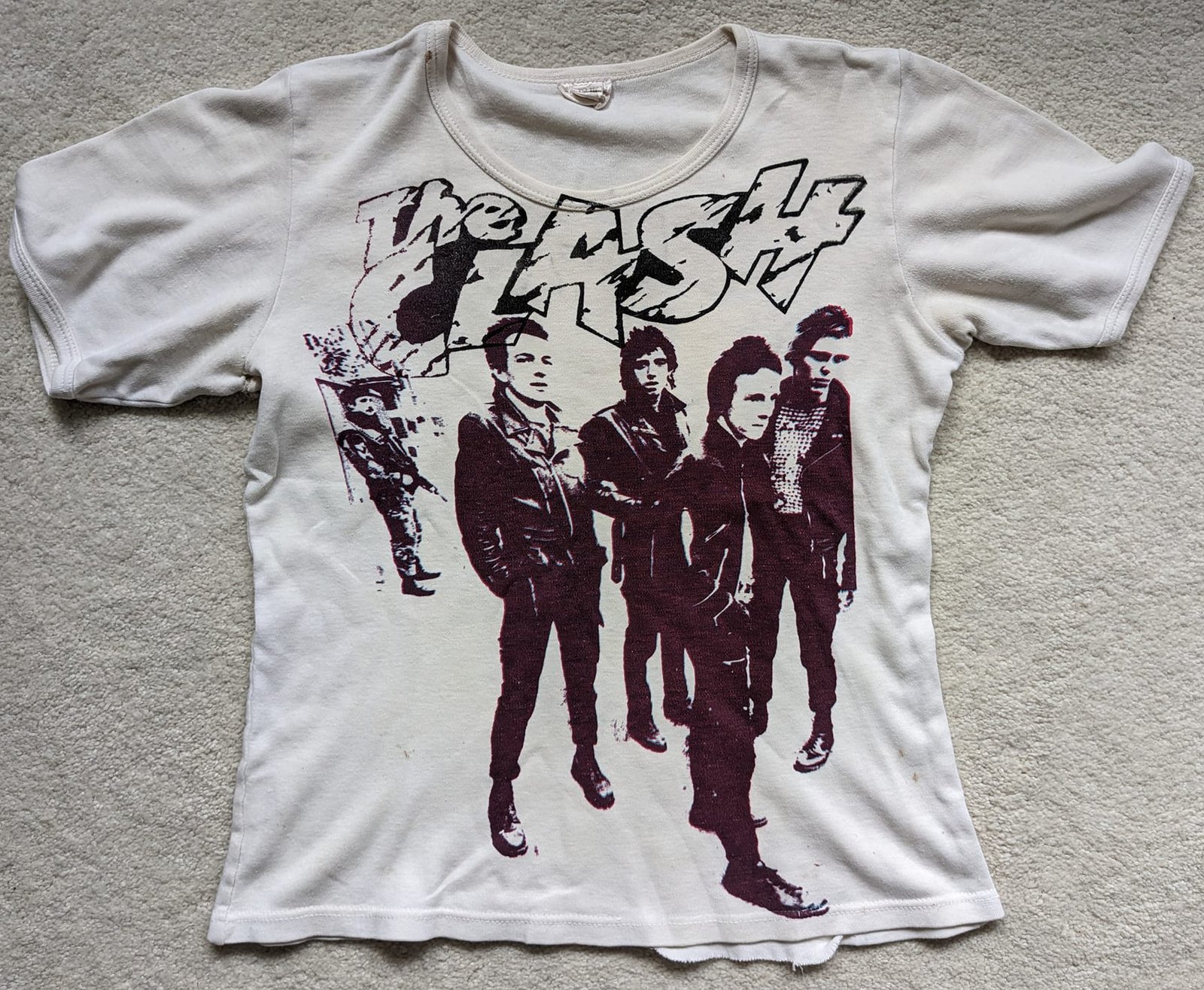


/NME%2029%2010%201977.html/NME%2029%2010%201977_files%20copy/NME%2029%2010%201977-4_500h.jpg)
/NME%2029%2010%201977.html/NME%2029%2010%201977_files%20copy/NME%2029%2010%201977-5_500h.jpg)
/NME%2029%2010%201977.html/NME%2029%2010%201977_files%20copy/NME%2029%2010%201977-6_500h.jpg)


/1977%2010%2029%20Melody%20Maker%20Desolation%20%26%20Chaos%e2%80%93%20The%20Clash/1977%2010%2029%20Melody%20Maker%20Desolation%20%26%20Chaos%e2%80%93%20The%20Clash.html/1977%2010%2029%20Melody%20Maker%20Desolation%20%26%20Chaos%e2%80%93%20The%20Clash_files%20copy/1_500h.jpg)
/1977%2010%2029%20Melody%20Maker%20Desolation%20%26%20Chaos%e2%80%93%20The%20Clash/1977%2010%2029%20Melody%20Maker%20Desolation%20%26%20Chaos%e2%80%93%20The%20Clash.html/1977%2010%2029%20Melody%20Maker%20Desolation%20%26%20Chaos%e2%80%93%20The%20Clash_files%20copy/2_500h.jpg)
/1977%2010%2029%20Melody%20Maker%20Desolation%20%26%20Chaos%e2%80%93%20The%20Clash/1977%2010%2029%20Melody%20Maker%20Desolation%20%26%20Chaos%e2%80%93%20The%20Clash.html/1977%2010%2029%20Melody%20Maker%20Desolation%20%26%20Chaos%e2%80%93%20The%20Clash_files%20copy/3_500h.jpg)
/1977%2010%2029%20Melody%20Maker%20Desolation%20%26%20Chaos%e2%80%93%20The%20Clash/1977%2010%2029%20Melody%20Maker%20Desolation%20%26%20Chaos%e2%80%93%20The%20Clash.html/1977%2010%2029%20Melody%20Maker%20Desolation%20%26%20Chaos%e2%80%93%20The%20Clash_files%20copy/4_500h.jpg)
/1977%2010%2029%20Melody%20Maker%20Desolation%20%26%20Chaos%e2%80%93%20The%20Clash/1977%2010%2029%20Melody%20Maker%20Desolation%20%26%20Chaos%e2%80%93%20The%20Clash.html/1977%2010%2029%20Melody%20Maker%20Desolation%20%26%20Chaos%e2%80%93%20The%20Clash_files%20copy/5_500h.jpg)
/1977%2010%2029%20Melody%20Maker%20Desolation%20%26%20Chaos%e2%80%93%20The%20Clash/1977%2010%2029%20Melody%20Maker%20Desolation%20%26%20Chaos%e2%80%93%20The%20Clash.html/1977%2010%2029%20Melody%20Maker%20Desolation%20%26%20Chaos%e2%80%93%20The%20Clash_files%20copy/6_500h.jpg)
/1977%2010%2029%20Melody%20Maker%20Desolation%20%26%20Chaos%e2%80%93%20The%20Clash/1977%2010%2029%20Melody%20Maker%20Desolation%20%26%20Chaos%e2%80%93%20The%20Clash.html/1977%2010%2029%20Melody%20Maker%20Desolation%20%26%20Chaos%e2%80%93%20The%20Clash_files%20copy/7_500h.jpg)


/SOUNDS%201977%2010%2029.html/SOUNDS%201977%2010%2029_files%20copy/SOUNDS%201977%2010%2029-7_500h.jpg)
/SOUNDS%201977%2010%2029.html/SOUNDS%201977%2010%2029_files%20copy/SOUNDS%201977%2010%2029-8_500h.jpg)
/SOUNDS%201977%2010%2029.html/SOUNDS%201977%2010%2029_files%20copy/SOUNDS%201977%2010%2029-9_500h.jpg)

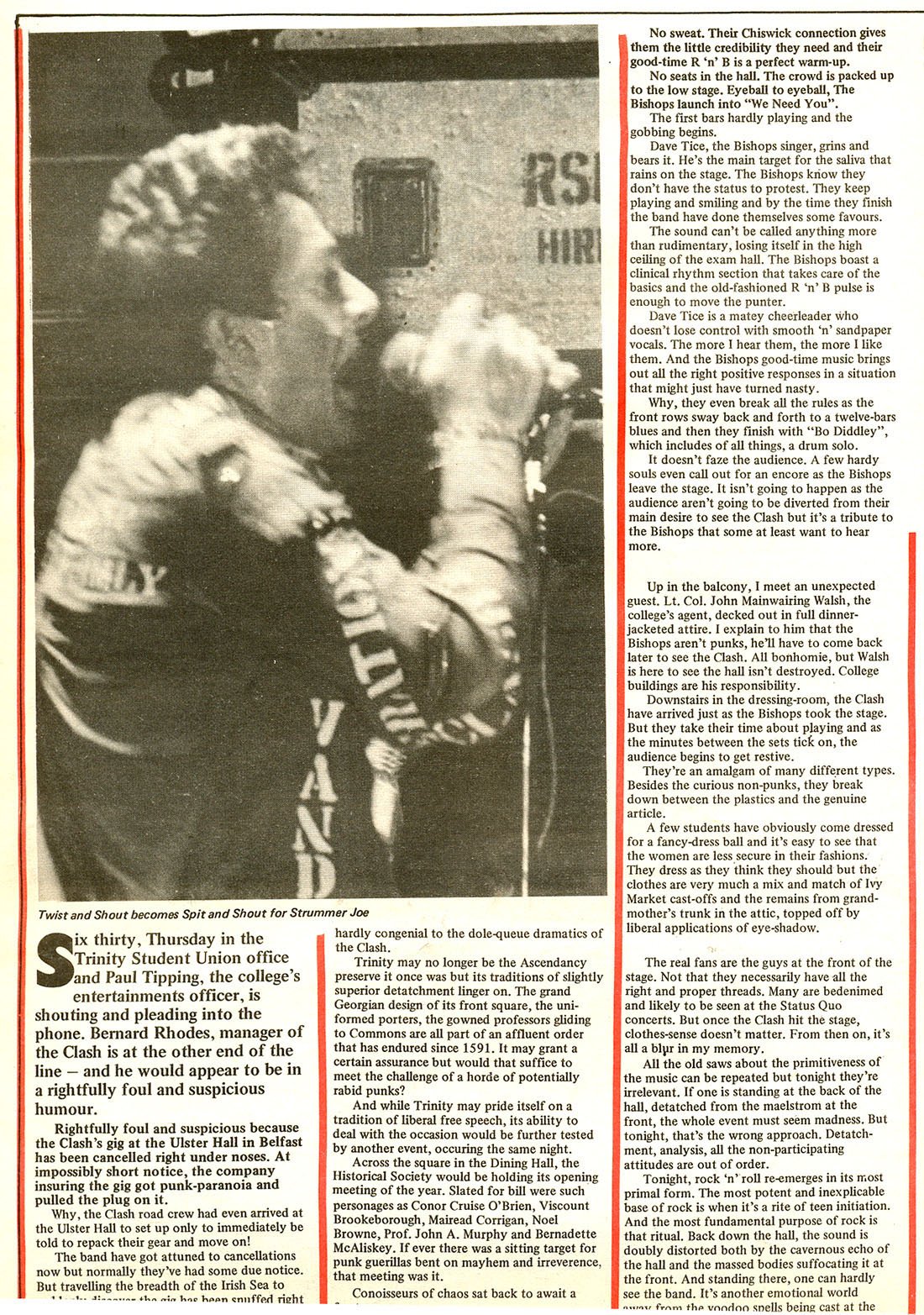
/MELODY%20MAKER%201977%2010%2029.html/MELODY%20MAKER%201977%2010%2029_files%20copy/MELODY%20MAKER%201977%2010%2029-5_500h.jpg)
/MELODY%20MAKER%201977%2010%2029.html/MELODY%20MAKER%201977%2010%2029_files%20copy/MELODY%20MAKER%201977%2010%2029-6_500h.jpg)
/MELODY%20MAKER%201977%2010%2029.html/MELODY%20MAKER%201977%2010%2029_files%20copy/MELODY%20MAKER%201977%2010%2029-7_500h.jpg)
/MELODY%20MAKER%201977%2010%2029.html/MELODY%20MAKER%201977%2010%2029_files%20copy/MELODY%20MAKER%201977%2010%2029-8_500h.jpg)


 3 pages