Thursday 9 December 1976
Electric Circus, Manchester
Supporting The Sex Pistols
Anarchy Tour supporting the Sex Pistols and in the home town the Buzzcocks.
updated 20 December 2014 - added graphics
updated 17 January 2017 - tidied up page
INDEX
Recordings in circulation
Background
Tickets, Posters
Other
Venue
Gig Review
News Reports
Books
Magazines
Comments
Social Media
Photos
Recordings in circulation

 Audio from CD
Sound 3.5 - 24min - Low gen - Tracks 10
Also includes The Buzzcocks and Sex Pistols sets
Cheat
 1976/77 Julian Temple's early footage 50hrs
Known to contain several concerts including The Roxy 1 Jan 1977 and Harlesden plus Rehearsals footageJulian Temples 1976 footage 18 hours - included Roxy/Anarchy Tour/Harlesden/Rainbow - only the footage that was used in the film eventually got digitised because it was shot on an obscure format that does exist anymore and so it cost a fortune to put onto tape.


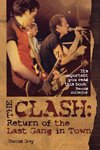
Book: Return of the Last Gang in Town
Julian Temple's early footage
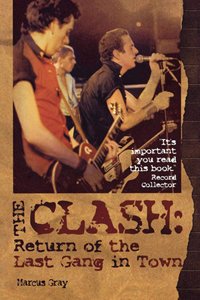 [Extract] ... Malcolm’s (Mclaren) band had a promo film, so Bernie’s (Rhodes) band had to have one too.
Julien’s (Temple) black and white footage of the Clash at Rehearsals, on the Anarchy Tour, at the Harlesden Coliseum and in the Beaconsfield studio had been shot prior to the Clash’s latest image change and so was outmoded.
In 1999, Julien would contribute clips of the various bands on the Anarchy Tour, the Clash rehearsing ‘What’s My Name?’ with Rob Harper, the band overdubbing vocals to ‘I’m So Bored With The USA’ at Beaconsfield, and the band posing on the balcony outside 111 Wilmcote House, to Don Letts’s Clash documentary Westway To The World.
His own Sex Pistols documentary, The Filth And The Fury, was finally released the following year.
Julien claims to have over 50 hours of Clash footage from the 1976-77 period, most of which has never been seen.

Bootleg details can be found here
Visit these websites for a comprehensive catalogue of unofficially released CD's and Vinyl (forever changing) or If Music Could Talk for all audio recordings
Discogs - PDF - webpage
Punky Gibbon - PDF - webpage
Jeff Dove - PDF - webpage
Ace Bootlegs - PDF - webpage
For all recordings go to If Music Could Talk / Sound of Sinners
Background
“Banned from the Palace, banned from the Free Trade Hall” – Punk finds refuge in Collyhurst
By the time the Anarchy Tour reached Manchester, the city’s grander halls had already turned the Sex Pistols away. The Palace Theatre and Free Trade Hall refused bookings, citing earlier run-ins: “They started arguments with the audience and the language was a bit strong,” one manager recalled.
The Pistols were ejected from the Midland Hotel and then the Arosa in Fallowfield after what staff called “the filthiest language” and a general riotous attitude.
Eventually, the band landed at the crumbling Electric Circus in Collyhurst, a venue as notorious as the group themselves. Local press ran with the line “Banned from the Palace, Banned from the Free Trade Hall”, turning rejection into publicity.
Police dispatched detectives in “pop gear” to mix with the crowd, with senior officers keeping vigil from the back as if expecting an uprising.
Inside, the show delivered exactly the chaos everyone anticipated. Reporters said 500 packed the hall, facing an immediate hail of obscenities.
Letters poured into the Manchester Evening News. One public school critic scoffed that the Pistols were “just playing on the frustrations of young kids who have no jobs and no prospects.”
Another, a teenage Stephen Morrissey (later of The Smiths) from Stretford, countered that the Pistols were “speaking for the youth today.” Memories lingered of violence: glasses and bottles flew, with one fan calling it “easily the most terrifying concert I’ve ever been to.”
Yet for Pete Shelley of the Buzzcocks, it was unforgettable: “I thought we played really well … the Anarchy gig turned it round and started punk in Manchester.”
That night, alongside The Clash, The Damned and The Heartbreakers, punk carved out its place in the city, not through polite acceptance but by sheer, unruly defiance.


Manchester's Electric Circus
"Does anyone remember the Electric Circus? Yeah, a right shit hole" Joe Strummer at the Apollo (now Academy) February 1984. The venue was an iconic and seminal location for punk rock in 1970s Manchester.
The Electric Circus was a music venue in Collyhurst, Manchester, England, situated at the corner of Teignmouth Street and Collyhurst Street. The building was originally the Palace Cinema, then the Top Hat Club run by Bernard Manning, and later a bingo hall. It became a heavy metal club in the 1970s until punk arrived there in 1976, and Richard Boon and Alan Robinson started promoting nights there. The venue was an iconic and seminal place for punk rock in 1970s Manchester, hosting a wide range of bands, including The Clash, The Damned, Buzzcocks, and The Fall .
However, the building was in a poor state of repair and was closed in late 1977 due to objections. It briefly reopened in 1978 as the New Electric Circus, but by 1980, the building was closed again. The building that housed the Electric Circus was eventually demolished, and the area was replaced by rows of modest two-story homes.
The Electric Circus was a regular feature on 'So It Goes', Tony Wilson's television program, showing live performances from a number of punk bands, giving them much-needed exposure.
The Clash performed at the Electric Circus on December 9, 1976, as part of The Anarchy Tour.
Despite its relatively short life, the Electric Circus is remembered as an influential venue in Manchester's history, particularly for its contribution to the punk rock scene[6]. The Clash's performance there is considered a significant event in the band's history and the history of punk rock in Manchester.
1. Electric Circus, Manchester - Wikipedia
2. 'Dangerous' lost venue saw Sex Pistols play 'under a hail of gob'
3. Electric Circus
4. The Clash - Live At The Electric Circus, Manchester, 1976 (Full Concert!) - YouTube
5. Electric Circus - Wikipedia
[1] The Clash - Take It Or Leave It on Discogs
[2] Electric Circus, Manchester on Wikipedia
[3] Buzzcocks Electric Circus Video 1977
[4] Electric Circus on Songkick
[5] The Clash 1977 Gigs - Electric Circus
[6] Manchester Evening News - Lost Venue
[7] Electric Circus Digital on LinkedIn
[8] Manchester's Lost Music Scene
[9] The Clash - Take It Or Leave It Reissue on Discogs
[10] Hanging Around Musicians - Electric Circus
[11] Electric Circus Digital Ltd on Endole
[12] The Clash, Buzzcocks, The Slits - Manchester 1977
[13] Electric Circus Photograph 1977
[14] Electric Circus on YouTube
[15] Electric Circus on Concert Archives
[16] Electric Circus Vinyl Exchange Record, CD, Tape 1977
[17] Punk History in Manchester
[18] Clash Bootlegs - My Way
[19] Clash White Riot Tour 1977 LP Record Vinyl Album
Fans queuing up to see Warsaw (later Joy Division), Buzzcocks, Penetration, and John Cooper Clarke at the Electric Circus on May 29, 1977, captured by photographer Kevin Cummins 1 .

A photograph of the Electric Circus just after it closed in 1977, which provides a view of the venue's exterior 2

A photograph from a Buzzcocks performance at the Electric Circus on November 10, 1976, with Howard Devoto on vocals 3 Photos by Linder Sterling


Buzzcocks... The Electric Circus, Manchester 1976. Photo by Linda Sterling #40YearsOfPunk pic.twitter.com/iEcBprmBqb
— PuNk and Stuff (@PunKandStuff) October 19, 2016

We grew up in Manchester redefining the rock scene: Sex Pistols, Clash, ...

The Palace which became the Electric Circus - notorious Punk venue in the 70's
Collyhurst Community Enterprises - Collyhurst Voices FB
Another former cinema in Collyhurst, The Palace which became the Electric Circus - notorious Punk venue in the 70's. It became the Top Hat Club/Palladium, operated by comedian Bernard Manning. This was followed by use as a bingo club in the early-1960’s which closed in the 1970’s. It was re-named Electric Circus, and became a live concert venue, where the group Joy Division made their debut performance. When it closed the building was demolished in early 1980. Housing now occupies the site.
https://cinematreasures.org/theaters/47586

The Gig
"and now we'd like to sing about"
Protex Blue is completely re-worked into a new song, seemingly called "Big Brother" or "Big Brother Is Watching You"
The music is the same, but the lyrics (sung mostly by Joe) are completely different. He even introduces the song with "and now we'd like to sing about... big brother arrived yesterday"
By the time of the next gig recording (Harlesden March 3 1977) it has reverted back to Protex Blue.
News Reports
“Sex Pistols! Clash! U.K. rock!” Rock Scene, no. May 1977, pp. 34–37.
Sex Pistols! Clash! U.K. Rock!
— Photo story with most photos coming from teh Electric Circus, Manchester 9th December 1976 featuring the Sex Pistols, The Clash, The Damned, and New York’s Heartbreakers.


Books
Book: Peter Smith, Sex Pistols: The Pride of Punk Google books
Book: Sex Pistols: The Pride of Punk
"Pete Shelley remembers the gig fondly...
Book: Sex Pistols: The Pride of Punk
[more] ... "Pete Shelley remembers the gig fondly: "I thought we played really well. It was the last time we ever played with the Pistols and the last time I saw them play. The Electric Circus had previously been a heavy metal club, but the Anarchy gig turned it round and started punk in Manchester" (Black 1996).
Among the audience were members of the Stiff Kittens, soon to become Joy Division, and then New Order. Steven Morrissey, soon to be of The Smiths, was also there, largely to see the Heartbreakers, as he had been a big fan of the New York Dolls and used to run their UK fan club.
He wrote a letter about the concert to Melody Maker (December 11, 1976): "The likes of the Sex Pistols have yet to prove that they are only worthy of a mention in a publication dealing solely with fashion; and if the music they deliver live is anything to go by, I think that their audacious lyrics and discordant music will not hold their heads above water when their followers tire of torn jumpers and safety pins."
"It was easily the most terrifying concert I've ever been to," remembers Frank Brunger (Black 1996). "There was a violent element in the crowd and the glasses and bottles soon started flying."
This was becoming more and more frequent at punk gigs, as local gangs used the con- cert as an excuse for violence.
Peter Hook remembers the second night at the Electric Circus as "just a riot. There were so many football [soccer] fans and lunatics throwing bottles from the top of the flats. It was really heavy, a horrible night. Punk had been completely underground until Grundy. After that, it was completely over the top. There were so many of the punks getting battered" (Lloyd 2016)."


Book: Images of England Through Popular Music: Class, Youth and Rock 'n' Roll
By K. Gildart
(more..) [extract] "Pistols had already played two shows at the city's Free Trade Hall on 4 June and 20 July. The Palace Theatre and the Free Trade Hall unsurprisingly declined the invitation of further concerts in light of the adverse publicity.
The manger of the latter, Ron O' Neil claimed that during the group's previous appearance ‘they started arguments with the audience and the language was a bit strong'. Paul Galsworthy of the Palace told the paper that he had ‘heard that they were very rough and the lowest type of group'. The request to perform was duly rejected.
The Electric Circus was a privately owned former cinema in Collyhurst, north Manchester. The location perfectly suited the ‘rough music' and performance of the Sex Pistols. By the mid- 1970s, Collyhurst was becoming a ‘problem area' with dilapidated housing stock, petty crime, unemployment and youth delinquency.
The promoters had used the rejection from other venues to publicise the show; ‘Banned from the Palace, Banned from the Free Trade Hall'. The group had already been asked to leave the city's prestigious Midland Hotel the day before the show.
The manager, Harry Berry, changed his mind on the booking once he realised who they were.°* They were then refused accommodation at the Belgrade Hotel in Stockport, eventually securing rooms at the Arosa in Fallowfield.
They were also ejected from these premises when the manager, Mohammed Anwar, claimed that they ‘started using the filthiest language, ran riot and upset other guests'.
The show went ahead with the press reporting that the 500 people in attendance faced an immediate slew of obscenities. In preparation for any kind of violence, the press claimed that ‘local detectives had been dispatched in ‘pop gear' to mix with crowd while senior uniformed officers kept vigil from the back of the hall'.
Punk music had created divisions amongst Manchester's youth, which was articulated along lines of social class. Howard Paul, a public school boy from Cheshire, was featured in the Manchester Evening News castigating the Sex Pistols."
In response, he had formed a band with ex-grammar and public schools boys with the name Contempt; a reference to what he felt for this new form of music. Paul claimed that the Sex Pistols were taking advantage of a section of gullible youth: ‘They are just playing on the frustrations of young kids who have no jobs and no prospects.'
John Scott said that he was sickened by the whole spectacle of punk rock. He felt the Sex Pistols were deliberately stirring up trouble and violence for publicity purposes. In contrast, Stephen Morrissey, a 17-year-old working-class music fan from Stretford, later to lead another influential group, the Smiths, penned a letter to the Manchester Evening News claiming that the Sex Pistols were ‘speaking for the youth today'.
Their manager, Malcolm McLaren, told reporters that the Sex Pistols ‘dress loudly and they are loud mouthed like all young kids in a similar predicament'."
Magazines
GOLMINE Magazine, Patrick Prince, Sep 7, 2010, Online
The Clash were once the only band that mattered
Before they rocked The Casbah, the Clash staked out ground as ‘the only band that matters'
Strummer later recalled that a Dec. 9 show at the Electric Circus in Manchester was the moment he knew the group would make it. - We were better than The Pistols, - he told Salewicz. "They had a really hard time following us. We blew them off the stage." That Strummer had felt just as blown away when he first saw The Pistols a mere eight months previously says much about his growing confidence.

Published 2010-09-08, Patrick Prince
The Clash were once the only band that mattered
Nicky “Topper” Headon, Mick Jones, Paul Simonon and Joe Strummer. Photo courtesy Epic/Legacy/Hanauer/Sipa Press.
By Gillian Gaar

On April 8, 1977, the British punk act The Clash released its debut album on CBS Records in the UK. Simply titled The Clash, the album featured 14 cuts in the short-sharp-shock tradition of the day, most of which ran under two-and-a-half minutes. Though the British fanzine Sniffin’ Glue lamented “Punk died the day the Clash signed to CBS,” the album has gone on to become a classic of the punk era. At the time of its release, it reached No. 12 in the U.K., and has since regularly landed on “Best Punk Albums” lists in both U.S. and U.K. publications. Once heralded as “The only band that matters” in an early promotional slogan, it’s clear that the band’s legacy still matters to music fans today.
Now U.S. fans will be able to experience The Clash in both its original format — vinyl — and its original U.K. running order (which differed greatly from the U.S. version of the album) with a new reissue on Omaha, Neb.-based Drastic Plastic Records. “When we decided to actively pursue bringing classic punk and post-punk titles back into print on vinyl we wanted to begin with something essential, as well as a recording that we all felt personally close to,” explains Neil Azevedo, general manager, A&R, at Drastic Plastic. “The Clash’s debut was our top choice.”
The original album came out more than 30 years ago; now, 21st century music fans can be introduced (or re-introduced) to the band’s timeless brand of righteous punk rock.
The Clash came together in 1976, as a new generation was in the process of transforming the musical landscape in Britain. John Graham Mellor was a member of that new generation, a rock fan who’d dropped out of art school to become a musician. His first band, The Vultures, was based in Wales; when that group broke up in 1974, he moved to London and formed pub-rock outfit The 101’ers, named after the address where the band members squatted, in an abandoned house. Mellor, guitarist and vocalist in the band, had by then taken on the nickname “Woody,” after Woody Guthrie, and by mid-1975, he’d adopted a new name, Joe Strummer. It was part of a continual process of crafting a new identity; John Mellor came from a well-off family and had been sent to private school. “Joe Strummer” was a name, and a personality, that had more street credibility.
The 101’ers played rough-and-ready covers of songs like Van Morrison’s Gloria and Chuck Berry songs, along with original numbers, like Keys To Your Heart (released as a single on U.K.-based Chiswick Records). But things were about to change dramatically for Strummer. On April 3, 1976, The Sex Pistols opened for The 101’ers at London’s Nashville club. Strummer was blown away. “As soon as Johnny Rotten hit the stand, right, the writing was on the wall, as far as I was concerned,” he said. “They came out and they just, just cleaned me out.” Strummer became an instant devotee of punk, and the days of The 101’ers were numbered.
What Strummer didn’t know is that he was already being eyed by a new group of musicians. Bernard Rhodes was a friend of Malcolm McLaren, The Sex Pistols’ manager, and he was looking to work with a group himself. He’d become friends with guitarist Mick Jones, who had also been mightily impressed by The Sex Pistols, and was struggling to get his own band, London SS, off the ground (the group would eventually split without having played a single live show). Jones had now joined forces with Keith Levene (later of Public Image Limited) on guitar, and Paul Simonon on bass, but they had yet to find a permanent lead singer or drummer.
Jones had seen The 101’ers perform and liked the power of Strummer’s performance. Rhodes encouraged him to speak to Strummer about joining his group, but Jones demurred. So Rhodes took it upon himself to approach Strummer at another Sex Pistols show at London’s 100 Club on May 25, asking him to consider throwing in his lot with a new band. On June 1, Strummer arrived where Jones and Simonon were living. “We were all terrified,” Mick Jones remembered. “He was already Joe Strummer, he was already somebody … It was a big deal getting Joe Strummer.” But the musicians hit it off from the beginning, and they were soon working on songs, including Protex Blue and I’m So Bored With You. Both would later appear on The Clash, the latter number rewritten as I’m So Bored With the USA. The 101’ers would play their last show on June 5.
Terry Chimes, who’d played in some of Jones’ previous bands, was finally brought in as a drummer. On July 4, the group played their first show, opening for The Sex Pistols at the Black Swan in Sheffield. It was Simonon who thought up the group’s name — The Clash, inspired by newspaper headlines that kept mentioning the word. The group also worked on establishing a new visual, as well as a musical, style — not surprising, given that Strummer, Jones, and Simonon had all attended art school. Gone were the flared jeans of the early ’70s; tight, drainpipe trousers were the new look (“Like trousers, like brain,” Strummer joked to Sniffin’ Glue). They also spattered paint on their clothes (following the “drip paint” style of Jackson Pollock), or wrote stark slogans like “Creative Violence” or “Heavy Duty Discipline” on them.

Photo by Bob Gruen
Musically, Strummer and Jones were writing very fast, in an effort to catch up with the new musical scene they felt was exploding around them. Rhodes encouraged them to write about current events, avoiding what Strummer called “loveydovey stuff” — like Keys To Your Heart. “There was a lot of discontent, because that was really the first time that a generation had grown up and realized they didn’t really have any future,” Strummer later told biographer Chris Salewicz. “The ’60s were a booming time in England… science hadn’t reached any kind of dead end, and pollution hadn’t become a topic, and the economy was booming. By that time in the seventies the generation had realized that there wasn’t going to be a lot going for it. So we were really articulating what a lot of young people were feeling.”
The band’s songs had a raw energy that perfectly captured the prevailing zeitgeist. “1977” drew a generational line in the sand with its taunt “No Elvis, Beatles or Rolling Stones in 1977.” The dead-end life British youth had to look forward to was chronicled in “Career Opportunities” (inspired by scanning the want ads in the daily paper), and “London’s Burning,” with its chorus “London’s burning with boredom now.” Even criticism provided fuel for songs; after the group was slammed in the New Musical Express (“The Clash are the sort of garage band that should be speedily returned to the garage, preferably with the motor still running”) they responded with the song “Garageland,” which defiantly proclaimed “I don’t want to go to where the rich are going/They think they’re so clever, they think they’re so right/But the truth is only known by gutter snipes/We’re a garage band and we come from garageland.” The chaos of the riots at that year’s Notting Hill Carnival in London, where black youth battled with the police on the streets, was distilled into the fury of “White Riot.”
Strummer had clearly left his pub rock days behind him. “I was surprised that Joe could pull it off,” says Julien Temple, then an aspiring filmmaker who was already shooting footage of the Pistols.
Temple knew Strummer from his days in the 101’ers, “So I’d seen him in the hippie days,” he says, “and my first impression was, ‘How the hell can he pull off being a punk rocker like the Pistols?’ He did look a bit over-punked — too much bleach in the hair, he had a pink blazer like a kid’s school blazer. It did look like he was trying a bit hard. I think the other Clash members saw that, too, and had him turn it down a bit. But when they were on stage, it only took about two seconds to realize this was amazing. He did totally pull it off, and pull it forward. He was amazing.”
Mick Jones also lived in Temple’s flat for a bit, “so I was quite close to them,” Temple says. “I had a good relationship with all of them I think, even though I was more middle class — other than Joe! I had a little bit of a thing with Joe because it takes one to know one. He was trying really hard to be a reinvented street punk, and he didn’t want to have some idiot like me hanging around. Class was a huge mental thing at that stage, particularly in the punk movement, which was supposed to be very pure and rising up from the streets. But it takes all types to make a revolution.”
Temple also shot rehearsal footage of The Clash during this period, later used in the documentary The Future Is Unwritten: Joe Strummer, which reveals that the band’s intensity was present from its first performances. Temple also made videos for some of the group’s early songs. “Really hilariously primitive,” he says. “Like for ‘London’s Burning’ we used postcards of London Bridge and Buckingham Palace. It’s quite good, actually!”
By September, Levene was out of The Clash, Strummer simply announcing that “He’s not really a part of what we’re doing.” Jones took over on lead guitar, and the group continued building its reputation playing shows around London. Live reviews had prompted record labels to start taking an interest, and in November, they were offered a chance to record demos for Polydor Records. Working with producer Guy Stevens, the group recorded early versions of “Career Opportunities,” “1977,” “London’s Burning,” “White Riot” and “Janie Jones.”
The band wasn’t happy with how the demos came out (Strummer described them as “very flat … dull”), and a second blow arrived when Terry Chimes announced that he wanted to quit, his departure attributed to “ideological disputes.” Rob Harper filled in on the kit for the rest of the year, which included a spot on The Sex Pistols’ Anarchy In the U.K. tour that was slated to begin in December. But on Dec. 1, The Pistols appeared as last-minute guests on the U.K. television show Today and outraged viewers by indulging in copious swearing, live on air. Most of the tour ended up being canceled by nervous promoters as a result, but as The Pistols became increasingly embroiled in controversies that had little to do with their music, The Clash was able to come to the fore. Strummer later recalled that a Dec. 9 show at the Electric Circus in Manchester was the moment he knew the group would make it. “We were better than The Pistols,” he told Salewicz. “They had a really hard time following us. We blew them off the stage.” That Strummer had felt just as blown away when he first saw The Pistols a mere eight months previously says much about his growing confidence.

Photo courtesy of CBS
Just seven months after The Clash’s first show, Rhodes secured the group a deal with CBS Records; the band signed the contract on Jan. 27, 1977. A few weeks later, on Feb. 10, The Clash entered CBS Studio 3 to record its first album. Having yet to find a new drummer, Terry Chimes agreed to come back for the sessions. Strummer insisted that Mickey Foote, who’d been the sound mixer for the 101’ers and The Clash, serve as producer — or more accurately, to make sure CBS didn’t foist a producer of its choice onto the group.
The band worked quickly, recording Thursdays through Sundays through Feb. 27, completing the album in 12 sessions. The group was anxious that the songs not sound overly produced, and while the music does lack the roughness of the band’s live performances, the album still has a brash freshness that’s invigorating. The Clash eventually got off to a rolling start with “Janie Jones,” with a near-rockabilly beat that gives way to a barrage of guitar riffing, telling the story of a man stuck in a dull job who only lives for rock ’n’ roll, dope and visits to Janie Jones, a famous London madam. “I’m So Bored With The USA” attacked American culture, with references to Watergate and the prevalence of cop shows on TV “’Cause killers in America work seven days a week.”
“White Riot” is one of the band’s finest moments, a whirling frenzy that clocks in at less than two minutes. Some misinterpreted the song’s demand for wanting “a riot of my own” as a racist call-to-arms, which the band strongly denied, explaining it was meant to point out that while blacks had their own culture, whites were reluctant to confront their problems, preferring to exist in a world where “Everybody does what they’re told to” as the song puts it.
The album’s most daring track stylistically was a cover of Junior Murvin’s reggae number Police & Thieves. The band members were all fans of reggae, but hadn’t thought of putting a reggae song on their album unless they could do it well. The respectful cover not only showed off the band’s diverse musical skills, it helped broaden their audience. Fine Young Cannibals’ lead singer Roland Gift later recalled how the track made him feel punk was equally open to blacks as whites.

Joe Strummer in 1982. Photo by Frank White
Less than a month after the album’s sessions were completed, the first single, “White Riot,” was released on March 18. The single, in a new mix enhanced by the addition of a wailing siren heard at the song’s beginning and an alarm bell going off toward the end, reached No. 38 in the charts. The album followed on April 8. Though well-received in England, CBS initially decided not to release the album in the U.S., claiming the raw sound was not “radio friendly.” Frustrated American fans began ordering the U.K. album instead, with import sales reportedly topping 100,000, prompting CBS to finally release the album in 1979.
But the U.K. and the U.S. versions are very different, with songs cut from the U.K. version, replaced by newer songs (by then already released in the U.K.) for the U.S. version. The U.K. version’s running order is as follows: (Side One) “Janie Jones,” “Remote Control,” “I’m So Bored with the USA,” “White Riot,” “Hate & War,” “What’s My Name,” “Deny,” “London’s Burning” (Side Two) “Career Opportunities,” “Cheat,” “Protex Blue,” “Police & Thieves,” “48 Hours,” “Garageland.” On the U.S. version, the running order is: (Side One) “Clash City Rockers,” “I’m So Bored with the USA,” “Remote Control,” “Complete Control,” “White Riot,” “(White Man) In Hammersmith Palais,” “London’s Burning,” “I Fought the Law” (Side Two) “Janie Jones,” “Career Opportunities,” “What’s My Name,” “Hate and War,” “Police & Thieves,” “Jail Guitar Doors,” “Garageland.” Initial copies of the U.S. album also included a bonus single, “Groovy Times”/“Gates of the West.” The U.S. version of the album reached No. 126 in Billboard.
The new tracks featured the band’s latest drummer, Nicky “Topper” Headon, who joined the group after the February 1977 sessions. Despite stating his intention to leave, Terry Chimes was in the photographs shot for the album’s cover, but was cropped out of the final image chosen for the record. He is credited as “Tory Crimes” (the Tory Party is Britain’s Conservative Party) on the sleeve. Headon had briefly played in the London SS. Ironically, his previous band, Fury, had been offered a deal by CBS, who felt that Headon wasn’t a strong enough drummer, so he was kicked out. But he clicked with The Clash and was soon off and running with the group on its first headlining engagement, the “White Riot” tour, that began May 1, a punk package tour that also included The Jam, The Buzzcocks, Subway Sect, and The Slits.
A May 9 gig at London’s Rainbow proved to be a landmark date, the moment when punk decisively crossed into the mainstream. The Rainbow was a legitimate theater, not a club, and where early Clash shows had featured no more than three dozen people, they now faced an audience of more than 3,000. “That was the night punk really broke,” said Strummer. “The audience came and filled it. Trashed the place as well, but it really felt like — through a combination of luck and effort — we were in the right place doing the right thing at the right time. And that kind of night happens once or twice in a lifetime.” For The Clash, there was no looking back.
Now Drastic Plastic hopes to recreate the visceral thrill the band’s original fans received on first listening to The Clash. For Neil Azevedo, the reissue brings back memories of when he first bought the album in 1980 at a record store in a strip mall in Lincoln, Neb., while his friend picked up the Sex Pistols’ Never Mind The Bollocks album.
“We took them home to my room in my parent’s basement and were subsequently f**king blown away,” he says. “And that was it, I never bought a metal or Top 40 record again. I fell hopelessly in love with music after understanding how powerful it could be. It shaped my thinking, my career and my politics in terms of feeling the need to be a concerned, aware citizen and effect social change when and where I could. We felt as though we were part of this bigger thing that made sense and was powerful and moral. Perhaps it sounds hyperbolic to suggest that listening to The Clash made me a better person, defined me as a person, but that’s exactly what I’m saying. And it’s true.”
It will mark the first time the U.K. version has been released in the U.S., in a limited edition of 5,000 copies pressed on 180-gram vinyl. Subsequent releases will include vinyl reissues of The Clash’s second album, Give ’Em Enough Rope, the 10-inch Black Market Clash EP, and the U.S. version of The Clash. All reissues are pressed from the original masters. Reissues of Combat Rock and Sandinista are also being considered. London Calling is available on vinyl through Sony/Legacy.
“Our mission here at the label, our guiding star if you will, is to recreate the original music experience physically, visually and audibly while offering an authentic — albeit 21st century — sound in terms of clarity and sonic quality,” says Azevedo. “We have endeavored to recreate an artifact that reveals a glimpse of the social and political movement that was the energy of 1977 England, not to mention one of the great records of all time. We feel we have risen to the challenge, and what I most want your readers to take away from that is the curiosity to listen to this recording. If they’re familiar with it, they are going to be genuinely surprised by the sound. If they’re unfamiliar with it, well, what a potent treat awaits them.”

Pete Silverton | SOUNDS | 18 December 1976 | Page 2
Conspiracy to silence Punk
(1) Have the Sex Pistols’ antics succeeded in making punk rock an outlawed culture? Or are they the victims of a conspiracy by the Rock Establishment ... As Sounds goes to press, there is not one major concert venue in the country that will have the Pistols/Clash punk package.
(2) A new club (Roxy) specially aimed at catering for new wave bands will open in London tonight (Tuesday).
(3) What will YOU say when they ask... What did you do on the Punk tour, daddy? Pete Silverton reports on what is shaping up to be an all-time classic rock ’n’ roll tour
SOUNDS | 18 December 1976 | Page 2

Conspiracy to silence Punk
Have the Sex Pistols’ antics succeeded in making punk rock an outlawed culture? Or are they the victims of a conspiracy by the Rock Establishment to ensure that new young bands are stifled through having nowhere to play?
As Sounds goes to press, there is not one major concert venue in the country that will have the Pistols/Clash punk package. The shattered remains of their British tour are taking place in small independent halls and clubs.
In London the situation has reached crisis point. Already cast out by the Hammersmith Odeon, Rainbow and New Victoria and getting blank responses from every other place they’d tried, they thought they’d found sanctuary at the new Roxy Theatre in Harlesden.
However last week Roxy manager Terry Collins banned the group from appearing at the theatre. They had used it for rehearsals before their tour and had, according to Collins, left the lavatory in a dreadful state with a broken mirror and graffiti all over the walls (most of it referring to some gentleman called Bill Grundy) alleging that he indulges in certain solitary practices.
The Pistols themselves, while not denying that damage had been caused in the toilet, said that there were no lights and they couldn’t even see where to piss. They were also highly suspicious of Mr Collins’ motives for cancelling the gig.
Whoever cancelled a gig because of a broken mirror, said their tour manager last week.
Certainly there did seem to be a delay between the gig being announced and its cancellation but Mr Collins told Sounds that the date was announced without his knowledge. Now, further attempts are being made to find a place in London that will have the band.
After the Derby debacle reported in last week’s news pages the Pistols tour finally opened at Leeds University. A review appears on page 10.
But already there had been signs of a split in the hitherto uniform front that the bands on the tour had hitherto been showing. And so it came to pass that after the Leeds gig The Damned quit the tour, or were fired depending on whose account you believe.
The trouble had started at Derby when The Damned suggested that they and the other bands might play at Derby King’s Hall even though the Pistols had been banned. We made the suggestion because 1,000 tickets had been bought for the concert and it seemed a pity to disappoint them punters, said a spokesman for The Damned. But when the others said no we went along with the majority, he added.
Matters were not helped because The Damned were staying at different hotels from the other bands on the tour — we couldn’t afford to stay in the places the Pistols were staying at.
The Damned claim they were fired from the tour by Pistols’ manager Malcolm McLaren but the first they heard of it was when…
continued page 10
Tour news, From page 2
They picked up the music papers on Wednesday and found that McLaren had called their behaviour at Derby disgusting and added we feel the Damned have no place on this tour.
We had no real disagreement with the Pistols, emphasised the spokesman who added that he found McLaren’s remarks mystifying.
So The Damned returned to London where they played a special benefit concert at Islington’s Hope and Anchor which was filmed for transmission on the continent.
The Damned have no more concerts fixed because they blew out their projected gigs to appear on the Pistols’ tour. They are going back into the studio to complete their debut album.
Then we’ll see what happens. We want to play and if somebody wants us then we’ll be along, said the spokesman.
Were they worried about the punk backlash that might leave them out in the cold as well as far as finding venues is concerned? No. We’re hopeful about getting gigs and the fact that we’ve been kicked off the tour will probably help us.
Meanwhile the Pistols and their entourage — The Clash and Heartbreakers — moved on to Manchester leaving behind them another front page story after a few potted plants became dislodged from their moorings at their Leeds hotel and a warning from the EMI big brass who had been encountering heavy flak from shareholders, that unless the Pistols improved their behaviour EMI might rescind their contract.
At Manchester’s Electric Circus on Thursday night local group Buzzcocks replaced The Damned.
Manchester was hardly welcoming either. They were asked to leave the four-star Midland Hotel after one night and were left without after-gig accommodation. They were also refused a booking at the Belgrade Hotel, Stockport. Former Yugoslav freedom fighter manager, Mr Dragan Lukic, commenting: I don’t want this sort of rubbish in my place when there are so many nice people in the world.
The Pistols eventually did find refuge in the decidedly downmarket Arosa Hotel, Withington. They went off to the gig and the national press reporters moved in, asking the manager such delicate questions as What are you going to do if the Pistols do start causing trouble.
And so when the band returned from the gig, very delayed by the fact that the police had forced them to move the tour bus a mile away, and discovered that a policeman had been sitting waiting for them and the prospective trouble to arrive, the inevitable happened. By mutual agreement, they checked out of the hotel at three o’clock Friday morning and made the trip back to London on the coach, arriving six hours later cheerful but sleepy and tired.
A Luxembourg Radio interview with Rotten was taped in London over the weekend, the original plans to do the interview live in the Grand Duchy being scrapped and DJ Tony Prince being suspended for merely suggesting the idea.
Tour dates have been rearranged and as Sounds goes to press they are: this week — Tuesday, Caerphilly Castle Cinema; Wednesday, Lafayette’s, Wolverhampton; Friday, Market Hall, Carlisle; Saturday, Electric Circus, Manchester. Next week: 20th, Bingley Hall, Birmingham; 21st Plymouth, Wood Centre; 22nd Penelope’s, Paignton; 23rd Plymouth, Wood Centre. For all the gigs, except Manchester where the Buzzcocks are again supporting, the bands playing are the Pistols, The Clash and the Heartbreakers.

New punk club
A new club specially aimed at catering for new wave bands will open in London tonight (Tuesday).
Run by ex-Damned manager Andrew Czezowski, The Roxy (not to be confused with the Roxy Theatre, Harlesden, which recently banned punk) ..... rest of text missing

What will YOU say when they ask...
What did you do on the Punk tour, daddy?
Pete Silverton reports on what is shaping up to be an all-time classic rock ’n’ roll tour
To turn up to a Sex Pistols’ show nowadays is to make a statement to the world that you care about rock ’n’ roll and don’t give a Bill Grundy what the yellow-press thinks.
And enough kids in Manchester, God bless ’em, were prepared to do just that, almost filling the Electric Circus. However, once there, they weren't quite sure what to do.
When Johnny, Glen, Steve and Paul sliced through the crowd (no folding lotus stages for them ... yet), bounded up the steps and roared straight into Anarchy in the U.K., the kids knew just what to do because they knew the song. They sang along and jumped and bumped me back into the unreceptive arms of the national daily press photographers, one of whom was trying to take his pix with his hands over his ears (try it sometime).
However, with Anarchy searched and destroyed, our heroes (the Pistols and the kids) were on unfamiliar ground. The kids didn’t know the songs and weren't quite sure how to react. The band were visibly tired and disorientated by the happenings of the past week (see news page for the whole story). They’d come, they’d seen, but the conquering had had to be postponed.
Local band, the Buzzcocks, opened the bill in place of the now-off-the-tour Damned. I’d seen them once before (in London) and my second viewing only reinforced my belief that they’re a second-rate, provincial Pistols copy. The lead singer was only honestly interested in performing his eyebrow massage tableau. They’re the façade of the new wave with none of its substance. Their set was notable only for their mutilation of the Troggs’ hoary chestnut, I Can’t Control Myself, the evening's first outbreak of pogo dancing and the fact that a section of the audience disagreed with my sentiments — the Buzzcocks got an encore.
Then came what was probably the best received band of the evening, The Clash. I’m probably supernaturally thick-skinned but, although ex-public schoolboy turned guitarist and vocalist with The Clash, Joe Strummer, in a fit of childlike pique, had me thrown off the coach back to the hotel (I did get reinstated), I still reckon he's currently the quintessential English rhythm guitarist. As rough as a Surform. As energy-charged as a Ford Cosworth V8.
You remember that Sixties bedsit poster of Che Guevara with his eyes pointing upwards to that great Bolivia in the sky? That's how Joe looked once he'd ploughed into the set. Once, that is, he'd told them to shut down the crummy light show with the advice: It’s a bit psychedelic in here, innit? This ain’t Amsterdam, y’know.
Mick Jones bust strings on his guitar. Paul Simonon flashed off his bass with the notes painted on the frets so he knows where to put his fingers and Rob Harper, drummer for the tour, beat hell out of his kit and had lots of fun. The Clash did the greatest hits of their, so far, short career: White Riot (an anti-racist anthem), I’m So Bored (With the U.S.A.), Janie Jones and the sparkling new Hate and War. Their weakest, most strained song Crush on You came as an encore to a splendid set.
Next up, the Heartbreakers, are like the Ramones with songs that have beginnings, middles and ends ... in that order. More straightforward rock ’n’ roll than the other bands on the bill, they had the best drummer in former New York Doll, Jerry Nolan, and the craziest looking bassist in Billy Rath — he could've stepped out of West Side Story.
Walter Lure’s on second guitar and the front man (guitar and vocals) is the other ex-Doll, Johnny Thunders. They’ll be very good in the future but this night they were still in need of match practice and only cut loose three quarters of the way through their set. They also had a great song about a telephone conversation which ends with one of the parties hanging themselves on the phone flex.
Me, I clapped hard but the Heartbreakers went off to polite applause which is when I noticed the stony-faced security goon standing in front of the stage. He answered to the name of John Robinson — You can write what you like about me ’cos I'm getting paid a tenner — and offered the opinion on the evening's entertainment: It’s pure noise, and bad noise at that.
Which ain’t what the kids thought at all. Nick Lomas and Billy Massacre from Clayton Bridge? It’s great. We’ve never seen them before. We’re forming our own band as soon as our mums give us the money for the amps. The sentiments were echoed by most every kid I spoke to — they were certainly all in the process of forming bands, Stiff Kittens (Hooky, Terry, Wroey and Bernard, who has the final word) being the most grotesque offering.
I broke off my enquiries at that point, seeing the Pistols make their move towards the stage, and dived forward to soak up the aforementioned Anarchy.
Now, as Pistols fans go, I’m very much a Johnny-come-lately — for a long time I thought they were very average. But I’d grown to like them and this night in the beautifully apt locale of a converted flea-pit bounded on one side by wasteland and on the other by one-third bricked-off council tenements, I was finally convinced.
I could see that they were well below maximum power — getting thrown out of two hotels before lunchtime does sap your energy somewhat. But anyone who can, as Johnny Rotten did, rejuvenate the tired lines of Substitute when he's evidently exhausted, has got to be one hell of a rock ’n’ roller.
If Johnny was uncharacteristically quiescent, the others almost made up for it. Glen Matlock seemed to be playing his bass in a blur of knee jumps. Steve Jones practised calisthenics between savaging his guitar — he's beginning to justify the legend Guitar Hero sprayed on his amp. And Paul Cook kept right in there with his solid drumming and torn porno T-shirt.
It wasn't really their night though. The kids were all gobbing at the stage, devoid of menace, obviously believing that was the correct behaviour at a Grundy rock-gig. Mr Rotten’s elegant (honest) belted red jerkin and soft mulberry shirt were covered with saliva by the end. It’s up to you. If you wanna keep gobbin’, we won’t play.
They stopped and it was into the God Save the Queen intro to the newie, No Future. Difficult to make a judgement on it but it seemed a good set closer: iconoclastic, demonic and rocking.
The lights went down, came back up and Problems blitzed us all one more time. It was apparently the encore but I didn’t know until I was told later.
It was the end of a great gig but it was also the mark of the unease in the Pistols’ set. They lacked a degree of certainty and concentration just as the crowd were unsure how to pogo.
But, no matter, it’s shaping up to be an all-time classic rock ’n’ roll tour. The sort that'll have your grandchildren asking you: Where were you when the Pistols, the Heartbreakers and the Clash [were] doing the rounds?


Paul Morley –– Sun 21 May 2006, Online or archived PDF
Guardian - A northern soul
Thirty years ago, the Manchester music scene was changed for ever. Paul Morley revisits the city of his youth and recalls the sights and eviscerating sounds that transformed the lives of a generation.

Paul Morley, The Guardian, "A northern soul", Sun 21 May 2006
A northern soul
Paul Morley
In 1976, if you were a teenager in and around Manchester, which was a city still covered in war dust and with streets seemingly weakly lit by gas and an economy financed by pounds, shilling and pence, and you a) read the NME; b) wanted to write for the NME, or just send them letters every week, signed Steven or Morrissey; c) were intimate with the Stooges, the Velvets, Patti Smith and Richard Hell; d) were poor but had a few pence in your pocket; or e) were bored with Dark Side of The Moon, which didn't seem as much fun as the dark side of the moon, then you'd go and watch the Sex Pistols twice at the Lesser Free Trade Hall on 4 June and 20 July.
Those two shows started the process that led to the actions that inspired the creative energy and community pride that pieced the city back together again and which led to it being filled - splendidly and somehow sadly - with light and lofts and steel and glass and sophistication.
Over a hundred years after the Industrial Revolution, which seemed destined to crush the area into dust and isolation as the world it inspired moved Manchester out of the way, an Emotional Revolution happened that would push Manchester into the 21st Century. This happened because Johnny Rotten showed Howard Devoto a way to exploit positively his interest in music, theatre, poetry and philosophy. Devoto, let's just say, for the hell of it because the story has to start somewhere, with a bang, or a legendary punk gig, was the man who changed Manchester because he had an idea about what needed to happen at just the right time in just the right place. He arranged for the Sex Pistols to play in Manchester before the rest of the country had caught up with the idea that there was any such thing as a Sex Pistol. In the audience for the shows were Mark E Smith, Ian Curtis, Morrissey and Devoto himself, four of the greatest rock singers of all time, directly challenged to take things on. Johnny Rotten was like a psychotic lecturer explaining to these avant-garde music fans exactly what to do with their love for music, the things they wanted to say, and their unknown need to perform.
Buzzcocks formed in time for the sold-out second Pistols show, and became where Beckett met Bowie, or so it seemed to me as I followed them from gig to gig in the new clubs mysteriously opening up underground in cramped drinking dives or overground in grubby pubs and decaying bingo halls. With Pete Shelley on cheap guitar and the viciously smart Howard Devoto singing songs that had already abstracted the idea of the Pistols' punk into something seething with thought, history and humour, Buzzcocks made a sour sort of brainy bubblegum pop. Our very own Buzzcocks joined the travelling carnival with the Pistols and the Clash and showed everyone in Manchester who a) read the NME and b) wanted to form a band, the route from nowhere to more or less somewhere.
1976 ended with the Sex Pistols' Anarchy tour playing Manchester twice when most places in the country wouldn't allow the group inside their boundaries even once. They played the Electric Circus, a heavy metal venue a couple of miles up Rochdale Road in Collyhurst, abruptly co-opted by a new scene that needed venues to cope with this new audience. The Pistols sort of felt like a Manchester band, and there was Buzzcocks, local lads, playing - plotting - with them as they invaded and outraged this dull, drab land.
Coach trips would be organised, leaving from Piccadilly Gardens in the centre of town, 75p a ticket, heading for places around the country where the Pistols would be playing under various aliases, to avoid the censoring wrath of local councils. Malcolm McLaren, the Pistols' manager, would put the whole coach load on the guest list. The young people of Manchester, including various Buzzcocks, would arrive to see the Spots - the Sex Pistols On Tour Secretly - in Wolverhampton, and walk straight into the venue and into the very heart of the deliciously forbidden action.
Just after Christmas 1976, using a loan from guitarist Pete Shelley's dad, Buzzcocks recorded their Spiral Scratch EP with producer Martin Hannett, a local lad from the dark side of Mars. He was the city's Spector, the region's Eno, the man who produced the sound of Manchester, forcing the spacey, twisted highs and thumping lows of his life into the local, cosmic and carousing music that would soon follow Buzzcocks. Spiral Scratch was released on the bands own New Hormones label at the end of January 1977: four brief songs, four monumental miniatures, four stabs in the light. It was meant merely as a memento of the adventure they'd been having, a way of recording this lively little local disturbance. They hoped to sell at least half of the 1,000 copies so they could pay Pete's dad back.
The Spiral Scratch sleeve was black and white, the music was black and white, the landscape their songs occupied was black and white and it was the last time Hannett's production would be so black and white. The vivacious intelligence and dry, saucy wit was smuggled in behind the austerity. It was as though the group was clinically scrapping bloated rock history, and finding a very particular position where things could start up again. Perhaps, if you like, Spiral Scratch was the first real punk record, the birth of alternative indie culture, the rich, compressed source, ideologically if not sonically, of punk, post-punk, new wave, grunge and so on.
Certainly, at the time, as the person who had shoved Morrissey out of the way to become the local NME reporter and whose first review was of the sixth or seventh gig played by Buzzcocks (Billy Idol's Chelsea were supporting and Devoto looked like an emaciated glam rocker from a sci-fi Poland), I was making out that this record had a kind of power that would last for ever. I also sort of believed that none of this would ever go anywhere beyond the city limits, would never mean anything in, say, the next year, or in 1980, even as I started to follow Buzzcocks to Liverpool, Leeds, London.
We never thought we were ever going to be nostalgic about what was happening. We would die first, or retreat into a Rimbaudian silence. The me-I-appear-to-have-been-back-then, bursting into 1977 as an NME writer covering the music scene in a city where it was opening up just as I needed something to write about, would tell the-me-I-appear-to-have-become to fuck off for being nostalgic. This now-me would not tell that then-me to fuck off in return because I am aware of what was about to happen, which made Manchester the best place in the world to be and the very worst place all at the same time. It became a place to escape into, and a place to escape from.
During 1977, lost to myself as I was following the creation of this endlessly exciting new scene, my father killed himself. The year split into two. One 1977 where everything collapsed and closed down. One 1977 where the world was opening up.
If you a) read the NME and b) had started a fanzine that was a Manchester reply to Mark Perry's Sniffin' Glue - I had, and Perry wrote me a note, saying that my effort, Out There, printed on glossy paper, looked posh like Vogue - one week you'd be seeing the fem-crazed Slits in a pub called the Oaks, a two-mile walk from my house in Heaton Moor. The next week back at the Oaks you'd be hearing a freshly formed Siouxsie and the Banshees still working out their sound. You'd be writing poems about Gaye Advert for fanzines called Girl Trouble.
As John Cooper Clarke matter of factly said about what happened after Spiral Scratch - one thing would start another. 1977 was the year that everything sped forward faster and faster as things led to other things, as local action spurred more local action, and by the middle of the year it seemed as if there was a gig to go to every night at a new venue, a new band to see every week with a new take on things, and hordes of eccentrics, enthusiasts, loners and hustlers suddenly having places to go and ambition to fulfil. Suddenly, there was a community.
We sort of took it for granted that the scene would include a demented poet who made you laugh before some group or another got angry about something or other. Cooper Clarke was a skinny vision in specs and bone-hugging black who looked as if he'd fallen from the front of Blonde on Blonde into the streets of Salford and he fitted just fine on bills with Buzzcocks and the bands that were about to take part in the one thing leading to another, bands who hadn't yet sorted out their names.
By mid-1977, the instantly intimidating and incendiary Fall were blasting tinny sound into cryptic song, fronted by that creepily normal looking maniac first spotted violently heckling Paul Weller - 'fucking Tory scum' - when the Jam played the Electric Circus. The Fall's first show seemed to be played in front of an audience that consisted entirely of the Buzzcocks. Mark E Smith's earliest performances, where he was often playing in tiny clubs or rooms that sometimes seemed to be where you were actually living were possibly the angriest thing you would ever see in your life. It seemed he was being so angry on your behalf. You sometimes didn't think he'd make it to the next song, let alone 30 years and 30 albums, some of which sound like they were made before they even existed. Through a harsh northern filter, the Fall channelled into their songs a night's John Peel show from the mid-Seventies, one of the darker, stranger ones on which he played rockabilly, dub, psychedelic pop, garage punk, New York punk, English punk, Canned Heat, the Groundhogs, Peter Hammill, Henry Cow and Faust. The Fall might in the end be Manchester's greatest group, if only because there have been at least 20 Falls, one leading to another, all of them with the same lead singer, who's always the same and never the same twice.
In 1977, I somehow managed a band, the Drones, while simultaneously giving them bad reviews in the NME, because I couldn't bring myself to tell them to their face that they were a little bit too corny for me. I played and sang alongside photographer Kevin Cummins and Buzzcocks manager Richard Boon in the Negatives, the po-faced joke group who deleted their debut EP, Bringing Fiction Back To Music, the day before it came out, mainly because we never bothered to record it. We played a lot with the Worst, who made the Clash seem like Rush. Alas, their 60-second rants about police brutality and the National Front were never recorded. In my mind, and it might well have happened, a key Manchester night in 1977 was an anti-Jubilee show that featured the Fall, the Worst, the Drones, the Negatives, John Cooper Clarke, Warsaw and John the Postman. Buzzcocks would be in the audience.
Warsaw never made it, possibly because they weren't that good. They played on the closing night of the Electric Circus, the venue the locals had taken over and which had lasted only 10 frantic months before being shut down. We had plans to save it by occupying the premises after a two-night farewell show on 2 October, but that never came to anything. There was no time to be sentimental. Something else was always happening, because one thing was always starting another.
By then, bands were playing at the Ranch, the Squat, Rafters and the Band on the Wall. If you go in search of these places now, none of them has been turned into supersmooth loft apartments like the Hacienda has. They've just disappeared, as if they were never really there, or they're broken-down buildings not yet touched by the modernisation spreading through the city, or they're rusted doors that seem sealed and give no clue of the chaos and noise there once was on the other side. Warsaw became Joy Division, who would, in one way or another, make it. They played their first gig in January 1978. It was the month when Rotten quit the Pistols and formed, as if he'd had them in his pocket all along, Public Image Ltd. The events started in 1977 couldn't stop just because 1978 was in the way. Devoto had left Buzzcocks after a dozen or so gigs and the EP, deciding that what had become known as punk was all over now it was known as punk. He'd met Iggy Pop and handed him a copy of Spiral Scratch with the immortal words 'I've got all your records. Now you've got all mine.'
His new group Magazine accelerated into the hard and cerebral post-punk zone with their furiously articulate debut single 'Shot By Both Sides', released in January 1978 along with 'What Do I Get?' by Pete Shelley's Buzzcocks as they dreamt up punk pop. Joy Division's music was changed beyond belief from that of Warsaw's by the involvement of Hannett, whose influence helped bend their music into, and out of shape. The difference between Warsaw and Joy Division was the difference between the Sex Pistols and PiL, between sleepwalking and exploring outer space. By 1978 Manchester had Magazine, Buzzcocks, the Fall and Joy Division - music, rhythm and thinking that you now hear streaked across more and more new bands
Watching from the inside but on the outside of everything, the doomed Steven Morrissey still dragged himself around town, and tried to get involved. He was slowly planning his revenge on all of those who doubted he'd be anything other than the strange boy waiting for something that would never happen and who wrote to the music papers.
In May '78, The Factory Club had opened in decaying Hulme, which led to Factory Records, which led to the intensification of the one thing starting another, which has led to Manchester today, with a brand new history as one of the world's greatest music cities, with a brand new future as the hip, renovated place to live. The Factory designer Peter Saville, who generated images, accessories and styles that made and remade Factory's shifty, shifting mystique, is the city's creative director. The young man whose vague project was to invent a record label like no other by raiding the design history of the 20th century is now in charge of inventing the idea of Manchester being a city like no other. A city that has become what it has become for better and worse because the Sex Pistols visited in June 1976 and something started to happen.
I have been putting together a compilation of music from the cities of Manchester and Liverpool between 1976 and 1984, called North By North West. It follows the music that was being made in the two cities because a group of people - an adventurous underground collective looking to establish their own identity - were suddenly shown by the Pistols, and the Clash, that they weren't the only ones having these thoughts, listening to that music, fancying themselves as the boisterous bastard children of Warhol, or Nico, or the New York Dolls, or Eno, or Fassbinder, or Marcel Duchamp.
Manchester and Liverpool were only 30-odd miles apart, and Eric's was one of the best music clubs of the period, so a few of us in Manchester would often make the journey in less than an hour, but the way the two cities' music developed during the few years after punk was vastly different. You can tell by the names of the groups. Liverpool names were eccentric, told stories and showed off: Echo and the Bunnymen, Teardrop Explodes, Big In Japan, Wah! Heat, Lori and the Chameleons, Orchestral Manoeuvres in the Dark, Dalek I Love You, Frankie Goes To Hollywood. The Manchester names were more discreet and oblique: Magazine, the Fall, Joy Division, Ludus, Durutti Column, the Passage, New Order and, ultimately, the Smiths. The music, while it shared the same influences, and was inspired by the same English punk personalities, sheared off in different directions. Only the Bunnymen and Joy Division retained any kind of remote atmospheric contact, feeding right into U2 .
The Liverpool scene started a little later. Historically it was tough to know how to avoid the trap of appearing to be creating another Merseybeat scene. Throughout the early Seventies, only Deaf School, a self-conscious sort of panto Roxy Music, gave any clues as to how to form a new Liverpool band without being the Beatles.
Eric's opened in October 1976 as a members club, which allowed it to stay open until 2am, and it started to put on the Ramones, the Damned, Talking Heads and Johnny Thunders and the Heartbreakers. The Spitfire Boys were playing Ramones covers on a Warrington bill with the Buzzcocks and the Heartbreakers by May '77 and as the only Liverpool punk group at the time, they would support all the visiting groups. They were the first Liverpool punk band to have a record out, but in a way their take on punk was a false start, and was soon overtaken by the Liverpool scenesters, jokesters, gossipers and posers who all acted like superstars when their only audience was each other. There had been an underground since 1975, with glam followers looking to create a New York type scene around their love for Bowie and Roxy, but for a while it was more clothes, and hair, than music. The vitriolic Pete Burns was the city's ultimate face with make-up better than any music he ever made.
Perhaps Liverpool was in some ways slow to get going because they didn't have the Sex Pistols visit twice. The closest the Pistols got was Chester some time in the autumn of '76. The big change in Liverpool happened when the Clash played Eric's on 5 May 1977, and Joe Strummer spent hours talking with half of Liverpool, or at least the half of Liverpool that was a) reading the NME; b) wanting to form a group; c) living more or less with each other; d) working out what particular pose would save their lives; or e) hating/bitching about members of other Liverpool cliques and clans and cults who just weren't cool enough, pretty enough, arty enough or good enough.
Three local pals were there for the Clash show. They were always there. There were at least a hundred regulars who turned up every week. The awkward, short-sighted Ian McCulloch, the gloriously garrulous Pete Wylie and the freakishly self-assured Julian Cope. They became a group that talked a lot about being a group. Wylie called them Arthur Hostile and The Crucial Three. McCulloch hated the Arthur Hostile name, and so they became simply the Crucial Three, a group who just talked about being a group, and how legendary they would be. Eventually, each member of the Crucial Three would form their own band and Wylie's Wah! Heat, Cope's Teardrop Explodes and McCullochs Echo and the Bunnymen would all play their first gig at Eric's - Teardrop and Echo on the same night in late 1978, a few days after the first performance by Orchestral Manouevres in the Dark. These last were electro-pop pioneers who slipped between scenes and crossed over into Manchester, releasing their debut single 'Electricity' on Factory Records with the full Factory treatment - a glorious Martin Hannett production, a gorgeous Peter Saville sleeve and occasional contact with Factory's inspired and infuriating spokesman Tony Wilson.
If the Liverpool scene was a kind of surreal sitcom, then living next door to the Crucial Three, underneath OMD with their synths, and across the road from Pete Burns and his wife Lin with her kettle handbag, were Big in Japan. The Crucial Three loathed the camp, play-acting performance tarts Big in Japan, who were a kind of reverse super-group, a training ground for extrovert Liverpool characters destined for fame and notoriety. They contained Holly Johnson (later of Frankie Goes To Hollywood), Bill Drummond (producer, impresario, founder of Zoo Records and the KLF) Ian Broudie (Care, the Lightning Seeds), Budgie (Slits, Siouxsie and the Banshees) and scene queen Jayne Casey (Pink Military, avant garde impresario, and later spokeswoman for the Cream nightclub). Jayne shaved her head, screamed, wore lampshades for hats, Drummond wore kilts, Holly would also be bald with two plaits strung over his face. One song, 'Reading The Charts', was Jayne reading that week's top 40 over a load of feedback. Big in Japan became so hated that a petition was organised which raised 2,000 names demanding the group be stopped. They were. Nothing could stop Echo, Teardrop and the various Wah! incarnations from taking over the pop world, except their own vanity and vulnerability.
As well as the compilation, I've been working on an essay for a book of photographs by Kevin Cummins that follows the Manchester music scene from the time the Sex Pistols played their two shows in June and July 1976 - stop me if you've heard this before - all the way past New Order via Happy Mondays and the Stones Roses through to Oasis, the Doves and beyond. There is also a book that I'm writing about the North itself - exploring the psycho-geographic idea of the North as a real place, and a dream place, and the differences and similarities between Liverpool and Manchester, Lancashire and Yorkshire. The book examines what it is that makes you northern, and what it means to be northern, and northern for life even if you move away. The sleeve notes for the compilation, the essay for Kevin's book, the book about the North that searches for the moments that sealed the northern-ness inside me, and this very piece I'm writing could all begin with the same words, because in the end it's not about passively looking back, but acknowledging that history happens, and that's what makes the future:
"Eight days after the Sex Pistols played their first public date supporting Eddie and the Hot Rods at the London Marquee on 12 February 1976, two college friends from the north, Howard Trafford and Pete McNeish, borrowed a car and drove down to High Wycombe. The Sex Pistols were playing a show at the College of Further Education, supporting Screaming Lord Sutch. Howard and Pete wanted to see and hear for themselves this new thing that promised 'chaos' and not 'music'. This implied that whatever music there was, it was worth driving hundreds of miles to experience. After all, these two friends from the Bolton Institute of Technology had been drawn together through their love for Captain Beefheart, Can and Iggy Pop, and the understanding that if you formed a band you should know your way around the Velvets' 'Sister Ray' inside and out.
"They liked what they discovered in High Wycombe so much that not only did it focus their ideas for the band they were putting together but they were inspired to change their own names. In the new world the Sex Pistols were roughly creating, a change of identity seemed necessary. Trafford would become Devoto - Latin for 'bewitching' - and McNeish would become, romantically, Shelley - the name he would have had if he'd been born a girl. They would become Buzzcocks. They had the unusual desire to actually bring the Sex Pistols up to Manchester, and closely studied a tape they'd made of the gig so that they could work out what the Pistols were doing.
"If you lived in a city like Manchester, in the mid Seventies, you didn't really think of forming a band, unless that band sounded like it was from London, or even Los Angeles, or the middle of nowhere. There was nothing around to show you how to do it. Bands came to Manchester but they didn't really come from Manchester. It was the same with Liverpool. Then, inside a couple of years, all that was to change."
Sounds of two cities
Five classics from Manchester
1 'Boredom' by Buzzcocks from the Spiral Scratch EP (New Hormones)
2 'Transmission' by Joy Divsion (Factory)
3 'Shot By Both Sides' by Magazine (VIrgin)
4 'Bingo Masters Breakout' by the Fall (Rough Trade)
5 'This Charming Man' by the Smiths (Rough Trade)
And five from Liverpool
1 'Read It In Books' by Echo and the Bunnymen (Korova)
2 'Reward' by Teardrop Explodes (Mercury/ Island)
3 'Big In Japan' by Big In Japan (Zoo)
4 'Better Scream' by Wah! Heat (Inevitable)
5 'Relax' by Frankie Goes To Hollywood (ZTT)

Comments
Two amazing nights at the Circus
shay rowan - @shayster57 - 14 Oct 2019: Two amazing nights at the Circus although that second one (19th December 1976) got a bit 'tasty' afterwards!
John Moore –– What a great night of music. Facebook
David Rigg –– Didn't attend this gig, but went to the Electric Circus a number of times. The venue surrounded by derelict and demolished flats and the local kids used to run up and spit at you whilst you queued to get in. The place itself was well past its sell by date, the toilets were often an inch deep in p*ss. Nevertheless, dark and dingy, it was a fantastically atmospheric and exciting place to be.
Amongst all the leather jackets, bondage trousers and sugar spiked hair there were plenty of kids just dressed in old jeans and t shirts, maybe with a few rips and safety pins. There used to be a lad who dressed to kill in red teddy boy drapes. When he danced with his girlfriend, everyone gathered round to watch in awe and wonder. There were barely any punk records in the early days so lots of great reggae was played and stuff like the Kinks, Stooges, MC5, New York Dolls, Ramones etc mixed with The Damned, The Pistols, Clash and Buzzcocks. Managed to get my little red tickets for the two closing nights as captured on the 10" LP. Days of wonder !!
Kevin Hyland –– Was there 49 years ago tonight...l was 17..life changing evening indeed. The same gig took place 10 days later...
Alan Keogh –– Great gig!
Blackmarketclash | Leave a comment
Did you see The Clash!
Please send us a comment
Leave your comment here on the Blackmarketclash's FB page (above/below)
Or alternatively leave a comment here
Please email us at:
All help appreciated. Info, articles, reviews, comments or photos welcome.
Please email blackmarketclash
More comments here I saw the Clash
The Clash | Faceboook
All FB posts –– FB posts on Clash Official

Manchester Electric Circus, 1976

Photos
Open photos in full in new window
Manchester Elkectric Circus / 9th / Anarchy Tour Photos

Ranking Fred - THE CLASH ON PAROLE
12 April at 07:06


Manchester Electric Circus, 1976. Photos Kevin Cummins


Extensive archive
of articles, magazines and other from the Anarchy Tour
INDEX
PAGE 1 - The Anarchy Tour, pre Bill Grundy
Anarchy Tour 'Dates' - pre Bill Grundy show
Articles - before Bill Grundy Show
Posters
PAGE 2 - The Bill Grundy Show, the outrage
LWT (ITV) Bill Grundy Show
Bill Grundy front page newspaper headlines
The 'moral-outrage', moral panic that followed
EMI's response
PAGE 3 - The fallout, Tour collapses
Revised Dates following the Grundy outrage
Anarchy Tour Adverts, before and after
The fallout from Bill Grundy show
Feature Magazines
Books (Anarchy Tour)
PAGE 4 - The Clash, restrospectives, photos
Anarchy Tour Photos
The Clash & The Anarchy Tour
1976 feature magazines
1976 Sundry
Site map
web: www.blackmarketclash.co.uk
email: blackmarketclash.co.uk@gmail.com
STRUMMER, BAD, Pogues, films + : THE SOLO YEARS STRUMMER & THE LATINO ROCKABILLY WAR BOOKS, NEWSPAPERS & FEATURE MAGAZINES Sex Pistols / The Jam / The Libertines / Others
|



Setlist
|
1 |
White Riot |
|

Extensive archive of articles, magazines and other from the Anarchy Tour
INDEX
PAGE 1
- The Anarchy Tour, pre Bill Grundy
Anarchy Tour 'Dates' - pre Bill Grundy show
Articles - before Bill Grundy Show
Posters
PAGE 2
- The Bill Grundy Show, the outrage
LWT (ITV) Bill Grundy Show
Bill Grundy front page newspaper headlines
The 'moral-outrage', moral panic that followed
EMI's response
PAGE 3
- The fallout, Tour collapses
Revised Dates following the Grundy outrage
Anarchy Tour Adverts, before and after
The fallout from Bill Grundy show
Feature Magazines
Books (Anarchy Tour)
PAGE 4
- The Clash, restrospectives, photos
Anarchy Tour Photos
The Clash & The Anarchy Tour
1976 feature magazines
1976 Sundry
|
ANARCHY TOUR A collection of A collection of articles, interviews, reviews, posters, tour dates from the ill feted Anarchy Tour. Articles cover December and the Tour.
ANARCHY TOUR, Video and audio footage
ANARCHY TOUR, BOOKS
*page numbers relate to print edition Anarchy Tour pg197 ...
|
.gif)