Joe Strummer and Robert De Niro in 1980. "We had a cameo in Scorsese's The King of Comedy," says Jones. "When he was cutting Raging Bull, we got to see some of it. It was cool, because Raging Bull was the film of the time and London Calling was the record of that time. The Clash Official | Facebook
Craig Kudel | Facebook --- Craig Kudel --- Joe Strummer and Robert De Niro in 1980. "We had a cameo in Scorsese's The King of Comedy," says Jones. "When he was cutting Raging Bull, we got to see some of it. It was cool, because Raging Bull was the film of the time and London Calling was the record of that time.
Record Mirror - 17 May 1980
Paul Simonon with the Sex Pistols in Vancover filming
THE Sex Pistols and Paul Simenon from The Clash were staying in the same hotel as me in Vancouver as they are making a Lou Adler film up there. They'd been there for about six weeks and were slowly congealing with boredom, as there's not a lot to do except talk to the trees.
Most of their evenings were spent abusing a rather wimpy waiter they called Manuel in the hotel bar. The alcohol laws are a little odd in Canada, a point that made their harrassing even worse.
Men and women have to enter bars in certain places through separate doors and you can't stand up with an alcoholic drink in your hand - Perry Mason.
The Clash get America on its feet quicker than Jimmy Carter can say Ayatollah.
Venue Dispute at the Warfield Theatre
"You don't understand, mate. You just can't leave those chairs there."
Joe Strummer, The Clash's lead singer and rhythm guitarist, is really wound up. He takes another puff off his cigarette and moves closer to the manager of San Francisco's Warfield Theatre.
"Don't you see," Strummer continues in an urgent guttural whisper, "people will destroy those chairs, rip 'em right out. They come here to dance, and that's what they're gonna do. I don't wanna see kids smashed up against the stage in front of me just because there's not enough room to dance."
The Clash are playing a 2,200-seat art-deco palace on the first date of nine shows in a ten-day blitz of the US. In a few hours, despite this hectic schedule, The Clash and their US record company, Epic, realise they have to strike now. After watching their first two critically acclaimed albums go virtually ignored by radio stations and record buyers in the US, their latest, London Calling, more accessible than its predecessors, was immediately picked up by FM radio.
At this moment, however, the Clash are faced with another problem: they feel that some of the halls selected for this tour aren't right for them.
"Just take out a couple of rows," Strummer suggests.
"But we can't do it," the manager replies. "It's too late. Besides, kids have tickets for those seats. Your fans waited in line for hours to get those seats."
"Good," says Strummer. "If they're our fans, they won’t mind, 'cause they'll wanna be standin'."
"So what do we say when they come in with tickets and no seat?"
"You tell 'em Joe Strummer took 'em out so they could dance. If they're upset, we'll give 'em a free T-shirt or somethin'."
"But it'll take hours."
"We got lots of people here who can help. I'll get down on my hands and knees and help if I have to."
A little more than an hour later, the chairs have been removed. And Joe Strummer didn't even have to get down on his hands and knees.
The Clash: A Band of Momentum
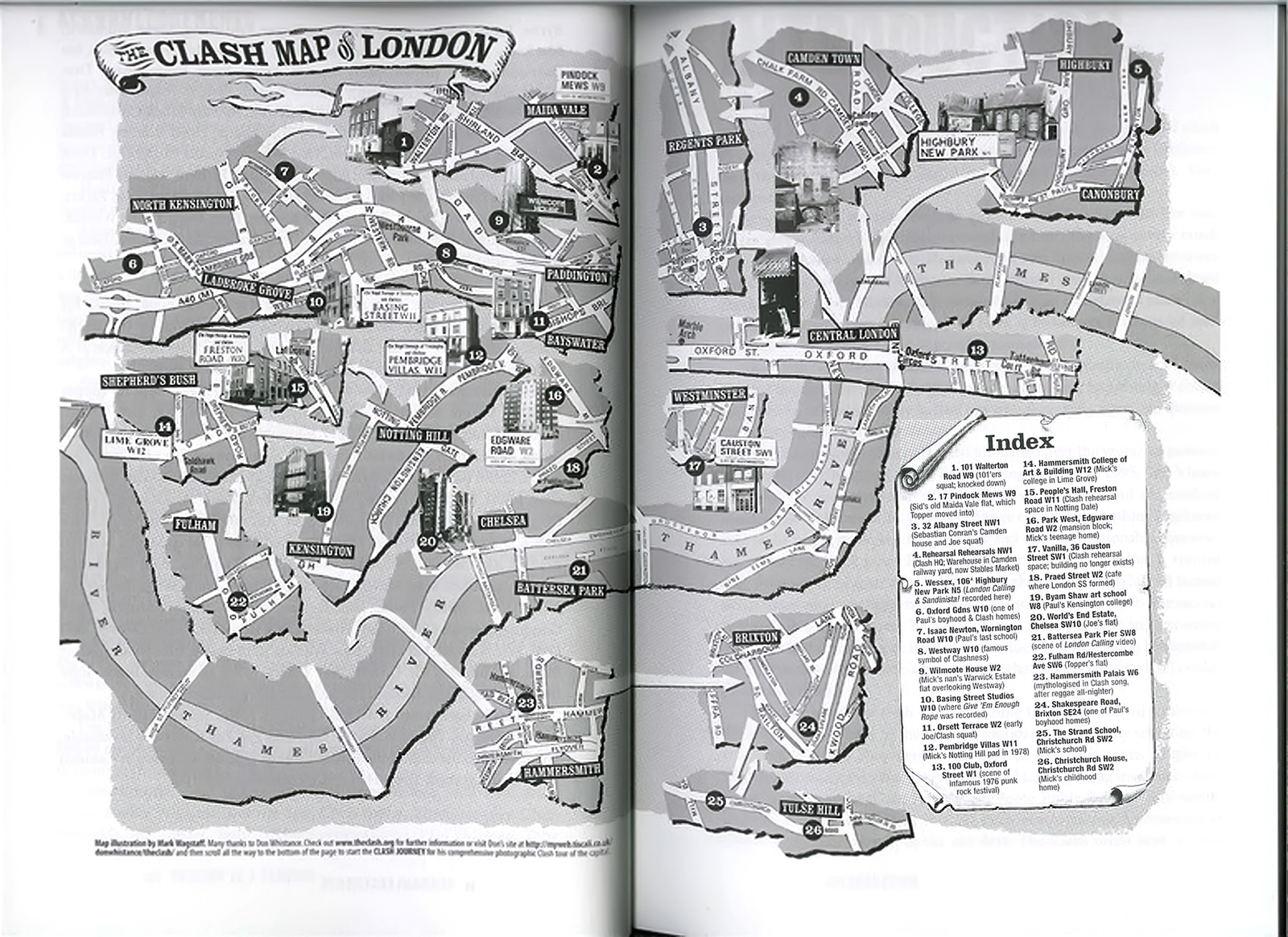
With the possible exception of the Sex Pistols, the Clash have attracted more attention and generated more excitement from the press than any other new band in the past five years. Their first LP, The Clash, released in England in 1977, has been hailed by some critics as the greatest rock and roll album ever made.
Considered too crude by Epic Records, The Clash was never released in the US. Instead, a compilation LP that included ten of the album’s cuts plus seven songs from later British 1970s singles and EPs was issued in 1979 as The Clash (one of the best-selling imports ever). Those British 45s expanded the group’s musical range and lyrical attack, making it clear this was a band determined to leave its mark on rock and roll.
"Clash City Rockers!" shouts Joe Strummer, slamming his mic stand to the floor of the Warfield Theatre stage. Immediately, Mick Jones rips into the intro, and the American leg of the Clash'sSixteen Tons Tour is officially under way.
The Clash On Stage
Like The Who, The Rolling Stones in their prime, or any other truly great rock and roll band, the Clash are at their best on stage. The music, delivered at ear-shattering volume, takes hold for nearly two hours. The energy never lets up.
Strummer, planted at centre stage, embodies this intensity. Short and wiry, his hair greased back like a Fifties rock and roll star, he bears a striking resemblance to Bruce Springsteen. When he grabs the mic, the veins in his neck and forehead bulge, his arm muscles tense, and his eyes close tight. He spits out lyrics with the defiance of a man trying to convince the authorities of his innocence as he's being led off to the electric chair.
But the Clash also convey a sense of fun, the spirit of a celebration. Mick Jones and Paul Simonon race back and forth across the stage, and as Topper Headon flails away at his drums, you can't help but want to dance. That’s exactly what this audience—a surprisingly mixed crowd of punks, longhairs, gays, and straights—is doing. Everyone is on their feet. Hundreds are mashed against the stage, while at the rear of the hall, people are bobbing up and down in their seats.
Joe Strummer: A Rebel’s Story
"Here, I gotcha!" Joe Strummer shutters on his brand-new Polaroid SX-70 Sonar camera and shoots another photo. In some ways, Strummer is the least-accessible member of the Clash. He tends to keep his distance among outsiders, often appearing to stay on the sidelines when the rest of the band socialises.
Born John Mellor, Strummer is the son of a British diplomat. His only brother, a member of Britain’s fascistic National Front, committed suicide.
"I grew up in a boarding school in Epsom, 15 miles south of London," he says, fidgeting with his camera.
Strummer is extremely soft-spoken, and because many of his teeth are rotting or knocked out altogether, it's often difficult to decipher exactly what he's saying. "I found that I was just hopeless at school... A total bore. First, I passed in art and English, then just art, then I passed out. That was when I was 17. I left to go to art school. Biggest rip-off I've ever seen."
Mick Jones and the Band’s Origins
"I first saw Joe in the dole line," Mick Jones tells me. "That’s no lie. We looked each other over but didn’t talk. Then we saw each other in the street a couple of times; eventually, we started talking, and he wound up over at my flat."
That meeting took place in summer 1976. By then, Jones had already formed the nucleus of the Clash with Paul Simonon and Keith Levene (who later joined Public Image Ltd).
A Farewell to War?
"You made me cry out there, man," Freddie, a 19-year-old Englishman transplanted to San Francisco, grabs Mick Jones around the shoulders and gives him a big hug.
Backstage at the Warfield Theatre on Sunday night, the Clash have just completed their exhilarating, second and final show in San Francisco. Near the end of the set, Jones dedicated Stay Free to "someone I know who's going into the Marines tomorrow." That someone is Freddie, who has come to thank him.
Jones, his sadness almost turning into anger, tells Freddie that enlisting is a mistake. After a private discussion with Kosmo Vinyl, the band's assistant and PR person, they return with a decision: "He’s not going. Me, Kosmo, and Joe will give him the $500 a month. He’s coming to work with us."
Music Over War
Later that evening, Jones reflects on conscription: "If England started the draft again, we'd start our own anti-draft movement."
Would he go to war?
"That’s out of the question. People prefer to dance than fight wars. If there’s anything we can do, it’s to get them dancing again."
The Clash Sandinista! From Clash City Rockers to New York City Rebels
VIVE LE ROCK / #76 / 2020 / 16 pages /
1. Sandinista, Bonds, Kris Needs
2. Ross Sinclair (Soup Dragons) Busking Tour Glasgow photos
UK Newspaper --- 27 April 1980
Observer Joe Interview on the 16 Tons Tour
Joe Strummer on London and the Clash
The Clash's Reception and Criticism
Joe Strummer: Life Outside of the Band
Daydream: Early Life and Musical Beginnings
Punk, Inspiration, and the Future
FIONA 'S Metropolitan Diary
JOE STRUMMER: A REBEL'S LIFE IN LONDON
JOE STRUMMER says he's learnt a lot about London in the past few weeks. The Clash, his group, has been recording in New York after an American tour, which followed a 40-day British tour, and precedes a two-week European tour.
New York is just so set up, Joe says, by which he means that in New York you can forget about the sky because the buildings keep going up and up. Coming back to London made him feel like a sewer rat coming into the light after weeks spent underground.
One or two critics have hailed The Clash as the greatest rock'n'roll band of our time. Joe Strummer and Mick Jones write the songs, Joe sings them and they have been labelled another Lennon and McCartney. The Washington Post said their latest album, 'London Calling,' is their beacon of sobriety slicing through the tension, a mature expression of human responsibility, and, as if that wasn't bad enough, it's also a willingness to face the apathetic and lethargic present before it becomes tomorrow's tombstone."
Ten days ago Joe was dunking plain, sweet biscuits in his coffee and reflecting on the more mundane aspects of life. The rest of the band were still in New York but he had to come home because of a little problem with the police in Portsmouth over half a joint of marijuana and because he's just been given notice to quit his squat. "It's difficult to get that side of life together when you're constantly on the move," he said.
The battery of publicists, managers, and secretaries which is supposed to take care of such practicalities, was not in evidence. "I resent anyone trying to take care of me. We've had a series of managers. There was Bernie Rhodes at the beginning, then Caroline Coon, who, shall we say, retired gracefully, and now we're working something out with Blackhill Enterprises. I've noticed these pop stars usually dry up after they move into their high-security estates with the dogs and that. I just keep walking around the streets looking at things. I don't know what else to do."
To begin with, Joe took care to talk slowly, using bad grammar in deliberate phrases, but after half an hour the background won through his gappy, rotten-toothed grin. He is articulate and intelligent, was born in Turkey, brought up in Epsom, and came to London 10 years ago to go to art school. In the late Sixties he listened to The Beatles and The Rolling Stones, but The Beatles were four berks from Liverpool and The Rolling Stones were the real thing. Then there were the Dave Clark Five from the Tottenham Court Road and, on another tack altogether, Captain Beefheart.
Daydream: Early Life and Musical Beginnings
He hated art school. "I cut loose after a year to see what there was to do. I did manual jobs to leave my mind free. I have to daydream." His musical career began when he started to collect money for a busker on the underground. He learnt to play basic guitar chords from him and formed his first group, The One-O-Oners, in Newport, South Wales, where he went because he grew tired of sleeping on a floor off the Edgware Road. He joined The Clash on his return to London and his lifestyle hasn't changed since they hit the big time, apart from all the travelling.
He likes to switch from living by day to living at night. In New York, we walked around all night. At the moment I'm walking during the day. It's amazing to be in London, I keep expecting to be hustled on the street and nothing happens. Kids in London are having a hard time and it's getting more violent because there are so many subcultures on the streets and they've got nowhere to live and nowhere to go.
I watched them pull down the old 59 Club the other day. It was a youth club after they closed it and a rock'n'roll club. Nobody cares where the kids will go now, and over the road from there they've converted some houses into flats and the For Sale signs are in English and Arabic. Say more.
Punk, Inspiration, and the Future
Punk music has been jumping in London since 1976. Joe said The Clash are fundamentally a punk band but they try never to repeat themselves. "I can't stand bands who produce the same sound over and over because it's safe," he said. "We take risks a bit. We stick our necks out and one day we'll get our heads chopped off. New York has been a big influence because in that city jazz and punk are meeting head-on, and we're looking into the Sugar Hill Jive, which is pure and black and from Harlem."
His inspiration comes from walking pavements, and he likes to feed his brain on McDonald's fishburgers, chips, baked beans on toast, a lot of tomato ketchup, and strong lager. When he gets an idea for some words to a song, he acts fast. "I'm a real cigarette packet merchant," he said, "and very one-track-minded, very obsessional. Apart from the band, I'm not interested in anything except reading. I'm reading the story of Lenny Bruce and Lord Denning's report on the Profumo Scandal at the moment."
There should be a new album in August which will be full of surprises, said Joe, and everyone will hate it. He modestly omits to mention that every album so far has met with critical acclaim. Until then, Joe would like to pass on Woody Guthrie's message: "Take it easy, but take it."
Paul Du Noyer | Music Book Author | NME Journalist
Paul Du Noyer interview
This interview took place over three or four days in December 1980. I was a staff writer on the NME, and each day Joe would call into our Carnaby Street office and take me round the pubs and Italian cafes of Soho. (We had to call off one session, having awoken on 9 December to overnight news reports of John Lennon's death.) It was the cover story of NME's issue dated 3 January 1981. The photos of Joe were taken by the great Pennie Smith.
I. It was just me, Joe Strummer… and the King of Corsica. We bought a few beers and pulled up some chairs. But it wasn't hard to see that Joe was uneasy, that he had something on his mind.
Trouble was, the King was full - the way that Soho pubs always are at that time of day - and Joe had to take a seat with his back to the door. And that was making him uncomfortable.
He says this is how they got Wyatt Earp in the end. The day the townsfolk told him to relax, he'd cleared the last gunman out of town, Earp took a drink in the saloon, back to the door. He never did finish that drink.
Well, the guns might not be out for The Clash, even if the reviewers have been using 'Sandinista!' for target practice. But according to Joe, "there's a lot of people would like to see us take a dive." Scorned by diehard punks for some supposed betrayal of the true faith, and sneered at by others for following a rock'n'roll stereotype - attacked for changing too much and changing too little - small wonder Strummer feels beset by negativity. It gets him down. But he'll fight back.
"We might not be so 'hip' and mean so much to all this 'push back the frontiers of modern music' scene - but on a world-wide scale we've fucking done a lot, and given hope to a lot of people. I live here. And I walk these streets, and I'm not gonna get pushed out of town. I was thinking about going to live in Birmingham, or Australia, all these crazy ideas. But I thought, 'Shit, I've always walked these streets, so why the fuck should I stop now?' I've only wrote the best songs I could…"
Say what you like about The Clash's fourth album - it's a complex, sprawling affair and we've all got our opinions as to how much and which parts really succeed - one fact remains clear. Joe Strummer is still one of the most valuable characters around. He speaks with warmth and candour, as honest and clear-sighted a spokesman as we're likely to get. So before you clamber aboard that anti-Clash bandwagon, listen in to the things he's got to say.
Over the King of Corsica's lunchtime noises, we begin the conversation with a brief retrospective.
What kind of 1980 was it for The Clash?
Really tough, actually. I remember at the beginning of 1980 we planned to have some fun with singles, a Clash Singles Bonanza, fire them off like rockets all through the year. And then we ran into that 'Bankrobber' business. When we passed them [CBS] the tape they said "We're not putting it out," so we shut down communications in a fit of pique, and that dragged on for the whole year. So there goes the Singles Bonanza.
We've had a tough time touring as well. I've been attacked by a mob this year, suffered at the hands of a mob.
Kids pissed off by 'London Calling'?
Yeah, that's right. In Berlin, there's some German skinheads and they were saying "Oh, my grandmother likes The Clash." Understandably, they were pissed off about that. But in Hamburg these kids attacked us, going "You've sold out, you've sold out." But I figured that they hadn't come to that conclusion, it was rather a trendy supposition that they thought "Oh, we'll follow that." I don't think they worked it out using their own brains.
A tough year. I mean, it's changed my mind a lot. That Hamburg thing was kind of a watershed, y'know?
You were physically attacked?
Oh yeah, for sure. It was like nothing you've ever seen. They were all down the front, and if they could grab hold of a microphone lead they'd pull, and it was a tug o'war. And then it started getting really violent - and that was my fault in a way. How much can a man take, y'know? I was playing and I saw this guy, sort of using the guy in front of him as a punch-bag, trying to be all tough. So I rapped him on the head with a Telecaster, I just lost my temper. And there was blood gushing down in front of his face. It wasn't much of a cut, but it looked real horrorshow. And the howl out of the audience - you shoulda heard it. From then on it was jump in and punch.
After that, after I'd been taken down the cop station and charged with assaulting a German citizen by striking him over the head with a guitar, I began to think that I'd overstepped my mark. And that's what I mean by it was a watershed - violence had really controlled me for once. I became very frightened that violence had really taken me over. So since then I've decided the only way you can fight aggro in the audience is to play a really boring song.
Also, we kind of made a few decisions this year. Like, we've been going on loads of tours and we just can't do it any more. I don't mind about the physical stress and strain. But financially it makes no sense. We're gonna have to work something else out.
Is 1981 going to be any better?
Yeah, I'm resolved to enjoy it more. I feel that groups like Madness enjoy what they've achieved. And we're not allowed to do that, in the amount of flak we receive. Like, a gang of punks that I see in the street, they're more likely to jeer than say 'Hi'. I'm gonna try and enjoy it more. I mean, what the hell, we work really hard.
Why do you think those kids are hostile to you?
Obviously they just turn on to the sound, and they wanna hear, y'know, DA-DA-DA, that burst of energy. And there's nothing wrong with that, but there's plenty of groups doing it. And that's what I always say to them: Well, you've got the Upstarts doing it, lots of groups. I mean, The Ramones probably don't get people coming up to them and saying "You've sold out", right? But I wouldn't listen a Ramones album unless you tied me to a chair.
Tell us about your new stuff, 'Sandinista!'.
We've carried straight on. We've done what the hell we've wanted to do. I mean, there's no 'musical direction', y'know? People in America, they go [mimics earnest interviewer] "What musical direction?". And I always think, Can't they see we're just a bunch of idiots who'll do whatever we wanna do?
'London Calling' went in about five musical directions.
Yeah well this time we've probably gone in about 36 different directions. We've tried things we weren't sure we could do.
Why so many songs?
Well we sat down, right, and after a while it became apparent that we were beginning to sit on a pile of tracks. So we thought, let's see how far we can push 'em - CBS that is - as far as price goes. Originally we were intending to make just the usual double, and we weren't bothered about counting the tracks. And then we found it was gonna be a jam fitting them all on a treble, a tight fit. So we decided to go treble.
And I remember thinking, Is this some kind of bloated arrogance? I could imagine some US group doing it, Styx or Foreigner, all them overblown outfits. But then I figured that if we could get it for the same price as one, then fucking more power to us.
But it only counts as one to CBS, your commitment to them?
Yeah, that's the trouble with having it at a single price… Basically, after we'd recorded all this we had to decide, Are we gonna take them to court, or are we gonna put a record out? And it's really hard when you've put your life and soul on to a bit of tape to think it's gonna stick on the shelf for another year, and when it comes out it won't be worth nothing because times have changed - especially in the nature of the lyrics. I'm not writing moon-in-June stuff that'll sound the same in 50 years.
Why that title, 'Sandinista!'?
I was singing this song 'Washington Bullets' and I didn't have 'Sandinista' written down, and I got to a verse about Nicaragua. I just came out with it, I just shouted it out. And when I got out of the vocal booth Mick said "That's the name of the album" and I started thinking about it. I only found out about the Sandinistas through a friend of mine in San Francisco sending me literature - I'd never read it in the daily rag - so we figured we might as well use that space, it'd be printed everywhere. You could have some hip phrase like 'My Hair Is Backward", y'know what I mean, but I feel it's more use like this. It's something to find out about.
Are people going to like the album?
I don't think your average punk rock fan should bother to buy it, not if he wants sort of amphetamine rock. Maybe he should get the others, the new Subs or Rejects LP would be a better buy if he wants amphetamine rock. It's music, y'know?… The music's gotta change. I wish people would understand that more, and allow for it.
[More about that in a while. Talk turns to the independent companies, and Joe's belief that they represent the future…]
… Well I mean, I speak as one on the end of a spear, a giant corporate spear, y'know? I'm being roasted in the flames. There wouldn't have been any blues records if it hadn't been for independents in the America in the '20s. And I think that's what happening today. Like, look at CBS. I mean, we're a walking disaster once we get near them anyway. They don't deserve to do better. They go out for lunch, they have meals that you or I would probably freak out of we saw them on our table. Seriously!
These independents, the good ones, they're the ones who are really in touch. I hope the majors just die away. I think it would be amusing if CBS moved into the place just vacated by Rough Trade.
What would you say, then, to a young group who are offered a major deal?
I'd say don't take an advance. A lot of groups know this already, cos they're smart. But we weren't so smart when we started out. I know it now though, through bitter experience. If you wanna take a contract, great. But make sure they ain't gonna tell you what to do, they ain't gonna give you a producer you don't want, they ain't gonna hype or hang around the studios, all this bullshit that goes on, they ain't gonna tell you what to wear. We've never had any of that.
But as for the advance, don't take it, because it seems like easy money at the time, but you just spend the whole thing on touring, gear, studio. And it ain't money for nothing cos you owe it to them. You dig yourself into a hole. It takes a lot of guts to dig yourself out.
I'd also like to say to anybody signing a contract with CBS, we walked into this trap that we can't get out. They've got this trap, it works like this: this is the contract [picks up a newspaper] with this many pages, right? And here it says "This is three years plus two years company's option." And you think, "Five years, it's a long time, but I can make it." Back here, on this page, it says, "If at any time the company decide to call on seven extra LPs blah blah, they can." So you think you're signing a five-year contract, and it turns out you're in there for fucking ten LPs.
That might explain why so many groups split up. I mean, we were really tempted, I tell ya. We looked at each other and said, "How far are we prepared to take this? Are we prepared to destroy the group?" And we just couldn't do it, but we were really thinking seriously. Me and Mick Jones, we were really at the end of our tether.
So, is there life after CBS?
Well [laughs], I can't answer that. It's so far in the future I don't know if we're gonna be here still. We have talked about this of course. I wouldn't want to be involved in a big bullshit scene like Apple, where they said "Right, we're gonna start our company and we're gonna help new talent and it's gonna be wonderful" and of course it all turns out to be a load of freeloaders.
Y'know, I've got a mate who was fucked up by Apple, a bloke called Tymon Dogg, he sings a number on 'Sandinista!' ['Lose This Skin']. He was, like, the one they signed and couldn't do anything with. Paul McCartney wrote him this song and it went [mimics prissy pianist doing inane ditty]: "Good golly Miss Pringle / You make me go jingle" - and this is like, one of the heaviest songwriters I ever met!
But CBS - I just think it's really criminal. They're a business, a giant corporation. They're protected by the courts of law, they've got sixty lawyers. And yet they stoop to a trick like that and that's how they run their business. Like, if I was to get one in here and go "Don't you think that's a bit nasty?" [the word Joe actually used was "cunt-ish", subbed out due to NME policy at that time] they'd go "No, I don't see anything wrong." They're just… And then society moans about how people go cat-burglaring and shoplifting, and yet this is the protected code of business. It's such hypocrisy.
[Conversation wanders from businessmen to Bernie Rhodes, "ex Clash manager", to Johnny Rotten and PiL's live album.]
Huh, a live album. It's just a joke. I don't mind that they go on about "Rock'n'roll is dead and it's gotta be killed off"; that's just a load of words, what does it actually mean? Does it mean that I'm not allowed to write a song or what? Julie Burchill too is really into this "stab the dinosaur". It's all so boring.
We've always resisted the idea of a live album. I mean, don't you think that CBS have been on to us? In fact we've turned up at a gig and there'd be a mobile parked outside the gig. And all the gear would be miked up by the time we hit the venue for the soundtrack in the afternoon, and we come in and we go "What's all this about?" "Oh, CBS'd just like to get a live" and we'd just say "Get the mikes outta here, get that truck outta here." We've just refused to have anything to do with it.
You know that thing we were saying about PiL and Burchill; "Rock'n'roll's got to die" - I agree if they mean overblown masturbation on stage, passé drivel. But they never define their terms. Don't they earn their living from the rock-buying public? They do.
That aside, PiL are moving away from rock as it's sounded for years.
PiL sounds to me like Uriah Heep on Mandrax, that's the first thing I said when I heard them. But I'm no bloody expert on their music. Levene's a brilliant guitar player. He pretends he doesn't know any of them rock'n'roll solos but he does. I know, I've seen him play 'em.
Music's gotta change, though. Cos who wants punk to be like heavy metal? There's no difference, and who'd have thought that would ever come to pass?
Are The Clash innovative, musically?
Musically? I think we're learning to be, yeah. We're not afraid to play around. What we're doing now is experimenting. But I'll only put on a record if it's worth listening to. I hate music that's so concerned with being 'new' that it forgets to have any soul, y'know? We experiment, but with those limitations: it's gotta be worth listening to.
I'm sure a lot of groups don't bother to apply that. They want to be smarty-pantsy and they don't think what fucking use it is to a stoker in Aberdeen, is it going to make HIM feel better, or what?
But innovative… we are in some ways. Like we were one of the first groups that dared play reggae. We've really fused some stuff. We are interested in mixing it up. I've gotta say that hearing stuff like 'Banana Republic' from The Boomtown Rats - it just makes me feel ashamed. And hearing 'The Tide Is High' [by Blondie] - those two make me ashamed about white reggae, make me wanna puke.
Of course, the other innovation is politics.
Yeah, and on that score we're getting a lot more political in our old age. As I get older my politics are clarifying themselves, becoming more pointed. More potent…
My politics are definitely left of centre. Yet I believe in self-determination. I don't believe in Soviet Russia at all, because there's hardly any choice. You've still got a ruling class riding around in big cars. Our bass player went to Moscow to see for himself and he said that people walk around like this [heads down]. Tourists and party members have special shops, but your normal Joe Russian isn't even allowed in the bloody shop, never mind that he's got no dough to spend in them. And where's that at?
I believe in socialism because it seems more humanitarian, rather than every man for himself and I'm all right and Jack and all those arsehole businessmen with all the loot. But you can't bring socialism in with orders. I mean, look at the Khmer Rouge in Cambodia. They just massacred and butchered the whole country to make them to do what they were told. That's ten times worse than the shit we've got going on here.
When I left art school, I took a dive: no future, no skill, nothing. So I just laboured and doled, fucked off around the place. Took a job when I was really skint, if I could get one, got fired every time for late timekeeping. The usual.
And I made up my mind from viewing society from that angle. That's where I'mfrom and that's where I've made my decisions from. That's why I believe in socialism. When I was on my uppers, every door was slammed in my face. Once I asked a lady outside a sweetshop to buy me a bar of chocolate. I'd been hitching all day and I was really hungry. I just thought I'd turn around and try society on. And this lady came along and I said, "Would you give me the rest of the money for this bar of chocolate?" And she just said "No, why should I?" Things like that annoyed me.
D'you want a drink?
Nah, let me get it. I'm supposed to be the big pop star around here.
II. I really think that we've got to devise a plan for this country. I'm not interested in the others, really. I mean, we put out records world wide, but "home is where the heart is," it's really true. We spent a month in New York, recording in Jimi Hendrix's studios, and when we got back the sun was shining on Leicester Square, y'know? It felt great to be back, just to stand there.
We've gotta devise some sort of plan. Cos all these groups like the BM [the far right British Movement], they're using patriotism to recruit. And that's my number one guideline: if anyone gives me a patriotic pitch I know he's an arsehole,I know he's a rip-off merchant, I know he's trying to have one over on me.
"Patriotism is the last refuge of a scoundrel."
It's true! It really is!
And yet there's something genuine there too.
Mmm. I've only been able to detect it in myself in the last couple of years. Whereas before, I'd been shat on by the system, as it were, and seen it from the underside - any patriotism at all made me wanna throw up. As far as I saw it, we're all earthlings - not English or French. And if we ever discover a new civilisation, that's gonna get more in perspective. I mean, think of us all on this planet, fighting and shooting each other. You crack up thinking about it. That's how I used to think. I still do, mind, but I do feel patriotic, y'know, when England does something good. But what about Northern Ireland, how can you feel patriotic with all that going on? We gotta sort something out.
It's complex, but with The Clash you're accused of just sloganising problems - maybe you can't do anything else in a two-minute rock song?
I think that criticism belongs to someone else, perhaps Tom Robinson in his early days, or groups who followed our line, tried to crash in our territory. Cos I always understood that you had to be personally involved. Or, you have to feel for something before you can write about it. If you really feel for something then you don't write slogans, you write truths. You're really on the ball. Obviously in a rock song the situation's gotta be simplified down from, say, a grand scale debate, when you can take into account all of the nuances. But I just don't see why subject matter has to be so bloody bland…
But, y'know, I'm getting more political as I get older. And I think there's gotta be a plan, and a party. I mean, I've always hated parties because I don't believe in toeing the party line. But there must be some way that we can get ourselves together here, not let Thatcher walk all over us. Like, Foot's going on about unilateral disarmament - and what the fuck have we got to lose by disarming? As soon as they start the argy-bargy Russia's gonna dump missiles on us straight away anyway, I think Britain should show the way now. Kick Thatcher out. Get Foot or Benn in. Disarm.
Everybody's taken it for granted these days about doomsday. And all these fuckers getting bunkers together. I mean, big deal.
I'm getting kinda religious and all. I really don't believe that we just get born and die and that's your one shot and that's it. I really feel that we're individual spirits and souls.
What? But religion is usually the point where people get off being concerned about social matters, the here-and-now world.
But I'm not talking about 'born again' and 'saved'. All I know is that we gotta clear this mess up, here and now, by physical action. And I also know, I don't 'think', I know that when we die we go on. There's a difference between saying "I'm born again, Jesus is here to save me, and that's all I'm gonna talk about for ever more. Amen." Bollocks! That ain't the case. I'm interested in every bloody thing, like how much people work for and why they should bloody bother, and who the fuck's getting the profits, y'know? I'm into Karl Marx, really heavily…
[Joe runs quickly and accurately through Marx's Theory of Surplus Value.]
But there's no education going on in Britain at the moment. I mean, when I was at school, I hated the entire thing, the boring way they put it over. And yet nowadays, now I'm 28, I find myself vitally interested in going to buy books they were trying to give us at school, but they just didn't put it right. There's something basically wrong somewhere.
We've got to educate the young, otherwise they'll just grow up with all this shit and see no way out. Then it just takes the fucking BM to come along and go "Blame it all on the blacks" and in fact it's not the blacks, it's the rich white people that are to blame, the white fat cats. The Stock Exchange and Wall Street. And yet, what does that skinhead from East Ham know about the Stock Exchange? And yet that's what's killing him off, and he doesn't know anything about it.
[And now… the dreaded Clashbag. A collection of questions, posed by anonymous members of the NME team, hastily scrawled and thrown into a plain brown envelope, to be drawn at random by the man himself. Starting with …]
Are you any nearer opening the club you've been talking about for three years?
That's easy to answer - No [laughs]. We did have a place sussed out, the Lucky Seven, bu the landlord wanted to turn it into a snooker hall, and when it came to fighting them over that, we really couldn't beat their aces, because a snooker hall makes no noise - the clink of balls - and we were proposing mayhem. It was no contest really… I dunno, perhaps I haven't got the clout I thought I had. Perhaps you need a ring of businessmen who can beat them at their own game.
What should unemployed kids be doing with their time?
I found my life was a drag until I linked up with other people by forming a group. Our life was full from the moment we decided to do something. Whereas before we'd just been lying around Squat City. And I'd say if anyone was unemployed and bored out of their minds they should sit down and figure out what they think'd be great, then go out and try make it happen - cos there's plenty of other people out there.
To connect with other people and communicate with them, that's when things really happen and are really exciting. Like the beginning of punk, the whole place seemed to be crawling with people who had some idea of what they wanted to do. It's too easy just to throw years of your life away.
When I was younger I thought time was eternal, but growing up I began to know how long a year is, and it ain't that long.
What can bands and audiences do about the British Movement threat?
Well, speaking for the bands I'd say a very practical way they can help is by being very careful what they write isn't misconstrued. Like, some people write a song slagging off the NF [the National Front, another far right party] and they write it from the stance of "I'm a Nazi and I'm a bloody idiot", but sometimes people don't quite get the subtleties and that's dangerous - I know I've done it.
And as for audiences, being British we have this thing where you leave people alone, that cool behaviour, not like Italians. And I think audiences have got to shake themselves out of it. An audience of 2,000 people will cheerfully let 30 people ruin the show. They don't want to get involved. But they're gonna have to get involved.
Favourite bands?
I saw The Stray Cats just the other week, and they were really great. Just three guys playing their hearts out, no hype about it. I think 'Runaway Boys' is a great record - perhaps it even tops 'Ace Of Spades'! But apart from Stray Cats and Motorhead [laughs]… At the moment I'm really into Gregory Isaacs, great voice. So many of those reggae guys can really sing. We all shout over here, and they sing.
What painters/art movements have influenced The Clash?
Paul Simonon's our resident artist, he left art school the last. I used to enjoy pop art. They had a great exhibition about ten years ago at the Hayward Gallery, and that was mind-boggling. Paul though, he's obviously into Jackson Pollock. He's really into customising his bass. He'll unscrew his scratchplate and lay it on the floor; he kinda walks around it for an hour, and then he just goes flick with a bit of blue, and then another hour, and then flick with a bit of red - he's an artist.
The Clash: What went wrong/what went right?
What went wrong was we didn't realise exactly what the structure of the business was. And what went right was that we could handle that, and not give in.
Many things went wrong in the early days. Like that day we turned up for rehearsals and Terry Chimes said he was leaving. I could have hit him over the head with a spade…
And then we fell out with Bernie [Rhodes]. Bernie lost control of us. His scene was not to give us any money in case it ruined us, which is the way you deal with kids - which he thought we were. But he underestimated us. Like people say Bernie wrote our songs, but that's not true at all. All he said was, "Don't write love songs, write something that you care about, that's real." And it's a pity we fell out with him cos we made a good team.
But he got really funny when The Clash all started to happen. We wouldn't see him from week to week. If he wanted to communicate he'd just send a minion - inferring he was too busy elsewhere to deal with us.
You know 'Complete Control' which Mick wrote about the record company, in fact we got the phrase off Bernie one night in that pub in Wardour Street, The Ship. I remember him going - he'd obviously been talking to Malcolm and was trying to be the master puppeteer - going "Look, I want complete control, I want complete control.' And we were just laughing at him.
But what went right was that we didn't explode, or implode. It was desperately hip at one point, when the Pistols jacked it in, everyone was going, "Of course they did, man. That's the ultimate end to the ultimate group." And I was thinking, that's just a cop-out.
What happened to the TV show you were planning to launch?
I haven't found anyone who's interested. I think The Clash exist very much outside the society of this town - I mean the people who run the TV, even the music industry. We're really outside of it, no communication with anybody. Like, things happen, and I read about it afterwards. When they have a big bash and it says "Anybody who was anybody was there", I find out about it when I buy the paper the following week! And I think that's pretty good for us, it helps us appreciate the realities of the situation rather than be lulled into any false sense of 'everything's cool, man, let's have a party.' I'm glad we're outsiders in that respect. But this is where it falls down, whenever it comes to getting anything together, getting a businessman to take you seriously. It's very difficult.
And you won't do Top Of The Pops.
There's this farce that's been going on for ten years, where they take the group into the studios to re-record the backing track for TOTP, they take the BBC engineer down to the pub for a drink, meanwhile they swop the tapes with the original tapes of the single, and they throw away what they just pretended to record. I mean, this goes on in 12 studios in London every week, the same charade is played out - which we haven't had to go through not having been on the show, nor ever going to be either.
Last question: how have The Clash stayed together when everyone else splits up?
Hooray! Something good, something I can boast about! It's not often you get a question like that. I feel a warm glow all over me. I really do. It's like I was saying: walking out is a cop-out. And that's the way we've always thought, and that's why we haven't done it. It gets rough a lot of the time, but we've just been really open with each other. And we know that to say bollocks and storm off is a cop-out. We've often felt like it.
And perhaps there's another reason. I know this helps. Sometimes you think "That's it! That's the last straw! I never wanna hear the word Clash again." Then you go home and you think "Hang on a minute. We're not gonna leave it to The Jam, are we? I know The Jam aren't the be-all and end-all, and I'm gonna stick around to prove it.
III. Thrown out the pub at closing time we make our way to an Italian café on the edge of Soho. Pessimistically, Joe ponders the commercial rewards of a life in show business. The Clash's stance on record prices - such as insisting that the triple album be sold for the price of a single album - is not shared by their record company. Accordingly, the financial sacrifice involved falls largely on the group. When they sell 200,001 copies of 'Sandinista!' in Britain, then their total royalties will amount to 30 pence. Publishing royalties will also be payable on the basis of a single album. Recently Joe was refused a mortgage.
Nor have the LP's prospects been greatly helped, he feels, by its December release date - just in time to get buried by the Christmas rush. "There's only two categories of people that put records out in December," he says, stirring and staring into a cup of cappuccino. "That's lunatics - and superstars."
And which category are you lot, then?
Joe laughs quietly. "The first," he replies. "Definitely the first."
Interview withPaul Du Noyer -- Music Book Author | NME Journalist
Touring and Working with Other Musicians Lasting Legacy and New Projects
MUSICLEE DORSEYBlues,
Punk Can Sometimes Mix
BY MICHAEL SNYDER
Lee Dorsey's Punk Experience
At his most recent Bay Area performance, New Orleans rhythm-and-blues singer Lee Dorsey was greeted with a torrent of spittle from the audience. But Dorsey simply smiled, stepped back, and sang. He knew he was dodging a punk equivalent of frenzied applause.
The year was 1980, the venue was the Warfield Theater in San Francisco, and Dorsey was opening for the British punk-rock band, the Clash, at the invitation of lead vocalist Joe Strummer. "I had never witnessed anything like that in my entire career," said the 58-year-old Dorsey, laughing. "I was a little upset at first. I thought 'Whoa, what's going on here?' But those guys in the Clash told me that if the kids dug you, they'd spit on you. There I am in my $200 suit with spit on it, and the Clash are telling me 'They love you. And sure enough, they spit all over the Clash, too."
Today, such viscous displays of affection are as passé as punk, but Dorsey maintains his legendary status as one of the finest and funkiest singers to emerge from the New Orleans music scene. His reputation was built on a string of five Top 40 hits "Ya-Ya," "Do-Re-Mi," "Ride Your Pony," "Working in a Coal Mine," and "Holy Cow" that kept the buoyant Crescent City sound on American radio during the '60s. In the past few years, his patronage by new wavers like the Clash and DEVO (the latter having recorded a robotic version of "Working in a Coal Mine") made Dorsey fashionable again. "I never did hear that DEVO record," admitted the gravel-voiced Dorsey during a telephone interview, "but that song, 'Coal Mine,' is going to be around for a long while." Dorsey was calling from Natchez, Miss., where he was preparing to headline a Mardi Gras ball with his backup band, Skor. "We've got a heckuva thing going on here tonight," he chuckled. "It's going to be early morning before we're done."
Life Off the Stage
When he's not touring or playing club dates in the New Orleans area, Dorsey is hanging out at his son's body and fender shop in New Orleans' 7th Ward. It used to be Dorsey's shop, but he's no longer bending fenders full-time. "I just hold the door open for my son. He named it Ya-Ya Body and Fender Repair. It was called Lee Dorsey & Son, but the place belongs to Lee Dorsey Jr. now," said the divorced singer, who fathered four boys and seven girls while he was married. "I didn't have too much off-time," he added, revealing that he also sired "seven or so" children out of wedlock.
"I can't stand the exhaust and paint fumes anymore, but I still have a love for garage work. I don't mind the large jobs like straightening a bent frame or replacing a quarter panel. Because I know how long those repairs will take, they don't eat into my music business."
Early Years and Musical Beginnings
In 1936, at age 10, Dorsey emigrated with his family from his native New Orleans to Portland, Ore. A veteran of World War II, Dorsey was an undefeated prizefighter in the featherweight and lightweight divisions of Oregon, until he simply grew tired of "beating on people." In 1955, he returned to New Orleans with no intention of becoming a singer, but fate intervened.
Discovering a Talent for Music
At this point in his life, his music takes precedence, but he was originally discovered in 1957 when a talent scout heard him singing as he worked under a car. "I always liked tinkering on cars," Dorsey said, "so I got me a job at a body shop owned by Ernie the Whip, a New Orleans deejay. I loved to sing while I worked, and one day, this guy heard me singing away and asked me if I wanted to make a record."
That first recording, "Rock Pretty Baby," sold enough in the New Orleans area to warrant a second try. "Lottie-Mo," the follow-up, was successful enough to gain national distribution and an appearance by Dorsey on "American Bandstand." It also marked the beginning of his relationship with the great New Orleans songwriter, arranger, and producer, Allen Toussaint, who authored most of Dorsey's subsequent material. "I got $50 a pop for recording each of those early records," said Dorsey, "and Allen told me not to make any more records for that little." So Dorsey went back to his garage and tools.
Building His Career
In 1961, Marshall Sehorn and Bobby Robinson of Fire/Fury Records came across a copy of "Lottie Mo," and they were impressed enough to sign Dorsey to a real recording contract. Scrambling for original material, Robinson and Dorsey took a children's street chant and turned it into "Ya-Ya," a Top 10 hit that earned them a gold record. Dorsey assembled a band and hit the road, working with seminal rhythm-and-blues musicians like T-Bone Walker, Big Joe Turner, and for 61 consecutive one-nighters James Brown. "You make a lot of money playing live, but you're spending, too," Dorsey said. "It wasn't easy when the club owners were waiting to rip you off. You had to watch the door while you were up on stage."
Touring and Working with Other Musicians
Throughout the '60s and '70s, from the gritty, rollicking "Ya-Ya" and "Coal Mine" to the slicker and more urbane "Yes We Can" and 1978's "Night People," Dorsey toiled in the studio with Toussaint and worked the club circuit. He recorded with the Meters, Toussaint's favorite session musicians and perhaps the quintessential New Orleans rhythm-and-blues group, and though he never attained the heights of his early success, he never despaired. If times were lean, he could go back to the garage. "I don't know if I'm a better body and fender man or singer," he said.
Lasting Legacy and New Projects
He's toured England 10 times, a hero to the British, so it's logical for the Clash to have expressed an interest in bringing him to their audience. Joe Strummer even wrote the liner notes to a U.K. compilation of vintage Dorsey tracks. "I'm collecting royalties on 'Coal Mine' and 'Ya-Ya' from around the world," said Dorsey. "The checks aren't big, but that's OK, because I've got some new projects going."
"Allen and I recorded a country-and-western album I want to put out, and we're supposed to go back into the studio to do a rap record. You know, the kids who bought my first records are older now. As time goes by, you need something for the youngsters of today. If they're still spitting, I'll just get out of the way."
Lack of Support from the Office of Student Activities
CCP's Success with Angela Bofill Performance
DAILY COLUMBIA SPECTATOR - FOUNDED 1877 - VOL. CIV-No. 84 NEW YORK, N.Y., --- MONDAY, MARCH 3, 1980
Copyright 1980 Spectator Publishing Co FIFTEEN CENTS MARCH 3, 1980
Columbia Concerts Production's Struggles
By GENE KUMMERER
After the group's first semester in existence, members of the Columbia Concerts Production (CCP) attribute their lack of success in attracting top-name acts to both poor organization and resistance from the university.
Since the Student Council established CCP in the fall, the group has organized only three shows: the John Cale concert, the Necessaries dance, and the recent Angela Bofill show. According to one CCP member.
First of two parts, the first two were "hastily put together at a probable financial loss."
"The group is extremely divided, but this is not a major problem," another member said. "The chronic problems are a general lack of committee (meetings), dealing with the antiquated administration of Ferris Booth Hall (FBH), and a hostility from FBH towards non-BOM (Board of Managers) members of the CCP."
Several CCP members cite the group's recent failure to get the new wave band the Clash to play at Columbia as an example of these problems. The CCP failed to get the band because they failed to complete negotiations with the band. CCP members John Morace and Mark Schuyler said they met resistance from other CCP members and university administrators when they tried to bring the Clash to Columbia, although group chairman Rick Corbesiero claims to have personally talked to several administrators about the matter. Schuyler and others involved with the planning of the concert said they had problems reserving the Levien gymnasium for the show. See CONCERT, 9.
Failure to Bring Major Acts to Columbia
"No administrator was willing to fight for us," claimed one committee member. "Very few seemed to have any confidence in our efforts." The Clash concert hinged on securing the gym, he said. Both Morace and Schuyler said they discussed the concert with Alvin Paul, director of physical education and intercollegiate athletics, several times, but Paul rejected the idea.
"The two young gentlemen did an excellent job in presenting their request," Paul said, but added that there were many reasons not to hold the show. Among these, he said, was the concert's date, which would fall on the spring break weekend. Morace said another proposed concert, by the Boomtown Rats, was dismissed by the CCP because it would have come during the break.
Paul said he felt the profits from concerts held in the gym should go primarily to Columbia. He also said he doubted a Clash concert would be in the best interests of the university community, and that he was concerned with the non-reserved seating arrangement required by the band's contract.
"I don't want the vaguest possibility of some trouble occurring," he said, citing the death in December of nine people at a Who concert in Cincinnati.
"Our facilities here are just not conducive to giving concerts," Paul said. "We've had bad experiences with concerts in the past." A BOM sponsored concert by the Marshall Tucker Band in the early 1970s caused heavy damage to the gym floor and resulted in a "great financial loss," he added.
Administrators said the promoter for the Clash had offered to post bond to cover damages, but that they rejected the offer. "What does that mean?" said Philip Benson, deputy for student affairs. "What is bond going to do if someone gets killed?"
"The Marshall Tucker show demonstrated that the gym is primarily an athletic facility," he added. "The damage was uncalculable, including the damage of trust and confidence. Furthermore, this concert failed even after months of planning and culminated in two highly critical reports examining the concert's failure.
"As for this Clash concert," he concluded, "they're not even getting support from FBH, their own people."
Administrative Resistance and Issues with the Gym
Lack of support from the Office of Student Activities and Director of Student Activities Alan Liebensohn has left CCP virtually impotent, members said. Schuyler said Liebensohn arranged the upcoming concert by avant-garde musician Steve Reich without consulting the CCP. "The whole thing was done independently of us," he said. "Liebensohn handled the contracting on his own."
Liebensohn, however, said the contracts for the Reich show were made through BOM. Furthermore, he said, last week's David Johansen concert-sponsored by the Rugby Club-was also set up without the help of the CCP.
Liebensohn said he does not think the Clash even wanted to come to Columbia. "This concert committee isn't ready to handle a gym show of a 3,000 capacity," he noted. "I could not recommend for them (CCP) to do it."
Student Council member Neil Sader said that while Liebensohn is the "responsible administrator" for all shows, "he should not have signed any agreement without CCP approval.
According to Council members, the approved CCP proposal states: "The CCP is the sole organization of Ferris Booth Hall activities that can fund and produce concerts."
"No activities," the proposal continues, "other than the CCP can receive funds for the purpose of producing and/or promoting. College Senator Jay Marcus, who helped draft the CCP charter, said, "Ideally, student activities groups would come to the organization if they want to bring an act to campus. Student campus organizations should be working with the CCP and not around it."
In response to Liebensohn's handling of the Reich show, College Senator Robert Spoer proposed a motion to the council censuring Liebensohn. This proposal was unanimously rejected.
According to Corbesiero, "Al got undue flak over the thing. He could have seen to it that the CCP was contacted, but it's not his job to police BOM."
Lack of Support from the Office of Student Activities
Morace claimed Liebensohn's opposition kept new wave musician Joe Jackson from coming to campus. "Al (Liebensohn) said Jackson was too big an act to bring to Columbia and he strongly dissuaded the committee from pursuing the act," Morace said.
Liebensohn, however, denied the charge. "I am not against any group and I only comment on financial matters; whether the concert will be for the campus constituency; and whether they are picking a good date." The Clash concert did not fill any of these criteria, he said.
Corbesiero explained that Liebensohn was only against Joe Jackson in light of other bands being pursued. "John came to the CCP with a list of bands, and we told him to go after five of these bands. He came through with none."
CCP's Success with Angela Bofill Performance
The CCP has had at least one success this year, with the sold-out Feb. 11 performance of disco musician Angela Bofill. Although receipts for this concert have not been calculated, Sader said, "the Black Students Organization worked through the CCP to pull off this very successful show, and everything ran smoothly."
London Calling: American Rhythms and Cultural Influence
After the Show: Lili's and Post-Gig Revelations
Joe’s Need for Normalcy
The After-Party: Soul and Sound in Lee Dorsey's Room
Joe’s Reflections on Reggae, 2-Tone, and Ska
A New Day: Motown and the Clash's Exploration
The Challenge: Meeting at 11:00
The Reality of Songwriting: Collaboration Beyond Labels
Press Reviews: The Clash and Their Critics
Joe's Interests: A Passion for Films and Crumb
The Love for Quirky Films and the Pink Flamingoes Influence
Joe's Guitars: Care, Wear, and Debate
Feminism in the Clash: Sexism, Rock ‘n’ Roll, and Self-Reflection
Reflections on America: The Clash's Struggles and Triumphs
The Clash Clamp Down On Detroit
by Susan Whitall
London Calling: Now don't look to us, Phony Beatlemania has bitten the dust
-"London Calling"
DETROIT—On a cloudy, cold March night, tall skinny radical activist of amorphous persuasion M-50 stood outside the Motor City Roller Rink shivering and passing out leaflets that read: "THE CLASH SOLD OUT!"
M-50's Discontent with the Clash's Shift
M-50 feels he was let down after the pain and fury of the first two Clash albums. His feelings are not likely to be soothed by the fact that the Clash's music is finally palatable to the dons at Rolling Stone, or by their album marching resolutely up the charts to sit, fat and smug, at #27. There's gotta be something wrong, and M-50 figures bucks must be involved. The Clash had to sell out to sell records, right?
The Clash's March 10th Benefit for Jackie Wilson
Most of the people filing into the roller rink for the Clash's March 10th benefit for Jackie Wilson tossed the fliers away, but the rumblings are coming from both sides of the rock 'n' roll fence: FM programmers are "happy the Clash has made an album acceptable to AOR." They finally stopped shouting and made a nonthreatening album.
M-50's View of the Clash's 'Sell Out'
M-50 and pals would agree: they sold out.
The truth is that the Clash, arrogant as ever, have made exactly the album they wanted to make and piss on you.
They had no reason to do otherwise; at the time of recording London Calling, the band was at bottom emotionally and financially. Lengthy managerial hassles had depleted their money and devastated them personally. London Calling could very well have been their last shot. Recorded cheaply and released at an economic $9.98, it is a stirring emotional comeback. They had nothing to lose, as Joe Strummer pointed out later:
"It was like, let's rock out before they bug us out of the studio."
Joe Strummer on the Misinterpretation of London Calling
I told him about a misinterpretation of the album in the magazine Us, where it was slagged off as negative in spirit and punkily perverse.
"I don't think that we could have made a negative record," he replied, shaking his head sadly. "It would have been too depressing."
The Clash's Emotional Burden with Their Fans
More than any other band to come out of punk, the Clash are burdened with their fans' emotional expectations. Not the new fans of London Calling (like Bootsy Collins, who plays "Train In Vain" every day), but the fans who cherished their import copies of the first two albums of passionate, political music. The people from Kansas who drove in for the Jackie Wilson benefit because it was the closest the Clash would come to them (700 miles is close? 700 MILES IS CLOSE?).
This burden does not sit lightly on Joe Strummer's shoulders. While the band seems to genuinely enjoy giving their fans treats (like the impromptu concert they played instead of just a soundcheck for the early arrivals at the Detroit gig), the more intense feelings of their congregation seem to worry them.
Joe Strummer on the Pressure of Fame
CAPTION: "If you're gonna pick up a guitar or open your mouth, you've gotta make sure you've got a six-foot thick skin." —Joe Strummer
Photo: THE EARS HAVE IT: Joe Strummer, mer, trendsetter, displays the latest bowling shirt fashions from Paris.
Joe Strummer's Fan Encounter
As my CREEM cohort Mark Norton and I sat around behind the stage of the roller rink, soaking up the fan ambience, the band finished their soundcheck/preview and disappeared up the stairs to the dressing room. Strummer had barely made it to the third step, though, when cries of "Joe! Joe!" brought him doubling back down, guitar still strapped on. "Joe!" a leather-jacketed teenager yelled. "I just wanta touch ya." Strummer's face broke into a gap-toothed grin, and he pumped the kid's hand. This gave a kid just behind the first one his chance to grab the hapless singer and bearhug him. Joe's attention to them both seemed to gently imply, "See. I'm just a flesh-and-blood schmoe like you," especially confronted with their adulation. It probably had the opposite effect—it probably thrilled them to the bone.
Kozmo Vinyl: The Spirit Keeper
While talking later at the hotel, my comrade-in-pens Norton had gone into a Brando/Apocalypse Now impression, in the course of an impassioned discussion on flicks: "Strummer!" he choked in a strangled Brando mumble, "What do you call it...when the assassin...accuses the assassin... (See, Brando's still got the cotton in his mouth from The Godfather)."
Joe laughed. "That's how I feel, every day, when I try to talk to people...like (does English Brando mumbling)...sometimes I think I'm their Godfather, just grunting away.
Picture Joe, in his pale broad-brimmed hat, spliff firmly in mouth, mumbling "You shall have your justice" to a desperate soul. He mumbles well.
"Like, in Boston," he related. "We'd just got out of the coach, and there were all these people shouting 'Ban Don Law,' 'ban Don Law, just like that, and handing out pamphlets. The guy turns out to be the promoter, and I'm thinking, here we go for the classic punch-out gig, you know. And we get in there, and they're taking all the seats out, and that's made their demonstration irrelevant. They were complaining about being harassed and told to stay in their seats, but they'd actually taken out the seats, like everywhere should. Like everywhere should.
"They were complaining that this guy, Don Law, uses guerillas... But I went to those people, I went to the biggest guy I could see. And I said, 'There's no chairs here, right?' And he said, 'No.' And I said 'Well, what are you gonna do when there's people standing there?' And he says 'I'm not gonna do nothing to them.' 'Well, what if they start jumping around?' 'Well, we got the chairs here to protect us, so I don't give a f**k.' That kind of eased the tension a bit, I reckon. But we're always walking into that, 'cause it's hard to be a group from somewhere else, and come steaming three thousand miles in, and you have to go with the guy in town, say Bill Graham in Frisco. If you don't go with Bill Graham in Frisco, he's gonna bar cars from the street the gig's on and turn it into a car park before you get out of the airport."
CAPTION: "…Sometimes I think I'm their Godfather, just grunting away." —Joe Strummer
Photo: Joe Strummer, who lost his little dog 'Fluffy' several months ago, weeps for his loss.
☆☆☆
Facing the Clash: The Dilemma of the Interview
Against all odds, Mark and I finally made contact with Kozmo Vinyl, vital for any Clash press business. (After numerous calls to Kozmo at the hotel, an exasperated desk clerk asked, "Did his mother give him that name?") Kozmo was everything we'd heard he was and more. A record company friend who'd been put through the mill by Ian Dury nonetheless spoke warmly of Kozmo; it was universal. Now I know why: Kozmo strives to please everybody. He may end up scattered, running to and fro while confusion reigns, but nobody gets mad because he tries. He talks to you. He makes you laugh. Said Joe Strummer: "He's more than a PR man, he...keeps the spirit up. You know what I mean? You need someone, when you're flagging, to keep your spirit up so you can get back up there. Kozmo's one of those sorts of human beings, he's all razzle-dazzle and no downs, which is quite special, doing a tour and stuff."
The Clash's Personal Morality
Kozmo transported us upstairs to meet the Clash before the show; we'd talk afterward.
The moment of truth had arrived: would we be eaten up by the Clash machine and spewed out like so much journalistic excrement? Would we be verbally trashed? Would Joe get mad and hit our tape recorder? Would they laugh at our clothes? This was a terrible dilemma; as with any Clash fan, their personal morality was abnormally important to me, and I knew a few journalists who were devout Clash fans but had emerged from their interview encounters...shaken. How could they hate such devoted nice guys as Simon Frith (who their then-manager Bernie Rhodes had advised to check for his wallet after he left the band), and Dave DiMartino? Simon probably appeared, in late 1977, dangerously mature and too intellectual to be a Clash fan. But he was. Dave did what pisses me off: gross indecencies with a cigarette (albeit in all innocence). Still, were the Clash righteous assholes peddling moralistic Sunday School lessons to their fans, only to trample on kindly human souls in real life?
Topper and I made contact sartorially—we were wearing identical green Air Force jackets (mine so unspeakable my mother won't sit in the same room with me wearing it). We laughed, and then he went back to his brooding. (Understandable as he was nursing a cracked pelvis and a torn ligament in his hand, so anything above a snarl was probably a superhuman effort.) Freddie, a muscular guy in the band's employ, demanded "So is this a cover story?" menacingly, but Mick was effervescent and entertaining, and Joe smiled genuinely and answered all questions with care: Kozmo gave us Dutch beer; was there any limit to this British hospitality? Our fragile American illusions remained intact.
CAPTION: "I like to be given the duff review." —Joe Strummer
The Clash's Detroit Debu
And so, the gig: As soon as DJ Birry Myers spun "Higher & Higher" we knew the Clash were imminent; they came bursting out with "Clash City Rockers" and a long, frenzied gig was underway. The Clash seemed to look at the audience as curiously as they themselves were scanned from the teeming masses on the roller rink floor. Joe decided to break the ice with a little grooming foreplay, asking the audience for a comb (just like our monkey ancestors licking each others' fur?). Presented with a brush, he protested but made do. He's just lucky it wasn't Ted Nugent's—the guitar-playing deer hunter had driven in two hours from his farm near Jackson to experience the Clash in Detroit. And indeed, he experienced a cultural clash when the band gleefully sent out a roadie with a pair of scissors and the message that Ted could come back and meet them if he cut off his frizzy mane. All in fun, but Ted didn't get the joke, and huffed out. An apologetic letter from the Clash's manager was sent out the next day. "After all," said an Epic person, "what if someone said they wouldn't talk to Joe Strummer unless he fixed his teeth? How rude." The Clash didn't insult anybody else in Detroit, though, in fact they played a long set, covering each album generously, re-emerging manfully for encores, and surprising the crowd with one last turn onstage when everybody'd given up on them, already having had several hours' worth of music. Whether by playing long, or by playing well, the Clash were determined to give Jackie Wilson's benefactors their ticket's worth.
Audience Reactions: The Clash's Broadening Appeal
The Detroit FM stations were playing the two "radio" cuts from London Calling—"Train In Vain" and "London Calling"—only, so a good deal of the audience were politely attentive but had never heard a lot of the Clash's earlier numbers, as they hadn't been played on the radio. Another portion were the hippie "show me" types. One such fellow stunned me by never moving so much as a hair in the long mane floating down to his waist. It was incredible—not one muscle moved in even a spasm of rhythm. But it struck me, listening to Mick Jones thrashing out precise, thundering power chords, that maybe someone like Nugent was getting off on this...or even Mr. 1969.
Hippies like the Clash. So do black people. I watched two black girls dancing to see whether they favored the reggae-flavored numbers or not. They didn't. They're American girls, after all.
This ever-broadening audience of the Clash's, being American, is so large and uncouth and...unhip that maybe it's a natural conclusion on the part of the avant-gardists that the Clash are unhip, too. These people in their audience don't even know how to dress, this goddamn hippie may have bought every one of their albums, but what does he know? Right? He might as well be at a Molly Hatchet show if looks are anything. Next, my mother will want an album, and M-50 will be furious: How dare they appeal to such people?
London Calling: American Rhythms and Cultural Influence
I told Joe Strummer during our interview that I found London Calling full of American rhythms, and thus its appeal to Americans wasn't very hard to fathom. Do you believe that touring the length and breadth of the New World, listening to their rockabilly and 50's rock 'n' roll tapes was responsible for deepening the texture of their sound, resulting in the versatile combo showcased on London Calling? It's embarrassing when the Clash are slavishly acclaimed by critics as the rock 'n' roll band of the decade, and yet, what other band has so successfully absorbed the music of so many cultures, digested it, and emerged with a startling, evocative language of their own?
After the Show: Lili's and Post-Gig Revelations
After the show, Mark and I awaited Kozmo and our journalistic destiny at the foot of the dressing room stairs, mingling with the kids, country punks, Detroit media superstars, etc. A chap next to us, Carl Nordstrom of "Free Radio Now," announced authoritatively: "We can't see the Clash because they're upstairs giving an interview to CREEM, The price of fame, blah, blah." Mark and I nod understandingly.
Fashion note: All of the Clash still favor their late 50's/early 60's greaseball hairstyles, which of course necessitates frequent, Kookie-like combing sessions. (Ask your older brother who Kookie is...) In the dressing room after the show, as we explained to Kozmo how punch press operators in the auto factories have their hands clamped to their machines, Paul, Mick, and Joe lined up in front of a trunk mirror and made some impressive comb moves, maneuvering their heads so each could see himself.
"Working For The Clampdown"
The men at the factory are old and cunning,
You don't owe nothing so boy get runnin'
It's the best years of your life they want to steal.
—"Working For The Clampdown"
It being decided that the Clash required a bar to satisfy their post-gig cravings (and our interview wishes), we were called on to choose the place, and fixed upon our old haunt Lili's, in Hamtramck. Coordinating a large bus crammed with people with our Mustang took some doing, but we arrived with half an hour left before closing. Despite the entourage who'd followed us down the freeway (as we entered the club, one fellow snorted to his pals "Don't you EVER try to talk me out of following anybody!" as he took his place at the bar next to the Clash), the bar wasn't too raucous. Mick settled down to drinking tequila with a tableful of friends, and I could see Joe's hat planted at the bar, where Lili, the Polish Zsa Zsa Gabor, poured rounds of wisniowka. Joe was instructed on the proper pronunciation of the Slavic toast "Nazdrowie," which magically brought more and more of the red liquid to his glass. It's a tribute to the alcoholic capacity of the average Englishman that our interview was ever conducted at all once Lili got through with Joe.
CAPTION: "I see in London the papers are full of... 1001 ska bands, all doing the old ska hits, and probably ruining them all forever." —Joe Strummer
Pic: Long a Clash favorite, the guys' cover version of Styx's "Lady" always brings excited fans to their feet!
Joe’s Need for Normalcy
Packed snugly by a crowd of Detroit "pals", Joe called me over to explain that he needed to relax in the bar, as it was "normal," and, after a gig, he needed desperately to feel normal. We agreed to do a formal interview later, at the hotel. As I passed by Mick's table, I also heard the word "normal" issued from Jones's mouth to describe the place. Strange, when we're used to suspicious English visitors like Elvis Costello or reclusive megastar groups like the Stones, to encounter a group so eager to mingle with the natives and observe the local scene. If they wanted equal, low-key treatment, this was the place; Lili didn't know exactly who they were, but any friends of friends of hers are given the Wisniowka treatment and a hearty welcome.
The After-Party: Soul and Sound in Lee Dorsey's Room
Since Detroit was the last date of this truncated tour, the mood back at the hotel was distinctly non-business. My compadre and I walked despondently to Lee Dorsey's room, where a soul hootenanny was taking place. Photographer Pennie Smith offered helpfully, "Well...you can always do an atmosphere piece."
And we have the perfect atmosphere tape: a roomful of assorted Clash well-wishers, Kozmo Vinyl, visiting friend Pearl E. Gates, fans from Kansas (not the band), Clash employees, and, of course, Lee Dorsey, and ourselves, singing every old soul/gospel/R&B song we could think of. But no C.C. Rockers in sight; subject Simonon was long in bed, resting his moody profile as he was off to Vancouver the next day to begin shooting on a movie; subject Jones was off, intent on chatting with a pretty blonde; subject Headon was nowhere to be found; subject Strummer had been seen ducking into his room.
But, as we laughed in the face of interview disaster, drank beer and sang, Joe kept the faith by returning to Lee's room, where he lounged back on the bed, still behatted, listening to our wailing with no small amusement. Since Topper came in and broke the caterwauling up by slapping on a Taj Mahal tape (boooo), we agreed with Joe to adjourn to his room, where Joe fielded questions cheerfully, offering us Clash t-shirts and buttons in return for the R. Crumb CREEM t-shirts we gave him. It was 5:30 or 6:00 in the morning, and the distinctive Strummer voice was reduced to a hoarse whisper, but we sipped beer and slogged on. First, he questioned us: "What would it take," he asked in that distinctive monotone, "for a reggae record to go to number one in America?"
Joe’s Reflections on Reggae, 2-Tone, and Ska
Probably it would have to be a novelty record like "My Boy Lollipop" or "The Israelites," I offered. "Novelty" to American ears, anyway... What about the anti-reggae backlash in the English papers?
"That's the devil talking, if you ask me," Joe replied. "A couple of years ago I thought the same thing; I thought, well maybe it's going to go into a slump now, you know? But then, it's just cooking away, and it's even going to break through bigger than what I even thought before. And so I've changed my opinion on that. I read that too, I think...some guy going 'Blah blah.' I think he's a fool."
What about the 2-Tone sound?
"Bluebeat? The trouble is...this one summer I'd gone to live with this bloke called Don Etts who'd made the punk rock movie, kind of a home movie—he's done a lot of filming for us—well, I'd moved into his house, I rented a room he had spare, and he gave me this Trojan album, 'cause he was digging the 'now sound of roots rock reggae,' right? And he didn't want it—they're not interested in the old stuff. They think it's boring if it ain't new, you know? Which is quite a good attitude. But anyway—he said he didn't want it...so I got hold of it. I put it on...and I was just wiped away for six months, 'cause it's just like the cream of all the triple album set, the cream of bluebeat stuff."
"And then all that new stuff came up—I felt that there was a danger sign 'cause they were just ripping off the licks, you know? Like even if they had their own song, they just put in a famous bluebeat lick, you know?" (**Joe hummed the intro to "Gangsters")...and that's all off old records. I felt like ringing them up and telling them, 'Hey, put yourself in there, get some input in, 'cause otherwise it becomes too dangerously...retreading, you know what I mean?
"I see in London the papers are full of that kind of 1001 ska bands, all doing all the old ska hits, and probably ruining them all forever! I don't know..."
What about the possibility that the Specials-type ska will—being pop-ish—influence Americans to go back and listen to the real thing?
"That's a thought, yeah," Joe replied. "I think it probably will. 'Cause I like those bands," he said. "That's my reservation. Apart from that, I like those bands, I think they're fucking great." He took the offensive again. "Is it true you can tour the Motown studios? Are they far from here?"
We confirmed that there was a tour, and offered to take him over the next morning.
The Challenge: Meeting at 11:00
"Ahhh, you won't remember. Could you be here at 11:00? Nah, you won't make it. I'll bet you five dollars you won't."
We accepted the challenge.
The Reality of Songwriting: Collaboration Beyond Labels
What about songwriting? The songs are credited Strummer/Jones—did Joe compose mostly lyrics, and Mick mostly music? That was probably the image most people have.
"You could say that was a rough definition, but I wouldn't even ever say that, because it's just not true. Mick wrote all the lyrics to 'Complete Control.' And all the music."
"We collaborate on everything... there ain't any method to it at all. It's a big jumble up, really. You'd probably be surprised if you knew who contributed what—they think just because I sing it, I wrote it, or because he sings it, he wrote it, but it ain't like that at all."
I offered him a cough drop, but Joe lit up another Camel Light. "I just believe that... it's difficult but good to have a meeting of minds... it's difficult because everyone's got an ego, and you obviously think that what you think up is better than what anybody else thinks up. Or you do if you're like me, anyway," he laughed. "So it's good to collaborate..."
Press Reviews: The Clash and Their Critics
What about the American press? "Well, I read what I can find, but I haven't been able to find very much." He laughed silently, his hoarseness growing worse. "A little review in the New York Bollocks or whatever that said we was like... volume merchants or something. Ira something. Ira Schnub."
"But I like to be given the duff review," he rasped happily. "You know? Especially by a square. Like on newspapers, they send back some guy who's got an attitude before he walks in the door, and he reviews the concert from that point of view, and they come up with some beautiful sentences... like one I read tonight, it's fantastic! It was really an over-the-top sentence, and I'm kind of rooting for them, going yeah!" he chortled hoarsely, beside himself. "Say something worse! 'Cause the worse they say, I know the better it is, you know what I mean? Because if they don't get it, that means it really must be there..."
Joe's Interests: A Passion for Films and Crumb
We passed Joe his t-shirts, which prompted him to ponder R. Crumb's fate. "Guy's a genius! He's probably drinking wine tonight or something." Joe paced up and down the room. "There's a few slick cartoonists in England, right, and they do stuff that looks just like this," he pointed to the girl's arm on the Mr. Dreem Whip shirt. "That crosshatching on that bird's arm—those strokes. If they're drawing someone's leg they do that Robert Crumb crosshatching on the side." Inspired, Joe continued to walk about, chanting, "Bring back Robert Crumb... bring back Robert Crumb... only he can save us."
We discovered Joe's taste in films to be right up (or down, possibly) our alley—he'd make a lively luncheon companion for our own Edouard Dauphin (Drive-In Saturday) on the subject of movies, as both favor the trash aesthetic in films. Joe revealed himself to be "a Dark Star fanatic," having seen the embryonic Carpenter film three times in England.
"Oh, God, they filmed that so cheap," Mark cried out, in acute pain. "American cinema is actually a lot better than that."
Joe was firm. "I know, but that's a fucking great film."
"It is, it is..."
"I don't care about the budget, I care about the idea," he emphasized, getting up to pace around.
"Joe! Sit down!"
The Love for Quirky Films and the Pink Flamingoes Influence
"When they're trying to talk to the Commander," he laughed.
"The Commander was on ice, and he's talking: 'I am dead, but I will talk to you...'"
"Did you see The Fog?" Joe queried, eager for the news.
I responded that it'd been... disappointing.
"Boo, boo, boo, boo!" he exclaimed. "By the way, do you get the films that nutter make down in Cleveland—the guy—the Pink Flamingoes guy?" John Waters, from Baltimore—affirmative.
"They just got that one in England made back in '74—Desperate Living," Joe enthused.
"Hey schtoopid, you got your clothes on backwards!"
We questioned how Joe had come to see so many weird American flicks.
"In London there's quite a lot of people who get into those films, actually," he said. "They're classics! They should be shown on TV, American prime time TV! I'll ring up my friends at CBS and tell them to stick it on their TV."
Joe's Guitars: Care, Wear, and Debate
In describing the Polish/Ukrainian neighbourhood Lili's bar was located in to Joe, we got into the subject of the depressed local economy (Chrysler, etc.), the similarities over in England, and Joe introduced a topic dear to his heart—guitars and their manufacture. He spoke fondly of his '61 Esquire and his '63 Telecaster (although whether the '61 was an Esquire or not was the subject of heated debate).
"What the fuck are we going to do in ten years?" he said. (With older guitars.) "Take care of them..."
"Yeah, but is it still gonna be working?" Joe queried.
"You change the pods and pickups..."
"But what about the nut?" Stradivariuses last 300 years...
"Yeah," he countered, "but did the guy play the Stradivarius every night at the show? He didn't bang it on the back of fucking amps because he couldn't stand to hear it go twanging..." Joe looked heartbroken. "My brand new '61 Esquire, right? My little baby..."
How could you... break a beautiful instrument?
"Ah, some nights are like that, you know."
Feminism in the Clash: Sexism, Rock ‘n’ Roll, and Self-Reflection
The daylight was getting more and more insistent, so I trotted out my awkward question... what about the Clash's feminist consciousness?
They'd been known for insisting on female opening acts; the lyrics of "Lovers Rock" on London Calling actually proposed that men take some responsibility for birth control and their partner's pleasure. While heavy metal musicians of whatever nationality are the worst offenders, casual observation of English male musicians generally reveals a pretty primitive attitude towards women. (And not just the stereotyped superstar/grouple scene.) Along with European charm comes a certain subtle chauvinism... which makes the Clash's view of women all the more intriguing and admirable.
"Well, I think it's something you have to watch, because it's inbred," Joe proffered. Sexism?
"Yeah. It's inbred, you don't even notice it. Sometimes I catch myself saying that are just... stupid, you know?"
Did he think rock 'n' roll was particularly sexist?
"Well, all the early passion was derived from... a sort of lust."
"But lust isn't sexist."
"Yeah, but it tended to bend that way," he replied. "When taken to an extreme... 'I'm a hog for ya baby / Can't get enough of your love'—you could say that's a love song... and this guy comes along, and it ends up in England, going like... I don't even want to say it. I don't even want to say it... it's really dumb." Heavy metal seemed to twist a lot of honest sex around...
"That's what it turned into," Joe said. "I mean, those early sort of passion numbers turned into... just macho. What do they call it? Cockstrutting routines. And I can't stomach that."
"You just say one word, chicks," Joe snapped his fingers. "Says it all, right? We used to find we'd be standing in the warehouse in Camden Town [their practice room] and these kind of surveyors were coming in off the pavement, and they'd go: 'Oh blah blah blah, these chicks, man!'"
...And I remember we'd kind of get up and say: "You can call them girls... or birds... or women... but you can't call them chicks." Know what I mean? Chickens, I remember sometimes, they really could get my goat. And then, the other day, I found myself saying it." Joe leaned against the window of the hotel room, looking overwhelmed by it all, the worried Godfather of his own description.
Reflections on America: The Clash's Struggles and Triumphs
Did he have any new impressions of America this time around?
"Well," he sighed. "I think America's really too big... to fit into. Playing at one time. If you put New York, Boston, Philadelphia, Georgia, South Carolina, and Louisiana—and these places stick out in the back of your head—by the time you get round to Oregon, and Utah..." he sighed again.
Now that the Clash had broken through successfully in Detroit, was he going to continue the Clash crusade in America?
Finally surrendering to fatigue—mental and physical, Joe drooped on the radiator. "Well, noooo."
We prepared to leave. It was 7:00. "So," he perked up. "Are you going to meet here at 11:00 to go to Motown? Bet you five dollars you don't make it. I'll be in that coffee shop across the street." (Note to Strummer: do you take checks?)
WHEN PEOPLE SAY that we're a political band, what they usually mean, I gather, is that we're political in the way of, like, left and right-politics with a capital 'P,' right? But really, it's politics with a small 'P,' like personal politics. When somebody says, 'You can't do that,' we think you should stand up and ask why, and not go, 'Well, all right.' -Paul Simonon, bass player, The Clash
"You don't understand, mate. You just can't leave those chairs there." Joe Strummer, the Clash's lead singer and rhythm guitarist, is really wound up. He takes another puff off his cigarette and moves closer to the manager of San Francisco's Warfield Theater. "Don't you see," Strummer continues in an urgent, guttural whisper, "people will fuckin' destroy those chairs, rip 'em right out. They come here to dance, and that's what they're gonna do. I don't wanna see kids smashed up against the stage in front of me just because there's not enough room to dance."
The Warfield 1 March
In a few hours, The Clash are supposed to be onstage at this 2200-seat art-deco palace in the first date of a nine-shows-in-ten-days blitz of the U.S. The tour comes on the heels of the group's grueling, two-month trek through the U.K., and just before bassist Paul Simonon is due in Vancouver, where he will begin working with ex-Sex PistolsSteve Jones and Paul Cook on a film in part about an all-girl rock & roll band.
The British punk rock band The Clash (L-R) Mick Jones, Topper Headon, Paul Simonon, Joe Strummer during a stop on the group's 'Pearl Harbor '79' tour in Monterey, California. GEORGE ROSE/GETTY
Punk Pioneers Iggy Pop, Darby Crash and Other Icons
But despite this hectic schedule, The Clash and their U.S. record company, Epic, realized they had to strike now. After watching their first two critically acclaimed albums go virtually ignored by radio stations and record buyers in this country, The Clash released London Calling earlier this year. Broader and more accessible than its predecessors, the album - a two-record set that sells for little more than a single record - was immediately picked up by FM radio. After only six weeks, it is in the twenties on the charts and has sold nearly 200,000 copies. At this moment, though, The Clash are faced with another problem: they feel that some of the halls selected for this tour aren't right for them - they have chairs secured to the floor, leaving little or no room for dancing.
All About The Clash
"Just take out a coupla rows," Strummer pleads. "But we can't do it," the manager replies. "It's too late. Besides, kids have tickets for those seats. Your fans waited in line for hours to get those seats." "Good," says Strummer. "If they're our fans, they won't mind, 'cause they'll wanna be standin' anyway." "So what do we say when they come in with tickets and their seats are missing?" "You tell 'em Joe Strummer took 'em out so they could dance. If they're upset, we'll give 'em a free T-shirt or somethin'." "But it'll take hours." "We got lots of people here who can help. I'll get down on my hands and knees and help if I have to." "We just can't do it…."
A little more than an hour later, the front two rows of seats have been removed. And Joe Strummer didn't even have to get down on his hands and knees.
With the possible exception of the Sex Pistols, The Clash have attracted more attention and generated more excitement and paeans from the press than any other new band in the past five years. Their first LP, The Clash, released in England at the height of the punk movement in 1977, has been hailed by some critics as the greatest rock & roll album ever made. Its fourteen songs jump from the record with such ferocious intensity that they demand that the listener sit up and take notice - immediately. But perhaps even more important are the lyrics. While the Sex Pistols and other punk bands viewed the deteriorating English society with a sort of self-righteous nihilism, The Clash observed it through a militant political framework that offered some hope. Certainly, a long battle was ahead, they suggested, but perhaps it could be won.
The Clash's Impact on Rock and Roll
Considered too crude by Epic Records, The Clash was never released in its original form in the U.S. Instead, a compilation LP that included ten of the album's cuts plus seven songs from later British singles and EPs was issued in 1979. (Nonetheless, the English version of The Clash is one of the biggest-selling imports ever.) Those British 45s expanded the group's musical range and lyrical attack, and made it clear that this was a group of musicians determined to leave its mark on rock & roll.
With its immense guitar sound, their second album, Give 'Em Enough Rope, recorded with Blue Öyster Cult coproducer Sandy Pearlman, pushed things even further. The LP prompted critic Greil Marcus to write, "The Clash are now so good they will be changing the face of rock & roll simply by addressing themselves to the form - and so full of the vision implied by their name, they will be dramatizing certain possibilities of risk and passion merely by taking a stage."
The Clash's Onstage Presence With London Calling, The Clash have matured on all fronts: the playing is more skilled and relaxed, though no less intense. The songs draw on a wider variety of influences - rockabilly, R&B, honky-tonk, reggae - and cover a broader range of topics, from Montgomery Clift to the Spanish Civil War to the Tao of Love. And the group's sense of humor, which had been buried before by their Sturm und Drang, is more evident than ever. Some of the credit must go to producer Guy Stevens, a legendary British music-business eccentric. Stevens, who among other things produced four LPs for Mott the Hoople, a band that influenced The Clash, found a way to capture all sides of The Clash on record.
"'Clash City Rockers'!" Shouts Joe Strummer, slamming his mike stand to the floor of the Warfield Theater stage. Immediately, Mick Jones rips into that song's power-chorded intro, and the American leg of the Clash's "Sixteen Tons Tour" is officially under way. "We're gonna do a song about something that no one here can afford," Strummer says the instant "Clash City Rockers" ends, and the band bashes out "Brand New Cadillac," a rockabilly oldie covered on London Calling. From there they tear into "Safe European Home" from the second album; next, keyboardist Micky Gallagher, on loan from Ian Dury's Blockheads, joins them onstage, and the group launches into "Jimmy Jazz."
Like the Who, the Rolling Stones in their prime, or any other truly great rock & roll band, The Clash are at their best onstage. The music, delivered at ear-shattering volume, takes on awesome proportions; for nearly two hours, the energy never lets up. Strummer, planted at center stage, embodies this intensity. Short and wiry, his hair greased back like a Fifties rock & roll star, he bears a striking resemblance to Bruce Springsteen. When he grabs the mike, the veins in his neck and forehead bulge, his arm muscles tense, and his eyes close tight. He spits out lyrics with the defiance of a man trying to convince the authorities of his innocence as he's being led off to the electric chair. His thrashing rhythm-guitar playing, described by one friend as resembling a Veg-o-matic, is no less energetic.
But The Clash also convey a sense of fun, the spirit of a celebration. As Mick Jones and Paul Simonon race back and forth across the stage, and as Topper Headon flails away at his drums, you can't help but want to dance. And that's exactly what this audience - a surprisingly mixed crowd of punks, longhairs, gays, and straights - is doing. Everyone is on their feet. Hundreds are mashed together, dancing, at the foot of the stage, while at the rear of the hall, people are bobbing up and down in their seats.
The Clash's Encore Performance
After eighteen songs, The Clash leave the stage. The band returns with Mikey Dread, the dub singer who opened the show (dub is a form of reggae popularized by Jamaican DJs who talk, chant, and sing over backing tracks). The first song of their encore is "Armagideon Time," the B-side of the English London Calling single. As a white spotlight pierces the ominous blue stage lights and focuses on Strummer, he begins intoning the lyrics: "A lot of people won't get no supper tonight / A lot of people won't get no justice tonight / The battle / Is gettin' harder …" Coupled with Jones' scratchy guitar lines, Simonon's mesmerizing bass, and Gallagher's loping organ fills, the effect is eerie. When Mikey Dread begins chanting "Clash, Clash" near the end, the whole scene takes on an air of frightful prophecy. Five songs later, the show is over, and the fans begin to leave. Outside on Market Street, one can't help but notice the movie marquee abutting the Warfield's. It reads "Apocalypse Now."
Joe Strummer and His New Camera
"There, I gotcha!" Joe Strummer snaps the shutter on his brand new Polaroid SX-70 Sonar camera, and out shoots another photo - in this case, one that will bear my likeness. Fresh from an early-afternoon shower, Strummer has agreed to sit down and talk with me before he has to leave for a sound check. But right now, the most important matter at hand is his new camera. "Some girl had one of these backstage last night, and I couldn't believe it," he says. "She said it only cost $100, so I went out looking for one after the show. The first place I went, they cost $500 or something - way out of my current reach. But then we went to Thriftimart, and it was only eighty-eight dollars. Incredible!"
Strummer's Early Years and School Experience
In some ways, Strummer is the least-accessible member of The Clash. "We're totally suspicious of anyone who comes into contact with us. Totally," he once told another writer from this magazine, and in his case, it seems to be especially true. He tends to keep his distance when among outsiders, and often appears to stay on the sidelines when the rest of the band is involved in some sort of merrymaking. Twenty-seven years old, Strummer (born John Mellor) is the son of a British diplomat; his only brother, a member of Britain's fascistic National Front, committed suicide. "I GREW UP in a boarding school in Epsom, fifteen miles south of London," he says, fidgeting with his camera, when asked about his childhood. "It's not a lot to go back to, if you know what I mean. My dad was working abroad, and my mother was tagging along. I don't think I really gave them a thought after a while."
Strummer is extremely soft-spoken, and because many of his teeth are rotting or knocked out altogether, it's often difficult to decipher exactly what he's saying. "I found that I was just hopeless at school," he continues. "It was just a total bore. First I passed in art and English, and then just art. Then I passed out. That was when I was seventeen; I left to go to art school. Boy, that was the biggest rip-off I've ever seen. It was a load of horny guys, smoking Senior Service, wearing turtleneck sweaters, trying to get off with all these doctors' daughters and dentists' daughters who got on miniskirts and stuff. And after I took a few drugs, things like that began to look pretty funny."
Strummer's Path to Rock & Roll
"Like, one day someone gave me some LSD, and I went back into the school, and they were doing this drawing. I was really shattered from this LSD pill, and I suddenly realized what a big joke it was. The professor was standing there telling them to make these little puffy marks, and they were all goin', 'Yeah,' making the same little marks. And I just realized what a load of bollocks it was. It wasn't actually a drawing, but it looked like a drawing. And suddenly I could see the difference between those two things. After that, I began to drop right off."
"Then I just spent a couple of years hangin' around in London, finding no way to manage. I was studying this Blind Willie McTell number all day, and then I'd go down to the subway at night and strum up a few pennies [hence the name "Strummer"]."
"That was when we moved into squatters' land. They're demolishing all this housing in London, and all these places are abandoned. People started kickin' in the doors and movin' in, so we just followed suit. You had to rewire the whole house, 'cause everything's been ripped out. Pipes, everything. We'd get a specialist who'd go down to this big box underneath the stairs and stand on a rubber mat and take these big copper things and make a direct connection to the Battersea Power Station. Bang! Bang! I seen some explosions down in these dark, dingy basements that would just light things up."
The Formation of The Clash
Eventually, a band called the 101'ers (named after the street address of the "squat") began making a name for itself playing R&B in pubs around London. The group recorded a single, "Keys to Your Heart" on Chiswick Records, before Strummer left to join The Clash. "As long as I'd been pubbin', I'd been really frustrated," he recalls. "I was just lookin' to meet my match, just lookin' to stir things up. And when I was offered this job, I recognized that it was the chance I'd kinda been waiting for. Just the look of Mick and Paul, you know? The gear they had on…."
"I first saw Joe in the dole line," Mick Jones tells me. "That's no lie. We looked each other over, but we didn't talk. Then we saw each other in the street a couple of times; eventually, we started talking, and he wound up over at my flat." That meeting took place in the summer of 1976. By then, Jones had already formed the nucleus of The Clash with Paul Simonon and Keith Levine. (Currently a member of Johnny Rotten's Public Image Ltd., Levine, a guitarist, left The Clash very early on.)
Recruitment into The Clash
But, in fact, it was Jones who recruited him for The Clash. "We ran into each other at a concert," Jones says. "I asked him how things were going, and he said great. Then I mentioned that we were looking for a drummer, and he jumped at it. The only thing I told him was that he'd have to get a haircut."
Stay Free
And I move any way I wanna go
I'll never forget the feeling I got
When I heard that you'd got home
An' I'll never forget the smile on my face
'Cos I knew where you would be
And if you're in the Crown tonight
Have a drink on me
But go easy
step lightly
Stay free.*
"You made me cry out there, man." Freddie, a nineteen-year-old Englishman transplanted to San Francisco, grabs Mick Jones around the shoulders and gives him a big hug. Jones gently pulls away, his dark eyes staring mournfully at Freddie. "I made you cry? How do you think we're gonna feel when they bring you back with a hole in your chest?"
Backstage at the Warfield Theater
Backstage at the Warfield Theater on Sunday night, The Clash have just completed their exhilarating second and final show in San Francisco. Near the end of the set, Jones dedicated "Stay Free," a song from Give 'Em Enough Rope, to "someone I know who's going into the marines tomorrow." And now Freddie, that someone, has come to thank him.
"Aw, come on, man," Freddie says. "Stop it. You're making me cry again."
"I mean it," Jones says, his sadness almost turning into anger. "What the fuck do you think you're doing? One way or another, you'll never come back alive. They'll ruin you." Jones pauses and surveys Freddie's rock-hard physique. "Freddie here used to be as skinny as me," Jones says, turning to me. "We used to see him at our shows in London. Now look at him. He's joining the marines, 'boot camp,' I think he called it."
Freddie's Decision
Freddie, straining to hold back tears, is obviously shaken. "But Mick, it's a roof over my head and $500 a month," he protests.
"FIVE HUNDRED DOLLARS a month!" Jones erupts. "Fuckin' lot of good that'll do you when you got a hole through you." Jones stops and looks around the dressing room. He spots Kosmo Vinyl, the band's assistant, PR person, and jack-of-all-trades. The two huddle for a few seconds, then leave the dressing room.
Finally, Jones wanders back in. I ask about Freddie.
"He's not goin'," Jones says. "Me and Kosmo and Joe will give him the $500 a month. He's coming to work with us."
A little later that evening, I run into Jones in a corridor at a party being thrown for the band by Target Video, a company that makes New Wave video cassettes. "Look, if you wanna talk, let's talk now," he says, leaning against a wall. "I'll have more to say now than I will later." Soon we're into a discussion of the draft.
The Draft and War
"If I lived in America and the government was talking about war and about starting the draft again, I wouldn't just be sitting there," he says. "You'd think people in America would be more aware. I mean, Vietnam wasn't that long ago. They should know not to believe for a minute that it's good. I went to a church this morning, and you know what those people said? They said if the country goes to war, we'll go. Maybe we can help some guy in the trenches. Is that right?"
I ask what he'd do if England started the draft again.
"We'd start our own antidraft movement."
Would he go to war?
"That's out of the question. This is an important fact: people prefer to dance than to fight wars. In these days, when everybody's fighting, mostly for stupid reasons, people forget that. If there's anything we can do, it's to get them dancing again."
The New Album
After a minute or so of silence, I ask about the new album. It was recorded during a rough period for the band. The group had just split with its second manager, Caroline Coon, and settled a lawsuit with her predecessor, Bernard Rhodes. In one interview, Joe Strummer was quoted as saying they felt the LP was their last chance.
"We were more introspective," Jones says. "We were fed up with things. We were also quite miserable. Miserable gray old place, London is. Very oppressive. Things are going very badly there."
Why then, I ask, does the album seem more relaxed, more playful?
"Well, some of it is relaxed, but not all of it. I don't call 'London Calling,' 'The Guns of Brixton,' 'Clampdown,' 'Brand New Cadillac' relaxed. I certainly don't think it's fair when people charge that we've mellowed out."
But the music is more accessible.
"We realized that if we were a little more subtle, if we branched out a little, we might reach more people. We finally saw that we had just been reaching the same people over and over. And the music - just bang, bang, bang - was getting to be like a nagging wife. This way, if more kids hear the record, then maybe they'll start humming the songs. And if they start humming the songs, maybe they'll read the lyrics and get something from them."
Musical Direction and Goals
I ask what it is he's trying to achieve, what his goal is.
"My goal is like a mountain, a very big mountain. And it's gonna take a lot of gear to get up to the top. You know what it's like? It's like banging your head against the wall. There are some victories, but they're small."
Do they even out in the end?
"I'm not sure they do; I think we're getting beat. It'd be nice to be a band that people didn't have so many preconceptions about, one that's not the hip thing to like. When we can go onstage and play what we want-jazz, maybe-and not have to do what people expect, that'll be a big step forward."
That said, we go back out into the main room, where some of the great Motown songs from the Sixties are blaring from the sound system. And where everyone's dancing.
In 1980, the Clash faced new frontiers. Four horsemen riding out to widespread public acclaim of an album that wasn't really meant to be commercial. "Have they sold out?" cried the hard-core punks as a hush fell over the city. People needed time to absorb the various influences on London Calling and figure out what the Clash were doing. Not content to serve up countless rehashes of "White Riot", the boys had discovered that elusive ingredient known as subtlety.
Anticipation was high for their upcoming performances at the Warfield, and they didn't let us down. The old energy wasn't the least bit diffused, and their conviction and attitude remained intact (despite the fact that they now receive radio airplay on KCBS-FM). But I'm getting ahead of myself... The story begins Friday night when your dauntless Idol Worship reporters set off for the group's hotel in search of a story. We brought along a painting of Joe Strummer and one Vicki Berndt deserves credit here for putting up with being crushed by it on the way over. We encounter Kosmo Vinyl in the hotel bar and he agrees to fetch Joe for us. Joe autographs the painting and photos are taken all around. He seems quite impressed by it and takes it into the bar to examine it in a more drunken light. A variety of beverages were consumed by all present: Japanese beer, cokes, and orange juice. Joe kept nodding off at the bar until he was woken up by an awful polyester tuxedo lounge act man (Vicki's description) playing Barry Manilow's greatest hits and telling punk rock jokes for our benefit ("Hey folks! Why did the punk rocker cross the road? It was safety pinned to the chicken!!").
THE REHEARSAL
We all get invited to their rehearsal in SIR Studios on Folsom. Usually the site of practice sessions by the likes of Journey, it was an unusual place to see the Clash. That is, for those of us who got to see them. The two female reporters who had gone to park the car were locked outside a wrought iron gate by the tour manager who implied that they were groupies and belonged back at the hotel. He said they would be "too distracting", which was also the reason given for not allowing Punk Globe editor Ginger Coyote to watch Sunday's gig from the side of the stage. Later, the girls are let part of the way in and given some beer by road manager Johnny Green. Unaware of the events taking place outside, the Clash were hard at work. They did many new songs, and from the sound of them that night, the next album should be amazing. The new single is a song called "Bankrobber", a reggae workout that will be produced by Mikey Dread. There were also instrumental versions of "The Prisoner" and "Listen", songs rarely heard in live performance. They did snippets of "Brand New Cadillac" and "Rudie Can't Fail". How anyone could sleep through a Clash rehearsal is beyond me, but it wasn't beyond faithful Clash roadie Baker Glare, who nodded out on the couch. Another roadie along for this tour has a very unusual story. A fan from the early days at the 100 Club, he almost joined the Marines. When the Clash heard about this, they took him on as a roadie in order to save him from that fate. His pay comes directly out of Kosmo's and Mick's wages. (I predict a run on Army fatigues and skinhead cuts shortly before the Clash's next tour. Psychic Ed.) The rehearsal was a cautious tuning-up process that allowed the group to gather their energies for the upcoming gigs. Bassist Paul Simonon and drummer Topper Headon, aided by Johnny Green, let off steam by placing all of DJ Barry Myers' records from his monstrous collection in the wrong sleeves and taping them shut, or inside the sleeves, with handfuls of albums taped together so they couldn't be removed from the case. Barry was quite good-natured about the fact that he had to sort out hundreds of records. "If they want to be childish, that's up to them," he said later.
MICK THINKS HE ALWAYS SINGS
The gig is explosive. The previous night's rehearsal has paid off and they've reached the boiling point. They open with a hard-edged Clash City Rockers and we all pogo down the front. Realizing that the balcony is no place to experience the full force of the Clash, I manage to get all the way to the front of the stage. The set was almost perfect (Sue still wanted to hear "White Riot"). They played great, and the set was very well-paced. In concert, even the newer songs took on an energetic feel that made the recorded versions sound limp by comparison. It was quite a sight to see everyone pogoing to "Jimmy Jazz", but it worked surprisingly well. An intense version of "Garageland" was a treat with a guitarless Joe Strummer screaming out the words like he'd written them yesterday. For all their newfound popularity, the Clash remain true to their origins and still sound like they mean it. "Clampdown" sounded especially good live, a heroic call to arms. "Revolutionaries" in the audience unfurled a banner supporting their cause and also paraded around outside distributing newspapers and leaflets. Strummer was not impressed. After a couple of multi-song encores, both group and audience were too exhausted for anything more. The Clash had given their all, and I'm sure the "regular" people there had never seen anything like it.
CAPTION: HUH-WHEN'S IT GONNA BE MY TURN?
BACKSTAGE AFTER THE GIG
Backstage after the gig, a tired group talks to their fans. Topper's off doing an interview for Videowest, and Mick Jones seems quite pleased with the gig. At Joe's request, Johnny Green puts your ticketless IW reporters on the guest list for Sunday's gig. The IW staff and friends also did a little backstage shopping and so lived off the Clash's milk and sandwiches for the next week or so. They really do care. Sunday's gig is spectacular, possibly the best S.F. performance yet. The Clash are really up for the show and are very active onstage (in contrast to Friday's rehearsal, where Mick was the only one moving). They do "Protex Blue" and "Rudie Can't Fail", songs we didn't get to hear on Saturday. Great!! Someone put a huge bone on Paul's side of the stage that has to be more "distracting" than Ginger, Vicki, and Sue combined, but it remained there for the entire set. There's a huge crowd backstage afterward. The doors were opened so fans were let into the dressing room a few at a time. Mick is in extremely high spirits. A young kid who obviously thinks Mick's just about the coolest ever walks up to get his autograph, and Mick gladly obliges. ("You're my guitar hero, Jonesy.") Paul and Joe are very relaxed (and quite preoccupied). Topper is knackered. The party at Target Video is really fun—not at all stuffy and boring like most of these affairs.
CAPTION: "AND NOW FOR MY NEXT NUMBER....
SPANISH LESSON #1 REPEAT: LOS DIENTES DE CRUMBLE.
Lots of Motown is played and everyone's dancing. Johnny Green and Joe Strummer prove what great dancers they are while Mick doesn't "I don't dance," he said. The Clash leave at 5 a.m. and we all stagger out the door. They'll be back in two or three months. When you read this, Paul should be finishing up his movie in Vancouver. Joe was heading for Austin, Texas, after the tour to record with Joe Ely. The weekend reconfirmed our faith in the Clash. The only place they sold out was at the box office.
JOHNNY GREEN HAS QUIT
Johnny Green has quit his job as Clash road manager. We learned that after this last tour, Johnny flew to London to marry his long-time sweetheart, then the two of them moved to Lubbock, Texas, where Johnny will work for Joe Ely! Apparently, he's always been fond of country western music and Texas as well, so this seems like the ideal move for him. Yee-haw, Johnny!
Re-recording Capitol Radio on the Cost of Living EP
The Rights to Capitol Radio's Original Version
SITUATION BUTALE FANZINE --- March 1980
INTERVIEW WITH JOE STRUMMER OF THE CLASH
Q: A lot of punks were out there tonight... like it was 76 again! Strummer: I know, it's like some sort of 76 revival, I feel like being ill. I'd rather be a hippy... or heavy metal or something.
Q: Who thought of putting a local band on the support slot of each town on this tour? Strummer: Well, that was me, really, yeah, it was a good idea, cos it helps you 'plug in'; not much, but a local scene; you know what I mean? Rather than just poncing though. People slag us off, say: "Well they only do that cos there's a ton of old crap on, and so no-one shows 'em up."
Q: What did you think of the support band, the Golinski Brothers? Strummer: I only saw the sound check, but I saw all of it, and they done about five numbers. I specially like "I'm Not a Toy", they could be the new Amen Corner of the 80's! That's a bit of a faker.
Q: The biggest local band are the Piranhas... J Space Invaders? What do you think of that? Strummer: I like it actually...
Q: What sort of reaction did America have to the band? Strummer: Well in L.A. it's like this, it's like a British audience, but in L.A., amazingly enough.
Q: Do you continuously get all this hassle, like the gobbing? Strummer: Oh, the gobbing... Well, not much last tour... Bit in Aylesbury... A little bit in Canterbury, but tonight was like, the worst so far...
Q: I don't suppose it happens much in America, does it? Strummer: Not much, nah... they do the Worm in America; they just throw themselves on the ground and shake! And like it takes four blokes to grab hold of one bloke doing the Worm, and they all smoke E.P.C. or something - Horrible - and they just do The Worm all over the stage, they don't just come running on and pogo, they all come flooding up, and they're just lying on the stage and wriggling. That's in L.A., but everywhere else... bit deader than that.
Q: Is the reggae influence on London Calling derived from your American trips? Strummer: Well, it's an untapped market, maybe The Police have got it, a lot of white, middle-class T-shirt brigade in America, they've just sort of gone mad over reggae. You see them in Boston, they're begging to hear more of it really.
Q: Did that therefore rub off on the L.P.? Strummer: We recorded the album before we went there, see? We went in on the first of August, and we banged the whole thing out, and by the fifth of September, we were in Monterey, kickin off the tour, right? And we just laid the whole thing down, and we played the States, while Bill Price fiddled with the mixes, then we came back, listened to all the mixes; and said: "Oh, this bit here," or "That bit there", and most of it was pretty good, and that was it. So it was put down before we went over there.
Q: Have you got any sort of 'message to the public on this British tour? Strummer: Yeah, like, ah. Do we have to use a sledgehammer? You know? To get the message across... Yeah... they want "White Riot" all the time, and it just gets bloody samey... Strummer: Yeah, I know! I mean, we're gonna play "White Riot" again, but we ain't gonna play it on this tour. Bollocks to it.
Q: Do you play "Capitol Radio" on this tour? Strummer: Nah, we just bung it out... you get bored with it... you just get bored with it. When you're in a group, you only wanna play the new stuff... The old ones are the good ones, but we can't keep playing the old shit. Two years ago, we were playing the same venues with the same songs, you're just... You're dead, I think.
Q: Did you like working with Guy Stevens? Strummer: I loved it really, you know: it is a bit of a shock... But, safely now, looking back, I can say "I dug it all"; when at the time, I wanted to kill him! Well, he had this fuckin' lovely piano, right? And I was just learnin' to play the piano, a Bausandorfer, like the Gibson of grand pianos, right? No Steinway, it was a Bausandorfer, I never heard of them before, but anyway, there it is; and he, (Guy Stevens) wanted this cab fare, or somethin. He was always short of money! And, he just pulled out this can of beer, he always had beer on him, and he poured it (Joe's voice takes on a note of agony) all over the inside of the belly of this huge piano. I tell you, it cost twenty grand that piano, no kidding... at least twenty grand. And we were halfway through the session, I was using it everyday on the tracks!
Q: Really? Strummer: Yeah! Like, we called in a piano-tuner, and he sort of, dried up the beer and tuned it back up. But, you know, I was fuckin' crazy I coulda killed the cunt!
Q: Yeah, but do you like the sound he gets with you in the studio? Strummer: I'll tell you the truth; he doesn't have anything to do with the sound at all. This is a misconception that we've hoisted on the whole music business, right? He came in and he inspired us to do the backing tracks, and not just do ten, like, it was frigid: "Oh dear is that good?" and he inspired us to lay down twenty backing tracks, and then, after that, we had to like, tie him to a chair! And like, that's the truth. But I'll tell you, because I'm hoping that Guy will get some more work and get himself out of this terrible bender... that he's been on... like a ten-year bender.
Q: Like a rut? Strummer: Yeah, he's like a drunk, he's always pissed, his face is a mass of cuts, he's always sort of falling over, and we wanted him to get out of the rut, and that's why we said: "You're gonna be the producer", even though, to be quite honest, Mick Jones, Bill Price, and Gerry Green were the three men who probably were most involved with the sound.
Q: Now who was it produced "Clash City Rockers" single then? Strummer: Hmm... shit... (Joe's brow furrows with thought) that was actually produced by Mick Jones, but was credited to Mickey Foote; and he was the guy that went in, and speeded it up by nine seconds, after we fucked off somewhere... so when I heard it on John Peel, first time, it sounded like Donald Duck! I was... really! I coulda given up!
Q: Bit of a shock? Strummer: Yeah! I thought: "That's it", to hear yourself on the radio, and Donald Duck, you know, getting yourself cranked up, then it comes out like Mickey Mouse
Q: When the "Cost of Living" EP came out, why did you re-record "Capitol Radio" when... Strummer: Fuck it up, you mean!
Q: Well surely the thing to do, to most people, was to put out the original version and stop all the money-making on the freebie? Strummer: Yeah, I know; but we were so egotistical, we couldn't help thinking we could do it better, but... even though I admit it now, we could!
Q: Personally, I don't think it was any better... Strummer: Well I don't now... Like, that was a part-time thing; NME & CBS, and surely CBS had the rights to re-release that original take on another release? Strummer: Hmmmm... tricky question... it might have been owned by IPC... who knows? In those days we just gave things away, you know? We used to think: "Ah, fuck, just give it away..."
Q: Well, they sell at big prices now, as you know. Strummer:Bernie Rhodes has got a box of them, about fifty stashed away, cos he gave me one for a Christmas present, free X-Mas present!!
Q: Just what you needed! Strummer: Yeah, right!
CLASH INTERVIEW WITH JOE STRUMMER CONTINUED IN NEXT ISSUE WITH TOPPER HEADON! MAKE SURE YOU BUY IT!!!
New York7 March 1980 Lifetimes' TV documentary -
audio sound quality 4 -
video: poor picture quality - 6.36 mins
Lifetimes TV Documentary
An excellent and very positive 7-minute documentary appeared on US TV on the programme ‘Lifetimes' with live clips from the Palladium show and interviews with fans outside and the band backstage. A good audio dub circulates but video copies are generally poor which is a shame as the live clips are brilliantly intense.
Alan McPheely : I shot this March 9, 1980 on silent Super 8mm film. Recently, some thirty years later, I found the audio on the internet and matched it up. alanmcpheely@mac.com
A brief Super 8 colour film and sound from both the Detroit 79 and 80 shows has surfaced.
1) Almost ALL of Safe European Home, camera mainly on Joe, Joe PLAYS to the camera near the end when he dos that spoken word thing. This is from the Jackie Wilson Benefit march 10/80 at Motor City Roller Rink.
2) Mick sings a song I've never really cared for. He sings Bang Bang something. Over 2 minutes of that.



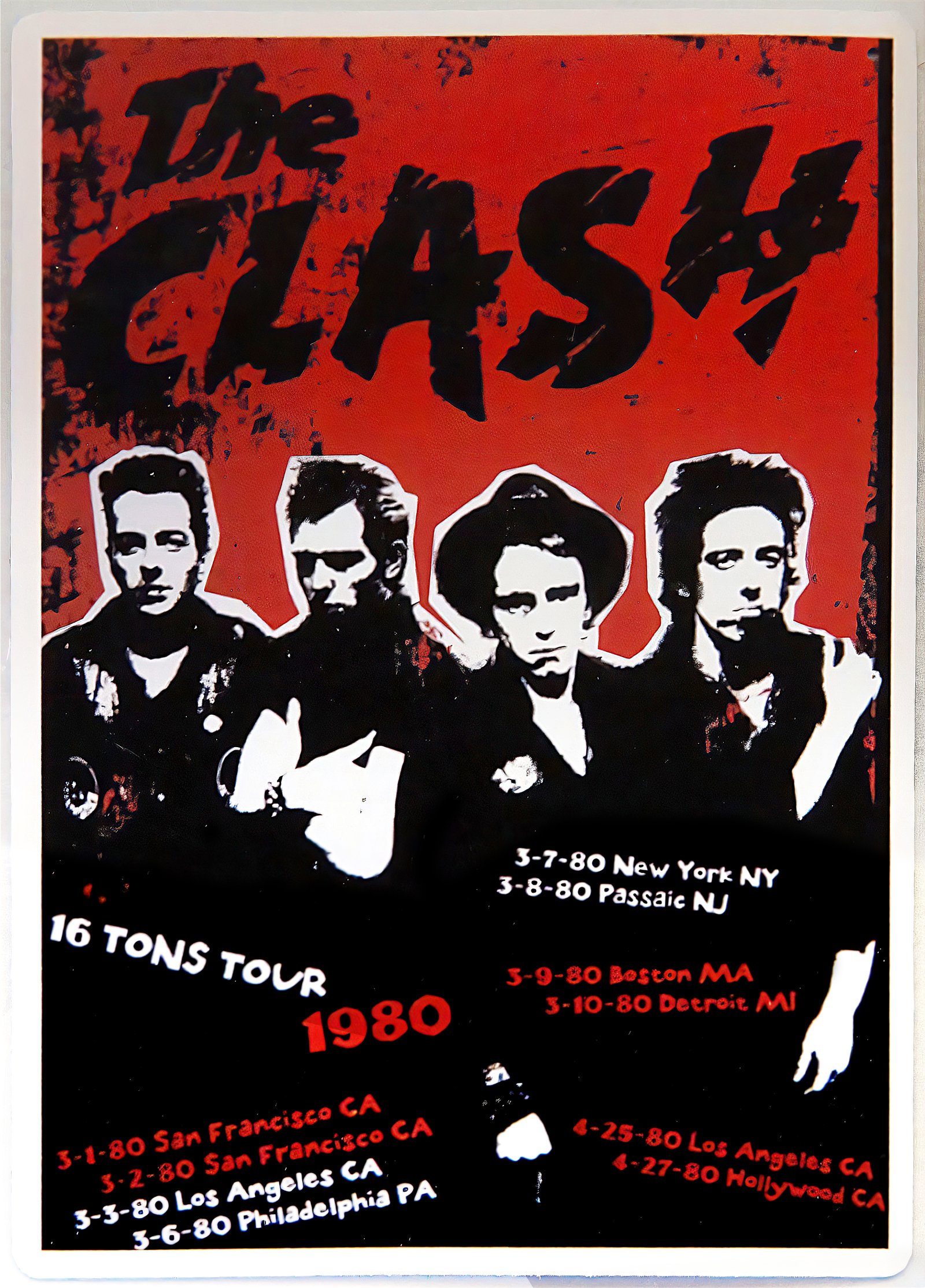


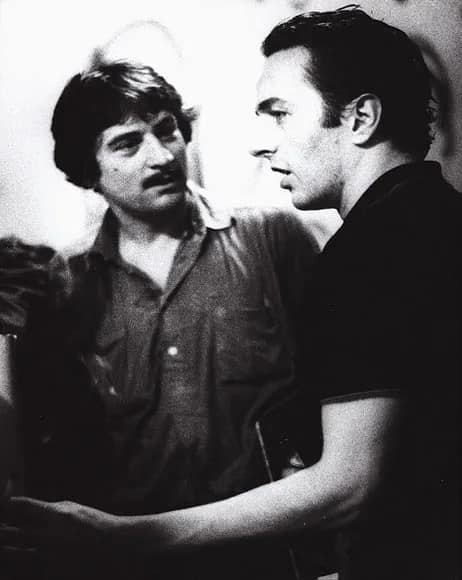

 Enlarge image





%20Creem/80%2006%20Creem300.jpg)
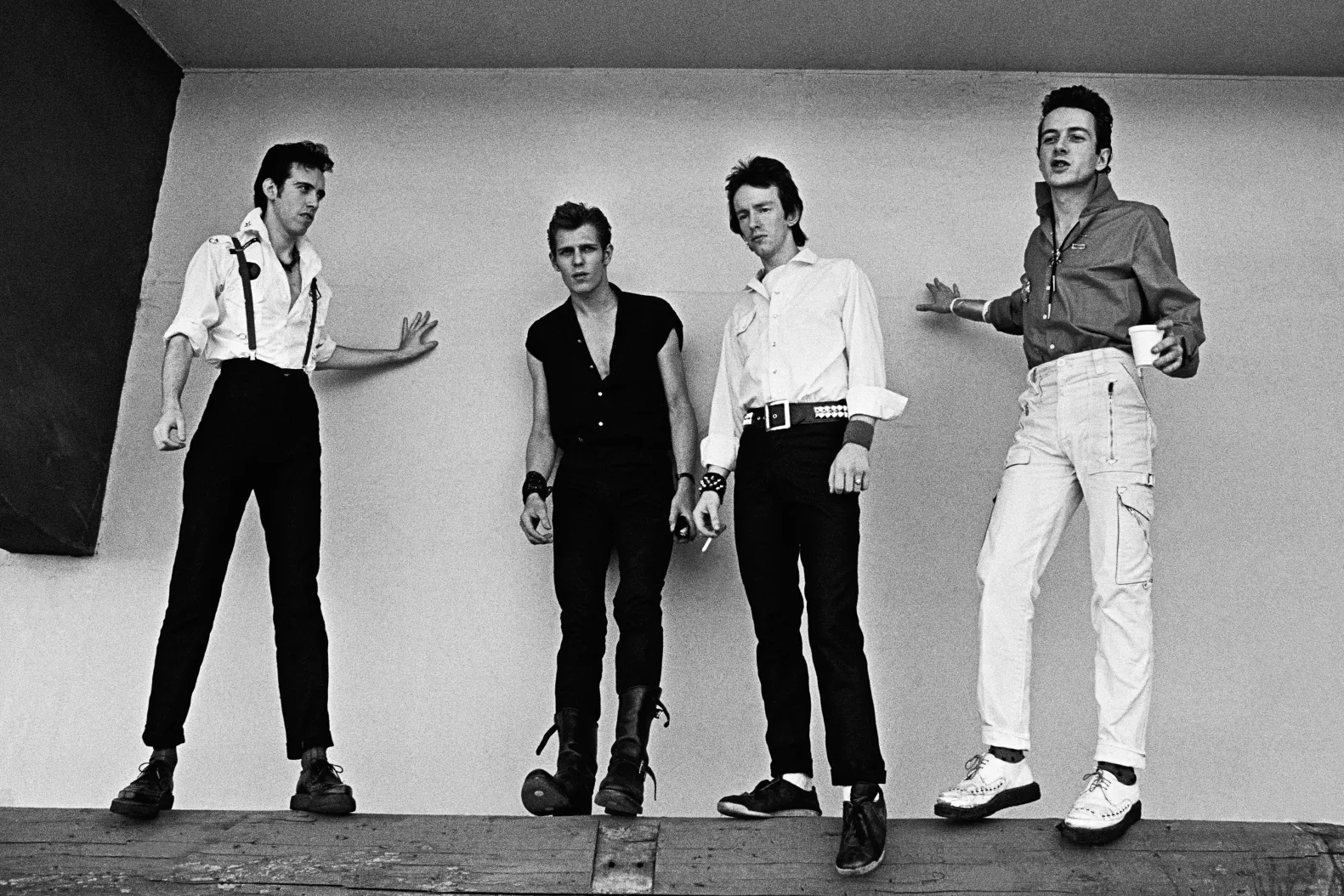

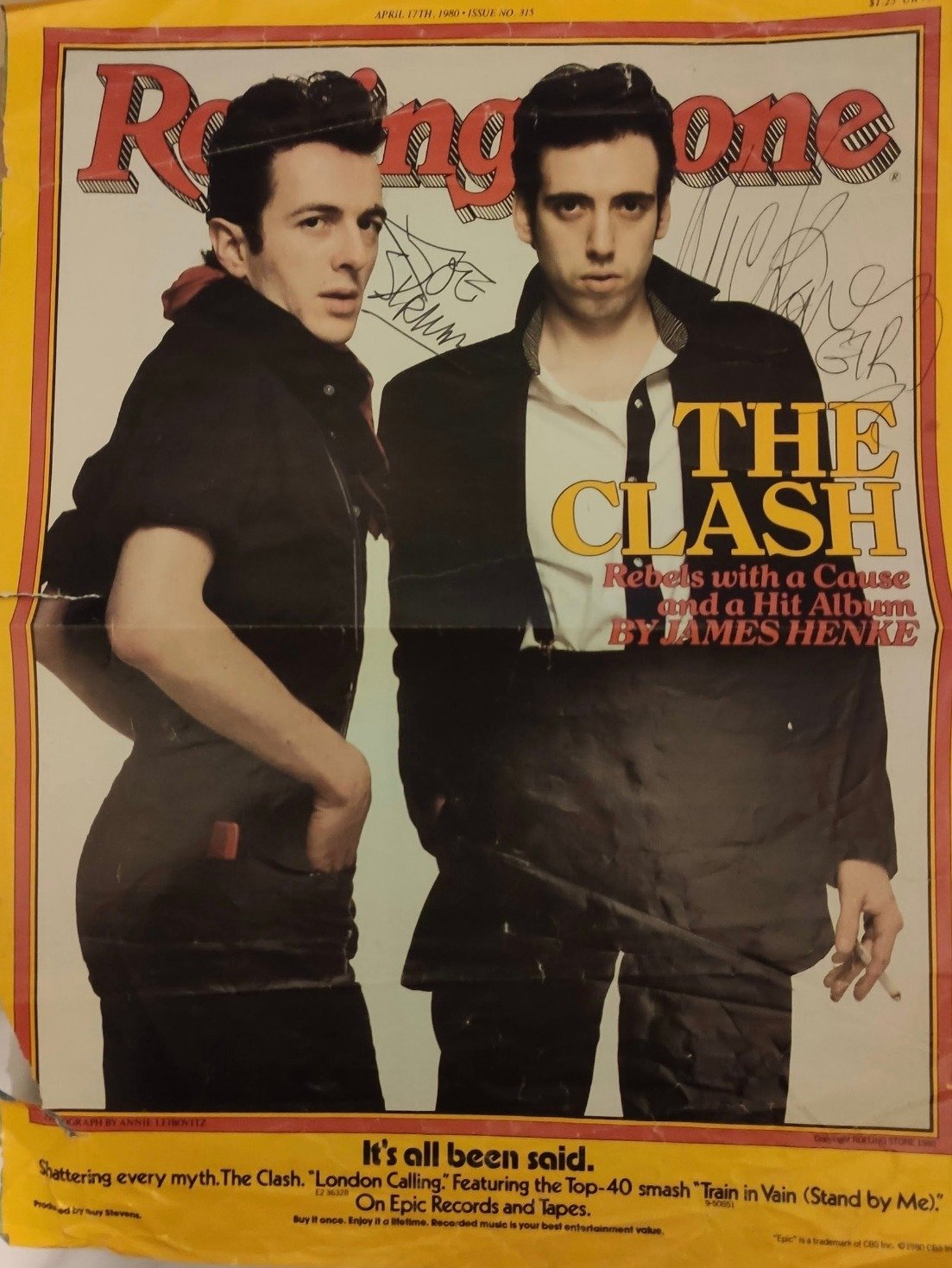





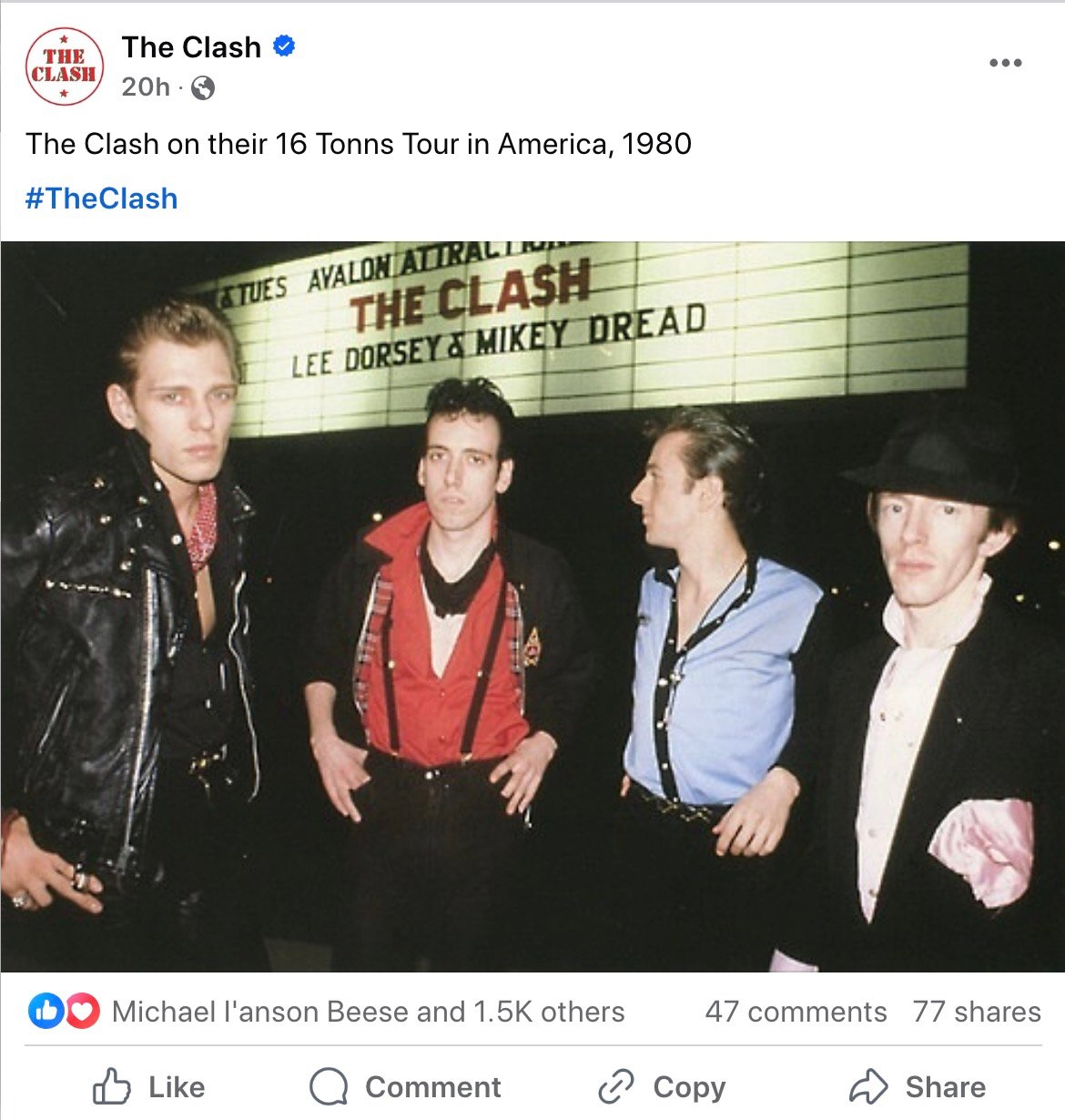



,%20JS%20int)/1.jpg)
,%20JS%20int)/2.jpg)