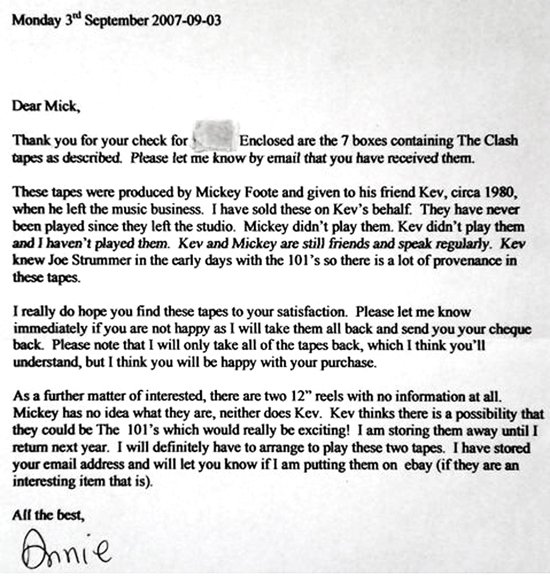
Reels were advertised on Ebay for £3,000 but they have never surfaced, only the track listings.
Audio source 1
Sound 3 - 16min - much copied - Tracks 7
I'm so Bored, London's Burning, White Riot 2 takes, 1977, Janie Jones Instrumental, Heartbreak Hotel
White Riot
Audio source 2
Sound 4 - 21min - much copied - Tracks 8
Studio chatter, I'm so Bored, London's Burning, White Riot 2 takes, Career Opp, 1977, Janie Jones Instrumental, Heartbreak Hotel
White Riot
Studio - National Film and Television School (Beaconsfield Demos)
I'm So Bored With the USA
London's Burning
White Riot (2 takes)
Janie Jones (Instrumental)
Career Opportunities
1977
Heartbreak Hotel (Joe/tagged onto recordings)
Line Up: Joe Strummer - vocals, guitar, Mick Jones - guitar, Paul Simonon - bass, Terry Chimes - drums
The cdr circulating has a better sound quality than the CD boot All the Young Punks on the Tommy Gunn label, although it barely reaches a 3 in sound quality, except for the last three tracks which do have a better clarity.
You can differentiate the instruments clearly but the sound experiences a swimmingly flat warble throughout.
The vocals, drum and lead guitar/s are OK, it is the middle and lower sounds which suffer. This is more than just listenable but it is far from brilliant.
Faint voices can be heard between tracks. Interestingly Janie Jones is an instrumental here.
The last track, Joe sings Elvis's Heartbreak Hotel which he recorded two versions of in very early 1978, a track previously performed by the 101ers. Check the Derby 75 gig for a 101ers version. Heartbreak Hotel is probably the clearest of all the songs here.
Bootleg
The boot CD All the Young Punks has a much poorer sound quality.
Bootleg details can be found here
Visit these websites for a comprehensive catalogue of unofficially released CD's and Vinyl (forever changing) or If Music Could Talk for all audio recordings
Not satisfied with the 'Polydor Demos', The Clash had a go early new year at producing something better at Beaconsfield Studios with Mikey Foote. Terry Chimes stands in on drums again following on from Rob Harper.
From these Mickey Foote sessions, White Riot was remixed for the LP. These tracks may have been broadcast by the BBC though this is unsure.
Book: Marcus Grays, "Return of the Last Gang in Town"
Beaconsfield Recordings with Micky Foote
Page 192
The band would insist the revised version of the song was not anti-American, but instead opposed to American imperialism, both literal and cultural. The Beaconsfield version is just plain anti-American. For Joe, in truth besotted with both America and American culture, it was so much punk method acting.
Overall, despite the band’s expressions of dissatisfaction during recording, the Beaconsfield demos were far more aggressive and impressive than the Guy Stevens efforts. They may well have helped sway opinion at Polydor: by mid-January Chris Parry had won approval, and was in a position to formalise a deal.
Page 194
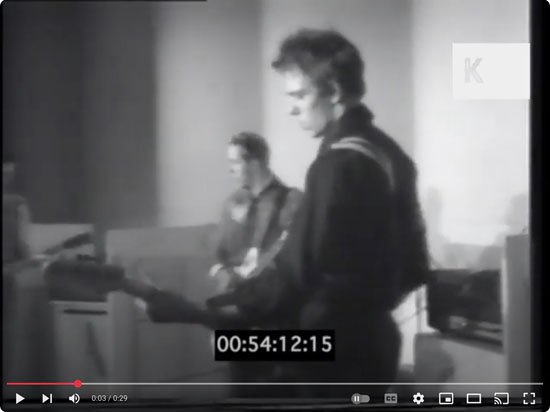
In a report accompanied by a still from the Beaconsfield recording session, the 22 January issue of Melody Maker reported that a Clash deal was imminent. The suggestion was that it would be with Polydor. Sophie Richmond’s diary entry for 26 January revealed that there had been a last-minute change of plan: “Bernie has signed with CBS. Poor old Polydor — again.”
Page 199
For this reason, Micky Foote was once more appointed producer. In view of later difficulties between CBS and The Clash over their conflicting interpretations of the phrase “complete control”, it might seem odd that the record company should allow their new £100,000 investment to go into the studio with someone who was totally unknown and inexperienced. But representatives from the record company’s A&R department were familiar with the Beaconsfield demos. These had informed them of two things: firstly, that Micky was apparently capable of getting the band the raw, basic sound The Clash defined as “punk”; and secondly, that, as the A&R men themselves could not understand this sound, it was unlikely that any “old-school” producers would be able to, either. “Robin Blanchflower said to me, ‘We don’t know what the hell it’s all about, but they’ve got this presence,’” says Simon. “The record company never showed their faces at all during the recording of the single or the album. They kept well away. I was given carte blanche to let them go in and do what they wanted.”
Immediately after the recording, Micky Foote explained to Tony Parsons why he had taken on the job: “You do it yourself because nobody else cares that much.” In 1990, Bernie Rhodes informed the NME’s Stuart Bailie that it was in fact he, Bernie, who had produced (as well as written) the band’s first album.
Simon and Terry’s accounts of the band’s initial approach to studio work suggest it was amazing anything was produced at all: the spirit of Beaconsfield certainly lived on. The band went into Studio 3 — which Mick was ecstatic to learn was where Iggy and the Stooges had recorded Raw Power — and set up as though for a live performance.
Page 201
This was the origin of the sound effects included on the single version of White Riot: the siren at the beginning, the alarm bell at the end, the breaking glass, and what Simon refers to as “the famous stomping overdub” in the middle. Sebastian’s air pistol might not have made it onto record, but his feet did. Reflecting on the earlier suggestion that he might take over as band drummer, he says, “My sole contribution to the rhythm section was, you can hear my feet stamping on ‘White Riot’. We were all jumping around the microphone.” The single proved acceptable to CBS, although the band themselves were not overly impressed with the Studio 3 version of White Riot, believing the Beaconsfield demo version to be braver.
Page 204
As Simon Humphrey (then a staff engineer at CBS Studios on Whitfield Street in central London) confirms, it was not another new recording, but a remix of the earlier 8-track Beaconsfield demo version.
Page 205
When Mick also told Kris, “We had lots of our own material, but we wanted to do one song by someone else,” he was being somewhat disingenuous. With the inclusion of Garageland, the yet-to-be-performed Cheat, and the BeaconsfieldWhite Riot, the band had a total of 13 self-penned tracks for the album without having to resort to novelty numbers like 1-2 Crush On You or any of the material discarded as substandard over the previous few months. That number of songs would usually be considered generous, but as most Clash compositions lasted closer to two minutes than three, the total running time of the album was just under 29 minutes. Brevity was a virtue for individual tracks, but not for an album, where it would undermine the Value For Money principle. Someone suggested rectifying the situation by including the band’s warm-up arrangement of Police and Thieves. “I think there was some laughter at the suggestion,” recalls Terry, “but then we realised it did sound good, and we did it.”
Passion is a Fashion
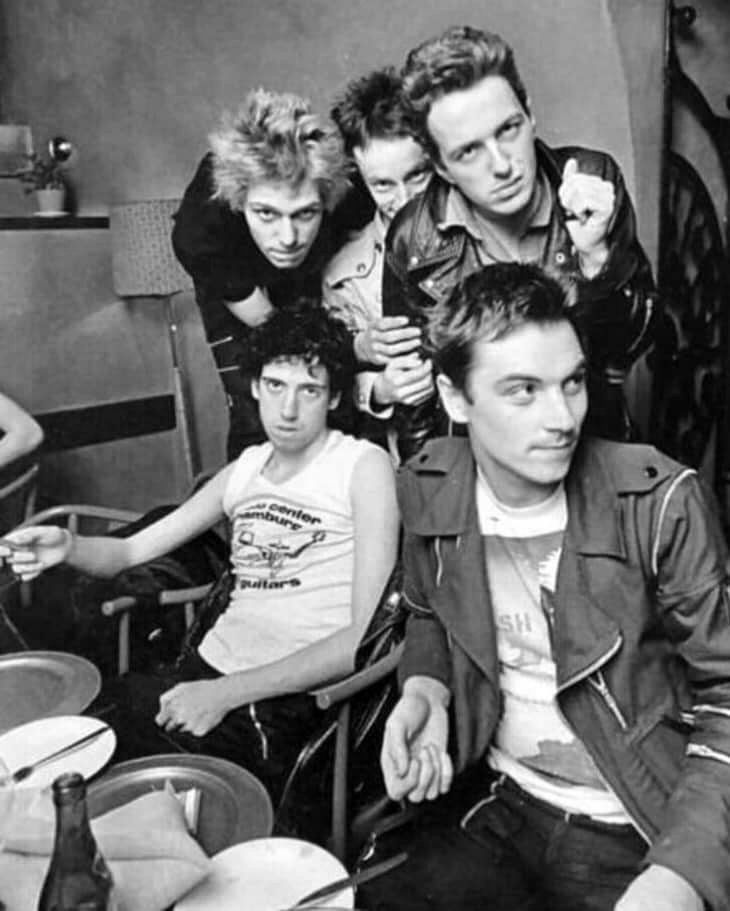
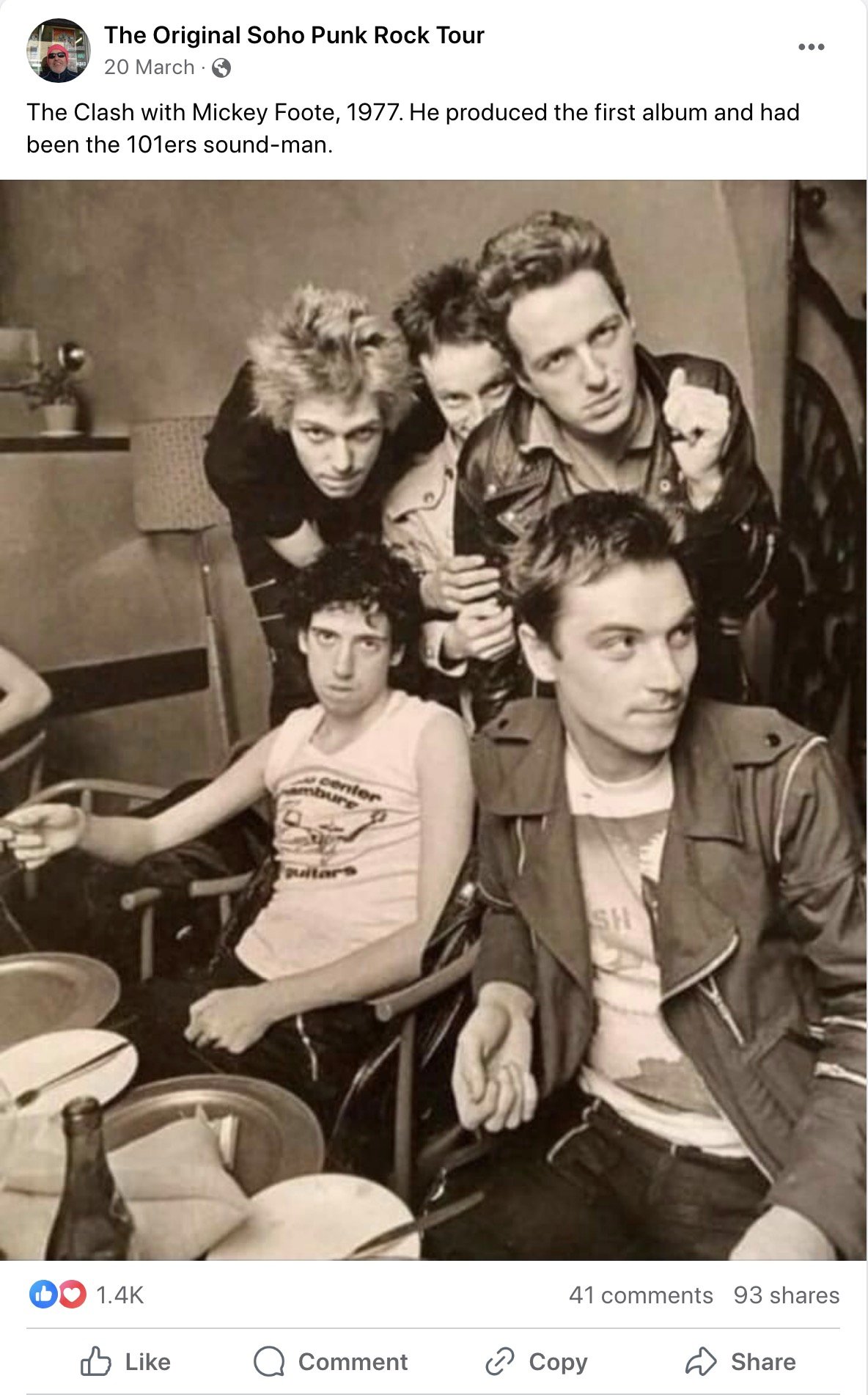
Since a “conventional” producer — if Guy Stevens could ever be described as such a thing — had found it difficult to create a vivid snapshot of the group’s raw sound, it was decided that Micky Foote, their soundman, should oversee the recordings. This way it was hoped the vibe at rehearsals could be replicated.
A tape of the Beaconsfield session that has leaked out gives an extraordinary fly-on-the-wall insight into the session. The over-riding impression is of a charged, macho atmosphere: present are the group and their girlfriends, including Caroline, plus Micky Foote, Roadent, Julien Temple and Sebastian Conran. Communication is blunt and testy, though there’s a subtle warmth between Joe and Mick — clearly the king bees. In the background, Simonon plunks at his bass incessantly. Mick is the musical director, spelling out to Paul a change he wants in a bass line, but there’s a strong impression that Joe is “the leader.”
The session is in chaos. The group finish London’s Burning then take a break. Someone enquires whether anyone wants anything to eat. This results in a couple of minutes of order-taking, then the conclusion that they ought to wait till they return to London as the engineer is only booked until 9 p.m. Mick suddenly accuses Micky Foote of saying that he looks like the guitarist out of The Derelicts. “Who said that?” says Foote. “You did,” says Mick, spikily.
Foote, in charge of his first recording session with the group, is at the receiving end of their frustrations about the studio sound (Joe: “it sounds like buckets of concrete”; Mick: “it sounds like kids playing a toy guitar”) and the slow progress they’re making. Though rough, the Beaconsfield material was deemed good enough for Micky Foote to be appointed producer for the CBS recordings.
The first session was booked for Friday, 28 January — the day after the deal was signed — at the label’s studio at Whitfield Street, just around the corner from Goodge Street tube station. The session took place in the small Studio 3 on the first floor. The group were thrilled to discover that Iggy and the Stooges’ 1973 masterpiece, Raw Power, had been made in the same building (though in the larger studio one floor below).
The plan was to record White Riot, together with a B-side, 1977, as a debut single for release in March. The group were then booked in for three long weekends (Thursday to Sunday), beginning 12 February 1977, to record an album. The engineer on the sessions was Simon Humphrey, who was twenty-one at the time. On their arrival, The Clash made it quite clear that they didn’t care much for the studio, or the staff. They may have signed up to one of the largest record companies in the world, but that didn’t mean they were going to tone down their moody, aggressive behaviour. Their rebellion, the integrity of which was called into question after the CBS deal, was now manifesting itself symbolically as a worker-management struggle.
Book: Marcus Grays, "Return of the Last Gang in Town" of Page 198
The need for a new drummer to fulfill commitments
Rob Harper, Terry Chimes
As the need to record was so pressing, the Clash had spent the latter half of January doing their best to fill the gap in their line-up.
A certain weariness of tone is detectable in the display ad carried in the classifieds section of the 15 January issue of Melody Maker: ‘DYNAMIC DRUMMER WANTED for young professional Rock Group. Must look great, play great.”
Once again, the anonymous band had been deluged with applications, and had spent much of the following week auditioning all those drummers who turned up and stuck around long enough to try out. Unfortunately, nobody had proved suitable, and another ad was placed in time to be included in the 29 January issue. Decidedly more buoyant, it read: ‘POWERFUL YOUNG DRUMMER WANTED FOR NAME BAND. No jazz, no funk, no laid back.’
This second ad hit the streets around the time Bernie secured the deal with CBS, which meant that the band signed to the record company asa three piece.
Turning up for an audition, Jon Moss was initially put off by the dirtiness and scruffiness of his potential colleagues-to-be. Then realisation dawned, as he explained six years later to Smash Hits’ Dave Rimmer: ‘I said, “You’re the Clash, aren’t you?” and Joe Strummer went, “How do you know?” And I said, “Well, it’s written on the back of your jacket...”’ Aside from illustrating the difficulties faced by the would-be anonymous Lettrist, this gave the Clash fair warning of Jon’s far from retiring personality. Although asked back for further rehearsals, he was by no means the only candidate, and itwas anyway too late to integrate anew drummer in time to record.
Both Terry Chimes and Rob Harper were approached to help out. The plan — hinted at in the following week’s National Rock Star — was to use Terry on those tracks with which he was familiar, namely, the single and the bulk of the album material, and Rob on those songs written since the original drummer’s departure. ‘Bernie phoned me up, and it was like, “Come up for a meeting, and we’ll all put our cards on the table and see who is in the group and who isn’t,”’ says Rob, ‘And I said, “No, I’ve fucking had enough. Bye, bye.” That was it,really.’
That wasn’t quite it for Rob, though. The care ‘he takes to give as balanced an account as possible of his time with the Clash stems from his irritation at the revisionism to which ithas since been subjected. When Glen Matlock left the Sex Pistols, the bassist found his decision to go portrayed as a sacking. Thereafter his former group and manager vilified him at every opportunity.
At first, the circumstances of Rob’s departure were similarly altered.
Before long, though, instead of being mocked or scorned, he found he had been written out of the Clash’s history altogether. ‘Iran into the Clash once or twice at clubs and things, and Mick said, “Oh, Bernie told me he’d sacked you.”
Apparently, as with Terry, Bernie could not believe that Rob would walk out on him voluntarily. Only in this case, he altered reality to fithis idea of how things ought to have been. Rob may have been involved in one of the most celebrated rock events of all time — more than just ‘a classic rock’n’roll tour’ — but he was not mentioned in any further interviews, family trees, encyclopaedia entries or band histories, whether official or otherwise.
Even when Glen Matlock’s 1990 autobiography made reference to him, itdid so without using his name. Only in 1991’s Clash On Broadway booklet was he finally credited as the drummer for the Anarchy Tour. Until then, had itnot been for one or two Ray Stevenson photos taken during the tour and at the 1 January Roxy gig, as far as the Clash and their followers were concerned, he might never have existed.
‘The definite offer to join them wasn’t there, but the possibility was there,’ says Rob. ‘I actually said to myself at the time, “One day you’ll regret that you threw up this opportunity, and didn’t just knuckle down and do what they wanted, walk how they wanted, play how they wanted, dress how they wanted and behave how they wanted, because then you could have gone around the world. And you’ve got to remember, years later, when you think those things, that there was no way that itwas going to work, and that’s why you didn’t do it.”
I guess I was a bit cavalier with my opportunities back in those days.’ True: in addition to passing up the chance to join the Clash, Rob turned down Mark Knopfler’s invitation to help put together the band that became Dire Straits, and played roles of varying magnitude in the formation of the UK Subs, Secret Affair, and Adam and the Ants, for the last of which bands he even suggested the name.
‘I’ve had so much of this, itmeans nothing to me,’ he laughs. ‘It’s alljust like fate, you know.’ Since then he has played a variety of instruments in a variety of bands, but still maintains, “The Clash were bloody good. Best band I’ve ever been with.’
As a result of Rob Harper’s refusal to co-operate, the Clash once more had to rely wholly on the goodwill of Terry Chimes.
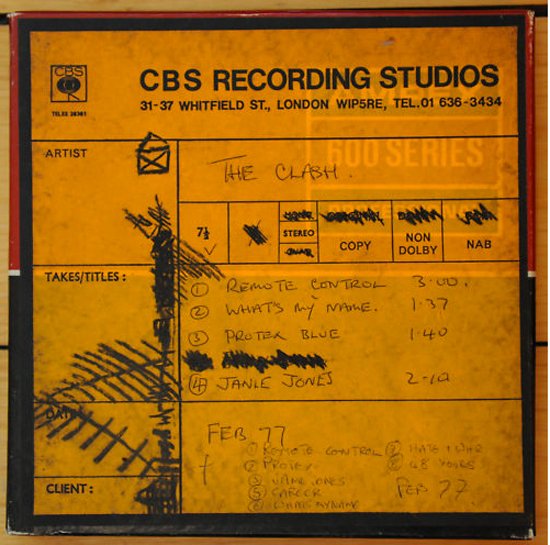
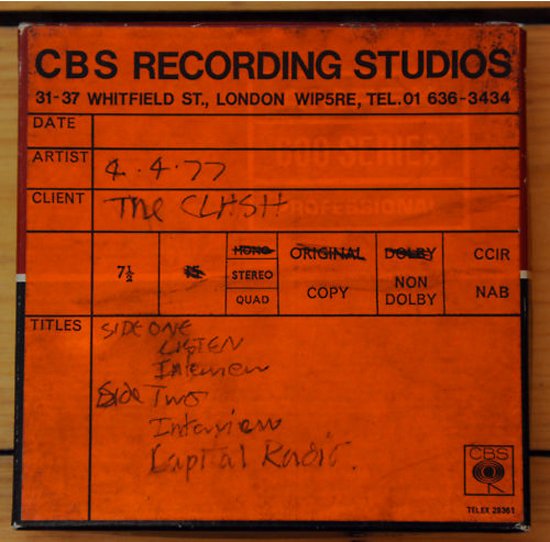
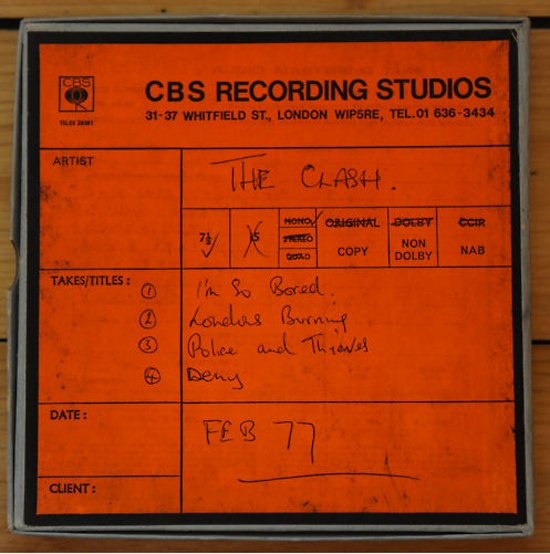
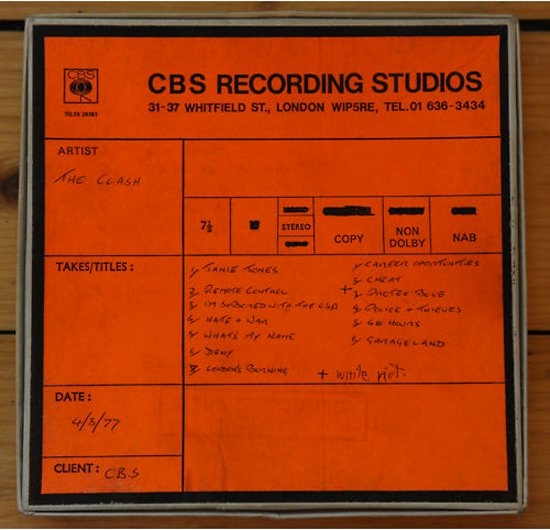
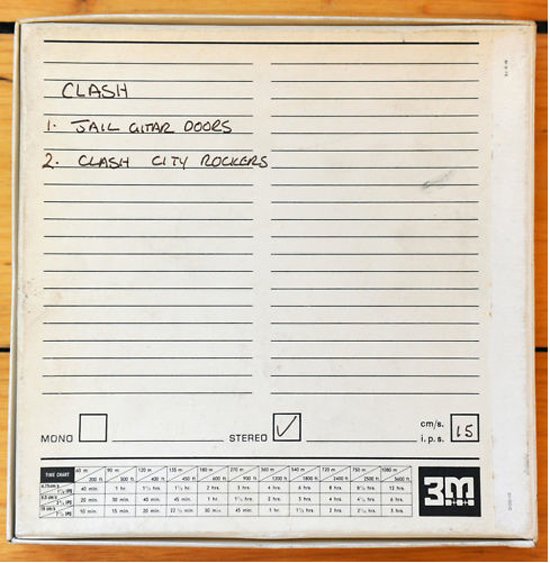
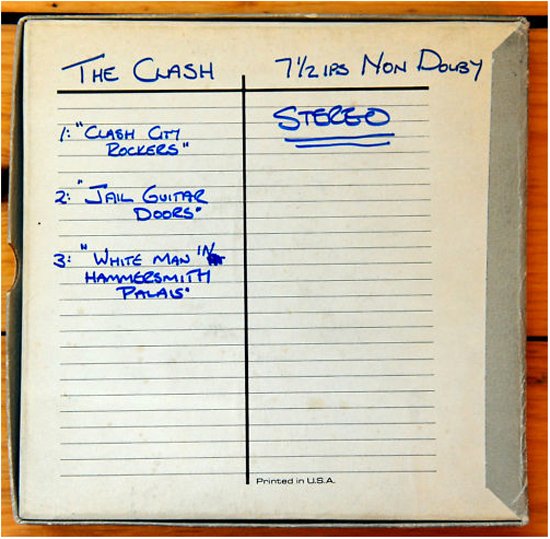
Original CBS reels sold at auction
The nine original reels came for auction revealing the recorded track list. View contents and full image of reels, here
Mickey Foote’s Original CBS Studio Reel dated 4-4-77
Lee Holbrook - It's copy off the master reel. Could be 10 or more knocking about
The Herald, obituary by Phil Davison, 9 March 2018.
Mickey Footes Obituary
Obituary of Clash producer Mickey Foote, highlighting his role shaping their debut sound and later activism opposing Donald Trump’s Scottish golf development near his Aberdeenshire home.
The Herald, obituary by Phil Davison, 9 March 2018.
Mickey Footes Obituary
24 OBITUARIES
ANALYSIS, INSIGHT, OPINIONFriday March 9, 2018
Mickey Foote
The Clash's first producer and anti-Trump campaignerBorn: September 8, 1951;Died: March 2, 2018
MICKEY Foote, who has died aged 66, was the producer and sound-mixer on the historic 1977 debut album of the punk band The Clash, and was largely responsible for creating the aggressive, in-your-face studio sound which turned them into global superstars. Including the tracks London's Burning and White Riot, the record changed the face of music in the UK and ultimately beyond, influencing future rockers, post-punk and new wave bands and even reggae, dub, funk, ska and rockabilly. It also gave a voice, including a political voice, to a new generation during a time of growing civil unrest.
After leaving the music business, Mr Foote settled in 2007 for a quiet life back in Balmedie, Aberdeenshire, with his partner Kym. But it became anything but quiet after the US property tycoon Donald Trump, son of Mary Anne MacLeod of Lewis in the Outer Hebrides, decided to create a new golf course complex at Menie Links, close to Mr Foote's home.
The former record producer was horrified at the damage this would cause to the environment, the wild-life, the residents and not least the area's magnificent sand dunes. Rekindling the fire he showed with The Clash, he helped launch a protest movement against Mr Trump, who would later become as controversial in the White House as he is in Scotland. To paraphrase a famous Clash hit, Mr Foote fought the Trump but we don't yet know who won.
Mr Foote became spokesman for the Sustainable Aberdeenshire movement, dedicated to opposing Mr Trump's plans, and his efforts were shown in the award-winning 2011 documentary You've Been Trumped, directed by Anthony Baxter. Mr Foote, who features prominently in the film, was rapturously cheered during the film's premiere and became something of a local hero among many in Aberdeenshire.
He fought Mr Trump's plans until his dying day and his partner Kym, a Londoner, and sister Alison have vowed to keep up the fight despite the fact that Aberdeen Council, local businesses and much of the media initially fell under Mr Trump's dollar-backed spell.
He has completed the first golf course but has been blocked by the council from building surrounding houses until he has completed the clubhouse and hotel first. Mr Foote always believed that Mr Trump's real aim was to build 600 houses to make enough money to offset the cost of the golf course, clubhouse and hotel.
Michael Alexander George Foote was born in Aberdeen on September 8, 1951, to George Foote, a gas fitter, and his wife Eva (nee Smith), a psychologist.
He first attended Causewayend Primary School in the Granite City but after his parents separated when he was eight, he was educated down south, first at the Barstable School in Basildon, Essex, and later at the Newport College of Art which later merged into the University of Wales.
It was in Newport that he met the singer and guitarist John Mellor, the son of a crofter's daughter from the Scottish Highlands, who would later become The Clash's front man using the soon-to-be famous stage name Joe Strummer. Mr Mellor was not a student at the art college but the two men met in the student union and immediately clicked.
Joe Strummer went on to play with the band the 101ers in London, where he linked up again with Mr Foote. When Strummer helped start up The Clash, Mr Foote became their sound man on the road, including opening for the Sex Pistols during their 1976 Anarchy Tour of the UK. Due to fights among and within the bands, many of the gigs were cancelled, including their Scottish gigs at the Apollo in Glasgow and Caird Hall in Dundee.
The Pistols were the breakthrough band of the time. Their music was raucous but they became increasingly frustrated by the fact that The Clash's lyrics made more sense and had tuned into the spirit of the times.
So when The Clash asked Mr Foote to produce their first album in 1977, he was the perfect man for the job. He had been their sound man on the road and he was determined to take that sound, their energy and vibe, into the studio.
In the 1977 album, called simply The Clash, he did so and the rest was history. Fans will argue forever but whereas the Pistols rocked the establishment, The Clash took punk rock to a new level.
One music writer said: "The Clash are the only band that matters" - probably a blurb pushed by their label CBS but anathema to Johnny Rotten and the Sex Pistols. Rotten would later in life, however, admit to the greatness of The Clash and Mr Foote.
Even before The Clash's debut album was released, Mr Foote was influential in releasing one of its tracks, White Riot, as a single. Urging young British whites to rise up the way their black compatriots had done, the song hit a raw nerve. Contrary to the culture of the time, it did not criticize British blacks but urged white youth to take inspiration from them. That in itself was a major premonitory statement.
"Mickey was a private guy but always a bit of a rebel," his sister Alison told The Herald. "He was a groomsman at my wedding and had to wear a hired suit but he wore luminous pink socks as a statement."
Although Mr Foote and The Clash had a falling out in the late-1970s, they remained friends and the Scot helped re-release many of their demos and previously unknown recordings over the years.
Mickey Foote is survived by partner of 30 years, Kym Swindells, his sister Alison Duncan and nieces and nephews.
Brixton Academy 8 March 1984
ST. PAUL, MN - MAY 15
Other 1984 photos
Sacramento Oct 22 1982
Oct 13 1982 Shea
Oct 12 1982 Shea
San Francisco, Jun 22 1982
Hamburg, Germany May 12 1981
San Francisco, Mar 02 1980
Los Angeles, April 27 1980
Notre Dame Hall Jul 06 1979
New York Sep 20 1979
Southall Jul 14 1979
San Francisco, Feb 09 1979
San FranciscoFeb 08 1979
Berkeley, Feb 02 1979
Toronto, Feb 20 1979
RAR Apr 30 1978
Roxy Oct 25 1978
Rainbow May 9 1977
Us May 28 1983
Sep 11, 2013: THE CLASH (REUNION) - Paris France 2 IMAGES
Mar 16, 1984: THE CLASH - Out of Control UK Tour - Academy Brixton London 19 IMAGES
Jul 10, 1982: THE CLASH - Casbah Club UK Tour - Brixton Fair Deal London 16 IMAGES
1982: THE CLASH - Photosession in San Francisco CA USA 2 IMAGES
Jul 25, 1981: JOE STRUMMER - At an event at the Wimpy Bar Piccadilly Circus London 33 IMAGES
Jun 16, 1980: THE CLASH - Hammersmith Palais London 13 IMAGES
Feb 17, 1980: THE CLASH - Lyceum Ballroom London 8 IMAGES
Jul 06, 1979: THE CLASH - Notre Dame Hall London 54 IMAGES
Jan 03, 1979: THE CLASH - Lyceum Ballroom London 19 IMAGES
Dec 1978: THE CLASH - Lyceum Ballroom London 34 IMAGES
Jul 24, 1978: THE CLASH - Music Machine London 48 IMAGES Aug 05, 1977: THE CLASH - Mont-de-Marsan Punk Rock Festival France 33 IMAGES
1977: THE CLASH - London 18 IMAGES
Joe Strummer And there are two Joe Strummer sites, official and unnoffical here
Clash City Collectors - excellent
Facebook Page - for Clash Collectors to share unusual & interesting items like..Vinyl. Badges, Posters, etc anything by the Clash. Search Clash City Collectors & enter search in search box. Place, venue, etc
Clash on Parole- excellent Facebook page - The only page that matters Search Clash on Parole & enter search in the search box. Place, venue, etc
Clash City Snappers Anything to do with The Clash. Photos inspired by lyrics, song titles, music, artwork, members, attitude, rhetoric,haunts,locations etc, of the greatest and coolest rock 'n' roll band ever.Tributes to Joe especially wanted. Pictures of graffitti, murals, music collections, memorabilia all welcome. No limit to postings. Don't wait to be invited, just join and upload. Search Flickr / Clash City Snappers Search Flickr / 'The Clash'
Search Flickr / 'The Clash' ticket
I saw The Clash at Bonds - excellent Facebook page - The Clash played a series of 17 concerts at Bond's Casino in New York City in May and June of 1981 in support of their album Sandinista!. Due to their wide publicity, the concerts became an important moment in the history of the Clash. Search I Saw The Clash at Bonds & enter search in red box. Place, venue, etc
Loving the Clash Facebook page - The only Clash page that is totally dedicated to the last gang in town. Search Loving The Clash & enter search in the search box. Place, venue, etc
Blackmarketclash.co.uk Facebook page - Our very own Facebook page. Search Blackmarketclash.co.uk & enter search in red box. Place, venue, etc
Search all of Twitter Search Enter as below - Twitter All of these words eg Bonds and in this exact phrase, enter 'The Clash'

 CBS reels


















 The Official Clash
  Clash City Snappers

