
TROUSER PRESS/March 1980
THE CLASH PLAY REVOLUTION ROCK!
By Chris Salewicz
Rehearsals Before the Tour
It's four days before Christmas. A dark, early evening damp with snow and rain. Immediately south of the Thames, in the inappropriately genteel Victorian suburb of Putney, The Clash is stashed away in a rehearsal studio. They are readying their set of reggaebilly rockers for a 40-date British tour set to start on the fifth day of the New Year. As elevated tube trains rumble past a few yards away from the building, The Clash, vibed in on several hours of playing and spliffing, are into serious work, running repeatedly through the backing track for "Rudie Can't Fail."
Drummer Topper Headon retains a spiky haircut (albeit growing out), but the three front-line Clashers now bear little sign of the band's punk origins. In keeping with their fascination with and love for their musical roots, they all resemble variants on late-'50s rockers. Lead guitarist Mick Jones sports a black slim-lapelled, drainpipe-trousered suit and pomaded black hair; all he lacks is a pencil-thin moustache to seem at home cleaning his nails with the end of a metal comb in a backstreet Italian bar. Bassist Paul Simonon wears a brown chalk-striped variant on the same cut of suit as Jones; his blond locks are plastered back too, in homage to James Dean. (Simonon is due in Hollywood this March to act in a feature film.) Lead singer/rhythm guitarist Joe Strummer's dark blue woollen shortie overcoat proclaims hitman cool, though this image is softened by faded tight jeans and battered shoes.
Strummer's seated at the organ in the middle of the rehearsal room, pouring out his soul on "The Bankrobbing Song," an unrecorded slow blues featuring Jones on bottleneck. As he sprawls over the notes and squeezes his mournful words into the mic, Strummer invokes memories of countless anonymous bar-room bluesers, their voices husky from too many nights of booze and cigarette smoke—though Joe hardly drinks at all these days. (Live, The Clash's keyboards are handled by Blockhead Mickey Gallagher, who in another incarnation co-wrote Peter Frampton's fab smasheroo, "Show Me the Way.")
Dinner Break and Reflections on Food Choices
"The Bankrobbing Song" completed, The Clash replenish the energies of several hours' playing with Chinese and Indian foods brought in during the last song by personal assistant Johnny Green. Jones and Strummer check carefully to ensure no animal flesh comes their way (Jones: "Chrissie Hynde once told me that if you eat meat you inherit the fear of the animal as it was killed"); the assorted dishes are shared around until a no-waste situation is achieved.
New Album: London Calling
London Calling, the new Clash double LP, has been in the shops for about 10 days and entered the British charts at number nine. With legendary, supposed loony, producer Guy Stevens at the controls, the album—cut in three and a half weeks prior to the band's summer '79 US tour—transcends the introversion (not to mention the Blue Öyster Cult sound) of the Sandy Pearlman-produced Give 'Em Enough Rope.
Dealing with emotions and decrying self-defeatism, London Calling is the direct spiritual heir to The Clash. Just as that LP was probably the best debut album ever made by any group, so London Calling, appearing at the tail end of 1979, is possibly the definitive '70s rock 'n' roll record—an ironic antidote to Me Generation selfishness and self-defeatism.
"It's our 20 Greatest Hits currently," Mick Jones comments after dinner. (Only 19 titles are listed on the cover; the closing "Train in Vain" was a last-minute inclusion after a plan to give it away free with New Musical Express hit insurmountable technical problems.) "We knew it was coming out at Christmastime so we thought it would go up well against all the other 20 Greatest. We think ours stands up quite well against Lena Martell."
Pricing Concerns for the U.S. Release
"Tell you something," the lead guitarist turns to Strummer, clambering back to the organ like a kid returning to a school desk. "We're going to have to do something to make the album come out as cheap as possible in America. That's quite important. How much is Tusk?" Jones turns to me.
"About $15," I hazard.
Strummer: "But that's made of ivory, isn't it?"
Simonon: "Must be."
Jones: "Well, I reckon we must definitely go for about ten bucks. And we'll have to stand by it, 'cos, you know, once you've said it—"
Strummer: "Stand by your price."
Relationship with Epic Records
Doubters have suggested that The Clash's open derision towards their record company is little more than a chic urban pose; this is hardly a worthy estimation of the intensity of passion within the band. The Clash just despairs at the generally ham-fisted lack of humanity displayed by the soulless super-corporation and their company's depressingly low level of understanding of what rock music is all about. Consider Strummer's appalled reaction to the news that, prior to the band's spring Los Angeles show, Epic Records execs had gorged down nine-course meals. "What sort of person goes out and eats a nine-course meal and then goes to see some rock 'n' roll?" he demanded incredulously.
Despite constant public confrontation between the band and their Babylonian Paymaster General, genuine Clash fans apparently exist at boardroom level. There seems to be little question of the band's being dropped by Epic should London Calling fail to shift the required number of units. Headon hands me a highly laudatory, slightly unctuous cable from an Epic bigwig comparing The Clash to such mighties as John Lennon. It says he will love them always and that they are jolly smashing.
"There you go then," Jones says with a decisive nod. "That's what they think of us... Though they probably will turn against us if [the new album] doesn't happen. It's not as though they almost haven't anyway. Perhaps they haven't in America, but here it's different. They've always got so many problems with us; we're the problem cases."
Jones continues: "You see, they're not very musical people at CBS. They're not really interested in music. The ones in charge don't know anything about music." He turns to the bassist. "What do you think of CBS, Paul?"
Simonon: "I don't really know." (Shrugs.) "I don't really deal with them."
Jones: "Yeah, we don't really. We've stopped."
Simonon: "But before it was always a pain. I can't bear to go up there."
Headon: "We never ever speak to them."
Jones: "See, they're the sort of company—their latest Christmas card, right, is a classic. It's in full color: a picture of the managing director holding his dog's paw..."
Simonon: "...which is holding a pen..."
Jones: "...which is signing a contract..."
Headon: "...in front of all these gold albums."
Simonon: "That must be what they think of us."
Jones: "People on our label are the same as dogs. Anytime it looks like you're going to get out of it they find loads of different ways for you to owe them money."
Simonon: "They sort of say, 'Well, here's some money to help you out'; but it doesn't help at all. It just appears on a bit of paper later. You think, 'Oh, great. We've got out of the mess we're in.' And there it comes again."
Jones: "We did think that we could just do a load of records, right—like just quick, jazz albums—hand them all in at once and it'd be over with. But this is a contract we signed when we were naive youngsters. It says the records have to be made over a certain period of time. So it's just a case of us doing our time, really."
Past Management and Moving Forward
Besides guerrilla warfare with their record company, until recently The Clash was involved in a similar situation with former manager Bernie Rhodes (who signed the band to British CBS the same day the group thought they were signing with Polydor). The diminutive Rhodes, former second-in-command to one Malcolm McLaren, appeared to thrive on tensions and disharmony at direct odds with the growth of the group's collective strength. Having settled out of court with Rhodes, The Clash is now managed by Blackhill, one of the world's more trustworthy management operations. The original managers of Pink Floyd currently care for the career of Ian Dury, as well as Roy Harper and Philip Rambow.
"You've got to get ripped off," Strummer concludes, "to know what it's all about."
Musical Influences and Reggae Roots
London Calling is littered with allusions to and pastiches of rockabilly, R&B and especially reggae, not forgetting rocksteady and ska. These are sources, though, not Bowie-type steals. There's nothing self-conscious or sneaky about them; it's all out in the open. The Clash wit, and the fiery positivism it hangs out with, sees to that.
Of all the sources, reggae is certainly dominant. It pervades London Calling, sometimes unobtrusively, sometimes not. The Clash listens to a lot of reggae; on-the-road traveling music is invariably chosen from the Paul Simonon cassette collection. "Rudie Can't Fail," "Wrong 'Em Boyo" (originally cut by The Groovers in '64), "Lover's Rock" and "Revolution Rock" are obviously under the influence, but it's all over the place: "Hateful," "Jimmy Jazz," "Death or Glory," "Clampdown" and others. For the B-side of the "London Calling" 45, The Clash cut their version of Willie Williams' summer reggae single, "Armagideon Time." The original was released on Coxsone Dodd's Studio One label, a company renowned for some of the best sounds that come out of Jamaica (and also for the philosophical manner in which its artists seem to accept not being paid).
Armagideon Time and Rhythm Influences
"Armagideon Time" used one of the most popular rhythms of the year, Sound Dimension's "Real Rock." The Clash had hoped to go to Jamaica after their US tour to use the same rhythm track. Studio One expressed no interest whatsoever. "They didn't want to know," Jones says sadly, "though they don't mind selling us the publishing! I was bitterly disappointed that I had to come back to England instead.
"There were all these plans: we were going to have gone to Cuba. And to Mexico. And Japan. We were going everywhere. And instead we came back here as soon as it was all over." The Cuban tour idea fell through during the mini-crisis about Russian troops on the island.
Chaos in Los Angeles: The US Tour's End
The last US tour seemed almost predestined to end in chaos. The organization completely fell apart at the last date in Los Angeles.
"Me 'n' Joe were stuck at the airport," Headon recalls. "We didn't even have the money to fly the luggage out. As soon as the last gig was over, everyone did a runner. We woke up in the hotel the morning after the last gig, and there were just the four of us left."
"We were in charge that night," Jones continues. "Kosmo [Vinyl, member of the Blackhill team and legendary rock 'n' roll visionary] had lost his passport and had to go up to Vancouver to fetch it. Then the geezers in the road crew wouldn't start the show unless they'd been paid. And there was this massive audience going bonkers. All bribes and things to get them to turn the power on. After that, even the tour manager skipped."
The Clash vs. America
How about the famous Clash vs. America stand-off?
"America hasn't really woken up to us on any massive scale. The concerts are good. I think we have a bit of a rep as a live band.
"I imagine"—Jones's lips curl contemptuously—"the Police—someone like that—must have sold quite a lot of records there. Like the Knack have."
Radio Airplay in the US
And radio airplay?
"Some... It's like—[to the others] I mean, are we underrating it or what?"
Strummer: "Underrating what?"
Jones: "Do we get played on the radio a lot or not?"
Strummer: "Definitely not!"
Headon: "On John Peel-type shows."
Strummer: "What's that station in Boston?"
Jones: "Can't remember. We had a good time in Boston. Took over a radio station."
Headon: "Oedipus."
Jones: "That's the name of the DJ."
Headon: "We smashed all his records up."
Jones: "Yeah, we were taking his Boston and Foreigner albums out of their sleeves and scratching them. His most popular records totally messed up. The program director was talking to us as he stood on this pile of hundreds of records that had just been chucked down on the floor."
Clash's Experience with American Radio
What sort of radio programs did The Clash find themselves stuck on?
Strummer: "Look at the latest drivel that's come into town."
Headon: "Latest gimmick."
Jones: "Four novelties from England."
Headon: "We'd play up to it 'n' all."
Secret Gigs and Rehearsals in London
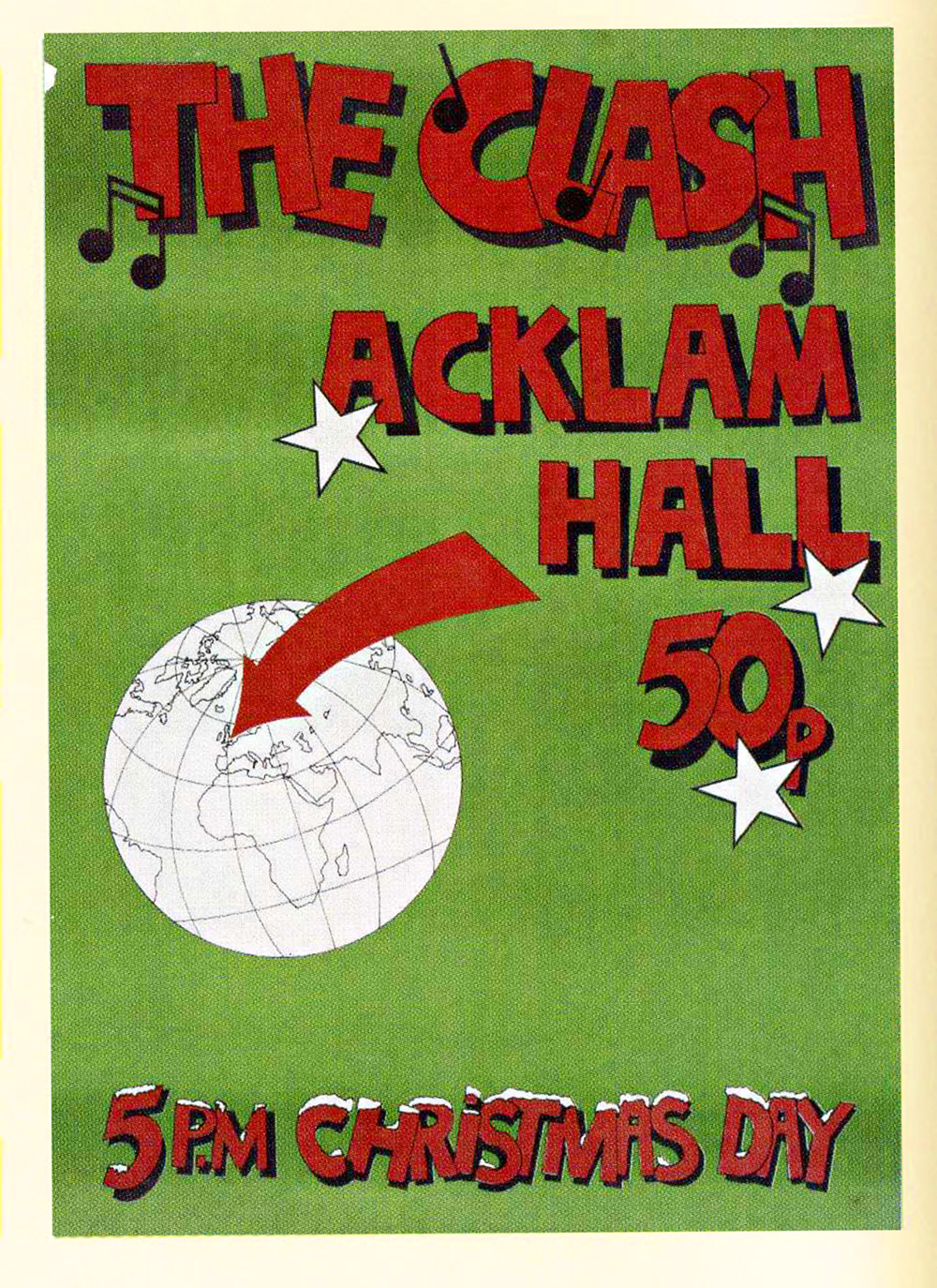
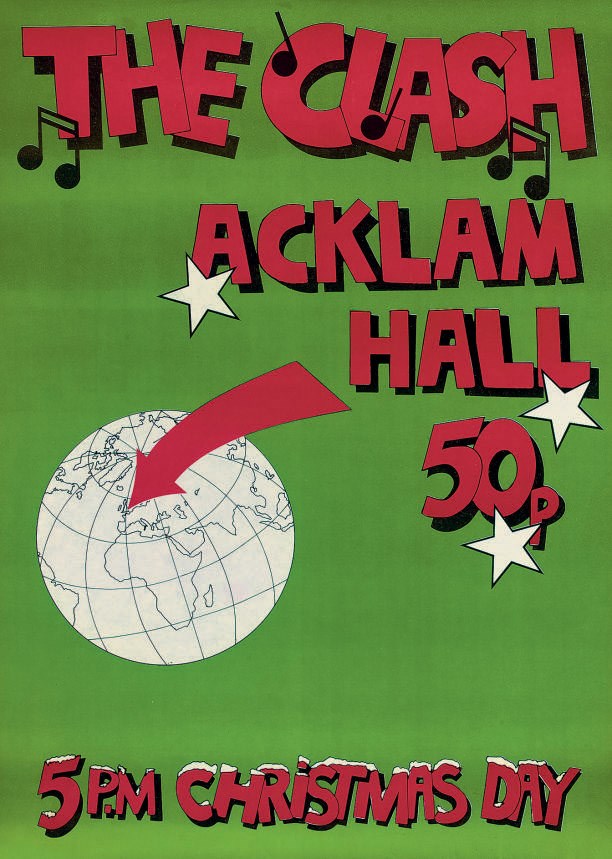
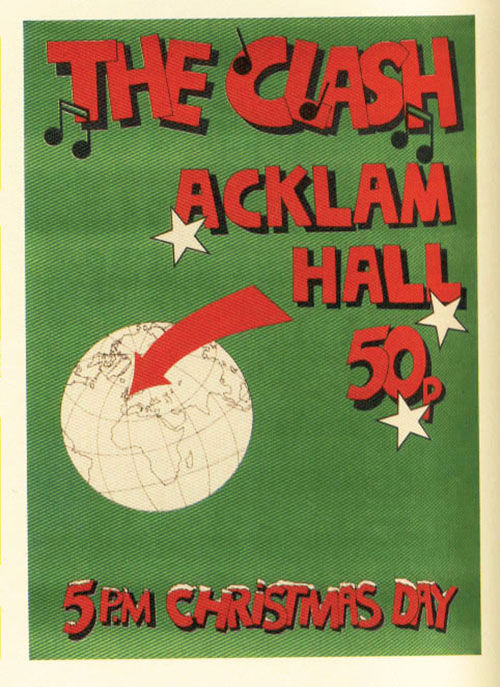
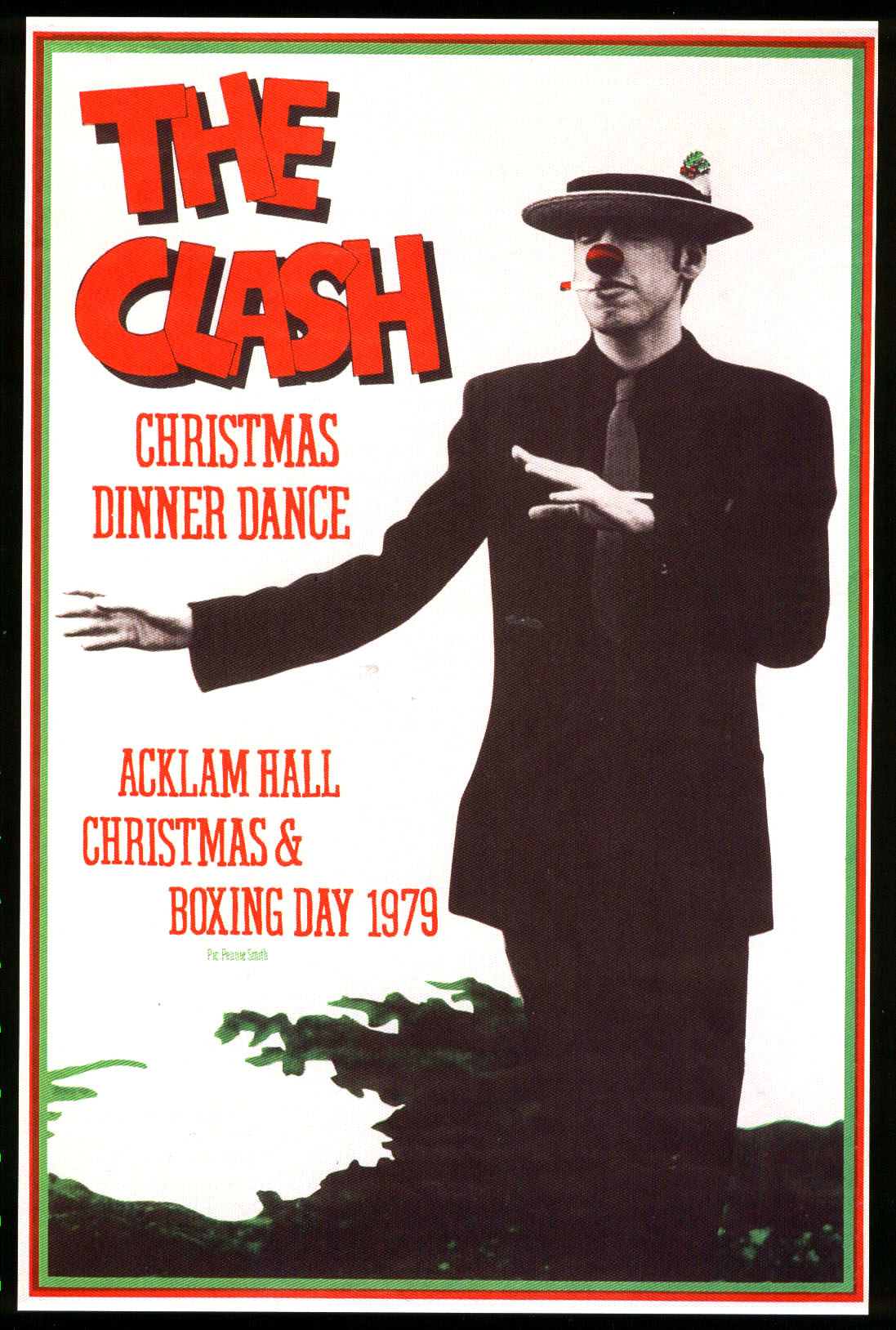
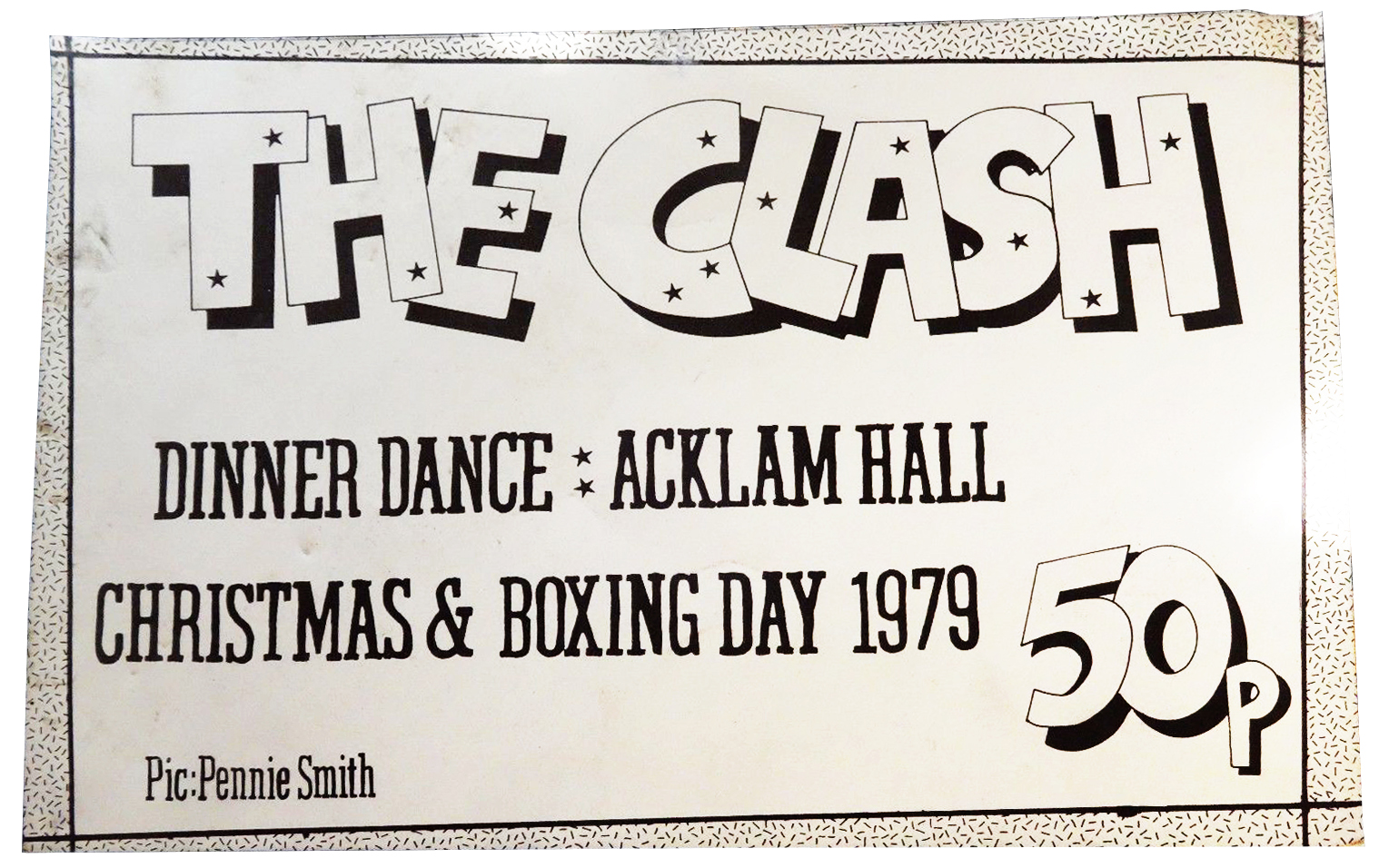
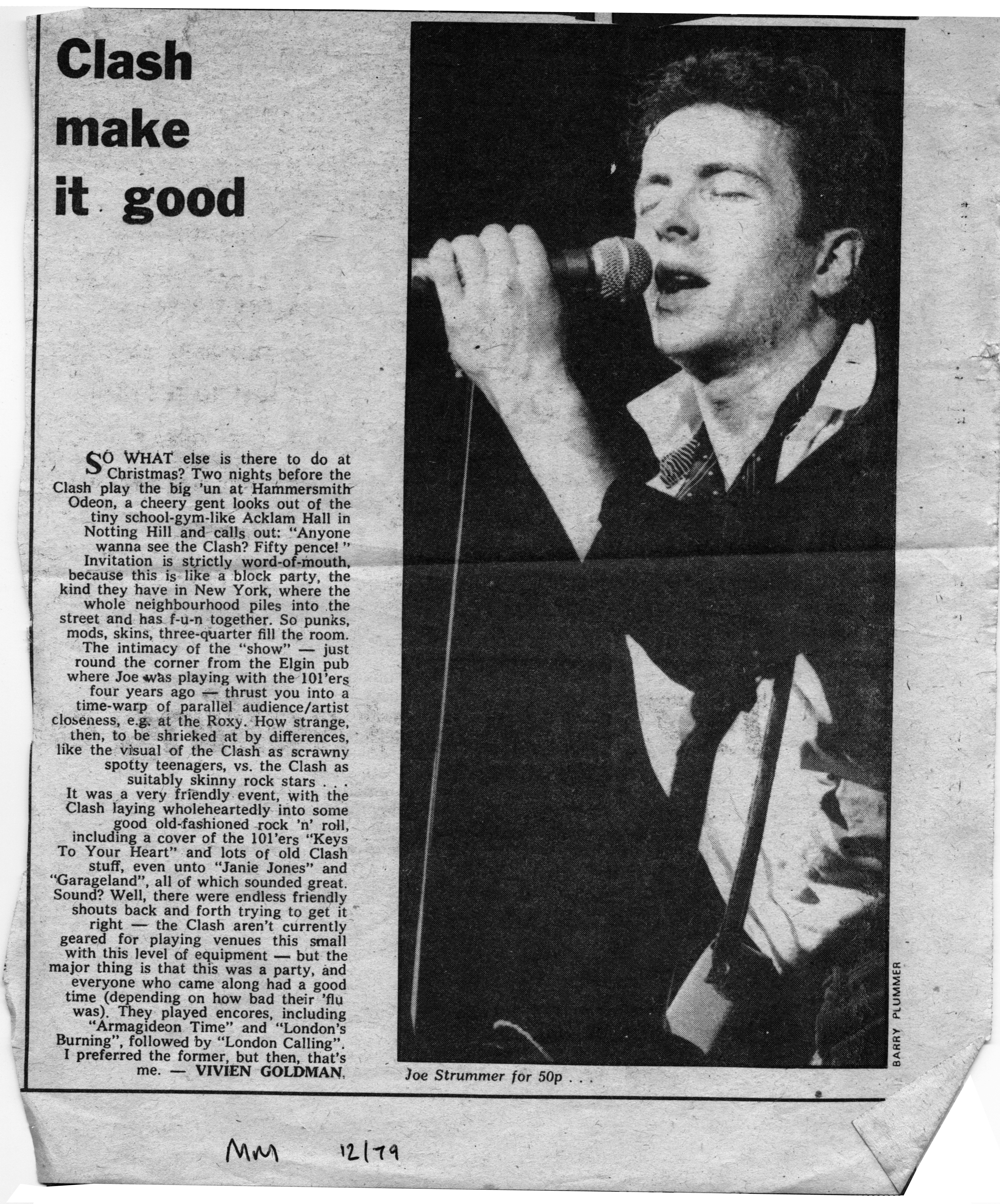
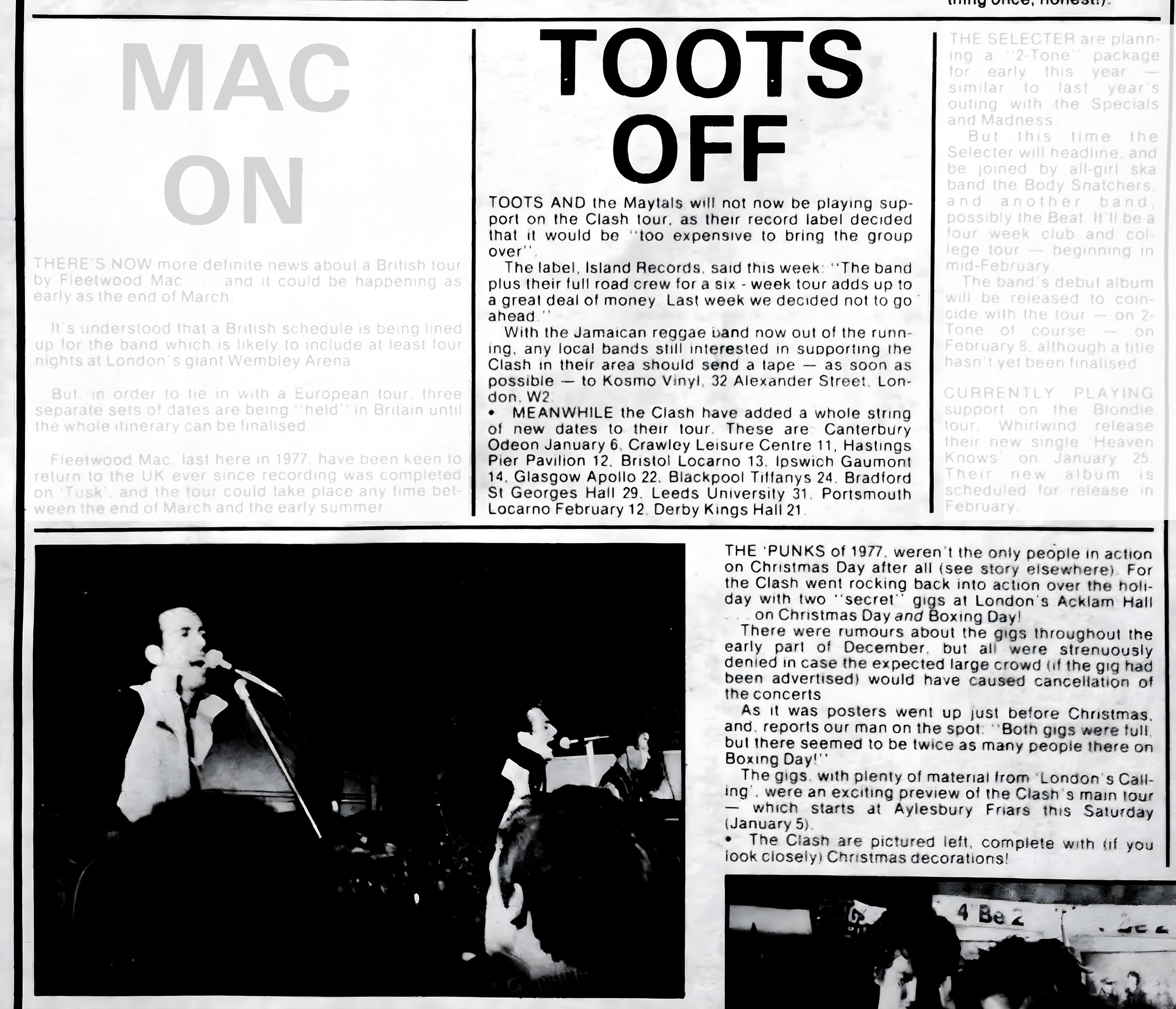
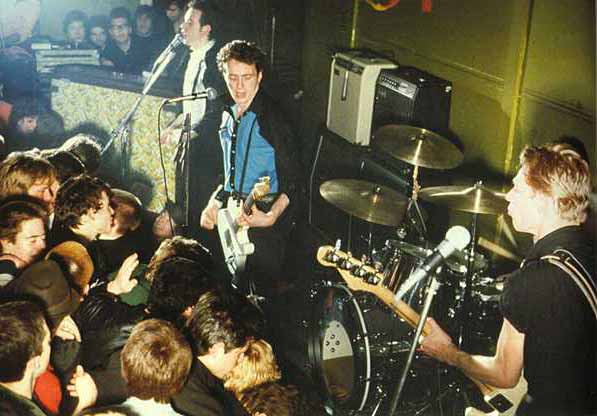
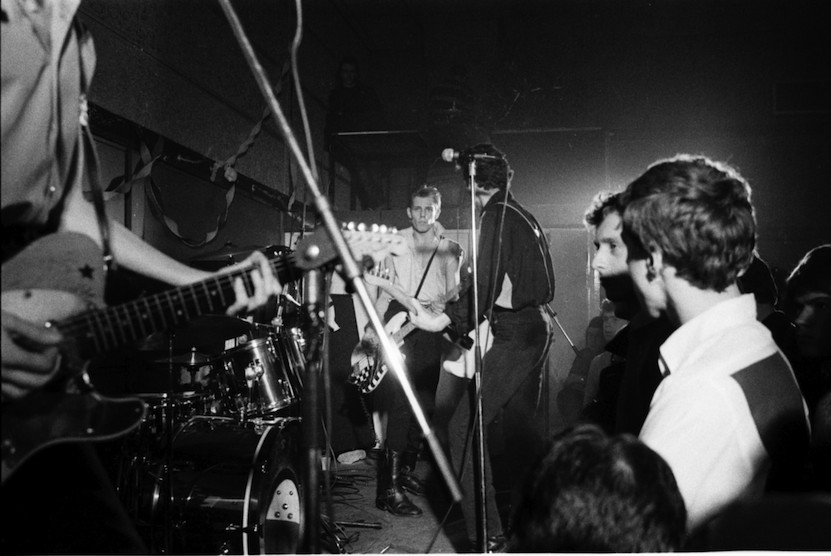
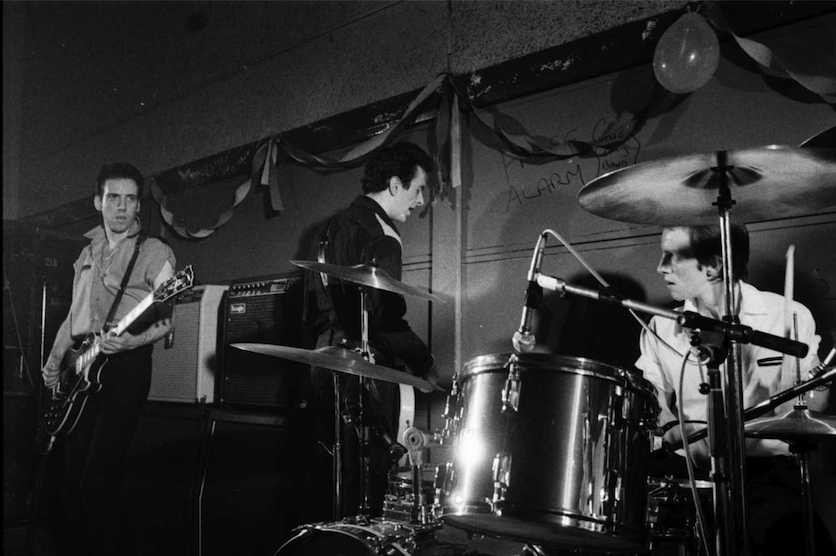
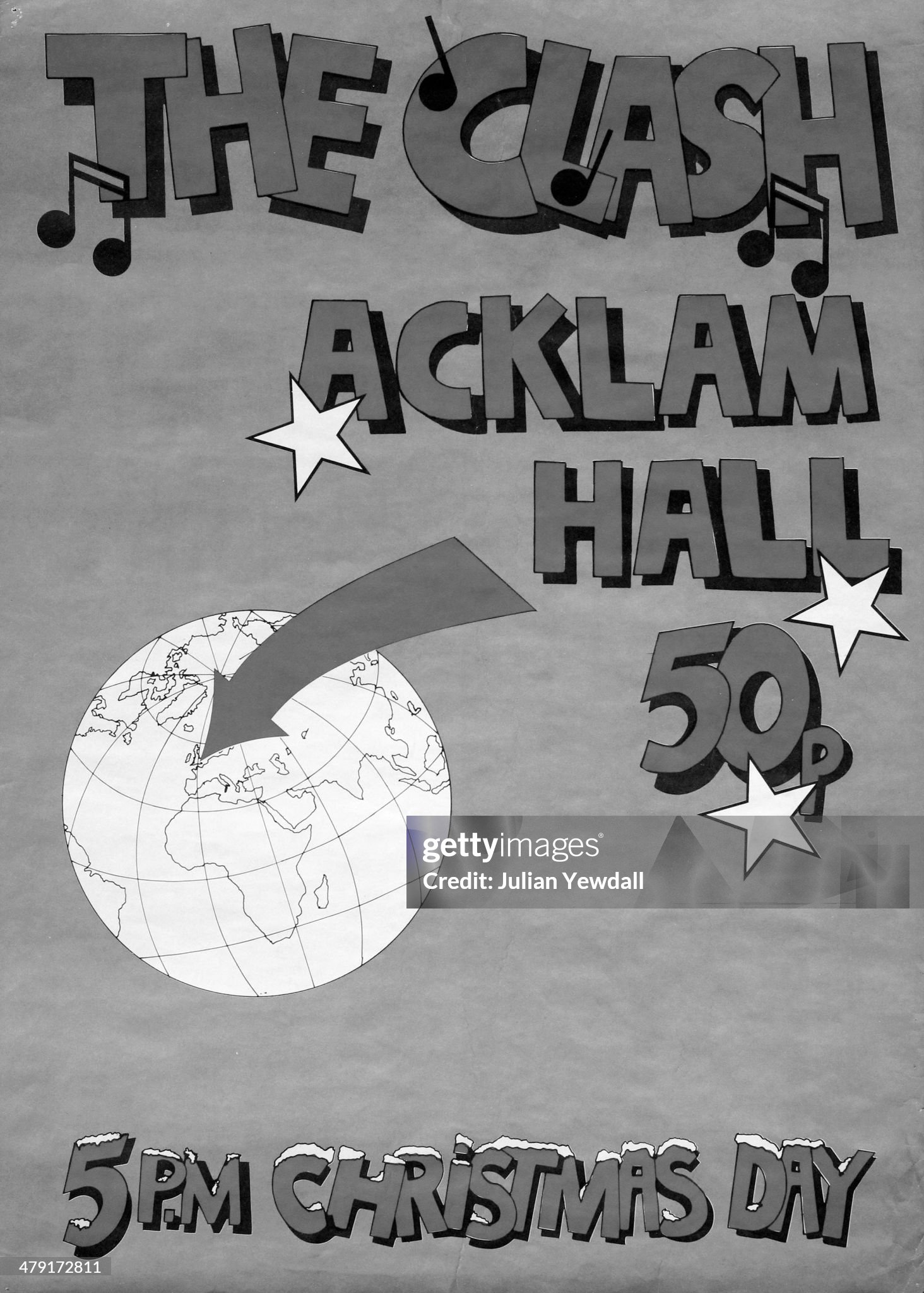
Christmas Eve. The Clash is rehearsing in Acklam Hall off Notting Hill's Portobello Road, directly beneath the Westway flyover—a vital symbol in the group's mythology. On Christmas Day and Boxing Day (the 26th), The Clash is playing two "secret" gigs at the hall (tickets $1) as an antidote to the holidays and as warm-up dates (with Mickey Gallagher) for their British tour.
A Night at Simonon's Flat
Afterwards, Simonon, Strummer, Headon, and I walk to Simonon's basement flat a couple of blocks away. It's a modest two-room place, decorated and carpeted in various shades of red—totally appropriate for a fire-sign person. The other two Clashers call for cabs to take them home. Simonon and I sit down in the kitchen with some rum and my tape recorder. His American woman friend and her friend watch a Gene Kelly film on one of the two TVs that are switched on in the front room.
Like Strummer and Jones, Simonon is a former art student. The offspring of a broken marriage (as are Joe and Mick), he used the first money he earned with The Clash as a deposit on the flat. He badly needed a place of his own after years of sharing bedrooms with his brother and living in squats. "It's great in this neighborhood," he says. "There's this black family next door, and really early in the morning, they play all this dub. I don't even need to put anything on to listen to when I'm getting up."
Reflections on America
We return to the subject of America. The country does seem to be accepting more new wave.
"Yeah, slowly. Something seems to be stirring over there. I think all those other groups like The Police—and whether I like them or not is another thing—you do hear them a lot on the radio, so it does help us in some ways. Makes them a bit more open to our music.
"New York's really great for us. It's probably about the only place in America I really enjoy. Then again, it's got all its nonsense attached to it.
"I think someone from England coming up against all that stuff can easily be taken in and sink with it. Every time I go over there, I'm aware of that. Funny thing is, after a while, it gets boring."
Recording with Guy Stevens
Recording often tires Simonon, although that wasn't the case with London Calling.
"Usually I get really bored because the producers and people aren't interesting. But Guy Stevens is really different from the others. He's much more than a producer, really."
Mick Jones had said that Stevens absorbed all the nuttiness and tensions within the band.
"Yeah. You could just pour it all out. Great!
"Making the last one was terrible. CBS or Bernie or whoever it was kept us separated from each other. Blackhill, our new management people, seem okay so far, but we've got our eyes open more than before. We no longer sign things when we don't know what they're for. I suppose that showed stupidity—though it's good in a way that happened to us because we'll actually tell people about it."
Holiday Gigs and Hammersmith Odeon Performance
After two superb Acklam Hall shows, The Clash climaxed its holiday gigs on December 27th at the Hammersmith Odeon as the "Mystery Act" at an Ian Dury-topped benefit for Cambodian refugees.
Before The Clash was due on, I met Guy Stevens at the backstage bar. In addition to his incredible production work, Stevens was responsible for the release of about half the classic R&B and soul Britain heard in the mid-'60s. Music is precious to him, and he deplores its bastardization by large record conglomerates for mere profit. He knows The Clash is true to the cause. The Clash is part of the Quest.
"Listen," he shouts in my ear, spraying the entire right side of my face with spittle. "Did you see Joe Strummer in the dressing room just now? Down on the floor, ironing his stage clothes on a towel? Gene Vincent would've done that! Eddie Cochran would've done that! Jerry Lee Lewis would've done that!" He has a firm hold on my arm, passion burning in his voice. Loosening his grip, he slumps down on a seat to contemplate this perfect rock 'n' roll image.
Stevens' Enthusiasm During the Performance
Midway through The Clash's set, I look up from my seat and see a squirming Guy Stevens being carried up the center aisle by four security men. Concerned he may be kicked out or beaten up, I search for him at the rear of the auditorium.
He's okay. One of the guards recognizes him and mildly scolds him for causing a scene. Caught up in the music, Guy had been dancing in front of one of the cameras filming the event. He is very drunk.
As we navigate a swaying journey down the auditorium side toward the backstage door, someone suddenly rushes up behind us and throws his arms around Guy. It’s an equally inebriated Pete Townshend! Leaving Stevens in good hands, I return to my seat.
Traveling to Birmingham for Tizwaz Appearance
Eight days later, I'm seated between Jones and Strummer in the mini-bus The Clash rented for their British tour. It's about midnight as we travel up the M1 to Birmingham, where the band will appear the next morning (Saturday) on the children's TV show Tiswas. Hard Jamaican sounds pour from Simonon's portable cassette player, filling the warm vehicle.
Discussing London Calling and Song Meanings
The intention is to discuss specific details of London Calling with the self-contained and highly romantic (a compliment, of course) Strummer. We start with "Lover's Rock," a title referencing a reggae sub-division popular in England, often featuring twee-sounding teenage girls and electronic drums. The Clash's version explores how lovers should rock, invoking Taoism through quotes from The Tao of Love ("You can make a lover in a thousand goes") and critiquing the Pill's subtle Babylonian oppression.
"It's been misunderstood, that song, you know," Strummer half-grins, wryly self-mocking. "You have to be a bit gone in the head to try to get that over."
Inspiration Behind "The Right Profile"
"The Right Profile" is about Montgomery Clift. I recall Guy Stevens mentioning he lent Strummer a paperback on Clift.
"I read two of them," he nods. "It's interesting to read two books about the same person because they give you completely different pictures. You read one and think, 'Oh, that's how the guy really was!' Then you read another and wonder, 'Was he like this, or like that?' And you realize he was probably like neither."
Broader Conversations and Reflections
Strummer’s recent reading leads our conversation toward the Odyssey, Greek and Roman mythology, the Basques and Atlantis, Carl Jung, Edgar Cayce, and Rasta passivity. That last topic reminds me that London Calling encourages the opposite: people should step forward, act, and reject apathy.
"Yeah, but—it's very hard to deal with apathy. Pretending you have the answers to everybody's problems—it's impossible, of course. Everyone must sort out their own problems; that's the key to everything. You fix one issue and get the will to tackle another. You can't expect any help, I don't think.
"Mainly, though, we were thinking about people accepting shit as gold. Just a little while ago, we heard a record on the radio that was pure shit, and this guy goes, 'Mmmm... that's good.' It's just the Emperor's new clothes again and again. Of course, it ain't good. It's just a load of fuckin' shit, y'know."
The Clash questions everything, which is why they're so positive. They don't believe in hopelessness; they believe we have nothing but hope.
"Only the lazy ones look to us for a solution," Strummer says. "We just made our feelings clear; other people happened to feel that way too, so they got behind it. But making your feelings clear is a long way from solving everything.
Misinterpretation of "Bored with the USA"
"That 'Bored with the USA' song has always been misconstrued. We say, 'We're so bored with the USA' having to sit at home and have it pumped into us. The second you turn on the TV you know it's in America somewhere, and there's this bird who's probably a detective, and then a car's gonna roll over a cliff—you know all the plots by heart. 'I'm So Bored with the USA' was about the importing of culture.
Perspective on Visiting the States
"A quick spree 'round the States taking in all the sights and buying all the crap you can lay your hands on—that's what we call fun. So long as we don't have to live there."
Reflection on Success and "Selling Out"
The next afternoon, arriving at the gates of the Aylesbury Civic Hall for the first date of the tour, Joe Strummer gazes out of the mini-bus window at the street filled with punks and punkettes.
"See," he turns to Paul. "We've sold out again. And we said we'd never sell out."
TROUSER PRESS / March 1980



 No known audio or video











%20Rare%20UK%20Punk%20Fanzine%20Clash%20Interview,%20Joy%20Division/Cover-300.jpg)



















.gif)











 The Official Clash
  Clash City Snappers

