Clash Take the Fifth Tour
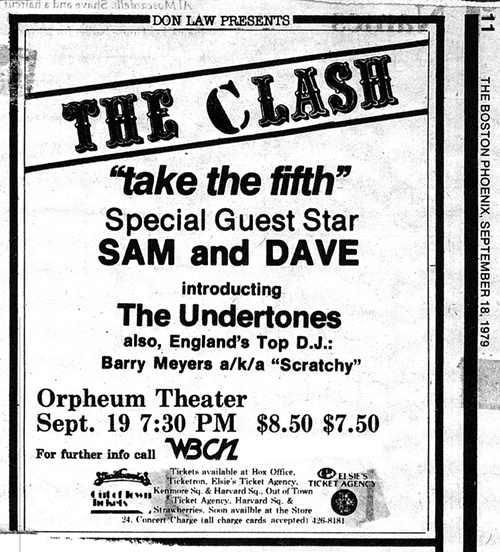
Supported by The Undertones & Sam And Dave
updated 7 July 2008 - link to photos by Cathrine Vanaria
updated 25 Dec 2008 - The Clash Play Revolution Rock
updated August 2022 added article
updated Feb 2024 added Mineapolis Star
This one came with decent sound but with some horrendous tape speed problems. Corrected, the recording certainly improves somewhat. It is one of the best recordings from this tour and certainly one of the best performances.
The sound improves considerably from the start of London Calling probably as a result of the taper lifting the hand held mike above the heads of the audience; you can hear the mike thud down at the end of each encore. From here on there is a good range of sound and considerable clarity. Some stereo separation also adds to the listening enjoyment.
Only criticism is the sound is a touch harsh concentrated in the mid range. The drums, guitars, bass are all clearly audible, the vocals perhaps down a touch. Guitars come through the mix strongly including Joe's. There is little evidence of Mick's guitar effects here too thankfully. Shouts and claps from the lively audience add not distract here to the enjoyment. The atmosphere of the gig is captured well.
Paul Morley wrote that Detroit was not a Clash city yet
Paul Morley wrote that Detroit was not a Clash city yet, Joe sensed the negativity from stage and grew progressively angry. When asked in Detroit for a message for USA he said curtly "Eat less!" And at Cleveland Joe had a croaky throat. An interview recording does exist from WWWWDetroit FM Radio recorded before the Detroit gig
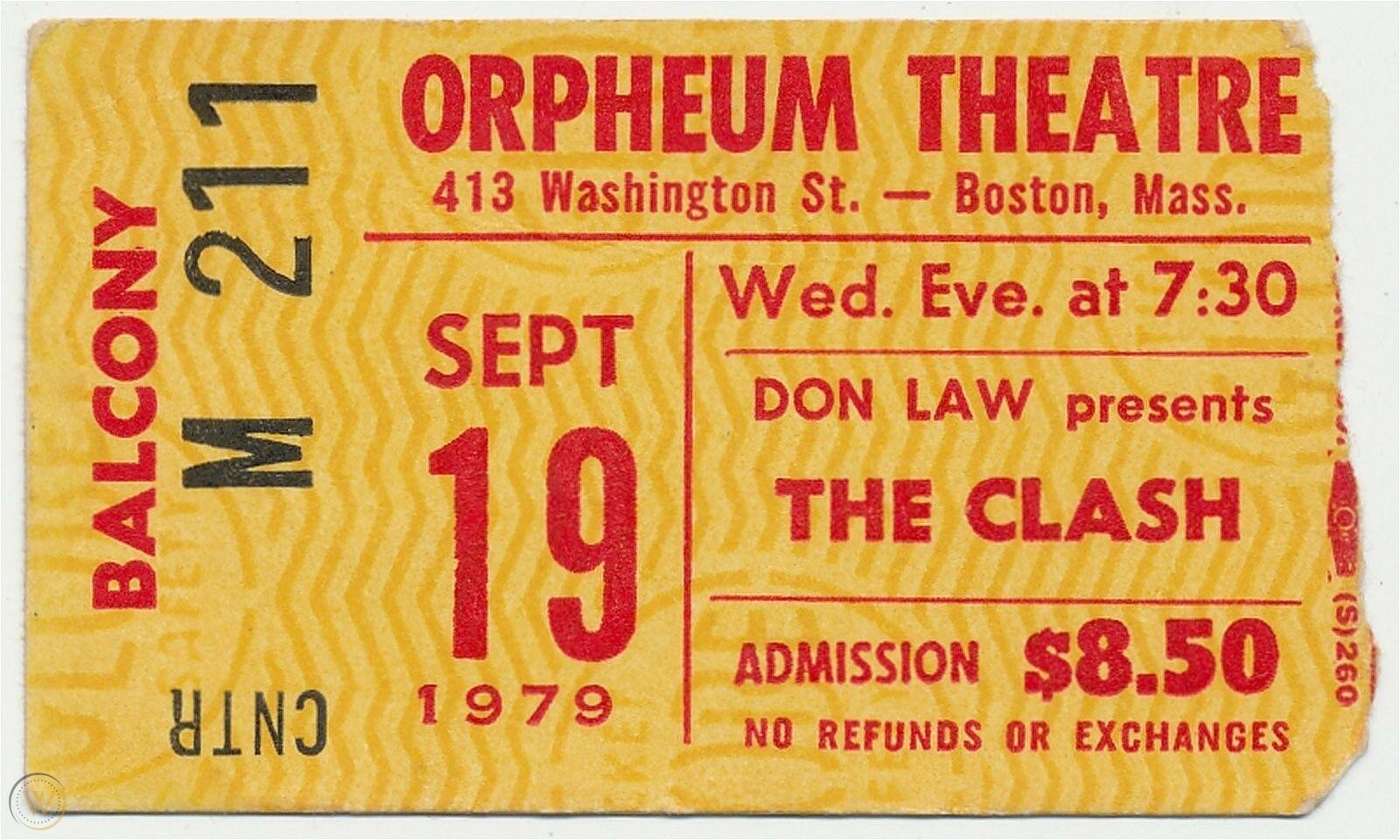
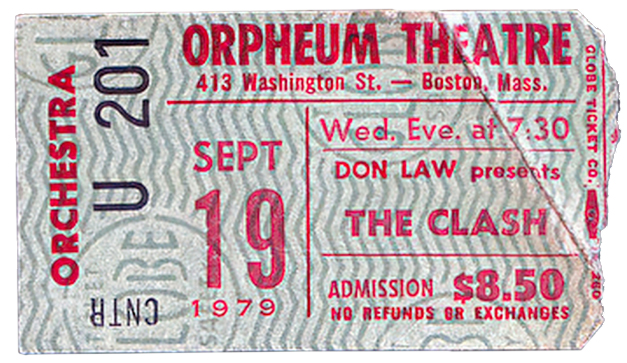
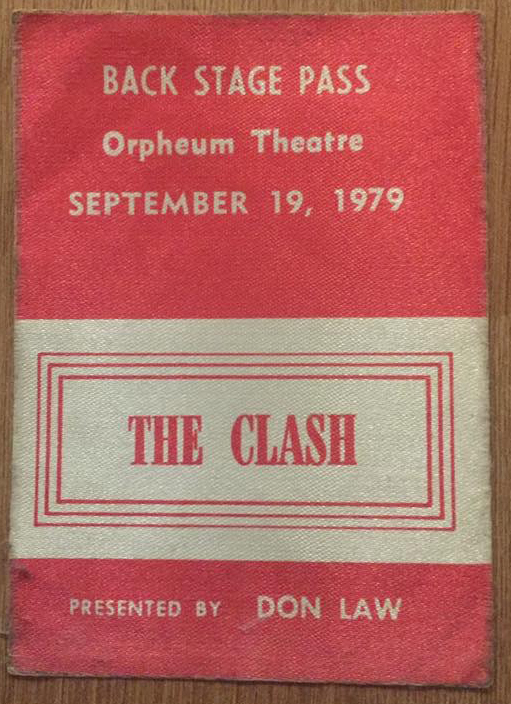
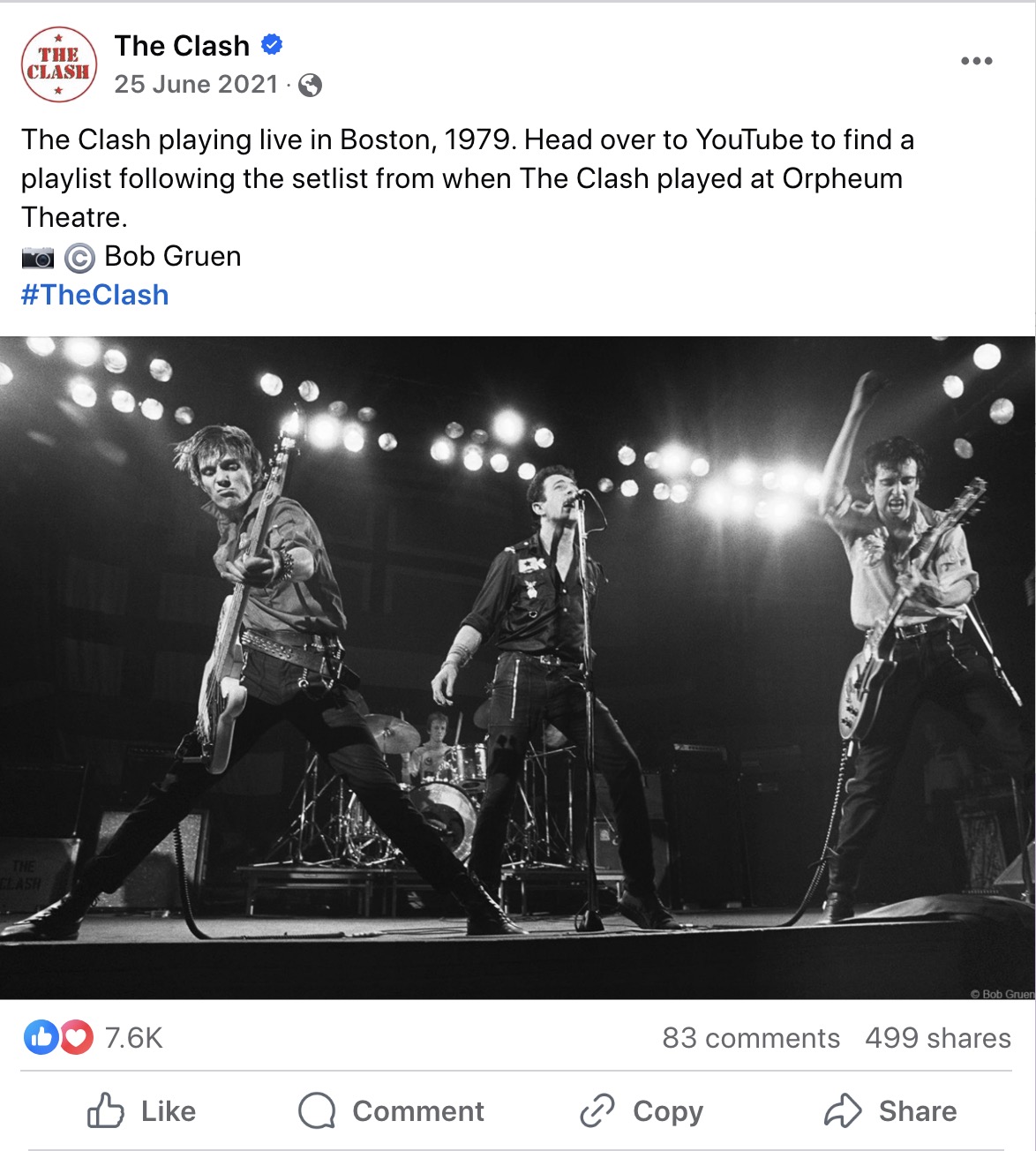
The Orpheum Theater, Boston would prove a favourite venue for The Clash and their debut performance here was exceptional, aided by a highly enthusiastic and lively audience who called them back for 2 encores. Take The Fifth became exactly that at this gig with Mickey Gallagher making his debut. A very good audience recording circulates together with a controversial phone in show that the band did after the concert on WBCN Boston.
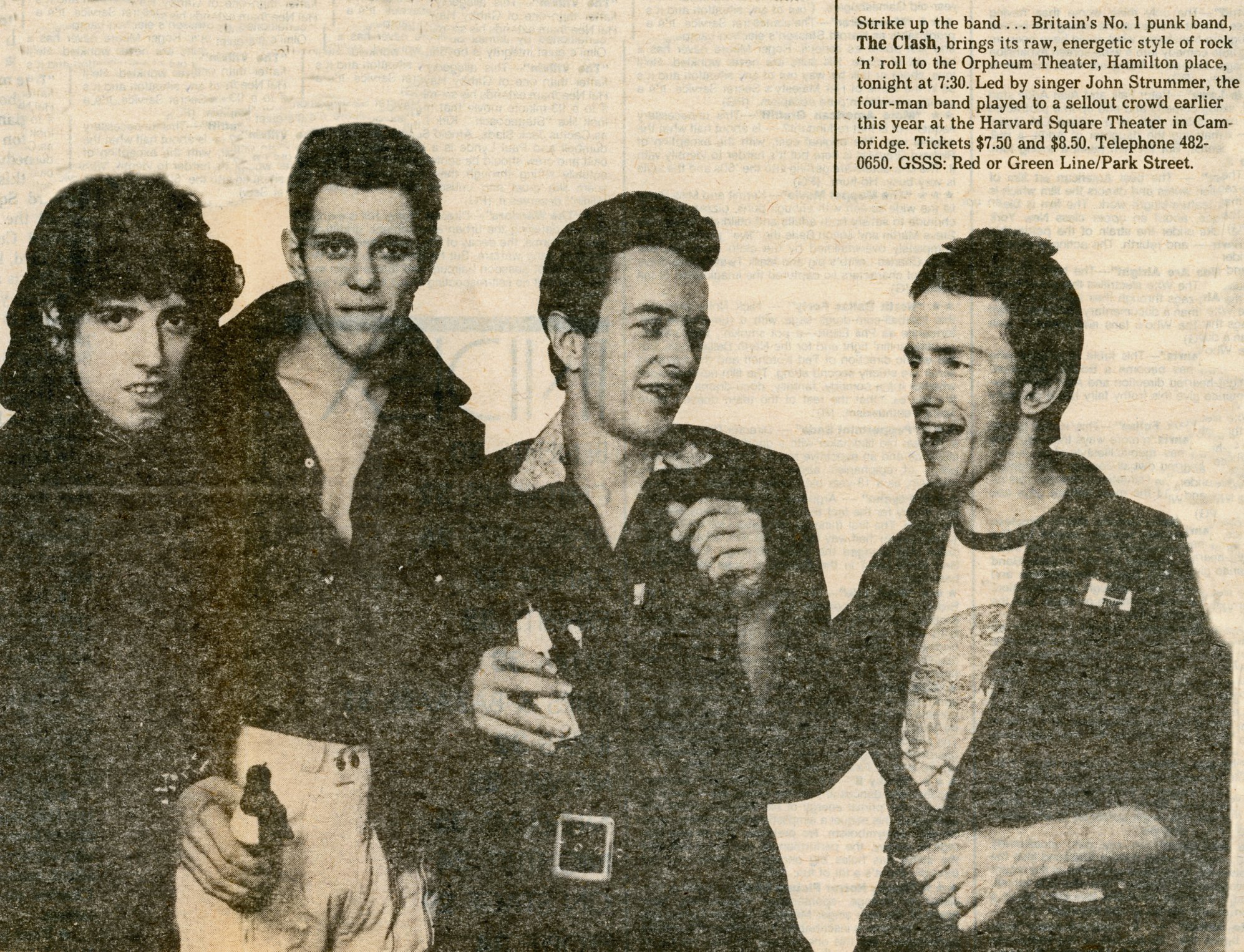
Strike up the band... Britain's No. 1 punk band, The Clash, brings its raw, energetic style of rock 'n' roll to the Orpheum Theater, Hamilton place, tonight at 7:30. Led by singer John Strummer, the four-man band played to a sellout crowd earlier this year at the Harvard Square Theater in Cam- bridge. Tickets $7.50 and $8.50. Telephone 482- 0650. GSSS: Red or Green Line/Park Street.
Metro Boston Memories, History and News
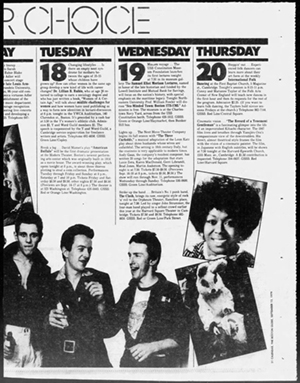
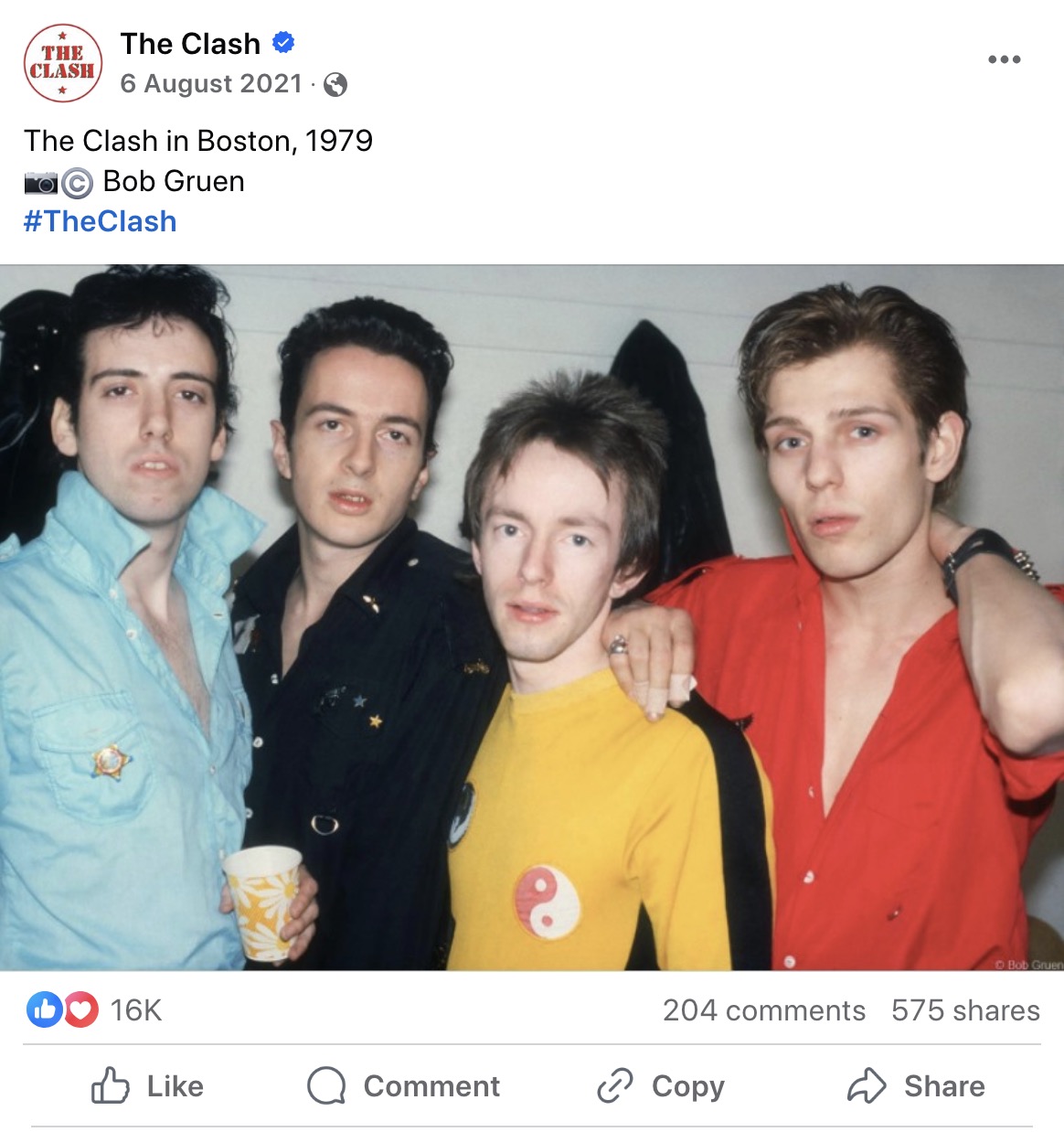
Facebook - The Clash in Boston. Photo when the Clash dropped into the radio station after their Sept 79 show in Boston. The Globe Calendar Magazine was touting the return of this punk band in the September 14, 1979 edition.
WBCN Boston FM Radio Phone-In Show
Marcus Gray decribes this show as "foul and obnoxious"
19 September 79
Entertaining Clash Radio Phone In after the Boston gig so the proceedings are lively. Interview starts off seriously but as it progresses dominated by some 'wacky' callers and ends with some regretable and dated commentson the Village People.
Joe, Mick, Topper, ‘Scratchy' Barry Myers take phone calls and play various records. Begins with encouragement to a caller from the Direct Action Coalition to take over the Seabrook Nuclear Facility; the March 28th 79 nuclear accident at Three Mile Island would inspire The Clash particularly Joe.
A Londoner working in Boston saw tonight's concert and thought it better than the 2 he had seen in London, Mick disagreed. Questions about Mickey Gallagher who will continue to play on the tour "for as long as we can afford him".
A woman calling herself the ‘Queen of Swords', stoned out of her mind, asked why the limousine did'nt come and pick her up, Mick replies no limos at Clash concerts we came in the transit bus. She then asks for help over something "emitting into the cosmos", Topper says "don't take the brown acid!".
A caller asks them whether they knew that Sam & Dave were "given the finger" by many in the crowd [sections of US Clash audiences always failed to appreciate a number of The Clash chosen black support acts, some even shouting racist abuse]. An angry Joe says they were aware of it and "that's the reason we try to get to play with people like that, because everyone goes around posing in their tight trousers thinking they're it but those guys is where the music comes from."
To emphasis this the music chosen by The Clash is largely from their support acts; Sam & Dave, Screaming Jay Hawkins, Desmond Dekker and The Mighty Diamonds (Scratchy " This is for all the people in red [bouncers] at tonight's concert ‘Whose gonna bodyguard, mr bodyguard!'.
After about 20 minutes when the band talk football and talking callers it goes awry.
A caller bigs up Elvis Costello verses the Clash and the abuse starts to flow. Led by Kosmo Vinyl and Topper, Mick starts it off and chips in before Joe tries to defuse it.
Marcus Gray decribes this show as "foul and obnoxious" on a par with Bill Grundy interview. The source of the swearing is a slurring Topper and starts when one caller asks "how much longer do we have to listen to you assholes!" and another caller who says they are almost as good as Elvis Costello! The show ends with the assembled throng singing along to the Dave Clark Five's ‘Glad All Over' and Village People's ‘Y.M.C.A". Teh interview is way out of hand when Mick shouts out "faggots" and Kosmo singing "Why are you gay?".
The radio interview and the Clash's behavior following the interview (smashing up the interviewers/stations whole record colletion) were probebly the lowest point of the bands whole career given the stand they had taken on excesses of the rock establishment and the politics that the band promoted. Probably one they look back on with great regret and one which presented everything the Clash came to stand against. Joe Strummer and Paul Simonon didn't join the antics.
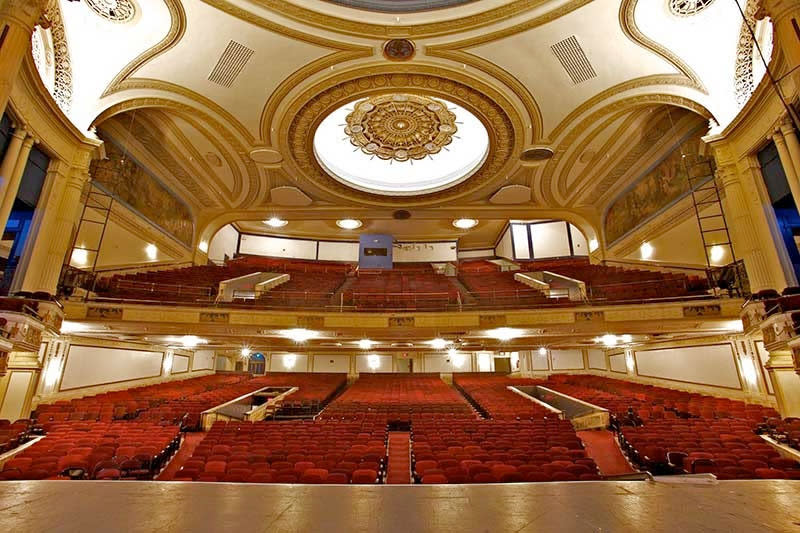
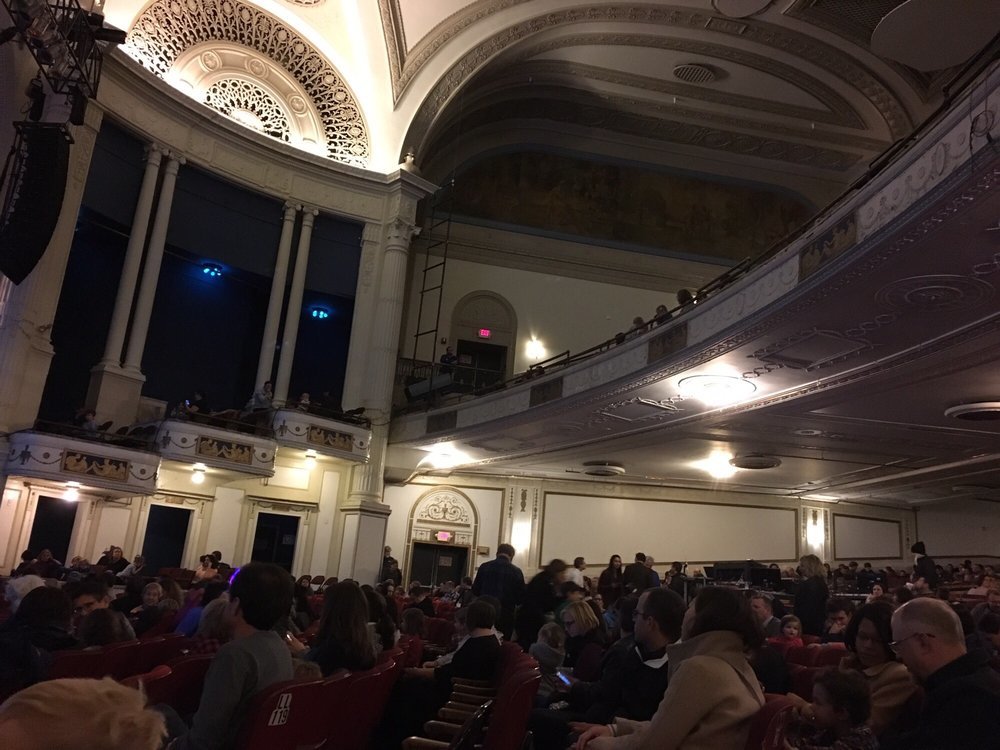
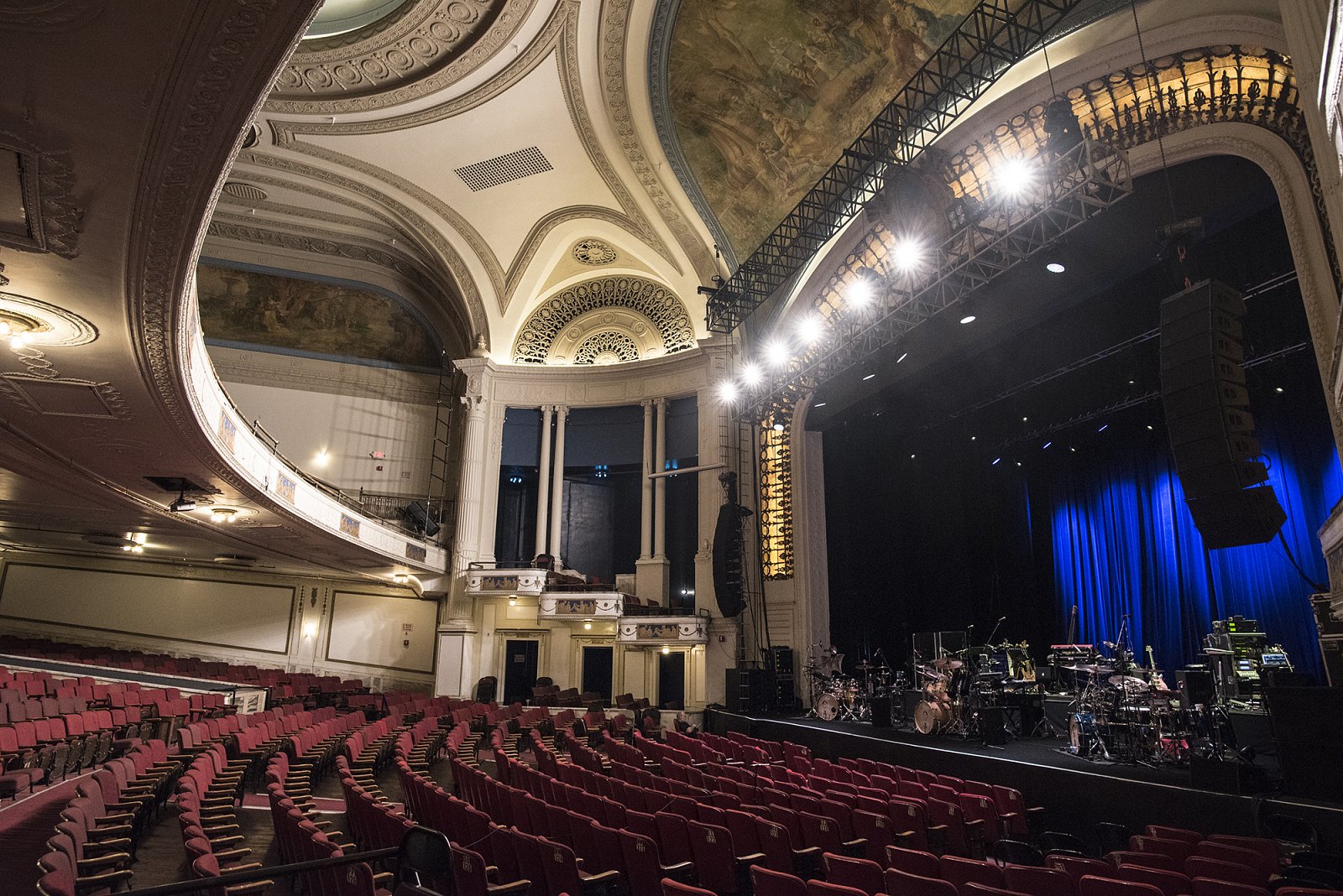
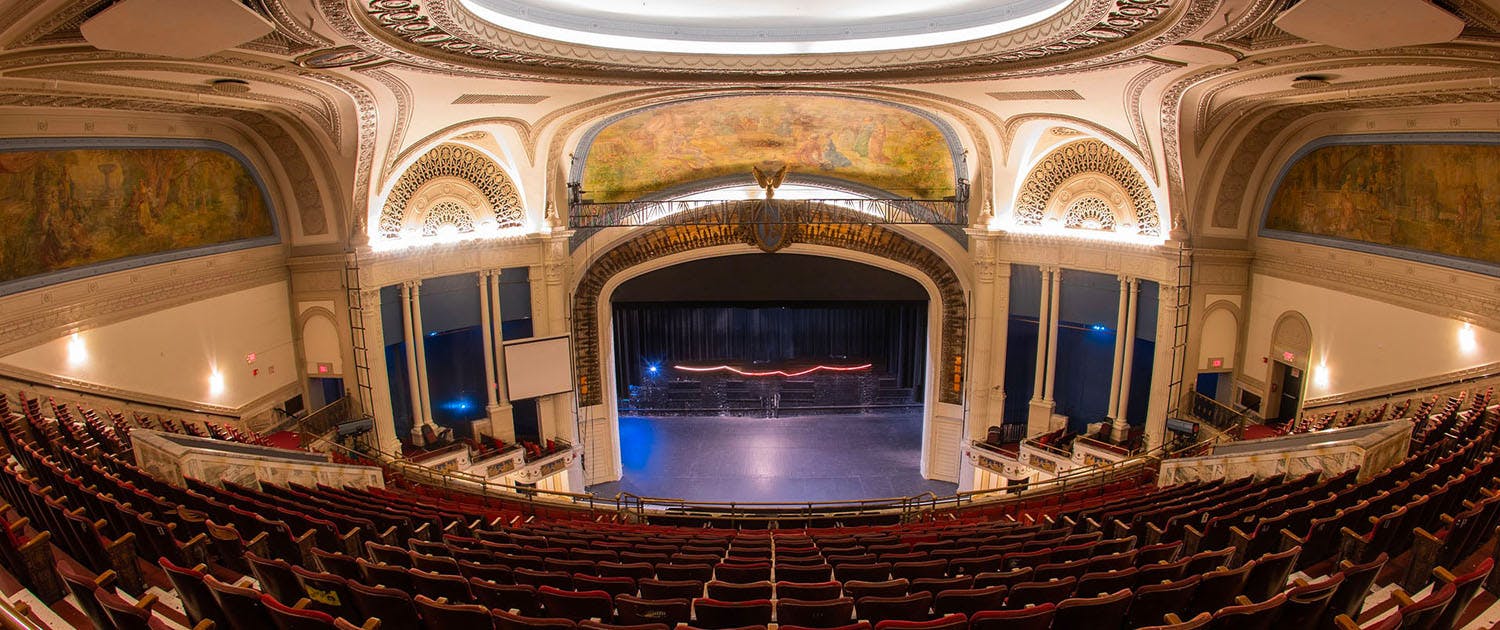
The Orpheum Theatre was opened in 1852 and is still a popular music venue today. It has very good acoustics and seats 2,800.
The Orpheum Theatre in Boston, one of America's oldest entertainment venues, has a rich and varied history dating back to 1852. Originally known as the Boston Music Hall, it was designed by Snell and Gregerson and served as the founding location of the New England Conservatory of Music in 1867 2. The venue also hosted the Boston Symphony Orchestra from its inception in 1880 until 1900, when the orchestra moved to its new home, Symphony Hall 12.
After the departure of the Boston Symphony Orchestra, the theater underwent a significant transformation. In 1900, it was converted into a vaudeville theater and operated under various names, including the Empire Theatre 12. The venue acquired its current name, Orpheum Theatre, in 1906. A major renovation occurred in 1915 when Loew's Theatres purchased the Orpheum and completely redesigned the interior under the guidance of renowned theater architect Thomas Lamb 12.
Throughout the 20th century, the Orpheum Theatre continued to evolve with the changing entertainment landscape. It transitioned from a vaudeville and movie theater to a strictly movie theater in the 1930s 1. In the early 1970s, it was rebranded as the Aquarius, a live concert hall, before briefly serving as the home of the Boston Opera Company from 1971 to 1978 2. Since then, the Orpheum has primarily functioned as a popular music venue, hosting legendary performances by artists such as The Police, U2, Aerosmith, and David Bowie 12.
"I hereby say people are allowed to stand where they like that pays their money"
The Clash again respond to a very lively and enthusiastic audience by delivering a fired up very strong performance, perhaps not quite as intense as Chicago.
The intro music is The Standells 60's garage classic Dirty Water which name checks Boston but this though sounds like a cover version as the lyrics have been changed to name check the Thames and London.
The Clash then blast into City of the Dead, an unusual set opener not likely to please the audience. Johnny Green's book has him adding it to the set list as a joke at Vancouver, (last night of the tour), much to the consternation of the band! However it may well be that this was the night and Johnny's memory not for the first time is at fault. Before the audience can react its Bored With The USA and then Joe responds to the applause and shouting with "just like to say this is a very nice turnout for us, don't think we don't appreciate it" a brilliant Complete Control follows with great soloing from Mick.
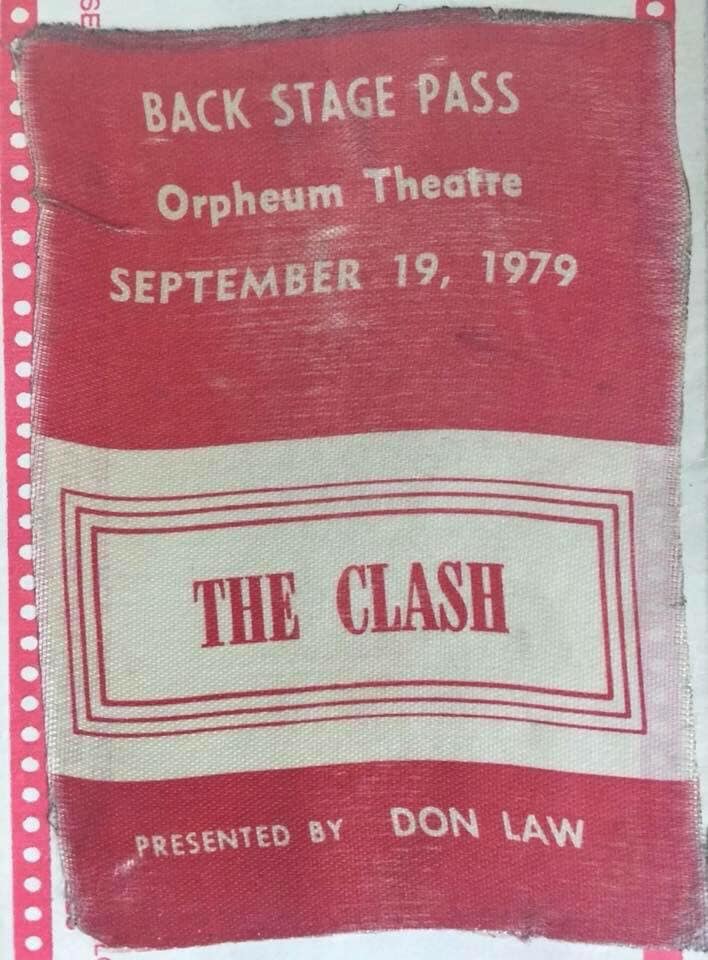
Joe then addresses the audience in response to the violence of the bouncers "short announcement, who is the promoter? Where's Don Law? (He's a fuckin pig someone shouts} you guys at the end of this aisle, I hereby say people are allowed to stand where they like that pays their money". This gets the audience going even more and cheer and shouts of encouragement ring out. Joe later said that the bouncers were punching people all over the hall and one girl was beaten up and thrown down the stairs.
The sound quality now improves for the best London Calling to date, harder and tighter than previously without the annoying guitar effects at the start of the song. "Time to be tough…" line still included at the expense of the recorded "ain't got no swing except for the ring of the truncheon thing".
White Man is excellent again with the band getting in a loose groove. Joe then tries again (rather charmingly) to get the audience out of its seats and up at the stage with "If you'd just give me a minute to explain, what I meant was I was talking about earlier about Don Law, he's the promoter and he's paying these gentlemen in the red T-shirts, you see in England when a band strikes up as it were, they kind of stand up in the aisle and get as near as they can, but if you're quite happy where you are (No! No! Shouts the crowd. Koka Kola then blasts out segueing brilliantly into I Fought The Law.
The next highlight is the earliest circulating recording of Paul singing Guns Of Brixton here has a different arrangement to later tours. All the performances are strong with Joe clearly fired up. A further announcement from Joe heralds the arrival of Blockhead Mickey Gallagher although he doesn't even get a name check! "if you hear a new sound in the next few numbers don't go and get your money back, this greasy guy over here.."
Mickey had arrived unrehearsed that afternoon so that the first time he sees them playing live he played with them. Morley says he was tucked away at the side of the stage barely heard or seen and certainly his debut song Clampdown reaches its mid point before his organ can first be heard.
Gallagher was brought in to add that "wild mercury sound" of electric organ that Dylan loved for his ground breaking 65/66 performances. Strummer of course was and is a big fan of Dylan's, a feeling reciprocated when Dylan came to see The Clash live and was soon playing with a US punk band on US TV.
Following an intense Police and Thieves Joe says " Long John Silver (Green) has whispered in my ear that the geezers in the red tracksuits have gone, so those who wanna break a law.. Mick " Be daring, go down the front a bit, dance a bit!" Some clearly do and Joe says "Oh criminals!" At last getting the sort of intense reaction from the audience to match the intensity of The Clash's performance they launch into a wild Capital Radio.
The audience roar their approval then it's the first live recording of Wrong 'Em Boyo introduced by Joe "I want you to listen to this and tell me what you think of it, this one is going down big in England (referring to the ska revival)" Mickey Gallagher does a solo and this is another highlight of a very strong performance.
It's a roar then through Janie Jones and Garageland to the first encore. Armagideon Time is getting tighter then just as the audience have got their breath back its Career Opportunities and White Riot blasting through the PA.
The highly enthusiastic crowd are rewarded with a second encore of a speeded up Jimmy Jazz with goes straight into What's My Name.
A very enjoyable performance good sound but oh! to have been there, and the great Sam & Dave too.
The Tufts Observer - Tufts University, Medford MA - 1979-02-28
The Clash blast States crowd: work on a new smoother image
The Clash blast States crowd; work on new smoother image
By ERIC BERGEMANN
The Clash, called by many the leaders of the so-called d "punk rock movement", are currently in the midst of their second American tour. Their first, a seven-city jaunt, took place last February and was wildly hailed by fans and critics alike.
The Clash-singer Joe Strummer, guitarist Mick Jones, bassist Paul Simenon and drummer Topper Headon-were applauded by Americans for their vicious and intense hard rock attack, and the picture of global politics painted in their songs. The group has changed much In the last last seven months, however, and the band that took the stage at the Orpheum theatre last Wednesday was different from the one that was highly received at the Harvard Square Theatre last winter.
On their first U.S. tour, the Clash presented themselves as a combination punk band and international combat army. Jones, Strummer, Simenon, and Headon wore soldiers' uniforms and handled their guitars like machine guns. The band played in front of a flags-of-all-nations backdrop with the logo "Unprovoked Retaliation" at the bottom. They chose to spotlight songs dealing with international politics and war-"Guns On The Roof", "Tommy Gun", "English Civil War."
They took the stage with the attitude that they were Concert Review the only rock and roll band in the world that could still make any kind of difference. They saw themselves as the leaders of a new social movement. Their presentation was well received in the U.S.A., but roundly jeered in the band's native England. In the U.K., the Clash started out as a bunch of vicious street fighters. Their newfound global consciousness (as presented onstage and in the album Give 'Em Enough Rope) was regarded by fans and critics as a shallow sellout of their original principles.
What the English were really objecting to was the Clash moving further away from the immediate concerns of their homeland. Matters came to a the head in May when the group released The Cost Of Living Ep.
In the song "Groovy Times (Are Here Again)", Joe Strummer attacked his everyday countrymen for their unwillingness to see the real issues in the British food delivery strikes of last fall. The crowning blow w was the song "Gates Of The West", in which Mick Jones sang about leaving England for something new namely, the U.S.A. The record A. was poorly received by fans and critics. To many, the Clash seem to have repudiated their original boast, "I'm So Bored With The U.S.A."
Actually, nothing could be further from the truth. The Clash have simply decided to make their immediate goals more manageable (if conquering the United States with a reputation as a basic punk band, and little support from their record company, can be called a manageable goal). They have discarded the role of worldwide rock and roll soldiers for the moment. Last Wednesday at the Orpheum, the military uniforms and flags backdrop were absent. The Clash were more like Western outlaws riding into a strange town to wipe out whatever evil they can find. The band (with the exception of the punky Simenon) looked more like cowboys than soldiers.
Punk concert
Clash bash states audiences
The music was different too. "Guns On The Roof" and "Tommy Gun" were dropped from the repertoire, further reducing political interpretations. The pacing was not nearly as furious as expected. The Clash played six new songs, three of which were straight reggae tunes that slowed down the show at appropriate moments. The changes of pace made each individual song stand out-a distinct improvement from shows on the first tour when numbers blended together in a blare of noise.
A few other twists kept the music sounding fresh and different. Mick Gallagher of lan Dury's Blockheads joined in on organ two-thirds of the way through the show, and his playing lent an epic quality ity to the superb "Police and Thieves." Thiev Strummer and Simenon swapped instruments for a song written and sung for Simenon (his first such efforts for the Clash). One was left with the impression that the Clash are sincerely sincerely trying to expand their musical horizons.
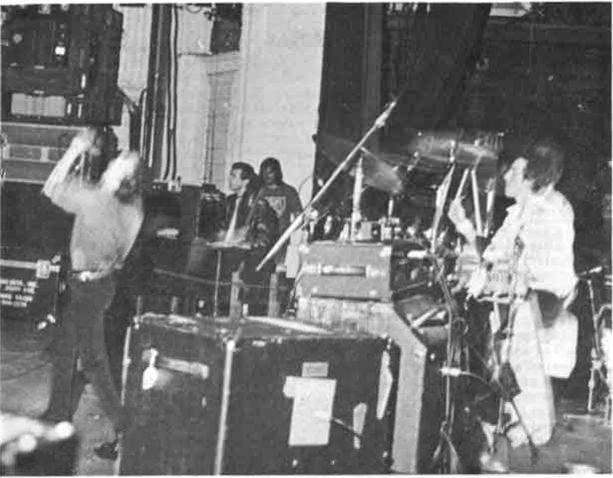
What made the show really special was the Clash's commitment to the audience. In the middle of the opener, "City of the Dead," Joe Strummer leaped into the audience and ran up the aisle unguarded playing his guitar. He stayed stayed in in t the crowd at song's end and delivered a diatribe against promoter Don Law. He told Law's enforcers to let the kids in the theatre leave their seats and dance in the aisles. When everyone followed Strummer's suggestion, the law men were helpless. With an enormous throng only inches away from them, the Clash were able to establish an energy exchange between themselves and their fans the likes of which are too rarely seen.
The energy that the Clash project is what makes them such a remarkable group. At the end of the ninety minute show, they were playing as furiously as they The Clash return to the States for concert engagement.
had at the beginning, still running back and forth across the stage and taking leaps off the drum stand. During the storming finale, "Garageland", Strummer leaped up over Topper Headon's drumkit, then ran back down down over it again just to show how easy it all was. The willingness of the Clash to give their all, every performance, makes them a rare band indeed. No other current rock and roll band is as dedicated, spirited, violent, and as driven as is the Clash. Best of all, they seem to be smart enough to survive where so many others before them have fallen. Their current tour proves that they really are the greatest rock and roll band in the world.
Clash concert intriguing but hardly transcendental
Minneapollis Star - 13 Sept 1979
Clash concert but hardly transcendental
Reviewed by JON BREAM Minneapolis Star Staff Writer
"Their concert surpassed the three best shows I've ever seen," read the review from Boston. "It was the best rock show most people had ever seen," was the report from San Francisco. "The most intense rock band ever," declared New York's Robert Christgau, who calls himself the dean of rock critics.
Indeed, the buildup for the Clash-the survivors of the British punk rock movement who made their local debut Wednesday night at the St. Paul Civic Center Arena-was nothing less than spectacular. The Clash cult was expecting nothing less than the second comIng.
Well, the concert was hardly cathartic or transcendental. The first half was curious, but something was missing; once the quartet clicked in the last half, the performance was intriguing if not convincing.
Punk rock may have died earlier this year with Sid Vicious of the defunct Sex Pistols, but the four members of the Clash haven't lost their punk attitude. In England, punk rockers were an angry, politically oriented bunch. For them, punk was a way of life that was reflected in everything from their dress and music to their politica and practice of living on the edge. By contrast, American punks tended to display a sense of humor that prevented them from going off the deep end.
Joe Strummer, front man of the Clash, certainly seemed to cultivate stereotypical punk offensiveness Wednesday, as if to demonstrate in his own self-righteous way how punk (read hip) he could be. After the group opened with "I'm So Bored with the U.S.A.," he blasted the Midwest as a waste land. Later, he told the 2,000 or so fans that if they didn't like the Clash's performance, they should "tell us limeys" where to go.
Strummer ran around kicking guitar amplifiers and swinging the microphone stand. His angry antics seemed more anarchic than purposeful. However, once the singer rhythm guitarist turned the lead vocals over to lead guitarist Mick Jones, the Clash finally began to click.
Listeners began to realize that this group was talented and well-conceived, not just a garage band that manically banged out intense, rudimentary rock 'n' roll. However, the Clash was little more than an amateurish garage band was formed in June '76 after Jones had left art school and Strummer had been frustrated singing in a soul band.
The Clash's first album is raw musically, militant politically and generally negative. But, the music mirrored the times. And the British rock press loved it, and so did the fans.
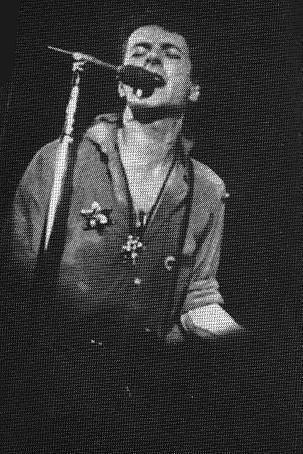
Star Photo by Steve Schluter (Joe Strummer displayed punk rock's offensiveness)
When the Clash's second album, "Give 'Em Enough Rope," was re-leased in mid-'78, it entered the British pop charts at No. 2. It is a bolder, more violent and more political record. It's more worldly in its scope, but perhaps less developed in its vision.
Yet, if the politics are becoming naive, the Clash's music is clearly growing. Melodies, subtlety and even humor were evident Wednesday. There was some reggae, some pop-styled songs and even a cabaret jazz number. Oftentimes, though, it was difficult to decipher the words Strummer was shouting with his coarse voice; Jones was a more lucid singer, but he, too, had a rather heavy accent.
Nevertheless, even if the Clash's heady politics or raucous style are not everyone's cup of tea, few can deny that the quartet is a great dance band. The group had most of the concertgoers on the main floor of the arena dancing for the 70minute performance.
Nicky Headon's booming, almost orchestral drumming was Impressive, and hard-working Paul Simonon complemented the drums. perfectly with his machine-gun bass. Jones was a surprisingly adventurous and accomplished lead guitarist and the unexpectedly advanced sound techniques also provided some nice touches.
Appearing before the Clash was David Johansen, whose early 70s band, the New York Dolls, was the prototypical American punk group and an influence on the Clash.
His performance was wonderful but all too brief. He demonstrated a charming rock sensibility, with Just the right mixture of humor, outrageousness and meaning. He Indicated he has definitely developed into a force to be reckoned with Johansen sang an old Four Tops song and a Dolls number. But most of his material was drawn from his two solo albums. He offered thoughtful ballads and intelligent, full-bore rockers. Especially memorable was "Wreckless. Crazy," a wild tune from his new album, "In Style," one of the most stylish rock albums of 1979.
I recorded it on cassette, wish I still had that tape!
Jeff Markarian - I believe that show was simulcast on WBCN...I recorded it on cassette. Wish I still had that tape!
I was there. "Life altering."
Doug Geer - My first Clash show. My two word review: Life altering. Link
Mark Fisher - I was there, I think they had Sam and Dave opening and Joe Strummer had to come out and ask some of the audience to show some respect… Times have changed huh !!
THE CLASH - THE ONLY BAND THAT MATTERS!!!
@EddieC3336 - THE CLASH - THE ONLY BAND THAT MATTERS!!!
I caught the Boston part of this tour at the Orpheum Theater, still remember that opening guitar riff of White Riot.
It was the same situation with seating arrangements until Joe asked if everyone was dead and the stage was rushed, people standing in thier seats the whole show,swear that night I really thought the balcony was coming down!! A Clash show is not complete without the audience involved.
They were the only band that mattered, and what a ride it was with these guys, 1st lp was a masterpiece right of the bat, love that lp, then to follow with another masterpiece London Calling, prime Clash right there, well all things come to an end, SHEA, and that was it, still play em.
The Clash as DJs
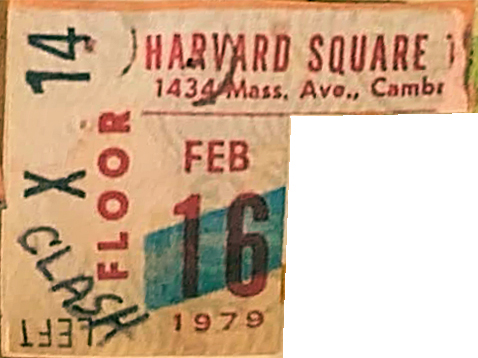
The Oedipus Project - The Clash first performed in the Boston area on February 16, 1979, at the Harvard Square Theatre in Cambridge, MA. It was a Friday evening and the band was scheduled to come up to the radio station for a late night interview with me. Unfortunately, it never materialized as our staff had just gone on strike. The new owners of WBCN had decided to fire half of the workers in order to break the union. We all walked out. Scabs were hired. Although we eventually emerged victorious, this is another story for another post. That evening at the concert Joe Strummer dedicated a song to me and wished all of us good luck in our struggle.
The Clash returned to Boston later that year and played the Orpheum Theatre on Wednesday, September 19, 1979. Sam and Dave were their support. After their performance the entire band joined me on my program as guest DJs. Here is a recording of what remains from that night in radio history with a increasingly drunken Clash playing their favorite songs, exposing their politics, battling with listeners and singing along to the Dave Clark 5 and the Village People! Yes, this did air live.
I believe that show was simulcast on WBCN
@byobge - YouTube - Wow. First live show I ever saw, so long ago. Every few years I look around to see if it was preserved somewhere, and hey, it was. Opening acts, as I recall, were the Undertones (made sense) and Sam and Dave (made sense to me 30+ years later, but not at the time).
Jeff Markarian - I believe that show was simulcast on WBCN...I recorded it on cassette. Wish I still had that tape!
A life changing moment for me
Doug Geer - My first Clash show. A life changing moment for me. Doug Geer - facebook - My first Clash show. My two word review: Life altering. Sam and Dave were amazing. Punters giving them the finger but they played on with huge smiles bringing all kinds of soul. Dave was killed a couple of years later in a crash.
Bruce Kilgallon - Facebook - I saw these guys walking through the Boston Common while they were on this tour
James Amorello - Worcester Telegram & Gazette - Saw that Orpheum show in Boston earlier and was fortunate to have Norther Ireland’s Undertones and r&b legends Sam&Dave open. Epic life changing evening after seeing Strummer stand down Don Law’s red shirt goon squad for manhandling fans. Literally went home and removed pictures of the Stones etc. from my walls. I’d found new worthy heroes.
Mark Fisher - Boston Orpheum…still one of the best gigs I’ve been to…
Trina Payan - I saw them play in Boston and other places. I met them twice. I loved Joe Strummer
Rik Van Horn - I saw The Undertones open for The Clash in Boston.
I was in the front row - 14 years old!
Jane Gilmartin - I was in the front row - 14 years old! remains one of the most amazing shows I've EVER seen. amazing photo! David Emerson I remember The Undertones backed them up. That show is locked in my mind. I was blown away. I saw The Clash many times but in 1979 it was intense.
Rik Van Horn - I was there at the Orpheum show was 1982 I believe. I saw them three times, this one, The Orpheum and at Bond's Casino in 1981.
I worked that show at Boston Orpheum, '79
Brian Riccio - I worked that show at Boston Orpheum, '79. They did a twenty minute blues jam at sound check. I’ll never forget it.
When the Clash came on it was like double the volume
Magoo McCormick - I saw this performance at The Orpheum Theatre in Boston. [Take 5th] My brother and I made the pages of Trouser Press ,or Hit Parader or Circus in an article . Beautiful days.
Chris Guttmacher - I was at the Boston show that tour, that gig was Sam & Dave instead of Bo Diddley but the Undertones were on the bill. When the Clash came on it was like double the volume.
Paul was hanging off the stage playing bass real hard
I should remember it was coming out, so to speak, as in taking dancing seriously and not being self-conscious or having fear. I just said, "fuck it, I'm taking complete CONTROL." Well, almost dying of double pneumonia a couple of months earlier was a game changer as well. I was in the Coast Guard on a ship just north of Boston at the time; I started to get sick down in the Bahamas, and when we got back, it got worse.
During the Clash show, kind of up front, me and some other gal who I knew a bit from the Boston Rat club in Kenmore got literally grabbed by bouncers and hauled up the aisle. Boston bouncers were the friggin' worst. Joe Strummer jumped off the stage yelling at them to leave us alone. I got told to cool it with the dance shit and go to the balcony, where I stayed until the end of the show. The fucker broke my camera too.
Well, everybody thought it was the end of the show; they came out and did THREE ENCORES. The thing was that people just emptied the front and most of the up-front seats. When they came back out to play, people just hung by the side aisles and the back and stayed there, which gave a LOT of room up front. I seized the chance—not to show off but just to get INTO IT and break loose—and I did! It was like having the Clash ALL TO MYSELF!
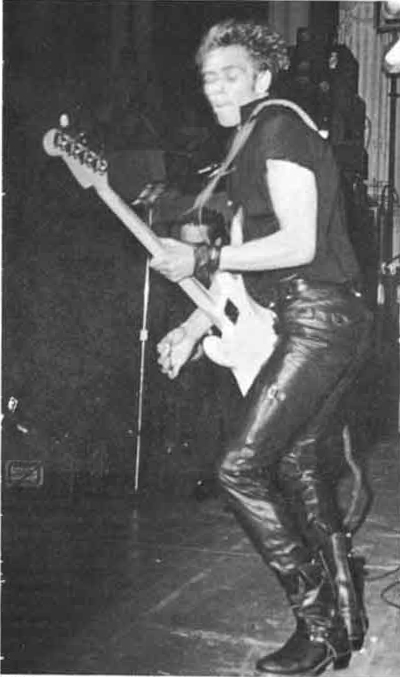
Paul was hanging off the stage playing bass real hard and yelling at me, cheering me on like saying, "yeah this mate GETS IT." It was AWESOME! They played "What's My Name," "Complete Control," "Jail Guitar Doors," and then came back and did new stuff that turned out to be what was on London Calling. They didn't do that song but did "Brand New Cadillac" (wicked best cover EVER), "Wrong 'Em Boyo" (Micky Gallagher on organ and some of Sam and Dave's horn players came out as well), and "Clampdown" and "Revolution Rock" (Topper was effing wicked).
My buddy Tommy Tight Pants, lol, who drove me to the show was off kinda behind me. He came up to me and yelled in my ear, "Wow! Everybody's looking at us!" I was like, "KNOW/NO everybody's looking at me." Although again that's not my mission to get attention per se; it's more like getting SO lost in the music and movements and DISAPPEARING.
So that was my born-again rock n roll epiphany '79 show with The Clash. It was my third Clash show (3 IS a CHARM) with more to come but will always be my favorite. To put it bluntly or spliffly: LIFE CHANGING in so many ways.
I talked to Bob Gruen in front of R bar in 2012 about it as a famous photo of The Clash he took was at that very Boston Orpheum show. To make matters well matter more, that photo is/was at Manitoba's bar next to my favorite end of the bar. Oops! Sorry about the rambling comment about all this Bean Town junk, lol, but now it's been said, and all of it was true. Thanks for the memory recall!
@blackmarketclash @blackmktclash @blackmktclash
@blackmarketclash7308 @clashonstage @clashonstage
Leave comment | Facebook, Twitter, Bluesky below
See also Instagram post here – and Threads post here
Leave a comment | Facebook
Leave a comment | Twitter
The Clash live - Boston Orpheum, MA
Wednesday 19th September 1979
Take the Fifth Tour, USA
The Clash live - Boston Orpheum, MA Wednesday 19th September 1979 Take the Fifth Tour, USA Please add/send any comments/info. w: www.blackmarketclash.co.uk e: blackmarketclash.co.uk@gmail.com WhatsApp: wa.link/ysk9md @TheClash #TheClash
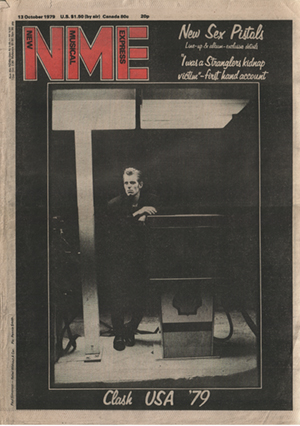
Paul Morley of the NME travels on the tour bus from Detroit on the 17th through to New York on the 21st interviewing and following the band.
DETAILS: The Scene. The Clash on tour of America. There's a glamorous image, with a confident, crusading edge to it. The Clash: a lot of hope and responsibility there. America: it still means a lot. Clash's current six week coast to coast tip to toe tour of the United States Of America is their first major assault.
Killer Children Wormtown zine, October 79
Killer Children Fanzine Review - Boston review
Killer Children Fanzine Review
Boston review 9/19/79 - Boston Orpheum
I found the alley where the equipment trucks were parked. Two cops approached The Clash came to the Orpheum Theater which that night seemed more like the Paradise because the Goon Squad--better known as Don Law's Brainless Bouncers-- were pushing their weight around.
During the Undertones' encore, I left my seat for a closer shot of the band. Before I could even raise my camera, I was grabbed by two animals. in red T-shirts, pushed down the aisle and out into the lobby.
I found the alley where the equipment trucks were parked. Two cops approachedI tried to converse with them, but they didn't speak (maybe they didn't know how). I found the alley where the equipment trucks were parked. Two cops approachedI also attempted to speak to the men at the door, but they had been told not to let me in and added insult to injury by calling me a "rock'n'roll" nigger.
I found the alley where the equipment trucks were parked. Two cops approachedI was labelled, stamped and shipped out the door. When the goons out front started harassing me, even the Undertones came out to see what was going on. I found the alley where the equipment trucks were parked.
Two cops approachedI told them what had happened, and they offered me their backstage passes. But of course the Red Shirts weren't having any: "It doesn't matter what he's got--he's not getting in!"I found the alley where the equipment trucks were parked. Two cops approached 33
I found the alley where the equipment trucks were parked. Two cops approached me, and before they could say anything, I told them I was doing a story and I was waiting right there until I got to speak to someone from the Clash (a lie, but it worked). By now, Sam and Dave were playing, so I just lis- tened, hoping to hell someone or something would let me back into the hall in time to see the Clash. I thought I was dreaming this whole nightmare.
Then the Clash pulled up. Before I could explain what had happened, Joe Strummer grabbed me and flung me into the door and started yelling at me. "I don't want to hear your problems! I've got me own. If you're supposed to photograph, get in there and photo- graph. You've got to be more aggressive: if you're not, you'll never make it.
DO YOU THINK WE GOT WHERE WE ARE BY SITTING ON OUR ASSES?! No! You've got to go after what you want!" I could barely speak, but I did manage to ask, "What if you've got 10 goons standing in your way?" "You just do what you're doing now," he said, "outsmart 'em. You know you're smarter than they are. They're just a bunch of idiots. Now follow me!"
We walked up two flights of stairs to their dressing room, me trying to think of what to say to them that wouldn't sound totally stupid. Upstairs, there was plenty of food, beer and tension. The manager was upset: an argument erupted about money and who got what. Naturally, Don Law's name came up. After the manager stormed out of the room saying something like "Keep all the money," I figured this wasn't the time or the place to photo- graph the band. So, I stayed backstage to prevent the goons on the floor from attacking me and was able to photograph the whole concert without any problems.
35
The Clash were unlike any band I've ever met, heard or photographed. Their attitudes and energy really can't be ver- balized by anyone. except themselves. so I leave you with the words of the Clash--tonight their songs made more sense to me than ever be- fore. But one song in particular sums up what I felt about Don Law's bouncers:
HATE AND WAR
The only things there are today/And if I close my eyes they will not go away/ You have to deal with it/It is the currency$$$$$$$$$ Hate...hate...hate The hate of a nation a million miles from home/And war from the junkies (bouncers) who don't like my form/I'm gonna stay in the city even when the house fall down/ I don't dream of a holiday when hate and war come around/ HATE AND WAR/I have the will to survive/
I cheat if I can't win/If someone locked me out I kick my way back in/And if I get aggression
I GIVE IT TO THEM TWO TIMES BACK
36
The The story wasn't over yet, though. After the concert I went looking for my girlfriend and found her outside, frozen cold and bullshit. In the process of looking for me before the Clash came on, she had learned from the fuckin' bouncers that I'd been beaten up and the police had me outside. She asked if she could go out and see if I was OK and would they let her back in with her ticket stub.
They replied sure, sure. but the minute she was out the door, they said she couldn't come back in. When she tried, they used some muscle and forced her out into the street. How low can you get, you lying bastards, you macho scumbags?
Where the fuck do you guys get off? The people who buy tickets are paying your salaries, as well as making Don Law rich. People used to respect Don Law, but now he's become a Little Hitler--and his big bouncers are the SS who have the power but no common courtesy. They use and abuse the public.
After they grab your dough, you're just a seat number--nothing more. 37
We weren't the only people thrown out my girlfriend saw at least a dozen more bruised and bleeding victims flung into the street outside the front door of the Orpheum. And that's not all--after the box office closed, people who didn't have tickets were paying full price to the bouncers, who were pocketing the money.. Isn't this called "skimming off the top," Don? Maybe your boys aren't as honest as you thought, or maybe this is how you keep them happy--at the expense of the bands. But shit. I'm sick of talking about Don Law. Back to the Clash.
9/28/79 - Clark University
Nine days later, we're on our way to Clark University to see the Clash. I couldn't believe we were going to see them twice in 10 days. We were right on time, and we had our tickets. What could possibly go wrong? Nothing, right?
Wrong! We got to the door, only to be met with, "Sorry, the concert hall is filled. They oversold the tickets, and no more people will be ad- mitted due to fire laws. You can get your money back next week."
Everyone started screaming and yelling, "White riot, I wanna riot." Then the police appeared and started moving bodies around. A few bottles got thrown; a few people got arrested. I was going crazy, and so was my girlfriend. Others were mumbling, "I can't believe this: I came all the way from Boston New York East Oshkosh .."
Everyone was bitching, and worse, they were going home just 'cause the police had told them to. By this point, I was boiling. I started yelling at all the wimps: "Go home! Give up, you fucking wimps! Leave! Go on! The people who stay will tell you later how great the Clash really are!"
The whole time, all I could think of was Joe Strummer saying, "If you want something, you've go to go after it. Be aggressive, or you'll never get anywhere." And I sure as shit wasn't going anywhere until I saw the Clash.
Only the people who really wanted to see the concert ended up staying, and most of them were from Boston. I kept telling the people around me. "Don't give up. Mark my words--when Joe finds out, we'll get in."
Two hours later, a bus pulled up, and out stepped Strummer. We screamed, "We got tickets, and they won't let us in! Joe, let us in. The crowd jeered, "We are your real fans--half those college students are sightseers." Joe put up his arms to quiet the mob, yelling, DON'T GET IN, WE DON'T PLAY." "IF YOU EP.
Everyone immediately went nuts.
39
Eventuall ventually we were all let in, with the re- striction that we had to stay in the lobby of the concert hall because of the fire laws. But we were in, and we could see and hear fine, and that was all that mattered. The Clash even dedicated their songs to us--the Cla Clash City Rockers in the lobby.
It It was a great show. Afterwards, we found the Clash in their dressing room; we smoked spliffs, drank beers and talked. This time there was no problem with taking photos, so I shot portraits of Joe and Mick. As the night came to a close, Joe said to me, "You again! Jesus, you are an aggressi bastard, aren't you? Don't you ever give up?"
"No!" I responded. "Not til I get the shot I want. "So he asked, "Well, do you got it yet?"
Chris Salewicz, Trouser Press, March 1980 - 6 page article
TROUSER PRESS, The Clash Play Revolution Rock
The March 1980 issue of Trouser Press (TP 48) featured The Clash, highlighting their significant role in the punk rock movement 4. Most of the article is focused on Aklamn Hall gigs at xmas and a band interview which includes the band giving their take on the WBCN Boston Radio interview.
IT'S FOUR days before Christmas. A dark, early evening damp with snow and rain ... ALSO INCLUDES Los Angeles Feb79, Boston Radio 19Sept79, Acklam Hall 28Dec79, Tiswas80, Cuba Tour
TROUSER PRESS/March 1980
THE CLASH PLAY REVOLUTION ROCK!
By Chris Salewicz
Rehearsals Before the Tour
It's four days before Christmas. A dark, early evening damp with snow and rain. Immediately south of the Thames, in the inappropriately genteel Victorian suburb of Putney, The Clash is stashed away in a rehearsal studio. They are readying their set of reggaebilly rockers for a 40-date British tour set to start on the fifth day of the New Year. As elevated tube trains rumble past a few yards away from the building, The Clash, vibed in on several hours of playing and spliffing, are into serious work, running repeatedly through the backing track for "Rudie Can't Fail."
Drummer TopperHeadon retains a spiky haircut (albeit growing out), but the three front-line Clashers now bear little sign of the band's punk origins. In keeping with their fascination with and love for their musical roots, they all resemble variants on late-'50s rockers. Lead guitarist Mick Jones sports a black slim-lapelled, drainpipe-trousered suit and pomaded black hair; all he lacks is a pencil-thin moustache to seem at home cleaning his nails with the end of a metal comb in a backstreet Italian bar. Bassist Paul Simonon wears a brown chalk-striped variant on the same cut of suit as Jones; his blond locks are plastered back too, in homage to James Dean. (Simonon is due in Hollywood this March to act in a feature film.) Lead singer/rhythm guitarist Joe Strummer's dark blue woollen shortie overcoat proclaims hitman cool, though this image is softened by faded tight jeans and battered shoes.
Strummer's seated at the organ in the middle of the rehearsal room, pouring out his soul on "The Bankrobbing Song," an unrecorded slow blues featuring Jones on bottleneck. As he sprawls over the notes and squeezes his mournful words into the mic, Strummer invokes memories of countless anonymous bar-room bluesers, their voices husky from too many nights of booze and cigarette smoke—though Joe hardly drinks at all these days. (Live, The Clash's keyboards are handled by Blockhead Mickey Gallagher, who in another incarnation co-wrote Peter Frampton's fab smasheroo, "Show Me the Way.")
Dinner Break and Reflections on Food Choices
"The Bankrobbing Song" completed, The Clash replenish the energies of several hours' playing with Chinese and Indian foods brought in during the last song by personal assistant Johnny Green. Jones and Strummer check carefully to ensure no animal flesh comes their way (Jones: "Chrissie Hynde once told me that if you eat meat you inherit the fear of the animal as it was killed"); the assorted dishes are shared around until a no-waste situation is achieved.
New Album: London Calling
London Calling, the new Clash double LP, has been in the shops for about 10 days and entered the British charts at number nine. With legendary, supposed loony, producer Guy Stevens at the controls, the album—cut in three and a half weeks prior to the band's summer '79 US tour—transcends the introversion (not to mention the Blue Öyster Cult sound) of the Sandy Pearlman-produced Give 'Em Enough Rope.
Dealing with emotions and decrying self-defeatism, London Calling is the direct spiritual heir to The Clash. Just as that LP was probably the best debut album ever made by any group, so London Calling, appearing at the tail end of 1979, is possibly the definitive '70s rock 'n' roll record—an ironic antidote to Me Generation selfishness and self-defeatism.
"It's our 20 Greatest Hits currently," Mick Jones comments after dinner. (Only 19 titles are listed on the cover; the closing "Train in Vain" was a last-minute inclusion after a plan to give it away free with New Musical Express hit insurmountable technical problems.) "We knew it was coming out at Christmastime so we thought it would go up well against all the other 20 Greatest. We think ours stands up quite well against Lena Martell."
Pricing Concerns for the U.S. Release
"Tell you something," the lead guitarist turns to Strummer, clambering back to the organ like a kid returning to a school desk. "We're going to have to do something to make the album come out as cheap as possible in America. That's quite important. How much is Tusk?" Jones turns to me.
"About $15," I hazard.
Strummer: "But that's made of ivory, isn't it?" Simonon: "Must be." Jones: "Well, I reckon we must definitely go for about ten bucks. And we'll have to stand by it, 'cos, you know, once you've said it—" Strummer: "Stand by your price."
Relationship with Epic Records
Doubters have suggested that The Clash's open derision towards their record company is little more than a chic urban pose; this is hardly a worthy estimation of the intensity of passion within the band. The Clash just despairs at the generally ham-fisted lack of humanity displayed by the soulless super-corporation and their company's depressingly low level of understanding of what rock music is all about. Consider Strummer's appalled reaction to the news that, prior to the band's spring Los Angeles show, Epic Records execs had gorged down nine-course meals. "What sort of person goes out and eats a nine-course meal and then goes to see some rock 'n' roll?" he demanded incredulously.
Despite constant public confrontation between the band and their Babylonian Paymaster General, genuine Clash fans apparently exist at boardroom level. There seems to be little question of the band's being dropped by Epic should London Calling fail to shift the required number of units. Headon hands me a highly laudatory, slightly unctuous cable from an Epic bigwig comparing The Clash to such mighties as John Lennon. It says he will love them always and that they are jolly smashing.
"There you go then," Jones says with a decisive nod. "That's what they think of us... Though they probably will turn against us if [the new album] doesn't happen. It's not as though they almost haven't anyway. Perhaps they haven't in America, but here it's different. They've always got so many problems with us; we're the problem cases."
Jones continues: "You see, they're not very musical people at CBS. They're not really interested in music. The ones in charge don't know anything about music." He turns to the bassist. "What do you think of CBS, Paul?"
Simonon: "I don't really know." (Shrugs.) "I don't really deal with them." Jones: "Yeah, we don't really. We've stopped." Simonon: "But before it was always a pain. I can't bear to go up there." Headon: "We never ever speak to them." Jones: "See, they're the sort of company—their latest Christmas card, right, is a classic. It's in full color: a picture of the managing director holding his dog's paw..." Simonon: "...which is holding a pen..." Jones: "...which is signing a contract..." Headon: "...in front of all these gold albums." Simonon: "That must be what they think of us."
Jones: "People on our label are the same as dogs. Anytime it looks like you're going to get out of it they find loads of different ways for you to owe them money." Simonon: "They sort of say, 'Well, here's some money to help you out'; but it doesn't help at all. It just appears on a bit of paper later. You think, 'Oh, great. We've got out of the mess we're in.' And there it comes again."
Jones: "We did think that we could just do a load of records, right—like just quick, jazz albums—hand them all in at once and it'd be over with. But this is a contract we signed when we were naive youngsters. It says the records have to be made over a certain period of time. So it's just a case of us doing our time, really."
Past Management and Moving Forward
Besides guerrilla warfare with their record company, until recently The Clash was involved in a similar situation with former manager Bernie Rhodes (who signed the band to British CBS the same day the group thought they were signing with Polydor). The diminutive Rhodes, former second-in-command to one Malcolm McLaren, appeared to thrive on tensions and disharmony at direct odds with the growth of the group's collective strength. Having settled out of court with Rhodes, The Clash is now managed by Blackhill, one of the world's more trustworthy management operations. The original managers of Pink Floyd currently care for the career of Ian Dury, as well as Roy Harper and Philip Rambow.
"You've got to get ripped off," Strummer concludes, "to know what it's all about."
Musical Influences and Reggae Roots
London Calling is littered with allusions to and pastiches of rockabilly, R&B and especially reggae, not forgetting rocksteady and ska. These are sources, though, not Bowie-type steals. There's nothing self-conscious or sneaky about them; it's all out in the open. The Clash wit, and the fiery positivism it hangs out with, sees to that.
Of all the sources, reggae is certainly dominant. It pervades London Calling, sometimes unobtrusively, sometimes not. The Clash listens to a lot of reggae; on-the-road traveling music is invariably chosen from the Paul Simonon cassette collection. "Rudie Can't Fail," "Wrong 'Em Boyo" (originally cut by The Groovers in '64), "Lover's Rock" and "Revolution Rock" are obviously under the influence, but it's all over the place: "Hateful," "Jimmy Jazz," "Death or Glory," "Clampdown" and others. For the B-side of the "London Calling" 45, The Clash cut their version of Willie Williams' summer reggae single, "Armagideon Time." The original was released on Coxsone Dodd's Studio One label, a company renowned for some of the best sounds that come out of Jamaica (and also for the philosophical manner in which its artists seem to accept not being paid).
Armagideon Time and Rhythm Influences
"Armagideon Time" used one of the most popular rhythms of the year, Sound Dimension's "Real Rock." The Clash had hoped to go to Jamaica after their US tour to use the same rhythm track. Studio One expressed no interest whatsoever. "They didn't want to know," Jones says sadly, "though they don't mind selling us the publishing! I was bitterly disappointed that I had to come back to England instead.
"There were all these plans: we were going to have gone to Cuba. And to Mexico. And Japan. We were going everywhere. And instead we came back here as soon as it was all over." The Cuban tour idea fell through during the mini-crisis about Russian troops on the island.
Chaos in Los Angeles: The US Tour's End
The last US tour seemed almost predestined to end in chaos. The organization completely fell apart at the last date in Los Angeles.
"Me 'n' Joe were stuck at the airport," Headon recalls. "We didn't even have the money to fly the luggage out. As soon as the last gig was over, everyone did a runner. We woke up in the hotel the morning after the last gig, and there were just the four of us left."
"We were in charge that night," Jones continues. "Kosmo [Vinyl, member of the Blackhill team and legendary rock 'n' roll visionary] had lost his passport and had to go up to Vancouver to fetch it. Then the geezers in the road crew wouldn't start the show unless they'd been paid. And there was this massive audience going bonkers. All bribes and things to get them to turn the power on. After that, even the tour manager skipped."
The Clash vs. America
How about the famous Clash vs. America stand-off?
"America hasn't really woken up to us on any massive scale. The concerts are good. I think we have a bit of a rep as a live band.
"I imagine"—Jones's lips curl contemptuously—"the Police—someone like that—must have sold quite a lot of records there. Like the Knack have."
Radio Airplay in the US
And radio airplay?
"Some... It's like—[to the others] I mean, are we underrating it or what?" Strummer: "Underrating what?" Jones: "Do we get played on the radio a lot or not?" Strummer: "Definitely not!" Headon: "On John Peel-type shows." Strummer: "What's that station in Boston?" Jones: "Can't remember. We had a good time in Boston. Took over a radio station." Headon: "Oedipus." Jones: "That's the name of the DJ." Headon: "We smashed all his records up." Jones: "Yeah, we were taking his Boston and Foreigner albums out of their sleeves and scratching them. His most popular records totally messed up. The program director was talking to us as he stood on this pile of hundreds of records that had just been chucked down on the floor."
Clash's Experience with American Radio
What sort of radio programs did The Clash find themselves stuck on? Strummer: "Look at the latest drivel that's come into town." Headon: "Latest gimmick." Jones: "Four novelties from England." Headon: "We'd play up to it 'n' all."
Secret Gigs and Rehearsals in London
Christmas Eve. The Clash is rehearsing in Acklam Hall off Notting Hill's Portobello Road, directly beneath the Westway flyover—a vital symbol in the group's mythology. On Christmas Day and Boxing Day (the 26th), The Clash is playing two "secret" gigs at the hall (tickets $1) as an antidote to the holidays and as warm-up dates (with Mickey Gallagher) for their British tour.
A Night at Simonon's Flat
Afterwards, Simonon, Strummer, Headon, and I walk to Simonon's basement flat a couple of blocks away. It's a modest two-room place, decorated and carpeted in various shades of red—totally appropriate for a fire-sign person. The other two Clashers call for cabs to take them home. Simonon and I sit down in the kitchen with some rum and my tape recorder. His American woman friend and her friend watch a Gene Kelly film on one of the two TVs that are switched on in the front room.
Like Strummer and Jones, Simonon is a former art student. The offspring of a broken marriage (as are Joe and Mick), he used the first money he earned with The Clash as a deposit on the flat. He badly needed a place of his own after years of sharing bedrooms with his brother and living in squats. "It's great in this neighborhood," he says. "There's this black family next door, and really early in the morning, they play all this dub. I don't even need to put anything on to listen to when I'm getting up."
Reflections on America
We return to the subject of America. The country does seem to be accepting more new wave.
"Yeah, slowly. Something seems to be stirring over there. I think all those other groups like The Police—and whether I like them or not is another thing—you do hear them a lot on the radio, so it does help us in some ways. Makes them a bit more open to our music.
"New York's really great for us. It's probably about the only place in America I really enjoy. Then again, it's got all its nonsense attached to it.
"I think someone from England coming up against all that stuff can easily be taken in and sink with it. Every time I go over there, I'm aware of that. Funny thing is, after a while, it gets boring."
Recording with Guy Stevens
Recording often tires Simonon, although that wasn't the case with London Calling.
"Usually I get really bored because the producers and people aren't interesting. But Guy Stevens is really different from the others. He's much more than a producer, really."
Mick Jones had said that Stevens absorbed all the nuttiness and tensions within the band.
"Yeah. You could just pour it all out. Great!
"Making the last one was terrible. CBS or Bernie or whoever it was kept us separated from each other. Blackhill, our new management people, seem okay so far, but we've got our eyes open more than before. We no longer sign things when we don't know what they're for. I suppose that showed stupidity—though it's good in a way that happened to us because we'll actually tell people about it."
Holiday Gigs and Hammersmith Odeon Performance
After two superb Acklam Hall shows, The Clash climaxed its holiday gigs on December 27th at the Hammersmith Odeon as the "Mystery Act" at an Ian Dury-topped benefit for Cambodian refugees.
Before The Clash was due on, I met Guy Stevens at the backstage bar. In addition to his incredible production work, Stevens was responsible for the release of about half the classic R&B and soul Britain heard in the mid-'60s. Music is precious to him, and he deplores its bastardization by large record conglomerates for mere profit. He knows The Clash is true to the cause. The Clash is part of the Quest.
"Listen," he shouts in my ear, spraying the entire right side of my face with spittle. "Did you see Joe Strummer in the dressing room just now? Down on the floor, ironing his stage clothes on a towel? Gene Vincent would've done that! Eddie Cochran would've done that! Jerry Lee Lewis would've done that!" He has a firm hold on my arm, passion burning in his voice. Loosening his grip, he slumps down on a seat to contemplate this perfect rock 'n' roll image.
Stevens' Enthusiasm During the Performance
Midway through The Clash's set, I look up from my seat and see a squirming Guy Stevens being carried up the center aisle by four security men. Concerned he may be kicked out or beaten up, I search for him at the rear of the auditorium.
He's okay. One of the guards recognizes him and mildly scolds him for causing a scene. Caught up in the music, Guy had been dancing in front of one of the cameras filming the event. He is very drunk.
As we navigate a swaying journey down the auditorium side toward the backstage door, someone suddenly rushes up behind us and throws his arms around Guy. It’s an equally inebriated Pete Townshend! Leaving Stevens in good hands, I return to my seat.
Traveling to Birmingham for Tizwaz Appearance
Eight days later, I'm seated between Jones and Strummer in the mini-bus The Clash rented for their British tour. It's about midnight as we travel up the M1 to Birmingham, where the band will appear the next morning (Saturday) on the children's TV show Tiswas. Hard Jamaican sounds pour from Simonon's portable cassette player, filling the warm vehicle.
Discussing London Calling and Song Meanings
The intention is to discuss specific details of London Calling with the self-contained and highly romantic (a compliment, of course) Strummer. We start with "Lover's Rock," a title referencing a reggae sub-division popular in England, often featuring twee-sounding teenage girls and electronic drums. The Clash's version explores how lovers should rock, invoking Taoism through quotes from The Tao of Love ("You can make a lover in a thousand goes") and critiquing the Pill's subtle Babylonian oppression.
"It's been misunderstood, that song, you know," Strummer half-grins, wryly self-mocking. "You have to be a bit gone in the head to try to get that over."
Inspiration Behind "The Right Profile"
"The Right Profile" is about Montgomery Clift. I recall Guy Stevens mentioning he lent Strummer a paperback on Clift.
"I read two of them," he nods. "It's interesting to read two books about the same person because they give you completely different pictures. You read one and think, 'Oh, that's how the guy really was!' Then you read another and wonder, 'Was he like this, or like that?' And you realize he was probably like neither."
Broader Conversations and Reflections
Strummer’s recent reading leads our conversation toward the Odyssey, Greek and Roman mythology, the Basques and Atlantis, Carl Jung, Edgar Cayce, and Rasta passivity. That last topic reminds me that London Calling encourages the opposite: people should step forward, act, and reject apathy.
"Yeah, but—it's very hard to deal with apathy. Pretending you have the answers to everybody's problems—it's impossible, of course. Everyone must sort out their own problems; that's the key to everything. You fix one issue and get the will to tackle another. You can't expect any help, I don't think.
"Mainly, though, we were thinking about people accepting shit as gold. Just a little while ago, we heard a record on the radio that was pure shit, and this guy goes, 'Mmmm... that's good.' It's just the Emperor's new clothes again and again. Of course, it ain't good. It's just a load of fuckin' shit, y'know."
The Clash questions everything, which is why they're so positive. They don't believe in hopelessness; they believe we have nothing but hope.
"Only the lazy ones look to us for a solution," Strummer says. "We just made our feelings clear; other people happened to feel that way too, so they got behind it. But making your feelings clear is a long way from solving everything.
Misinterpretation of "Bored with the USA"
"That 'Bored with the USA' song has always been misconstrued. We say, 'We're so bored with the USA' having to sit at home and have it pumped into us. The second you turn on the TV you know it's in America somewhere, and there's this bird who's probably a detective, and then a car's gonna roll over a cliff—you know all the plots by heart. 'I'm So Bored with the USA' was about the importing of culture.
Perspective on Visiting the States
"A quick spree 'round the States taking in all the sights and buying all the crap you can lay your hands on—that's what we call fun. So long as we don't have to live there."
Reflection on Success and "Selling Out"
The next afternoon, arriving at the gates of the Aylesbury Civic Hall for the first date of the tour, Joe Strummer gazes out of the mini-bus window at the street filled with punks and punkettes.
"See," he turns to Paul. "We've sold out again. And we said we'd never sell out."
TROUSER PRESS / March 1980
Archive PDF (1) ---- Lesser, includes index, The Clash, Glen Matlock, Slits Archive PDF (2) ---- Clearer but just the Clash
Sat Sep 22 1979, The Boston Globe, Saturday, September 24. 1979
The Boston Globe - Clash make the sparks fly
7 - REVIEW/MUSIC
Clash makes the sparks fly
THE CLASH - In concert with Sam and Dave, and the Undertones at the Orpheum Theater, Wednesday night.
By Jim Sullivan, Globe Correspondent
Confrontation and conflict are corner- stones of the Clash. Within their songs, the Clash continually push limits; they explore an ever-increasing variety of mu- sical forms and their lyrics more often than not have a sharp political edge to them. Wednesday night at the Orpheum, the Clash brought their sense of righte- ousness and confrontation politics to the forefront after just three songs.
Lead singer/rhythm guitarist Joe Strummer ground the frantic pace to an abrupt halt after noticing, what he thought to be, an inordinate amount of force being used against fans who were standing in the aisles by promoter Don Law's red-shirted security patrol. Visibly angered, Strummer called upon Law to present himself. When Law did not show, Strummer continued to castigate the se- curity-men and exhorted the crowd to stand up and dance as it pleased. Later, after the concert, Strummer tersely said,"We will never work with Don Law again because you can't hire animals to control people."
And so, the Clash returned to the Boston area with a bang. Strummer's anger did not get in the way of the show; in fact, it may have given the band an immediate focus for their relentless music. They ripped through a 24-song set that proved them to be far from mere survivors of the initial punk-rock surge. They are now, simply, a very good and intelligent rock 'n' roll band.
One of the key factors in making the Clash such a compelling group is their ar- tistic growth. Although they haven't out- grown the harsh three-chord attack of their early days (they still play it with a fervor), they're moving on into a wider range of musical expression. Most nota- bly, the Clash is integrating reggae rhythms more naturally and with greater frequency.
For their first encore, they started with a new song, the reggae-tinged "The Police Walked in For Jazz" and moved into the call-to-action pogo rocker, "White Riot" without missing a beat. Both are credible, contemporary.
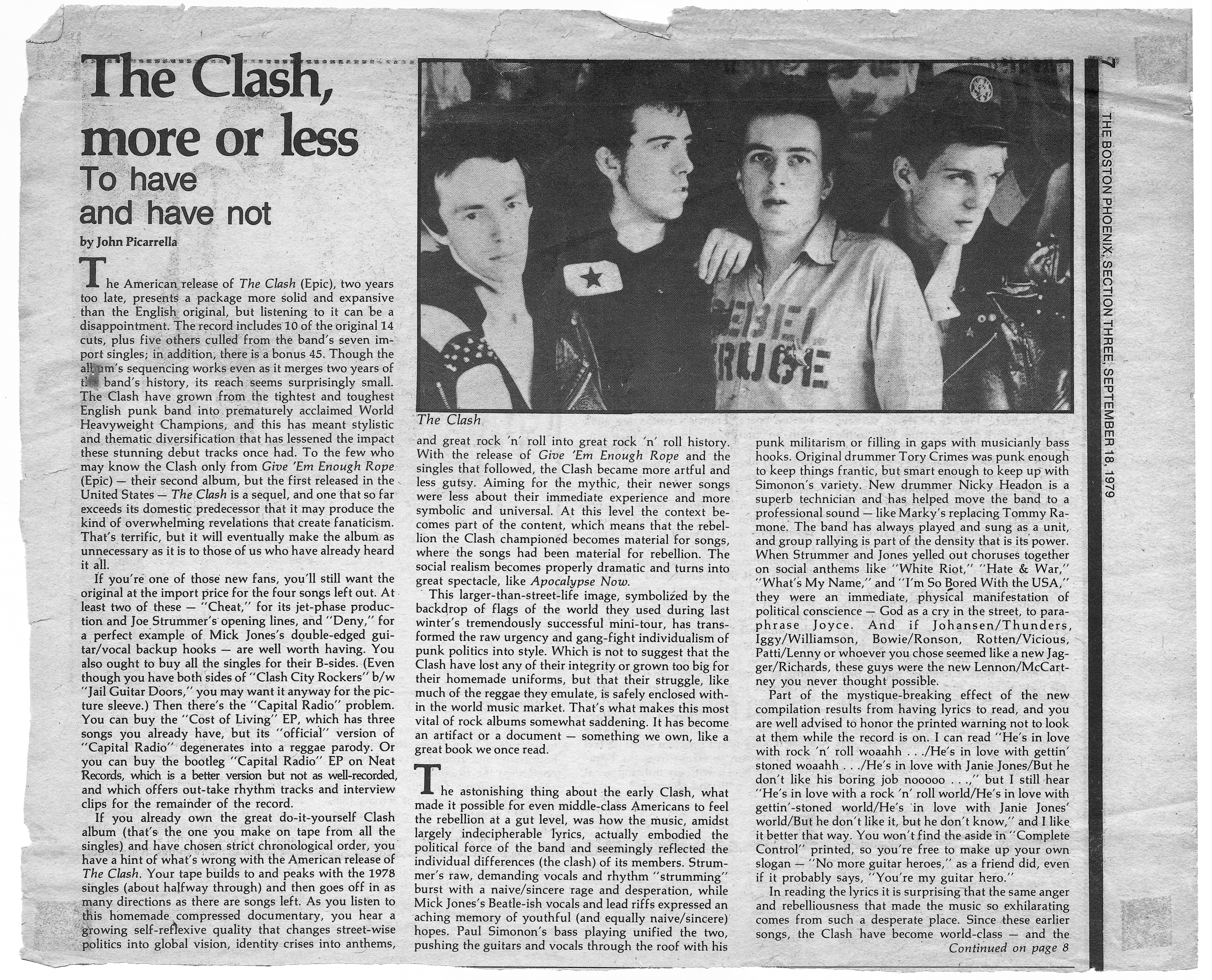
THE BOSTON PHOENIX, SECTION THREE, SEPTEMBER 18, 1979
The Clash more or less, to have or have not
incomplete - WANTED ****
The Clash, more or less To have and have not
by John Picarrella
The American release of The Clash (Epic), two years too late, presents a package more solid and expansive than the English original, but listening to it can be a disappointment. The record includes 10 of the original 14 cuts, plus five others culled from the band's seven im port singles; in addition, there is a bonus 45. Though the album's sequencing works even as it merges two years of the band's history, its reach seems surprisingly small, The Clash have grown from the tightest and toughest English punk band into prematurely acclaimed World Heavyweight Champions, and this has meant stylistic and thematic diversification that has lessened the impact these stunning debut tracks once had. To the few who may know the Clash only from Give 'Em Enough Rope (Epic) their second album, but the first released in the United States The Clash is a sequel, and one that so far exceeds its domestic predecessor that it may produce the kind of overwhelming revelations that create fanaticism. That's terrific, but it will eventually make the album as unnecessary as it is to those of us who have already heard it all.
If you're one of those new fans, you'll still want the original at the import price for the four songs left out. At least two of these "Cheat," for its jet-phase produc tion and Joe Strummer's opening lines, and "Deny," for a perfect example of Mick Jones's double-edged gui- tar/vocal backup hooks are well worth having. You also ought to buy all the singles for their B-sides. (Even though you have both sides of "Clash City Rockers" b/w "Jail Guitar Doors," you may want it anyway for the pic- ture sleeve.) Then there's the "Capital Radio" problem. You can buy the "Cost of Living" EP, which has three songs you already have, but its "official" version of "Capital Radio" degenerates into a reggae parody. Or you can buy the bootleg "Capital Radio" EP on Neat Records, which is a better version but not as well-recorded, and which offers out-take rhythm tracks and interview clips for the remainder of the record.
If you already own the great do-it-yourself Clash album (that's the one you make on tape from all the singles) and have chosen strict chronological order, you have a hint of what's wrong with the American release of The Clash. Your tape builds to and peaks with the 1978 singles (about halfway through) and then goes off in as many directions as there are songs left. As you listen to this homemade compressed documentary, you hear a growing self-reflexive quality that changes street-wise politics into global vision, identity crises into anthems, The Clash
and great rock 'n' roll into great rock 'n' roll history. With the release of Give Em Enough Rope and the singles that followed, the Clash became more artful and less gutsy. Aiming for the mythic, their newer songs were less about their immediate experience and more symbolic and universal. At this level the context be- comes part of the content, which means that the rebel- lion the Clash championed becomes material for songs, where the songs had been material for rebellion. The social realism becomes properly dramatic and turns into great spectacle, like Apocalypse Now.
This larger-than-street-life image, symbolized by the backdrop of flags of the world they used during last winter's tremendously successful mini-tour, has trans- formed the raw urgency and gang-fight individualism of punk politics into style. Which is not to suggest that the Clash have lost any of their integrity or grown too big for their homemade uniforms, but that their struggle, like much of the reggae they emulate, is safely enclosed with- in the world music market. That's what makes this most vital of rock albums somewhat saddening. It has become an artifact or a document something we own, like a great book we once read.
The astonishing thing about the early Clash, what made it possible for even middle-class Americans to feel the rebellion at a gut level, was how the music, amidst largely indecipherable lyrics, actually embodied the political force of the band and seemingly reflected the individual differences (the clash) of its members. Strummer's raw, demanding vocals and rhythm "strumming" burst with a naive/sincere rage and desperation, while Mick Jones's Beatle-ish vocals and lead riffs expressed an aching memory of youthful (and equally naive/sincere) hopes.
Paul Simonon's bass playing unified the two, pushing the guitars and vocals through the roof with his punk militarism or filling in gaps with musicianly bass hooks. Original drummer Tory Crimes was punk enough to keep things frantic, but smart enough to keep up with Simonon's variety.
New drummer Nicky Headon is a superb technician and has helped move the band to a professional sound like Marky's replacing Tommy Ramone. The band has always played and sung as a unit, and group rallying is part of the density that is its power.
When Strummer and Jones yelled out choruses together on social anthems like "White Riot," "Hate & War," "What's My Name," and "I'm So Bored With the USA." they were an immediate, physical manifestation of political conscience God as a cry in the street, to para phrase Joyce. And if Johansen/Thunders, Iggy/Williamson, Bowie/Ronson, Rotten/Vicious, Patti/Lenny or whoever you chose seemed like a new Jag- ger/Richards, these guys were the new Lennon/McCart ney you never thought possible.
Part of the mystique-breaking effect of the new compilation results from having lyrics to read, and you are well advised to honor the printed warning not to look at them while the record is on. I can read "He's in love with rock 'n' roll woaahh He's in love with gettin' stoned woaahh/He's in love with Janie Jones/But he don't like his boring job nooooo...," but I still hear "He's in love with a rock 'n' roll world/He's in love with gettin'-stoned world/He's in love with Janie Jones' world/But he don't like it, but he don't know," and 1 like it better that way. You won't find the aside in "Complete Control" printed, so you're free to make up your own slogan "No more guitar heroes," as a friend did, even if it probably says, "You're my guitar hero.
In reading the lyrics it is surprising that the same anger and rebelliousness that made the music so exhilarating comes from such a desperate place. Since these earlier songs, the Clash have become world-class and the
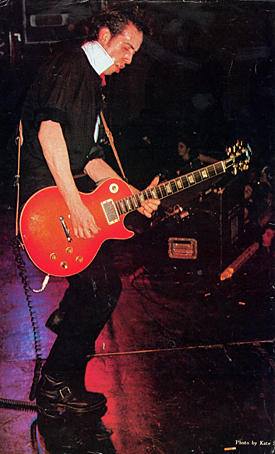
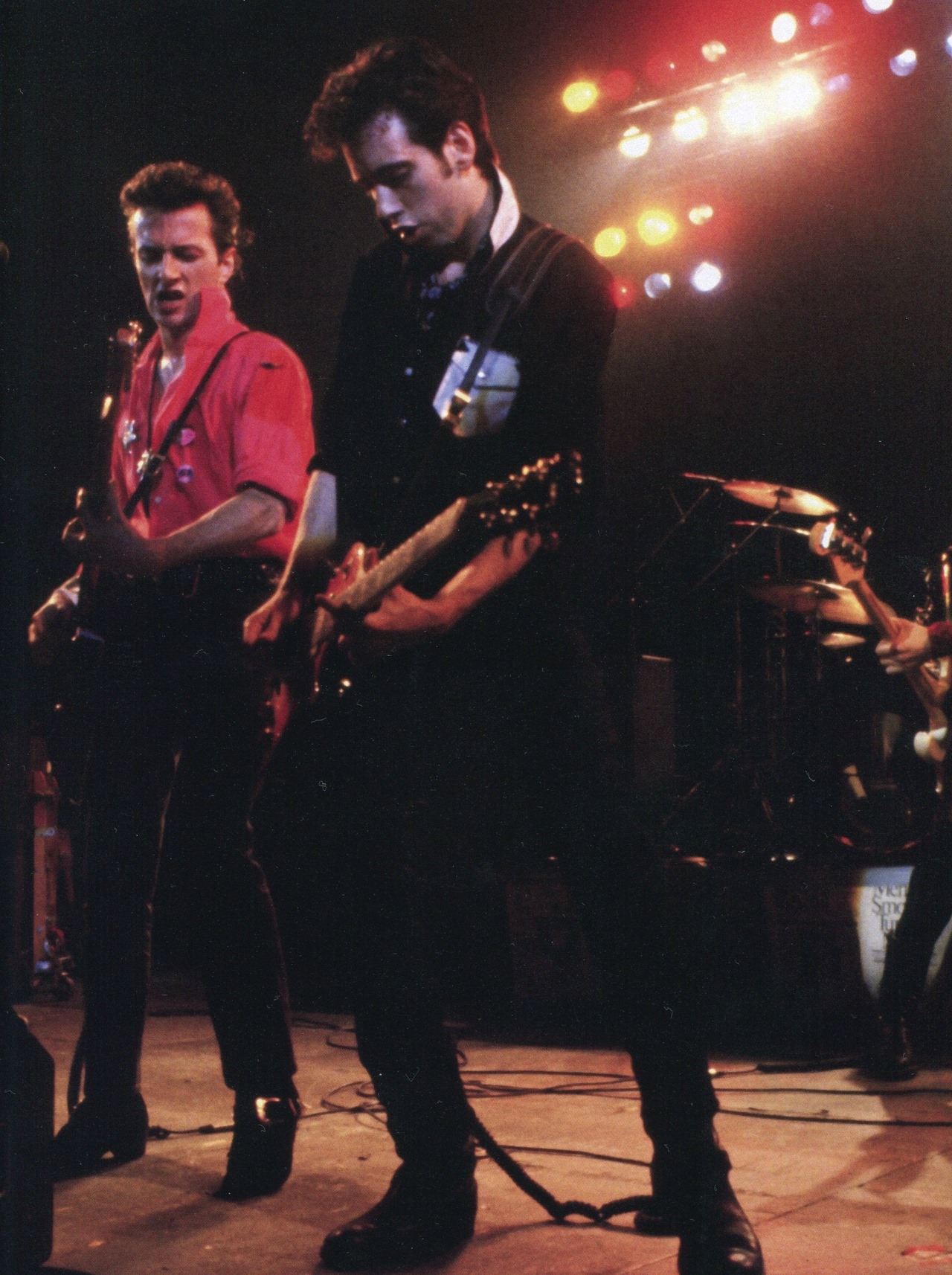
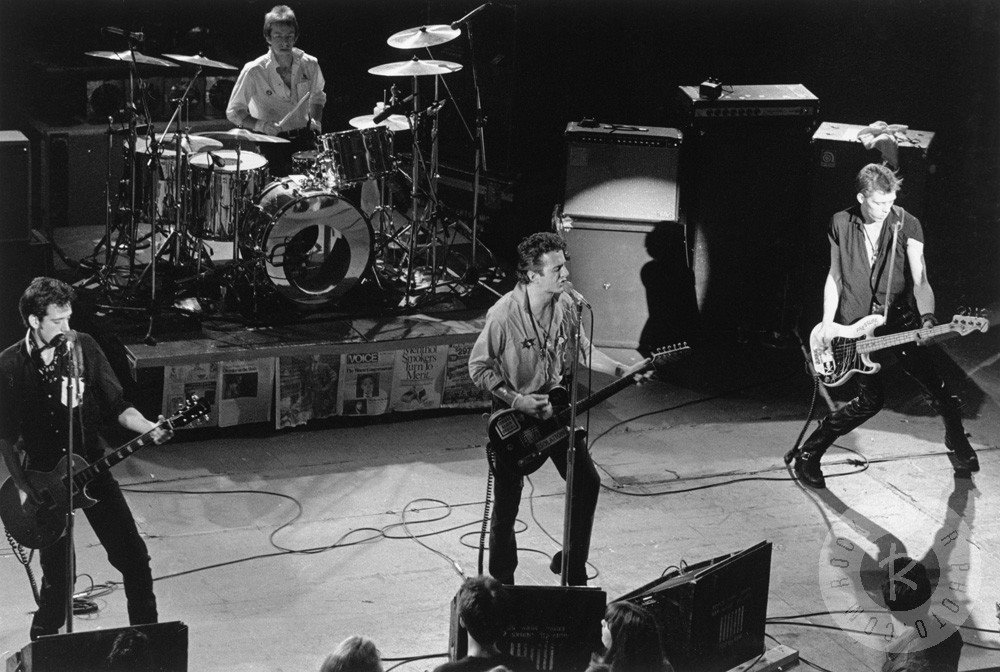
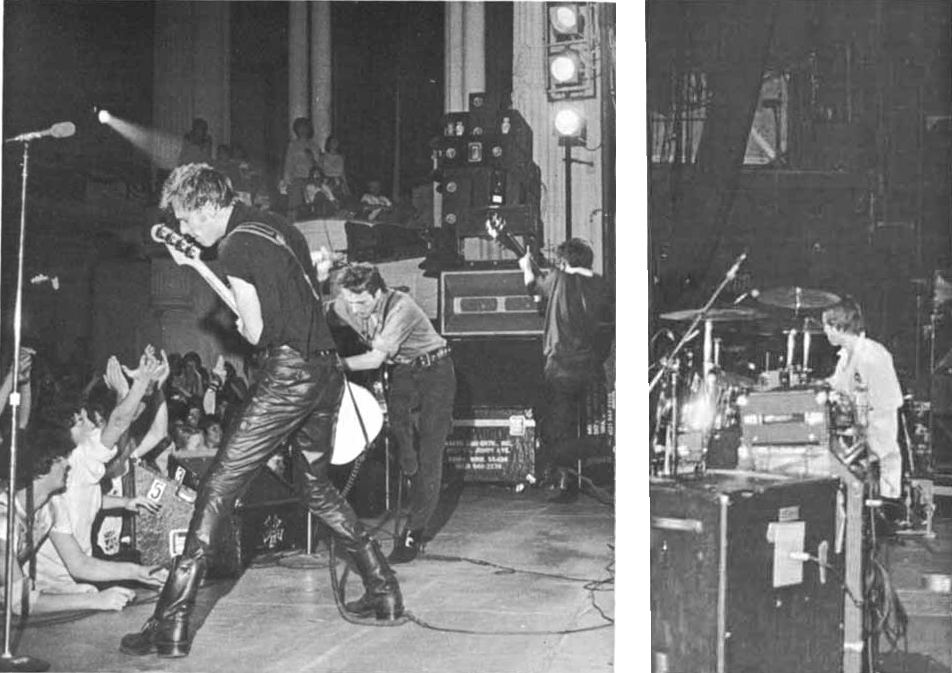
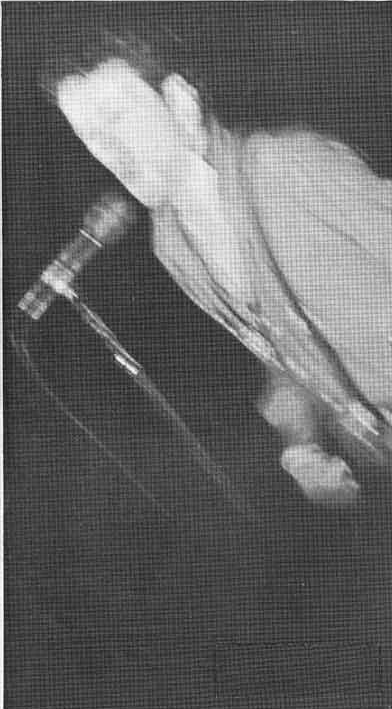
Catherine took 7 photos at Harvard Square Theater, Cambridge MA, USA (16 Feb 1979), 1 from Boston Orpheum (Sept 19th 1979) and 3 from the Boston Orpheum - one of which wrongly attributed to Harvard (March 9 1980). Cathrine Vanaria [broken link]
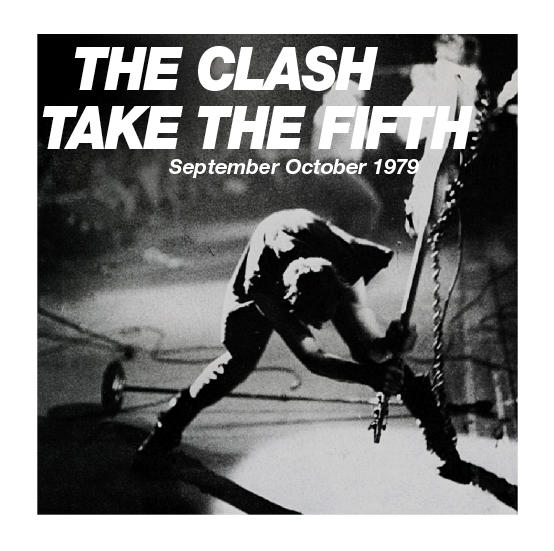
facebook.com - The Clash at the Orpheum Theatre, Boston, September 19, 1979. Photo Catherine Vanaria
City of the Dead I'm So Bored with the USA Complete Control London Calling White Man In Hamm Palais Koka Kola I Fought the Law Safe European Home Jail Guitar Doors The Guns Of Brixton English Civil War Clash City Rockers Stay Free Clampdown Police and Thieves Capital Radio Wrong 'Em Boyo Janie Jones Garageland Armagideon Time Career Opportunities White Riot
Jimmy Jazz
Whats My Name
Extensive archive of articles, magazines and other from the Take the Fifth Tour of the US, late 1979
Brixton Academy 8 March 1984
ST. PAUL, MN - MAY 15
Other 1984 photos
Sacramento Oct 22 1982
Oct 13 1982 Shea
Oct 12 1982 Shea
San Francisco, Jun 22 1982
Hamburg, Germany May 12 1981
San Francisco, Mar 02 1980
Los Angeles, April 27 1980
Notre Dame Hall Jul 06 1979
New York Sep 20 1979
Southall Jul 14 1979
San Francisco, Feb 09 1979
San FranciscoFeb 08 1979
Berkeley, Feb 02 1979
Toronto, Feb 20 1979
RAR Apr 30 1978
Roxy Oct 25 1978
Rainbow May 9 1977
Us May 28 1983
Sep 11, 2013: THE CLASH (REUNION) - Paris France 2 IMAGES
Mar 16, 1984: THE CLASH - Out of Control UK Tour - Academy Brixton London 19 IMAGES
Jul 10, 1982: THE CLASH - Casbah Club UK Tour - Brixton Fair Deal London 16 IMAGES
1982: THE CLASH - Photosession in San Francisco CA USA 2 IMAGES
Jul 25, 1981: JOE STRUMMER - At an event at the Wimpy Bar Piccadilly Circus London 33 IMAGES
Jun 16, 1980: THE CLASH - Hammersmith Palais London 13 IMAGES
Feb 17, 1980: THE CLASH - Lyceum Ballroom London 8 IMAGES
Jul 06, 1979: THE CLASH - Notre Dame Hall London 54 IMAGES
Jan 03, 1979: THE CLASH - Lyceum Ballroom London 19 IMAGES
Dec 1978: THE CLASH - Lyceum Ballroom London 34 IMAGES
Jul 24, 1978: THE CLASH - Music Machine London 48 IMAGES Aug 05, 1977: THE CLASH - Mont-de-Marsan Punk Rock Festival France 33 IMAGES
1977: THE CLASH - London 18 IMAGES
Joe Strummer And there are two Joe Strummer sites, official and unnoffical here
Clash City Collectors - excellent
Facebook Page - for Clash Collectors to share unusual & interesting items like..Vinyl. Badges, Posters, etc anything by the Clash. Search Clash City Collectors & enter search in search box. Place, venue, etc
Clash on Parole- excellent Facebook page - The only page that matters Search Clash on Parole & enter search in the search box. Place, venue, etc
Clash City Snappers Anything to do with The Clash. Photos inspired by lyrics, song titles, music, artwork, members, attitude, rhetoric,haunts,locations etc, of the greatest and coolest rock 'n' roll band ever.Tributes to Joe especially wanted. Pictures of graffitti, murals, music collections, memorabilia all welcome. No limit to postings. Don't wait to be invited, just join and upload. Search Flickr / Clash City Snappers Search Flickr / 'The Clash'
Search Flickr / 'The Clash' ticket
I saw The Clash at Bonds - excellent Facebook page - The Clash played a series of 17 concerts at Bond's Casino in New York City in May and June of 1981 in support of their album Sandinista!. Due to their wide publicity, the concerts became an important moment in the history of the Clash. Search I Saw The Clash at Bonds & enter search in red box. Place, venue, etc
Loving the Clash Facebook page - The only Clash page that is totally dedicated to the last gang in town. Search Loving The Clash & enter search in the search box. Place, venue, etc
Blackmarketclash.co.uk Facebook page - Our very own Facebook page. Search Blackmarketclash.co.uk & enter search in red box. Place, venue, etc
Search all of Twitter Search Enter as below - Twitter All of these words eg Bonds and in this exact phrase, enter 'The Clash'


 Audio 1 - see below


 Thu Sep 13 1979

















%20NME%20Magazine%2020%20October/nme-magazine-20-october-1979-bob.jpg)











.gif)











 The Official Clash
  Clash City Snappers

