
BOOK: Alain Pacadis, Frédéric Beigbeder | Pages 165 to 171
Un jeune homme chic |
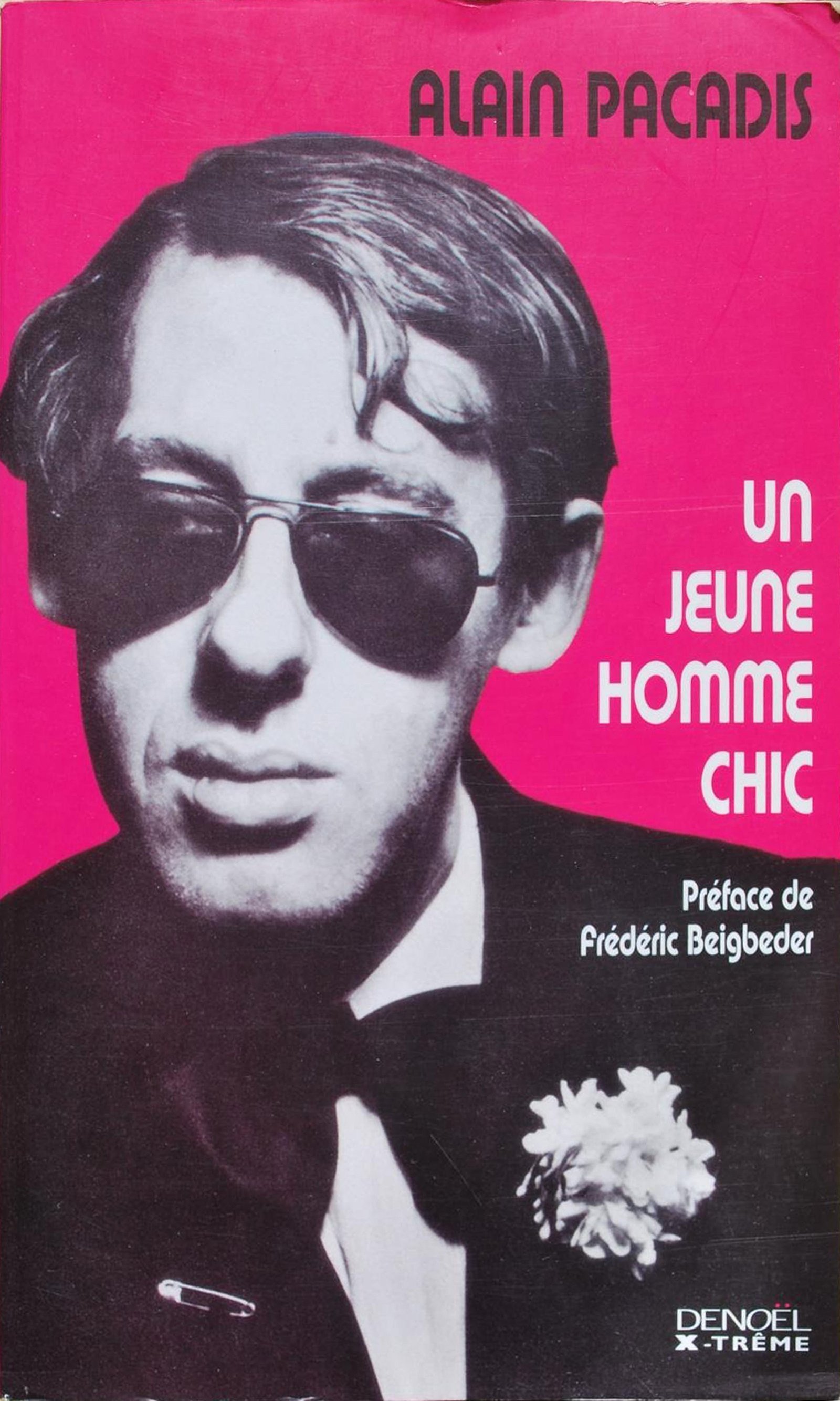
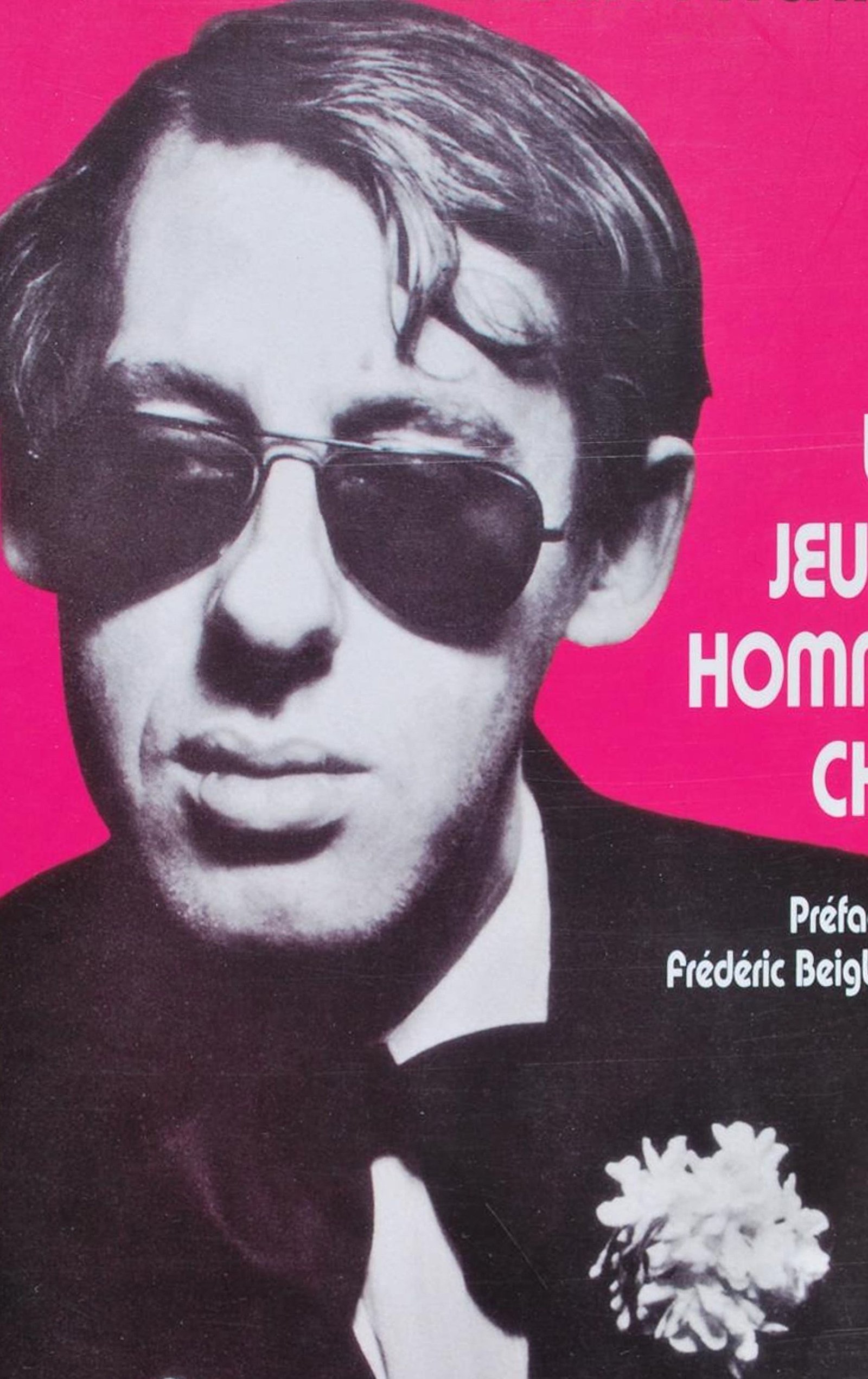
BOOK: A chic young man
Alain Pacadis
Preface by Frédéric Beigbeder
Tuesday 26: continuation of the Punk Festival at the Palais des Glaces with Subway Sect and The Clash. Today, there are many more people than yesterday. Yves Adrien is out of his bunker. There is Serge, Djemila, Edwige walking around since the beginning of the week with a photo of The Clash stuck to her jacket, Titi, Alain Benoît, Jean-Luc Maître, Valérie and Anne (the inseparables), Aphrodisia Flamingo, Fury, etc. In short, all the punks as well as a new scene of chicer people who became interested in punk because of its outward aspects — clothing, attitude — and who are now beginning to develop a taste for the music.
The concert begins with Subway Sect. There is Vic Godard (vocals), Paul Myers (bass), Robert Miller (guitar) and Paul Smith (drums). They say they compose a song at night and play it the next day. Vic Godard, their very young 18-year-old singer, declares: “Our music defines nothing. At first we improvised, now we rehearse our songs but our music is still the same!” They are all very young, between 18 and 19, and were tired of being unemployed and hanging around without money; so they began playing in Hammersmith in the underground station. That’s where they took their name.
Then, The Clash, the most politicised band of the new English scene. In April ’76, the manager of the 101ers came to see me at Libé. He had been told in London about a guy who wrote articles on punk in a leftist rag. Unfortunately, I wasn’t there and he left me a little package with photos of the band, press clippings and a cassette with the demo of their next album. I listened to it that evening. What a slap! Finally a good rock’n’roll band, with all original songs that swing and make you want to dance: Keys to Your Heart, their single, Leavin’ Suck City, Petrol, Rabies, Steamgange 99, Moto Boys Heart, themes with urban and teen inspiration. They had formed a band in Paddington, a London district known for its trains: the 101ers. Joe Strummer, their guitarist, is obsessed with the rhythm of the railway tracks: “Once you’ve got that clickety-clack rhythm in your blood, you’ll never be the same again.” The group also included, besides Strummer, Tall “Snake Hips” Dudansky on drums, Clive W. M. Timperlee on guitar, “Desperate” Dab De Bass on piano. For over a year, they criss-crossed the London pub circuit, freely covering rock’n’roll classics or playing their own songs. They lived in squatted houses, which meant they often played to defend that cause. One day, at the Nashville in Kensington, the Pistols played three songs as an opening act for the 101ers. They were torn apart by all the press: “The Pistols do as much for the cause of rock’n’roll as the Second World War did for the cause of peace,” wrote Allan Jones after the concert. Yet in the hall was Mick Jones, part of the London SS, a band that did not yet dare to get on stage (Tony James, bass; Brian James, guitar; and Rat Scabies, drums), and Paul Simonon, who belonged to the Bromley Contingent, that first nucleus of Pistols fans. With Joe Strummer, who as soon as he saw the Pistols decided to dissolve the 101ers, our three guitar heroes were going to form a band: it would be The Clash. Immediately, Bernard Rhodes offered to become their manager. Bernard printed T-shirts for Malcolm McLaren at the Sex shop in London. There was not yet a definitive drummer. Then came the first concerts, then the Punk Festival at the 100 Club, where they were noticed by the press because of their shirts dripping with colours in the style of action painting close to Pollock, and above all their lyrics which expressed the aspirations of a radical band. Soon, the Pistols were fired by EMI and then A&M. The press began to lose interest in them; there was a place to take at the front of the stage and The Clash signed for a large sum with CBS, released a single and prepared an album. “Watch out Pistols, The Clash are coming!” The Clash would steer punk in a new direction by radicalising its discourse and its music. The Pistols had pushed punk towards a suicidal path, with their arsenal of swastikas and their more than ambiguous position on the place of youth in the fight against the bourgeoisie. With The Clash there was a return to a more politicised perspective. They assimilated Marxism and preached urban warfare, class struggle. “We are anti-fascist, anti-racist, and non-violent. We seek to educate the kids who come to our concerts to keep them from joining the National Front if the political situation worsened. We are aware that young Jamaicans express their hatred of colonialism through reggae, that Blacks revolt against US imperialism through free jazz, but we are young white proletarians and it is through rock that we express our hatred of the bourgeoisie! Before, we hung out all night in bars, drank pints of beer and fought with kids in pubs before going to smash the phone booths on King’s Road. Now we make a rock’n’roll band and the kids who come to see us have fun and no longer go out to get drunk!” declared Joe Strummer. Their 45 rpm single is a hymn to 1977, on an urban, violent, radical music.
“In 1977, no Elvis, no Beatles, no Rolling Stones / In 1977, I don’t want to serve for the RAF. / I don’t want to fight the colonial war / I am against civil service / In 1977, I will not throw bombs for you...” The Clash means conflict, combat. A police siren, cobblestones flying, a burning barricade — that is what The Clash talk about. On the cover of their 45 rpm, they write a theoretical text: “Youth, after all, is not a permanent condition, and a generation conflict is not as fundamentally dangerous for the government as a conflict between rulers and the ruled.” The Pistols had shown the imminence of the generation conflict; The Clash push the axiom further and move it to class conflict. Long live The Clash! Long live the class struggle!
After the Palais des Glaces concert, I met The Clash in the lobby of their hotel, Place de la République. They introduced me to their new drummer: his name is Nicky Headon and he is now definitively part of the band. A few beers. The design décor of the Modern’ Hôtel.
Joe Strummer: “Are you the one who writes in Pénétration?”
AP: Not Pénétration, but Libération. It’s a far-left daily newspaper. What do you think of squatters in London, of this whole movement of occupying empty houses?
Mick Jones: “The Squatters, is that a new band?”
JS: “I squatted for three years. Now, in the occupied houses, there are only dirty hippies left. They are not at all organised and don’t know what to do against the new law: The Criminal Trespass. A few years ago, it was good. People didn’t know where to live, they occupied a house and organised themselves. But now, in these neighbourhoods, there are only a few junkies left.”
AP: “You don’t wear swastikas on your clothes like the Sex Pistols?”
JS: “No, because we don’t like what they mean.”
AP: “What do you think about hard drugs?”
JS: “I think it’s a weapon used by the CIA to destroy revolutionaries and people who want to do something. We are against hard drugs and we fight against them. We only smoke ganja (weed).”
AP: “Do you think ganja should be legalised?”
JS: “We don’t care as long as we can find it freely.”
AP: “There have recently been a lot of fights in London between Blacks and the police.”
JS: “Yes, but I think French cops are even tougher than English bobbies. We’ve heard a lot about May ’68. In London, during the Notting Hill Gate riots, there were no Whites. We still went out of curiosity with Bernard, our manager, and he got his glasses broken.”
AP: “What is the current political situation in England?”
JS: “I’m not interested.”
AP: “What are your political bases?”
JS: “I think you shouldn’t follow any leader. You don’t need a leader! I believe in organisation. We ourselves are an organisation, ‘The Clash Organisation’ which includes seven members: me, Paul, Mick, Nicky, Bernard our manager, and two roadies who never leave us and live with us.”
AP: “Is it an organisation built on democratic foundations?”
JS: “Yes, it’s whoever shouts the loudest” (he starts shouting).
Mick Jones: “What’s gotten into you to shout like that?”
JS: “I was showing him how our organisation works.”
AP: “What do you think of Marxism?”
JS: “What’s that? Can you define it for me in 25 words?”
AP: “Yes, it’s a doctrine which says that historical facts are not determined by chance or the whims of great men, but by classes fighting among themselves to gain power.”
JS: “Do you think that can be applied to America? There are no more classes over there, they’re all bourgeois!”
AP: “Obviously, we can bring corrections to historical Marxism. Today, young people no longer belong to a determined class, as for workers, they are all bourgeois, they only think about television, cars and their second home.”
JS: “Yes, the workers have become straights. The Clash are the most politicised band of the English scene, but we content ourselves with making rock, we know our limits. Before, we were starving, now we are rich, and that doesn’t help the workers at all. I don’t believe a rock band can have great political importance. Political power is at the end of the rifles. We have rifles because we can afford them, that’s all.”
AP: “Yes, let’s buy rifles, because one day we’ll use them!”
After the interview, Joe Strummer, Mick Jones and Nicky went to meet Marc at the Gibus. There they found musicians from The Damned, Captain Sensible, Dave Vanian and Rat Scabies. They did a jam session together. I went to dine at the Coupole. There was Paul Simonon surrounded by people from CBS London, Elli and Jacno from the Stinky Toys, Yves Adrien, Maud, Paquitta, Pierre Benain and Anne Mizes. It was two in the morning, I went home to bed.
Thursday 28: electricity strike. No metros or buses. I woke up quite late. I hitchhiked with Yves to the Palais des Glaces where the concert was to take place.
BOOK: Un jeune homme chic | Alain Pacadis, Frédéric Beigbeder | Pages 165 to 171